
Have you ever wondered how solo or independent developers manage to create outstanding games? Or how major AAA studios accomplish massive, complex projects without missing a beat? The truth is, regardless of size, both types of creators sometimes rely on professional game design and development services, though scale and scope differ. Solo developers may outsource specific elements, such as art and music, to external professionals. On the other hand, large studios often hire teams to work on entire portions of a project, bringing ambitious games to life.
At the core of every successful game, however, lies a simple idea that sparked great things. It might have started with a “what if?” written in a notebook or a concept imagined before going to bed after playing games. For aspiring game developers, Stardew Valley and Undertale are certainly among the many inspirations. However, not everyone is as gifted as ConcernedApe or Toby Fox. Similarly, turning an idea into a fully realized, interactive experience requires far more than creativity alone. It demands artistic skills and technical prowess among many things. That is why many creators find the need to leverage game design and development services.
If you are one of them, you have come to the right place. You are about to discover more about how game design and development services transform ideas into immersive experiences, diving deep into key stages, professional benefits, tips on choosing, latest trends, game solutions, cost factors, and much more.
What Are Game Design and Development Services?
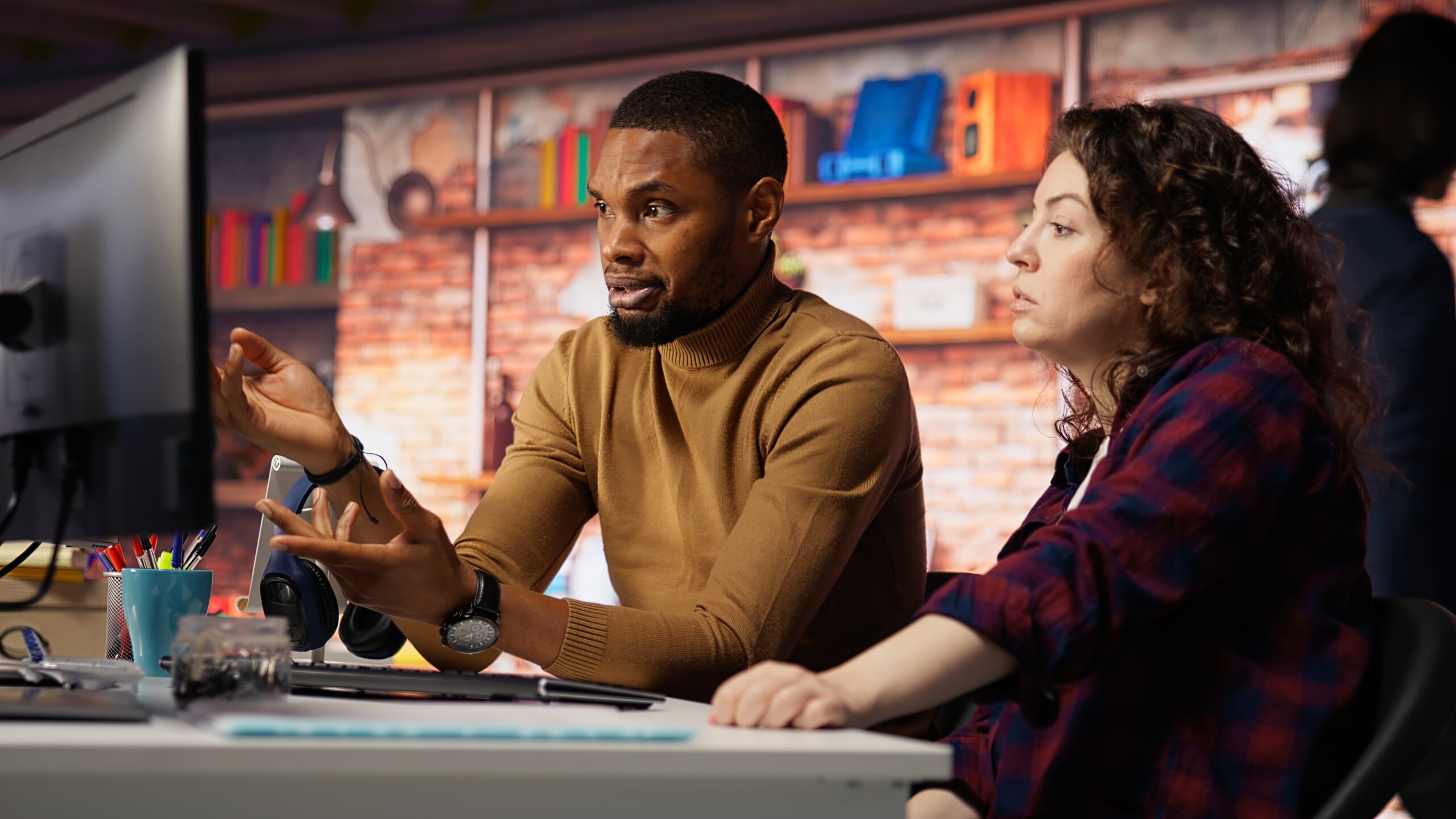
Game design and development services support developers at every stage of game creation, providing the expertise, resources, and tools necessary to complete a game project. Most of the time, they get involved in the entire process, from concept to launch and beyond. In a way, you can think of them as partners that save you from unnecessary headaches. You are all in it together!
Who is Part of a Game Design and Development Team
Generally, game design and development services are multidisciplinary in nature, which is why they remain valuable. Remember, game creation is a collaborative process that calls for a group of experts working in sync. So, a typical team might include:
- 2D/3D Artists who focus on the visual elements or assets that define a game’s aesthetics.
- Animators who add motion and personality that give life to characters, creatures, and environments, which also ensures responsiveness to player input.
- Game Designers who manage the creative aspects of characters, graphics, and user experience.
- Game Producers who oversee the entire process of game creation, ensuring that all components come together smoothly and the game gets completed despite any issues.
- Game Testers who test all possible game scenarios to identify and record errors, such as bugs and crashes.
- Marketing Specialists who build hype around your game before launch by utilizing ads, PR campaigns, and promotional events.
- Narrative Designers who develop the story, quest, and missions that shape a video game, and ensure they connect with the game mechanics, theme, and player actions.
- Programmers who write and maintain the code that allows features, mechanics, and gameplay systems to function properly, essentially powering a video game.
All in all, these team members who are part of game design and development services are focused on their respective expertise, collaborating to ensure that every detail (i.e., from gameplay to visual polish) works seamlessly.
What Do Game Design and Development Services Offer?
Every stage of game development is crucial, so you need partners that provide various game design and development services that cater to each phase of creation. You should find options that offer:
- Audio Production
- Concept Development
- Game Design and Prototyping
- Maintenance and Technical Support
- Publishing and Distribution
- Quality Assurance and Testing
- Software Development and Coding
- System Integration
- Training and Consulting
- Visual Design and Animation
Key Stages of Game Development
To create a game, a structured development pipeline must be in place. Although the specific steps may vary depending on the project, knowing the key stages allows you to identify where professional help is needed most.
- Pre-Production – This is where the initial ideas are explored and shaped, such as art style, game genre, game mechanics, narrative, and target audience. It is also when creators form the game design documents and start building prototypes.
- Production – Here, developers write code, artists generate assets, and designers create levels and systems, essentially building the game. Additionally, this includes testing and iteration to ensure that the game has no bugs, glitches, or performance issues.
- Post-Production – It is where the game is ready for publishing and distribution. This part also entails post-launch support, including releasing updates, fixing bugs, and expanding.
Benefits of Professional Game Design and Development Services

While solo game development paves the way for a different kind of exploration and self-growth, there is a certain level of quality and efficiency that is hard to achieve alone and can only be reached by working with professionals.
- Access to Specialized Skills and Tools – Opting for game design and development services brings you professionals and advanced technologies you can rely on to build unique projects.
- Better Player Experience – Professional services emphasize user experience, focusing on the details that ensure a game is engaging, enjoyable, and intuitive.
- Faster Development Timeline – Outsourcing experienced teams that utilize proven workflows boost efficiency, reducing delays and keeping the project on track.
- High-Quality Output – Professionals have the skills, resources, and proficiency with industry standards to produce polished, top-tier games that are likely to be a hit.
- Risk Reduction – Experienced service providers can anticipate possible concerns early and employ ad-hoc solutions, adapting to a game’s specific nature and requirements.
With these benefits in place, you will be able to access cost-effective approaches that prevent unnecessary expenditures. That means you can achieve your target without exceeding your budget.
Choosing the Right Game Design and Development Team

Careful selection of the right partner is crucial, as not all teams are created equal. By doing so, you can be more confident that you are choosing the right team to work on your project.
One of the criteria you should consider is their portfolio. Their previous work should reveal the depth of their experience and capabilities. You can also ask about their workflow to see who provides a clear, structured process. Likewise, prioritizing communication is a must, as the lack of it can derail projects.
Another key consideration is their technical capabilities. You should choose a service provider that is proficient in game engines, possesses mastery of development tools, has expertise in programming languages, and is familiar with technological innovations. Moreover, you would want to work with teams that provide long-term support, since you will need updates and maintenance after launch. Furthermore, the pricing structure matters, so you should find the option that offers good value within your budget.
Latest Trends in Game Development
Staying updated with changes and movements in the game industry is crucial, especially since the sector is fast-evolving. That said, modern game design and development services integrate the latest trends to create games that are not only great but also competitive and relevant.
- Artificial Intelligence – AI powers immersive experiences by enabling smarter gameplay, realistic NPC behavior, procedural generation, adaptive difficulty levels, and flexible audio adjustment.
- Cloud Gaming – Games are becoming more accessible as players can stream them without powerful hardware, thanks to services like Xbox Game Pass Ultimate, Nvidia GeForce Now, and PlayStation Plus Premium.
- Cross-Platform Integration – Players now expect cross-platform compatibility for seamless gaming experiences that allow them to play across devices without sacrificing connectivity or progress.
- Immersive Technologies – Virtual and augmented reality technologies are now creating deeper and more interactive experiences.
- Live Service Models – Games are past the launch-and-finish era and are currently banking on player feedback to provide regular updates and content drops that keep them engaged.
Custom Game Solutions for Businesses
Today, games are no longer for the sole purpose of entertainment. They are now also powerful business tools. According to Macrobian Games, game solutions are purpose-built digital experiences that are designed to match an organization’s branding, culture, and technical infrastructure. Nowadays, these can be used for marketing campaigns, training and development, customer engagement, and education and awareness. Accordingly, businesses should align mechanics to goals, customize games for diverse teams, and select the appropriate platform to create game solutions that deliver real, measurable impact.
Cost Factors in Game Design and Development
The costs of developing a game vary widely. Based on the data from Abhiwan Technology Pvt Ltd., a basic mobile game can cost around $10,000 to $20,000, while a mid-level 2D video game may cost between $20,000 and $50,000. More advanced 2D games can exceed $50,000. For casual 3D or mid-size games, budgets generally fall between $50,000 to $200,000. Meanwhile, titles that have VR/AR tech, multiplayer modes, and high-end features can cost as much as $1 million.
These figures show why understanding the factors involved can help you effectively tailor your choices of game design and development services to your goals and preferences. A few of the factors you should consider before you hire game design and development services include game complexity, platform choice, features and functionality, art and design quality, and team structure. At the same time, you have to take into account factors such as the development timeline, technology stack, marketing and distribution, licensing and legal fees, cloud infrastructure, and post-launch support.
To know more about the expenses attached to creating a game, check out our full breakdown of how much it costs to create a video game.
Future of Game Design and Development
Innovation will continue to grow as technology advances, making the future of gaming increasingly more exciting.
Moving forward, we will be seeing more personalized gaming experiences, where it is possible for systems to adapt in real time to player behavior. Artificial Intelligence, cloud gaming, and VR & AR will play bigger roles in both development and gameplay, even blurring the line between virtual and real worlds.
The integration of games into non-entertainment sectors will also continue to expand. From education to enterprises, games will be essential tools for engagement, development, and problem-solving.
As the evolution continues, game design and development services will remain at the forefront, helping creators and businesses stay ahead of the curve by adapting and innovating.
Frequently Asked Questions
Q1: What do game design and development services include?
Answer: Game design and development services mostly cover everything from initial concept all the way to launch.
Q2: How long does it take to design and develop a game?
Answer: The timeline commonly depends on the complexity of a project. A simple mobile game may take a couple of months, while more advanced games can take a few years.
Q3: How much do game design and development services cost?
Answer: Costs may differ widely based on factors including game complexity, platform features, and team size. Small projects may cost a few thousand dollars, while large-scale games can require significantly higher budgets. According to Goodfirms, the average hourly rate for game development companies ranges from $25 to $49.
Q4: Do businesses benefit from game design and development services?
Answer: Definitely! Many businesses take advantage of these services for marketing, employee training, customer engagement, and more.
Q5: Is technical knowledge necessary to start a game project?
Answer: While it helps, it is not mandatory. Professional game design and development teams guide you through the entire process, making it accessible even for non-technical clients.
Final Thoughts: Support Matters
With everything we have covered, we hope that you now understand that bringing a game idea to life is a formidable journey. Aside from creativity, expertise, collaboration, and structure can become necessities. Therefore, it should be clear now that going solo is not always an option. Sometimes, people need help, and that is perfectly okay, especially when doing a daunting task like game development. With the help of game design and development services, even the most demanding projects can become fully realized experiences that connect, inspire, and innovate.
If you want to explore other help you can get, try reading our article about game art design services. Meanwhile, if you really feel like having an independent experience first before working with game design and development services would help you in your journey, you should consider learning the essential steps to making your first game through our 2D Video Game Development guide.

