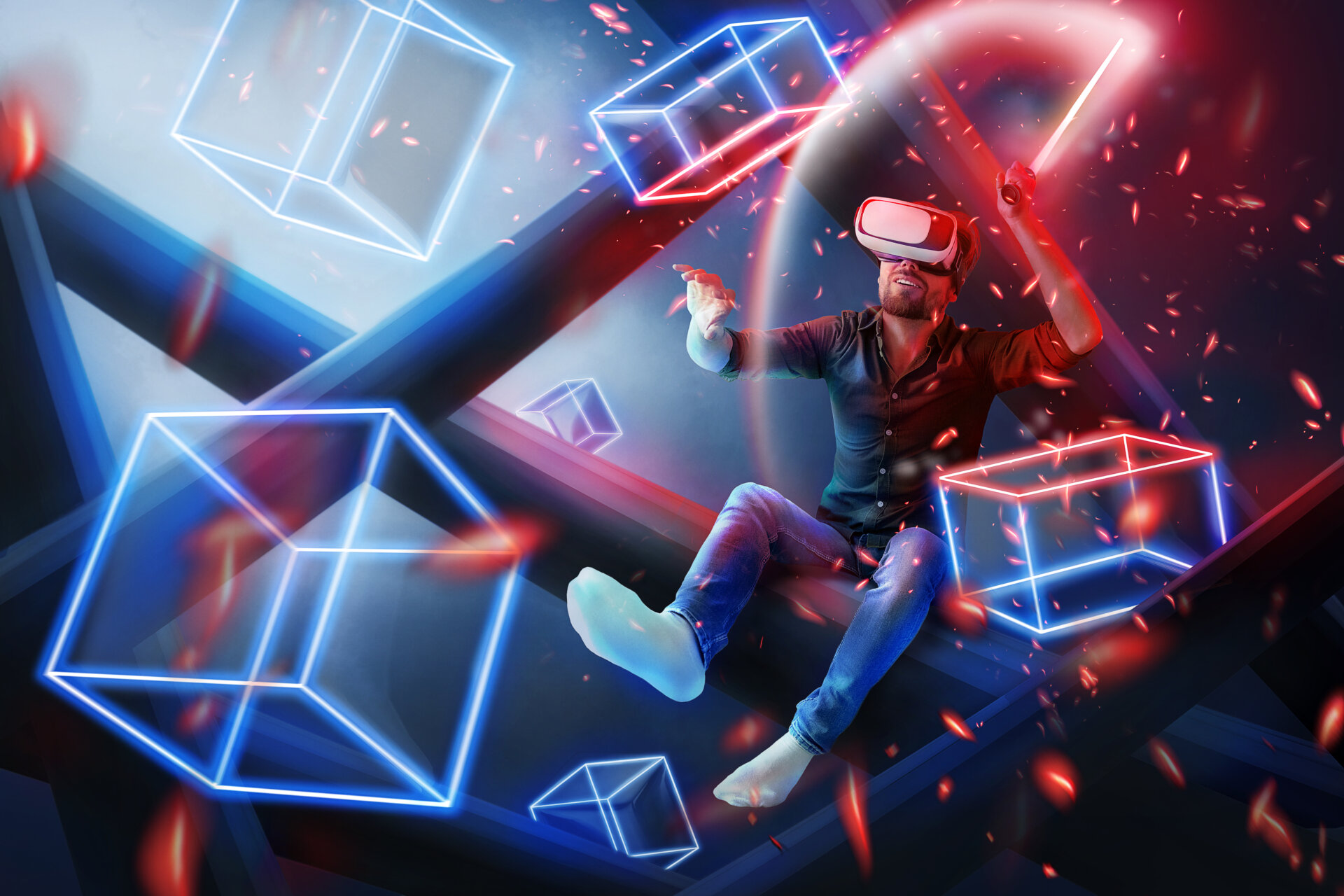
Many players are already more than satisfied with 3D video games. They let you move freely in all directions, control the camera or viewpoint, and explore realistic environments. To think, people were even happy with 2D video games for a long time. With such advancements, you would think that we’ve already reached the peak of games’ potential. Well, technology says otherwise. As a result, game developers are showing no signs of stopping until they redefine gaming once again. In fact, there is a relatively new concept that is quietly pushing boundaries further — 4D video games.
It’s true. Gaming has always evolved by expanding how we experience worlds. And now you and other gamers are about to enter a new era of gaming. However, 4D gaming can be utterly confusing. It’s a complex concept in gaming, to say the least. And understanding it is key to seeing what makes 4D video games so fascinating. That’s where things get more interesting. So, let’s unpack everything there is to know about 4D video games and find out how the 4D concept shapes game design.
What Are 4D Video Games?
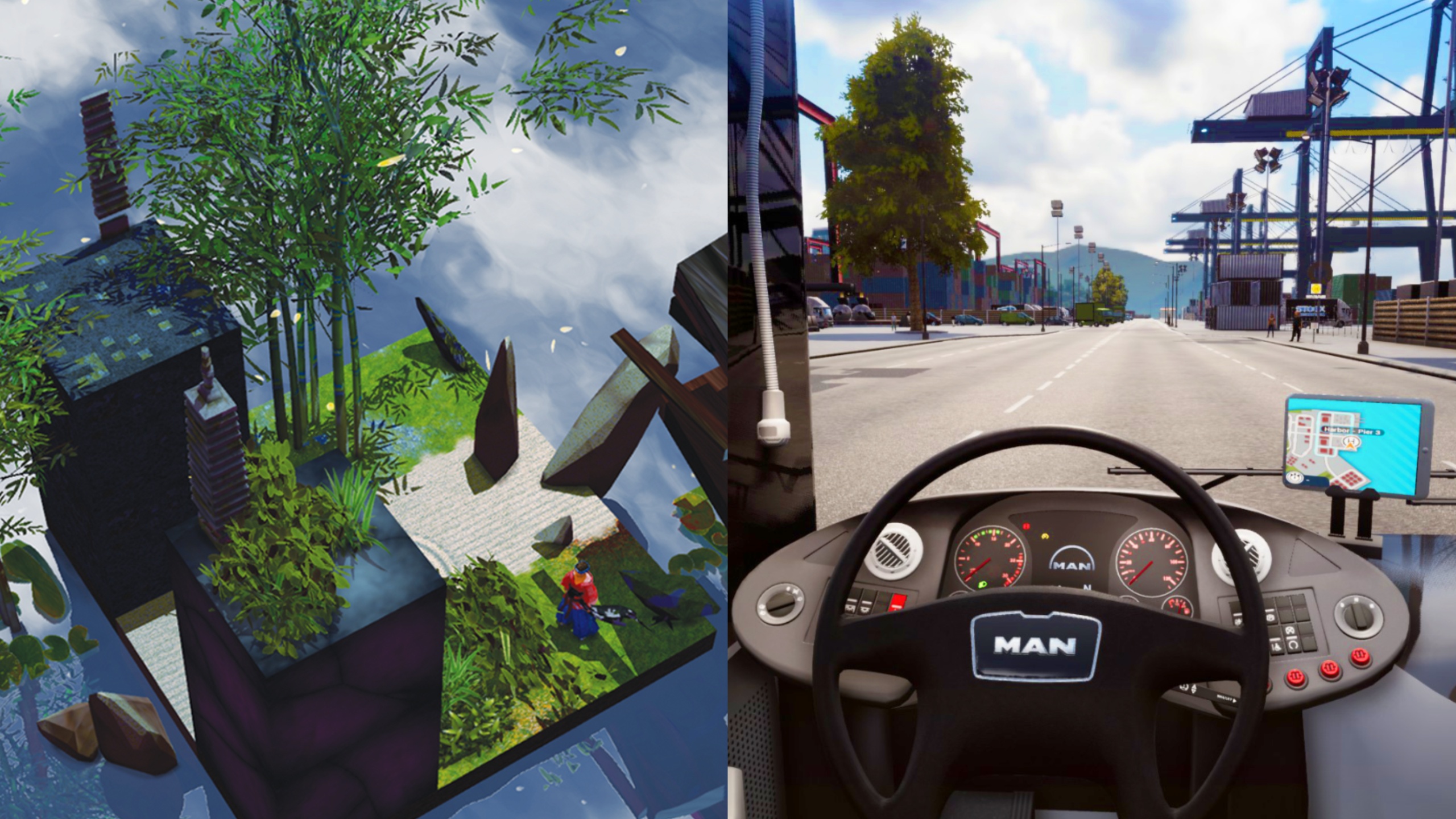
At first glance, 4D video games may sound simple. Just 3D taken to the next level. While that isn’t technically wrong, it doesn’t exactly paint the whole picture. In reality, 4D gaming isn’t straightforward. It’s actually a bit of a chameleon, used to describe two very different ideas. Yes, that “fourth dimension” can mean two different things.
But before any of that, let’s first address a common misconception (arguably). People often say that time is the fourth dimension. If you’ll base it on science, that’s true. But in gaming? Not exactly. It’s a long shot. Take this, for example. If time alone made a game 4D, then almost every game ever made would qualify. Time manipulation alone isn’t enough to market a game as 4D. And if developers do so, players would likely view it as a gimmick or a misunderstanding of the terminology. Either way isn’t good.
Now that’s out of the way, let’s get down to business.
In the more common definition, 4D gaming is rooted in extended physical immersion. It focuses on adding physical effects, such as vibrations, motion, and environmental elements, using hardware. So, instead of bending space, these games would make you feel the game world physically through sensory experiences. You would often find these types of games at specialized VR environments or high-end arcade setups.
On the other hand, the second meaning says that 4D refers to a fourth spatial dimension. This creates a type of space that humans are not naturally capable of visualizing. More specifically, these types of 4D video games allow you to interact with a world that extends in a direction you cannot directly see. In other words, you’re not just moving forward or backward. The result? Objects appear, disappear, or change shape. It sounds complicated, because it is.
How 4D Gaming Works
So, how do 4D video games actually work in practice?
For sensory-based games, hardware matters more than math. This includes haptic feedback for advanced tactile sensations, auditory immersion to hear specific sounds, dynamic environments to simulate the in-game environment, olfactory simulation to emit scents that match what’s happening in the game, and interactive setups to simulate game movements.
In spatial games, the trick is showing players a 3D slice of a 4D world. That’s why when you move or rotate in these games, a wall might suddenly vanish, a path may appear out of thin air, or an object might morph unexpectedly. You’re basically shifting perspective.
Even with the differences, both types of 4D gaming aim to enhance immersion more than traditional 2D and 3D gaming.
Popular 4D Video Games
While still niche, a few titles have explored the concept of 4D in games. Take a look at some of the examples below.
- Spatial 4D Games – From moving through exploring four spatial dimensions and interacting with shapes to navigating curved and non-Euclidean spaces, games like Miegakure, 4D Toys, Hyperbolica are basically brain-melting in a good way.
- Sensory 4D Games – Through virtual reality systems with motion tracking, advanced controllers, and simulation rigs, games like The Lost Foxfire, Half-Life: Alyx, and Gran Turismo 7 blur the line between playing and physically experiencing a game.
Benefits of 4D Video Games
You’re probably asking. If 2D games and 3D games already work just fine, why should we pay attention to 4D video games? Well, there are a few notable reasons to give them a chance. For instance, 4D gaming expands how gamers think, delivers unique gameplay, and enhances immersion. At the same time, these types of games feature elements that improve realism and trigger emotional engagement. Above all, it pushes game design forward. And let’s admit it, everyone benefits from that.
How 4D Gaming is Changing Game Design
The rise of 4D video games not only affects players. It also directly influences game design or game creation as a whole. In more detail, it changes how developers think about space, movement, and player interaction. With 4D concepts, traditional mechanics will be challenged by shifting perspectives, hidden spaces, and physical elements. To put it simply, 4D gaming can foster more immersive and experimental game design.
Frequently Asked Questions
Q1: Are 4D video games really four-dimensional?
Answer: Honestly, not in the literal sense. Humans cannot fully perceive true four-dimensional space. People are basically hard-wired to perceive three-dimensional space at best. For that reason, 4D gaming simulates it using design techniques. Some projects turn a 4D world into a 3D view, while others use physical effects to deliver a higher level of immersion.
Q2: Do you need special equipment to play 4D video games?
Answer: Well, it depends on the type of 4D video games you’re going to play. In particular, a standard device can usually be enough to play spatial 4D video games. But those sensory-based ones may require additional hardware setups to fully experience the effects.
Q3: How do 4D video games affect game design?
Answer: 4D gaming can influence how game designers approach ideation and creating games in general. It can push them to make the experience more dynamic and to think of fresh gameplays that require players to rely on more than reflexes.
Final Thoughts
As of now, these two niche areas of 4D gaming are not yet a major segment in the gaming industry. They’re still largely experimental. But it’s safe to say they’re not just a trend that would suddenly go out of style. You could even argue that they’re a sign of where gaming is headed.
With 4D gaming getting introduced to players, games would no longer be confined to fixed, predictable spaces. They now make players active participants in interpreting reality. In that sense, 4D video games are already changing modern game design.
The evolution of game creation will go beyond providing better graphics. You might even see a significant pivot into expanding what a “game world” can be. As 4D concepts continue to emerge, they will redefine how time, space, and interaction come together to shape the future of gaming.

