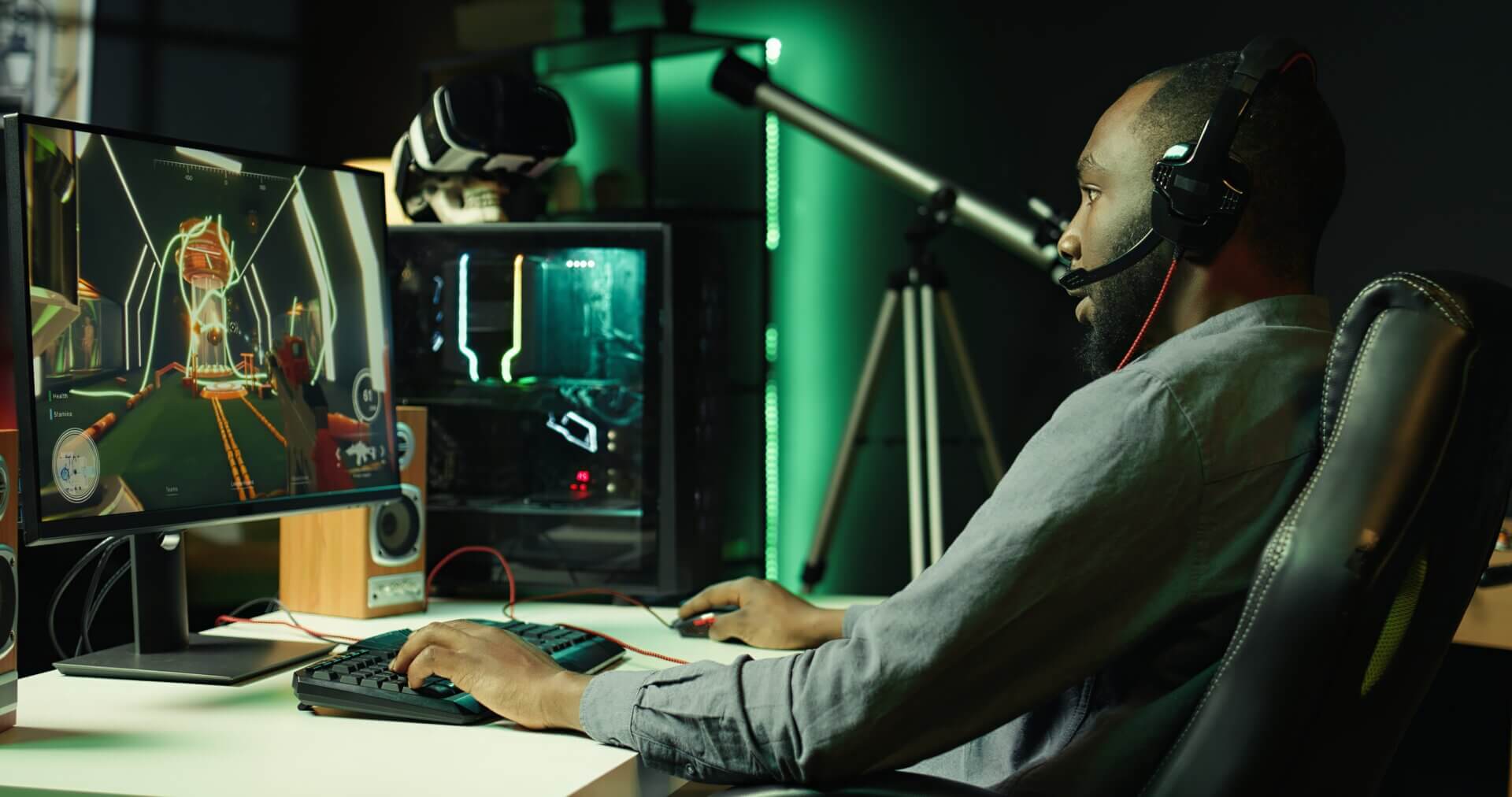
Professional game designers, whether at indie or AAA studios, will always have game design tips for beginners. It’s because designing video games is often considered a tough career. They know that translating ideas into well-structured systems alone makes it a very challenging path. That’s why many of them have already developed several common tips that would certainly help newcomers boost their creativity and improve their projects.
Game design is more than creativity. It also entails making decisions under constraints, including pacing, usability, technical limitations, and player behavior. With the help of proven game design tips, designers can make a mechanic not only look interesting on paper but also be impactful in actual gameplay.
Game Design Tips to Enhance Game Projects
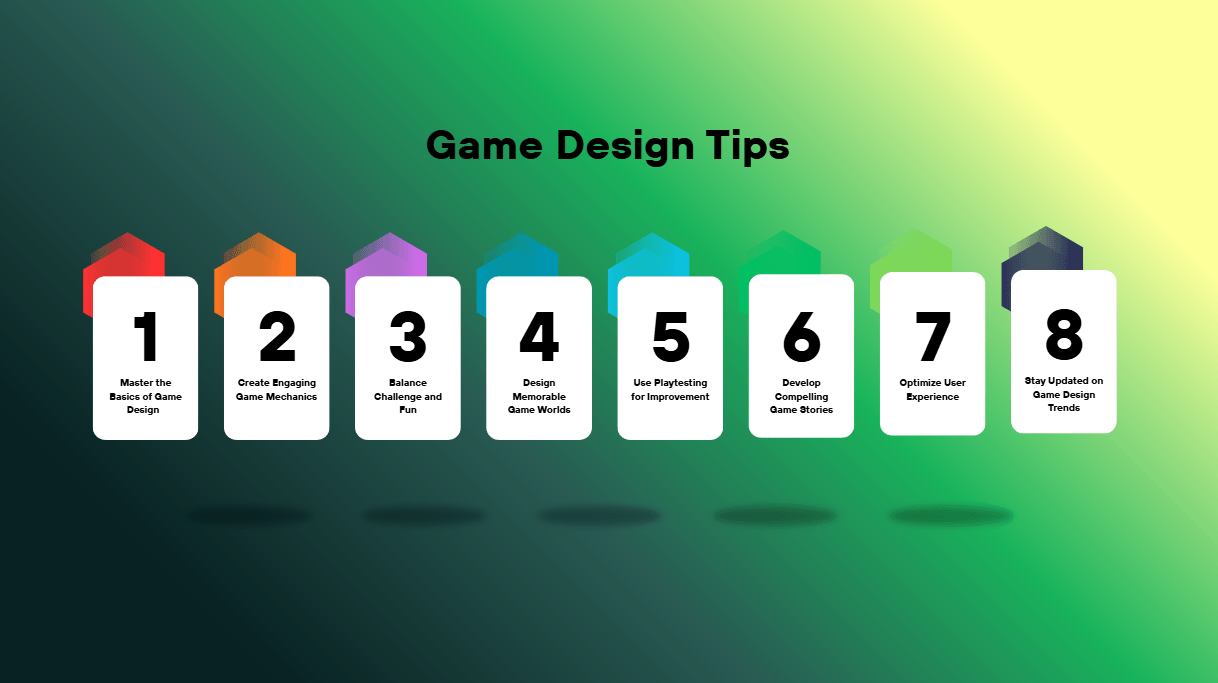
In popular game companies like Bethesda Game Studios or Supergiant Games, every decision is refined through structured game design principles. Such an approach shapes everything from core mechanics to user experience. That said, the following game design tips will break down how professional game designers manage systems, mechanics, storytelling, and iteration to build more engaging game projects.
1. Master the Basics of Game Design
Nobody starts as an expert. So begin with the fundamentals, such as how games function as systems. This includes core elements like mechanics, goals and objectives, feedback mechanisms, progression systems, and more. Game designers who skip the basics often get overwhelmed, frustrated, or struggle to build systems that connect and create cohesive experiences.
- Key Example: In Pac-Man, the core system relies on a very simple feedback loop: eat dots while avoiding the ghosts. When the game is examined, it doesn’t add complex new mechanics to scale the difficulty. It builds systemic depth by giving each enemy a unique behavior that heightens through speed.
The design of this game shows how mastering the basics enables designers to scale complexity through pacing and system interaction, not just blindly adding more features.
2. Create Engaging Game Mechanics
One of the most useful game design tips for improving games is designing a strong mechanic that creates interesting decisions. Game mechanics define what players actually do within a game. And engaging ones are built around interaction, feedback, and meaningful choice. In other words, mechanics should affect gameplay outcomes.
- Key Example: The 2012 game Dishonored showcases this through its teleportation mechanic called Blink. This ability is more than a tool for getting from point A to point B. The physics and momentum of teleporting over short distances interact with the game’s gravity and stealth systems, allowing players to approach every scenario in various ways.
In game design, well-designed mechanics reduce reliance on excessive content. The depth of mechanics alone can allow players to generate their own experiences, boosting replayability.
3. Balance Challenge and Fun
An effective video game puts a player in a flow state, the moment when they are in the zone while playing. One way to achieve this is by ensuring the game is neither too easy nor too difficult for a player’s capabilities. Designers have to tune enemy behavior, resource availability, and failure conditions to keep players engaged without being bored or frustrated.
- Key Example: Hades balances brutal roguelike difficulty by tying failure to the game’s core progression system. Unlike traditional roguelikes, death here returns players to a vibrant hub world where they discover new insights into the world’s lore, making every death feel rewarding rather than frustrating failure.
Preventing frustration spikes can help designers prevent players from abandoning their game. With a balanced level of difficulty, players remain motivated to play more despite losing at times.
4. Design Memorable Game Worlds
Among the game design tips, world design stands out. Why? Because game worlds are not just visual environments. They communicate tone, story, and gameplay expectations. In turn, this shapes how players explore and engage with the game. Keep in mind that a memorable world supports player navigation and reinforces the game’s identity through environmental design.
- Key Example: Brilliant environmental architecture is evident in the survival game Subnautica. Without relying heavily on constant objective markers, the game can guide players through underwater exploration by adding environmental cues (e.g., terrifying trenches as high-risk areas, thermal vents as downward directional guides).
Strong game-world design reduces reliance on tutorials and heavy UI guidance, encouraging exploration and player-driven discovery rather than instruction.
5. Use Playtesting for Improvement
On average, it takes three months to a few years to complete a game project, which entails extensive work by game designers and developers. But this constant exposure to the game can lead to game dev blindness, a phenomenon where too much immersion obscures a designer’s perception of the game’s overall quality. That makes playtesting crucial. It helps identify issues that are overlooked or not visible during the creation process.
- Key Example: During Half-Life: Alyx‘s playtest, players grew fidgety during the long intro. Admitting that it couldn’t have been predicted before playtesting, the game designers then decided to shorten the choreographed scenes to prevent players from losing focus and interest.
In real-world workflows, playtesting drives iteration. It helps studios identify broken components and refine systems before they scale into full production.
6. Develop Compelling Game Stories
One of the most overlooked game design tips is effective storytelling through the integration of narrative into gameplay. Remember, games that rely on emotional engagement can feel pointless without an accompanying narrative, even with top-tier mechanics and visuals. A strong story supports player motivation and gives context to in-game actions.
- Key Example: Reviews of the first-person exploration video game What Remains of Edith Finch commonly applaud its seamless interweaving of gameplay and narrative. Each family member’s tragic story is told through a completely different mechanical interface, making the gameplay itself the primary storytelling device.
Integrating story with mechanics increases player investment. It makes gameplay feel purposeful rather than repetitive.
7. Optimize User Experience
A major factor in any game’s success is how satisfied players are with the user experience. That means ensuring that the game feels intuitive and responsive. This includes controls, interface clarity, and feedback systems. All of which helps players understand what is happening at any moment in the game.
- Key Example: Dark Souls handles a dense interface by anchoring all critical survival feedback directly alongside the player’s focus point. Using color-coded stamina bars, players can easily track their physical limits mid-combat without ever needing to look away from the enemy.
To ensure players don’t struggle with controls or interface issues, it’s vital to design a logical UX that reduces confusion and improves responsiveness. This affects the game’s perceived quality.
8. Stay Updated on Game Design Trends
Among game design tips, keeping track of current trends in the field helps designers adopt effective systems. As a result, one can remain competitive in the industry and meet the expectations of emerging players.
- Key Example: Helldivers 2’s Galactic War feature reflects contemporary game industry trends by combining cooperative shooter gameplay with ongoing live-service content and community-driven progression systems. It enables community participation to influence the game’s ongoing conflict.
With the continuous evolution of the game industry and player standards, understanding the trends can help game designers leverage relevant features to improve innovation and long-term player engagement.
Final Thoughts
In game design, sophisticated mechanics or more features don’t necessarily mean better. Game designers should focus on making informed design decisions within systems.
This is evident in how Arrowhead Game Studios designed Helldivers 2. In particular, the friendly fire mechanic forces players to actively think, adding a complex layer to the gameplay. By following a set of rules, the designers focused on how mechanics like this interact within the broader system to create meaningful gameplay experiences.
By applying these game design tips, designers can turn ideas into cohesive systems that perform well in real-world development.

