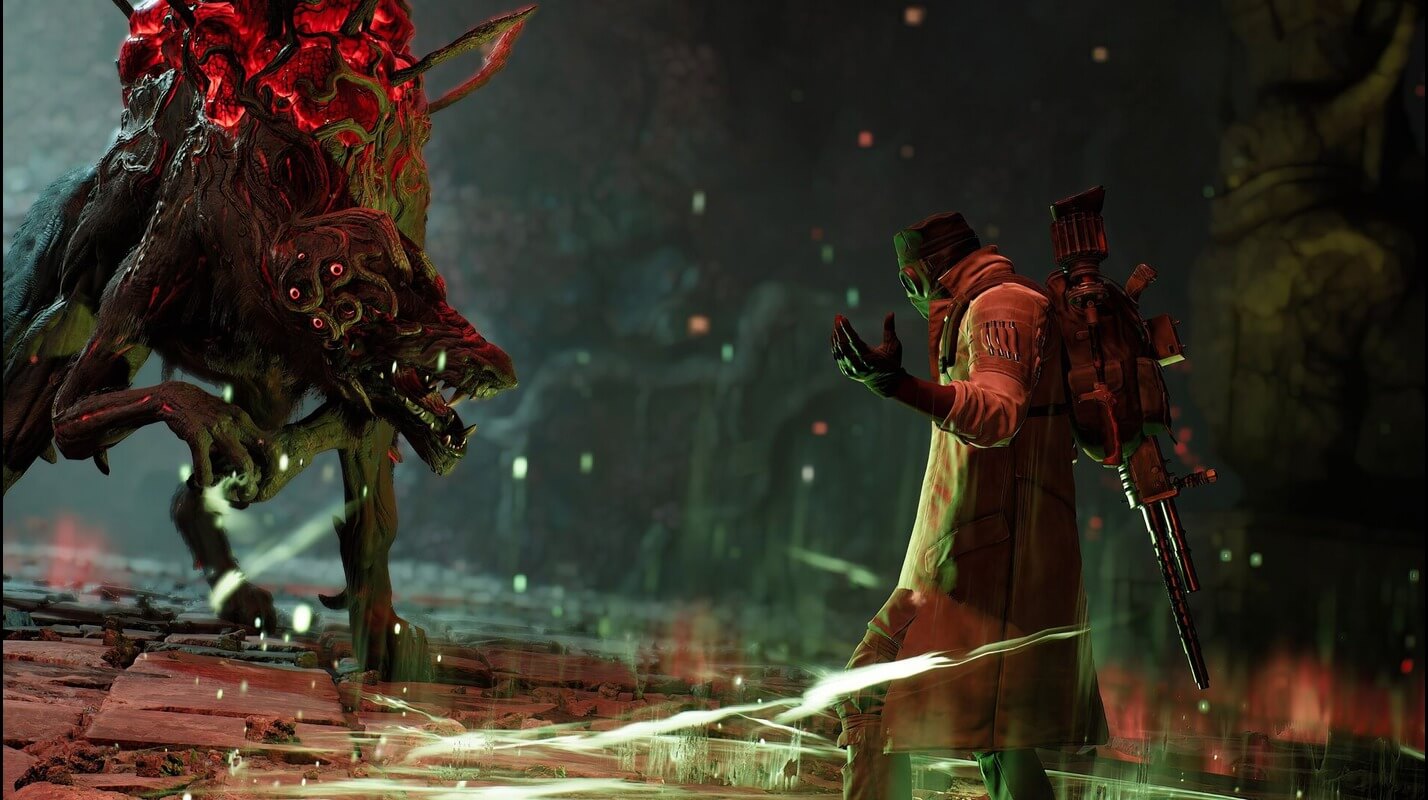
Soulslike titles are on the rise following the success of Dark Souls, establishing its influence on modern action role-playing games and the video game industry itself. While they’re known for their extreme difficulty, there’s more to this genre than its unforgiving gameplay. A true soulslike is a balance of combat, consequence and environment.
Strategic Stamina and Combat Systems
Soulslike combat typically operates as a strict resource management test. Stamina is a universal currency. Attacking, evading and blocking all draw from the same limited pool, which forces players to calculate every move.
Consider a player facing a formidable enemy. Spamming attacks drains the stamina bar. It leaves the character unable to dodge an impending counterattack, resulting in an immediate, harsh punishment. This systemic design penalizes reckless play and forces players to learn enemy behaviors, telegraphs and animation timings. Combat rewards strategizing over button-mashing in a soulslike game.
A few modern games feature similar mechanics, like dodge rolls, without the accompanying mechanical depth. Soulslike’s popularity has also led to frequent mislabeling in the industry. Some developers are even pushing back against the term’s overuse.
Consider Silent Hill producer Motoi Okamoto rebuffing claims that Silent Hill f is a Soulslike. “This is one of the things that we see — the term soulslike — being thrown around on the internet quite a bit. And I think it’s a label that’s a little bit disingenuous. Modern players will see like, oh, there’s a stamina meter, there’s a dodge, and they’re like, ‘Okay, it’s a soulslike.’”
The difference lies in the results. A genuine soulslike requires combat mechanics to be intrinsically tied to severe consequences.
Death Consequences and Psychological Rewards
Soulslikes create a psychological loop of frustration and accomplishment. In many traditional action games, death is a checkpoint reset. In a soulslike game, death is a mandatory educational tool.
The stakes are always high, as dying often means dropping hard-to-find resources. Returning and getting past the site of death requires applied knowledge of the prior failure, which can create suffocating tension.
Soulslike developers deliberately balance this frustration with an intense emotional payoff. They target the dopamine release when a player finally succeeds against seemingly impossible odds. It’s a design philosophy that comes directly from the genre’s pioneers.
According to FromSoftware’s president Hidetaka Miyazaki, death gives meaning to the experience, which makes every venture more significant.
“I just want as many players as possible to experience the joy that comes from overcoming hardship,” Miyazaki shared. “We are always looking to improve, but, in our games specifically, hardship is what gives meaning to the experience. So it’s not something we’re willing to abandon at the moment. It’s our identity.”
Death’s consequences shift the player’s mindset from avoiding failure to embracing iteration. They turn grueling challenges into highly rewarding achievements.
Boss Design and the Community Experience
In a soulslike, boss fights test all the movement and resource management skills players have cultivated throughout the game. Difficulty parameters are fixed, which means there’s almost no room to bypass the battle.
Imagine a player finally defeating a notoriously difficult late-game boss after dozens of attempts. Because the encounter’s speed, damage output and attack patterns remain identical for everyone, they can share their triumph and the strategies they used with others. The unified difficulty fosters a powerful sense of camaraderie and collective problem-solving among fans.
“I think what connects Soulslike players is that they are all struggling in these games,” Valor Mortis game director Radosław Ratusznik shared. “If they manage to succeed in this game, they can share this experience with other players. And this is something that has a huge value I think for them, for this community.”
A soulslike audiovisual presentation elevates this shared emotional struggle. Boss encounters often rely on swelling scores and sound cues to build tension, turning fights into unforgettable theatrical experiences that resonate long after the credits roll.
The auditory reward of boss encounters is so impactful that the official Elden Ring Nightreign soundtrack includes 57 tracks and over three hours of original orchestral scores. It lets fans relive the terrible glory of the Nightlords’ wrath as often as they want, without the pressure to defeat the boss.
Environmental Storytelling and Interconnected Levels
In soulslikes, item descriptions, enemy placements and ruined architecture do the heavy lifting for world-building. Kiron Ramdewar, the head of PC and Console at Playstack, notes that soulslikes tell stories through the environment instead of relying on narrative exposition.
“The better Soulslikes have a sense of loneliness and overbearing struggle that almost oppresses the player – their world-building and atmosphere are just as important as their tight hitboxes or twisted enemy design,” Ramdewar shared. He notes that these games also had “a sense of mystery that is becoming rare nowadays.”
Soulslike design forces players to actively piece together the history of a ruined society through compelling and cinematic gameplay rather than passively consuming a linear plot. Any available map often functions as a primary narrative device.
The genre’s interconnected level design often facilitates rewarding gameplay shortcuts. It ensures every visual element serves a deliberate narrative purpose. This intricate mapping transforms progression from a simple A-to-B journey into a cycle of spatial discovery, making players feel like actual explorers uncovering forgotten secrets.
The soulslike genre has irrevocably altered modern game design by trusting the player’s patience and intelligence. A soulslike is an ecosystem. It combines stamina-gated combat, psychological rewards, thoughtfully crafted enemies and atmospheric mystery. It’s a formula that ensures every failure feels fair, and every victory feels profoundly earned.

