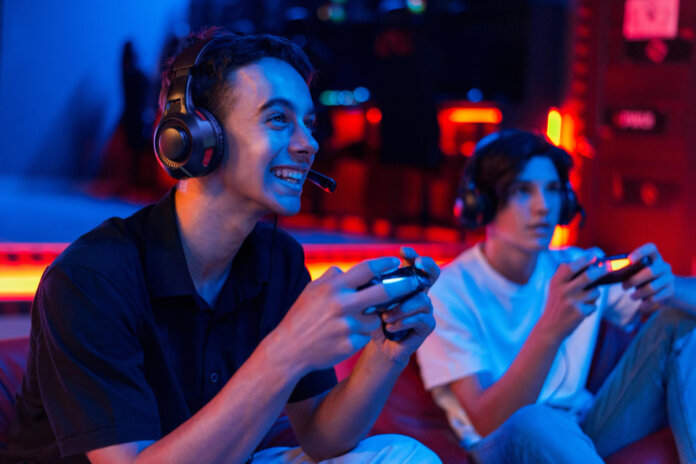
Think about the last time an app congratulated you for a weekly streak, or you earned a shiny badge just for moving money into savings. You get a little jolt of satisfaction, right? That’s gamification, once the special sauce of video game designers, now seeping into almost every part of our daily routines.
The mechanics that kept us hooked on Mario and Tetris are now driving how we approach fitness, personal finance and even learning Spanish. What started as pixels and play has grown into a movement quietly transforming how entire industries talk to us, and how we respond.
The best part? Most of us barely notice it happening. We open our phones and, before long, chasing points and unlocking levels starts to feel totally normal. And that’s the point, the lines between work, life and play have started to blur.
The heart of gamification
Under all the buzzwords, gamification is really just about sprinkling game elements; points, progress bars, leaderboards and challenges, onto things that aren’t games at all. But it’s not just for show. Good design goes much deeper. It’s about motivation, that itch for achievement and competition, the payoff of hitting “next level” in whatever you’re actually doing.
Game designers have spent decades perfecting ways to keep people deeply engaged, and now everyone wants a piece of that action. The secret is in harnessing what psychologists call “intrinsic motivation.” When you’re learning or working or saving, and it feels like play, you’re more likely to stick with it. You’re not forced; you want to keep going.
How games sneak into the real world
Game designers have always been pretty genius at drawing us in. They build worlds where you get just enough rewards to keep going, challenges to overcome and constant feedback on how you’re doing. Now these tricks have gone mainstream. Fitness apps, productivity tools or digital classrooms, they’re all borrowing mechanics that used to be exclusive to PlayStations and PCs.
Consider progression. Video games drip-feed small victories so you feel like you’re always advancing. Fitbits and running apps do that too: Those steps don’t just count, they add up to new badges, virtual fireworks or beating your friends on a leaderboard. Suddenly the morning jog isn’t just exercise; you’re on a mission.
Gamification is everywhere
Online casinos: Gamification feels native
When it comes to gamification, online casinos really set the standard. It’s like the whole industry was made for this stuff. These platforms have always been about fun, progress and reward, but lately, they’ve stepped up their game. Instead of just tossing out slot games or card tables, they’ve turned gambling into something bigger.
What’s wild is how much platforms shape the experience now. Platforms uses experts to test out various operators, to help create overviews of the best online casino operators, based on certain elements. Such elements could for example be slots with highest RTP, casinos with live features, casinos with sports betting offers, etc.
Education: School’s in and it’s fun
Education, long plagued by boring textbooks and disengaged students, has embraced gamification like a lifeline. Digital learning platforms offer points for correct answers, badges for completed modules and even friendly leaderboards. Suddenly, learning isn’t just about grinding through assignments, it’s about scoring wins and tracking your progress.
The best part about gamified learning? Instant feedback. Like in video games, you know right away when you’re getting things right, and it makes you want to keep improving. Studying goes from a chore to a challenge you can win.
Fitness: Every step counts
If you’ve ever been held hostage by your daily step goal, you’ve witnessed gamification at its finest. Fitness apps obsessively track your steps, your workout streaks and your calorie burn. And every milestone gets you a new badge, a virtual pat on the back or maybe even bragging rights with friends.
Narrative elements are cropping up, too. Apps turn jogging into story-driven quests. You’re no longer just running, you’re escaping zombies or unlocking new adventures. And once you build a streak, breaking it feels like a betrayal, you keep going just to see what happens next.
A cultural shift as games are for everyone
This whole gamification trend wouldn’t be possible if gaming weren’t absolutely everywhere now. A couple decades ago, “gamer” mostly meant young guys in dark rooms. Not anymore. These days, it’s parents squeezing in a round on a phone after dinner, busy professionals battling stress with a puzzle game on their lunch break, or entire families setting up Mario Kart tournaments in their living rooms.
You can spot it in the way we talk, too. “Level up”, “unlock achievement” or “boss battle”, that’s regular conversation now. Companies lean on this shared language because it feels familiar, even comforting.
Why gamification actually works
Games reel us in because they’re designed to. They give us clear goals, regular rewards and a sense of making progress, stuff we all crave in life. When these elements show up in other parts of our world, it gets easier to stick to routines, master new skills or even save money.
People aren’t fueled by external rewards alone. The best implementations trigger that internal sense of “heck yes, I did it”. But gamification isn’t magic. Poorly designed systems can come off as cheesy or manipulative. It only works when the game-like rewards fit what you’re actually trying to do.

