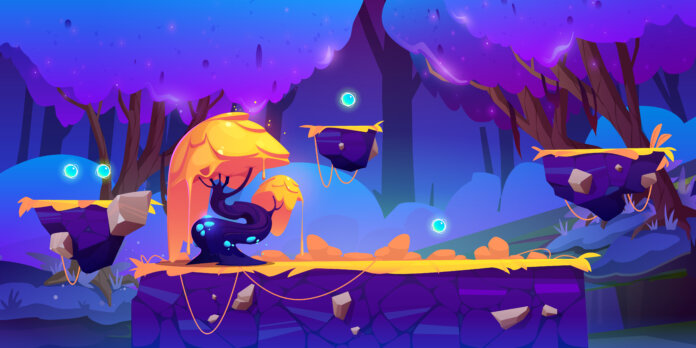
Education is changing, but not in the loud, disruptive way people often expect. There are no flashing screens replacing teachers overnight, no classrooms turning into arcades. Instead, the shift is subtle. It happens in how lessons are structured, how progress is measured, and how students experience challenge. At the center of this shift sits an unlikely influence: game design.
The connection between education and games is often misunderstood. Many assume it starts and ends with points, badges, or leaderboards. In reality, the influence runs much deeper. It reshapes how learning is paced, how mistakes are handled, and how motivation is sustained over time.
This idea surfaced for me during a conversation about academic pressure and creative thinking, where DoMyEssay essay writer no AI appeared side by side in a discussion about authenticity and structure. The mention was brief, but the implication was striking. Whether someone is designing a game, writing an essay, or building a curriculum, the same principle applies: people perform better when systems guide them instead of judging them.
Game design understands this instinctively. Education is only now catching up.
Why Traditional Education Struggles With Engagement
Most educational systems were designed for efficiency, not experience. Lessons are delivered in batches. Assessments arrive at fixed intervals. Progress is measured with grades that summarize weeks or months of work into a single number.
From a design perspective, this is risky. Feedback arrives too late. Objectives are often vague. Failure feels final rather than informative.
Games operate under the opposite logic. They break complex goals into manageable steps. They provide immediate feedback. They treat failure as part of the process, not a verdict on ability.
This difference explains why students who feel disengaged in classrooms can spend hours solving complex problems in games. The issue is not attention span. It is structure.
Learning as a Playable System
Game designers do not ask players to master everything at once. They introduce mechanics gradually. Each challenge builds on the previous one. Progress is visible, and effort is rewarded with new opportunities rather than judgment.
When this mindset enters education, learning becomes a system instead of a performance.
Instead of asking students to prove knowledge in a single high-stakes exam, game-inspired learning environments allow students to demonstrate understanding repeatedly, in different contexts. Knowledge becomes something you use, not something you display once and forget.
This approach changes behavior. Students experiment more. They ask better questions. They persist longer because the system expects growth, not perfection.
Motivation Is Not a Personality Trait
One of the most damaging myths in education is the idea that motivation is something students either have or lack. Game design rejects this entirely.
In games, motivation is designed. Clear goals, achievable challenges, autonomy, and meaningful feedback create engagement naturally. Players are not told to care. They are placed in systems that make caring inevitable.
When educational environments adopt these principles, motivation becomes less fragile. Students know what they are working toward. They see progress. They understand why effort matters.
This does not mean learning becomes easy. Games are often difficult. The difference is that difficulty feels purposeful rather than arbitrary.
The Power of Immediate Feedback
Feedback is where game design truly outperforms traditional education. In games, feedback is constant. Every action produces a response. Players adjust in real time.
In many classrooms, feedback arrives weeks later. By then, the emotional connection to the work is gone. The learning moment has passed.
Game-informed education shortens this loop. Quizzes respond instantly. Simulations show consequences immediately. Digital platforms track skill development over time.
Mistakes stop being embarrassing and start being useful. Students learn faster because they are allowed to fail safely.
Storytelling as a Learning Tool
Games rarely present information in isolation. They embed knowledge inside stories, challenges, and decisions. This narrative structure makes information memorable.
Education benefits enormously from this approach. When lessons are framed as problems to solve rather than facts to absorb, students engage more deeply. History becomes a sequence of decisions. Science becomes a system with cause and effect. Ethics becomes a set of dilemmas rather than abstract rules.
Stories provide context, and context creates meaning. Meaning improves retention.
This is not about turning lessons into entertainment. It is about respecting how humans process information.
Skill Development Over Memorization
One of the strongest arguments for integrating game design into education is its focus on transferable skills. Games teach players how to think, not just what to know.
Players learn problem-solving, pattern recognition, collaboration, and resilience. These skills extend far beyond the game environment.
Educational systems influenced by game design prioritize application over recall. Students demonstrate understanding by using knowledge in new situations, not by repeating it under pressure.
This prepares learners for real-world complexity, where problems rarely come with clear instructions or single correct answers.
Higher Education Is Already Adapting
Universities are increasingly experimenting with game-based frameworks, especially in technical and professional fields. Simulations are used in medicine, engineering, and economics. Role-based scenarios teach leadership and ethics. Virtual labs reduce costs while expanding access.
These tools do not replace educators. They enhance instruction by handling repetition and feedback, freeing teachers to focus on mentorship and discussion.
When students arrive engaged and prepared, teaching becomes more effective.
Psychological Safety Changes Everything
Play creates psychological safety. It allows people to explore without fear of embarrassment. In games, failure is expected. In classrooms, it is often punished.
Game-informed education reframes failure as feedback. This shift reduces anxiety and increases participation. Students take intellectual risks because the system supports recovery.
This does not lower standards. It raises them. Students persist longer when they believe improvement is possible.
Designing Education for a Changing World
The modern world rewards adaptability more than memorization. Careers evolve quickly. Tools change. Information becomes outdated.
Game design embraces change. It teaches players how to learn systems, not just follow instructions.
When education adopts this mindset, students stop asking whether something will be tested and start asking how it works. That curiosity is the foundation of lifelong learning.
Where Education and Game Design Truly Meet
The future of education is not about making learning flashy. It is about making it humane.
Game design succeeds because it respects human behavior. It anticipates frustration. It guides progress. It rewards effort.
When education borrows these principles thoughtfully, learning becomes something students participate in rather than endure.
The classroom does not need to look like a game. It needs to think like one.
And when it does, education stops being a system of judgment and becomes a system of growth.

