Home Blog Page 24

Minimum Viable Product: What Does MVP in Gaming Mean?

0

Software for Game Designing
If you’re at all like me, you wanted to develop your own game when you got older.

Obviously, when the time came, I learned it was much more complicated than just having a vivid imagination.

Although a necessary part, you need to know programming, design, and how to use software for game designing, and a wide knowledge of various technologies.

Along with these, you also need to know how to build something called the minimum viable product.

Basically, this means seeing if your game would actually have an audience, rather than just releasing it and hoping for the best.

Teaser for Silent Hill Was Used for Market Research

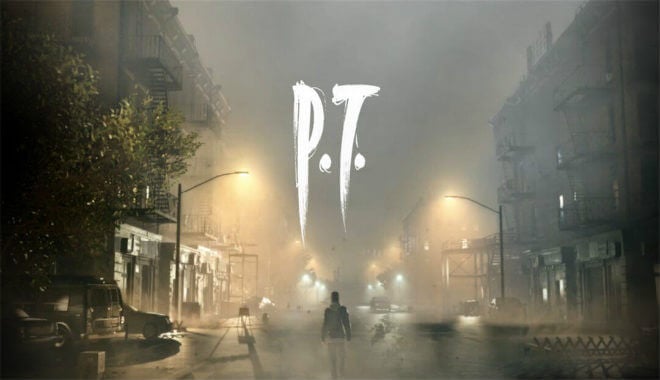
Playable Teaser Silent Hills
Back in 2014, PlayStation players were treated to a truly horrifying experience.

Repeated walks through an increasingly dangerous and chilling hallway in a house filled gamers with dread and fear.

This turned out to be P.T., or playable teaser, for the future game Silent Hills.

Unfortunately for Silent Hill and horror fans, Silent Hills was scrapped after Hideo Kojima’s rift with Konami and the controversial development of Metal Gear Solid V: The Phantom Pain.

Movie director Guillermo del Toro and Kojima would go on to take this concept from P.T. and apply it to the upcoming, extremely bizarre, Death Stranding.

Not only was P.T. insanely frightening, but it also served a market research purpose.

Walking through the darkened rooms, awaiting jump scares and other nameless terrors allowed Konami, Kojima, and del Toro to see if there was potential interest in their project.

By releasing a playable teaser, they tested the waters of the consumers to see if players were ready to delve into a much darker Silent Hill universe.

The reception was amazing, and when it was canceled around 2015, the press was extremely negative.

This teaser was breathtakingly polished, promising, and most importantly, scary. To me, it was an unfortunate and sad development of such a promising idea.

However, P.T. has made me excited for Kojima’s Death Stranding, and still tests to see if there’s a market for an ambitious, bizarre horror title from him.

Pink Hour- an MVP used to create buzz for Kero Blaster

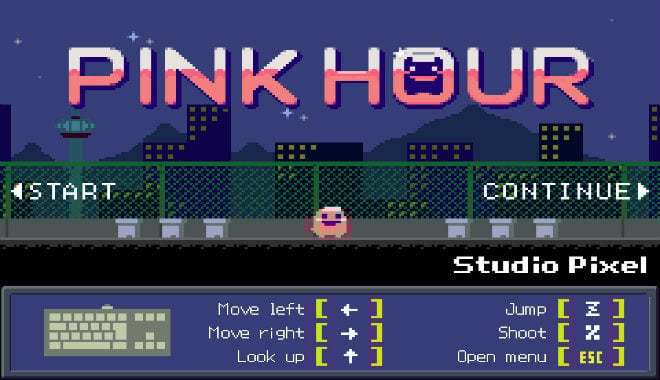
Pink Hour was another mini MVP, it being a prologue to a game called Kero Blaster.

Pink Hour was released about a month before Kero Blaster. This helped create buzz for and interest among gamers and served as a way to confirm that the game was on the right path.

Focusing on the Why


In an article written by Multidots for the website Hacker Noon, they outline extremely important underlying factors to a successful MVP.

They ask very pertinent and thought-provoking questions:

  • Who will be the target audience?
  • Why should people care?
  • What do you want users to do?

These are ideal and thought-provoking questions. Let’s examine them closer using the P.T. example.

Who will be the target audience?

In P.T.’s case, the target was mostly, I believe, horror fans or those that want to be scared.

Of course, the Silent Hill fandom was the most pertinent audience, but Kojima and del Toro had to find the broader scope while keeping the base.

The tension, puzzles, and ambiance were enough to attract a wide swath of gamers. Along with that, all PlayStation 4 users were able to download it.

If we want to extend this further, we could look at Minecraft.

The wide accessibility and creativity were its greatest assets. Everyone in the gaming community could connect to this simplistic yet complex game.

Why should people care?

This is arguably the most important factor. This is basically your mission statement for your game. Why should people care about P.T. or Silent Hills?

You could come up with a plethora of reasons. Silent Hill fans will be happy, the franchise will evolve with the hardware, and a new direction will add more significant narratives and points of view.

What do you want users to do?

In P.T.’s case, users were corralled in a haunted house, being forced to traverse a single hallway over and over, changing to the environment every time the player would open a door into this hellish world.

The developers outlined all of the aims of the player very clearly in terms of progression, leading the player with a loose but guiding hand. They had the users do exactly as they intended.

Basically, to create a robust and polished product, you need to keep your ear to the ground, connect with potential fans and gamers who you’re aiming your product.

If you can create an MVP, and do all of these things, you could potentially make a hit game.

Eric Ries, entrepreneur and author of “The Lean Startup”, explains the importance of MVP’s and continues learning:

When is the Right Time to Ask for Gamers’ Feedback?

Besides the two examples mentioned above, a minimum viable product is a sweet spot between finding what doesn’t work in game design and releasing a satisfying final product.

You could release a polished, but overall subpar game to disappointing reviews and just go back to the drawing board.

Or, you could develop an MVP and test the waters of the gaming community.

This allows gamers to get a taste of what you offer, with you safely behind the release deadline and allowing you to tweak your game based on user feedback.

Using Layer Feedback

When you make a game, you want to like it. You need to like it. It’s like a baby to you. We get it. The thing about games is…well…it isn’t enough for you to like it. You need other people to like it too. That’s the point, right? Designing games is all about executing your vision and bringing joy to others through that execution.

Even though it’s hard to share your work with others, eventually you will have to release it to the world. Why not bring players into the fold early? Player feedback and testing can be invaluable when you’re still in a position to make changes. Even AAA games do this, think about the Titanfall 2 Multiplayer test that took place a couple of months ago.

Intention is Everything

Consider your intent when making a game. If you’re waist-deep in the design process, you should have a clear idea of the finished product that you’re heading towards. On the most basic level, you want to make a game that’s fun to play.

That gives you a lot of wiggle room. Crossy Road is fun. Battlefield 1 is fun, too. Those games are completely different experiences (obviously).

We are using extremely polarized examples to illustrate the point; the intention behind these games was different from the onset. It’s important to keep your vision at the center of your efforts for the entire design process.

If you’re going to use player feedback (and you should), you need to make sure you find players that understand your intent. You need to cultivate a group of players that are giving feedback based on your vision.

To go back to our polarized game example, if you have Crossy Road lovers playing Battlefield 1 hoping for Crossy Road, you’re going to get some very bad advice.

If you get Battlefield 1 players playing Crossy Road hoping for Battlefield 1, you’re going to get terrible advice. You need players that understand your intent, understand your decisions, and can give you feedback on your decisions from a player standpoint.

Ignoring Good Ideas

Bad ideas are easy to ignore: “you should change the chicken to a German soldier and instead of just being able to jump you should be able to choose between a wealth of World War weapons and instead of the game being single-player, the game should be able to support 64 players playing simultaneously at once.”

That’s obviously not good advice for a game like Crossy Road.

If players have good ideas that don’t fit your vision, that’s when you have to put the critical thinking cap on. There’s nothing quite like an election year to remind everyone that people have strong opinions about…everything. Just because an opinionated person feels strongly about an idea doesn’t mean it’s the right idea for you and your game.

If you’re making a role-playing game, you might hear feedback like “you should make the combat more like Runescape” or “your loot system should be more like World of Warcraft.” If it doesn’t work for your game, ignore it.

It won’t be easy, but you can’t get bogged down by players trying to turn your game into something that already exists. Stay focused on your vision!

Use Feedback to Fix Issues

Anything you catch before releasing the game will be one less headache for you post-release. Using player feedback to identify the issues in the game can save you time down the line. Again, we aren’t talking about “Be more like Skyrim” feedback.

We’re talking about “My character gets stuck at this part” or “I can’t interact with this character at this part in the quest if I do X first.”

Having players give you feedback for debugging the game takes some pressure off you. Once early players can get through your game without issues, the masses can too.

You Can’t Please All the People All the Time

Despite your best efforts, you’ll have some people that love what you’re doing and others that won’t go near it with a ten-foot pole. If there’s one thing you’ll learn through game design, it’s that you just can’t please all the people all the time. So don’t try! Stick to your vision. Build an audience of gamers that understands your mission.

Learn to trust the players who get it, and ignore the ones that don’t understand what you’re going for. This won’t be easy. It’s better to have 100 fans who are crazy about your game than 1,000 fans who are lukewarm about your game, play it once, and forget about it before the week is out.

Rust and the Five-Year Idea Validation

Would the wildly popular Rust, developed by Garry’s Mod creators, have fared better as a solid release rather than a carefully looked after and tested product?

After all the years in development, I can safely say ‘no’.

Although I wanted Rust to release in full, I recognize that the full product would be absolutely underwhelming if the developers didn’t put it in early access, if they didn’t create a minimum viable product.

I was extremely impressed with the first build of Rust, and I think that the developers made a successful MVP or a product that attracts early potential buyers.

When I look back on the first build, however, you can really see the world of difference between the product in 2013 and that of the final product released in 2018.

That’s five years of listening to fans, tweaking bugs, and adding new features.

To make a successful MVP, a developer needs to avoid putting out a subpar preview. This could potentially trip up your product irrevocably.

Overall, there needs to be a perfect balance.

Godot Game Engine Review & Tutorials

0

godot game engine review and tutorials
Game engines are the framework around which game developers build the actual game around.

Of course, they all have their own unique build. For example, Grand Theft Auto V’s game engine, RAGE, is very different from the widely-used Unreal engine.

This gives a game its own particular look and feel. Some of your favorite games are sometimes recognizable due to their engine.

The above example, Grand Theft Auto, has insanely fun physics that wouldn’t be as memorable if Rockstar used a different setup.

Unreal and RAGE are great video game engines, but what about smaller ones; engines geared toward smaller game development companies? Let me introduce you to the Godot game engine.

Godot


Godot was developed in 2007 by two individuals, Juan ‘reduz’ Linietsky and Ariel ‘punto’ Manzur. One of their aims with Godot was to keep the project expanding, building increased features. Since 2014, Godot has been receiving periodical updates, and is currently on version 3.0, released in January 2018.

Licensed from the Massachusetts Institute of Technology, Godot is a free-to-use, open source, game engine. I was immediately drawn into their basic premise and mission:

Godot provides a huge set of common tools, so you can just focus on making your game without reinventing the wheel. Godot is completely free and open-source under the very permissive MIT license. No strings attached, no royalties, nothing. Your game is yours, down to the last line of engine code.

Godot promises unique nodes and extreme custom-built assets for someone designing their own game from the ground up. It promises:

Friendly content creation pipeline for artists, level designers, animators and everything in between.

This truly is a golden age for game development from the solo coder developing the next Stardew Valley, to a more advanced gaming studio. Not only that, but the platform diversity is truly impressive.

  • Windows
  • Linux
  • Mac
  • OS
  • Haiku
  • FreeBSD
  • OpenBSD

The sheer accessibility is a huge plus, especially if you were looking to release your product on Steam; players on every computer can access your product.

The good news for starving artists: Godot is free. It allows for download in:

  • 32-Bit
  • 64-Bit
  • 32-Bit C# Support
  • 64-Bit C# Support
  • Also, able to be downloaded on Steam

On the downloads page, Godot offers unparalleled support. You have immediate access to not only the huge list of developers but also the two developers. On top of that, the community is very active and supportive.

Good news for old users of Godot as well: they also give people access to former builds of the engine if you were more comfortable with the program before their 2018 update.

Godot can teach you how to make better games


This is all great, but how do you go about using Godot? We all want you to be able to bang out great games by utilizing every aspect of Godot, letting no part go to waste to make the best game you can make.

Here are some pointers and tutorials to help you through it.

Godot’s Website


Godot themselves offer an in-depth tutorial for their engine, starting at the very first steps of design, becoming familiar with the interface. Along with these main tenets of Godot’s design, there are subheadings that help you get down to the nitty-gritty of video game development. It’s honestly breathtaking. Here’s some of what it offers in the ‘Getting Started’ section alone:

  • Scenes and nodes
  • Instancing
  • Scripting
  • Your First Game (this section has a slew of options as well)
    • Project Setup
    • Player Scene
    • Enemy Scene
    • Main Scene
    • HUD
    • Finishing Up
  • Godot’s design philosophy

Every game engine is different and fits different needs. Not only do they offer a range of features, the design of each engine is unique. This leads to different workflows and different ways to form your games’ structures. This all stems from their respective design philosophies.

This page is here to help you understand how Godot works, starting with some of its core pillars. It is not a list of available features, nor is it an engine comparison. To know if any engine can be a good fit for your project, you need to try it out for yourself and understand its design and limitations.

They place a lot of significance on the impact of their community. They pride themselves on being community-driven and have a great forum in which you can interact with other Godot users for general discussion and technical help on your next project.

They tout over 500 contributors working on Godot, along with some full-time employees. It’s a labor of love, and has a great grassroots feel to it. Via the community, they also offer a few video tutorials to help.

This is why I believe that Godot’s own website is most likely the premier source of support and guidance in regard to learning Godot properly: right from the horse’s mouth.

GDquest


One of the tutorials that Godot offers developers is a channel called GDquest, run by a French gentleman named Nathan.

Become a better game designer with open source programs! Learn game programming, game art, and game design. Here, you’ll learn the techniques professionals use to create games.

That’s a perfect summation of GDquest’s goal. GDquest, specifically, has an unbelievable amount of video tutorials for Godot developers. They have nearly 20 videos on RPG turn-based combat, and 77 videos in the playlist ‘Godot 3 tutorials.’

In the RPG tutorial, I couldn’t stop watching, as I watched the basics of creating a turn-based RPG develop in real time. I recommend watching these well-made videos even if you’re not using Godot.

I found myself going down the YouTube rabbit hole with this one. Not only are they easily accessible videos, even for non-developers, but they involve beautiful artwork and creative designs in which someone could just watch normally. That’s something special.

Definitely check out GDquest. Here’s Nathan’s twitter account if you need to get in touch with him.

KidsCanCode


I really like this option. With most totaling in at 15 minutes per video, KidsCanCode show you everything in Godot. Not only that, but they put an emphasis on teaching younger coders on game development, something I particularly find admirable. I watched an in-depth video on making a Top-Down Tank Battle, and I loved it.

I think we all need more channels like this, which provide easy to use and interesting tutorials in which young, aspiring game developers can perhaps learn more hands-on techniques than they would in a class or in school.

I know when I wanted to develop games, I was only able to attend a game design camp that was lacking in what I really wanted to do. Nowadays, kids and adults can access great tutorials with a few clicks or tap of the fingers, something which I’m extremely grateful for.

Gamesfromscratch


Along with in-depth reviews and tutorials on different video game engines, Gamesfromscratch also offers an exclusive tutorial series on the 3.0 build of Godot. Narrated by a likable and positive host, the channel explores the ins and outs of the Godot engine.

I watched enraptured as this video displayed the basics of the newer build and saw as an RPG-like environment was built before my very eyes. Along with Godot videos, Gamesfromscratch offers interesting miscellaneous videos dealing with gaming engines and gaming in general.

My personal favorite is Materialize — An AMAZING Free Texture Map Generating Tool. Their mission is as follows:

We cover all things game development related, with a focus on tutorials. Game engines, art tools, programming languages, you name it, we will cover it. After doing text-based tutorials for several years we have started slowly making more video content.”

HeartBeast


HeartBeast is another useful YouTube channel dealing in game engines and gaming in general.

“Hi! Welcome to my channel. My name is Benjamin and I make GameMaker Studio Tutorials, Godot Engine Tutorials, and pixel art tutorials. If you want to learn to make games, you are in the right place!

Benjamin offers great info for game developers. With over 12 million views, Benjamin has built a great little channel to help you with Godot tutorials, as well as other engines.

His handling of Godot is exceptional, starting with the very basics, and slowly going over every detail so you know exactly what you are getting into. His first video is 23 minutes long, and although this may scare away some impatient viewers, Benjamin puts in great care to show first-time users what to expect when planning their projects.

Definitely check out Benjamin if you haven’t already downloaded Godot, (which you should have!), to get a greater feel for the engine.

Strengths of Godot


Accessibility: the effort it takes to start using Godot is to simply press the download button on their website.

Community: The Godot community is a great resource for your developer’s needs. A positive group of individuals awaits you to talk about games, code, and the engine. The sheer number of developers should make you feel right at home.

Versatility: I love the fact that you can code in 2D and 3D. The option for a robust cross-platform model is also a plus. This grants inclusion within the gaming community and should inspire developers to reach out to a larger audience.

Tutorials: The tutorials themselves are very in-depth. Having them as strength is such a positive aspect of Godot.

You need a good intro for complete newbies of Godot, and they offer that in spades. From their own insanely detailed website to the beautifully detailed YouTube channels dealing primarily with their game engine, Godot has the benefit of having an unshakeable base in which you can get started on your game.

More Options: In a poll of which is the best 2D game engine, Godot scored a staggering 3rd place, with Unity at 8th place. Unity at 8th?! It’s something I thought I’d never see, but there it is. People’s main pro was that every property in the engine can be animated. Not only can everything be modified but modified with relative ease as well.

YOUR work: The unique license allows you to keep your work and hold onto it. No DRM here: everything you create is YOURS.

Weaknesses of Godot


3D support: Unfortunately, when it comes to 3D support, Godot requires the user to access outside-party plugins, perhaps making it a bit more tedious and difficult to make your project more cohesive. The graphics pipeline is a little all over the place, so you could run into some licensing issues.

Amateurs beware: Some users have claimed that although Godot is a great engine, its learning curve could be a little rough for new users. You really need a firm grasp of the ins and outs of whatever it is you are trying to develop.

Summary


Yep, you’d be hard-pressed to find another pros and cons list with such minimal cons compared to the great pros. The consensus on the Internet is that Godot is the engine to use if you’re looking to make some seriously creative projects. Check out our full list of the best game engines to compare with Godot.

The advent of engines being made by a small team is a great movement in gaming. This allows more options, fewer constraints, (meaning more ambitious projects), and greater ownership of your work.

We need more engines like Godot in the world, where a game developer can fully realize and execute an ambitious project that will delight gamers to no end

If you are not downloading Godot by now, what are you waiting for? Everything is all on the website. This is the engine to make your creative vision a reality.

Are Pay to Win Games Are Taking Over?

0

worst pay to win games and best pay to win games
‘Pay to Win’ has become an infamous term in the gaming world.

Users and players willing to shell out a few extra bucks to access features that are normally unlocked as the game progresses can give some serious advantage, especially in online games.

This presents an unfair balancing issue within the online communities.

What if a gamer is dedicated but doesn’t have the cash to pay for a rare weapon or endgame upgrade early on?

It irritates gamers to no end and unfortunately doesn’t show signs of stopping.

Game companies can earn more income for eager gamers trying to avoid grinding in games.

Our Ranking Criteria

In addition to player and critic ratings, we use objective metrics like sales, users, and sales growth rate to make our lists (read more). Some of these data sources include:

The 3 Worst Pay to Win Games

APB Reloaded


APB, an MMO where ‘cops and robbers’ come to life, has been an outlier in this field due to its reskinning of weapons already in-game and selling them as new. Although sporting a deep customization system and no shortage of players, even in recent years, opinions are still somewhat sour.

Reddit user Minty_chu chose it as their pick in the ‘Most Notorious “Pay to Win” Games’ thread on r/gaming:

“APB Reloaded is my #1 pick.
Tried it for half a week, everyone who played in this game had a DRASTIC upper hand. It was absurd and halfway from unplayable if you didn’t drain your wallet.”

This is a terrible thing to come across in-game. You’re either forced to grind out levels to get the same weapons that other gamers can just open their wallets for and get instantly. And even THEN, the weapons are nothing but reskins. It’s one thing to not play a game for years, come back online and see everyone has gotten great gear.

That’s the nature of the beast. But to see gamers buy items that need the effort to acquire getting them instantly is disheartening, and I could see why many people would be tempted to leave these games in droves. In this case, APB proves to be in its own genre: pay to win games.

Dungeon Keeper (2014)


Based on the 1997 strategy game Dungeon Keeper, the *new* Dungeon Keeper has earned an insane amount of criticism for its crippling pay-to-win system.

When confronted with the issues, the developers said that they didn’t intend to make it pay to win. They went on to claim that everything in the game is free; that one can start the game and acquire all goods and items for free.

This statement, at face value, is technically correct: anyone can play this game for free and get everything. However, the odds are so stacked against those who don’t take advantage of microtransactions in the game that they might as well not play the 2014 strategy game.

The time it would take to grind for those items that can be bought in seconds is staggeringly high. It seems to me that EA was just, (unsuccessfully), trying to save face.

Luckily, the game’s developers have since expressed regret over their reliance on microtransactions and were forced to add more explanation about the pay-to-win features on the App Store and other places by the British ASA.

I wonder if getting outside corporations involved with gaming practices is a good or bad thing going into the future, but I’m personally glad that the developers were held accountable for their practices.

Neverwinter


Neverwinter is a free-to-play MMORPG set in the Dungeons & Dragons universe. It received mixed reviews from critics and was also criticized for its pay-to-win model. A member of r/gaming wrote:

“Don’t even bother trying to PvP unless you’ve spent a ton of money in the Zen shop. Buying an epic mount? Enjoy saving for months and months and months trying to get millions of Astral Diamonds. Or you can just buy it–instantly.”

This is a heartbreaking view on the pay-to-win games out there. In the old Neverwinter games, there was no pay to win at all; players had to level throughout the story and actually earn their gear or spells.

I remember playing Neverwinter Nights years ago and enjoying going on quests, discovering hidden items and areas, meeting interesting characters. What happened to it? It pretty much takes the actual game out of the game, making it just an exercise in opening your wallet to balance the playing field.

The 3 Best Pay to Win Games

Maple Story


A true online classic, 2D side-scrolling MMORPG Maple Story was released way back in 2003. A beloved game by South Korean company Wizet with publisher Nexon, it has received nearly $3 billion in revenue over its lifetime. However, as dedicated as the fan base can be, there are some players that long for those lost days.

Reddit’s r/gaming user PanoramaMan said of Maple Story:

“Friends of mine have even told me that they had to abandon Maple Story after experiencing frustrating issues with the pay to win model. They needed cubed items and couldn’t get them, leaving others to acquire the newest content, leaving my friends in the dust. It takes the very soul out of the game.”

Wizet shouldn’t have to resort to expensive upgrades that take the challenge out of everything and alienate its player base, especially with all of that revenue. Talk about greedy.

Games should create a challenge and balanced leveling systems based on a player’s game time, not their wallets or their willingness to get the best gear without the proper work being put in. Game developers, unfortunately taking advantage of gamers’ passions for these titles, seem to be making off like bandits.

Clash of Clans


The wildly popular Clash of Clans, unfortunately, suffers from the pay-to-win model in its own way. Join one of the many clans and have a go at building your own village, all including barbarians and strategy game goodness.

However, if you want to build your buildings faster, or train more troops quickly, you have to pony up the cash in the form of ‘gems’ in-game.

A famous ‘Clash’ player, Jorge Yao, had achieved notoriety on the game’s leaderboards, but at a great cost: Spending $3000 on Clash of Clans within the first few months of his fame.

Gamers are forced to either sink the money in or spend hours—like Jeorge Yao who would often play for 48-hour stretches of time—trying to defend against other players and getting your name on the top of the lists.

Amusingly enough, someone had calculated what it would take to essentially ‘beat’ the game from its starting point, totaling up to an unbelievable $15,000—$18,000 price tag.

Warframe


A free-to-play online coop game, Warframe was released in 2013 on PC, and PlayStation 4, and 2014 on Switch and Xbox One. Right now, it’s one of the most played games on Steam, no mean feat.

The developer, Digital Extremes, was very hands-on with the community, helping it turn from a mediocre release to a great gaming community that flourishes online. The game includes shooting, parkour, and classic role-playing elements. Much like the Monster Hunter series, the player is in fast-paced combat and grinds for gear.

The pay-to-win model is also found in gems like Warframe.

An anonymous user from r/gaming in the ‘BEST pay to win games’ thread on r/gaming states:

“Warframe’s model to pay to win is somewhat unconventional. You can cut out the grinding, sure, but the bonuses you acquire will help everyone in the game, as well as your money going directly to the developers so they can tweak issues or even add more content to play around with.”

The passion displayed by players and developers alike for the betterment of the game is a great thing to see, especially in light of more toxic gaming communities. Perhaps the pay-to-win model works better in a coop game rather than a head-to-head multiplayer game where the stakes are high every time you strap in to hunt down the other team?


Reading cautionary tales about pay to win models has worried me. Tales of family members paying time after time in certain games to acquire newer or more powerful weapons or armor have some people left in debt. You shouldn’t have to worry about your loved ones falling prey to these pay-to-win models.

Like I said before, games should be a balanced experience for everyone, not just the privileged few who can afford upgrades via microtransactions. Some players even enjoy the grinding, actually playing the game the way it was meant to be played and acquiring all items, secret and rare. The pay-to-win model can harbor good and beloved games, but at what cost?

The Most Popular MOBA Games Right Now

0

top moba games to play this year
What is a MOBA?

As gamers, we happen to be pretty familiar with them, even if we’ve never actually played one. MOBA stands for ‘Multiplayer Online Battle Arena’.

MOBAs make up a large chunk of the gaming population, originally spawning from real-time strategy games. Blizzard played a large role in the story of MOBA games and their popularity.

With their iconic releases of StarCraft and Warcraft, (specifically Warcraft III), they set the stage for a more interactive experience and user-based content.

Harnessing the creator’s toolkit via game editing programs, people modded these games to experience all on their own, only sharing color palettes and game sprites.

All that said, what are the best MOBA games?

Our Ranking Criteria

In addition to player and critic ratings, we use objective metrics like sales, users, and sales growth rate to make our lists (read more). Some of these data sources include:

The Best MOBA Games Right Now

Smite
Smite
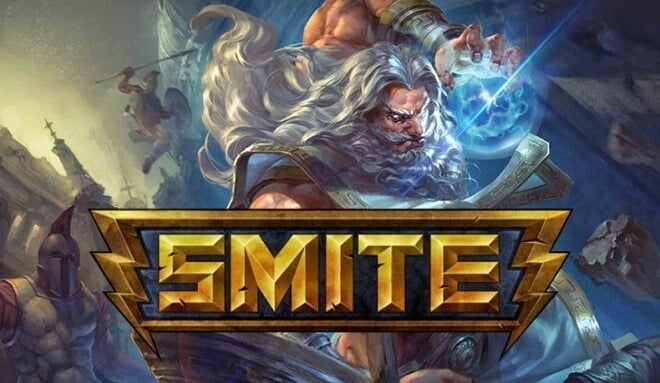
Released in 2014, Smite is still going strong into 2023. Developed by Hi-Rez Studios, Smite allows the player to take on the role of a god or goddess in a third-person perspective, then subsequently engaging in combat with other players. I was taken aback when I learned the stakes people played this game at it currently has a million-dollar esports pool. Maybe there’s something to it.

The big draw for this MOBA is Conquest mode, where 2 teams of 5 players go at it in the arena. Players are allowed resources to buy weapons and other upgrades before the round starts, (reminding me of Counter-Strike), and both teams begin the round at their teams’ ‘fountain’, or home base. The goal is to kill the other teams ‘Phoenix’ and ‘Titan’.

A feature of Smite that I dig is the level of customization. You can choose from nearly one hundred characters, all originating in myths from different cultures. As a mythology nerd, I’m already all-in with Smite.

They’re even adding another pantheon of heroes from the King Arthur stories. Don’t worry, Nintendo Switch players; you’ll get your chance to play one of the best MOBAs. The Switch version of Smite is planned for a February 19th, 2019 release date.

What Makes It Great

Unique Perspective: Smite’s third-person camera angle provides a fresh take on the MOBA genre, making it feel more like an action RPG. This perspective also affects gameplay elements like map awareness, making it more challenging and dynamic.

Character Variety: The game features gods from seven different mythologies, each with unique abilities and roles. The third-person perspective enhances some of these abilities, like Thor’s “Anvil of Dawn,” which launches you into the sky.

Complex Combat: Unlike other MOBAs, every ranged ability in Smite is an aimed skill shot, and your position and direction are crucial when playing as a melee character. This adds a layer of complexity to combat.

Skill Ceiling/Difficulty

The game Smite is generally considered to have a steep learning curve, especially for newcomers. The complexity of the game, with its variety of gods and abilities, adds to the challenge.

Heroes of the Storm
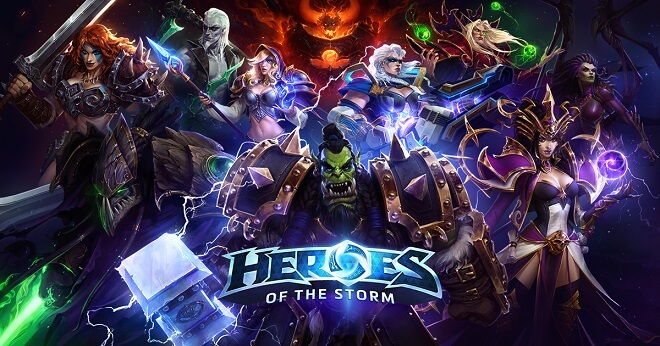
Heroes of the Storm
Blizzard makes its first appearance on the list with 2015’s Heroes of the Storm. It was released on Microsoft Windows and Mac. Blizzard shies away from calling Heroes of the Storm a MOBA game—instead, they refer to it as a ‘hero brawler’, and they’re not wrong: Heroes of the Storm includes everyone’s favorite Blizzard characters in the roster.

It’s veritable who’s who in gaming characters. Tracer, Genji, Gul’Dan, Leoric, and others all make an appearance, 85 of them in all. My personal favorite is The Butcher from the first Diablo. I used to be so scared of him while playing when I was younger, but now I can harness his evil power to beat my enemies—I’d say that’s pretty good character development.

Again, the prize pool is massive: the most recent tournament had a 1,000,000 prize.

Using Blizzard’s Battle.net, players are thrust into intense 5v5 battles on 15 different maps. It even includes mounts, something World of Warcraft players are familiar with. This is one of the best MOBAs around, and worth checking out long into the future.

What Makes It Great

Streamlined Systems: Unlike traditional MOBAs, there’s no gold or items to worry about. This allows players to focus more on team fights and objectives rather than farming.

Unique Characters: The game features characters from various Blizzard franchises, each bringing their own unique abilities and styles to the battlefield.

Innovative Hero Design: Some heroes, like Cho’Gall, are designed to be controlled by two players simultaneously, offering a unique gameplay experience.

Interesting Facts

  • Player Base: At its peak in 2017, HotS was almost as popular as Dota 2. Although those days are gone, it would still easily be among the top 20 most played games on Steam if available there.
  • Queue Time: In big regions like North America or Europe, you can find a quick match in less than a minute almost at any time of the day.

Skill Ceiling/Difficulty

Heroes of the Storm is generally considered to be easier to pick up for newcomers compared to other MOBA games like League of Legends. The game emphasizes team play and offers a variety of maps and objectives, making it strategically rich. While it is easy to get into, mastering the game can be challenging.

League of Legends
League of Legends
League of Legends, aka LoL aka League, was developed by Riot Games for Windows and Mac in 2009. Defense of the Ancients, or DotA, directly inspired it. A feature I like from League is that every game takes place in its match, meaning that players all start on the same footing, leaving it up to the player to advance and get better skills and items.

League of Legends has a richly detailed backstory, with an original fantasy environment being written around the different champions, something I like over the other MOBAs. Destroying the opposing team’s nexus is the goal of the game, and you need to battle your way through a wide and wild array of character types: ranging from Eldritch horror to steampunk.

Riot Games is extremely active in the game’s development, even holding their own eSports league: League of Legends Championship Series. The 2014 world championship had a whopping $2.13 million prize. Game times vary, sometimes running up to 45 minutes, but players are in an agreement that it’s closer to 30 to 35 minutes in length.

Currently, there are 143 champions in the game, divided into 7 classes: Controller, Fighter, Mage, Marksman, Slayer, Tank, and Specialist.

What Makes It Great

Item System: League has a comprehensive item system where killing minions, enemy champions, and towers grants you gold. This gold can be spent on hundreds of items, each with unique stat-boosting powers, adding another layer of strategy to the game.

Constant Evolution: The game has evolved significantly since its release, with every new character adding new mechanics and complexity. This keeps the game fresh and engaging for long-term players.

Mental Engagement: The game is mentally taxing but in a rewarding way. It’s not a game you play to relax; it’s a game you play to be challenged.

Interesting Facts

  • It’s One of the Two Biggest MOBA Games in the World: League of Legends is huge. Popularity begets popularity. LoL is a premiere eSport, and as such has notable visibility worldwide. MOBA stands for Multiplayer Online Battle Arena. LoL is perfectly suited for this “realm” of gaming.
  • According to the recent League of Legends statistics, 2022 has seen 31,512,723 peak players per day, totaling 180 million average monthly players.
  • Judging by LoL stats, the game attracts players worldwide, but 14.44% of users are from the United States.

Skill Ceiling/Difficulty

League of Legends is considered a difficult game to learn, especially for beginners. The game has a steep learning curve, with various mechanics, strategies, and a large pool of champions to understand.

Dota 2
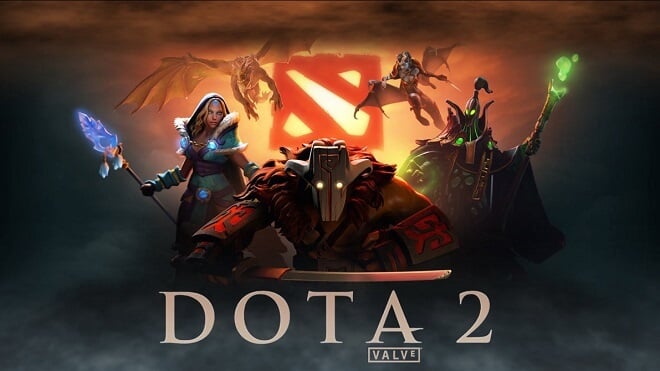
Dota 2
The sequel to the originator of MOBAs, Dota 2 was released on PC, Linux, and OS X in 2013. This isn’t just a pretty coat of paint on an existing engine; it’s a massive upgrade using the Source 2 engine. In it, players control their ‘hero’, or player character, and face off against other players, usually in two teams of 5, something very common with MOBAs.

As with other similar games, during the match, your goal is to defeat the other players, collecting loot along the way. Dota 2 has been cited as being one of the best MOBAs and best games of all time—not a title to be taken lightly. I can see why, as the gameplay is very rewarding and downright addictive.

It’s only fitting that the sequel to the grandfather of MOBAs is one of the best.

Of course, Dota 2 has an insanely large competitive gaming scene. Tournaments and leagues all over the world compete with each other in this richly detailed environment. Valve itself outs on the largest one in Seattle. The prize pool of Dota 2 in 2018 was an unthinkable $25,532,177 split between multiple teams.

The first-place finishers in the International Dota 2 Championship were team OG, taking home their share of the massive prize—$11,234,158 between its 5 members. Matches can last up to 45-50 minutes. I read a player’s experience that he was in a grueling 2-hour long match, taking a lot of stamina to complete the game.

Can’t make an omelet without breaking a few eggs, friend!

What Makes It Great

Depth of Gameplay: Dota 2 is described as one of the deepest games in terms of gameplay mechanics. It requires players to manage resources and economy, meticulously, making every decision crucial.

Item and Talent Complexity: The game offers a wide range of items and talent trees that allow for multiple strategies. This adds another layer of depth, especially in the late game where decisions can be game-changing.

Dynamic Game Environment: Dota 2 is ever-changing, with frequent game patches that introduce new mechanics, items, and heroes.

Interesting Facts

  • Dota 2 was the most played game on Steam for the longest time. However, in 2018, PUBG broke the record
  • Most people know that Dota first began as a modification of Warcraft 3. However, it was inspired by the map ‘Aeon of Strife’ in StarCraft, making that map the true legacy from which the popular gaming genre started.

Skill Ceiling/Difficulty

Dota 2 is considered to be a challenging game for beginners. The game has a steep learning curve and is not forgiving to new players. The community can be toxic, especially to newcomers who are still learning the ropes.

Even with friends to guide you, the game’s complexity and the skill level of other players can make the initial experience daunting.

DOTA 2 Prize Pool Tracker
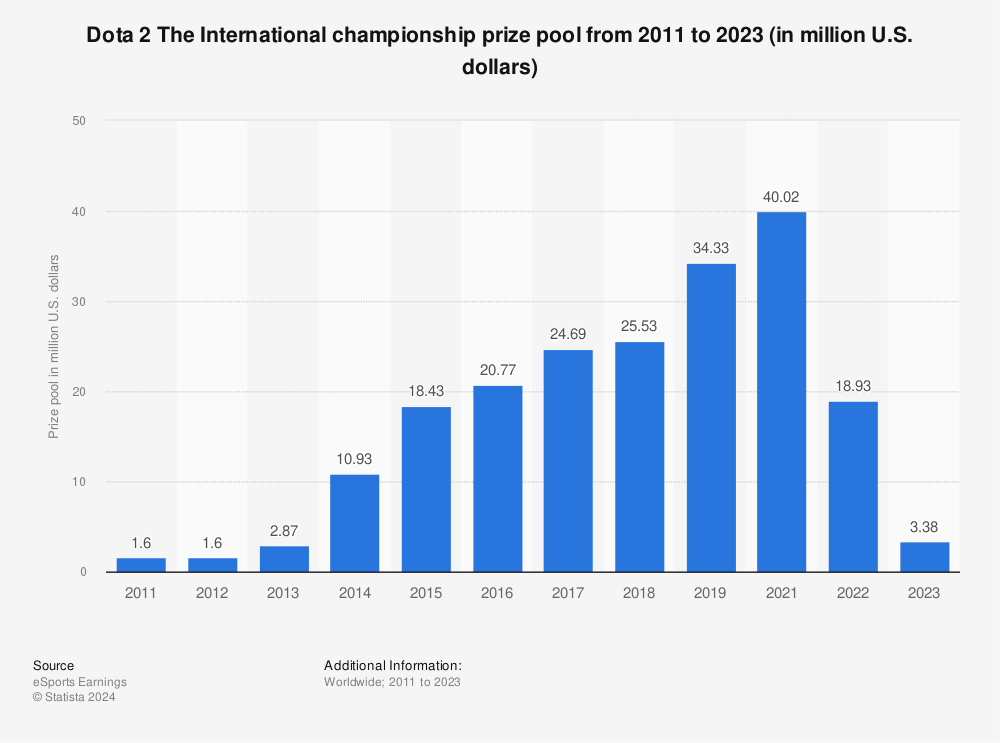
Statistic: DOTA 2 The International championship prize pool from 2011 to 2022 (in million U.S. dollars) | Statista
Find more statistics at Statista

Strife

Strife was released in 2015 on Linux and Windows and was developed by S2 Games, a game studio based out of California. Something that immediately caught my attention about Strife and S2 Games was their aim to stop toxicity in the gaming community, something that I think can get overbearing and abusive.

They somewhat streamlined Heroes of Newerth into Strife to appeal to more casual players of MOBAs. Strife pits two teams of players against each other, with the main goal being to destroy the opposing team’s structure. The structure, dubbed ‘the Crux’, reminds me of the Nexus in League of Legends.

A player chooses a hero to stick with for a game’s running time, usually about 30-40 minutes, and can level that hero up outside of the game by winning experience points.

What Makes It Great

Role-Playing Elements: Strife is not just a first-person shooter; it incorporates role-playing game elements. NPCs in the game are not just targets; they offer quests that move the story forward.

Variety in Combat: The game starts slow but can get intense, resembling the action. It offers a range of weapons and items, including stealth kill weapons like the punch dagger and crossbow.

Skill Ceiling/Difficulty

Strife is considered an easy game to pick up and learn. It has simplified gameplay and controls compared to similar games of its era, and it incorporates RPG elements that add depth without making it overly complex

Vainglory

Vainglory advertises itself as the ‘no compromise cross-platform MOBA’ and comes in as the first primarily mobile MOBA on the best MOBAs list. Originally released for iOS and Android devices back in 2014 & 2015, Vainglory is currently in Alpha on Windows and Mac.

Published by Super Evil Megacorp, Vainglory was originally displayed at Apple’s iPhone 6 announcement to show off the hardware, software, and graphical power of their (then) new device. The player’s goal is to ultimately control the path between their and their opponent’s bases.

They can venture off of the path, avoiding or battling AI turrets and other monsters, to gain resources and help their team to victory. This is a cross-platform title, meaning people on all three different release platforms can play in the same match with each other.

That’s something I dig about this game, and frankly, it should be a mainstay in the gaming world by now. Vainglory’s version of the game’s hero is called the ‘avatar’, which the player controls along with 4 others on their team. The goal is to make way pass enemy turrets and destroy the ‘Vain crystal’.

This should take anywhere from 20-30 minutes on average, so it’s relatively quick to play compared to MOBAs like Dota 2. Right now, players can choose between 48 different avatars, plunging themselves into a beautifully rendered world with detailed shadows and textures. The original number of avatars? Seven.

I have to applaud Super Evil Megacorp on their dedication to updating this game so much and building on their past experiences and their influential cross-platform play. See a full list of cross-platform MOBAs.

What Makes It Great

Well-Balanced Mechanics: The game mechanics are well-balanced, and the power scaling is well-polished, making it a game that follows in the footsteps of LoL and DOTA 2 but with its unique twists.

NPC Involvement: Vainglory features non-player characters called Minions that stop the enemy team from advancing. Behind these Minions are turret towers that add another layer of defense.

Diverse Hero Pool: Vainglory offers 52 different heroes, each with unique abilities and powers. Players can unlock these heroes by playing the game and climbing the ranks, providing a sense of progression.

Skill Ceiling/Difficulty

The game is complex and stays true to the MOBA genre, featuring a large map, multi-dimensional heroes, and intricate item strategies. While it offers a rich gameplay experience, it is not necessarily easy for newcomers to the MOBA genre.

Arena of Valor
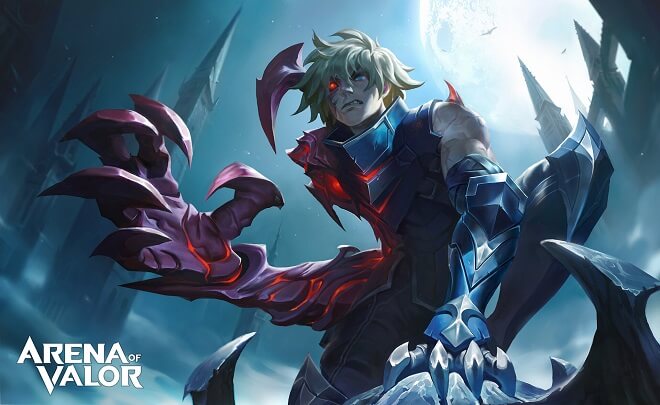
Arena of Valor
An adaptation of the Chinese variant MOBA, Wangzhe Rongyao, Arena of Valor was released in 2016 in Taiwan. Little by little it then released into different countries all over the world onto mobile devices, eventually culminating in the world-wide release on the Nintendo Switch in September of 2018.

Arena of Valor was published by Tencent Games, which I didn’t realize was the largest video game company in the world. They hail from China and focus primarily on online games, notably PlayerUnknown’s Battlegrounds on the mobile.

Arena of Valor started as the brainchild of Tencent games after they approached Riot Games, developers of League of Legends, asking if they could develop it into one of their mobile titles. The creators of League didn’t bite, saying that it was strictly to be on non-mobile platforms, as being on mobile would decrease the integrity of the gameplay and graphics.

Players take on the role of the heroes, a choice from a roster of 78 characters. These range from the lighthearted ones like Wisp, a small child piloting a mech, to the actual Chinese historical figure from the Three Kingdoms era, Lu Bu, (albeit highly fictionalized).

This game has been dubbed the ‘kingpin of pocket gaming’, and has amassed over 200 million players.

What Makes It Great

Hero Diversity and Customization: With over 39 heroes to choose from, each falling into one of six different classes, players have a wide array of options. The game also allows for further customization through the Arcana Pool, letting players tailor heroes to their play style.

Multiple Game Modes: Arena of Valor offers a variety of game modes, including Ranked Matches, Standard Matches, Custom Matches, and Arcades. This keeps the gameplay fresh and caters to different player preferences.

Game Duration: The game offers quick, action-packed games with importance on both micro and macro gameplay.

Interesting Facts

  • Player Demographics: More than half of the players in Arena of Valor are women, accounting for 54% of the player base.
  • Playable on Nintendo Switch: The game is not limited to mobile platforms; it is also playable on the Nintendo Switch console
  • Global Market: Tencent aims to make the game widely accepted in other countries and is willing to make adjustments to the heroes to suit different markets.

Skill Ceiling/Difficulty

Arena of Valor is a complex MOBA game with a variety of roles and heroes, each with specific objectives and skills. While the game does offer a guide for new players and features straightforward controls designed for touchscreen devices, it still has a learning curve due to its complexity

Defense of the Ancients

The one that blazed a trail, perhaps one of the best MOBAs, the original Dota paved the way for all other entries on the list.

It started as a mod for Warcraft III: Reign of Chaos and its expansion, Warcraft III: The Frozen Throne; in which you need to team up and destroy the other team’s ‘Ancient’, or their structure in their section of the map.

This game is why I love it when creators give the players access to world editors.

Because Blizzard allowed for such creations in their WarCfrat III World Editor, a whole genre, and internet phenomenon was born. Dota was released in 2003 by designers Eul, Steve Feak, and IceFrog.

Two teams dubbed the Sentinel and the other the Scourge, must vie for control of the map and destroy the other team’s aforementioned Ancient.

Players choose their hero, one of a staggering 112 possible choices, leaving an amazing amount of replay for the players. Players gain combat gold by destroying enemy players or other creatures, giving their team an advantage in the way of resources. This game has been called ‘the ultimate RTS’, which I wholeheartedly agree with.

It’s a step up from the RTS style of gameplay, opening up avenues, literally, as the ones on the game map, and those avenues of creativity of the players given free rein with resources, time, and creative vision.

What Makes It Great

Focus on Individual Strength: Unlike traditional RTS games that require resource management and base-building, DotA focuses on strengthening individual heroes. Players earn experience points and gold by killing computer-controlled units and enemy heroes, which they can use to level up and buy items.

Game Modes: DotA offers a variety of game modes, allowing for a flexible and customizable gaming experience. The game modes can dictate the difficulty of the scenario and whether heroes are chosen or assigned randomly

Influence and Legacy: DotA has inspired other popular games in the genre, like League of Legends, and has been credited with revolutionizing the MOBA genre.

Interesting Facts

  • Influence: DotA is largely attributed as being the most significant inspiration for the MOBA genre. Valve acquired the intellectual property rights to DotA in 2009 to develop Dota 2, which was released in 2013.
  • Cultural Impact: The game was so popular that it inspired a song by Swedish musician Basshunter that cracked the top ten singles charts in several Northern European countries.

Skill Ceiling/Difficulty

Defense of the Ancients (DotA) is a complex and challenging game. The game requires a deep understanding of teamwork, strategy, and game mechanics. It also demands quick reflexes and adaptability to different situations.

Mobile Legends

Bang Bang: Strictly a mobile entry, as the name states, Mobile Legends: Bang Bang was released in 2016 exclusively for Android devices. Later that year it was ported to iOS devices as well. Mobile Legends was developed by Moonton and is exclusively released in China, Indonesia, and Malaysia.

Sure, it follows the hallmarks of the best MOBA titles like Dota and Dota 2, but this game was the first MOBA to include a Battle Royale mode; something that is taking the gaming world by storm.

Moonton ran into a bit of trouble when Riot Games, (developers of League of Legends), claimed that Moonton not only used a logo that looked too similar to League’s, but that they had stolen elements of maps from Riot Games. Moonton lost the lawsuit and ended up having to pay $2.9 million for the offenses.

Hopefully, Moonton will recover from this setback and keep producing more content for their game, so mobile players can still have access to a mobile MOBA.

What Makes It Great

Mind Development: The game is compared to Chess for its ability to train the mind and promote strategic thinking. It encourages decision-making that leads to positive outcomes and mental growth.

Mobility and Convenience: The game is designed for handheld devices, making it convenient to play anywhere, anytime. It also has reliable and consistent servers

Teamwork and Social Interaction: Mobile Legends fosters friendship and teamwork. It offers a team-based environment that allows for easy interaction with other gamers and friends.

Interesting Facts

Longevity and Cultural Impact: With over a billion downloads, Mobile Legends has a lasting impact and is considered a part of gaming history. It has a strong online community with over a million users on its platform at any given time.

Skill Ceiling/Difficulty

The game offers a complicated in-game environment with simple mechanics, making it easy to learn but hard to master

You Should Know

Tencent sent warning letters to Moonton’s partners in Indonesia, including esports platform RevivalTV, referencing a lawsuit against Moonton’s CEO Xu Zhenhua in China for violating trade secrets to develop MLBB’s game software.

However, the court documents revealed that the dispute was actually a labor case involving a non-compete clause in Xu Zhenhua’s contract with Tencent, and there was no decision made on whether he actually violated trade secrets.

Despite this, Moonton filed a lawsuit for commercial defamation regarding the warning letters sent in Indonesia, which they won.

Battlerite

Stunlock Studios released its MOBA, Battlerite, in the Fall of 2017 for Microsoft Windows. There’s an upcoming port due for release in 2018, but it’s still a secret. In Battlerite, players are introduced to their brand of heroes—Champions. Champions are broken down into their three attributes: offense, defense, and movement abilities.

The matches are much shorter than what you’re used to, due to many of the same MOBA elements that gamers are familiar with being nonexistent in Battlerite. Gone are the objectives to destroy the other team’s structure and gone are destroying AI-controlled characters for resources. Stunlock wanted to focus on action-filled gameplay, and they’ve worked it out in a great way.

They’re going to pursue making a standalone version of Battlerite and remove its free-to-play aspect. Maybe this will lead Stunlock to make a new subset of a MOBA or hone the MOBA genre into the next form it’s going to take. The best MOBAs are no stranger to innovators, so it’s fun to speculate on the future.

What Makes It Great

Fast-Paced Matches: The game features quick 10-minute matches, making it easier for players to engage in multiple sessions without feeling drained. The fast pace keeps the adrenaline pumping throughout the game.

Champion Depth: Although the game has a relatively smaller roster of 24 champions, each champion offers a unique set of skills and abilities. Players can also customize their champions further with “Battlerites,” which are adjustments that slightly augment a champion’s existing skills.

Consequential Movement: The game places a strong emphasis on the movement and positioning of your champion. The difference between winning and losing can come down to a single frame, making every dash, spell, and key click feel consequential.

Skill Ceiling/Difficulty

The game is skill-shot-based and requires a good understanding of mechanical skills and hero abilities. The game can be hard, especially when trying to master specific heroes.

Heroes of Newerth
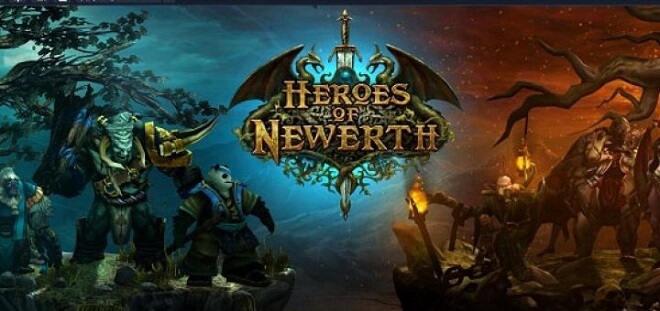
Heroes of Newerth
2010 was the year of S2 Game’s original MOBA, Heroes of Newerth. As I said before in the list, Strife was an offshoot of this title, desiring more streamlined access for more casual players. Heroes of Newerth was transferred to Frostburn Studios when S2 pooled all their time and energy into making Strife one of the best MOBAs.

Heroes of Newerth separates the two teams in terms of ‘Legion’ or ‘Hellbourne’, and their central structure is based on their team affiliation, specifically the World Tree or the Sacrificial Shrine, respectively. The perfect mix of skills is essential for pummeling your enemy and making them surrender.

Game times can range from 25-40 minutes depending on all factors, so you could either have a quick play or a deep intensive match that tests your true skill. The eSports prize pool for the HON Pre-Season of Professional League 2015 was $236,185.14, so get out there and make some bank playing MOBAs!

Update: Heroes of Newerth shut down its operations for good on June 20, 2022. Frostburn Studios made the announcement on Facebook expressing their gratitude for all the support that they received in the past years.

Awesomenauts

The cartoonish yet loveable and addicting Awesomenauts was developed by Ronimo Games and released in 2012 on Xbox 360 and PlayStation 3, Linux, OS X, and Windows, while the newer version for the most recent console generation in 2016. The availability on all platforms is a plus. It’s a 2D style game, featuring the Awesomenauts, the heroes of the game.

Awesomenauts are vastly different from each other in skill, making matches even more fun and intense than usual for even the best MOBAs. Games are played mostly 3v3 matches where the opposing team’s Solar Collector becomes the objective to destroy. Something I like about the design of this game is that it spices up the maps.

For example, one map has a giant monster in a pit to be a pain to players trying to destroy their enemy. Matches are usually quick—about 20 minutes. It became free-to-play in 2017.

What Makes It Great

Humor and Absurdity: The game is filled with absurd and hilarious characters, like a monkey with a laser-mounted jetpack, adding a unique flavor to the MOBA genre.

Tactical Gameplay: Despite its silly nature, Awesomenauts takes its strategy seriously. It requires patience and commitment, especially when playing against high-ranked players with superior characters.

Unique Spin on MOBA: The game offers a different take on the traditional MOBA genre, making even vetted MOBA players look at the genre in a new light.

Skill Ceiling/Difficulty

Awesomenauts is not considered an easy game for new players to get into. The game has a level system that locks certain items, putting newcomers at a disadvantage. Additionally, it features a long and unskippable tutorial that has been criticized as a barrier to entry. While the game has a passionate community, these factors make it less welcoming for those who are new to the game.

Demigod
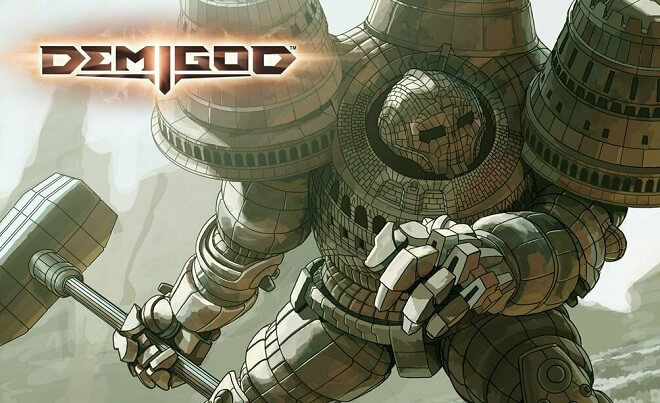
Demigod
Released back in 2009 on Windows, Demigod is a title developed by Gas Powered Games and published by Stardock. Much like Awesomenauts and Heroes of Newerth, the game’s title derives from the name of the player characters in the game—Demigods going to battle against one another.

The Demigods are classified into two different groups—the Assassins and Generals. These two categories are vastly different in terms of gameplay. Assassins are suited best for the player that wants to outright defeat their opponent in brute combat, while the Generals are much more nuanced in strategy and support.

The Generals populate the arena with minions and demigods to stop the opposing team. Overall, there are 10 demigods available to play, with the specific choices being narrowed down to whether you play Assassin or General.

I like this unique setup with the two types. It allows for a more strategic and more carefully planned action of attack, much like the standard RTS games that MOBAs derive from.

What Makes It Great

Time as a Resource: In Demigod, time is your most crucial resource. The choices you make on how to spend your time in the game can determine victory or defeat. Whether it’s retreating to heal or capturing a flag for a special bonus, every decision counts.

Tactical Choices: The game forces you to make dozens of choices that could turn the tide of battle. Whether it’s deciding which part of the battlefield you can make the most difference at, or choosing to upgrade your citadel, the game keeps you on your toes.

Online Experience: Despite initial networking issues, the game aims to offer a fantastic online multiplayer experience.

Skill Ceiling/Difficulty

For Demigod, the absence of tutorials and poor documentation make it particularly unwelcoming for newcomers. Unlike some other games that might offer straightforward gameplay or community support to ease the learning curve, Demigod seems to throw players into the deep end without much guidance.

Monday Night Combat
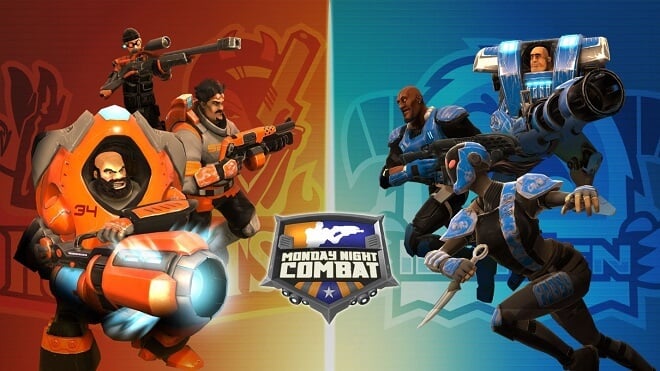
Monday Night Combat
Uber Entertainment and Microsoft Game Studios released Monday Night Combat on PC and Xbox 360 in 2011. Presented in an amusing ‘Monday Night Football’ spoof of the future, Monday Night Combat is a third-person team shooter. The main goal is to destroy the other team’s Moneyball within the arena.

The teams are made of players of clone soldiers duking it out in the arena. This game blurs the lines, in a good way, of what it is. It borrows heavily from RTS games, tower defense titles, and MOBAs, creating a nice mixture of the genres. Teams of 6 players engage in ‘Crossfire’, the game’s standard mode of play. Each clone soldier has its unique look and stats.

It reminds me a lot of Team Fortress 2 in its personality and design choices.

What Makes It Great

Blend of Genres: Incorporates elements of third-person shooting, tower defense, and MOBAs, offering a unique gameplay experience.

Turrets and Bots: Includes various types of turrets and bots, providing an additional layer of tactical decision-making.

Class Diversity: Offers six unique classes, each with distinct weapons, skills, and upgrades, enhancing replayability and strategic depth.

Skill Ceiling/Difficulty

In the case of Monday Night Combat, the unique twist is its time-specific gameplay window. This means you’re not just learning the game; you’re racing against the clock to get your playtime in.

While the community seems to love the game, this time constraint could be a real hurdle for newcomers who need more flexible hours to get the hang of things.

Realm of the Titans

Realm of the Titans broke onto the scene in 2010 in China and 2011 in North America on Microsoft Windows. It was developed by Ningbo Shengguang Tianyi, a Shanghai-based studio. The developers had gone to Australia to study, becoming giant fans of the best MOBAs out there, igniting the fire inside them to make their title.

There are 168 heroes in the game and 5 skills that can be used by each. The developer also keeps adding more heroes to play, increasing the playability and replayability of the game.

A cool feature included in this MOBA is four bosses that lurk in the corners of the game maps. Players can kill these bosses, triggering the other bosses to turn into the ‘creep’ AI.

What Makes It Great

Phases and Adaptation: The game allows players to adapt their skills to different phases of the match, such as laning or team fights, making the gameplay dynamic.

Adaptable Skill System: The game introduces a unique Titan Skills system that allows players to choose an additional skill at the start of each match. These skills can be swapped every 3 minutes, allowing for adaptive strategies.

Skill Variety: Realm of the Titans offers a whopping 25 external abilities that can be used on any hero, providing a wide range of tactical options.

Skill Ceiling/Difficulty

The gameplay is straightforward but offers depth in terms of strategies and mechanics.

Prime World
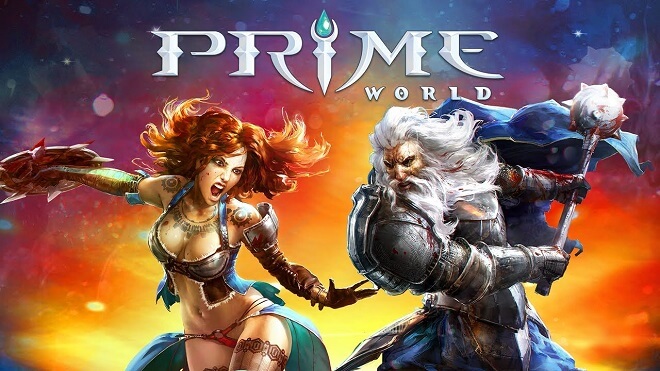
Prime World
Prime World is a unique blend of MMO and MOBA. Released by developer Nival in 2014 on Windows, Prime World frames the MOBA gameplay through an interesting narrative. The two main nations, the Keepers of Adornia and the Dokht Imperium, are warring for dominance over the main resource in the game world: Prime.

From the comforts of their castle, players vie for victory over a map versus other players for the mysterious and godly substance of Prime. I love this fantasy story within a MOBA, something that I feel is missing. You could have the best MOBA, but for me, I need a little meat on the bones, some backstory or motivation for my actions.

You have 42 heroes in the game, with the two unique units to the nations being the Ha’ka and Da’ka. This MOBA allows for Facebook connectivity to give you the ability to battle your online friends and family. The match length is usually around 30 minutes. The game won multiple awards, including the ‘IGN Best Strategy Game 2011’.

What Makes It Great

Castle Building: The game incorporates a castle-building element where you can gather resources and build structures.

Multiple Match Types: Prime World offers a variety of match types, including standard 5v5 MOBA-style matches and unique single-player missions.

Terrain Control: The game introduces the concept of terrain control, where players receive buffs when they are on their home turf.

Deep Talent System: For more experienced players, the game offers a deep talent system that allows for a variety of hero builds.

Skill Ceiling/Difficulty

The game is designed to be accessible for newcomers, offering a simplified item shop and predetermined talent abilities for heroes.

Bloodline Champions

Another Stunlock Studios MOBA, this game was released in 2011, 6 years before Stunlock’s other MOBA, Battlerite. You can see where they got their practice. The standard 5v5 players apply, with teams being either on team ‘Warm’ or ‘Cold’. You have different gameplay modes, like Arena, the standard MOBA mode, and Capture the Artifact, this game’s Coat the Flag mode.

This game includes a unique feature—the fog of war. You can’t see certain enemy areas due to ‘fog’, obstructions in the players’ eye line. There are currently 29 heroes that you can play as.

What Makes It Great

Balanced Arena Combat: The game is designed to be a balanced arena combat experience. There is no character leveling, equipment, or loot, ensuring that all players are on an even playing field. All characters have their abilities available to them at all times.

Simplicity and Variance: The game features four archetypes of characters: tanks, melee damagers, ranged damagers, and healers. While the characters within each archetype are similar, they each have subtle differences in abilities, allowing players to easily switch between them without a steep learning curve.

Skill-Based Gameplay: The game relies purely on player skill for attacking and determining damage. There are no mathematical bonuses or penalties, making the game accessible to those who don’t want to delve into complex statistics.

Skill Ceiling/Difficulty

Game is accessible for beginners who can quickly understand the basics, while also offering depth and complexity for those who wish to master it.

Paladins
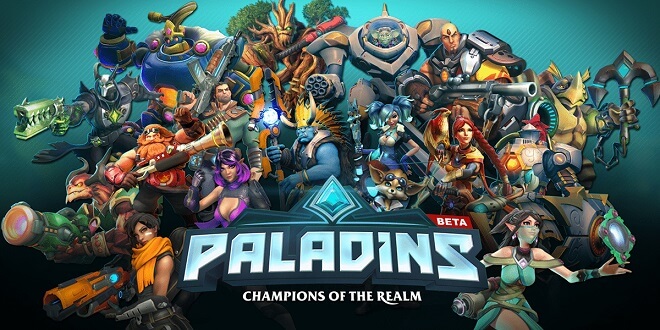
Paladins
A recent release, Paladins was developed by Evil Mojo Games. It was released worldwide on the main consoles and PC, and later on the Nintendo Switch. Paladins put you in the role of one of 40 champions. You and your team are locked in battle with the opposing side, relying on heavy strategizing to take home the victory.

Your team is divided into the front line, damage, support, and flank. This isn’t a game where you can just choose the character you like best for aesthetic reasons; this game makes you choose your character wisely for the most optimal gameplay experience. There are three game modes: Siege, Onslaught, and Team Deathmatch.

Siege is the standard MOBA equivalent in this game. Players must engage in an intense game filled with capture points, gaining, and losing ground, and mayhem. Onslaught is a point-based mode, where teams try to score as many points by performing certain actions like capturing a point or killing an enemy.

Team Deathmatch is your classic multiplayer bloodbath that we all know and love. You fight to 40 kills to claim your victory.

What Makes It Great

Player Choice and Customization: The game allows you to dictate your playstyle through in-depth card and item customization systems. Players can pick five out of 16 cards to create a preset loadout tailored to the champion they choose, enhancing stats and moves during a match.

Dynamic Gameplay: The game’s depth lies in its flexibility. You’re not pigeonholed into a specific role by your choice of character because of the heavy customization options. This allows you to adapt to different team compositions and maps, providing a greater sense of control.

Even after over 300 hours of gameplay, Paladins continues to offer new experiences, making it a game that players are likely to stick with for a long time.

Interesting Facts

  • Competition with Overwatch: Paladins has been competing with Overwatch for over years. Despite similarities, the game’s inspiration was not Overwatch but Team Fortress 2.
  • Total Players: As of December 2020, over 45 million people had played Paladins since its launch in 2015.
  • Cross-Platform Features: Paladins supports cross-platform multiplayer, parties, and progression.

Skill Ceiling/Difficulty

Paladins is generally considered accessible for newcomers, making it a welcoming gateway into the world of shooter games. However, if you’re aiming to become highly skilled, the game presents a steep learning curve.

Dark Eclipse
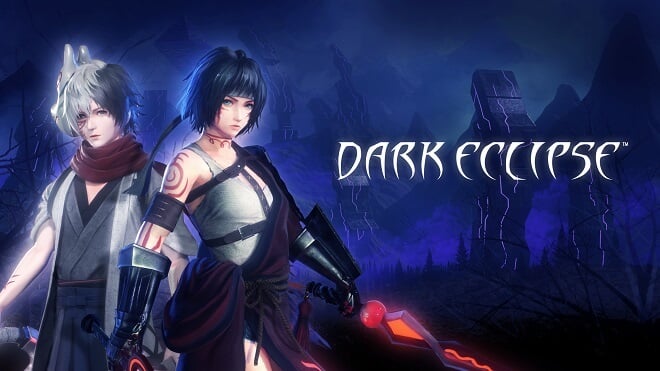
Dark Eclipse
Last but certainly not least by any measure, Dark Eclipse is shaping up to be one of the Best MOBA Games. This MOBA was released in late September 2018 by Sunsoft, veterans of the video game industry. They have titles near and dear to my heart to their name: Batman and Lemmings on the Nintendo Entertainment System, and countless others in the late 1980s and early 1990s.

They’ve primarily shifted their focus to mobile gaming, and that makes way for more player-friendly experiences, and perhaps more competitive ones, like MOBAs. The Dark Eclipse website briefly lays out the aim of Dark Eclipse, in a pretty cool way:

“Play in VR without the boundary of a 2D screen. Control three characters, called Leaders, build towers and destroy the enemy base. Developed by a team of MOBA and RTS lovers. This is a game by MOBA gamers for MOBA gamers.”

You read that right: a VR MOBA. I was curious, and a bit skeptical. As soon as I started reading about it, however, I became intrigued.

The site states:

“You can grab and move the characters (called Leaders) directly.No need for a mini-map…you just look around and you can see the whole battlefield. Feel the game with haptic feedback on your fingers, and listen to enemy movement with 3D audio.”

It gives the player better control over their characters and truly immerses them in the game.

Fear not–you can still use your DualShock controller to play if VR isn’t your style or disorients you.

What Makes It Great

Genre Fusion: Dark Eclipse successfully combines elements of MOBA and RTS genres. You control three heroes, direct them around the map to collect resources, build structures like in an RTS, and fight random monsters to gain XP, similar to a MOBA.

VR Implementation: The game is designed for PlayStation VR and offers a unique point of view and control scheme. It simulates a tabletop experience where you look over the board and move your heroes and soldiers using a floating hand, controlled via the DualShock 4 or PS Move controllers.

Strategic Gameplay: The game is slow-paced, requiring you to think strategically. You need to collect resources, build towers, and gain levels by killing random monsters. The fog-of-war effect adds another layer of strategy, as you can only see enemies near your bases or heroes.

Skill Ceiling/Difficulty

Dark Eclipse is a game that initially appears complex but becomes increasingly enjoyable as you understand its various elements. It’s a MOBA/RTS hybrid available on PlayStation VR, featuring a blend of base destruction, character leveling, and strategic tower building.

Heroes Evolved
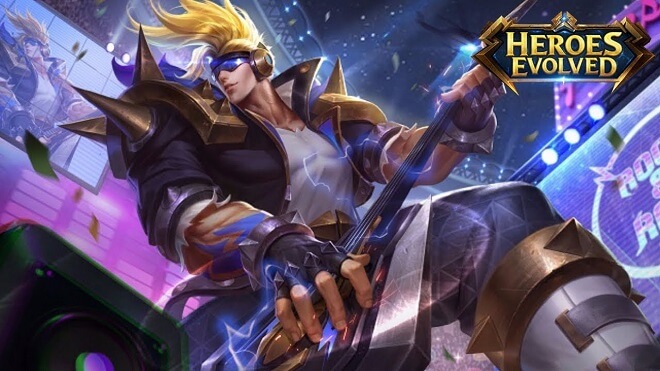
top moba video game
I can’t wait to see the future of Dark Eclipse, and what other MOBAs will follow in its footsteps. Will the best MOBAs be in VR? Only time will tell, but this is a good step. I also like the emphasis on the development of MOBA gamers.

This happened in Dota’s case; people came together who loved WarCraft III’s world builder and created a craze that doesn’t show any signs of stopping.

What Makes It Great

Familiar Yet Fun Characters: While the characters in Heroes Evolved may seem familiar to those who have played other MOBAs, they are still fun to play. For example, the character Nosferatu is similar to Vladimir from League of Legends but offers a unique take on gameplay.

Competitive Scene: Unlike other MOBAs, Heroes Evolved doesn’t have  “placement matches.” Instead, you play through each skill catchment one by one. Winning five matches allows you to play a match for promotion, but losing at higher ranks can also demote you.

Fair Monetization: The game is described as “balanced without P2W” (Pay-to-Win). The only items purchasable with real money are cosmetic items and characters, which can also be earned through in-game currency.

Skill Ceiling/Difficulty

Heroes Evolved is a MOBA game with a variety of heroes and gameplay modes, making it a dynamic and engaging experience. While the game does offer a training session and daily tasks to help newcomers, it can initially appear overwhelming due to its complexity and variety of roles and strategies.

Sources

https://www.ign.com/articles/2014/04/01/smite-review
https://cometoplay.co.uk/interesting-facts/league-of-legends-facts/
https://www.redbull.com/in-en/dota-2-trivia-you-didnt-know
https://thirdcoastreview.com/2020/11/10/game-review-strife-veteran-edition-switch/
https://www.pcquest.com/vainglory-review-free-play-mobile-moba-doesnt-disappoint/
https://www.gamersdecide.com/articles/is-mobile-legends-worth-playing
https://www.pcgamer.com/battlerite-review/
https://www.gamesradar.com/demigod-review/
Visual Design Career Roadmap, Education Path, & Essential Skills

0

Visual Designer Job Description
Today’s world runs on graphical and visual aesthetics. The more user-friendly user interface, better layouts, more works that are pleasing to the eye. All of these things and more make up the very essence of a visual designer. Visual designers have become the artistic ‘gatekeepers’; making sure things are looking clean and running smoothly.

Their presence in the world has magnified, and their duties and projects have spanned countless mediums. Photography, design, typography have all led the way for visual designers to become a force to be reckoned with in the artistic community.

Best described as a mixture of user interface design and graphic designer, the visual designer is the glue that keeps a project on track.

What the Job of Visual Designer Entails


The role of a visual designer is a multifaceted position in a company or team member that works in tandem with different designers—i.e. web designers, user interface developers—to make a product. Unfortunately, there’s no specific, definite answer to what visual designers do—they have their irons in many fires at a company.

Logos, icons, screen mockups, all of these are just but a few of the responsibilities of a visual designer. Communication is key and one of the main tenets of visual design.

You will rarely be working alone as a visual designer—instead, you’ll most likely be part of a diverse team of fellow creators with one vision, and you’ll need to make sure every part is in working order to make your project an appealing reality.

In brief, a visual designer works somewhat better as a blanket term for those who develop art and design for the digital world. You need to be someone with a creative eye for details; one that has almost a sixth sense when it comes to making an aesthetically pleasing design. Visual designers need to make everything come together for a project.

The customer or consumer has to be drawn in by unique, yet approachable designs and interface. Do you count yourself among them?

Primarily, you need visual design skills. These are the top 3 skills I believe you’ll need as a visual designer:

Creativity: this one’s pretty self-explanatory, but it’s what I think is the bread and butter of the profession. You aren’t going to get anywhere by not having a creative vision.

The creative vision you have should be the same one that gives you the ambition to go to a good design school and apply for great tech jobs in the right places. If you don’t have creativity, this isn’t the field for you at all.

Resourcefulness: You need to be able to think on your feet, as well as think outside of the box. You really need to think like an artist: not bound by normal design rules. If a design isn’t hitting the mark, you need to rethink it or envision a new solution for it.

Communication is key and can get you out of many frustrating binds with coworkers, employers, and clients.

Communication: I know it keeps coming up, but I can’t stress it enough. If you aren’t on the same page with your fellow designers or your clients, your product will ultimately suffer from your hesitation in the end.

Since many projects involve multiple people, keeping clear channels open for help, constructive criticism, and tips is essential for not only a positive working space but for your best potential.

A College Degree for Visual Design — a Must?


First of all, the best way to make your way as a visual designer is to have a strong background and passion for design and art. By now, you should have worked extensively through high school to get a good grip on design basics, do’s and don’ts, and your eye for artistic flair.

Usually, a bachelor’s degree is a typical requirement for a career in visual design. There are many schools to choose from, namely the Rhode Island School of Design (RISD). The professors here and the amount of funding for projects at this institution are second to none.

It will, however, take great visual design skills to reach this school and complete its quality programs and undergraduate degrees: with an acceptance rate of 29%, you’ll really need to prove you’re a cut above the rest. I list this school specifically because it is the best of the best consistently amongst design school rankings.

Some other schools that are also considered as one of the best art colleges in the US:

A friend of mine is one of the lead developers for mobile app design in a small town in the greater Philadelphia area. For this purpose, I’ll refer to her as Jen. She attended Drexel University, in a program she called ‘super easy’ for her.

Drexel University in Philadelphia, PA caters to the creative and ambitious go-getters of society, a great start for those interested in graphic arts. She started off interning at a similar company, giving her many of the skills her current employer was looking for.

Other schools can do this as well, making her very fortunate hire right out of college a reality for many. Now, it may not be exactly a breeze like it was for my friend, but it can absolutely be done.

At her particular workplace, the requirements are a bachelor’s degree; although she hinted that it was a very lax requirement. The consensus is the safe bet of having your bachelor’s in a related field to visual design.

I’m sure there are exceptions to some companies not having a strict requirement, but the right avenue for a great career, any other school above can deliver not only the education but the skills to find a great job in countless forms.

Another staple of visual design is the visual design software you use. The premier software is Adobe Creative Suite and other various design programs like my favorite, Photoshop. Other businesses require different programs, so not all are uniform in their requirements.

General knowledge of all visual design software is your best bet. Jen, for example, says her main tools are Adobe XD when helping to design web apps and Adobe Illustrator.

Top visual design software:

  • Photoshop: the reigning champion of Adobe products, this program is the lifeblood of the internet and design in the 21st century. This program will let you harness photo editing and help you create clean, appealing designs for whatever you are working on. This is a must-have for any designer—visual, UI, or graphical.
  • InDesign: Another Adobe product, InDesign is the bedrock for making brochures, posters, magazines, and other forms of media. Even if a visual designer isn’t using InDesign to make an actual design, the visual designer must be fluent in it to help edit team members’ work. Created in 1999, it has been a staple for designers.

The Typical Visual Designer Salary


Now to some of the important stuff. Can you live comfortably off of your visual design career? It seems you can in most cases. Of course, you’ll have to work your way up like at any other place of business, but the benefits are amazing.

Some visual designer salaries are breathtaking in their scope. If you’re interested in where you’re located and what you can find, check this out. In Pennsylvania, where my good friend Jen works, the salary range for a full-time visual designer is $72,162 – $120,750. New York is a whopping $88,164 – $147,525.

Even Anchorage, Alaska is $61,620 – $103,110—nothing to turn your nose up at! You’ll want to probably be based in an urban hub, somewhere like New York, Chicago, or Los Angeles for optimal results. However, with a higher salary comes harder work and higher levels of competition.

But if you’re forced to be in Anchorage Alaska, you can still make a pretty penny on visual design way up north.

However, as you could probably anticipate, places like Sioux City, Nebraska, although perhaps needing visual artists, don’t seem to be in the practice of shelling out a lot of money for the field. Their average salary range is about $48,757 – $81,585.

Again, not a small amount of money, but basing yourself in a more populous state, something creative like San Francisco, ($88,478 – $148,050!), or its neighbor Oakland, California, ($82,830 – $138,600), is ideal if you’re going to live off of your salary in a realistic way.

All of these factors vary: your education, skill, employer, and other things determine that number. Want to find out for yourself? Have a look at salaries and other info here.

How a Visual Designer Differs from Other Types of Design Jobs


As I said before, a visual designer is a good blanket term for those that engage with digital designing. However, there are key differences from those in other, similar positions. Those that work on a site’s user interface (UI designer), a web designer, and a UX designer all differ in their responsibilities.

Where visual designers have a more general outlook and set of responsibilities, these designers have a more niche field, much more closed in and specialized. Web designers, as predicted, focus all of their energy and creative prowess on the design and functionality of a website.

Web designers also need to know how to use the tools of a visual designer, like the aforementioned suite of Adobe products, and must keep a clear channel of communication with the design head and the visual designers to make sure everything is up to speed.

Visual designers compared to web designers, don’t narrow their field to just the website’s function. They need to be in constant communication with the appropriate parties to make sure the overall vision of the site or app is fitting together nicely.

When it comes to User Interface designers, they are the ones on the design team who make sure that the potential user or visitor to the site in question is able to navigate it easily and get the most out of the site or app’s message.

Although visual design owes much of its existence to graphic design, it isn’t the same field. Graphic design can be used as a catch-all term that can refer to anything designed by people for print or digital. Specifically, though, the term has been in use for nearly one hundred years.

Graphic designers are the ones that actually develop the layouts of the products, deciding where the pictures or typeface goes in the actual project. A huge difference between the two professions is the difference in salary, where visual designers seem to make significantly more than graphic designers—nearly a $30,000 difference.

The two professions work together—the graphic designers spring the actual design forth while the visual designers make sure it’s an actual cohesive product. The differences are minor, making the line between the two professions a little blurry in their definitions, but there is a difference regardless.

UX designers, or User Experience designers, work for many of the same aims that a user interface designer does. The User Experience designer actually studies the behaviors of users, information about the design, basically design theory, to make the best use of a piece of media. Their role is steeped in an almost sociological fashion.

The study of ergonomics, or human factors, the ways that humans interact with systems, is also a huge part of user experience. Visual designers and UX designers must work together to make sure that the perfectly honed user experience looks well and follows the aesthetic themes of the project.

I found this cool little site that offers a comprehensive class in visual design called the ‘Visual Design Blueprint’. In the class, you can start testing out and creating your own personal brand, something that seemingly everyone needs on the internet nowadays.

The Visual Blueprint will simulate clients for you, making you design things for them in different scenarios as well, simulating the daily life of a professional visual designer.

Their checklist for you if you want to know if their program is for you is as follows:

  • You want to build confidence and make money with tech skills, but don’t know how to begin.
  • You’ve dabbled in design but need to learn the fundamentals.
  • You don’t have any experience in design but are itching to learn.
  • You like learning to be fun and collaborative.
  • You’re eager to start creating professional design concepts.

After the course, you will be rewarded with the ‘The Skillcrush Visual Designer Blueprint Official Certificate of Completion’, which they say is the perfect addition to a professional portfolio and your LinkedIn page.

Although perhaps not for everyone, if you’re curious about a profession in visual design and have no idea where to get your start, perhaps try perusing their site to get a better feel for their programs, course instructors, and policies.

It seems as the years go on, becoming a visual designer is a more viable option than becoming, say, a graphics designer. The narrowness of the field leaves much to be desired if a company is looking for a more general, broad, and flexible position within their company.

An affinity for these art programs, the different schooling options, and the knowledge of the appropriate software will shed some light on what a visual designer truly is and if it works for you.

Animation Books for Every Aspiring Animator

0

Best Books for AnimatorsWe are reader-supported. Purchases made through links on our site may earn us a commission. Learn More.

Ever since watching Spirited Away in 2001 by Studio Ghibli, I have been enchanted by animation. And I’m sure I’m not the only one.

You may ask yourself, how do I begin to even match that style or any style of animation? You love and admire animators and the art of animation, but you’re not sure where to start your journey into the art world.

From amateur drawings to super-detailed landscapes, these books have it all. From the masters to your eyes, the tricks of the trade are yours if you pick up these top 10 best animation books to help you along in your creative journey into animation.

Our Ranking Criteria

In addition to reader ratings and reviews, we rely on public metrics like sales to build this list (read more). Some of these data sources include:

Our Top 10 Books for New Animators

The Animators Survival Kit

The Animators Survival KitCustomer Rating: 4.8/5

“We’re not copying life, we’re making a comment on it.”

Award-winning animator Richard Williams is here to show you how to make it in animation. Williams is world-famous for helping with the iconic Who Framed Roger Rabbit. And other well-known projects like the Pink Panther animations, and the long, troubled The Thief and the Cobbler, which he directed.

Who could be a better guide than Richard Williams? The book, released in 2001, is considered a must-have for any aspiring animator, as Williams divulges tips, tricks, and techniques that he himself has used and uses to this day. This book is invaluable and paves the way for future animators.

Who knows, maybe you could make the next big sensation on par with Roger Rabbit. You really couldn’t find a better animation book or one from such a decorated artist like Williams.

Get the Book

Cartoon Animation

Cartoon AnimationCustomer Rating: 4.8/5

Published in 1994, this guide by Preston Blair is an old, but extremely valuable resource for aspiring animators. Next to Animators Survival Kit, this may be the best animation book.

Preston Blair worked at Disney and MGM, animating famous scenes in Fantasia, specifically the Sorcerer’s Apprentice and the Dance of the Hours, Bambi, and Pinocchio.

He worked during the Golden Age of animation, considered to be from the 1930s to the 1970s. These pivotal decades brought us some of our favorite classics, some of which have animation by Blair.

In the book, Blair shares his signature way of animating cartoons.

You can pick up techniques from the expert who brought you Droopy Dog and the Flintstones. Blair died a year after the book was published, and I’m glad he let his tips be known before he was gone.

Get the Book

Acting for Animators 4

Acting for Animators 4

Customer Rating: 4.8/5

“In order to be funny, you have to touch somebody’s heart.”

Published in 2017, this animation book by Ed Hooks is the how-to guide to not only animating but integrating an integral role that emotion and intention both have on the animation process, culminating in your finished product.

I think this is an extremely valuable animation textbook, as it makes you think deeply about your animation, rather than just putting it on the page.

What is your character thinking?

What is your character’s motivation for doing an action?

These are all important questions that are explored within this animation book.

I love the emphasis on the ‘little things’, like facial expressions and small nuances in a character’s movement that really give the character a life of its own, rather than leaving it flat.

This is the fourth incarnation of Hooks’s Acting for Animators series. He’s an accomplished author, and acting teacher, even teaching a masterclass on this very subject.

Get the Book

The Illusion of Life: Disney Animation

The Illusion of Life Disney AnimationCustomer Rating: 4.9/5

‘“I definitely feel that we cannot do the fantastic things based on the real, unless we first know the real.”

Strap in, because you’re about to be educated by the masters. Frank Thomas and Ollie Johnston were considered two of Disney’s ‘Nine Old Men’, the original core of Disney animators who created some of the most beloved Disney characters and films. Thomas and Johnston animated films like Snow White and the Seven Dwarfs, Bambi, and Pinocchio.

Both men published this book back in 1981, the same year they worked on The Fox and the Hound. In this animation book, Thomas and Johnston show you the ways in which they made Walt Disney Studios not only a powerhouse in animation but the gold standard when it comes to the subject.

A great part of this book is the way they go about showing; they make it easily accessible and not convoluted or by using jargon. They created the 12 rules of animation which emphasized characters being realistic as well as retaining their essence as animations.

Get the Book

Timing for Animation

Timing for Animation

Customer Rating: 4.7/5

Published in 1981, the same year as Illusion of Life by Frank Thomas and Ollie Johnston, Timing for Animation instructs the animator in key ways on how to properly frame your animations.

As the title states, timing is important. Giving your animation enough space, utilizing the length of a drawing, ‘stretch and squash’, and other amazing techniques.

John Halas and Harold Whitaker were both iconic animators. John Halas and his wife Joy Batchelor started an animation company in Great Britain as ‘Halas and Bachelor’ in which they produced many animated films.

They worked on films like the adaptation of George Orwell’s Animal Farm in 1954, (which was the first animated feature film in England), and Harold Whitaker worked on the bizarre musical Heavy Metal in 1981. Another part of the book is just the simple, no-nonsense tone of it.

Want to learn the subtle nuances of animation? This couldn’t be a better pick for an animation book.

Get the Book

Character Animation Crash Course!

Customer Rating: 4.8/5
Character Animation Crash Course!

Eric Goldberg released this book in 2008. You may recognize his work: films like The Princess and the Frog, Wreck-It Ralph, and Hercules all bear his signature animation styles.

My personal favorite Disney movie is Aladdin, so I owe Eric Goldberg a big thank you, as he was the genius behind the Genie’s animation.

Once I learned about his history, I knew this was an animation textbook I had to look out for. Much like the Genie from Aladdin, the book focuses on strong character personalities, and how to make characters ‘pop’ off of the page.

How do you make your character likable and relatable to audiences?

Eric Goldberg, with his patented style, will show you exactly how the masterworks. Eric Goldberg’s tone in the book is witty, fun, and light-hearted, leading to an easy read, and an even easier time picking up valuable animation techniques.

Get the Book

Frames of Anime: Culture and Image-Building

Frames of Anime Culture and Image-BuildingCustomer Rating: 4.6/5

“Whether traditional or modern, one cannot ignore the historical development of Japanese art forms when exploring the aesthetic, performing, and ideological frameworks of Japanese animation.”

Anime fanatic maybe not exactly interested in Disney or Western animation?

I’ve got the book for you. It’s a 2010 book on the deep inner workings of Eastern culture and its relationship with anime. It’s more of a deep history rather than a guidebook.

However, I believe that a strong historical background is absolutely key to beginning to understand what you’re going to be drawing.

Knowing the storied past of anime will definitely give you a leg-up when actually drawing your animations, as you add the gravity of decades of animation history behind each pencil stroke.

Tze-Yue Hu interviews expert anime animators, doing an in-depth investigation into the roots of anime, using linguistics and the history of Japan from World War II onward.

You could easily finish this book in a single sitting, it’s an easy read where you’ll educate yourself not only in the styles you know and love but with a deeper, philosophical view of art as we know it.

Get the Book

Starting Point, 1979-1996

Starting Point 1979-1996Customer Rating: 4.8/5
“If I were asked my view, in a nutshell, of what animation is, I would say it is “whatever I want to create”.”

My personal favorite Eastern animation master, Hayao Miyazaki has written this 2014 semi-memoir that outlines his early career.

This animation textbook has many interviews, including sections on his childhood. Through these, it’s easy to see his influences which brought about early classics like Nausicaä of the Valley of the Wind and My Neighbor Totoro.

Like many of us, Miyazaki started out as a simple animator with a dream and ambitions.

He shares with us his story, his rise from the lowly ranks of a simple animator to the global legend we now associate with an animated film.

The special thing about Miyazaki’s vision is his fixation on childhood and glorifying your dreams, and it really shows in this book and in his animation as a whole.

While other books on the list will show you the valuable techniques that animation experts use, this animation book will show you the inner workings of a creative mind feeling stifled in his job and his way out.

Get the Book

Talking Animals and Other People

Talking Animals and Other PeopleCustomer Rating: 4.9/5

An amusing look into the life of the animator of characters like Woody Woodpecker, Popeye, and Pluto, Talking Animals and Other People was released in 1998 by Shamus Culhane.

He is perhaps best known for crafting the iconic ‘Heigh-Ho’ sequence in Snow White and the Seven Dwarfs, which took him and his crew six months to complete.

That hard work was well worth it, and in his writing, Culhane applies that same hard work to his life. Culhane started his animation career as more or less an intern to the president of his own company.

This book is much like Miyazaki’s memoir—it tells Culhane’s story as well as informs the reader on the storied history of animation, from its roots to the modern-day.

He talks about the fascinating inner politics of creative studios that’ll keep you turning pages.

This book is a must-read for any fan of animation, brimming with great illustrations and photographs.

Get the Book

The Making of Fantastic Mr. Fox

The Making of Fantastic Mr FoxCustomer Rating: 4.8/5

I love the films of Wes Anderson, and especially the Fantastic Mr. Fox. Unlike his other films, Fantastic Mr. Fox has beautiful animation and a lovely, endearing style that keeps you glued to the screen.

In this 2009 book, Wes Anderson gives a behind-the-scenes look at his adaptation of Roald Dahl’s 1970 book of the same name.

The unique animation style spoke to my creative nature; it wasn’t like any other stop-motion animation I had ever seen. Some people would perhaps not like to see the ‘behind the curtain’ of stop-motion animation.

You Should Know

In order to create a more natural-sounding dialogue, the actors recorded dialogue outside of a studio and on location. The dialogue was recorded in a stable, a forest, and an attic, for example. It helped make the film seem more realistic.

However, someone like me, (and most likely you as well), can’t resist knowing the techniques the studio used to perfect the movements of these humanoid animals.

It blends seamlessly together to bring such a memorable experience that you wish you yourself could do.

Get the Book

Take a Peek Behind the Scenes…

These animation books, all authored by experts, show aspiring animators not only valuable techniques but the mindset of the masters. Miyazaki, Culhane, and some of the ‘Nine Old Men’ of the original Disney animation team all shed light on movie magic, and what happens when you let those creative impulses out into the world.

Studying and perusing the best animation books I could find educated me on such a fun subject. Veteran and newcomer animators alike will be delighted by these animation books, learning new information to better your animation skills whether large or small.

I know that if you’re questioning whether you should start your dream of animating, reading these animation books will spur you on to finally pick up the pen and make your dreams a reality.

Unreal Engine vs Unity: Which Game Engine Should You Choose?

0

Unity_Vs_Unreal_Game_Engine_ShowdownWe are reader-supported. Purchases made through links on our site may earn us a commission. Learn More.

From console to mobile—all games require a game engine. At the moment, Unity and Unreal have taken over the market and are at the top. It’s almost every gaming developer’s tool to use, thanks to the wealth of options they provide and their accessibility.

When I first tried building a simple 2D game in Unity, I was surprised by how quickly I could get something playable on the screen. I dragged in a sprite, wrote a few lines of C#, and within an hour, my character was jumping across platforms. That sense of instant progress made me want to keep learning.

But how do you know which engine to use? And before anything else, what is a game engine? And why is it essential when developing games?

Let’s find out.

📌 Key Takeaways

  • Unreal Engine is best for high-end graphics, cinematic visuals, and ease of use for beginners.
  • Unity Engine offers flexibility, faster coding (C#), and is widely used by professionals and indie developers.
  • Unreal shines in VFX, rendering, and real-time performance, while Unity excels in cross-platform support and asset availability.
  • Pricing differs: Unreal is free until $1M in revenue (then 5% royalties), while Unity offers both free and paid plans.
  • Your choice depends on skill level and project goals — beginners may prefer Unity, while advanced or design-focused projects may thrive with Unreal.

What Is a Game Engine?

A gaming engine is a software or development environment. It consists of various settings and configurations that optimize and simplify the process of creating video games for developers across multiple programming languages.

A gaming engine is sometimes called a “game architecture” or “game framework.” It may include a 2D or 3D graphics rendering engine compatible with different import formats, a physics engine to simulate real-world activities, a sound engine, artificial intelligence (AI), etc.

Simply put, game engines provide the framework so developers can work on game content. If you’re an aspiring game developer, knowing the most suitable game engine to use is paramount. After all, the one you choose will determine the development process of your project from beginning to end.

Here’s what you need to know about the two popular game engines, Unreal and Unity, so you can make an informed decision.

Energy Consumption and Performance Efficiency

Recent studies show that game engines don’t just affect visuals and workflows—they also impact energy use. A 2024 academic paper compared Unity and Unreal under different workloads (physics simulations, static meshes, dynamic meshes).

  • Unity generally consumes less energy in lightweight scenarios like 2D games and mobile projects.
  • Unreal can use more energy due to its advanced rendering pipeline, but in optimized environments (like Nanite and Lumen in UE5), it can scale surprisingly efficiently.

👉 For developers targeting mobile platforms or energy-sensitive applications, Unity may be the better pick. But for high-end rigs or cinematic VR, Unreal’s heavier footprint may be justified.

What Is Unreal Game Engine?


Most Fortnite gamers know very well what an Unreal gaming engine is. Those new to gaming or game development should know that Unreal is one of the most popular 3D computer graphics game engines and creation tools.

Unreal Engine, or UE, is a video game development tool from Epic Games, a well-regarded software development company. It allows developers to create simulations, edit videos or sound, and render animations for their projects.

My first time opening Unreal Engine felt intimidating—the interface looked massive compared to Unity. But once I started experimenting with Blueprints, I realized how beginner-friendly it actually was. I connected a few nodes and suddenly had a working character movement system without writing a single line of code. That moment really sold me on Unreal.

Today, this software has been used to create some of the most popular games in the world, such as The Witcher, Quantum Error, and Off The Grid.

History of Unreal Game Engine

At 21 years old, Tim Sweeney created ZZT, the first official game from Epic Mega Games. The puzzle game had fairly simple graphics—after all, it was launched in 1991. Although the game wasn’t the most modern by any means, the way it was programmed was revolutionary.

Sweeney’s use of programming language in ZZT paved a path in all gaming code languages, but with modifications, of course. It went above and beyond what was established during that area, in that it conceptualized a framework for a gaming engine.

This then birthed Unreal, a game where players controlled a marooned prisoner on an alien world. This shooter game was one of the best in its time, with highly detailed indoor and outdoor venues for players. Soon, other games moved to Unreal’s engine, setting cutting-edge technological standards.

Epic’s first version of the Unreal engine focused on creating cohesive tools and streamlining technical hurdles for creativity. In the decades since, the engine has become an all-encompassing development tool.

Today, Unreal game engines are compatible with all game types, imports and exports, renderings, and devices, including mobile phones. Recently, Epic announced that the Unreal Engine 3 will be available to iPhone users as well. The future is bright for mobile gaming, as it is expected to boom right along with consoles.

What Is Unity Game Engine?


Unity, a multi-platform game engine, allows developers to create 2D and 3D content. This gaming engine is another popular choice among developers, especially those from large organizations. Because of its functionality, high-quality content, and flexibility to be used for any game, developers have flocked to Unity.

This all-in-one editor is compatible with Windows, Mac, Linux, iOS, Android, Switch, Xbox—the list goes on. Naturally, its user-friendliness makes development more accessible and minimizes training time. Additionally, the Unity Asset Store has a vast curation of tools that make creation even more straightforward.

Unity Game Engine has created some critically acclaimed games, including Pokemon Go, Among Us, Wasteland 2, and Angry Birds.

Platform Specialization: 2D, 3D, Mobile, VR/AR

When I tried making my first 2D platformer in Unity, I was shocked by how fast I got something playable. It felt like drawing doodles on a napkin and suddenly having them jump off the page. Unreal… not so much. I opened it once for a 2D test and immediately thought, “Wow, this is like bringing a rocket launcher to a snowball fight.”

But flip it around: the first time I tested Unreal in VR, I was blown away. The lighting, the depth — I actually reached out to touch a virtual wall and smacked my hand on my real one. That’s when I knew:

  • Unity is king of mobile, 2D, and small projects.
  • Unreal rules when you want to feel like you’re inside the world.

History of Unity Game Engine

In 2004, Nicholas Francis, Joachim Ante, and David Helgason designed the Unity game engine in a small apartment in Copenhagen.

Although the platform is fairly new, it has already been used to create more than half of the world’s games. Developers can design, buy, or import digital assets like landscapes and sound effects to create the logic that guides how all of these elements interact with players.

What started as a passion project for the creators soon turned into something larger than life. The three were simply trying to complete their individual projects and failing to do so, but working together and merging their codebases for their engines helped them succeed.

This made them realize the project’s potential, so they recruited a rotating cast to help prototype a wide range of ideas.

The diversity of ideas has resulted in an engine that could handle a broad range of use cases. Soon, commercialization was the goal, and the rest is history.

Latest Updates and Licensing

Both engines are evolving rapidly:

  • Unity 6 (2023/2024 updates) introduced performance improvements, a new rendering pipeline, and expanded AI tools.
  • Unreal Engine 5.x added Nanite, Lumen, and MetaHuman Creator, raising the bar for realistic characters and lighting.
  • Licensing is another key difference: Unity has shifted toward subscription pricing, while Unreal charges a 5% royalty after $1M revenue per title.

👉 Beginners might find Unity’s free tier appealing, while professional studios may budget for Unreal’s royalties in exchange for its out-of-the-box visuals.

Features of Unreal vs. Unity Game Engines

Both game engines are platforms for game development, but they differ in many ways. We’ll get to those in a bit. But before that, let’s take a look at some of the main features that developers love.

Market Share and Developer Trends

Think of Unity as the “crowded coffee shop” of game dev. Walk in and you’ll see every type of developer: students, hobbyists, small studios. Unreal is more like the exclusive cocktail bar — fewer people, but the ones inside are usually working on big, flashy projects.

Surveys back this up: Unity is still the most used, especially in indie and mobile circles. But Unreal is catching up fast, especially with AAA studios and filmmakers. It’s like watching Netflix and Disney+ battle it out — both are huge, but the vibes are very different.

Unreal Game Engine

Pipeline Integration

Unreal’s game engine makes it easy to connect with media production pipelines through FBX, USD, and Alembic. This allows for a streamlined, uninterrupted collaboration anywhere and anytime you need to complete tasks.

Unreal can read files without waiting for imports, displaying play load almost instantly.
Besides that, you can also automate Python scripting and data preparation workflows, procedurally lay out content on each level, and create custom UIs to control the Unreal Editor.

Through Datasmith, you can easily convert animation and metadata from 3D, Max, Revit, SketchUp Pro, and other DCC, CAD, and BIM formats at high fidelity. You can also use VisualDataprep, ShotGrid Integration, and LiDAR paint cloud support.

World Building

With Unreal Engine, you get the Unreal Editor, which is compatible with Linux, macOS, and Windows for content authoring and game-level development. The integrated environment allows for multi-user editing, so team members can collaborate in real-time safely and reliably.

Moreover, with landscape and terrain tools, scalable foliage, world partition, and asset optimization, you can create realistic landscapes like mountains, forests, skies, and water bodies. You can also create multiple layers within the same space.

Characters and Animation

You can also create character blueprints, character animation authoring, character retargeting, and more. The highly developed tool can reuse existing animations or characters with different skeletons and proportions.

In fact, the opportunity for creativity has never been this accessible. You can define and modify lighting, camera blocking, characters, and even details in the set dressing. Contributors can work on an entire sequence together without getting in each other’s way.

Rendering, Lighting, and Materials

Create video games with film-quality art assets without hindering real-time frames. With the help of virtual texturing, you can also improve rendering performance for procedural and layered materials by adjusting tiles.

Use Lumen dynamic global illumination to show reflections, get Hollywood-esque quality visuals with the physically based hybrid ray tracer, and sophisticated lighting to mimic accurate indoor and outdoor illumination. You can also use advanced shading tools to produce realistic coloring for a wide range of objects and surfaces.

Simulation and Effects

With Unreal’s VFX integration, you can create film-quality special effects for smoke, fire, water, dust, etc. Aside from visual effects in the background or for settings, you can also simulate clothing, fabrics, hair strands, and fur.

Gameplay and Interactivity Authoring

Unreal provides robust multiplayer support and advanced AI. You can also get a blueprint of the entire scripting and gameplay frameworks.

With the help of Graphics Motion Designer, you can construct interfaces from editable Blueprint Widgets for functions like buttons, checkboxes, sliders, and progress bars.

Integrated Media Support

Get professional video and audio support with various AJA Video Systems and Blackmagic cards. Unreal’s audio engine has a wide range of rich and dynamic audio features for a truly immersive experience. With MetaSounds, you can generate audio sources. Audio simply cannot be more customizable than this.

Virtual Production

The In-camera VFX Editor intuitively and efficiently lets you create, move, and edit light cards and save templates. You can then color correct. There is also an option to render real-time content at any resolution and display it on multiple physical or projected screens.

Virtual production cinematographers can drive cameras in Unreal Engine using an iPad Pro. And you can use the virtual scouting tool to explore the world through VR and screengrab certain scenes to place them in your world.

Content

Get your hands on industry-specific templates to get started and achieve the desired results without starting from scratch. You can browse through sample projects to adapt and learn different styles, ranges, and speeds.

Additionally, the Unreal Engine Marketplace contains many high-quality assets and plugins to ease production and bring new functionality to your workflows. You can access content freely.

Developer Tools

As a developer, you’ll have full access to C++ source codes and C++ APIs. Unreal is also compatible with Perforce, so you can create new control commands directly.

Unity Game Engine

Intuitive Tools

Unity has a robust scripting API that is quick and accessible, and you can adjust UI elements from the engine itself. The scripting API exposes such elements or features so you can work on them via code. The Unity Inspector makes everything accessible, including position, rotation, materials, and even audio playback.

Unity also offers many analytical tools to track performance issues and observe how players interact with your game. You can use them to debug problematic codes and understand every aspect of your game.

VR and AR Capabilities

Virtual Reality (VR) and Augmented Reality (AR) have become key features of Unity. You can choose between numerous packages that support almost all VR headsets. Moreover, Unity is keeping up with updates, so as technology evolves, so do your options.

You can also take advantage of numerous packages for ARCore and ARKit to create AR games for Android and iOS simultaneously.

Rendering Pipelines

Graphics make or break games, and how they are made dictates their overall performance. Unity has many built-in options for render pipelines to streamline development. This means you won’t have trouble using the graphical needs that suit your project best.

The game engine also offers Scriptable Render Pipeline API, so you can make your own pipeline and be as creative as you want.

Animation Tools

Unity also offers specialized tools for 2D and 3D graphics. You can animate your projects within the engine itself or import elements from other programs if needed. You can adjust position, rotate objects, and manipulate elements when creating animations.

The animator tool can also be used as an animation state machine, making transitions between actions incredibly smooth.

Versatility

While Unity game engine was created to develop games, its robust animation and pipeline tools make it versatile enough to handle other big projects, like CGI films. Independent filmmakers who are on a tight budget can use this software to achieve top-notch visuals for their projects and connect them with other editing software.

Needless to say, Unity is a fantastic engine and can be used far beyond what it was made for.

Beyond Gaming: Other Applications

Here’s something that surprised me: people use these engines for way more than just games.

  • A friend of mine in architecture swears by Unreal for virtual house tours. He showed me a “walk-through” of a house that doesn’t even exist yet, and I had to remind myself not to check the fridge for snacks.
  • Unity, meanwhile, is sneaking into classrooms, AR training apps, and even car design. It’s like that quiet kid in class who turns out to have five side hustles you didn’t know about.

So if you ever get tired of making games, these engines can still pay the bills.

Comprehensible Architecture

Unity ensures a straightforward method for composing game architecture. Every project in Unity is divided into scenes, which contain objects—the background, player character, or enemy, and other elements essential for every scene.

You can create multiple objects and set a specific hierarchy for each, such as outfits and accessories. You can easily access all of your object’s properties, so you can adjust them according to your needs without having to go back to the coding language.

Support Across Multiple Platforms

As a developer, you may need to work across multiple platforms, and Unity is perfect for that. It supports Android, iOS, Windows, macOS, Linux, PS4, Xbox One, and more.

If you have downloaded the appropriate kit, you can export games regardless of the platform. You can also export HTML5 games; however, you must apply certain tweaks for different versions, as each platform functions differently.

2D and 3D Graphics

Unity supports 2D and 3D graphics, so you can choose your preferred art style for your project. Each graphic type comes with a robust set of tools and different physics options that are suitable to its style. For example, you can use sprite sheet cutting for 2D graphics.

Similarly, if you prefer to work with 3D graphics, you can access tools to create custom materials, build shaders, customize lighting, utilize post-processing effects, and so much more.

The best part? You can create various 3D terrains or 2D maps. Simply put, you are assured of a well-rounded set of tools to use regardless of the graphics you choose. You will have no trouble creating the graphics you want.

Content

You can save time in the developmental stages by using existing elements available in Unity’s Asset Store. Graphics, game genre templates, audio, particle effects—you can find them all, and more. The asset store has paid and free options, so you can choose what you like depending on your needs and budget.

While Unity does develop these assets, many community members also upload their own work to share. You can add assets to your collection and integrate them into your project with the package manager. Files can be adjusted manually.

Unreal vs Unity Game Engine: What Makes Them Different?

I remember testing both engines side by side for the same project idea—a small RPG. Unity helped me iterate quickly and build core mechanics faster, but when I switched to Unreal, the lighting and environment instantly looked cinematic. Seeing the same world rendered so differently made me appreciate how much your engine choice affects the game’s final feel.

Graphics

Hardcore coders may find Unity to be a more practical option. The game engine has a wide range of free assets that can be downloaded separately. Developers can easily access templates and assets that others have created, so you can achieve your desired results quickly.

But while Unity has many intuitive tools, they are not as polished.

Meanwhile, artists may refer Unreal for many reasons. It can achieve better visuals and offers plenty of graphics that are unlike any other game engine. Unreal’s impressive selection of tools, like Material Editor and Landscape and Terrain, are great for creating and polishing cutting-edge 3D projects.

As for final rendering, you can speed up post-processing time with Unreal. Unity, in this instance, has comparable functionality.

It’s safe to say that Unreal is the better option if you wish to prioritize professional, film-like graphics. Although Unity doesn’t offer quite as impressive functionality when it comes to graphics, it can deliver similar results with a little extra time and effort.

Case Studies: Games Built with Each Engine

Sometimes examples speak louder than features:

  • Unity: Hollow Knight, Cuphead, Monument Valley. Every time I play Hollow Knight, I’m reminded that you don’t need crazy graphics to make something unforgettable.
  • Unreal: Fortnite, Final Fantasy VII Remake, Gears of War. These are the poster children for Unreal’s “Hollywood blockbuster” feel.

It’s kind of like comparing indie films to Marvel movies. Both can be amazing — just depends what story you want to tell.

VFX Quality

While both game engines render high-end visual effects, Unreal’s quality is a notch above Unity’s. You can get hyper-realistic visuals that are incredibly detailed and impressively immersive.

In contrast, Unity’s 2D and 3D renderings are not as detailed. Because they are created mainly for smaller screens, the quality is not silver screen level. However, it can still deliver exceptional results if you put a lot of work into it.

Animation

Both Unity and Unreal enable the creation of impressive animations. The main difference between the two is that Unity’s tools are very efficient, especially for experienced game developers in a professional workspace. They are significantly more sophisticated.

In contrast, Unreal’s tools are aimed at beginners who don’t know coding languages and tools very well.

Language

Unity uses C#, which is faster to compile and iterate—it’s a simpler language. If you’re familiar with HTML, you’ll find it much easier to comprehend. But don’t worry; the game engine also has an in-built code checker that highlights errors so you can immediately correct them.

Meanwhile, Unreal uses C++, a significantly more complex and challenging coding language. Novice coders may find it difficult to learn, especially if they’re already using C#, a more widely used language.

Asset Store

Naturally, you want an asset store that has it all. Both Unreal and Unity allow users to download and access many different templates and tools. When comparing the two, the Unity asset store comes out ahead—you can download as many free or paid assets as you like.

Pricing

Unreal is free for all developers. It charges 5% royalties for revenues if you earn over $1 million for a project.

Unity is a free platform, too. The paid version, Unity Pro, charges $2,040 per year per seat (billed annually) and has many advanced features. Unity Industry costs $4,950 per year per seat (billed annually). Custom enterprise options fetch custom prices.

Conclusion

Now that you know what the Unity and Unreal game engines are, their features, and comparisons between the two, the question is: which one is better? There is no straightforward answer simply because it all comes down to what you know and prefer.

As a beginner, you might enjoy Unreal; it’s simple, and easy to use, with plenty of automated options. Professionals may prefer Unity because of its sophisticated results and extensive time input.

Ultimately, as a game developer, you should go for what you’re comfortable with and what your project requires. Both are excellent options and are sure to deliver impressive results.

📌 Actionable Next Steps

If you’re just starting out, pick one engine (Unity or Unreal) and commit to small projects first. Download free assets from the Unity Asset Store or Unreal Marketplace to practice. Try creating a simple 2D or 3D scene, experiment with animations and character movement, and follow official tutorials. Once you’re comfortable, join online game dev communities or forums to share your work and learn from others. This hands-on approach will build your confidence and prepare you for bigger projects.

Frequently Asked Questions


Can Unity make AAA games?

Yes, Unity can make AAA games. It has been used to create globally popular titles like Pokemon Go, Among Us, and Wasteland 2. Its robust tools, cross-platform support, and massive asset store make it a reliable engine even for large-scale projects.

Which is harder to learn, Unreal or Unity?

Unity is generally easier to learn because it uses C#, a simpler coding language familiar to many developers. Unreal, on the other hand, relies on C++, which has a steeper learning curve, though it offers visual scripting (Blueprints) to help beginners.

Does Unreal use C++ or C#?

Unreal Engine primarily uses C++ for programming. While this gives developers more control and performance optimization, it’s harder for beginners compared to Unity’s C#.

Is Unity lighter than Unreal?

Yes, Unity is lighter than Unreal. It runs smoothly on lower-spec hardware, making it ideal for indie developers, mobile games, and smaller studios. Unreal requires more system resources, especially when working with high-end 3D graphics.

Is Unity better or Unreal?

It depends on your needs. Unity is better for cross-platform projects, mobile development, and professional workflows, while Unreal excels in cinematic graphics, real-time rendering, and VFX-heavy projects. Both engines are excellent—it comes down to project goals and personal preference.

Which Engine is best for AAA games?

Unreal Engine is often considered the best choice for AAA games due to its cutting-edge graphics, realistic VFX, and powerful rendering capabilities. However, Unity is also used in AAA development, especially for games targeting multiple platforms.

Is Unreal harder than Unity?

While both have their learning curves, many prefer Unity over Unreal. Unity has a wide range of tools within the interface and an asset store that can help developers with the basics of game development. Moreover, it uses C#, which is a coding language almost every developer is already familiar with.

Should I switch from Unity to Unreal?

You need not switch from Unity to Unreal if you’re an established developer. The Unity game engine caters to professionals who want polished results; its tools and features may be complicated for beginners. Unreal is better for projects centered on artistry, so if your changes are minuscule, stick to the game engine you’re already using.

Is Unreal or Unity better for beginners?

Beginners will likely prefer Unity over Unreal for many reasons. One of them is the wide range of tools that help developers learn the basics of game development. At the same time, they can build complex and immersive games with ease.

Sources Utilized

  • https://www.6sense.com/tech/game-development/unity-vs-unrealengine
  • https://theninehertz.com/blog/unreal-engine-vs-unity-3d-games-developmen
  • thttps://www.incredibuild.com/blog/unity-vs-unreal-what-kind-of-game-dev-are-you
  • https://www.creativebloq.com/3d/video-game-design/unreal-engine-dominates-as-the-most-successful-game-engine-data-reveals
  • https://program-ace.com/blog/unity-vs-unreal/
  • https://gamedevreports.substack.com/p/video-game-insights-game-engines
  • https://80.lv/articles/less-than-10-of-games-released-on-steam-in-2024-were-made-with-proprierary-engines
  • https://www.gamedeveloper.com/game-platforms/exploring-the-pc-game-engine-landscape
  • https://www.evercast.us/blog/unity-vs-unreal-engine
  • https://www.wikipedia.org/wiki/Unreal_Engine
  • https://www.wikipedia.org/wiki/Unity_%28game_engine%29
  • https://www.indianappdevelopers.com/blog/unity-vs-unreal-game-engine/
  • https://www.theverge.com/2024/10/1/24258723/epic-games-store-unreal-engine-launch-everywhere-royalty
  • https://arxiv.org/abs/2402.06346https://www.80.lv/articles/less-than-10-of-games-released-on-steam-in-2024-were-made-with-proprierary-engines

The Worlds Largest Virtual Reality Companies

0

virtual reality companies
We know that gaming is evolving constantly. With the way things are going, it seems that the controller may become an artifact of gaming, much like the joystick from the 1970s and 1980s.

How could such a thing happen?

Controllers are essential. Well, if these virtual reality companies have anything to say about it, our bodies will be the only controllers we need.

This extends to further aspects, like apps and video technologies.

Out of these companies, who stands out? Who’s leading the way? In this list of virtual reality companies, I’ll show you who and what just might be the ‘next big thing’

Our Ranking Criteria

In addition to player and critic ratings, we use objective metrics like sales, users, and sales growth rate to make our lists (read more). Some of these data sources include:

Top 30 Virtual Reality Companies

Oculus VR


Oculus is a name you should know by now. Facebook purchased the company for a whopping $2 billion dollars in 2016. The team even included a famous gaming visionary of id Software and ‘Doom’, John Carmack. Carmack eventually left Oculus over legal disputes with Zenimax, but Oculus hasn’t let that stop their creative engines from working overtime.

They’ve announced a standalone VR headset called the ‘Oculus Quest’ due to release in 2019. Oculus isn’t just a recognizable name in terms of VR companies, it’s *the* name to recognize.

Interesting Facts

  • Founded by Palmer Luckey in 2012, Oculus started as a Kickstarter project before being acquired by Facebook (now Meta) in 2014 for $2 billion.
  • Beyond gaming, Meta envisions VR for diverse experiences, from attending live events to virtual classrooms.
  • Meta has poured $36 billion into the metaverse, aiming for a VR environment for social, educational, and entertainment interactions.

Google


Yes, Google is possibly going to be one of the heavy hitters in the VR world. Gone are the simple searches for “how to tie a tie’, and ‘pie recipes’. Google is now dabbling in VR technology. Their move onto the scene was brilliant. They released the ‘Google Cardboard’, a cardboard VR headset that cost $15.

It was specifically designed to put over your phone or smart device and interact with different apps and games. This led to their release, the Google Daydream View. It’s not hard to see that Google will continue to explore the virtual reality world and possibly branch out with a larger presence.

Is it possible that Google will be known as a VR company as well as a prolific search engine? Only time will tell.

Interesting Facts

  • 12 billion visual searches are conducted using Google Lens every month.
  • Over 500 landmarks are currently available in Google Maps’ Immersive View.
  • Google has mapped over 10 million+ miles with the Street View car, enough to circle the world more than 400 times. They’ve also used unique methods like tricycles, sheep, and camels to capture Street View imagery globally.

HTC Vive


The HTC Vive is a mix of The Matrix, Ready Player One, and the entire cyberpunk genre. HTC has released this VR headset for $799 (Current price is $599), distinguishing the professionals from the amateurs. It includes a headset, sensors for your room, and handheld devices. The thing I love about HTC is that they partnered with Valve on this project to make it more robust.

I imagine this extends to many VR Steam games as well. The reason they score so high is not only the technology in which they present but the fact that this VR company is partnering with one of my favorite companies to team up and revolutionize the VR field with tanklesslab.

With their hardware, you’re going to be moving all around the room, not just sitting in a solitary spot as you confusedly look around. Check out their Formula 1 racing software for a rush.

They’re in the running to become one of the best virtual reality companies today.

Interesting Facts

  • HTC Vive introduced the groundbreaking concept of room-scale VR.
  • Its unique “Chaperone” system ensures users don’t collide with real-world objects.
  • Phone Integration: Vive allows users to receive and answer calls without removing the headset.

Unity


Unity is a great developer in the field of 3D animation, so it’s no surprise that they released software that is compatible with virtual reality. Maybe something people don’t think about much, but most of the existing content that has been used in VR has gone through the Unity 3D engine, making Unity an integral part of VR and a top VR company.

One visit to their site floods you with a truly impressive resume of projects, but resources to turn to in your own creative projects.

Interesting Facts

  • Unity is the global frontrunner for creating and operating real-time 3D (RT3D) content, empowering creators across various industries.
  • In 2022, Unity apps saw over 4 billion downloads per month, and 70% of the top 1,000 mobile games were crafted using Unity.
  • Unity operates in over 45 locations worldwide, emphasizing its global influence and reach.

VR Company

Location

Founded

No. of Employees

Known For

Oculus VR

Irvine, CA

2012

201

The first to offer a stand-alone VR headset

HTC Vive

Taiwan

2015

213

Viverse: HTC's 5G VR ecosystem

Unity

San Francisco, CA

2004

7,703

Build immersive VR experiences in games

Microsoft

Redmond, WA

1975

221,000

HoloLens: a "mixed reality" experience

Samsung

Suwon-si, S. Korea

1938

17,000

96-degree view, adjustable focus

Magic Leap

Plantation, FL

2010

1,000

Magic Leap 2: high res enables enhanced multi-tasking

WorldViz

Santa Barbara, CA

2002

11-50

Provides VR solutions for Fortune 500 companies

Snap Inc.

Santa Monica, CA

2011

5,288

Developed Snapchat

Wevr

Venice, CA

2010

<25

Creator of top VR experiences for Harry Potter, The Blu

Firsthand Technology

Seattle, WA

1995

2-10

Providing VR for the healthcare indsutry

NextVR

Newport Beach, CA

2009

95

Delivers live, broadcast-quality VR for mainstream events

Nvidia

Santa Clara, CA

1993

26,196

GeForce RTX™ GPUs delivers top performance in PC gaming

Prenav

Redwood City, CA

2013

<25

Advanced drone inspections, 3D visualization, AI-driven damage detection.

Osterhout Design Group

San Francisco, CA

1999

25 -100

A premier developer of smartglasses with AR, VR, and MR capabilities.

Marxent Labs

Miamisburg, Ohio

2011

123

Specializes in 3D, AR, VR for e-commerce design.

Microsoft


Another big name, another possible heavy hitter as a VR company. Microsoft comes onto the list, showing that VR companies can also be big existing companies as well. A big thing Microsoft is focusing on is not only virtual reality but Augmented reality (AR). We should all be familiar with this, as it’s the main thing that fueled 2016’s Pokémon Go.

You’re able to see the Pokémon against the backdrop of our world: Pikachu in your room, onyx at the bookstore, and Snorlax in the park. Microsoft is now releasing the HoloLens, which supports not only games but practical applications as well. I think that’s an important factor to consider: is it just games? Or is it a wide array of different uses?

This, I believe, sets companies apart from the innovators from the one-trick ponies.

Interesting Facts

  • Microsoft’s first major deal was with IBM in 1980, naming their operating system PC DOS, for a deal worth $50,000.
  • Microsoft introduced the first smartwatch in 1994, the Datalink 150, co-produced with Timex.
  • The game Solitaire was included in Windows to teach users the ‘drag and drop’ function.

Samsung


Many names we already know from our everyday life are making appearances here. They do so because, luckily for them, they already have a leg-up in technology, and Samsung is no stranger to technology, and this includes VR. Samsung did something pretty smart: they developed the Samsung Gear, a VR headset with the help of Oculus.

At $129.99, it’s a more palatable purchase for more casual users than products like the Vive. It’s for your phone, and you slip your phone right into the headset. Samsung has the enormous potential here, and I believe they can even begin developing games for their projects.

Interesting Facts

  • With Samsung’s vast smartphone market share, its VR headsets, compatible solely with Samsung flagship devices, are gaining rapid popularity.
  • Samsung strategically partnered with Facebook’s Oculus, a leader in the VR domain, for its VR headset line.

Magic Leap


A change from the list of VR companies so far, Magic Leap is actually a startup company. Magic Leap is focusing on more AR than full VR. They place 3D objects in the world around the user, something I really dig. This opens up the potential for further expansion, as they could dominate the AR market.

With the slogan ‘Free Your Mind’, Magic Leap is promoting their ‘Magic Leap One’. They’re so far only selling their creator edition of the VR, so hopefully, the apps and games they utilize will be in full swing by the time it launches on the market fully.

Interesting Facts

  • Magic Leap secured a whopping $542 million investment from Google, elevating its valuation to $2 billion.
  • The company labels its technology as “cinematic reality”, aiming to replicate true visual reality, blending virtual and real-world seamlessly.

WorldViz


Another smaller company, but no small feat. WorldViz primarily makes VR apps for schools, something near and dear to my heart. As a university student myself, having professionally designed software for VR is an amazing experience. I did a psychological study in which transported me to a cityscape, which was truly groundbreaking.

They also make programs for safety training and architecture purposes. Think of how useful it’ll be for architects to not only depend on drawings and models but to actually explore the different models they make. It would change the way buildings are made, and that’s why we need more companies like WorldViz.

Interesting Facts

  • With 20 years of experience, WorldViz has been at the forefront of VR, aiding numerous companies in harnessing the power of virtual reality.
  • WorldViz focuses on the academic and research sector, providing tools like Vizard that enable the creation of intricate VR applications for scientific studies.

Snap Inc.


Snap is the company that developed Snapchat, so you know these people are on the top of the technological heap. They’re masters of including aspects of augmented reality into their tech, proving they could be a top VR company. You can access different aspects of AR every day, with no cost—only a phone camera.

You can place 3D models in pictures or videos of yourself or friends out on a night on the town. Namely, the famous, (or infamous), dancing hotdog model. People made a splash by placing this 3D hotdog in random places, even someone placing it at a funeral for a family member.

Other than that ghastly experience, this technology is introducing itself to the mainstream without a lengthy production and release of hundreds of dollars.

Interesting Facts

  • Snap acquired Vertebrae, a company specializing in 3D and AR commerce solutions, showcasing Snap’s commitment to augmented reality.
  • This acquisition complements Snap’s existing AR tools, further solidifying its position in the AR commerce space.

Wevr


Wevr is primarily based on creator content. This technology is put into the hands of ordinary people, something I like a lot. They hope to create a mainstream VR, the ‘YouTube of VR’ with their project, the Transport. They hope to have users publish their content for others to experience in VR, making it an easy and seamless process for users.

I love to think of viewing content created by other, regular users, in VR. The human race is so creative that I know, (much like real life), I’ll go down a YouTube rabbit hole and spend hours viewing videos in VR.

Interesting Facts

  • Wevr has been crafting virtual experiences for over a decade.
  • Beyond just production, Wevr is a trailblazer in virtual technology.
  • They’ve shipped over 50 interactive projects and processed more than 10,000 game builds.

Firsthand Technology


I love this company for its aim. It’s a noble one that I think should possibly be at the forefront of the industry. They focus primarily on healthcare. The programs help those with anxiety to help ease it, something I can personally relate to. Imagine having a rough day and your nerves are fried. You pick up your headset and you can relax via VR.

They encourage users to relax while using their product, as it is based on heart rate. This crosses a great boundary in VR; the company and product actually care for its user, something I think we can all benefit from.

Interesting Facts

  • Transforms users from health consumers to active health producers.
  • Offers VR solutions that not only enhance wellness but also control costs, transforming individuals from mere health consumers to active health producers.

NextVR


For all of our sports fans out there, NextVR is the VR company for you. It broadcasts sports games, so you feel more connected to your favorite sport.

How cool is that? I have a friend who loves the Philadelphia Eagles—imagine if you could feel like you’re at the Eagles game, like at the past Super Bowl victory against the New England Patriots, without paying the ungodly prices for tickets.

I think right now this could be a godsend for those who either don’t want to shell out the money or can’t physically be at the game.

I’m sure that the sports companies will find a way to hobble this technology and make the user pay a fee of some sort, but for now, it has so much promise.

Interesting Facts

  • Started as Next3D, a 3D TV broadcast tech company, before pivoting to VR in 2012.
  • Collaborated with Live Nation for VR concert streams and with Times Inc. for 360 Video content.
  • Raised $80 million in a Series B round led by Formation 8, with participants like Comcast Ventures and Time Warner Investments.

Nvidia


We all know Nvidia’s iconic dedication to top-of-the-line graphics cards that allow us to see our favorite games in the best quality possible. I myself have been using Nvidia graphics cards for as long as I’ve been gaming—a very long time.

Nvidia is another company, like Unity, who offers VR technology for creators and other VR companies to use to create better apps and games.

As a biased Nvidia user, I think this combo is a no brainer for gamers and avid followers of the VR trends. They specifically allow a more easy and seamless resolution when a player or user is in the program or app, allowing for a more realistic experience for all involved.

Interesting Facts

  • NVIDIA incorporates Deep Learning Super Sampling (DLSS) for improved visual quality, dedicated ray tracing cores for real-time graphics, and PhysX for realistic physics-based simulations in VR.
  • NVIDIA offers resources for game developers to integrate DLSS, ray tracing, and PhysX into their VR titles.

Prenav


Of course, along with VR, drones have become a mainstay in technology. Prenav gives drones a more robust program to be better at exploring structures, one with simple Google Maps or other GPS technology won’t allow. These drones keep our cell service keep running smoothly, by creating 3D models of cell phone towers for drones to inspect.

The importance of everything running smoothly is the main reason that they score an important spot on the list of best VR companies.

Interesting Facts

  • Technology has inspected bridges, dams, and cell towers, and even executed the first automated drone flights inside a functional nuclear reactor.
  • PRENAV boasts a top-tier computer vision and software engineering team, dedicated to using AI to enhance the safety of global critical infrastructure.

Osterhout Design Group


For those of you who have played the Watch Dogs game franchise, Osterhout brings the game to life. Their technology gives you valuable information at what you’re looking at, via their headset—or more accurately their glasses. Compared to Google Glass, Osterhunt’s technology can give you the biographies of people you look at, and other useful applications.

Imagine getting a piece of furniture and being so frustrated that you don’t know how to put it together properly. Osterhout aims to help you put it together, eliminating the frustrations that come with some aspects of everyday life.

I think that’s such an important mission for a VR company. As much as I love VR gaming companies, the practical uses of it cannot be overstated.

Interesting Facts

  • Founded by Ralph Osterhout, who developed high-tech devices for James Bond movies and early mobile headworn products like PVS-7 night vision goggles.
  • ODG boasts the world’s lightest stereoscopic smartglasses, the first hazardous location-certified smartglasses

Marxent Labs


Marxent is a lead developer in showing detailed models of showrooms. Lowe’s hardware is their biggest client currently and uses their VR to model rooms and homes. One of my favorite parts of furniture stores, like IKEA, is walking through the displays of the rooms and viewing all of the different, beautiful layouts.

This makes you feel like you’re on a TV set, as well as in the comforts of a model home. Now imagine being able to explore these rooms and view different aspects of the structure using VR. Lowes specifically uses their products in the demonstrations, so I wonder what other big-name companies will start to jump on the VR company bandwagon.

That’s something I definitely want to check out soon, especially in the hunt for a great new home.

Interesting Facts

  • They recognized the transformative shift in retail, with emerging AR and VR technologies. However, the high cost of 3D content was a barrier to adoption.
  • Identifying a gap in the market for retailers without in-house 3D expertise, the Besecker brothers envisioned a comprehensive platform.

Bricks and Goggles


Another VR company that allows the user to inhabit a model is Bricks and Goggles. This company allows for creators to view, as well as edit, a structure that they’re building.

I love how the current trend is to not only take a design off of the paper, so you can better see how it’ll look when finished, but how you yourself can explore the rooms and structures as you go or see it as a finished product. This will breathe life into the design and VR companies like Bricks and Goggles are at the forefront of this revolutionary step.

Interesting Fact

  • Seems like company no longer exists

AMD


Much like other graphics software, AMD is a famous brand name that is hoping to make its brand even more famous by becoming the selling of graphics cards for VR game companies. They sell the chips for our favorite game companies like Nintendo and Sony, so they’ll perhaps be the reason we can finally play the Legend of Zelda or the Uncharted series in VR.

Right now, they sell a VR capable card for what I believe is a more than reasonable price for the valuable technology—about $200.

Interesting Facts

  • AMD stands as a leader in high-performance and adaptive computing, influencing the future of data centers, embedded systems, gaming, and PCs.
  • AMD’s mission revolves around creating products that propel the next generation of computing experiences.

Retinad Analytics


Perhaps a more accurate company for the 21st century, Retinad focuses on users’ browsing behavior. Much like Facebook and Google, Retinad observes browsing history and the behavior of users of the program. Although perhaps a pain for regular internet users like us, I believe their aim will bring them unbelievable success.

They can map out their ad strategies more accurately, something that companies will bend over backward for.

As much as I’m hesitant about this type of technology, blurring the lines between users and the space on the internet in which they inhabit, I have to recognize a beautiful business model that will revolutionize a technology, whether I necessarily agree with it or not.

Primarily, I’m interested in the success of VR companies and the way in which it can be used in different ways.

Interesting Facts

  • Retinad specializes in unraveling user behavior in 360 VR content, providing insights across mobile devices and VR headsets to enhance engagement and retention.
  • Retinad collaborates with preferred ad-networks to help content creators monetize their VR content, re-target their most engaged users, and drive in-app purchases at the right moments.

Groove Jones


Groove Jones is another VR company that has made its bones working with world-famous brands like McDonald’s and NASCAR. They seemingly do everything, no exaggeration here. They deal in CGI, sound design, animation, you name it. Much like other VR companies, they’re interested in augmented reality, something that’s near and dear to my heart.

Their deals with so many different huge brand names mean that they’ll not only have all the funding they need but revolutionize the way brands are recognized throughout the world.

Interesting Facts

  • Founded in 2015, Groove Jones is among the most award-winning XR studios in the U.S., boasting over 180 industry accolades.
  • Diverse Expertise: Not just limited to VR, they excel in AI, AR, ML, and Web 3.0 development, catering to advertising, marketing, and enterprise training.

Merge


Okay, now this is a cool one. If I had this technology as a kid, I would’ve been in heaven. Merge develops games and apps for children over the age of 10, something I think is useful and great that they’re focusing on a specific market. They develop educational programs, which I think will be their defining success.

Imagine a school using VR headsets to educate children and keep them engaged in perhaps a less than interesting subject. One idea that I absolutely love, is exploring the universe.

A planetarium right there in front of you, from the comfort of a seat, sounds like a dream. A beautifully rendered solar system would have helped me a lot in elementary school science classes!

Interesting Facts

  • They offer over 1,000 digital teaching aids, 100+ science simulations, and resources like activity plans and STEM projects.
  • Merge EDU is endorsed by world-renowned educational institutions and agencies, highlighting its credibility in the educational tech space.

Virtuix


Combining a subtle way to exercise with gaming, Virtuix uses their 20+ VR games to include a treadmill of sorts to engage gamers in the VR space. They have it all: headsets, the treadmill motion, and a plethora of games already. I was surprised when reading about them and how much success they’ve already had for an independent VR gaming company.

I love this idea because you can duke it out in some of the multiplayer games they have while moving your entire body in a productive way, something I think many VR companies need to utilize more.

Interesting Facts

  • Virtuix’s “Omni” is a first-of-its-kind active VR motion platform, allowing 360° movement.
  • Over 3,000 Omni systems have been shipped to entertainment venues in 45 countries.
  • Raised $20M from private and institutional investors, showcasing strong backing.

Survios


Survios attempts to make games work with human involvement as seamless as possible. They want to make games that are just taking place simply in the VR universe and make them work with the user. Specifically, they use their technology with the ‘Creed’ boxing game. Imagine feeling like you’re actually in the boxing ring facing down a fierce opponent.

Long gone are the days of Punch-Out and Fight Night; this VR company wants you to feel like the VR experience isn’t even VR, but an actual, human experience.

Interesting Facts

  • Survios is a top-tier developer in immersive VR games, pushing boundaries since 2013.
  • Pioneered groundbreaking locomotion tech, enhancing VR experiences.
  • Recognized with numerous awards for their VR titles.
  • From action-packed “Raw Data” to musical “Electronauts”, they cater to varied VR tastes.

SpaceVR


Finally, we go into space, the final frontier! Using SpaceVR, you get exactly that: a more comprehensive space viewing experience. You can observe from the satellites orbiting the earth, and other aspects of space. This is revolutionary for the education model.

Instead of boring diagrams of the moon or Earth, students and others can actually view real-life footage of the things they’re studying. This is invaluable for visual learnings, me being one of them. This also spices things up and might breathe life into students’ interests in this subject material.

Interesting Facts

  • SpaceVR is the first platform to offer VR experiences from space.
  • Utilizing their satellite, Overview 1, to capture 360-degree visuals.
  • Aims to provide a transformative “Overview Effect” for users.
  • Committed to democratizing space exploration for everyone.

BackLight


This French company’s motto is ‘Producing emotions, experiences in virtual reality and animated films.’ That’s something I can get behind. This company seemingly does it all. They involve themselves with 360 models of buildings, film, and a plethora of others. Go to their site and please check out their demo reel, specifically the ‘Renault Pitstop VR Project’.

In it, you’re thrust into high-octane Formula 1 racing, putting you in the role of the pit crew, with an intensity you can experience with 3 other friends as you aim to serve your racer in the fastest time.

Interesting Facts

  • BackLight is a Paris-based production studio specializing in immersive experiences.
  • They delve into augmented reality, virtual reality, and even “hyper-reality”, blurring the lines between the real and the virtual.

JAUNT


This one is sure to attract the attention of those who’ve been bitten by the travel bug. Inspired by trips into the American West, the team at JAUNT want to be able to bring their users a valuable travel experience, in which you can ‘Jaunt’ to anyplace whenever you desire. Their aim is ‘telling amazing stories with new media.

I would love to visit exotic locales to which I’ve never been. It would serve as an amazing tool for those who are interested in travel. Imagine scoping out a location before going, getting the overall feel of the place.

Interesting Facts

  • Their technology is adept at capturing 3D stereoscopic video and sound, processing it with advanced algorithms, and providing tools for post-production editing.
  • Jaunt has partnered with big names like Paul McCartney for a 360-degree concert experience and The Northface for immersive outdoor adventures.

Innerspace VR


Working with the aforementioned companies on this list like Oculus and Samsung, Innerspace is looking to become an entertainment giant. Specifically, they have a series of games called Firebird:

FIREBIRD is an award-winning series of musical experiences, a celebration of the emotional power of classical music set in visually stunning settings. Episodes from the FIREBIRD franchise are available in English, Chinese and French.

Imagine experiencing an immersive classical music concert in VR. Luckily there are quite a few entries, all available on Steam, so you can immerse yourself in a truly unique world.

Interesting Facts

  • Innerspace VR has developed its own frameworks for Unreal Engine, focusing on narrative-driven entertainment, which allows them to produce content more efficiently.
  • Their game “Another Fisherman’s Tale” is a sequel to the acclaimed “A Fisherman’s Tale”, offering players a fresh, mind-bending VR puzzle experience.

MAGNOPUS


This company is actually an Academy Award-winning company. In my opinion, that’s all the credentials you need. They tout themselves as ‘an experience company’, and have released one of my favorite Pixar movies, Coco, like a VR experience. Now I can sob in Virtual Reality! In it, you or a friend can experience the rich world presented in the film in greater detail.

If you’ve seen the film, you know the art direction is stunning and the top of the line. They’ve also worked on a Blade Runner 2049 project that immerses you in the tasty cyberpunk world of Blade Runner.

Interesting Facts

  • Magnopus envisions a future where the web evolves from connected pages to a series of interconnected spaces.
  • They collaborated with Expo 2020 Dubai to develop a city-scale, cross-reality connected space, offering a simultaneous digital experience for both on-site and remote visitors.

Vertebrae


Vertebrae intends to become a giant in the augmented and virtual reality field. They’re partnered up with companies like Lionsgate, and Mark Cuban owner of Dallas Mavericks to bring a better advertising and user experience. I think that augmented reality will be the first accessible step into full VR, so I think this VR company has the right mindset.

They have a mission and words of advice for companies:

Don’t just push a message. Create a two-way conversation using 3D & AR media to personalize and strengthen your consumer relationships.

Creating a more dynamic interaction with customers is just the ticket if future companies want to survive and actually grow a customer base.

Metagram


This unique company’s aim is to help users build a narrative experience using VR and AR. Their claim is that they offer users a ‘glasses-free’ augmented reality experience, something I think we can all be attracted to. They also advertise the ‘world’s first holographic film’, which I’m so psyched up about.

This changes film forever, and could perhaps make the viewer feel more connected to the films they watch.

Interesting Facts

  • Metagram uses Augmented Reality to build narrative experiences in the real world.
  • Metagram is the only company to offer a large-scale glasses-free Augmented Reality solution able to move through real-world space.

Sources

https://www.businessinsider.com/what-is-oculus?op=1
https://blog.google/inside-google/company-announcements/google-fun-facts-25th-birthday/
https://www.techradar.com/news/gaming/five-things-you-didn-t-know-about-the-htc-vive-1323843
https://unity.com/our-company
https://www.thefactsite.com/microsoft-facts/

Top 20 Highest Paid Pro Female Gamers in Esports

0

highest paid female gamers in esports
Esports is still dominated by men, but women are slowly climbing the ranks.

Below we highlight the highest-earning female esports athletes.

To build our rankings we primarily relied on publically listed prize money earnings.  We also accounted for sponsorships, endorsements, and other publically available compensation.

I still remember the first time I watched an all-female CS:GO team compete—it completely changed how I thought about esports. Seeing their focus, communication, and skill made me realize that competitive gaming wasn’t just dominated by guys; the scene was way more diverse than I expected.

Please keep in mind that tournaments are always happening, so these rankings are fluid.

Without further intro, let’s count down the top 20 earning gamer girls.

Key Takeaways

  • Female gamers are steadily breaking into the esports scene, earning hundreds of thousands in prize money.
  • Games like CS:GO, Fortnite, StarCraft II, and Hearthstone dominate the female esports earnings rankings.
  • Countries like Russia, Canada, and the United States produce many of the top female pro gamers.
  • The current highest paid female gamer is Scarlett, with nearly $300K in prize money.
  • Rankings change frequently as new tournaments and prize pools are added.

The Rise of the Female Gamer

When I first started gaming, I never called myself a “gamer.” Honestly, the word felt like it belonged to dudes with giant PC rigs, LED lights everywhere, and Doritos dust on their controllers. Turns out, I wasn’t alone. A Bryter study found that only about 1 in 3 women who game regularly actually call themselves gamers—even though nearly half the world’s gamers are women.

So yeah, the numbers don’t lie. Women aren’t just “joining” gaming… we’ve been here the whole time. It’s just that esports and pro play are still catching up to that reality.

Challenges Female Gamers Face

Here’s the not-so-fun side of things: being a girl in gaming can feel like playing on “hard mode” all the time. Surveys show that 59% of women have faced harassment online, and more than three-quarters admit they hide their gender in voice chat.

I remember queuing up for a match and saying “hi” once, and suddenly the game turned into a podcast of “OMG is that a girl?” comments. Pro tip: if your teammates are more interested in your voice than the objective, you’re not winning that round.

This stuff is exactly why so many talented female players never make it to the pro stage—it’s exhausting before the game even starts.

Top Earning Female Gamers

Ailey

Alyona Bordukova
Alyona “Ailey” Bordukova

Gamer Name: Ailey
Real Name: Alyona Bordukova
Date of Birth: N/A
Country: Russia
Overall Earnings: $22,580.00

Hailing from Russia, ‘Ailey’ is a famous Counter-Strike: Global Offensive player. Ranked at #3172 globally, and #121 in her own country, Ailey is a force to be reckoned with, competing in 5 tournaments in CS: GO, winning 1st overall in 2018 CS: GO female competition.

Nast1a

Anastasiya Evdokina
Anastasiya “Nast1a” Evdokina

Gamer Name: Nast1a
Real Name: Anastasiya Evdokina
Date of Birth: N/A
Country: Russia
Overall Earnings: $23,515.47

Another pro-girl gamer from Russia, Nast1a’s specialty is also Counter Strike: Global Offensive. Nast1a is currently ranked #3086 in the world, and #117 in her country. I’m sure she and Ailey are very familiar with each other, and I guarantee that the competition between these female gamers is intense as Counter Strike gamers themselves.

FemSteph

Stephanie
Stephanie “FemSteph”

Gamer Name: FemSteph
Real Name: Stephanie
Date of Birth: July 24, 1988
Country: United States
Overall Earnings: $27,906.66

Fornite makes its first appearance on the list with the American, FemSteph. Competing in 7 tournaments, FemSteph has shot onto the scene as a prolific Fornite gamer girl, landing her at #3058 in the world, and #635 in America. FemSteph is definitely someone I’d look out for.

Annialis

annialis
Deb “Annialis”

Gamer Name: Annialis
Real Name: Deb
Date of Birth: N/A
Country: Indonesia
Overall Earnings: $23,950.00

Annialis is another pro gamer girl whose specialty is Fortnite. Competing in 6 tournaments, including coming in 5th overall in the Fall Skirmish Series in 2018. This ultimately lands her at #3046 worldwide and #5 in her country in Indonesia.

Candy

Alyona Kuvaeva
Alyona “Candy” Kuvaeva

Gamer Name: Candy
Real Name: Alyona Kuvaeva
Date of Birth: February 6, 1995
Country: Russia
Overall Earnings: $31,000.52

‘Candy’ is a yet another hardcore pro gamer girl from Russia with a honed specialty in Counter-Strike: Global Offensive. Don’t let the innocent name fool you. Candy, along with others so far listed, namely Nast1a, and Ailey, brought home victory in the World Electronic Sports Games 2017 (Counter-Strike: Global Offensive Female) competition.

Her skills, and participation in 9 tournaments, lands her at #2776 globally and #102 in her mother country of Russia.

I once tried grinding in CS:GO myself, and it gave me a whole new respect for pros like Candy. Just keeping my aim consistent after a few rounds was tough—so to imagine competing on a global stage feels almost unreal.

xchocobars

Janet Rose
Janet “xchocobars” Rose

Gamer Name: xchocobars
Real Name: Janet Rose
Date of Birth: November 5, 1994
Country: Canada
Overall Earnings: $60,365

Another case of an innocent name fooling you, from the Great White North—Canada, is a professional girl gamer specializing in Fortnite. In October of 2018, she participated in the Fortnite Fall Skirmish Series, with her crew the ‘Rift Raiders’ taking 2nd place overall. In earnings, she ranks at #2679 in the world and #96 in the country of Canada.

juliano

Julia Kiran
Julia “juliano” Kiran

Gamer Name: juliano
Real Name: Julia Kiran
Date of Birth: November 4, 1993
Country: Sweden
Overall Earnings: $102,894.47

juliano is a Swedish professional girl gamer with Counter-Strike: Global Offensive being her game of choice. She rose to fame when her team, ‘Druidz’, defeated the other female team of ALTERNATE in the Electronic World Sports Cup 2013 (Counter-Strike: Global Offensive Female).

Also dabbling in DotA and other games, juliano has been competing in a staggering 26 tournaments. Now that’s dedication! That dedication lands her at #2650 in the world and #145 in her country of Sweden.

I’ve played in a few small online tournaments, and the pressure was enough to get my heart racing. Thinking about Juliano competing in more than 20 high-stakes events really puts into perspective just how much dedication it takes to thrive in esports.

missharvey

Stephanie Harvey
Stephanie “missharvey” Harvey

Gamer Name: missharvey
Real Name: Stephanie Harvey
Date of Birth: April 19, 1986
Country: Canada
Overall Earnings: $42,546.05

Canadian pro gamer girl missharvey is another enthusiastic Counter-Strike: Global Offensive player. She’s been at the grind for some years now, starting to compete professionally in 2007.

Over the past 11 years, she has competed in 20 tournaments, finding her most recent victory in the World Electronic Sports Games 2017 (Counter-Strike: Global Offensive Female) in China.

Related: The Top College Varsity Esports Programs

In the competition, missharvey and her Canadian teammates, ‘Those Damn Canadians’, came in 3rd overall—no mean feat. This earns her the spot of #2611 globally and #93 in Canada. Let’s see what missharvey has up her sleeve for the next decade.

GLHuiHui

Chen YuYan
Chen “GLHuiHui” YuYan

Gamer Name: GLHuiHui
Real Name: Chen, YuYan
Date of Birth: N/A
Country: China
Overall Earnings: $30,000.00

One of our first female pro gamers from China, GLHuiHui is a famous Hearthstone player. Starting very recently, GLHuiHui has found great success in the competitive Hearthstone scene.

In March 2018, she won first place in the World Electronic Sports Games 2017 (Hearthstone Female), and it remains the only tournament participated in, beating out fellow compatriot Dawn Liooon and Hongkonger ‘Yon’. 1-0 isn’t a bad record, but I want to see what else GLHuiHui can do—no doubt something great and wild as her first-place finish.

Is she a ‘one and done’ competitor, proving what she wanted to prove, or is she just preparing for another glorious finish? Her rank is #2569 in the world, and #300 in China.

Statistic: Leading eSports female professional players in China as of August 2023, by overall earnings (in U.S. dollars) | Statista
Find more statistics at Statista

potter

Christine Chi
Christine “potter” Chi

Gamer Name: potter
Real Name: Christine Chi
Date of Birth: October 31, 1986
Country: United States
Overall Earnings: $35,695.25

Our first American competitor, this pro girl gamer is a Counter-Strike: Global Offensive player. She won hands-down at the World Electronic Sports Games 2018 – USA Female Qualifier (Counter-Strike: Global Offensive) in California in November of 2018. Like missharvey, potter has been competing professionally for over a decade.

Hard work definitely pays off, as potter has won numerous prestigious first-place titles for her amazing skills, coming in 1st in 8 of her tournaments. Those skills bring her to the globally ranked position of #2546 and #524 in America.

BaiZe

Wang Xinyu
Wang “BaiZe” Xinyu

Gamer Name: BaiZe
Real Name: Wang, Xinyu
Date of Birth: N/A
Country: China
Overall Earnings: $30,312.39

Chinese pro girl gamer BaiZe focuses her skills on Hearthstone, much like her gamer compatriot, GLHuiHui. However, unlike GLHuiHui, BaiZe has been competing in tournaments for a while. While not always coming in first, BaiZe’s determination and work ethic has brought her great success.

Her biggest success in gaming was in the Gold Club World Championship 2017 (Hearthstone), in which her team ‘Royal Never Give Up’ came in third place overall. She was beaten out by ‘Planet Odd’, and ‘Team Celestial’. Despite the bronze medals, BaiZe’s work has earned her the rank of #2543 globally and #297 in China.

zAAz

Zainab Turkie
Zainab “zAAz” Turkie

Gamer Name: zAAz
Real Name: Zainab Turkie
Date of Birth: June 7, 1991
Country: Sweden
Overall Earnings: $89,265.85

Another Swede, zAAz is an expert in Counter Strike: Global Offensive. She’s competed in 30—yes, 30—tournaments. Gaming professionals in these tournaments since 2008, zAAz really shows amazing determination. Her and fellow Swede, juliano competed alongside one another in Intel Challenge Katowice in Poland, achieving a first place as team ‘Bad Monkey Gaming’.

Most recently, in March 2018, zAAz won second place in the Copenhagen Games 2018 (Counter-Strike: Global Offensive Female) division with her team ‘RES Gaming’. zAAz’s numbers speak for themselves, coming in at #2373 globally and #132 in Sweden, currently the highest-ranking pro girl gamer in Sweden on this list.

Check out the complete list here

Ant1ka

Anna Ananikova
Anna “Ant1ka” Ananikova

Gamer Name: Ant1ka
Real Name: Anna Ananikova
Date of Birth: March 24, 1995
Country: Russia
Overall Earnings: $44,268.17

Surprise, Surprise: another badass pro gamer girl from Russia specializing in Counter-Strike Global Offensive. Must be something in the water over there. Her record of accomplishment is impressive; she’s been consistently ranked at the top of her participating tournaments.

2017 was her year, winning 5 first-place finishes in tournaments like the Intel Challenge Katowice – 2017 as ‘Team Secret’, ESU Masters 2017 as ‘Dynasty Gaming’, and WESG 2017 – Europe & CIS Finals (CS: GO Female) as ‘Russian Forces’. I’m amazed by her first-place record of accomplishment, and it doesn’t really seem to show signs of stopping.

I believe that Ant1ka will continue her routine of show-stopping well into the future. She’s ranked #2292 in the world, and #84 in Russia.

Kittyplays

KittyPlays
Kristen “KittyPlays”

Gamer Name: KittyPlays
Real Name: Kristen
Date of Birth: February 16, 1992
Country: Canada
Overall Earnings: $38,950.00

I love these unassuming names. Maybe that makes it hurt more when the message comes up ‘You’ve been killed by Kittyplays via headshot’. Kittyplays is another Canadian gamer. Canada should be proud of its female pro gamers! We return to Fortnite, as Kittyplays does fairly well for herself in it.

She’s competed in 7 tournaments, with her highest position being 3rd place in the Fortnite Fall Skirmish Series – Clubs Standings, where she found victory alongside a slew of other gamers dubbed the ‘Fort Knights’.

Although not hitting the first-place mark, I love Kittyplays’s constant participation and determination, especially alongside hundreds of thousands of other Fortnite gamers.

I know for sure I wouldn’t ever want to see her name pop up in game, I’d probably just log off—it’s easier that way. The numbers speak for themselves: she’s #2055 in the world and #75 in Canada.

vilga

Ksenia Klyuenkova
Ksenia “vilga” Klyuenkova

Gamer Name: vilga
Real Name: Ksenia Klyuenkova
Date of Birth: August 3, 1991
Country: Russia
Overall Earnings: $125,000-$128,000

Here we have the highest-ranked Russian gamer girl on the list. vilga, like other female gamers from Russia, has found her niche in Counter-Strike: Global Offensive. She’s a real showstopper. I almost couldn’t believe the stats as I read them. She has won first place in 17 tournaments since 2015. Now that’s hard work and determination.

Do I want to know what her gaming practice looks like? Or will it be too insane for me to comprehend? Either way, her biggest victory was at the World Electronic Sports Games 2017 (Counter-Strike: Global Offensive Female) category in March 2018.

Alongside the Russian female pro gamers on this list, team ‘Russian Forces’, she found her victory and a hefty payday.

With vilga at #1855 globally and #68 in Russia, vilga is the highest-ranking Russian on the list. Not only that, but we’ve officially broken into the Top 5 on the list of professional girl gamers.

Sarah Lou

Sarah Lou
Sarah “Sarah Lou” Harrison

Gamer Name: Sarah Lou
Real Name: Sarah Harrison
Date of Birth: N/A
Country: United Kingdom
Overall Earnings: $50,000.00

Sarah Lou is a British pro girl gamer from the United Kingdom. Something different than we’ve experienced on the list, Sara Lou specializes in fighting games. She made her bones in one tournament. That’s right, we have another GLHuiHui situation where the pro girl gamer wins big in a tournament and has yet to participate globally again.

Specifically, she competed in the 2008 Championship Gaming Series Season (Dead or Alive 4), coming in first alongside fellow Brit, Messy, as a team ‘Birmingham Salvo’. Ten years later, where is Sarah Lou, or where are the challengers to take the 5th spot on this list?

Her absence intrigues me, and she’s a bit of a mystery. It makes for a killer story, though. Her one win in 2008 has placed her at #1684 globally and #62 in Great Britain.

Kasumi Chan

Marjorie Bartell
Marjorie “Kasumi Chan” Bartell

Gamer Name: Kasumi Chan
Real Name: Marjorie Bartell
Date of Birth: N/A
Country: United States
Overall Earnings: $55,000.00

Kasumi Chan is the first of what I like the call the ‘Big Three’ of American female gamers. Participating in only two tournaments—yes, two—Kasumi Chan solidifies her place on this list at number 3. Way back in 2006, Kasumi Chan won second place at the Championship Gaming Invitational 2006 (Dead or Alive 4) in San Francisco, California.

She lost to fellow American ‘Master’ but turned in tables in 2007 when she won first place at the 2007 Championship Gaming Series Season (Dead or Alive 4) in Culver City, California alongside Black Mamba as a team ‘Chicago Chimera’.

I love not only the fact that she competed twice, but she improved from the first to the second tournament. What’s the more appealing: winning consistently over the years or competing once or twice then just disappearing from the spotlight like a gaming phantom? She’s ranked #1558 in the world and #321 in her country.

Ricki Ortiz

Ricki Ortiz
Ricki Sophie Ortiz

Gamer Name: Ricki Ortiz
Real Name: Ricki Sophie Ortiz
Date of Birth: December 12, 1982
Country: United States
Overall Earnings: $83,054.66

Second of the ‘Big Three’ is the powerhouse that is Ricki Ortiz. She’s been putting in consistent work since 2003 in the fighting game circuit. Ricki Ortiz is transgender, choosing to identify as female in 2014.

Competing in a truly awe-inspiring 61 tournaments, Ortiz first found prominence in 2003 in the Evolution Championship Series 2003 (Marvel vs Capcom 2) in Pomona, California.

She came in second to Justin Wong. Over the years, she has been peppering the fighting game circuits with 2nd and 1st place finishes, but truly hit the big time in 2016 at the Capcom Cup.

There, she came in second to fellow American NuckleDu, but she received her biggest monetary prize ever. Ricki Ortiz is currently ranked at #1111 in the world and #234 in America.

Mystik

Katherine Gunn
Katherine “Mystik” Gunn

Gamer Name: Mystik
Real Name: Katherine Gunn
Date of Birth: April 20, 1988
Country: United States
Overall Earnings: $122,550

Last of the ‘Big Three’ is the American Mystik. Here again, we have someone who only participated in a few tournaments compared to her contemporaries. Her years of operation were in 2007, 2008, and 2010.

In 2007, she participated in her first tournament, the 2007 Championship Gaming Series Season (Dead or Alive 4). She placed second alongside Offbeat_Ninja as ‘Carolina Core’.

In 2008, she returned but instead came in 3rd, (where previous entry Sarah Lou and Messy won first prize). She wasn’t going to give up though. In 2010, she returned with a flourish and came in first playing Halo: Reach at WCG Ultimate Gamer Season 2. She’s currently ranked at #755 globally and #156 in America.

Scarlett

Sasha Hostyn
Sasha “Scarlett” Hostyn

Gamer Name: Scarlett
Real Name: Sasha Hostyn
Date of Birth: December 14, 1993
Country: Canada
Overall Earnings: $472,111.31

The heavy hitter herself, Canadian female gamer Scarlett is officially the highest-paid female pro gamer in the world. Unlike her predecessors on the list, Scarlett plays Starcraft II competitively, playing primarily as Zerg.

I tried StarCraft II once, and I barely survived the tutorial against AI. Watching Scarlett dominate pro-level matches makes me appreciate how much strategy, speed, and mental toughness it takes to be at the very top of this game.

As we gamers know, StraCraft is an insanely competitive game, and Scarlett just dominated whenever she competed, winning in South Korea, perhaps the most impressive accomplishment of a not just a female pro gamer, but of any gamer.

“In March 2012, Scarlett won the Playhem “Sponsor Me!” Tournament, an online event reserved for amateur players without a team or a sponsor. Winning that tournament awarded her an all-expenses paid trip to IPL 4 in Las Vegas, where she had a breakthrough performance in the open qualifiers.”

There’s something so poetic about her rising from not having a team or sponsor, then dominating the rankings. Scarlett earns the number one spot on this list and is currently ranked #294 in the world and #9 in Canada. Bravo, Canada, you make some great female pro gamers!

Updated Esports Prize Money Winners

Gamer Tag

Name

Country

Earnings

Scarlett

Sasha Hostyn

Canada

$454,000

Liooon

Li, Xiao Meng

China

$243,000

Mystik

Katherine Gunn

United States

$124,000

vilga

Ksenia Klyuenkova

Russia

$113,000

juliano

Julia Kiran

Sweden

$97,000

Nina

Nina Qual

United States

$93,000

Hafu

Rumay Wang

United States

$92,000

bENITA

Benita Novshadian

United States

$85,000

Ricki Ortiz

Ricki Ortiz

United States

$83,000

Alice

Maureen Gabriella

Indonesia

$81,000

Geguri

Kim, Se Yeon

South Korea

$79,000

Petra

Petra Stoker

Netherlands

$78,000

mimimicheater

Michaela Lintrup

Denmark

$77,000

TINARAES

Tina Perez

United States

$69,000

twenty3

Alexandra Timonina

Russia

$66,000

tory

Victoria Kazieva

Russia

$66,000

ANa

Ana Dumbravă

Romania

$65,000

Kat

Katarína Vašková

Slovakia

$64,000

zAAz

Zainab Turkie

Sweden

$62,000

xchocobars

Janet Rose

Canada

$58,000

Female Gamer Demographics & Preferences

Not all female gamers are grinding 12 hours of CS:GO like pros on this list. Most of us are somewhere in between—logging in after work, playing with friends, or grinding a mobile game while waiting for our coffee order.

Research shows:

  • Most female gamers are 21–35 years old (basically, the “I game but I also pay bills” age).
  • Mobile gaming leads the pack, because let’s face it—your phone is always with you.
  • And genres? We lean toward RPGs and story-driven games, but a surprising number crush competitive shooters too.

It’s proof that “female gamer” isn’t a one-size-fits-all label. Whether it’s Candy Crush on the train or StarCraft II on stage, we’re all playing—just in different ways.

Actionable Next Steps

If you’re inspired by these pro female gamers, start small by choosing one game to focus on and practice consistently. Join online tournaments, stream your gameplay, and build your presence on platforms like Twitch or YouTube. Connect with esports communities, look for amateur competitions, and consider joining a team to gain real experience. Every pro gamer started as a beginner—the key is consistency and persistence.

So, You Want to Be the Next Pro Female Gamer?

Here’s the thing: everyone on this list started small. They weren’t born with reflexes faster than Wi-Fi—they just kept showing up, playing, and pushing through the noise (sometimes literally).

If you’re looking for your way in:

Check out communities like r/GirlGamers
—it’s like the group chat you didn’t know you needed.

Stream, even if no one’s watching at first. You’ll get better, and you never know who’ll drop by.

Try a small tournament. The worst that happens? You lose. The best? You gain experience and new friends.

And who knows? Maybe in a few years, you’ll be the one on a list like this—someone scrolling on their phone will be reading your name and thinking, “Wow, I want to do that too.”

Frequently Asked Questions

Who is the most famous female gamer?
One of the most famous female gamers is Sasha “Scarlett” Hostyn, a Canadian StarCraft II player often called the “Queen of StarCraft” for her dominance in international tournaments.

What is a female gamer called?
A female gamer is simply called a gamer, just like their male counterparts. Some communities use terms like “girl gamer” or “female pro gamer,” but many prefer to drop the gender label entirely.

Are 45% of gamers female?
Yes, studies and industry reports show that around 45% of gamers worldwide are female, reflecting the growing balance between male and female players in gaming.

Are there female pro gamers?
Yes, there are many female pro gamers who compete in major esports tournaments. Players like Scarlett, Mystik, and Kasumi Chan have earned hundreds of thousands of dollars in prize money.

Who is the most demanded female gamer?
Scarlett is one of the most demanded female gamers due to her success in StarCraft II and her recognition as one of the top female esports earners globally.

Who is the oldest female gamer?
The oldest recognized female gamer is Hamako Mori from Japan, also known as “Gamer Grandma,” who has been playing video games for decades and gained worldwide attention on YouTube.

Who is the richest girl gamer?
Scarlett currently holds the title of the richest female gamer, with nearly $300,000 in esports tournament earnings.

Who is the most famous gamer?
Globally, the most famous gamer overall is Ninja (Tyler Blevins), known for Fortnite and streaming. Among women, Scarlett is often highlighted as the most famous.

Are female gamers increasing?
Yes, the number of female gamers has been steadily increasing, with more women participating in casual gaming, streaming, and professional esports competitions.

Sources Utilized

  • https://www.esportsearnings.com/players/6914-mystik-katherine-gunn
  • https://www.esportsearnings.com/players/62556-scarlet-
  • https://escharts.com/players/scarlett-canada
  • https://www.guinnessworldrecords.com/world-records/730336-highest-earning-esports-player-female
  • https://www.esportsearnings.com/comparisons/omlpk7-scarlett-vs-hero
  • https://www.esportsearnings.com/comparisons/0e2fzf-scarlett-vs-mvp
  • https://www.esportsearnings.com/comparisons/dxbshs-masa-vs-scarlett
  • https://esportsinsider.com/most-successful-female-esports-playershttps://en.wikipedia.org/wiki/Kat_Gunn
  • https://de.wikipedia.org/wiki/Sasha_Hostyn
  • https://playtoday.co/blog/stats/how-many-women-are-esports-gamers/
  • https://www.esportsearnings.com/comparisons/ogaaxi-scarlett-vs-hydra
  • https://www.esportsearnings.com/comparisons/t3by6l-scarlett-vs-rain
  • https://www.esportsearnings.com/comparisons/gt44uu-scarlett-vs-bomber
  • https://www.gamblinginsider.com/news/13174/500-top-earning-female-gamers-revealed
  • https://www.esportsearnings.com/players/female_players
  • https://escharts.com/news/female-esports-2024-report
  • https://newzoo.com/resources/blog/spotlighting-women-gamers-and-how-they-play-and-spend-on-video-games
  • https://www.intenta.digital/gaming-industry/video-game-industry/
  • https://esportsinsider.com/female-esports-stats
  • https://www.esportsearnings.com/players/female_players
  • https://escharts.com/players?female=1
  • https://www.esportsearnings.com/
  • https://newzoo.com/resources/blog/spotlighting-women-gamers-and-how-they-play-and-spend-on-video-games
  • https://www.mdpi.com/1660-4601/21/9/1136
  • https://www.intenta.digital/gaming-industry/video-game-industry/https://sqmagazine.co.uk/esports-statistics-2/
  • https://escharts.com/news/female-esports-2024-report
  • https://www.rivaltech.com/women-in-gaming-report
  • https://www.mintel.com/insights/sports-gaming-and-entertainment/women-in-the-gaming-industry/
  • https://wikipedia.org/wiki/Women_and_video_games
  • https://esportsinsider.com/female-esports-stats
  • https://escharts.com/players?female=1
  • https://www.esportsearnings.com/players/female_players
  • https://newzoo.com/resources/blog/spotlighting-women-gamers-and-how-they-play-and-spend-on-video-games
  • https://www.mdpi.com/1660-4601/21/9/1136
  • https://sqmagazine.co.uk/esports-statistics-2/
  • https://escharts.com/news/female-esports-2024-report
  • https://www.intenta.digital/gaming-industry/video-game-industry/

GameMaker Studio Tutorials and Review

0

gamemaker review
Game Maker Studio is probably one of the most popular engines for 2D top-down or side-view games.

  • Nidhogg
  • Cook Serve Delicious 2
  • Nuclear Throne
  • Paper Knight
  • Gunpoint
  • and the list goes on and on.

If you’re familiar with indie games, you’ll probably notice some of the biggest indie releases in the past few years.

The real question though: is the GameMaker engine right for you?

The Basics of GameMaker


We are huge fans of GameMaker Studio 2 here at gamedesigning.org. Since we have our fingers on the pulse of everything having to do with game design, we see a lot of powerful and underpowered, expensive, and free engines.

GameMaker Studio 2 is a fantastic option for those just beginning their journey. But before I get ahead of myself, let’s look at some basics, comparisons, facts, and what you need to know.

However, to be a little more objective and to set our personal biases aside, we will look at the good and the bad at GameMaker Studio 2, as well as how it stacks up against other more widely used game engines like Unity.

GameMaker Studio does have some stuff that Unity can’t do! But I’m getting ahead of myself. Let’s have some basic history of the engine and see where it leads.

GameMaker History


The very first iteration of GameMaker Studio was released by YoYo Games on 15 November 1999, originally under the name of ‘Animo.’ GameMaker is committed to cross-platform use and functionality.

It has been created with 2D game development at the heart of its mission. Although 3D games are not impossible by any means, 2D is where GamMaker Studio shines.

What Can I Do With GameMaker Studio?


One of the things that GMS spearheaded, is game creation with minimal coding skills.

If you aren’t very program savvy, you can use their visual programming language to drag and drop code. You can run and call functions, alter and interact with files and other data, run scripts, even drop in an in-app purchasing system.

As such, GMS is targeted at novice users, and with their recent overhaul of the drag-and-drop system, it’s even more versatile than ever.

What’s cool here is that you can actually look at the code behind the drag-and-drop boxes. That means that you could theoretically learn to code as you create your game, and customize it according to your needs, even with no coding experience. Of course, that being said, it’s generally best to not be learning a new skill as you’re making a game.

Now, on the other hand, if you do have some programming skills, you can use their own scripting language, creatively called Game Maker Language (GML). GML is based on C, so it’s a little bit outdated in that aspect, with most modern programmers learning C++ or C#. Either way, if you do know how to program, it’s very likely you won’t have any issues getting comfortable with GML.

Part of this easy-of-use philosophy is Game Maker Studio’s ‘Room Editor’. Essentially, this is the building block of your game. With the Room Editor, you can alter layers, use tileset brushes, share code and resources between objects (this system is called ‘inheritance’), and so on.

Furthermore, GMS provides you with a powerful Tileset Editor and Image Editor. Together, they allow you to add animations, create assets quickly, automate tile placement and even create quick and easy animations. All in all, it’s a powerful little toolset.

Of course, it doesn’t end there. GMS offers a lot of extra awesome features:

  • GitHub integration
  • In-engine debugger
  • Easy to use full shader support.
  • In-engine Physics.
  • A sound mixer
  • Behind the scenes Client/Server support.
  • Third-party libraries and SDKs
  • A GMS marketplace, similar to Unity’s or Unreal’s marketplace.

GameMaker Licenses


The good news is that GameMaker Studio 2 is nearly universal, with support on these platforms:

  • Windows Desktop
  • Mac
  • Ubuntu
  • PlayStation
  • Xbox
  • HTML 5
  • Android
  • iOS
  • Android TV
  • fireTV

Whew! What a mouthful.

But the intricate and varied access to all of these platforms allows for any game developer of any stripe to dive in and developer for almost anything you can think of.

Is GameMaker Studio free? Unfortunately, no. The bad news is that GMS has both a subscription model and a permanent license model broken up over 4 categories, so it might get confusing as to which version you’ll need for your budget.

There is a free trial version for those who just want to explore the basics of what the engine has to offer. Along with the free trial, there are three other packages you can purchase in the engine.

How much does Game Maker Studio 2 cost? It depends on the package and licenses you are buying. They vary in size and significance.

GameMaker Free Trials


First of all, there is a free trial of Game Maker Studio. Perfect for exploring the user interface and being immersed in the user experience, the free trial is a great way to navigate the engine with limited restrictions. While you can play around with most of the features of GMS, you cannot save to an executable. It also has a bunch of resource limitations, which you can find here.

  • Cost: Free
  • The free trial consists of full functionality for Windows for a month.
  • Who’s it for?
    • Ideal for those who are beginners looking to dip their toes in, or for people who just want to see if it ‘clicks’ for them.

‘Creator’ License


Secondly, there is the ‘Creator’ license.

  • Cost: $39 for a 12-month subscription
  • It’s available for Windows and Mac
  • Who’s it for?
    • The Creator package is for the beginning game developer. Although this is a 12-month license, this is the one that a casual game developer would want.
    • The Creator license is targeted more to hobbyists rather than people who want to release a full game.

The biggest downside of this license is that you cannot change the splash screen. While at face value that may not be a big issue, pretty much every other game engine out there allows you to change the splash screen once you pay some amount of money.

‘Developer’ License


Thirdly, you have the ‘Developer’ License. The licenses in this category are permanent licenses, which means you buy the license once and that’s it. Here are the details:

  • Cost:
    • Desktop – Costs $99 for a permanent license and allows you to publish to Windows, Mac, and Ubuntu.
    • Amazon Fire – Costs $149 and allows you to publish to Amazon’s Appstore.
    • Web – Costs $149 and allows you to publish HTML 5, which is pretty versatile, so it’s a good option.
    • Mobile – Costs $399 and allows you to publish to Android, iOS, and Amazon App stores.
    • UWP – Costs $399 and allows to you publish to Windows 10, as well as Xbox through the Creator’s Program.
  • Who’s it for?
    • This is possibly the most ideal if you are a solo developer who already knows their stuff.

‘Console’


Finally, you have the ‘Console’ category, which is mostly subscription-based, except for the UWP license which is permanent. Details below:

  • Cost:
    • UWP – Same as above.
    • Nintendo Switch – Costs $799 for a 12-month license.
    • Playstation– Costs $799 for a 12-month license.
    • Xbox – Costs $799 for a 12-month license.
    • Ultimate – Costs $1500 for a 12-month license, and is essentially a combination of every other single license, so you can publish to any platform that is supported by GMS.
  • Who’s it for?
    • The console license is the heavy-duty package that is explicitly aimed at developing console titles with GameMaker. This is aimed at teams of developers and moderately sized game studios.

As stated above, the prices are all $799 for each significant console, with the increase to $1500 for the ‘Ultimate’ bundle where the developer has access to a license on all consoles and other platforms.

Among game developers, this is one of the most significant issues. They believe, and with good reason, that these prices are a little insane for an engine aimed at helping beginners on their creative journeys.

It’s probably an appropriate time to mention that there’s also an Education License, but it’s quite complicated, so I’ll just let the company itself describe to you the process.

What Coding Does GameMaker Use?


GameMaker Studio uses its own coding language, aptly named GameMaker Language, or GML. GML is based both on C# and C++ in different ways.

Okay, so earlier, I mentioned that GML, the native programming language of GameMaker Studio 2, was a hodgepodge of different coding languages.

What is GML code? It is a coding language that uses imperatives, (or uses statements and commands to change around the game’s dynamics), and takes the best aspects of JavaScript, and the C-like languages.

GameMaker for 3D?


Of course, it’s not all rainbows and sunny days when it comes to Game Maker Studio. The biggest issue by far is that GMS is absolutely not made for 3D game development. If you’re looking to make a 3D game, then you might want to consider something like Unity or Unreal.

Another issue seems to be YoYo’s (the parent company) tech support. There have been complaints about it being slow. That being said, there is a great and active community, so you can always find some form of help.

While a bit nit-picky, the syntax used with GML isn’t always industry standard. If you don’t have any programming experience and learn through GML, you’ll end up learning a lot of bad practices. So this is definitely something to keep in mind.

There is the stuff mentioned earlier, such as the inability to edit the splash screen even when you pay and the slightly confusing licensing options.

GameMaker Pros and Cons

GameMaker Pros


Is GameMaker Studio 2 easy?

Yes. Compared to other engines that require developers to really know a lot of stuff about coding and programming, GameMaker Studio is a welcoming environment for those both new and old to the game development scene. Don’t have any knowledge of programming? Never fear, because Gamemaker Studio is extremely accommodating to those who are total newbs!

Good and easy tutorials

Any engine worth their salt should have useful resources, either provided by the developers or community at large. Luckily, those who find themselves lost when it comes to Gamemaker Studio’s features are in luck. There are a ton of resources in the form of tutorials, guides, and video walkthroughs. This isn’t some rinky-dink engine; it has a humongous and loyal following online.

Great Stability

Since GameMaker has been around in some form or another, especially in its previous iteration, GameMaker Studio 1, it’s a pretty stable engine The developers, YoYo Games, have their stuff down and you’ll rarely run into any glaring glitches or issues that will ruin your game development journey.

Cross-Platform

As stated before, GameMaker Studio 2 was specially created with cross-platform support in mind. Luckily, this is still one of GameMaker Studio’s strengths. As we move into an era where cross-platform multiplayer games are now the norm rather than the exception, cross-platform development and play have never been more critical, and GameMaker Studio is one of the engines on the front lines.

Also Has 3D capabilities

As I said, you can develop 3D aspects and games in Gamemaker Studio 2. Although it is primarily focused on 2D game development, 3D games are totally possible. Not only that, but 3D development doesn’t infringe on the capabilities of 2D development at all.

Okay, now that the pros are over and done with, let’s check out the cons.

GameMaker Cons


Costs

This can be a pretty big sticking point for some developers, especially those that aren’t part of a company or larger team that can cover or split the costs. The console license is extraordinarily expensive, and having the ultimate license could end up being more of a pipe dream than a reality for a majority of first-time developers.

Too embedded

What do I mean by this? Well, as fantastic as the accessibility is to the first-time programmer and game developers, getting used to GameMaker Studio and GML, in particular, can cause some problems down the road. A developer can learn the ins and outs of GML and become a master at it…but be left in the dust if they decide to move onto something like the Unreal Engine or Unity. The transition to other engines may prove difficult and awkward.

3D underdeveloped

While the access to 3D assets is fantastic, and a definite ‘pro,’ the existing 3D framework leaves much to be desired. Again, the focus is on 2D titles, so it’s understandable, but we still wish that you could make both 2D and 3D games with the same quality.

Overall though, Game Maker Studio is definitely a competitor to Unreal, Unity, and other engines of that caliber. It’s even possible that Game Maker Studio exceeds those engines when it comes to 2D, which is expected in a specialized game engine. There are some downsides, but if you’re going 2D, then you should absolutely consider GMS.

Helpful GameMaker Tutorials


game maker studio where to start
Great, so you’ve taken all that info in, and you want to move forward with using Game Maker Studio. Here are a few resources to get you started on making your very own game:

YoYo Games’ Learning Resources

Handily, YoYo games actually has its great little list of tutorials and guides to get you started on Game Maker Studio.

Most of these are youtube videos giving step-by-step instructions on how to do things. While you won’t likely find any information on the more advanced and varied topics, it’s a great starting place if you have zero experience making games. Also, they’re free, so that’s pretty great!

Udemy Courses

If you want something with a little bit more information and variety, Udemy is a great website for learning resources. Not surprisingly, there are quite a few courses on Game Maker Studio. Here’s two that might tickle your fancy:

The Complete GameMaker Studio 2 Game Development Course

To start, this is a great course made for complete beginners. You don’t need any coding experience, or any design experience, so for those novices out there, this a perfect solution.
Right now it’s going on sale for $9.99, but if you’re reading this when it’s more expensive, you should wait for a sale, or check out one of the other options listed here.

Make an Action RPG in GameMaker Studio 2 (V1.4 Compatible)

If you’ve got a little experience under your belt, and have Action RPGs in mind, this course will help you get accustomed to the more advanced features of Game Maker Studio.
Some of the highlights include programming AI, Inventory systems, using Game Maker Language and damage management systems.

If you’re interested, it’s going on sale for $49.99, but again, if it’s not that price when you’re reading this, wait for a sale, or check out some of the other options.

Bless Hay Gaming

Bless Hay Gaming
Bless Hay has been a developer making game-related guides and tutorials for a while now, most of them focusing on Game Maker Studio. He’s actually quite experienced, and a lot of people within the community recommend his work. If you’re more of visual learning, this is definitely one you’ll want to check out.

Now, while he himself closed down his youtube channel (apparently some issues with changes in YouTube), you can still access his videos here. One warning though, his accent can be hard to understand from time to time! Thankfully, Hay opened up his own blog with more recent and relevant tips and tricks. You can find all those learning resources here.

Shaun Spalding’s Videos

If you’ve checked out the first link to YoYo’s resources, you’ll be familiar with this name.

Shaun Spalding actually makes tons of tutorial videos on YouTube. He’s also a former Ubisoft game designer, as well as having been the former YoYo games, community manager. So if anything, this guy knows what he’s talking about.

Since he does a lot of different content involving Game Maker Studio, it’s hard to point to a specific video or playlist. Instead, we suggest you check out his channel over here.

The HeartBeast YouTube Channel

heartgamedev.com
If you’re looking for educational content specific to certain genres, then HeartBeast is the way to go. Every so often, a new genre is picked upon which a complete course is made. Right now the focus is on Hack-n-Slash, but there are also Platformers, RPGs and other general videos that teach useful skills.

Incidentally, it’s important to point out that these really are fleshed out courses. That means everything from boss fights to music, to enemy AI, dialogue, art and graphics, coding, and everything in between. So if you prefer to have on a resource to learn from that’s more linear and targeted, this is where you should go.

You can find the HeartBeast YouTube Channel here.

GameMaker Community Forums


Alright, so maybe you’ve got a bit of development under your belt and you want to go for the nitty-gritty under the hood stuff. Maybe you have a very specific issue that you can’t find information on. Well, the best place for that is the community forums:

Game Maker Community Forum

One of the first obvious places is YoYo Games’ own community forum.

There are so many sub-forums and topics, you’re really spoiled for choice. Anything from programming, to graphics design, and general game design. There’s even a specific sub-forum to find others to collaborate with.

Game Maker Reddit

Another really great resource is Reddit.

If you aren’t familiar with Reddit, it’s essentially the same as a forum, the only difference is that there aren’t sub-forums for a specific topic. At face value, it might not seem that great, but since each thread created is asking a specific question, it’s a great resource to find detailed discussions.

Currently, the Game Maker Reddit has over 27k subscribers and is very active.

Bonus Content…

Game Maker Studio vs. Unity


Along with GameMaker Studio, we are big fans of Unity. How could you not be? It has been the reason that some of our favorite games have been released over the past couple of years. But to make things a little clearer, let’s take a quick look at the differences between a more advanced engine like Unity and GameMaker Studio 2.

Is Unity better than GameMaker?

It depends. If only it were clear, but it really does depend on who is using each engine. For those who want to create bigger and more complex games, Unity is probably more your style. It just has more nuanced and complex systems to develop more prominent, more ambitious titles. However, GameMaker Studio 2 is no pushover. Both have their issues, but both have their fantastic benefits as well. Let’s take a closer look at some of the biggest takeaways from both engines and how they stack up against each other.

Is GameMaker good for beginners?

Absolutely. I would say GameMaker Studio 2 is one of the more beginner-friendly game engines that anyone can get their hands on. It promotes the ease of use for all of its users and has a great community willing to help out by providing tutorials and guides.

GMS2 Advantages (or Unity Disadvantages)


Tiles

It’s no contest: GameMaker Studio’s use of tiles blows Unity’s out of the water. It used to be that Unity didn’t even have tiles, so GameMaker won that battle by default. However, Unity caught up in that department but never perfected tiles like GameMaker Studio 2 did.

Performance

The overall performance of both of these engines was actually surprising. GameMaker Studio 2 runs like a dream, with a smooth, reliable performance. Unity, on the other hand, could get a little jerky when it comes to framerate.

This can be remedied by the computer expert, but if you’re a rookie, fixing the performance with Unity could prove to be more complicated than just using GameMaker Studio 2 in the first place.

GML

GML is so beginner-friendly it’s not even close. You could get your grandma to learn how to use GML, compared with native C-like languages used by Unity and other engines. This is perhaps one of, if not, the most significant pros that GameMaker Studio 2 has going for it.

Ease of Use

Not to say that Unity is entirely impossible to learn, but those with no programming background whatsoever will struggle more with Unity than with GameMaker Studio 2. We can’t emphasize enough that GML is a first-time programmer’s best asset here. Overall, side by side, doing nearly everything in Gamemaker Studio 2 seemed a lot easier than doing it in Unity.

What Unity Does Better (or what GMS2 does worse)


UI

Unity has a fantastic user interface. It may take some time to get used to, like with most everything else. Still, Unity’s interface, I have to admit, is more comprehensive and overall better than GameMaker Studio 2’s user interface.
Complex systems that interact with each other

Unity totally nails the complexity involved with C-like programming and interacting complex systems. Unity just has better tools to deal with more nuanced and complex aspects than GameMaker Studio 2.

Exports

Although GameMaker 2 has support on nearly every current platform, Unity is the undisputed king of the hill when it comes to exporting projects and other aspects to other platforms. It has been famous for not compromising on quality through the export process, and that’s a huge plus in its favor.

Final Thoughts on GameMaker Studio 2


Okay, so let’s shoot straight from the hip here.

Is GameMaker Studio good? Yes. For anyone who is looking to dabble in 2D game development or game development in general, GameMaker Studio is a fantastic option for those both starting out or looking for a new engine to explore.

Examine our pros and cons for the gaming engine and decide for yourself. If you’re a total rookie when it comes to programming and intimidated by the entire process, jumping into GameMaker Studio could be a fantastic way to introduce you to comprehensive and fun game design.

Keep in mind, however, that if you move onto more complicated engines, the transition may be a little wonky, as getting used to GML may create a disconnect with other programming languages. Not guaranteed, but something to look out for.

Ultimately, Game Maker Studio is a great engine if you’re looking to make a 2D game and have very little or no coding experience. Even if you do have the experience, GMS offers a ton of features that you’d find on other AAA engines. It can easily compete with Unity and Unreal in the 2D space, and it also has fairly good, although slightly complicated, licensing options.

In addition to that, it’s very well supported, either through Udemy, Youtube Videos, or community forums. So, if you’re a first-time developer or an experienced developer who wants to make a 2D game, definitely check out Game Maker Studio.

Overall, we recommend any game engine that promotes game developers and creative types of any skill level to join the ranks of game creators and famous designers. This means that GameMaker Studio 2 passes our test, and we can wholeheartedly recommend it for use ASAP!

Evolution of Gaming Culture

0

video game culture evolution
In just a few short decades, the video game industry has undergone dramatic change both technologically and culturally, and the pace of that change is only accelerating. Today, matches taking place between the best players on popular games like Fortnite and League of Legends are broadcast live to millions, while thousands fill stadiums to cheer on their favorite gamers.

The thought would’ve been unimaginable just three decades earlier when gamers would gather en masse at local arcades and the internet wouldn’t be a thing for years yet (dark days). For them, esports amounted to challenging the local high scores on arcade machines like Pac-Man and Space Invaders, to little acclaim and the loss of many quarters.

Throughout the late 1980s and 1990s, gaming transitioned out of the arcades and into homes, where players could enjoy longer, more complex gameplay. Many of gaming’s most enduring stars were created during this time and gaming slowly pushed into the mainstream with its first Hollywood movies.

Public Enemy #1


As gaming attracted more and more attention in the 1990s, so do the morality of its content, which included more realistic and graphic violence in games like Doom. The effect of violent video games on the mental wellbeing of players became a major talking point following the Columbine school shooting in 1999.

An endless number of studies have followed in the years since, attempting to find a possible link between violent games and increased aggression, violence, and anti-social behavior. The results have found no conclusive connection, while data shows that violent crime has actually decreased dramatically as video gaming has become more popular.

Gaming Culture Explodes Online


online gaming
Gaming became a hit online in the 2000s, with persistent online worlds like EverQuest and World of Warcraft attracting (and addicting) millions of players to leave the real world for extended stays in fictional realms.

Games that required precision play were less viable during this time because of the lack of reliable high-speed internet, which hindered the early growth of competitive gaming.

The website 4chan rose to prominence among gamers towards the end of the decade, becoming a valuable repository for snarky game-based memes and esoteric discussions on the finer points of gaming (that no one ever thought to talk about or even wanted to).

Video Gamers Realize the Joys of Playing Dress Up


Cosplay was first popularized in Japan, particularly in relation to anime. Given the overlap in the audiences of Japanese games and anime, it’s unsurprising that it soon bled over into gaming as well, and not just in Japan but the West.

Painstakingly recreated costumes of popular game characters give players a way to express their passion for gaming and unleash their creative and role-playing sides. Several cosplayers have even become “professionals”, building legions of fans through social media and receiving lucrative fees for appearing at conventions.

Social Issues Rear Their Ugly Heads in Gaming’s Direction


The fact that most professional cosplayers are female isn’t all that surprising in a male-dominated gaming climate that has been criticized for being misogynistic. Despite what some sources show as a 40% female user base, game companies cater primarily to the young male demographic according to their critics, using provocative female characters to sell their games.

As esports has begun to take center stage in modern gaming culture, it’s also become glaringly apparent that the upper echelons of competitive gaming are overwhelmingly male. Whispers of sexism have been slung about, while others point to men as simply being more capable of gamers physically thanks to having more fast-twitch muscle fibers and better reaction times.

Then there’s the treatment that female players can receive from their male opponents online, which is part of a broader toxic culture that plagues many online gaming communities. Enraged players swiftly round on their opponents or teammates with fury, telling them to get cancer and die because they missed a shot.

Gamers Become Internet Superstars


Gamers, including plenty of toxic ones, started building online followings around this time from their gameplay videos, which chronicled their antics exploring games new and old. YouTube was soon dominated by young gaming stars like PewDiePie, who holds a vice-like grip over YouTube’s record for most subscribers with 78.6 million.

Popular YouTubers rapidly gained major influence in the industry, with their opinions being capable of swaying legions of gamers. Before long, gaming companies saw the value in these videos and started using them to do market research on what things gamers found fun, boring, exciting, or lame about their games.

While there have been many great success stories, the majority of gamers sharing their gaming experiences with the world do so to extremely limited segments of that world. Most toil away in anonymity on platforms like YouTube and Twitch for years, their gaming history being largely ignored by society.

The Future Looks Virtual


The next frontier for gaming and its culture appears to be the virtual realm. It’s not hard to imagine live gaming events taking place within virtual arenas that can be attended by millions of other headset-wearing people.

Those attendees could wander around the virtual arena if they so chose, trying out the new Thai restaurant during intermission, the tastes from which would be delivered to your tongue through the headset’s mouth strip.

We could also see all manner of VR worlds spring up where people not only experience fully immersive virtual worlds, but make money while doing so to pay their real-world bills, whether by watching ads, doing virtual work for another player, or winning daily cash prizes for in-game achievements.

In a possible future world where unemployment could soar due to automation and a Universal Basic Income becomes a reality, it’s rather likely that the unemployed masses with too much time on their hands will spend more and more of it playing video games, which could usher in another major shift in the gaming zeitgeist.

Whatever happens, the only thing we can expect to continue when it comes to gaming and the culture surrounding it is the unexpected.

The Animation Pipeline, From Start to Finish

0

animation pipeline introduction
What are the steps to completing a successful animation? Obviously, it takes a lot of time, skill, planning, and plain expertise. The animation pipeline is a detailed game plan for your project. When considering the ‘animation pipeline’, you should have a good idea as to what step of your project you’re on.

The main steps of the animation pipeline are things like concept, designs, storyboard, layouts, music, poses, and outline. All of these things during your project make up the animation pipeline. Think of a factory, with all of its different steps along the way to make a product from its raw materials to its finished final product.

The raw materials, in this case, are daring ideas, good artistry, a bold execution, and a polished final product.

Concept


Concept Art
The most basic step of the art pipeline, the very concept of your current project is the lifeblood of your creation. This step is the foundation of what you will eventually create and submit. This is also the step of the process where ideas matter.

This is time to pitch that specific idea you had for a game or animation, as everyone will be brainstorming with each other, and maybe that idea you had would be perfect for the project. Imagine best animation studios like Disney—characters like the Genie from Aladdin and Scar from the Lion King—were all birthed in talented concept-planning sessions.

These are the bones of the animation production pipeline and the game art pipeline.

The only limitation you have during this process is that you need to be aware that you’re working within the confines of the technology in use. Your ideas may be great and ambitious, but they need to fit into the technology that you will eventually ship your product with.

Not everything comes easy to everyone; even the big studios like Rockstar and Bungie go through all the same struggles and processes that make an idea into a tangible product, the culmination of all of your hard work. Games like Grand Theft Auto V and Red Dead Redemption II must have gone through hundreds of hours of just throwing ideas around between the writers’ room alone.

Red Dead Redemption 2 was in development for eight years. More than 2,000 artists, designers, writers, programmers, and others contributed to it…

Rob Nelson, co-head of Rockstar North, discussed the challenges and ideas he and his team in Scotland had when addressing the improvements, they could and should deal with when moving from 2010’s Red Dead Redemption to the prequel, while keeping things fresh and making them new and shiny:

“We made the decision, at least the group that I worked with, to delve into the old game again and try to discern what the essence of it was, the feeling of it. The feeling that people came away with, I think, was the feeling of being able to exist in a wilderness and to survive. To just be.

That was the thing that ultimately — along with the story and the tone of the game — that resonated with people…When we looked at it, it was quite limited.

You could kill everything and “skin” it, but all you did with those things was sell them…we took those ideas and ensured that, even though now we’ve decided to tell the story of being in this game, and living and working in this game, we still wanted you to be able to go out and exist in the wilderness, to be alone, to have space, to survive off the land.

Hunting and crafting and camping and exploring, all of those things, were things we needed to take to a new level, because they felt like they were there before. We wanted to really make sure they were there this time.”

Rob Nelson and his team seemingly had it made: they had a game, a foundation in which to work that many would kill for in the industry. However, it seemed as if the concept alone was almost an insurmountable task, taking what is known and loved and developing for players that are now 8 years removed from the original title.

This first step of the process is universal when it comes to production pipelines; it’s just the degree to which the developers are working. Whether it’s the most famous game developers ever or an indie studio with just one artist, each company or group must ensure their concept is robust and free from cracks to succeed on the game art pipeline.

Design


Now, this is where everything that has been planned comes to life, more or less. Those brave ideas thrown around during the brainstorming sessions are now put to paper, or through programs. With video games, teams of artists are employed to draw the concept art for some of our favorite characters, their behavior, and their very essence, breathing life into them.

Some studios, specifically with indie studios, may only have one artist available to them, making the daunting task of making a world come to life before our eyes are even more staggering.

I like this stage specifically because everyone is working together as a unit. Each person is a valuable asset to the team, and even though there may be disagreement and strife, each part works together and the absence of some could be fatal to the project.

This is when the animation team will utilize programs like Photoshop, GIMP, and Flash. This is also when textures and animations are put into place. What kind of world do you want your characters to inhabit? What do enemies look like? How do the two engage with one another in your game world?

All of these, (addressed through storyboards and ideas), are key parts of the design process. Harnessing the power of editing and drawing software, developers can harness the power of the concept laid out earlier and make them real. Pipeline art, however, is still in its infancy.

This is the preparation for the pre-production phase, in which all of the aforementioned actions are all pooled into place, ready to begin to execute.

Pre-Production


Preparations for the process of doing the work are now set. The animation pipeline is now on the move. Along with the standard video game artist in the company lies another, newer type. Enter the technical artist.

The technical artist is a new concept and role in the game industry, and acts as a link between the artists and the programmers working on a game. They are something of a hybrid between an artist and a programmer.

This middle-man of artists seems to be integral to the process, and I’m glad that they’re becoming the new norm.

A lot of miscommunication can occur, (like with most things), while actually putting the animation programs into use, and the technical artist is there to make sure there’s a healthy line of communication between the different parties that matter. Their job is to make sure not only is everything running smoothly, but that their work is in line with everyone else’s.

This employee must wear many different hats: artistic skills, as well as technical skills, are necessary. They go as far as choosing the best art program for a company to use for their product. It seems that the technical artist is really a modern Renaissance Person, taking on many responsibilities and executing them with style, grace, and skill.

The game art pipeline keeps running smoothly due to technical artists and allows other employees to divert their workload into different categories to make sure everything is running smoothly.

Top game companies hire technical artists, and it’s a good thing too: imagine the thousands of artists on Red Dead Redemption II being on a different page from writers and a director like Rob Nelson. It would be a nightmare. Thankfully, they’re there to make sure nothing gets lost in the cracks.

This is also when things start to come together in a more recognizable way. The project’s alpha is usually released as a rudimentary build. You may be familiar with Steam’s ‘Early Access’ Games.

These are games that are currently being developed, still in their alpha stage, and they’re able to be played by the gaming community, having the gamers’ purchases of the access to funding the developer’s further production. A personal favorite of mine, Rust, was put on Early Access in 2014. It was an ambitious aim: a free-roam survival game.

I absolutely loved it in all of its different builds. It recently got a full release nearly four years later. That may seem like a long time, but the production pipeline must be moving in tandem with all of the developers, using the valuable feedback from their users to better the game and make sure that it releases in its best possible state at the time.

Garry Newman, the developer, warned people not to get their hopes up that this will be a huge celebration when the game launches regularly. He says:

“Part of leaving Early Access is making the development more stable”, explained Newman, “That means that not rushing in features and fixes that end up breaking something else.” To that end, the developer will be transitioning from a weekly update schedule to a monthly one, with a stable Main Branch in place for monthly updates and irregular hotfixes…”

Even after their long tenure in Early Access, Rust is still getting close attention paid to it, something I’m definitely grateful for. Newman hopes that the game isn’t a letdown and thanks to the players for helping them develop the most stable version of their game. The players actually take part in the animation pipeline, becoming unofficial game developers themselves.

Their ability to communicate closely with developers makes both parties great innovators and make games better.

However, sometimes the alpha process can be strewn with problems and, ultimately, fail. We hate to see things like this happen, but when the communication that I’ve outlined doesn’t go according to plan, the absence of competent technical artists, a giant rift between creative vision and execution, and perhaps even lack of funds can scuttle a game onto the shores of failure.

Specifically, the Early Access game Spacebase DF-9 by the gaming company Double Fine, ultimately failed the Early Access phase overall due to a hasty release to the general public. Their Early Access was going normally until the developers decided to release the game prematurely in comparison with the dev team’s aims of regular updates.

The result was a lackluster effort where a lot of features weren’t present. At first, the developers were committed to keeping tweaking the game after its release with a combination of Steam Workshop content and patches. However, Tim Schafer, Double Fine’s lead, cut off that idea by stating that Early Access profits weren’t able to cover the costs and it would be more trouble than it was worth.

As you can see, pre-production can mean the life or death of a project. The Rust team took the best possible avenue: they listened to their player base, they engaged with all communities, and stayed dedicated to the project no matter what. It seems with Double Fine’s predicament, it was a big case of miscommunication and lack of funds.

While on production pipelines, some projects hit the ultimate snag on this one, and it’s a shame. Think on how many great projects we would’ve been able to see and experience if everyone was on the same page, and projects received enough funding. Dean Hall had a clear, concise statement on his project, DayZ:

“I hope I implement a lot of bad ideas… So that then, we know they are bad. Then we can remove them and move on… If we stick to safe ideas, this isn’t going to become a great game over the next few months – it will just be a cool idea and I’ll try and spend the next ten years going around conventions talking about how cool it was. I’d rather follow all the dead ends, so I know what works and what doesn’t.”

—Dean Hall, lead designer of DayZ

Post-production


Now things are actually being put to the test. This is when the project is near completion. Game testers are brought in to test out the alpha, (if not on Steam Early Access), actually get paid to play, (how cool is that), and tell the developer about the experience and other things like glitches. Game testing seems like a sweet deal: you could make thousands of dollars doing it.

Sure, you’d probably be in a more technical than a recreational state of mind, on the hunt for bugs and glitches, but being paid to play games is my idea of fun.

The developers can then release their project through open or closed beta, either giving access to their project to everyone or only a select few. Beta test cycles can last anywhere from a short amount of time, like a few weeks, or even a few years.

It all depends on the complexity of the software and technology, what you need to change, and of course, the people playing or viewing your beta. I wish I could put down a definite timeline, but everything is different in this case. Some developers may release their product into beta as more of a ‘preview’ than an actual process of seriously fixing what could be wrong with the media.

Currently, the mobile Elder Scrolls: Blades open beta is from June 11th, 2018, and ending March 2019. In contrast, you have the open beta of Warhammer: Vermintide 2 that is only a month long. It all depends on what these two developers think needs to be done. Maybe Bethesda wants the mobile experience of the Elder Scrolls to be robust and made perfect.

The developers of Vermintide 2 could already have everything figured out and maybe need just a little more opinion or ironing out the kinks until they’re confident of their release.

This phase is the final phase of the production pipeline, eventually leading to your project being released wherever it intends to go. Hopefully, your ideas and your dedication will lead to amazing successes like Garry Newman’s Rust, Rob Nelson’s Red Dead Redemption II, and avoid blunders like Double Fine’s Spacebase DF-9.

Gaming Forums and PC Communities

0

The 30 most active video game forums
Online gaming forums have been a staple to the Internet since its inception. Gamers could get together and talk shop, provide walkthroughs for those tough to get through sections of their favorite game, and swap tips and tricks.

Video game forums are bigger than ever, with multiple avenues for people to interact with their fellow gamers. Here’s a more comprehensive look at the most active video game forums today.

Key Takeaways

  • Gaming forums are thriving spaces where players share tips, discuss hardware, and connect with fellow gamers.
  • Top picks include PC Gamer community, Pinoy Gamer (gaming news forum), Patient Gamers subreddit, and the PC Gaming subreddit.
  • Niche communities like Game Detectives and Total War forums cater to specific gaming interests.
  • These communities provide not only support and reviews but also friendships, events, and unique gaming experiences.

NeoGAF


NeoGAFhttps://www.neogaf.com/forum/

Launched in 1999 as Game-Age Forums, NeoGAF hosts several forums ranging from gaming to Off-Topic for those times you and those online want to goof off or address critical issues like ‘Is there intelligent life out in the universe?’ While lurking, I came across a topic about Red Dead Redemption II Online mode.

The poster endearingly addressed the community as ‘Gaffers’ and asked about Red Dead’s Online mode, (something that has been a bit controversial due to its many technical issues).

GameFAQS


https://www.gamefaqs.com/boards

A personal favorite of mine, GameFAQs was and is the definitive source for detailed walkthroughs of games. Stuck in an impossible dungeon? Not sure where the final piece of the Triforce is in Zelda? GameFAQs has walkthroughs and a supportive, tight-knit community for you to talk games in general, or specific help you need with a game.

There’s a reason the ‘Frequently Asked Questions’ are right in the name. Keeping a simplistic yet timeless design, the site still proves it’s going strong for 23 years.

IGN


IGN Gaming Forumshttps://www.ign.com/boards/categories/gaming.80142/

A classic and a current powerhouse in gaming, IGN’s video game forum is all quality. It’s easily organized by gaming platforms, (Xbox, PlayStation, Nintendo, etc.), and further into more specific topics.

A quick peruse of the PC forum showed a staggering amount of topics with gamers helping other gamers by giving good PC build recommendations and great deals on games.

The community is as good as any gaming forum can hope to be.

Gamespot


https://www.gamespot.com/forums/

A very active video game forum with a teeming, passionate population. Specific topics are chosen from the larger whole and displayed on the page, while other boards, such as the controversial ‘System Wars’ and the giant ‘Retro Gaming’ populate the site.

Some interesting topics I came across were ‘What’s the oldest video game system you have?’ to which a poster unbelievably replied with ‘the original Pong’. That right there should show how dedicated these gamers are.

Reddit Gaming Subreddit


https://www.reddit.com/r/gaming

In recent years, r/gaming has become a massive gathering place for gamers sharing knowledge, funny pictures, and other assorted gaming fun.

Around releases of big games like Red Dead Redemption II and Super Smash Brothers, r/gaming goes into a frenzy, sharing game secrets and sharing their personal stories with the games.

People are always outdoing each other with humorous pictures, relatable stories, and a love of games that keeps the site chugging with traffic. As of 2018, r/gaming has nearly 20 million subscribers.

MMORPG.com


mmorpgcomhttps://forums.mmorpg.com/

Massively multiplayer online RPG’s have some of the most dedicated fans in gaming, and this forum is no exception. With helpful links to buy, play, and preorder games right from the sidebar, this forum has easy accessibility.

There’s even a forum dedicated to site suggestions, helping the web developers with suggestions from the actual users of the site. ‘The Pub’, the general MMORPG forum on the site currently has a whopping 1.3 million comments and 60.1 thousand discussions.

Minecraft Forum


Minecraft Forumhttps://www.minecraftforum.net/forums

Minecraft is beloved by millions of all ages, and this is the definitive place for all of those die-hard fans to gather and talk about Minecraft. Clad in the iconic design of the game it represents, the Minecraft forum hosts hundreds of topics regarding the extensive mods and skins used in the game.

Sharing is the name of the game on this forum; maps, like the breathtaking Mines of Moria, rebuild, skins of marvel heroes are shared daily. Minecraft Forum has nearly 5.1 million members and nearly 5 billion views.

The Verge


the verge game forumhttps://www.theverge.com/forums/gaming/

A stylish design, The Verge evokes a fashionable, cool, and sleek appearance for visitors. The gaming community is just as present as the design, with people creating topics like ‘STARDEW VALLEY IS LIFE (And your fav game of 2017)’ to kick off some well-meaning and fun discussions.

VGR


VGR gaming forumhttps://www.vgr.com/forum/

I like VGR for its approach to the community. On the site, there’s an ‘Introductions’ board to meet and greet new members and talk about favorite games. There are also two very important forums on the site: Video Game Deals and Esports & Competitive Gaming. Who doesn’t need great deals on games, especially when they can cost a fortune?

Users will create posts listing certain games that are on sale and where to get them for that price. It’s a helpful way to help out your fellow gamer. The Esports forum is going to be a huge discussion when the new Super Smash Bros. comes out.

AVForums


avforums video game forumhttps://www.avforums.com/forums/general-video-gaming-chat.100/

Av deals in other forums for another tech, in fact citing themselves as ‘The No. 1 Home Entertainment Tech Company’. They go beyond to blend in all tech into one site. Along with having a solid gaming forum, they host reviews for different games and other hardware like surround sound speakers and TVs.

StudentEdge


studentedge gaming forumshttps://studentedge.org/forums/gaming

Student edge, in their own words, ‘seeks to enrich the lives of students across the country. The company aims to do this by helping students save and manage money, prepare for the workplace, find jobs and make informed career and life decisions.’ They offer deals on tech and try to help students out, (those textbooks are highway robbery!).

Their gaming forum, although simple in setup, is filled with passionate gamers engaging with other student gamers. It’s super simple to start a discussion about games, with the text field right at the top of the screen—a real ‘grab and go’ type of situation for students and gamers to get down to business.

Videogamer


videogamer forumshttps://www.videogamer.com/forums/

Right off the bat, the minimalist, no-nonsense design appeals to me. And, of course, a Red Dead Redemption II thread is stickied at the top. People passionately discuss their thoughts on the story of the game, what they thought could be improved, and the humorous stories of a guy who can’t keep his horse alive.

Gaming Latest


gaming latest video game discussionhttps://gaminglatest.com/

I really dig this site, it boasts a ‘Content Creator Lounge’ where actual game creators can converge and share their ideas and their content to other gamers. It’s a great community where sharing content and others’ channels is key and a large part of the forum’s identity.

Steam


steam games forumhttps://steamcommunity.com/discussions/#games

Steam’s unbelievable reputation precedes itself, so when it comes to games forums, of course, Steam knocks it out of the park. Users have access to hundreds of forums for each game hosted on Steam, all framed in the iconic black/blue/white color scheme we’ve all grown familiar with. Steam forums allow others to share gaming guides, FAQs, and modding walkthroughs.

Blizzard Forums


Blizzard Game Forumshttps://us.battle.net/forums/en/

Blizzard is known for its quality games, and the forums that accompany games like Warcraft, Overwatch, and Starcraft are no strangers to that quality. Blizzard puts so much time and effort into the forums on their games, with basic forums like ‘character class’ and ‘Guild Recruitment’ to help flesh out almost every aspect of their games.

Ubisoft Forums


Ubisoft Forums Gaminghttps://forums.ubi.com/forum.php

Like Blizzard, Ubisoft forums have quality in line with their games. The specific forums for each Ubisoft game are such a nice touch. You would never have to worry about searching endlessly through certain forums looking for a place to post something about Assassin’s Creed II when it’s all consolidated in one place.

Hundreds of thousands of users access the site daily to talk about their favorite Ubisoft titles.

Adventure Gamers


Adventure Gamers Gaming Forumhttps://adventuregamers.com/forums/

Adventure games were huge in the 1990s. This place seems like a haven for all lovers of those unique and artistic titles. A hot topic ‘What’s your favorite adventure Game?’ is one of the site’s most popular topics, with adventure gaming fanatics listing titles ranging from old LucasArts games to more recent titles.

Polygon


Polygon Video Game Forumhttps://www.polygon.com/forums

Famous gaming site Polygon hosts a great forum on games. The community truly cares about each other. I came across a topic in which a gamer felt lonely and asked for someone to play online with, with responders not only offering to play with him but to help him out with his personal issues.

Sometimes we need a good support system and those in the community help can really make a difference.

Rock Paper Shotgun


Rock Paper Shotgun Gaming Forumshttps://forum.rockpapershotgun.com/

Popular blog Rock Paper Shotgun hosts several forums running the gamut on games. My personal favorite is the PC Gaming thread simply named ‘The Screenshot thread’ where users post amazing images from in-game footage. Seeing the incredible details in games like Assassin’s Creed Origins and Endless Space 2 really took my breath away.

Eurogamer


Eurogamer Video Game Forumhttps://community.eurogamer.net/

This site, although simplistic in its design, has users commenting minute to minute. A particular thread I liked was the ‘recently completed game’ thread, where people tended to complete older games, spiraling the discussion into a great nostalgia-filled party.

Giant Bomb


Giant Bomb Gaming Forumshttps://www.giantbomb.com/forums/

A good friend of mine actually pointed me in this forum’s direction, and I’m glad he did. Its sleek, black design hosts countless forum posts, with people eagerly discussing their most anticipated game releases and future speculation on different gaming franchises.

It makes sense that they know games; Giant Bomb was formed from a former staffer of GameSpot, another great site.

Escapist Magazine


Escapist Magazine Game Forumhttps://www.escapistmagazine.com/forums/

Escapist puts out great content. With productions like ‘No Punctuation’, I knew Escapist was going to be a solid forum.

Its gaming discussion says, “Talk about the games you love, from indie browser games to big-budget MMOGs.” Sometimes simpler is better. A standout to me is ‘User Reviews’ where we get to hear unpaid opinions about games, old and new.

Racketboy


racketboy gaming forumhttps://www.racketboy.com/forum/

Racketboy advertises themselves as made for retro gamers and it shows how much effort they put into it. A particular standout to me is a forum dedicated to the philosophical, artistic, and cultural influence of games on our society. Deep discussion and gaming? Count me in!

Newgrounds


newgrounds forum gaminghttps://www.newgrounds.com/bbs/

Newgrounds is a great site that dominated pop culture in gaming and animation during the early and mid-‘00s. Their forum, which I’ve actually been a member of, is a fun, sometimes wild ride into edgy gaming opinions and colorful online characters. Much like its host site, these forums are raw but loveable and absolutely hilarious.

Ars Technica


arstechnica gaming forumhttps://arstechnica.com/civis/viewforum.php?f=22

A minimalist design doesn’t take away from the content of this forum. This forum is a staggeringly impressive list of places where you could find nearly anything to talk about in games. They have countless threads about gaming setups, operating programs, and PCs. There’s so much meat to these forums, the content will never be in short supply.

Penny-Arcade


penny arcade forum gaminghttps://forums.penny-arcade.com/

Internet Comic comedians Jerry Holkins and Mike Krahulik, AKA ‘Tycho and Gabe’, have created an iconic brand in Penny-Arcade. This extended to their forums as well. With 9.6 million posts, their gaming forum is very online-gaming heavy: Overwatch and Warframe are dominant topics.

Game Revolution


Game Revolution Gaming Forumshttps://forums.gamerevolution.com/

Another simplistic design but rich in content. The forums for games are split into two tiers: Gaming and Retro Gaming which I think is a great method of categorizing and keeping the community orderly.

More positive questions asked of the community, “What game are you best at?’ are some things I like to see when browsing forums, things that engage the rest of the community.

Something Awful


Something Awful Video Games Forumhttps://forums.somethingawful.com/forumdisplay.php?forumid=44

The famous website Something Awful’s forum, known for spawning the phenomenon of Slender-Man, the game forums are packed with content. My favorite topic I came across is a mega thread regarding getting a job in games. With over 3600 replies, it’s proven to be a hot topic, and I’m glad it has.

Epic Games


Epic Games Fortnite Gaming Forumhttps://www.epicgames.com/fortnite/forums

Along with forums designated to their iconic games, Epic Games also allow you to download their free software to edit content. Their game forums are much like Blizzard and Ubisoft in that they focus heavily on a single game, funneling resources into FAQs and discussion on that game.

Gearbox Software


Gearbox Software Games Forumshttps://forums.gearboxsoftware.com/

Gearbox focuses its forums on its games and franchises like Borderlands and Battleborn. Forums like Borderlands are wild, with people sharing stories of raids, items, and asking for help with a  particularly difficult boss. However, there is a general gaming discussion, as to not keep other, non-Gearbox games out of the discussion.

4 Bonus Gaming Forums

DoubleFine


DoubleFine Game Forumshttps://forums.doublefine.com/

From the makers of classics like Psychonauts and Grim Fandango, Double Fine hosts specific forums for each of their games. Games that have been out for years still have dedicated fan bases that are posting at this exact moment. It’s a very active forum for a very dedicated fanbase.

Square Enix


Square Enix Forum Gameshttps://forums.eu.square-enix.com/

Legendary developer Square Enix, no surprise, has a massive forum dedicated to their games. Final Fantasy alone could fill hundreds of thousands of internet pages, with each game and derivative having their own forum.

Bethesda Video Game Community


Bethesda Gaming Forumhttps://bethesda.net/community/

It’s no surprise, with the recent release of Fallout 76, that the Bethesda forums are on fire, the Fallout forums specifically have over 60,000 posts. Other Bethesda games like those in the Elder Scrolls Series and Dishonored are serviced here as well.

Pinoy Gamer Forum


Pinoy Gamer Forumhttps://pinoygamer.ph/forums/

Pinoy Gamer is a Filipino gaming forum proudly calling itself the dedicated gaming news forum of the Philippines. It offers spaces for gaming discussions, events, and even buying & trading software and hardware, making it a go-to hub for Filipino gamers.

Other positive aspects like the lively ‘welcome’ forum for those new to the site offer a refreshing look on online communities.

This is extremely useful, and the Filipino community is better off for its existence.

These are the heavy hitters of the online gaming community. You’ll find nowhere more teeming with love and passion for gaming than these sites.

The Best PC Gaming Communities of 2025

Our Favorite Pc Communities for gamers
If you are anything like me, you like to engage with fellow gamers about your favorite game, PC build, or anything else having to do with gaming. Going it alone on PC can be fun too, but there is something so satisfying about going to a community of gamers and immersing yourself in it.

Have you ever had a serious hardware issue, or need tips to get through a tough level in a game? Chances are that there is a gaming community at your fingertips ready to help and give you tips.

Games like Team Fortress 2, Overwatch, and the Total War franchise all have amazing communities in which you can share your awesome gaming stories and make some great friends. I know I have. That’s why I am here to guide you, to find:

PC Gamer Club


PC Gamer is a famous gaming magazine dealing with, you guessed it, PC games. It was founded in 1993 and has been a tour de force in gaming ever since. I personally owe PC Gamer a lot. During a YouTube loop where I couldn’t sleep, I was cycling through videos and found one about the game Crusader Kings II.
Pc Gamer Community Forum
I’ll never forget discovering the PC Gamer community after stumbling across a Crusader Kings II review late at night. Reading player stories about plotting, stealing, and marrying off characters made me feel part of something bigger. That experience pulled me into the PC Gamer community, where I started sharing my own strategies and getting feedback from fellow fans.

The Club is a community where you get some serious perks. Upon joining, (either a $4 or $5 price tag), you get in-game items, Steam keys for certain games, a subscription to their magazine, and a cool little guide to RPGs. Of course, you also get access to their vibrant community of gamers.

Granted, joining isn’t free, but for the price of a discounted Steam game, you could get some serious benefits, not to mention access to their popular Discord channel.

Patient Gamers


For gamers behind the times…: I’m absolutely in love with this community. It’s a subreddit, which we all know are great sources of info. Patient Gamers is no exception. Have you ever not gotten on the hype train for a game? Missed a popular release like Bastion and never got it but now you picked it up on sale?
Patient Gamers Subreddit
This community absolutely thrives on gamers who are just now playing through games that are at least 6 months old. But they’re not just new games. Many gamers on the subreddit talk about playing GTA San Andreas and other titles like those in the Devil May Cry franchise and Shadow of the Colossus.

I remember joining the Patient Gamers subreddit and diving into a heated Final Fantasy debate. Honestly, I expected chaos—but instead, I found respectful discussions and deep analysis. It was refreshing, and it reminded me of why I love being part of gaming forums: the mix of passion and respect makes you want to come back and contribute.

These members were being completely respectful, listening to others’ opinions and deep analyses of characters and themes of both games. It was beautiful, and it sold me on the community 100%.

Regardless of your allegiance to either Final Fantasy title, the community is very active; touting nearly 275,000 subscribed members. They post reviews of games and others will reminisce about titles gone by. It’s such a unique concept to what I’m used to, I had to pass it along to you all.

Game Detectives:


Another unique community, Game Detectives dedicate themselves to solving mysteries and puzzles surrounding alternate reality games and other games. An ARG uses clues and Easter eggs in the game as well as real-life to make a more memorable, engaging gaming experience.Gaming Detectives Gaming Forum
Being an amateur internet investigator myself, (okay, I primarily just end up watching creepy conspiracy videos on YouTube, but STILL), I was immediately drawn in by the passion that these gamers had.

I dove deep into this community, especially enjoying topics like someone trying to decode Morse code in the b. It’s stuff like this that makes you keep clicking through different topics and honestly makes you think about games differently. You’ll find yourself thinking more critically while playing and engaging with these users seems to be a real joy.

They are always on the lookout for any hidden meanings or mysteries. Right now, I’m looking at a topic where a user believes to have found some hidden message in the Borderlands Mask of Mayhem trailer. If you consider yourself a sleuth and love games, this is a match made in heaven.

PC Gaming Subreddit:


This was kind of a no-brainer here. PC Gaming subreddit boasts over 1.2 million subscribers, making it one of the largest pc gaming forums online. It should be the one-stop shop for PC gamers looking for a community. There are thousands of topics to view, constantly being updated.
PC Gaming Subreddit
It could lead you down different wormholes into different subreddits, allowing you to hone your interests more clearly and find others who feel the same. They post news, opinions, and patch updates for all to see. Some of my favorite topics are the ones like “What game blew all expectations you had going into it?” in which the users divulge some of their new favorite games.

More topics range from ‘when will the new next big MMORPG be released’ to ‘My mouse arm hurts!’. This eclectic mix of super helpful information and personal nuances makes this a community you don’t want to skip out on.

Those are some of the most highly recommended gaming communities for 2025, both in general and potentially going forward. They show no signs of stopping and have a great positive vibe to all of them. Don’t be shy, go join or lurk for some great gaming discussions! Now for a little something different…

Game-Specific Communities

Now I know that finding a broader category of community is a great thing, but I couldn’t resist adding some online gaming communities that I myself have been a part of for specific games. Sure, broad categories may help, but these communities may be right up your alley without you even knowing it. Think of them as honorable mentions of sorts to the above communities.

Total War Franchise:


I’ve made it no secret that I am a huge RPG and history fanatic, so for me, this was a slam dunk. I first played Shogun: Total War back when I was a budding PC gamer, and the subsequent releases I dutifully got and immersed myself in them. As I got older, I got into modding, and the Total War community delivers, which is how I got into the community.

Specifically, the forum twcenter.net/forums was an extreme help to me regarding mods. The community is also filled with history buffs who will simply discuss the historic periods based on the games. I remember getting pulled into a conversation about the Third Punic War between Rome and ancient Carthage.

You’ll meet some characters, people who are into history and making the game as historically accurate as possible. With the recent release of Total War: Three Kingdoms, the player is transported to the Three Kingdoms period of China, battling it out with the three major factions of that time, all while boasting in-depth diplomacy and graphical overhaul.

The time is now! If any of that sounds great to you, what are you waiting for? Some good forums are: forums.totalwar.com and www.twcenter.net/forums

Dark Souls Franchise


There’s something about the insane, blistering difficulty that will bring people together in a crisis. Maybe it’s a case of misery-loving company, but I found in my own personal experience that the Dark Souls community, specifically the official Reddit, is a great meeting place for players of the iconic series by From Software.


When I first played Dark Souls, I was stuck for days on the Four Kings boss fight. Out of frustration, I turned to the Dark Souls subreddit and posted about my struggle. To my surprise, dozens of players shared strategies, glitch tricks, and even offered to join my game to help. That experience not only got me past the fight—it showed me how supportive a gaming community can really be.

The difficulty alone makes the community more cohesive, friendly, and approachable. Spent hours on a level and finally defeated that boss that was making you pull your hair out? If you post on the subreddit, you’ll receive congratulations and encouragement. I believe that is something we need more of, especially in PC gaming. Check out their subreddit!

Ready to Join?


Those were just some of the interesting, positive communities that I found and even took part in. These communities have a robust user base that won’t slow down anytime soon and will help you through your gaming quests not only in 2025 but for a long time coming.

Video Game Community Infographic

Top Video Game Forums

[View Full Infographic]

🚀 Actionable Next Steps

If you’re just starting out, begin by joining one or two gaming forums that match your interests, like the PC Gamer community or the Pinoy Gamer news forum. Create an account, introduce yourself in the welcome section, and start by reading existing discussions before posting. Explore subreddits like Patient Gamers or the PC Gaming subreddit to ask questions and share experiences. As you grow comfortable, participate in niche communities such as Game Detectives or Total War forums to deepen your knowledge and build connections with like-minded players.

Frequently Asked Questions

What are the most popular gaming forums and communities?
Popular options include Reddit communities (e.g., r/gaming, PC Gaming subreddit), GameFAQs message boards—each game has its own board—PC Gamer forums with thousands of threads, ResetEra for news discussions, and Steam Community forums.

Are gaming forums still relevant, or are they dying out?
Forums haven’t evolved as much in usability compared to Reddit or Discord, leading some to see them as less user-friendly and possibly declining in popularity.

Which platforms are best for gaming discussions besides traditional forums?
Reddit remains one of the most active platforms with numerous niche gaming subreddits. Steam Community, Discord, and dedicated forums like IGN still provide solid discussion spaces.

What makes a forum community stand out to users?
Communities like gaming forums often thrive when users share beginner guides, post walkthroughs, or openly contribute strategies—especially in niche areas like speedrunning where members publish beginner routes and tutorials to support new players.

How many gaming forums exist, and are they widespread?
There are still quite a few active forums—for example, PC Gamer, Rock Paper Shotgun, Polygon, Destructoid, and Gamepressure—all hosting discussions on a regular basis.

Qatar

Sources Utilized

  • https://academyofanimatedart.com/gaming-statistics/
  • https://www.uswitch.com/broadband/studies/online-gaming-statistics/
  • https://explodingtopics.com/blog/number-of-gamers
  • https://en.wikipedia.org/wiki/NationStateshttps://en.wikipedia.org/wiki/Nexus_Mods
  • https://en.wikipedia.org/wiki/ProBoards
  • https://en.wikipedia.org/wiki/Baidu_Tieba
  • https://reddit.fandom.com/wiki/Subreddit%3Agaming
  • https://resourcera.com/data/social/reddit-statistics/
  • https://www.socialplug.io/blog/reddit-statistics
  • https://www.redditinc.com/blog/gaming-on-reddit/
  • https://gameinfohub.com/exploring-the-diversity-of-gaming-communities-on-reddit/
  • https://www.pluggo.ai/communities/best-online-communities-for-best-online-communities-for-gaming
  • https://zipdo.co/online-gaming-industry-statistics/
  • https://www.demandsage.com/gamers-statistics
  • https://www.statista.com/topics/1551/online-gaming/
  • https://www.statista.com/outlook/dmo/digital-media/video-games/online-games/worldwide
  • https://wired.com/story/worldwide-gamers-billion-players
  • https://arxiv.org/abs/2202.01317https://arxiv.org/abs/1112.4915

Super Fun Video Games For The Whole Family

0

family video games
With video games becoming so ubiquitous now, and kids from the ages of 3 to 13 spend so much of their time on them, it might seem like you’re getting further away from their interests.

Don’t fret though, because we’ve compiled a list that we believe both you and your kid will love playing.

Sure, it will mostly be frustrating for you, but it will be great fun for your kid and with acceptable content. Most importantly, it will give you more time to bond with and enjoy your time with your child.

Nintendo Labo


Right off the bat, the first suggestion has to be Nintendo Labo. It’s actually a really unique and brilliant ‘game’ created by Nintendo and it’s basically just a constructor set made out of cardboard. That means you can spend lots of fun time with your kids putting the cardboard pieces together, as well as enjoying the actual games that go along with the completed sets.

Granted, you will have to dish out for a Nintendo Switch, as well as the actual Labo games. Currently, they have two versions; Toy-Con 1 Variety kit which goes for $70, and the Toy-Con 2 Robot kit which goes for $80. That’s right, you can build a cardboard robot with your kid!

The games themselves are actually pretty simple, things like fishing games, piano playing, and motorbike racing. But the games aren’t as important as the actual experience of building and spending time with your children.

One warning though, the Labo is made out of cardboard, so it’s likely that your kids will destroy it at some point.

The Lego Games


Yes! They do actually have a ton of Lego Games based on the Lego movies and other movie franchises.

Batman, Harry Potter, Jurassic World, Marvel, Star Wars, Indiana Jones. The list really does go on and on. Even more than that, there’s also Lego games specific to the Lego universe, such as Ninjago.

The majority of Lego games have a co-op mode which allows you to play along with your young loved one. Of course, quite a lot of that time is going to be spent in frustration, since there is PvP damage, and for some reason, kids just love to smash things up without a moment’s thought of cross-fire.

But, if you can get past that, you actually have a ton of games you can play with your kids.

Grow Home and Grow Up


This is actually a sweet little game about robots growing large, space-reaching plants.

It’s a platformer, and there’s no damage from falling, so you shouldn’t have any hesitation when it comes to handing them the controller.

Of course, we are talking about kids playing platformers, so it’s likely you’ll be spending most of the game time falling and climbing back up. But hey, it really is all about the fun!

Snipperclips


One of the slightly more challenging games which could help teach problem-solving skills. It’s very likely you haven’t heard of this game, since it’s massively underrated.

Most of the game involves trying to solve puzzles by ‘snipping’ or cutting out parts of your avatar to achieve the goal. Actually, it’s pretty hard to explain with just text, so check it out for yourselves, we’re sure your kids will love it!

Minecraft


In complete contrast to Snipperclips, the chances of you not having heard of Minecraft is essentially zero. One of the most popular games for kids and tweens, this game should absolutely be something you take a look at.

The great thing about Minecraft is that it can be played by essentially all ages. With smaller kids, you can play the sandbox ‘creative mode’ and just build stuff together, and with older kids, you can play the survival mode, where you’ll have to fight, dig and explore to survive. It’s actually pretty fun when you get into it.

Roblox


A more grown-up version of Minecraft, Roblox actually allows kids to create their own games, as well as play the games that other people created.

It’s actually a great way to help kids develop creative skills and general skills as well. There’s almost no need for programming, since it’s an object-oriented language, and you can import everything you need. Roblox also allows people to sell their creations, so you can buy games, or sell your own.

A word of warning though, sometimes inappropriate or adult content might not get caught by the moderators, so it’s important to supervise their playtime.

Mario Kart 8


Mario Kart has been around for ages, and the latest installment is just aces. The controls are easy and the tracks are simple (but super fun!), so it’s easy for kids and adults of all ages to pick up.

There’s a Deluxe version out now on the Nintendo Switch, which should be the one you get if you have the option.

Overcooked 1 & 2


This is one of the better and critically acclaimed party games out there. The premise is simple: You have to cooperate with the other players to cook a specific type and number of dishes before the time runs out. The twist? The stages are alive!

You’ll be screaming, laughing, maybe even crying in frustration, but the truth is, this game is really fun regardless of what you’re doing.

FIFA or any other sports games


Sports games are actually great for playing with older kids and tweens. We singled out FIFA because it’s not a contact sports game (like NFL) or prone to aggression (like NHL).

That being said, if your kids are old enough and you feel comfortable with letting them play those games, then you absolutely should.

Rocket League


I mean . . . rocket-power cars playing soccer (or football if you’re not from the US).

We’re not really sure much more needs to be said.

Tesla Just Added A TeslaSuit To Add To Your Inventory of VR Tech Tools

0

what is the teslasuit

VR


Virtual Reality used to be an optimistic, fanciful vision of the future—something that belonged in movies and the imagination of the viewer. However, with new ideas over the past decade, things like the Oculus Rift, VR is now becoming a very real, viable option for entertainment, namely gaming.

Although it’s becoming more accessible and commercial now, the first virtual reality headset was actually invented in the 1960s, by a man named Ivan Sutherland. “Sutherland’s HMD was a project he described as “the ultimate display.”

first vr headsetIt connected to a stereoscopic display from a computer program depicting simple virtual wireframe shapes, which changed perspective as the user moved his or her head. Because these are superimposed on top of a real background, this could also be seen as the birth of “augmented reality.”” (Digital Trends).

Augmented reality is something we may all be very familiar with. The iconic Pokémon Go, launched in 2016, has a dynamic augmented reality system in which the wild Pokémon were made to look as if they inhabited your environment. This created some humorous scenarios in which Pokémon Go players would have to catch the wild animals in unique places.

“However, it never developed into more than a lab project — possibly because the device’s weight required it to be suspended from the ceiling on a mechanical arm like a periscope.”
Luckily, Sutherland is still alive to see the groundwork he laid to be developed into something truly breathtaking.

One of the first video game publishers to attempt to launch a VR headset was Sega, which planned Sega VR as an accessory for the Genesis. With development starting in 1991 and continuing for a couple years after, Sega VR was an attempt to squeeze more life out of the company’s 16-bit games console.

The visor-like look owes a lot to RoboCop and The Day The Earth Stood Still, with a sleek black plastic design that concealed LCD displays, stereo headphones, and internal “inertial sensors” for tracking head movement.

“Sega VR will create the impression that you are exploring an alternate reality,” a press release stated. “As your eyes shift focus from one object to the next, the binocular parallax constantly changes to give you the impression of a three-dimensional world.”

Unfortunately, it was never released — with one (somewhat amusing) explanation being that Sega worried the virtual effect was too realistic, and people would wind up hurting themselves while immersed. (Digital Trends).

What if Sega actually released their tech? Would they be doing better than they are now? Would they have been heralded as groundbreakers like Nintendo was with the Nintendo Wii, creating an amazing pop culture craze? What do you think?

I think they should have done it, regardless of the risk. No risk, no reward, especially in gaming. If you’re not innovating, someone else is.

Not only is VR viable as a gaming option, it works—and works well. I helped a friend with some homework he had to do in college for a psychology class. He developed a city scenario in VR to simulate a public protest. I was able to rotate my head 360 degrees and see all these little details in the cityscape.

It was disorienting only in that I was truly experiencing a different, nuanced world where I felt that anything could happen. I was like a newborn baby curiously and hesitantly becoming familiar with its surroundings.

vr baby
VR has planted itself right in the mainstream, being integrated into exhibits in museums, psychological studies, and therapy.

…the biggest use of virtual reality in clinical settings is probably in the area of exposure therapy and that is probably because the technology is well-matched to the needs of the clinical application. We see with exposure therapy the goal really is about helping a patient, whether it’s due to a simple phobia or PTSD, to engage, to confront and to process difficult traumatic memories.” (American Psychological Association).

This use of virtual reality is not only amazing but shows promise for the future.

TeslaSuit


If you’re experienced with VR, you’ve probably played it at a friend’s house, a tech store, or seen gameplay tech demos. Usually, VR is limited to a headset and possibly a handheld accessory of some sort. However, in an impressive leap forward, the TeslaSuit promises to throw you—yes, your entire body—into the fray.

I know, it sounds more sci-fi than reality. I’ll admit, reading about it had me scratching my head, thinking it wasn’t only fantasy, but a joke. However, Teslasuit is very real.

After a few years in development, Teslasuit was officially put onto Kickstarter in 2016.

Material


Tesla Suit
Strap in, because the majority of your body will be covered in something you’d see in an action movie, “The textiles used in the suit are woven with conductive thread, layers with waterproof neoprene which, somewhat amazingly, makes the suit itself water proof and fully washable.” (RoadToVR)

“The suit uses an “electro-tactile haptic feedback system” to really put you inside the games you’re playing. “It covers the entire body. Currently we have 68 channels, we’re going to expand to even more by the time we hit the consumer level…

It provides the sensations, anything from stroke to hard impact … but the hard impact we’ve specifically limited to the own wearer’s strength, not to damage any tissue or anything, to keep it safe.” (Digital Trends).

The main facet is the ‘T-belt’, much like a real belt, which is basically a giant Fitbit for the Teslasuit. It monitors haptic feedback, motion, and climate.
How cool is that? We’re eventually going to live in a world where we can hash out all our gaming grievances in real time, in front of each other, using state of the art tech.

Only a few more technological leaps and we’ll find ourselves in the Matrix or Tron.

Price


The only possible downside to this technology is the steep price. This sounds all great, but the forefront comes at a cutting-edge price. It was broken down into two different tiers on Kickstarter. You had the ‘Pioneer’ version, which was billed at about $1500 American, and the insane ‘Prodigy’ version.

‘Prodigy’ version has an astounding price of about $2750. With prices like these, is it viable to be at the forefront?

Obviously, if you can afford such a price, go for it. But if you’re me and thousands of others, this isn’t some drop in the bucket. Perhaps as time goes on and it becomes more streamlined, the price will decrease.

As of right now, the website doesn’t offer any public pricing and requires you to contact them if you’re actually interested in purchasing, I assume it’s mostly for game developers to collaborate with.

Gaming Potential


When I first read about the Teslasuit, the first thought in my mind was ‘Skyrim’. I can picture it: My Orc barbarian climbs the seven thousand steps up High Hrothgar to answer the summons of the Greybeards. Could the climate control on the suit detect I’m in below-freezing temperatures?

Wolves and Trolls on all sides. The tension would be overwhelming, but the rush would be worth it.

According to the Teslasuit, I’d be able to feel the attacks of these enemies, and the suit would immerse me further into the experience. Not enough to actually hurt you, but enough to make it different from simply sitting on your couch or chair and just simply pressing buttons.

In VR you’re actually wielding something in self-defense, and your bodily movements depend on if you pass trials and tests within the game. However, now your friends can’t use the excuse that their controller wasn’t responding to button touches; now they have to be fast enough on their feet to actually survive.

Imagine the detail in which games like those in the Call of Duty franchise or a squad-based game would have. You, along with friends, could enter an intense conflict zone, surrounded by numerous enemies, and you feel—actually feel every hit you take. I know fighting games will never be the same.

Feeling a kick or sturdy punch will make you learn from your mistakes. This could also translate to physical well-being, allowing for exercise while playing games.

Gaming tournaments will be filled with those wearing Teslasuits and playing the latest iteration of Street Fighter. It raises the stakes at the same time as immersing you safely within the framework of the game.

Along with game developers, the United States government had a hand in game development. America’s Army, developed by the Army back in 2002, was a squad-based combat simulator used to introduce American’s to the Army, how it works, and if the individual thought military would be an option for them.

I wonder if the Army will have an interest in the Teslasuit, or if they’re already working together to make a spiritual successor to America’s Army.

Whichever age you were when Virtual reality appeared on your radar, it was clear that this sci-fi fantasy was more plausible than flying cars. Now, you have the option to own and wear a full-body suit and take your gaming to the next level. Imagine playing your favorite games with the ability to feel the game interact with the suit.

I know I’ll be climbing freezing, enemy-infested mountains in Skyrim a little more carefully.

Indie Games Showcase: Development, The Team, and Gameplay,

0

indie video games showcase
Indie games have really been knocking it out of the park, lately. But they don’t always get the recognition they deserve.

This showcase looks at five indie games of varying levels of popularity that you may have missed.

We take a look at what the game is all about, who developed it, sometimes looking at why and how these teams developed their games. You’ll hear about the gameplay, where to get the game, and any plans for new content related to the game.

Time for the fun part!

Hollow Knight


Hollow Knight is a game set in a dark, desolate, underground world.

As the devs put it, “beneath the fading town of Dirtmouth sleeps an ancient, forgotten kingdom. Many are drawn beneath the surface, searching for riches, or glory, or answers to old secrets. As the enigmatic Hollow Knight, you’ll traverse the depths, unravel its mysteries and conquer its evils.

Development


Hollow Knight is beautifully animated in 2D. The environments, creatures you encounter, and action animation are all gorgeously melancholy.

Screenshots from the game feature washed-out blues, purples, and greens–excellent choices for the melancholy underground adventures of Hollow Knight.

Hollow Knight was built with Unity. And you can catch the original release trailer here.

Much of the game music is also beautiful. There are tracks you can appreciate even outside of the context of the game. The music was composed by Christopher Larkin–we recommend popping over to Bandcamp and giving a few songs a listen (Enter Hallownest, the first song on the digital album, is a fine place to start).

Who’s Behind the Game?


Team Cherry the developer team behind the game, consists of four people.

  • Ari Gibson is handling game design with William (intro to come). Ari created the art for the game, and also “animates hundreds of bugs. Thanks to Hollow Knight, he now knows an awful lot about insects.
  • William Pellen is the other game designer on the squad. He handled the behavior for bosses, enemies, our dear hero Hollow Knight, and the game in general. He is also the one to blame “if an enemy seems too challenging or a gauntlet insurmountable”.
  • David Kazi stood at the helm of the technical direction for Hollow Knight. “He divided his time between making the game run and fixing things that Ari and William break.

At the very least, these guys have a good sense of humor (though, with a game like Hollow Knight under their belts, with more on the way, they make way more than comedy gold).

  • Matt ‘Leth’ Griffin is the go-to guy for marketing, testing, and translating the game. He’s the PR guy. Prior to Hollow Knight he took on PR roles for Stardew Valley, Interstellaria, and Wanderlust Adventures.

Team Cherry is based out of South Australia (Adelaide, to be exact).

Gameplay


Hollow Knight is an action-adventure game that tasks players with exploring the cavernous kingdom beneath Dirthmouth.

There are traps to evade, corrupted beasts to fight, and “an ancient long-hidden mystery” to solve.

To do this, you’ll need to learn new skills and find new equipment throughout the game.

Where to Get it?


You can currently find Hollow Knight on Steam, though that’s not the only place to find it. It’s available on gog.com and at the Humble Store as well.

An Updated Version of Hollow Knight is Coming Soon!

The devs are also hard at work on a port to the Switch console. This version of Hollow Knight contains “a lot of changes to the guts of the game and a lot of tweaks to things like game balance, sound, and visual effects.

These changes, coupled with the new content the devs added, are being released on the Switch as the newly titled Hollow Knight: Lifeblood.

Here’s a list of the new Lifeblood features, as per the Lifeblood Update website:

  • One of the bosses has been “seriously upgraded. A true challenge awaits!”
  • There’s a brand new boss featuring a new music track from the original composer
  • Map Markers have made it into the game
  • Extras were added to the Extras menu
  • They’ve adjusted game balances
  • They’ve squashed some bugs (not any of the insects you fight in the depths, though)
  • There are more sound effects and voices
  • They’ve optimized parts of the game for performance enhancement

The Beta is getting into PC players’ hands first for final rounds of playtesting. Once the game is where it needs to be, Team Cherry will give the game a proper release on GOG, the Humble Store, and Steam.

Team Cherry is giving constant updates on their Switch port progress, but ultimately they’re committed to bringing the best version of the game that they possibly can to the console.

As per their latest update: they’re going to need more time. There’s no official Switch release window at this time.

Retro Highway


Dumb Luck Games released Retro Highway in the middle of April 2018.

Retro Highway is a “return to the days of blast processing and pure arcade fun! Retro Highway is a throwback mobile game aiming to combine the accessibility of modern titles with the high-skill challenge and charming aesthetics of old.

Development


Dumb Luck Games has been working on this idea since as early as October 2015. The team’s known influences for this mobile game are OutRun and Road Rash, a couple of classic Sega titles.

Who’s Behind the Game?


The development team consists of two people: Constantine Berg and Nicolai Danielsen. The two met on a forum and joined forces to make this game.

The idea for the game is a bit backward, but inspiration really can strike from anywhere: “Retro Highway’s soundtrack was actually made by Mikhail Rublyov a whole year before its development started and for a different game–a “manlier” Mario Kart ripoff made in a month or so…

The programmer wasn’t going to fix the busted product, but Berg didn’t want to waste the crunchy jams or Rublyov’s efforts. So Berg “decided to so the most sensible thing with a great Road Rash inspired soundtrack: use it for a Road Rash-inspired game.

So the game came from a soundtrack, a new forum-forged friendship, and a healthy dose of nostalgia.

Gameplay


Retro Highway gives players a real sense of speed as a motorcyclist racing down a traffic-plagued highway.

You feel every boost, every crash, and every landing as the “camera” shakes behind you down the highway.

Players score points and coins by doing tricks and navigating the challenges the Retro Highway throws at you. You can use your coins to unlock new bikes (over ten available) in between your races. You can also invest in upgrade power-ups.

After you complete enough challenges, you’ll unlock a new stage.

You can catch the release trailer on touch arcade.

Where to Get It?


Retro Highway is available for free download on your mobile device or your tablet (so check the in places like the App Store). For a couple of bucks, you can disable the ads in the free version for some uninterrupted, high-octane motorcycle racing action.

The download size is currently 73/5 MB, so free up some space on the ol’ phone hard drive if you haven’t already!
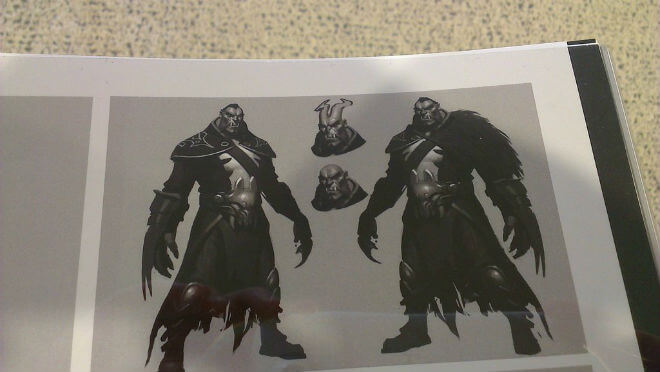
Hidden Folks


Hidden Folks is a game that’s received a lot of praise and award nominations, but you still might have missed it.

In the game, players “search for hidden folks in hand-drawn, interactive, miniature landscapes. Unfurl tent flaps, cut through bushes, slam doors, and poke some crocodiles!

Development and Who’s Behind the Game


Hidden Folks was created by Adriaan de John, the game designer, and Sylvain Tegroeg, the illustrator. “Everything in Hidden Folks is draw [sic] by hand, scanned in, placed, layered manually, animated, and scripted. All sounds you’ll hear originate from the developer’s mouths.

The two met in 2014, largely by chance, and a joke about making a game together quickly turned into Hidden Figures less than three years later.

Hidden Folks also had contributions from Mirthe Venbrux, the assistant producer; Martin Kvale, the video game sound designer; Aran Koning, the assistant programmer; Bram van Dijk, the writer.

The partners continue to add and develop new content for the game and have expanded from an original 15 areas to over 20 hand-drawn areas for players to explore.
Gameplay


The game has the nostalgic feel of a Where’s Waldo book…except everything is interactive and moving! The illustrations are wonderful and really help make the game what it is.

Players will get a strip of targets on each level showing them what to look for. They can tap each target if they need a hint. Once they find enough of the targets on a specific level, they will unlock the next area.

Where to Get it?


Hidden Folks is easier to find in digital stores than some of the in-game targets you’ll be looking for. You can find it on Steam, Google Play, and the App Store.

The computer version retails for $7.99 while the mobile and tablets version retails for $3.99.

Praise from Steam players:

Is there anyone alive who doesn’t love Where’s Waldo? I think not, ‘cause you’d have to be pretty dead inside not to adore that goofy, stylish fellow and his equally eclectic friends…aside from a few antiquated attempts those enthralling adventures never made it to the gaming world, and no one really tired to emulate the experience. At least, not until now.– Audish

This game brings back fond memories of childhood, only better. – Ramon

An incredibly charming hidden object game, like Where’s wally with dozens of objects to find across multiple maps, really nicely drawn aesthetic, amazing sound effects that make you smile every time you click on something, helpful clues if you get too stuck (but not overly obvious, just the general location or a hint). Can’t recommend it enough.” – Havok16

If a game makes Havok smile, you know it’s a light-hearted, pleasant way to pass the time. You’ll have as much fun hunting down objects as you will simply enjoying the illustrations and animations.

Claybook


Claybook is a neat looking game where everything in-game is made out of clay. “Everything acts like it’s made of real clay. Every inch of the environment can be shaped and molded. Everything has matter inside it, not just an out shell. Clay can be deformed, destroyed and frozen to solid.

Development and Who’s Behind the Game


Claybook was designed and published by Second Order. The studio was formed in 2015 (in October, wouldn’t you know it…) by two people: Sebastian Aaltonen and Sami Saarinen. They both worked as game developers together on the Trials game series prior to starting their own studio.

Claybook is built with a technology they developed in-house, which they refer to as Clayfield. They relied on Unreal Engine 4 to build their clayfield tech. If you want more of the technical info, you can check out Sebastian Aaltonen’s tweet thread.

Gameplay


The videos make this game look like a bunch of fun. You’re using certain clay objects at your disposal (a clay ball, a clay cube, even a clay rocket?) to solve challenges in each chapter of the game.

The game is compatible with up to four local players. We always appreciate when developers include split-screen play–something that many of the AAA titles have been steering away from for years in favor of online multiplayer.

Claybook includes “a unique clay simulation and visualization technology that has been designed from ground up for user-generated content, making it easy for player to unleash their creativity.

Player creativity can take shape through an “amazing in-game creation tool that lets you build your own books and chapters and share them with the Claybook community.” No modding, coding, or technical skills necessary in order to take advantage of these tools.

Where to Get it?


Claybook is available in its early access form on Steam, and in its game preview form on Xbox Live.

There are plans to bring Claybook to PS4 later in 2018.

The game is also available through a Humble Bundle sales widget on the game’s homepage: you’ll get a Steam key to access the game and the developers receive a greater portion of the purchase.

Remnants of Naezith


What happens when a human shares his body with the soul of an ancient thunder dragon?

You get Remnants of Naezith, a “fast-paced precision platformer oriented around grappling hook mechanics.

Development and Who’s Behind the Game


Tolga Ay started developing Remnants of Naezith in August of 2014. He is a student at Yildiz Technical University in the Department of Computer Engineering.

He’s also a competitive FPS player for games like Overwatch, Quake, and Team Fortress 2. It’s his love of fast-paced games, quick reaction times, and finely-honed skills that led him to develop Remnants of Naezith.

He had some help on the game with level design, technical support, graphics, playtesting, etc.

Gameplay


Remnants of Naezith lets you “rush through levels and swing around obstacles, improve your skills to climb the leaderboards, or even create your own levels. The fun of swinging with grappling hooks and the amazing feel of acceleration makes a great combination during the gameplay.

The game features four chapters, with 20 levels in each–not including the secret levels only unlocked by finding the hidden remnants.

Remnants of Naezith features leaderboards (which feature top player replays) so you can see how the best players are setting their records.

The game also features a custom level editor, which lets you build, share, and explore levels built by the community.

Where to Get it?


You can download Remnants of Naezith on Steam, where it’s available for $9.99.

Here’s what people have been saying about the game:

I don’t usually get addicted to speedrunning games but this game really hooked me. I’ve already sunk more than a hundred hours into this as a beta tester and it still feels as fresh as day 1…I highly recommend this game to anyone who likes platformers.– CheZ’Da

The controls in this game are absolutely top notch. The art is very good, if a little busy. The sense of speed and the complexity of the controls based on the three jump/hook/boost buttons is amazing…if you’re looking to master a game, this is the one to master.– Tankor Smash

A fast paced platformer that is undeniably influenced from an old IOS game called Hook Champ…The controls are tight and responsive. Which for a platformer of this speed is a necessity. It feels completely natural after only the first few levels…I can’t wait to see what the later levels have in store.– DrunkHobo

These are just a few comments we pulled from the 200+ reviews left on Steam.

The general consensus is: the game’s mechanics will push you to try and master the game, to do the level faster, to watch how the fastest players do it, and to emulate them.

This is a game for players who want to push their platforming skills to the limit.

Our Favorite Video Game Easter Eggs

0

gaming easter eggs
Easter Eggs need no introduction! You’re not here for our eggy pandering, you just want the yolk!

Feast, dear reader. Gorge yourself on these Eggs:

The Very First Easter Egg

If you know video game history (or SPOILER ALERT recently saw Ready Player One) you’re familiar with the Easter Egg hidden in Adventure on the Atari 2600.

This egg is recognized as the first one to appear in a video game. The process of getting to the easter egg is a bit complex, which makes you wonder how anyone found it in the first place.

But, find it they did. The trick is to perform a specific sequence of events that reveal a “dot” (a hidden pixel) on the corner of one screen. Bring that dot to a specific area and you’ll be treated to the Easter egg:

“Created by…Warren Robinett…”

Yeah, it’s just the creator’s name. Which might not be as exciting as other eggs on this list, but for the time it was fantastic. Games didn’t include a whole lot of “credits” back then (if they included any at all), so Robinett hid his name in the game. Genius.

Rumor has it that this easter egg may have been the first hidden and discovered in modern media, and many credits this secret with coining the term in the first place.

Head Knock, Who’s There?

Have you played Star Wars Battlefront 2? Seen the movies? Fan of both? One? Neither?

Well, a hard-to-spot egg hides on the neck of a stormtrooper in one cutscene in the game. It comes from A New Hope, where a stormtrooper comically bumped his head on a low-hanging door.

The game’s cutscene shows two stormtroopers walking far in the background of some imperial hangar, and, as they go to walk under a staircase, the stormtrooper bumps his head.

Same guy? Who knows!? Either way, it’s an easy thing to appreciate, even if you aren’t a diehard fan of the galaxy far, far away.

Speaking of all-things-knocks…Ground Pound, anyone?

Time for some monkey business with this one…We travel back in time to a game that came out in November of 1999 on the Nintendo 64:

Donkey Kong 64.
donkey kong 64 rainbow coin

There was a lot to like about the game, like an unforgettable rap in the beginning and a fun cast of characters.

And then there was something that went overlooked for 17 years…A rainbow coin.

The coin was hidden underground on a floating island. You had to use Donkey Kong’s ground pound move to reveal the coin, and never has a ground pound made so many so unhappy.

All of a sudden, all the speedrun records and completion records were….wrong. No one else had found this coin, and so no one else had technically hit 100% completion.

It makes you wonder…. What else have we missed?!

About that Swimming Pool…

Here’s an Easter Egg that did not take 17 years to find.

In Uncharted 2, you can go to the top of the Hotel Shangri-La in chapter 6.

If you decide to go into the pool for some R and R, Nathan will start playing the classic game Marco Polo, with his female companion. She reluctantly provides a “polo” to answer his call.

Is that You, Mr. Ratman?

Portal 2 is a fun, distance-warping jaunt where you get to use a portal gun to navigate a series of challenges.

It’s a total blast, just like its predecessor.

When you do finally decide to fire it up, be on the lookout for some peculiar graffiti (and a mug collection).

portal-2-easter-egg

If you walk up to the walls where you see these drawings (from a character named Ratman), you can hear faint noises playing in the background. Is it chanting? Is it a song playing? Is it Doug Ratman, giving you the runaround again?

No one is sure, but it’s a fun egg to hunt nonetheless.

It Doesn’t Matter How Dark it Gets, Someone Always Find the Cheese

Perfect Dark came out for Nintendo 64 and was a real blast, especially for players itching for gameplay similar to Goldeneye.

It didn’t take long for players to find curious additions to every level in the campaign…

Yes, a piece of swiss cheese.

No one knows what the cheese is for. To this day, gamers go back and forth on why the cheese is there.

Was it supposed to do something? Did its original purpose get cut? Was it for fun? Are we the butt of the ultimate video game cheese prank?

We might never know, but we can still find dat cheez.

Yosemite Bear

January 8th, 2010 was an incredible day for…rainbows?

On that day “it was rainbowing for at least an hour…It was incredible. The camera could not capture the vivid intensity and brightness. Look into the mirror, look into your soul!”

Yes, it was on this day that the infamous double rainbow blessed the world with its appearance. YouTuber Yosemitebear 62 went on about the double rainbow for over 3 minutes: marveling at its beauty, unpacking its meaning, and enjoying the phenomenon like no one else could.

borderland-2-easter-egg

But we’re not talking about nature’s Easter Eggs, here. We’re just giving you context for a great little diddy hidden in Borderlands 2. Find a secret spot behind a Hyperion base and you’re treated to either ClapTrap or Handsome Jack recreating the original double rainbow reaction.

In Honor of Pacific Rim

With movies coming out every couple of years where giant creatures rise from the depths (as if the ocean wasn’t terrifying enough?), it’s no surprise that some of that murky madness should find its way into video games.

In Saints Row 2, it’s possible to find a giant monstrosity, deep in the ocean. What is this magnificent, terrifying beast?

It’s not Godzilla. It’s a giant pink rabbit.

pink rabbit - Saints Row

Once you catch the scent of this easter egg, you just follow the arrows until you make it to the rabbit’s resting place. It will slowly rise out of the water to reward you for your perseverance.

Whatcha’ Lookin’ at, Robbie?

It turns out size isn’t everything, gang.

There’s a character in the Silent Hill series that works its way into Silent Hill 4 as a plush doll.

This doll is Robbie the Rabbit. Robbie the Rabbit is a pink bunny with a bloody face.

You can peep Robbie in a room in your neighbor Eileen’s home. Take a look through the hole in the wall, and there it sits (watch without sound, you don’t need it), slouched over. Why would Eileen have a Robbie doll?

Silent Hill's easter egg - Robbie

Who knows? Everyone has their own “stuff” to work out. Leave her be.

But, it gets worse for you. If you look after Eileen has gone missing, Robbie is staring right at you, fluffy, plush, murderous finger-pointing.

Boo!

How Did This Get Here?

Nothing tickles us more than cross-IP Easter Eggs.

And X-Men Origins: Wolverine doubles down on the references.

First, there’s a cross-medium reference to a hit television series: Lost. Hidden in the jungle for Wolverine to find is the famous hatch from the show.

If that’s not enough, how about a corrupting blade imbued with a sorrowful cold?

Frostmourne, the blade of World of Warcraft fame, lies hidden in the game as well. Not that Wolverine needs any additional blades or anything corrupting his spirit…

Is that Your Heart Beating?

Do you know who has fun with their Easter Eggs? Rockstar games, that’s who.

In Grand Theft Auto IV, you can get inside the Statue of Happiness (via a helicopter and some doors).

You’ll know you’re in the right place when you see a sign that says “no hidden content this way” (classic). Walk through that door and voila, you’ll be inside the statue and you’ll find the heart of the city.

Or at least the biggest heart in the city. Lady Happiness has an enormous beating heart chained up and suspended inside of her.

Where is the line, Rockstar?? And does nothing phase Niko?

Bonus: In GTA: San Andreas you can get to the top of Gant Bridge, via jetpack, and you’ll find a sign that says “there are no Easter Eggs up here. Go away.”

These are just the tip of the iceberg for GTA Easter Eggs.

Should Have Read the Obits in Orbit

Spoiler alert, gang.

If, for some reason, you haven’t beaten Dead Space…. SKIP TO #13.

But, if you don’t mind having the ending ruined for you (or if you’ve already finished the game), then read on!

You play as Isaac and you’re on a derelict space station looking for Nicole.

If you look at the chapter titles for each of the 12 chapters…

And take the first initial from each…

It spells out a foreboding message. You can learn the truth before experiencing it in the campaign:

Nicole is Dead.

A Link to Chris’s Secret Room

We always appreciate a good acknowledgment of a random kid in a video game. Who doesn’t love the thrill of someone being featured or the excitement at the thought of worming your way into a video game?

In the Legend of Zelda: A Link to the Past, that lucky winner was Chris Houlihan. Nintendo held a competition back in 1990. The winner would get programmed into a future NES game. Chris won. So he was immortalized in the game in the form of a secret room.

As the Zelda Wiki points out, this room isn’t a normal part of the game. It exists in the game as a failsafe against the game crashing. If the game doesn’t know where to send Link (as in what room he’s supposed to go to next), the game will send him to Chris Houlihan’s secret room.

It’s not a total bust though–it has a whopping 45 blue rupees in there. What a hoard!

Who Are You Callin’ Turkey?

The assassin bloodline runs deep and wide through history in the Assassin’s Creed universe.

Sometimes the power of assassins crosses the gap into other species.

In Assassin’s Creed 3, you can get a turkey to come to you by whistling at a specific homestead.

When you find the turkey, you need to do the Konami code. The classic: up, up, down, down, left, right, left, right, B, A.

Poof!

Assassin Turkey! The turkey will put on an Assassin hood and take justice into his own hands (not really). Watch out, Templar scum!

Shoulda’ Left the Flying to Turkeys

Do you know anyone who loves cross-game jabs? Us, probably everybody.

In Witcher 2: Assassins of Kings, you might come across a dead man lying next to a hay bale. Geralt of Rivia lives in a dangerous time, a dangerous world. Monsters, men–they both abound, and they can be violent and ruthless.

A closer inspection of this dead man reveals that his death likely wasn’t caused by a monster or man (unless he was Lannister-ed).

No, the man, wearing a white assassin-style outfit, appears to have jumped and missed his target: the hay bale.

When you walk up, Geralt will say something like “Hm…Guess they never learn” totally ribbing Assassin’s Creed for the jump-into-hay-bales gameplay mechanic.

Don’t Forget Your Sandwiches!

You were almost a Jill sandwich!

This A+ line appeared in Resident Evil. Not only did it work its way into a meme, but it also worked its way into Dead Rising.

If you look at the names of some of the shops in the mall, you can find a restaurant named….you guessed it: Jill’s Sandwiches!

Still Better than Snakes?

There’s a scene in Indiana Jones and the Kingdom of the Crystal Skull where Indy’s trapped in a nuketown as a nuclear test, is about to go off.

To save himself, he climbs into a lead-lined fridge. The explosion launches him miles and miles from town until he eventually rolls out of the fridge onto some desert.

In the movie, he lives…But in the Fallout: New Vegas universe? Well…the fedora-wearing skeleton in an old fridge seems to tell a different story.

More Nuketown, Fewer Fridges!

In Call of Duty Black Ops 3, there’s a way to bring the mannequins to life on the Nuketown map.

The goal: shoot the heads off of every mannequin in two minutes or less.

Next step: fight for your life.

The mannequins will start spawning and chasing you around, similar to the zombie play mode.

If it gets to be too much, you could always try hiding in a fridge…

Yeehaw!

What’s more fun than playing video games? Playing video games in style!

And few games let you do that better than this Gears of War 2 Easter Egg. In the chapter where you’re riding those big vehicles, there are 3 cowboy hats hidden at the beginning of the level.

If you manage to shoot all three with your pistol as you drive past, some real magic happens:

Everyone gets a cowboy hat! These hats instantly appear on everyone’s head in your unit.

It’s not just your unit that gets hats, though…The Corpse you fight has a hat, too!

Everyone could do with just a pinch more rustic charm.

From Rumor to Legend

In the original Diablo, everyone believed these rumors that there was a “low level.”

There wasn’t.

But that’s not where this story ends. When Diablo II came out, there was a cow level! Though traditionally a bit more benign than their minotaur cousins, the bovine on the cow level mean business.

They walk on their two back legs and all wield two-handed axes. And, they travel in serious herds.

Diablo 2 - Cows

Have you made it to the Secret Cow Level? Have you experienced the “bovine bliss” that can only be found in Diablo?

Southern Hospitality

In Hitman: Blood Money there’s an Easter Egg that lets you take a proper southern hootenanny from above-average get-together to “where did everyone’s pants go?”

And it only requires a single, well-placed bullet.

There’s a coin hidden near the outside of the mansion. If you find it and shoot it with your pistol, well…Some party guests figure congratulations are in order.

A bunch of male NPCs will run over to you and start clapping.

The catch? They’ve all stripped down to their underwear.

Can’t say for sure if that coin has anything to do with the titular blood money, we’ll leave that mystery for 47.

Bonus: There’s a great Easter Egg in Hitman: Absolution during a time when you have a tough decision to make.

In “End of the Road” you can either shoot your target or leave him alone to die in the middle of the desert.

But those aren’t your only two options… Five vultures are sitting around you. Walk near them until they take flight. If you shoot all five while they’re in the sky, an ice cream truck will come careening out of nowhere and drive right into the target.

I scream. You Scream.

We all scream for ice cream.

Guy Savage

Ever had a dream about vampires? What about zombies?

It was probably nothing like Snake’s from Metal Gear Solid 3: Snake Eater.

There is a minigame embedded in MGS3 that you can only access by saving at a very specific point in the game: at Groznyj Grad after Naked Snake is placed in the cell, right after his torture session with Volgin.

When you load that save up, you won’t be in the cell (at first). Instead, you’ll be in Snake’s dream. You’ll have two hook swords, and you’ll be chased by zombie-like, police uniform-clad characters. Oh, and they have hook-swords too.

These enemies seem zombie-like, but the conversation before and after Snake’s dream revolves around vampires.

This dream sequence doesn’t appear to work on the 3DS version or the MGS3: HD version.

Bonus: Also in MGS3: Snake Eater, there’s a character called The End. An old sniper fella’.

There are a few ways to kill him: snipe him early, sneak up and attack him, or….wait him out.

If you save your game after initiating your hunt of The End and wait one week (or adjust your console’s internal clock to reflect a week+ later), when you do find The End, he’ll have died from old age.

Such a cool way to deal with an old enemy!

Can’t Pick Just One

There are several fun Easter Egg inclusions worked into the Halo franchise over the years.

Some the game tells you about (i.e. the skulls). Others, the game does not.

Like when you stumble on two nondescript guards stationed near crates and a forklift at the beginning of chapter 6 in Halo 4. If you give it a minute, the guards will start talking. They’re voiced by Andy Richter and Conan O’Brien.

Or the “monkey” family with identical human faces in the first level of Halo 3.

If you want to see every Easter Egg from Halo: The Master Chief Collection in a condensed 22-minute video, you can do that too.

Just a Day Trip to the Lake

Ash Lake, that is…

There’s an entire zone in Dark Souls that’s easy to miss. It’s hidden behind a fake wall, where you’ll find a chest. And then behind that chest is another fake wall. Walking through will take you to Dark Hollow. From there it’s a long trip down trunks and roots and mushrooms until you reach the bottom and find Ash Lake.

Dark Souls - Ash Lake

There are all kinds of things to worry about: Little mushrooms. Giant mushrooms. Getting cursed. Falling off the narrow paths. And, when you do make it to Ash Lake, it turns out there’s a hydra down there.

Oh, and let’s not forget the Everlasting Dragon who calls Ash Lake home, too.

Binding of Isaac

For the penultimate Egg on our list, we wanted to pick something that took a lot of people, a lot of clever thinking, and a lot of physical, real-world searching to find.

The Binding of Isaac expansions did just that. People went on a real-life treasure hunt, decoded clues, looked for hints everywhere, and finally found what they were looking for in the real world. As a result, they unlocked a new character in the game.

The cleverness and dedication of both the game creators and the fans make you appreciate human ingenuity (and our propensity for both fun and solving problems).

You need to read the full story of the Binding of Isaac almost-goose chase.

The Issue of Diversity in Gaming

0

video game industry diversity problem
The better title might be a lack of diversity in video games.

Historically, the video game industry has been dominated by white men. There are a number of reasons for this and every once in a while we see pieces of it in internet arguments.

Some claim the culture isn’t welcoming because it’s sexist and racist. Others say of course it’s welcoming, it’s just other genders and races aren’t as interested in it. Then there’s the counter-argument that minorities aren’t interested because they don’t see it as an option, and they aren’t encouraged to pursue it.

And then you have the counterargument to that which says they aren’t encouraged to pursue it because they aren’t interested in pursuing it.

Chicken, meet Egg. Egg, meet chicken. Which one of you came first?

We think we’ll have our answer as more people of color get into games and spur younger generations to get involved. In fact, programs like this already exist.

Despite groups like Gamergate who initiate aggressive internet-based attacks on women in the industry, more genders and people of color are getting involved with games in one form or another.

But there’s still a long way to go.

Understanding why there’s a lack of diversity is one path to trying to fix it. Endlessly arguing over why there’s a lack of diversity is not. Especially when some of the more common arguments are based in speculation.

The fact is, the video game industry is still not diverse.

But the majority of the industry is ready for that to change.

This article is going to first take a look at some numbers to show what’s going on. Then we’ll take a look at some baby steps that are walking the video game industry, slowly, (and hopefully surely) in the direction of a more complete, inclusive, and diverse version of itself.

Industry Numbers: Who’s Working on Video Games?


The following numbers come from the 2017 Developer Satisfaction Survey conducted by the International Game Developers Association, also known as IGDA.

First up: Some age numbers.


Diversity in Gaming - Age

  • 20% of the respondents were 25 to 29 years old
  • 24% of the respondents were 30 to 34 years old
  • 17% of the respondents were in their 40s
  • 5% of the respondents said they were older than 50 years old
  • The youngest respondent(s were/) was 18, and the oldest was/were 67

The average age of the general labor force in the United States is 42, which is clearly not the case in the video game industry.

The typical age of respondents in this sample, according to the IGDA, was 35 years old. Seven years younger than the US average.

If we had to speculate, we’d say this is more a product of the recent popularity explosion in video games. This leads to more members of the younger generation getting into games, driving the average age down.

It’s also easier than ever to start your own studio or do freelance work, which is both appealing ideas to a lot of Millennials, and perhaps less traditional or common among previous generations.

Then there’s also the burnout. The game industry, especially the AAA game industry, can often push industry veterans onto new career paths. It’s no secret that the industry loses a lot of its appeal after one too many “crunch times” (which is probably just one crunch time).

Keep in mind that these are our best guesses based on the research provided and the numbers in the industry. Although the average ages are lower than the general labor industries, this seems less a product of ageism and more a product of the industry’s boom and sometimes insane overtime practices.

Next: Gender numbers.


Diversity in Gaming - Gender

  • 74% of respondents were male
  • 21% of respondents were female
  • 2% of respondents were male to female transgender
  • Less than 1% of respondents were female to male transgender
  • 2% of respondents were “other”

That pretty much lays it to rest. The 2016 census for the US (which only records biological sex) reported 51% women, 49% men. Not exactly reflective of the video game industry. There are 350% more men in the industry than women.

Third: Race/Ethnicity numbers.


Diversity in Gaming - Race, Ethnicity, Ancestry
For this part of the IGDA survey, respondents could select up to 3 options. If you see two conflicting figures that seem to say the same thing, look for the keyword “only.” If “only” isn’t present, that figure represents the number of respondents who picked that response and at least one other response.

  • 68% of respondents identified as white/Caucasian/European
  • 61% of respondents only identified as white/Caucasian/European
  • 18% of respondents identified as East/South East Asian
  • 5% of respondents identified as Hispanic or Latino
  • 3% of respondents identified as Pacific Islanders
  • 2% of respondents identified as Arabian or West Asian
  • 2% of respondents identified as Aboriginal or Indigenous peoples
  • 1% of respondents identified as Black/African American or African

The 2016 US census reports 61% of the population was white, 18% was Hispanic, 13% was black, and 6% was Asian. What do you make of that?

Meanwhile, in a PEW study looking at who plays games and identifies as a gamer, “some 19% of Hispanics self-identify as a gamer, compared with 11% of blacks and 7% of whites.” Do game developers not consider themselves gamers?

Obviously, all self-identifying gamers do not become game developers. There are other variables lurking here. Numbers paint a picture that can seem bulletproof, but you can’t forget rule number one of statistics, and all the implications it holds: Correlation does not imply causation.

Fourth: Sexual orientation numbers.


Gaming in Diversity - Sexual Orientation

  • 81% of respondents identified as heterosexual
  • 5% of respondents identified as homosexual
  • 11% of respondents identified as bisexual
  • 3% of respondents identified as other

These numbers are actually higher than the reported US statistics, but the language is interesting. It says that an estimated 3.5% of adults identify as gay, lesbian, or bisexual. If this estimated number is accurate, then the video game industry is more diverse in sexual orientation than the US.

And, regarding diversity progress, Rolling Stone put it well, saying that “81 percent of developers feel that workplace diversity is either “very important” or “somewhat important”…Though developers feel a need for increased diversity in the industry, the IDGA reports only 42 percent of people polled feel its taken steps to create a more diverse workplace”. That figure is down from 47% in the IDGA 2016 survey.

The importance of diversity is being acknowledged, but less than half of respondents see any of that translating to action within the industry.

Why Isn’t the Industry Noticeably Improving?


It’s hard to say why that is.

Some people say it’s AAA games that are dominated by white men. These same people are looking to Indie developers to save the day.

Other critics say the lingering sense of game development not being a “proper job” is hurting diversity.

It’s hard to say for sure.

What About In-Game Diversity?


In-game diversity is another problem, and research points to a seriously detrimental effect for young people of color playing video games.

The University of Saskatchewan’s Cale Passmore, a Human-Computer researcher at the school, conducted a study on the effects of a lack of in-game diversity. According to the Rolling Stone interview with Passmore, he says “The same long-term effects of depression, detachment, disengagement, low self-worth are present as outcomes, as you would see in everyday, daily racism”.

As gamers, we want to play games that have characters that resonate with us, that we can identify with.

The main protagonists in video games are often white and they’re often male. Likely a result of the white male-dominated game dev workforce. The flip side of this is that any people of color characters are at risk of showing up as stereotypes in games.

A way to fix that? Hiring people from the races, cultures, lifestyles you’re trying to recreate in games.

The Push For More Diversity


Instead of simply (and vaguely) demanding change, people and organizations are out there facilitating it.

Take, for example, Girls Who Code.

Girls Who Code is a group “founded with a single mission: to close the gender gap in technology”.

They’ve already reached nearly 90,000 girls from every state in the U.S. That’s some serious progress.

Reshma, the founder, writes “We’ve reached a moment unmatched in our history, a moment as full of anger and anguish as it is promise and potential. Women and girls across the country are coming together to correct centuries-long power imbalances across lines of gender, race, sexuality, and more.

Girls Who Code offers after-school club programs, summer campus programs, and longer summer immersion programs.

Girls Make Games hosts “a series of international summer camps, workshops and game jams designed to inspire the next generation of designers, creators, and engineers.

They have a great video you can watch on their website, here. And they have a number of partners: Xbox, Intel, Playstation, Discord, and more.

Even PlayStation is trying to help do its part to celebrate and support everyone, regardless of sexual orientation. In 2017, they sponsored London Pride. They even included the Twitter hashtag #ForALLthePlayers.

There were plenty of negative responses to the announcement (there always are). There were likely accusations of “cash grab” or “fake support” and, yes, with big corporations you always have to wonder if they’re truly doing anything altruistically.

But in this case, PlayStation Europe has an LGBT group within the company. It was their idea, they spearheaded it, and, as people who openly identify as LGBT, they did it for the right reasons.

There’s still a ways to go.

But game developers will catch on. This is a big bus that needs turning–it won’t be fixed overnight.

Companies are starting to be more inclusive in their games. Consider Uncharted: The Lost Legacy. The hugely successful franchise features two strong female leads in their latest installment.

Uncharted the lost legacy female leads
If big franchises like Assassin’s Creed, Star Wars, and Uncharted are willing to feature people of color, women, any protagonist that isn’t a white male, then surely the industry is listening and moving in the right direction.

Cryptocurrencies in Gaming: Tokens and Alt-Coins

0

Gaming Cryptocurrency and Coins Guide
Disclaimer: Speculating Cryptocurrency is risky and none of the information provided in this article should be considered financial advice.

Even if you live under a rock, you’ve probably heard about cryptocurrency, bitcoin, blockchain, or some other “latest craze” jargon.

Cryptocurrency means different things to different people. Some people love it. Other people are afraid of it. And everyone else just scratches their head.

Is there something to the crypto craze that is sweeping through investing and gaming circles alike?

This guide explores cryptocurrency (by talking about what the heck it is), blockchain, and then looks at how this technology is being adapted for use in video games. There’s a lot of action, a little bit of craziness, and a lot of interesting ideas. You don’t want to miss this.

But here’s the other thing: No one really knows what’s going on with cryptocurrencies. The ideas sound good! But they are still uncertain investments. You should be ready to lose any money you invest because that’s just how things could shake out.

What the Heck Is Cryptocurrency?


Cryptocurrency is a digital currency. It doesn’t exist in a physical form (despite all the fun graphics showing refreshing minted tokens). It has no intrinsic value. It’s decentralized (there is no “central authority” controlling the supply–no banks or governments can artificially inflate or deflate the value or limit how much is available).

There are also hundreds of cryptocurrencies available. Some of them are serious, others are less so.

Cryptocurrencies were a byproduct of the solution for a tangential challenge. The creator(s) of bitcoin was trying to build a digital cash system that operated in a decentralized fashion (something people didn’t think was possible). What he came up with involved blockchain and bitcoin.

Here’s (Basically) How Cryptocurrencies like Bitcoin Work:

Cryptocurrencies rely on a network of peers. Every peer on the network has access to the record database. This database shows every single transaction that has ever taken place, and also shows the balance of every account.

Say Grognak gives 10 Bitcoin to Pipboy. That is a transaction. That transaction is authenticated by Grognak’s private key.

The pivotal next step after the signing is confirmation. This is where “miners” come into play. Miners confirm transactions.

The miners need to solve very complex cryptographic puzzles in order to confirm transactions, and that’s when they’re rewarded with the cryptocurrency token (hence the “Crypto”…the currency-earning process is inextricably tied to cryptography).

Once a block is added to the chain, every peer on the network then gets a record of this transaction.

There are only so many coins that can be “mined.” And each coin is harder and more complex to mine than the last, which limits how many can be mined in a given time frame.

There are several fascinating elements to cryptocurrencies and blockchain.

One: Transactions can take place on a global scale almost immediately, regardless of the location of both parties–and it takes place more or less anonymously…Your real-world identity isn’t linked to your public key.

All of your transactions occur under this string of numbers, known as a public key, but you can’t identify who the real-life person is just by looking at their public key alias.

Two: Transactions are irreversible. Once a miner confirms a transaction, that transaction is recorded permanently, forever, for all time on the blockchain. There is no “undo” button. This permanence is both powerful and intimidating.

No government, for example, could stop you from making a transaction in the cryptocurrency space, or restrict you from accepting a payment (beyond regulating your access to cryptocurrencies by blocking or restricting access to wallet software. A “wallet” is a program designed to let you hold your crypto coins in a safe, private digital space.

With fiat currency (like the US dollar) the control over the supply and value of the currency is controlled by banks and governments. Even how you use your money within the system is controlled by banks and governments: frozen accounts, rejected payments, etc.

They can lower the value by printing more money. They can adjust interest rates. All of these and more influence what your US dollar is worth. Cryptocurrencies are not impacted by governments or banks unless members of either body purchase large quantities or sell their coins and impact the market price.

But, the cool thing about blockchain technology is…if they do sell it or buy it, there is a public, permanent record of that transaction in the blockchain history of those coins. Let’s talk a little about Blockchain.

(P.S. There are more in-depth explanations of the cryptocurrency process if you’re interested or want a deeper understanding of the process works. )

Why Should You Care About Blockchain?


Blockchain is different and exciting because the database it creates isn’t stored in a single, central location. Blockchain is completely decentralized, with the database distributed to every peer in the network.

Every transaction is recorded in a new “block.” Blocks cannot be altered. Every transaction on the blockchain is permanent, public, and protected from manipulation because of decentralization.

Every transaction is stored everywhere at once, so hackers can’t target a single point and corrupt the data. To successfully manipulate the system, you would need enough computing power to override millions of machines hosting the database at the same time.

And, every transaction is available to anyone with an internet connection. You can see “who” partook in which transactions.

It’s easy to see how this is helpful in cryptocurrency.

But what about other applications?

People are excited because blockchain could have a place in voting and politics. It could eliminate or mitigate voter fraud and election rigging. It could change the way companies, cities, states, or countries are run by building blockchain into the decision-making processes for these entities (and turning it into a more transparent collaborative process).

And, of course, there’s the use of blockchain (and cryptocurrencies) in video games.

This element is especially interesting to us, so we’ll spend the rest of this guide looking at those potential applications, the video game-based cryptocurrencies that are emerging, and how coin creators, developers, and players could change the video game industry with this technology.

Cryptocurrency and Video Games–What Are the Potential Implications?


Crypto and GamingBefore we get into specific video game currencies and platforms, we should look at the general ideas behind the push.
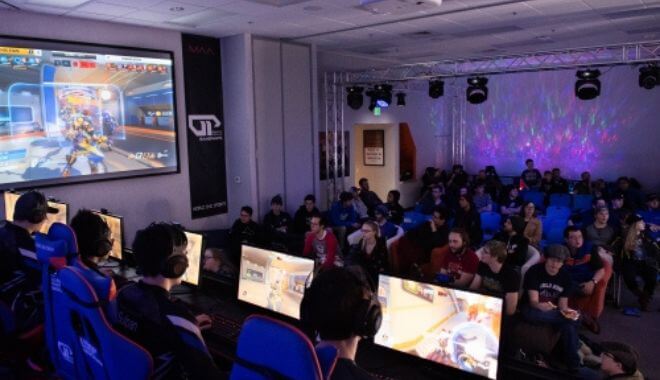
First of all, there’s a big crossover between the gaming audience and the cryptocurrency enthusiasts. This swollen-center Venn diagram has likely helped fuel the push for new incorporating cryptocurrencies into video games.

Right now, some game devs are losing profits when players sell their unique skins or game items outside of the game on the grey market.

To solve this issue, game developers and cryptocurrency builders are looking at creating assets you purchase in-game with crypto coins.

This would mean digital assets that you actually own. You really want this sword cosmetic? Buy it with your Swordcoin* (*not a real coin…at the time of writing, anyway…) and voila, now you own that sword. It is yours.

Picture the marketplace being similar to Steam. You buy a game with money, then you own it and it’s yours forever.

With Coins, you’d pay for items with the specific currency and then you’d own it. You could sell it. You could use it. Or you could hang onto it as a memento.

Here’s where the concept gets even cooler…

Developers could make games in the same universe and allow for items to crossover between the games. You could own a weapon and use it in multiple games. It’s kind of like the crossover from one game, like Mass Effect, where you can bring your character into the next installment. But instead of the same series, it’d be a completely different game.

Enjin, the popular platform, is developing Enjin Coin as a way to tokenize in-game purchases.

They pitch a really interesting example of the cross-game item compatibility we mentioned above.

Say a developer creates two MMORPGs, one set in a futuristic sci-fi world, the other in a fantasy landscape.

You would be able to play each game without the other. But, developers could create compound items that would need material from both games in order for players to craft them.

The blood of a dragon and a mythril shard combined with a nova battery and a tractor beam lens could create some kind of impressive magic-meets-science weapon (oh, hello Asgard!). Then you could use the weapon in either game. And maybe in other games made by the same developer.

And it would be yours. As a player, you could use it. You could hang onto it in your “wallet” as a relic of some of your best gaming memories, or you could sell it (or rent it!) for tokens to players who haven’t completed the challenge yet.

There are even more possibilities: quests, stories, etc. that start you on a spaceship and end with you as a slayer of dragons.

The ideas are still rolling in as developers and cryptocurrency inventors get more creative in realizing the full potential of cryptocurrencies and blockchain. Let’s talk about four of the more popular gaming-based cryptocurrencies. We’ll start with Enjin Coin.

Enjin Coin


One of the biggest cryptocurrencies to see the light of day is Enjin Coin.

Enjin coin is offered by Enjin, which is “the largest social gaming website platform in the world” with 19 million gamers, over 250,000 gaming communities, and reaching a ballpark of 60 million views per month globally.

Enjin Coin is “An ERC-20 token supported by a powerful framework of open-source smart contracts and software development kits (SDKs)”.

You may have heard about Enjin coin–they partnered with NRG eSports as a way to help spread the word about blockchain and crypto in gaming. And, the partnership is using ENJ coin technology to “reward’ their fans for participating in the technology.

These custom-branded (since Enjin coins are customizable) NRG tokens can be redeemed by entering raffles and winning prizes.

The coin itself follows an ERC-20 framework. That just means the coin uses Ethereum blockchain (an established cryptocurrency, largely regarded as the second biggest currency after Bitcoin).

The ERC-20 Framework is a set of immutable “laws” that anyone looking to use the Ethereum Blockchain must follow.

Enjin Coin is also a platform that lets developers and players “create, manage, distribute, and trade virtual goods. Giving game developers and content creators a new model of virtual ownership.”

Enjin Coin provides the open-source SDKs for wallets and payment platforms for devs to incorporate the currency into their games.

Players will be able to “bring or trade their assets from game to game, community to community, growing their digital wallet with real value as they play.”

Enjin Coin is the platform with a vision for the cross-game item creation (magic-science weapon) but they have other interesting ideas, too.

Ideas from Enjin Coin on Crowdfunding and Character Rentals:

Enjin Coin talks about offering crowdfunding incentives in the form of digital assets so that studios can cut back on overhead costs for physical items.

Crowdfunding rewards for bigger donors tend to be shirts, mugs, maybe an action figure or a collectible edition. Enjin Coin posits that digital assets could save the studio money.

It seems like it could actually drive more engagement, too…Enjin Coin points to in-game items, currency, a plot of land, or extra character accounts as in-game rewards that could boost donor engagement.

And, in some cases, these assets could work beyond that particular game, or have real-life value in the form of Enjin Coins on the marketplace. With blockchain the item wouldn’t just appear in your inventory, or locked on one saved game of one of your characters: it would be an accessible, transferable digital asset.

The other idea Enjin Coin discusses with the power of blockchain is renting your character. If you have a high-end character in a game like an FPS, or really unique skins, or a rare weapon, you could rent this item out to other players for X amount of Enjin Coin per day.

The other users could try it out (or use it to make their noob clan jealous), it keeps the item transactions in-game (as opposed to on the grey market), and the owner of the weapon gets to benefit from their hard work/long hours in the game.

These are all interesting ideas…But they’re largely just ideas.

The Cons of Enjin Coin

The problem with Enjin Coin (and most budding cryptocurrencies) is that people don’t really know what to do with it yet.

It’s in the early adoption stage.

If and when this catches on, we could see really interesting crossovers of in-game items, lucrative rentals, players benefiting from the marketplace both in-game and fiscally, etc.

But, for now, no one is doing this. No one knows for sure if cryptocurrencies will catch on, or if blockchain technology will work its way into video games officially.

The other issue is if crypto and blockchain do catch on in video games, which one will win out? Will we have one universal cryptocurrency for gaming?

Or will we always have as many as we do now?

What about dips in value? How do devs and players determine the price of items? Both in cash and in Enjin Coin?

There are a lot of unanswered questions that don’t just plague Enjin Coin, but all cryptocurrency creators in the video game sphere.

That being said, Enjin Coin has 756,192,535 coins circulating at the time of this guide, with a USD market cap of $86,277,787.

How to Purchase Enjin Coin

You can purchase Enjin Coin via Okex and Binance, both of which are linked from the Enjin Coin website.

The current price in USD was $0.114095 per coin, with a BTC price of 0.00001420 (for those paying with Bitcoin) and 0.00022467 ETH price (for those paying with Ethereum).

These prices will fluctuate all the time, so check back here for the latest numbers.

GTCoin


The GTCoin is another coin on the ethereum blockchain. It’s run by Game Tester, which is designed to facilitate collaboration between games devs and players by, you guessed it, testing games.

Here’s the vision for GTCoin, as laid out on their website:

“GTCoin is built for Gamers to buy game titles, hardware and in game content. Gamers are renowned as the worlds early adopters of all things tech and Crypto Currency is no exception. And best of all, Gamers can earth GTCoins by simply testing games when they register on GameTester.co. With the Global game market to grow from $108.9 billion in 2017 to $128.5 billion in 2020 (VentureBeat) the demand for GTCoin is growing. Gamers often transact across borders and crypto currency is the most effective means of currency transaction without the ridiculous costs or delays of currency exchange.”

Through blockchain, Game Tester users will be able to assign specific access to games via GTKeys.

The keys will limit the in-game playability to hone in on what the devs are hoping to test and limit the timeframe in which the game can be tested. These keys also make it easy for players to buy the games they test as soon as they come out.

As a player, the Game Tester platform will actually reward your time with GTCoins. You’ll get “first” access to new games, and you’ll also have the opportunity to earn prizes and rewards if you engage with the platform regularly.

Developers can get valuable feedback for their games, they can build excitement for their games, and they can release their games confidently knowing these factors are in place.

The Cons of GTCoin

GTCoin suffers from the same pains as all cryptocurrencies: there’s no way to guarantee success or value.

If GTCoins end up being worth fractions of a cent, the player appeal for testing games plummets–where’s the incentive?

But, if GTCoin takes off, they have a strong case for recruiting players and game developers alike.

How to Purchase GTCoin

At the time of this guide, GTCoin is valued at $1.10 USD.

You can purchase coins from your GTCoin wallet after creating an account. They have options for volume bonuses and extra bonuses for those who HODL their GTCoins.

HODL is used a lot in the cryptocurrency world and just means holding your coins instead of selling them.

Game Credits


GameCredits does not beat around the bush when it comes to their aspirations: they want to be the universal blockchain-based digital currency for video games.

GameCredits plans to offer extra value for players when they use the currency to make in-game purchases. Any credits earned in one game would also be transferable to another.

For developers, GameCredits is offering 90% revenue margins through its mobile gaming store, GPlay. That’s a 20% increase over the 70% percent offered by the other stores in the industry.

They recently partnered with Unity Technologies, the world’s number one game-development platform, with 770 million titles made using its engine.” They also boast that 340 of the top 1000 free mobile games used Unity tools. The second most popular platform has 180 on the list.

The partnership with Unity makes this a digital currency to watch.

The Cons of GameCredits

Their goal is ambitious and they mention it several times. They want to be the universal gaming currency.

So what happens if they fail in that endeavor? What happens to the value of the coin?

Aside from being subject to the same cons as the other currencies, GameCredits say they’re going for total dominance in the video game world.

What could the losing conditions look like?

How to Purchase GameCredits

You can purchase GameCredits through the G Wallet. At the time of writing the currency was worth $1.62 USD per coin. There were 64,355,352 GameCredit coins in circulation.

And, if you’re so inclined, they also have options for mining through their GShare BETA app.

Crycash


Crycash currency is being built with the help of Crytek. And they’ve “already confirmed integration into the renowned bestsellers from Crytek, with more partners to come.”

The idea behind Crycash is that gamers can earn the currency by completing challenges in the game. Instead of unlocking an “achievement” for satisfying certain in-game criteria, you’ll be rewarded with an actual currency that could be used for in-game purchases and more.

The creators hope this will incentivize gamers to play more games and ultimately lead to bigger audiences for developers. Crycash will soon be integrated with Warface, a free-to-play first-person shooter.

The Cons of Crycash

Crycash shares the same cons as the other coins. There’s just no way to tell how it will perform, but the idea of rewarding players for in-game challenges is an interesting idea.

How to Purchase Crycash

You can purchase Crycash (CRC) on sites like YObit.net, LIVECOIN.net, and IDEX.

They’re looking to add more purchasing platforms, soon (Binance, Okex, etc.).

Pocketful of Quarters


We included Pocketful of Quarters to show you how cryptocurrency really can be for anyone.

This company, founded by a father and son, has the son, a 12-year-old, for a CEO. It was the son’s idea, stemming from frustrations based around losing all his coins when quitting out of games.

Unlike other cryptos, Quarters is not looking for investors. Quarters are used purely for playing games.

They’re an ERC-20 coin, they have 10+ games and 100+ players using their for-games-only cryptocurrency.

The Future of Blockchain and Cryptocurrencies in Video Games


It’s hard to say where this will go. The world is still adjusting to cryptocurrencies. It’s very different from any trading system we’ve had up until this point. People are still feeling it out.

But the clever ideas are starting.

We talked about mixed-world items, quests, and stories, which might have your mind buzzing with interesting Ready Player One possibilities.

Then there are ideas like Decentraland. Decentraland is “a virtual world that runs on open standards.”

You can buy property on this virtual reality platform that relies on the Ethereum blockchain for record-keeping.

You can do anything you want with your plot of land in the virtual space… According to the website, “Your imagination is the limit: go to a casino, watch live music, attend a workshop, shop with friends, start a business, test drive a car, visit an underwater resort, and much, much more–all within a 360-degree, virtual world.”

Because land is purchased through blockchain, you have full, permanent, public ownership of your virtual plot. And the world lets you build upwards with no limit (that’s right, no zoning restrictions!).

It’s a pretty wild concept. It’s hard to predict if or when this will catch on…Or how this kind of immutable ownership of property could transfer into other games, like an MMORPG.

What if players could buy a shop in a game for coins/tokens and then “run” that shop in game by selling their own in-game assets? Or even assets for other games that take the currency?

How long until we’re all living in virtual reality? Our very own Oasis?

Or are we already in one?

The Strongest Esports College Programs

Varsity Esports Programs
$493 million. That’s the perceived value of the global esports market in 2017. Some expect that number to triple over the next couple of years, reaching $2.5 billion by 2023.

But, with the help of advertisers and investors, that number is rising much faster.

In 2017, investors contributed $750 million, making up 50% of the worldwide market size.

Advertisers and sponsors contributed over $250 million. Those numbers put the end-of-2017 market valuation of esports at 1.5 billion dollars. End-of-year projections expect esports to be a $2.7 billion market in 2023.

That’s some serious growth…

And now, US colleges are jumping on board the global esports train:

Only seven colleges and universities had varsity esports programs in July of 2016. By 2018 there were 63 institutions.

The largest US organization is the National Association of Collegiate Esports (NACE), which was formed in 2016. NACE is “a nonprofit membership association organized by and on behalf of our member institutions” (US colleges).

The NACE program describes a varsity esports program as “the principal teams representing a college or university. Primarily these teams compete against similar teams at peer educational institutions.

Esports, of course, are video games played competitively. This can be anything from 5 v 5 teamwork-testers like League of Legends, to 1 v 1 strategy-dominant Hearthstone, to anything-can-happen PUBG, and beyond.

Why Are College Varsity Esports a Big Deal?

The NACE website quotes an article in the June 22, 2015 issue of ESPN The Magazine, which said that 27 million people watched the 2014 championship tournament for League of Legends.

DOTA 2 pulled 20 million viewers in 2014.

Those are impressive numbers without context.

They’re even more impressive when you consider the viewership for other major sporting events that year: 5 million watched the National Hockey League’s Stanley Cup Finals. The World Series had 13.8 million. The NBA Finals had 15.5 million.

Clearly, professional esports is already a big deal.

Varsity Esports in Blowing Up

The growing popularity of college varsity esports is not just great for the future of professional esports and gaming in general (and make no mistake, it’s growing: the NCAA is already considering their role in the sport).

College varsity esports is another avenue in which colleges can attract students, celebrate the diversity of interests on campus, and invest money to benefit more of their student body.

With esports, a little investing goes a long way.

Esports training facilities are more affordable than regular sports training facilities. And, with the right sponsors, some programs don’t have to worry about supplying gaming chairs, or high-end computers, or other gear.

And an esports training facility doesn’t need a new, state-of-the-art million-dollar building. Many schools recommission old rooms that aren’t seeing much use. They gut it, spruce it up, and fill it with gaming gear.

Boom, there’s your varsity esports training facility.

When you think about the kind of money that’s dumped into sports (even state taxpayer money, for things like stadiums), it’s impressive to think that they’re getting outwatched by esports. Part of this could be the ease of viewing, since big tournaments, like the League of Legends Worlds, are free to watch and based online.

All you need is internet access. That’s significantly easier than, say, finding free MLB World Series coverage online (hint: barring free trials to service providers, a free option does not exist).

It’s accessible, it’s already popular, and now advertisers and sponsors are dumping hundreds of millions of dollars into it. If colleges continue to get on board with varsity programs (they show no signs of slowing down), this will be a “thing” in no time.

Future Implications of Esports in College?

While many in positions of power are slow to accept the place esports have in this world, everything is moving in the right direction.

The reason for the slow-to-adopt mindset probably rests in the stigma of playing video games: A lazy human’s pastime. A waste of time. Nerdy. Child’s entertainment. Just kids playing games.

The people in positions of power don’t all understand what esports really are. They don’t see the value in it, or they don’t care to see the value in it, likely because of some preconceived notions or some bad intel.

If you think about it, every college sport can be distilled to “kids playing games,” as Phil Alexander, a Miami University professor who teaches game design and co-directs the varsity esports team at Miami, said in an interview with Rolling Stone.

More colleges are joining every month, even with the $2500 registration fee instituted by NACE.

There’s another element that Alexander mentions which is really fascinating, which Brian Crecente captures well in his article: “[Alexander] sees the connection between pro players and college reversed from traditional sports. In esports…most pro-gamers’ careers end at 27 or 28 and then they want to go back to school.

This, as Alexander goes on to point out, would mean collegiate varsity esports could be a viable end-of-career option for professional esports competitors. They could get post-career scholarships, still have a place in esports, and get the education they bypassed to go pro in games in the first place.

It seems like a real win-win.

The growth of esports has everyone excited: even cities are getting involved.

Arlington, Texas, for example, is building a $10 million stadium.

They’re talking about a 100,000-square-foot space that “will be the largest and most flexible esports stadium in the country.

And this esports center isn’t even a new construction: they’re “transforming previously underutilized space of the Arling Convention Center,” which “showcases the adaptive re-use potential of esports. This innovative transformation of space is also comparatively inexpensive and more efficient than new construction. ”

If you’re wondering about the dynamics of varsity esports, or you’re interested in becoming a varsity player yourself, this next section is for you (Keep in mind that the list of colleges with varsity esports programs grows almost daily).

30 Strongest Varsity Esports Programs

Miami University


Miami University’s Master of Esports Management program, available both online and in a hybrid format, is a transformative journey from gaming passion to professional expertise.

The curriculum, rich in its depth and breadth, covers a spectrum of esports functions, from branding and marketing to team management, performance psychology, and even the legalities of broadcasting.

With a unique blend of online coursework and an in-person residency that offers hands-on experience with top-tier tournament organizations, students are primed to step confidently into the multifaceted world of esports management.

Boise State University

Boise State University (Idaho) Esports Program
Boise State Esports stands as a beacon of excellence in the gaming community, celebrating seven years of competitive play with over 1,100 match victories. Beyond the games, the program fosters a vibrant community of students, coaches, and enthusiasts, all united in their passion for esports.

With over 2,000 live broadcasts and a commitment to inclusivity, Boise State Esports is not just about competition; it’s about building skills, camaraderie, and a legacy in the gaming world.

University of California-Irvine

University of California-Irvine (California) Esports Program
The Esports Management program at UCI Division of Continuing Education is tailored for those eager to turn their gaming passion into a thriving career in the esports industry.

This comprehensive program offers students a deep dive into the world of esports, covering its history, global trends, and the intricate relationships between developers, athletes, fans, sponsors, and media.

With courses ranging from effective communication in esports to project management for live events, students are equipped with the tools and knowledge to navigate and excel in the ever-evolving esports landscape.

University of Akron

University of Akron (Ohio) Esports Program
The University of Akron’s Esports program offers passionate gamers not only a competitive platform but also a chance to earn scholarships of up to $1,000 as varsity team members.

Beyond the games, the university provides a rich blend of technology and computer-related degrees, ensuring students are well-prepared for in-demand careers in the gaming sector.

Additionally, their Esports Business Certificate equips students with the knowledge and skills to navigate the rapidly evolving global esports ecosystem, meeting the industry’s demand for informed business professionals.

Western Kentucky University

Western Kentucky University (Kentucky) Esports Program
The Western Kentucky University Varsity Esports program, established in 2016, has swiftly evolved into a comprehensive esports initiative, boasting teams in League of Legends, Overwatch, Rocket League, and Valorant. With a roster of 42 student players and 4 student coaches, the program offers scholarships ranging from $1,500 to $4,000 annually, reflecting WKU’s commitment to nurturing esports talent.

Positioned to be a pioneering program in collegiate esports, WKU provides its players with state-of-the-art equipment, a dedicated esports arena, and a vision to be recognized as the premier university for esports in the nation.

Harrisburg University

Harrisburg University (Pennsylvania) Esports Program
Harrisburg University’s B.S. in Esports Management, Production, and Performance is a comprehensive program designed to immerse students in the multifaceted world of esports. The curriculum delves deep into the esports ecosystem, covering everything from the history and current trends of competitive gaming to the intricacies of live event management and fan engagement strategies.

With a blend of theoretical knowledge and hands-on experiences, students are prepared to excel in various roles within the esports industry, from event production and broadcasting to leadership and business management.

Texas Wesleyan University

Texas Wesleyan University esports program
Texas Wesleyan University’s Esports & Gaming program is a holistic initiative that goes beyond just competitive gameplay, emphasizing the four core pillars: Competition, Creation, Community, and Career.

Whether students are diving into games like Valorant and FIFA, producing content, or engaging in community events, there’s a place for every gaming enthusiast.

Moreover, the program offers a unique blend of opportunities, from turning controllers into careers with a degree in sports communication to paid student positions, ensuring participants are well-prepared for the ever-evolving esports industry.

University of South Carolina Sumter

University of South Carolina Sumter (SC) Esports Program
USC Sumter proudly boasts an official varsity Esports program, drawing students from both local and international arenas to compete in a diverse range of popular games, including Call of Duty, Overwatch, Rocket League, and Valorant.

As a member institution in NJCAAE, NACE, and other associations, USC Sumter actively participates in seasons created by institutions across the nation, fostering a program that encourages player growth, skill development, and equal opportunities for all.

With a vision that extends beyond just gameplay, the program emphasizes holistic player development, ensuring that every participant, regardless of skill level, has the chance to excel and evolve in the dynamic world of esports.

Northwood University

Northwood University
Northwood University is one of the premiere collegiate Esports programs in the country. They offer a 2,000+ square foot, state-of-the-art gaming center that caters to all levels of competitive gaming.

Since the creation of the program in 2019, their teams have quickly climbed the ranks and claimed multiple national titles in Rocket League and Overwatch.

Fisher College

Fisher College
Fisher College’s esports program stands as a pioneering force in the Boston area, offering students a competitive platform led by nationally ranked coaches and a roster of over 100 elite players. Beyond the thrill of the game, the program equips students with real-world skills, from managing esports events to mastering live-stream production.

With monthly industry TED Talks and a state-of-the-art gaming arena, Fisher College is shaping the next generation of esports professionals.

St. Clair College

St. Clair College
St. Clair College’s Esports Administration and Entrepreneurship program is a beacon for those eager to dive deep into the multifaceted world of esports.

This two-year diploma program not only delves into the business and entrepreneurial side of esports but also offers hands-on experiences, from organizing large-scale events to mastering content creation for platforms like Twitch and YouTube.

With state-of-the-art facilities like the Nexus and strong industry connections, students are primed for success in the burgeoning esports industry.

University of St. Thomas

St. Thomas University
The University of St. Thomas’s Esports program is a gateway to the exhilarating world of esports, offering students a comprehensive insight into the multifaceted gaming industry. Beyond fostering a community for gaming enthusiasts, the program equips students with the tools to excel in various esports careers, from broadcasting and event management to entrepreneurship and talent management.

With partnerships like TEXSEF and NASEF, students are primed to lead in the rapidly evolving esports landscape.

Drexel University

Drexel University
Drexel University’s LeBow College of Business offers a cutting-edge BSBA in Esport Business, tailored for students aiming to carve a niche in the booming electronic sports and gaming sectors. This pioneering program, one of the first of its kind globally, seamlessly integrates core business principles with specialized courses in game design, law, and event management.

With a rich curriculum that includes game strategy, entertainment, and digital media, students are equipped to navigate and lead in the multifaceted world of esports business.

Maryville University

Maryville University
Maryville has traditionally made a name for itself in college esports in League of Legends, and that’s been no different in 2023.

The three-time CLOL champions were runners-up in this year’s CLOL championship but did win the NACE Spring Finals for League of Legends. Outside of League, the Saints won the NACE Spring Finals in Overwatch and placed among the top four in Blizzard’s Overwatch Collegiate Championship

Oklahoma City University

Oklahoma City University
Oklahoma City University’s Esports program is more than just competitive gaming; it’s a holistic approach to player well-being and professional development.

The program fields varsity teams in popular games like Call of Duty and Overwatch, while emphasizing physical and mental wellness, from wrist strength exercises to specialized workshops addressing the unique needs of esports students.

Moreover, with the integration of the Esports Management degree, students are primed for hands-on experience in the industry, ensuring they’re equipped for diverse roles from game production to esports event management.

Rochester Institute of Technology

Rochester Institute of Technology
Rochester Institute of Technology (RIT) offers an esports experience that’s more than just gaming—it’s about community, opportunity, and school pride.

Since its inception in 2016, RIT Esports has grown to be one of the nation’s premier collegiate esports programs, boasting nearly 300 players, over 2,000 community members, and participation in 18 different video games.

Beyond competitive play, RIT provides a holistic approach, emphasizing player wellness, offering an Esports Management degree, and fostering a vibrant community where students can engage in roles ranging from game strategy to live-stream production.

Ohio State University

Ohio State University
The Ohio State University’s esports initiative is not just about gaming—it’s a comprehensive fusion of academics, research, and student engagement, placing the university at the forefront of the rapidly growing esports industry.

Collaborative efforts span across various departments, including the Wexner Medical Center, the Office of Student Life, and multiple colleges under the Office of Academic Affairs. Together, they conduct research, curate learning experiences, and develop programs, ensuring students have unparalleled opportunities in the realm of esports and game studies.

Winthrop University

Winthrop University
Winthrop University’s esports program, established in 2019, has rapidly ascended to be one of the premier varsity esports programs in Division I athletics, clinching two national championships within its first 18 months. Not just limited to competitive play, Winthrop’s esports initiative offers a diverse range of roles from video editing and graphic design to stream production and casting.

As the program continues to expand, including JV and club divisions, it remains committed to providing an inclusive environment for gamers at all levels, all while ensuring students receive a top-tier education, as evidenced by Winthrop’s ranking as the #6 public university in the south.

West Virginia University

West Virginia University
West Virginia University’s esports initiative is more than just competitive gaming; it’s a comprehensive blend of championship-winning varsity programs and the innovative Esports Business and Entertainment (ESPT) academic program.

Students are not only immersed in the competitive realm, competing in games like Call of Duty and Rocket League, but they also gain hands-on experience in event management, communications, and other industry essentials.

Designed with insights from esports industry experts, WVU’s program ensures students are equipped with the skills and knowledge to thrive in the rapidly evolving esports landscape.

James Madison University

James Madison University
James Madison University’s Esports program is a vibrant hub for a diverse community of gamers, offering more than just competitive play. Rooted in the ethos of collaboration and learning, the program integrates esports, video games, and gamification, allowing students to apply classroom knowledge in supporting the varsity teams.

Beyond the games, JMU Esports fosters an inclusive environment where students can connect, share experiences, and build valuable professional relationships, all while being mentored by a network of alumni, students, and industry partners.

Illinois Wesleyan University

Illinois Wesleyan University
Illinois Wesleyan University’s Esports program is a dynamic blend of competition and creativity, fielding teams in games like League of Legends, VALORANT, and Super Smash Bros. Ultimate, all while competing on a national stage.

Beyond gameplay, the program offers students unique media opportunities, allowing them to delve into casting, production, graphic design, and content creation in a state-of-the-art broadcast studio. With dedicated coaches for each varsity title, players receive tailored training, focusing on individual mechanics, team strategies, and fostering a growth-oriented mindset.

University of Washington

University of Washington
The University of Washington’s Esports, Gaming & Broadcasting course is a deep dive into the multifaceted world of gaming and interactive media. Students, from incoming 10th to 12th graders, get the opportunity to explore competitive esports, game development, broadcasting, and the crucial aspect of diversity and inclusion within the industry.

Beyond theoretical knowledge, participants gain hands-on experience in broadcasting esports matches, covering roles from production and directing to marketing, all while interacting with seasoned industry experts to glean insights into potential gaming careers.

Shenandoah University

Shenandoah University
Shenandoah University’s Esports program is a trailblazer in the academic and competitive gaming landscape, aiming to mold students into innovators and leaders within the esports ecosystem.

Beyond just gameplay, the university offers a diverse range of academic programs, including Esports Management degrees and certificates, ensuring students are well-prepared for the multifaceted esports industry.

With a vision to set the gold standard for professionalism, Shenandoah’s esports initiative combines competitive varsity teams, hands-on learning experiences, and a commitment to going beyond gaming.

Tiffin University

Tiffin University
Tiffin University’s Esports Management program, nestled within its broader Sports Management curriculum, is a forward-thinking initiative tailored for the digital age of competitive gaming.

Drawing from the expertise of industry professionals, the program offers students a deep dive into the world of esports, from the intricacies of game strategies to the business side of the esports industry.

With a strong emphasis on real-world experiences, students are provided with unique opportunities to intern and collaborate with major esports organizations, ensuring they are well-prepared to navigate the rapidly evolving esports landscape.

Midland University

Midland University
Midland University’s Esports program offers passionate gamers not only a competitive edge but also a unique pathway to finance their college education.

Recognizing the immense growth and potential of the esports industry, the university provides students with opportunities to compete in popular games like Valorant, League of Legends, and Overwatch, all within a state-of-the-art gaming arena sponsored by HyperX.

Beyond gameplay, Midland University emphasizes the broader scope of esports, offering scholarships for eligible participants and fostering a community where students can turn their gaming prowess into a lucrative career, all while pursuing their degrees.

Saint Peter’s University

Saint Peter's University
Saint Peter’s University stands at the forefront of the esports industry with its Esports Business specialization, one of the first of its kind in the nation. This program dives deep into the rapidly expanding world of esports, equipping students with the skills and knowledge to thrive in a sector boasting a global audience of over 500 million.

The curriculum covers a wide range of topics, from esports digital marketing and consumer engagement to event planning, ensuring graduates are well-prepared to enter an industry that values strategic thinking, creativity, and intellectual curiosity.

Caldwell University

Caldwell University
Caldwell University’s Bachelor of Science in Esports Management is a pioneering program designed to equip students for the burgeoning electronic sports and gaming sectors.

Nestled within the esteemed School of Business and Computer Science, the curriculum delves into the multifaceted world of esports, encompassing business, digital marketing, event planning, ethics, and the sociocultural implications of esports.

Beyond theoretical insights, students benefit from Caldwell’s robust business resources, hands-on internships, international travel study trips, and the opportunity to engage with the university’s competitive Esports team, one of the campus’s most popular clubs.

Ashland University

Ashland University
Ashland University’s Esports program is a dynamic fusion of competitive gaming and academic excellence, tailored for those who are passionate about making their mark in the esports arena. Not only do students get the chance to compete in high-energy matches, but they also have the potential to earn scholarships, all while working towards their bachelor’s degree in a supportive environment.

With a history dating back to 2018, making it older than 75% of other university esports programs, Ashland ensures students benefit from a structured team environment, a well-organized competition schedule, and invaluable coaching on balancing gaming with academics.

Pace University

Pace University
Pace University’s Esports program is a harmonious blend of competitive excellence and community spirit, with its origins tracing back to 2015 and an official launch in 2021. Offering a diverse gaming portfolio, including titles like League of Legends and Valorant, the program celebrates both competitive achievements, with two ECAC National Championships.

Beyond the games, Pace places a strong emphasis on inclusivity, curricular development, and career pathways, ensuring students are equipped for both the esports arena and the broader gaming industry.

Emporia State University

Emporia State University
Emporia State University’s new Esports program, launched in April 2023, offers students a comprehensive experience that extends beyond just competitive gaming.

With a focus on vital skills applicable both during college and post-graduation, the program boasts competitive varsity teams in games like Overwatch and Valorant, and uniquely positions students to not only play but also coach, manage, and promote their teams on social media.

Additionally, the program’s state-of-the-art gaming arena, backed by both the City of Emporia and the ESU Foundation, doubles as a high-tech computer lab, enabling students to undertake expansive projects and engage in an E-Ventures academic component that hones skills in technology, illustration, design, and coding.

Sources

https://nebraskapublicmedia.org/en/news/news-articles/a-strategic-investment-nebraska-schools-going-all-in-on-esports/
https://www.harrisburgu.edu/news/hu-places-on-top-10-of-colleges-with-superior-esports-programs/
https://www.theitem.com/stories/with-numerous-upgrades-in-place-usc-sumter-esports-team-returns-to-normalcy,381741
https://esports.northwood.edu
https://www.fisher.edu/esports
https://www.stclaircollege.ca/programs/esports-administration-and-entrepreneurship
https://www.stthom.edu/Academics/Esports

Animation Schools in Louisiana (Begin The Path Down Your Animation Career)

0

top louisiana animation colleges
Louisiana may not be the first state that comes to mind when considering the best places to earn respectable degrees in Animation.

However, there are plenty of well-established college institutions and universities that are offering Animation courses in the state of Louisiana, allowing students in the area to branch out and begin their paths down their animation careers. Here are the top animation schools in Louisiana:

Louisiana State University—Baton Rouge


Baton Rouge, LA

  • Bachelor of Fine Arts in Graphic Design
  • Bachelor of Fine Arts in Studio Art with Concentration in Digital Art
  • Master of Fine Arts in Graphic Design

At Louisiana State University, all undergraduate students enrolled in the Graphic Design program are required to undergo an exploratory and thorough education that includes figure drawing, art history, 2D and 3D design, and drawing, before they can move forward with their specific concentration.

The concentration in digital art includes everything a young professional in the digital art industry needs to succeed, including an understanding of the latest digital art software and specific coursework.

All Digital Art students develop a sophisticated understanding of traditional and digital photography, interactive and web media in contemporary art, and digital media.

Southeastern Louisiana University


Hammond, LA

  • Bachelor of Fine Arts in Graphic Design with Concentration in New Media and Animation

Students wishing to undergo a full art education before moving forward in their concentrations will find satisfaction with the Southeastern Louisiana University undergraduate degree in Graphic Design. All Graphic Design students are educated in foundational courses, including drawing, 2D and 3D design, art history, and color theory.

Afterwards, students concentrating in New Media and Animation will undergo advanced courses, including 2D and 3D interactive multimedia, sound design, time-based digital media, digital imaging and modeling, internet technology, 2D and 3D animation, and computer art technology.

The senior project of students wishing to complete their degree will require a complete portfolio that will be exhibited in their final year.


University of Louisiana—Lafayette


Lafayette, LA

  • Bachelor of Fine Arts in Visual Arts with a Concentration in Computer Art & Animation
  • Bachelor of Fine Arts in Visual Arts with Concentration in Graphic Design
  • Bachelor of Fine Arts in Visual Arts with Concentration in New Media & Digital Art

Students interested in a combined digital and traditional art education will get what they are looking for at the University of Louisiana at Lafayette undergraduate course for Visual Arts. The foundational courses offered in this degree include design, drawing, and art history, as well as general education.

In the concentration of Animation and Computer Arts, students will deal with issues in relation to Maya, character rigging and animation, 3D graphics, stop-motion, and procedural animation.

No student is allowed to complete the course without proving competency in animation; a senior project consisting of an animated short is required to complete the degree. Students in Media Arts will undergo lessons in digital video, animation, electronic display, and computer arts.

All students are required to bring an Apple laptop with all the necessary software; scholarships based on merit and need are available for appropriate students.

University of Louisiana—Monroe


Monroe, LA

  • Bachelor of Fine Arts in Art with a Concentration in Graphic Design

With the Bachelor of Fine Arts in Art with a concentration in Graphic Design course offered by the University of Louisiana at Monroe, students can expect a rigorous but thorough course that is centered around the core of art learning.

All students in the program are taught the fundamentals in 3D design, drawing, figure drawing, art history, and studio arts, and they must show an understanding of the core lessons through a completed portfolio before moving onto their desired concentration.

Students will then choose to concentrate in packaging and advertising design, typography, graphic design, illustration, or advanced graphic design.

Northwestern State University of Louisiana


Natchitoches, LA

  • Bachelor of Fine Arts in Fine Arts with Concentration in Graphic Communications

At the Northwestern State University of Louisiana, students can expect to begin with the fundamentals of art education, with courses in graphic communications, paintings, drawing, and design. After passing the required core lessons of the degree, they will then choose a concentration, either in new media, creative technology, commercial illustration, the history of graphics, or photography.

What makes this course unlike is that regardless of the chosen concentration of the student, all lessons will overlap, creating a holistic and more thorough understanding of the graphic communications program. Students will be required to present a final portfolio in an exhibit in their final year.

University of New Orleans


New Orleans, LA

  • Bachelor of Art in Studio Art with Concentration in Digital Media
  • Master of Fine Arts in Studio Art

The University of New Orleans offers both an undergraduate and graduate course in Studio Art, and often the lessons in these two courses overlap, creating a more fulfilling experience for both undergrad and graduate students.

Before moving forward in their chosen concentration, students are expected to complete all core coursework, which will include lessons in painting, art history, digital design, imaging, drawing, and fundamental design. A senior project reflecting the learnings from the core coursework is required before advancing.

Graduate students of the Master’s program are required to complete 25 credit hours of study before they will be allowed to apply to their specified minor and major studios. Once they become candidates of their studio, graduate students can begin with studio art, seminar work, art history, and thesis writing.

Students don’t need to move out of state to earn a thorough and complete education in Animation; Louisiana has plenty to offer when it comes to animation-related degrees.

If you have found the right school for you, or need to know more about it, just browse through their links and see if the program fits you. Take the first step towards your animation career today.

Study in Connecticut Animation Colleges

0

best animation schools in connecticut
If you are looking to study in Connecticut with a major in Animation, there are plenty of options available. Animation is one of the fastest growing industries, and Connecticut can provide you with the schools and universities to help you achieve your dream in the animation industry. Here are the best schools with animation related degrees in Connecticut.

Best Animation Schools in Connecticut

Connecticut Online Animation School

Sacred Heart University


Sacred Heart University offers a CS (Computer Science) graduate certificate in Interactive Media to Bachelor study graduates. This program is much like a taste-tester of the master’s program.

A minimum of 12 credit hours will be needed in order to complete this graduate certificate program, which may then be used toward the MA degree if you like. The courses for this certificate focus on programming, interactive multimedia, flash animation, animation for the web, interface design, web design, and data structures.

This certificate is only available to BA graduates. MA students are not allowed to take part in this program.

University of Hartford


The University of Hartford offers quite a few options for both prospective art students and art graduates. As a freshman of the BFA program, you will attend a Foundation Year. This first year of the fine arts program will cover all of the basics concerning art history, issues in art-making, 2D and 3D design, and drawing.

Then, the program diverges into three paths: Illustration, Media Arts, and Visual Communication Design. Illustration students continue down a path of drawing, sculpture, ceramics, art history, editorial illustration, book illustration, and digital illustration.

Media Arts students may pursue drawing, photography, painting, media arts, video, and art history. Lastly, Visual Communication Design students are able to delve deeper into image-making and meaning, issues in design, design systems, typography, photography, and sequential graphics. All programs require the completion of a thesis as well as a portfolio.

University of Connecticut


There are two options if you are a BA graduate looking to pursue a master’s degree in animation or digital art at The University of Connecticut. You can either go down the MA or MFA route. The MA route is basically for those of you less familiar with the digital world of art.

This program will set you up with what you need in order to have a future in digital media. Courses will include introductory and foundation courses for digital media strategies, digital media aesthetics, digital arts, and digital humanities, to name a few. This is a one-year full-time degree.

The MFA program, on the other hand, aims to provide advanced students of the digital arts with collaborative opportunities, career training, and professional experience within the field, while receiving guidance from an advisor as well as other faculty.

This is a two-year full-time program that requires the completion of a thesis project.

University of New Haven


The University of New Haven offers a BA in Graphic Design in order to develop a career in product design, marketing, multimedia, or art direction. Courses will aim to provide knowledge concerning color theory, drawing, photography, composition, typography, digital illustration and imaging, and visual research.

An internship is part of this BA program, as well as the development of your portfolio. There will be plenty of networking opportunities available on campus, by means of the American Institute of Graphic Arts (AIGA), The College Art Association (CAA), and the Connecticut Art Directors Club (CADC).

There will be a number of visiting professional designers and lecturers to gain wisdom from as well.

Lyme Academy of Fine Arts


Lyme Academy of Fine Arts offers prospective art students their BFA in Illustration. A portfolio exhibiting your experience and creativity within the field of art is necessary in order to apply. It is also advised, before the term begins and courses commence, for students to purchase a Macbook.

As a freshman of the Illustration program, foundation skills will be covered, such as painting, design, drawing, color, and sculpture.

Sophomore year is then filled with 2D design, 3D design, calligraphic drawing, art history, digital illustration, anatomy, and perspective. Senior year mostly consists of compiling a portfolio of the work that was completed throughout your studies.

Obviously, Connecticut isn’t the first place that pops into your head when considering your dream college experience. But why would anyone want a dream-anything, when real life is right in front of us? The point is, it’s time to open your eyes, think clearly, and plan for your future.

If you have a passion for animation and/or art, Connecticut has countless opportunities for you to learn, grow, and pursue the career you were meant for.

Game Security: How To Protect Your Game Against Fraud and Theft

0

how to defend your game
Has your system been compromised?

Yes. You…

Your computer is hacked. You are being used. You are BOTNET.

Shutting down.

Just kidding! Your computer clearly isn’t shutting down, and we can’t say for sure whether or not your computer is actually hacked…

It’s the kind of thing most people don’t worry about on a daily basis–the security of their computer. Just like you probably don’t think about the security of your video game accounts. Hopefully, the game’s developers are.

Gaming Industry is a Big Target for Theft and Fraud


Everywhere you go on the internet to read about games, you’ll find mention of how it’s a $100 billion dollar industry. That’s an impressive amount of money. That kind of loot hoard draws the nefarious types out from their gloomy caverns and twisty, conniving towers.

See, that money doesn’t just come from game purchases. It also comes from in-game purchases.

And, in order to make purchases in a game, you need to pay with money. This means you’re connecting some kind of payment account, like a credit or debit card. It also means you’re verifying your identity by providing identifying information:

  • Home address
  • Email address
  • Phone number
  • Your name

You’re also setting up a username and a password. And who knows how many places you use the same password?

If a fraudster gets his or her hands on that information, it could be game over for you and your credit card limit.

theftThat information can be used to make purchases or sold out to other nefarious companies for who knows what.

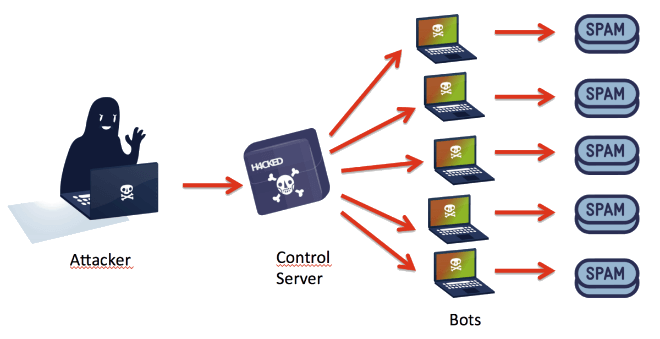

If you’re a game developer and you’re incorporating an in-game store, that uses real money, you need to think about security.

If you’re a game developer that simply requires players to log in (say, through Facebook or Google), then you still need to think about security. Identifying personal information and account credentials is still valuable to those who would do evil.

The Big BOTNET Threat


DDos
One of the most common attacks made against online games is DDOS attacks.

DDOS stands for distributed denial of service.

Apparently, these attacks are really easy to perform. That’s part of the reason why you’ve probably heard of them before–they’re fairly common.

In order to perform a DDOS attack, the villains need a BOTNET. A BOTNET is a group of networked computers.

Hackers will send virus downloads (like email spam) and wait for users to open the virus on their computers. Once that happens, the malware is installed on the computer and essentially makes the computer a robot slave.
botnet
Any hacked system becomes a remote-controllable minion of the DDOS army. Most of the time, users won’t even notice they’ve been hacked.

Once the hacker (known as a BOT herder) amasses a big enough computer slave army, they can initiate an attack.

The attack consists of ordering the BOTNET to access a specific IP or website, all at once. This enormous wave of requests is too much for the target site to handle. First, traffic to the site slows down. Then the site starts dropping connections.

Finally, the site is so overloaded it cracks under the pressure and shuts down.

BOTNETS average around 20,000 computer slaves. The largest one had 30 million.

DDOS attacks are pretty easy. Because, unfortunately, the insidious few who want to use BOTNETS don’t even need to set up their own. There are allegedly websites that make it easy for any user with an account to take advantage of existing BOTNETs. All they need is the coding, which these websites deliver.

In a funny twist, DDOS attacks aren’t always malicious (or even attacks). Sometimes the content is so good that people overload the servers innocently as they all try to access the page around the same time. It’s good-intentioned server overload.

The Real Threat


The DDOS attacks in and of themselves aren’t totally harmful. Eventually, the system can recover.

Usually, these attacks are a distraction, so that hackers can enter the system while tech support deals with the downed servers.

While everyone is distracted, the hackers scrape information (credit cards, home addresses, login credentials, users’ names, etc.) and get out before anyone notices.

This kind of hack can take weeks of investigation before the hacked company realizes data has been compromised.

Case and point: Sony

Sony’s Battle With PSN Hacks


anonymous hacker
2011 was a dark year for all gamers with an account on the PlayStation Network and finally proved the superiority of XBL (JK, Xbox Live gets hacked too).

What happened? The personal data of over 77 million PSN users, logged in Sony’s database, was compromised by hackers.

It was significant for a few reasons.

One: 77 million people is a huge breach. It was the biggest security hack to hit consoles at the time…and it might still hold that title.

Two: The PSN service was pulled offline for 3 weeks…which is a huge amount of downtime. Three weeks without online capabilities!

Three: It was a targeted attack–an act of retribution from Anonymous.

Four: It took days for Sony to discover that information had been stolen and alert their user base: names of users, email addresses, birth dates, home addresses, PSN passwords–it was all swiped.

PSN: Hack at it Again


sony hacked againIn 2017, Sony had another attack on their PSN, allegedly. The culprit was a group called “OurMine” who admitted their involvement (and broke the news) via Sony’s PlayStation Brasil twitter account. To quote OurMine’s tweet, they “are a security group.”

Their shtick is hacking into big businesses and exposing those weaknesses to land a job. OurMine tweeted “if you works [sic] at Playstation then please go to our website ourmine.org -> Contact”.

The group alleged they stole information from the PSn database, but they claimed they were never going to share the information. They were only going to show it to Sony to prove they did it.

It doesn’t seem to have worked and didn’t have the same kind of backlash that the 2011 hack had.

The Effects of Security Breaches


Sony estimated that it would lose about $171 million USD after the hack and the PSN’s extended offline period. While they returned online functionality after a few weeks, the PlayStation store stayed offline for months.

With a breach like this, a few things happen:

  • Consumer trust erodes
  • The company brand is damaged
  • Players leave (or can’t play)
  • Players stop buying (or can’t buy)

These outcomes go hand-in-hand with lacking security.

They aren’t always crippling–none of the breaches/hacks stick around for long, consider the success of the PS4.

In an effort to earn back consumer trust and operate in good faith, Sony doled out some free games to players after the incident was cleared up. They also implemented extra security measures, encouraged users to change their passwords, and even offered security monitoring.

All these remedies netted Sony that estimated a $171 million dollar price tag.

That is an expensive fix. But it seemed to work, and Sony’s PlayStation is still popular today, surviving a few more episodes of turmoil on the security front.

My Account is Stolen!


Stealing accounts is another way nefarious types can undermine the fun of gaming and also turn a substantial profit.

Weapon skins in games like Counter-Strike have real-world value. Weapons and gear in games like World of Warcraft have real-world value, as does the currency in those games.

There are rules in most of these games that prohibit selling items or the currency outside of the game. But, people do it anyway. And it’s lucrative.

Instead of setting up farming bots (which is something people do when they’re looking to profit from selling in-game resources outside of the game), hackers will actually steal player accounts.

They steal the account info through malware, then lock the player out of the account by changing the password. From there, the player’s top-tier gear is sold or moved to another account owned by the hacker to sell later.

If the original user does regain control of their account, they’ll usually log in to find everything gone. Accruing top-tier gear in a game like World of Warcraft can take hundreds of hours and a healthy dose of luck during loot drops.

All of that time and effort can be undone in minutes if hackers get into player accounts.

Then it falls to the developer to conduct an investigation and determine if the player’s account really was hacked, and decide how to restore the player’s old gear.

Account hacking isn’t affecting 70 million players in a single afternoon, but the players that do get hacked have it pretty bad. That’s without considering that credit cards could be tied to the account for in-game purchases, which the hacker now has access to.

The more accounts that are hacked, the less you have real players playing the game. How you handle a stolen account will determine whether or not you retain a high-level player in your game. The accounts that hackers go after are the ones with hundreds of hours of game time and all the best gear–aka some of the game’s “best” players.

Not from a skill standpoint (though that may be the case), but from a valuable-to-the-studio standpoint. These players are part of the reason devs made the game in the first place.

Protecting against hacking preserves the integrity of the game. Players don’t want to play an MMO with a bunch of hacked farming characters. And they don’t want to have to worry about their own account being hacked.

Unfortunately, it doesn’t even take a hack to get to these accounts. Some players will just leave themselves logged in on a public computer, without even thinking about it. Bye-bye, loot!

Fraud so Big the Feds Had to Handle It


Time for another real-life story.

FIFA coins, fraud, four arrests, and a death.

Four men used modified Xbox One consoles and some clever code to trick the FIFA game into thinking they had played thousands of games on their accounts.

The more games you play, the more FIFA coins you earn. The more coins you earn, the more football players you have access to the water heater.

But these guys weren’t using the coins themselves…

They were mining these coins and selling them to willing buyers. They made around $16 million dollars before the FBI stepped in and shut it down.

This is an interesting case because the four men who got in trouble (three pled guilty, one went to court and was convicted, and then passed away around his 27th birthday before he could appeal the ruling) weren’t trying to use the coins to give themselves an unfair advantage (in the game, anyway…maybe in life!).

But, they did change the game by bringing so many coins to market and making them available. And they used pirated code to pull off the whole money-making scheme.

You’ll always have players who are willing to cheat, and these four men gave the cheaters the opportunity to do so. FIFA can’t have that in the game because it will put the players who don’t buy coins (the ones playing by the rules) at a disadvantage.

It wasn’t a game-ruining hack. It didn’t involve stealing other accounts, or hacking information. But it’s still fraud.

Protect Your Game Against Fraud and Theft


protect your game
Unfortunately, writing good code won’t cut it.

It doesn’t matter what genre your game is, or the audience you cater to. Any popular game is at risk. Popularity means the money-making potential for the swindlers.

The first step to prevent it is to be aware of it. Understand the threats, where they could come from, and what they look like when they unfold.

If you have a bigger project, consider looking into customized security solutions from a third party.

It’s good to have a plan in place. It’s also good to know that your plan might not work. Be ready to adapt.

If you do have a breach, be open and honest with your user base. Let them know as soon as possible if their information has been compromised.

You’re in this business to make games, not protect the world from villains…Sometimes, you’ll have to do both!

How to Copyright a Video Game

0

Game Design and Copyright
Copyright is a mysterious, scary zone.

You don’t want to steal someone else’s game and get whacked with a lawsuit. And you don’t want anybody to steal your game, either. (learn about the rise in stolen indie games and video game theft)

A quick preface here–we’re not lawyers. If you have actual, pressing legal concerns, you should seek out the appropriate professional help.

This guide is intended to give you a better idea of what goes on in the world of copyright laws, particularly as it relates to game design.

And, as you’re about to find out, copyright law is a bubbly swamp of convolution, misunderstanding, and information that can be (and is) interpreted and reinterpreted all the time. Copyright law (along with much of the law system in general) works by leaning on precedence.

Precedence is the decisions and rulings formed in prior trials. Previous rulings factor into new rulings all the time. So, in a way, every new case shapes future cases and copyright law as a whole.

Welcome to the whirlwind. Please strap yourself in.

Copyright laws can be tricky regardless of the medium you’re working in.

You’ve likely read about the lawsuits in music–there was a big one with Robin Thicke, Pharrell, and Blurred Lines, where the Marvin Gaye estate sued for infringement. There was a more recent plagiarism claim against Lana Del Rey, and there have been many others.

You have it in the TV industry. Stranger Things creators are getting sued for stealing an idea for the show after allegedly meeting the claimant (the one doing the suing) at a party a few years ago.

Years ago, Universal Studios even sued Nintendo over Donkey Kong, claiming that it was a rip-off of King Kong. Nintendo won the case, though.

It’s everywhere!

Sometimes the claims seem legitimate, and the thieves should be penalized. Other times the suits seem more like money-grabs, the kind that makes your blood boil. But it happens (“don’t know why that is, greed, probably”– Name that game*!).

It’s tricky territory to navigate because the rules surrounding copyright protection are changing, and they’re always open to interpretation by the judge(s) involved.
The thing about video games is…there’s not a whole lot you can copyright.

What Can a Game Copyright Protect?

You can copyright your finished game.

As soon as you publish a work in a fixed, tangible form, you are the copyright owner. You do not technically have to do anything, you are automatically granted copyright ownership (you might want to register your work anyway, and we’ll get into why in a bit).

Once published, here’s what’s protected (mostly) by copyright:

  • Your specific art choices
  • Your specific characters, to a degree (remember that King Kong and Donkey Kong were ruled separate, but if you put Master Chief into your game, it wouldn’t fly)
  • Parts of your code (though there’s some argument over what should and should not qualify for protection)
  • Your original music
  • Your specific story (not general things, like a hero saving a princess from a dragon, but specific things, like an almost-orphaned Harry Potter going to a wizard school called Hogwarts)
  • Your finished game

These elements are yours and protected by law.

You can protect your logos, characters, and game titles with trademarks (a little different from copyright protection, and simply using the logo only ensures local protection. Registering a federal trademark will grant protection regardless of geographic location).

Your specific code is protected, like your original rendering of the Beach of Normandy for your WWII game. But the Beach of Normandy itself cannot be copyrighted.

beach of normandy
If someone ripped your code or copied your exact beach layout, you could potentially claim infringement. But if another game featured the Beach of Normandy in their way, they would be completely within their rights.

Simple.

What a Game Copyright Can’t Protect?

You can’t copyright what’s called scenes a fair. This French phrase refers to the elements that are needed to realize a specific idea.

A racing game, for example, needs race cars, tracks, drivers, steering wheels, speedometers, etc. Those elements cannot be copyrighted, because a racing game cannot exist without them.

A planetary exploration game needs spaceships, aliens, planets, and space suits. You can’t copyright those, either.

It’s the same with castles, dragons, wizards, potions, etc. In general, you can’t copyright them.

If you build a six-spire castle, stable on the east wing, alchemy tower on the west wing, kitchen on the south wing, name it Crachwall Castle, and paint the whole thing blue and write a story around the castle for your game…only to see an identical Crachwall Castle pop up in a dungeon explorer game that comes out after your game, you could potentially file a lawsuit.

If another blue castle shows up, you don’t have a lawsuit.

Scenes faire cover movies and books, too.

Here’s another thing you can’t copyright: game mechanics.

A good example to illustrate that point: PUBG and Fortnite.

pubg vs fortnite
PUBG was the biggest name in the “new” style of battle royale games. It was the game console players were salivating over. They watched for hours on twitch and youtube as PC players parachuted into Pochinki.

The PUBG team announced console release dates…

And then, all of a sudden, a free-to-play battle royale game hit the scene: Fortnite.

Fortnite blew up. And, from a purely technical standpoint, Fortnite is the superior console game. PUBG, even 4+ months after its release, is still plagued with rendering issues, disconnects, and more.

The concept is the same. You load into a flying vehicle with up to 99 other players.

You pick a landing zone and parachute down. You land with nothing and race to collect weapons before your opponents. Then a “safe zone” is outlined, and a blue forcefield begins closing in, pushing you into smaller and smaller play zones, until only one player (or team) is left standing.

The weapons are similar: assault rifles, SMGs, grenades, crossbows, pistols, etc.

But there’s no threat of a copyright lawsuit. The mechanics of a battle royale game cannot be copyrighted.

Now, Fortnite did add the building element, which certainly changes things. The games don’t play the same way. But the concept is the same, and the damaging force fields are even similar colors.

But PUBG had no claim to the mechanics of the game. It’s the same reason why Call of Duty and Medal of Honor can coexist. It’s why there is so many Clash of Clans games available on mobile.

Here’s the official scoop from the US copyright office:

Copyright does not protect the idea for a game, its name or title, or the method or methods for playing it. Nor does copyright protect any idea, system, method, device, or trademark material involved in developing, merchandising, or playing a game.”

Once a game has been made public, nothing in the copyright law prevents others from developing another game based on similar principles. Copyright protects only the particular manner of an author’s expression in literary, artistic, or musical form.

The second to last line is the most important and relevant to the point we’re discussing, here: “Once a game has been made public, nothing in the copyright law prevents others from developing another game based on similar principles.

That’s why PUBG and Fortnite can co-exist, even though the idea for Fortnite’s free-to-play battle royale mode comes from PUBG. And that’s why, if you come up with a revolutionary new game mechanic, other games using the same idea might follow shortly after.

How Do You Copyright a Video Game?

Technically you automatically own the copyright to any original work, including a video game, as soon as it’s published in a fixed, tangible (which includes digital, now) form.

The day you make your game available to the public, the day you own the copyright.

But, for extra protection, you need to register your work with the US copyright office. Registering your work has a few advantages.

One, you have certified, government-backed proof that you created said game, and when you created said game. You have an official record. That makes any future legal battles easier for you.

Without the certificate of registration with the copyright office, it is up to you to prove in court that you authored the word and that you published it when you said you did. It’s not the end of the world if you have to prove those things, but registering your work will save you time and effort.

Registering your work has the added benefit of putting the fear into any evildoers and game thieves. Your “cease and desist” letters have that much more weight (knock on wood that you never have to send one). And, if you do have to move to trial for infringement, you have the advantage.

There is a fee for registering your work. It’s usually a one-time charge in the $50+, which is a pretty reasonable price for extra peace of mind.

When Should You Register Your Game?

You only need to register your game one time, and you should. That will protect the work for your lifetime and then some.

Should You Worry About Game Copyright Laws?

The long and short of it is, you likely don’t need to worry about copyright laws right now. One, people have already come up with all the good ideas (Simpsons did it. Also, just kidding!). Two, it can be human nature to be a little overprotective of our ideas.

You may have great ideas and create great games that people want to steal a line of code for a line of code.

But living in constant fear of someone stealing your creations is no way to live (especially if you overestimate the appeal of your games to copycats).

Plus, there’s no plateau of protection. For as long as you are alive and have a game published, there is a chance someone could steal it. It’s just not worth over-worrying about.

Take the steps to protect yourself as best you can (i.e. registering your work with the US copyright office). And then get started on your next project!

The good thing about copycats is…they can only ever catch up! If you keep making, they’ll always be one step behind.

Another thing to consider: court battles can be time-consuming and expensive. You’ve seen how much room for interpretation copyright law leaves to judges.

But this flexibility has been great for the game industry. Without it, game dev studios could copyright things like weapons, game mechanics, or even whole genres. You could have one studio in control of all FPS games. Or all battle royale games. That means no Fortnite. No Halo. No Call of Duty.

We’d be stuck with one lame iteration after another of the same type of game from the same studio, with no option for other devs to take a stab! It can seem unfair sometimes, but copyright law does have its moments.

Is it ok for people to steal your game? Nope! There are times when it makes sense to fight for your rights. But it’s never going to be an easy fight. And worrying about it before you need to doesn’t help anything.

Focus on creating great content. Register your works as you publish them. And stay locked in on what matters: your passion for games.

And, of course, always seek professional legal help should the need arise.

5 Great Games Designed by Female Video Game Developers

0

best video games by women
You might be here for inspiration. You might be here for empowerment. You might be here for…something else. In any case, we’re bringing the heat on some top-notch games and apps.

Aside from being great, they have one more thing in common—they were designed by women.

Why is that awesome?

Because…According to the 2014/2015 Diversity Report from the International Game Developers Association:

  • 75% of the respondents were male
  • 22% of the respondents were female
  • 1.5% of the respondents were Transgender
  • 1% of the respondents were other
  • 6% of the respondents declined to answer

Less than a quarter of game makers in the industry are women. About 50 years ago…there was one woman designing games.

It’s amazing to think there was a time when only one woman was working in the industry—but it’s also amazing to think about how less than 25% of the industry workforce is female after half a century.

The margin is even greater in the app creation industry. Globally, only 6% of app developers are female. In North America, it’s 11%. (You might need to provide an email address to access this State of App Developers report)

As we continue to fight the good fight for equality, liberty, and video game-induced happiness for all, it’s worth taking a look at some of the great games and apps that have come out over the years—specifically games and apps designed by women.

This is a history lesson, an education session, a celebration of achievement (against extra adversity), and empowerment of all people to stand up for what’s right and to follow their dreams, no matter the roadblocks.

We want to be clear, here:

They’re not great for games and apps designed by women. They’re great games and apps period—And they’re designed by women.

Time to learn a thing or two about game design!

Speedway—Tag

That’s right, the first “best” game is actually a two-for-one deal.

It’s a twofer because Speedway didn’t take up all the room on the cartridge, and Tag didn’t warrant its own cartridge.

A twofer is born. Synergy.

This game combo gets recognition because its designer was a real trailblazer—for women and the industry.

These games were created by Joyce Weisbecker back in the late 1960s (1967 to be exact).

Joyce’s father worked for RCA at the time. At a time when computers could cost $6,000-$25,000 dollars, Joyce’s father managed to build his own computer, called FRED, in his basement.

Long story short, RCA pulled from the FRED design and built their own version of the home computer—for which they wanted some games.

Enter: Joyce.

She’d been encouraged by her father to program on the family computer from a young age. While she was home on break from college, he asked her if she wanted to make a game for RCA.

One thing led to another, and Joyce put together these two games. But she wasn’t an employee of RCA—she was contracted to do this work.

This means she was the first woman to design games, and also the first female indie game developer (the first female video game designer credit is widely misattributed to Carol Shaw with her 3D Tic-Tac-Toe release for the Atari 2600—also impressive, just inaccurate, as that came after Speedway—Tag).

Speedway is a racing game, where player one controls a white rectangle, and player two controls a white rectangle with a black dot in the middle. You raced each other around a simple track. Graphics have come a long way.

The Tag was simply two dots. Whoever was “it” had to get their square dot to touch the other player’s square dot. Every tag was worth 10 points.

Centipede


Centipede was a smash-hit arcade game that debuted in 1980.

If you haven’t played it, you basically dodge and shoot bugs (gamers are spoiled these days).

But it’s true. The titular centipede winds its way down from the top of the screen, and it’s up to you to shoot away all its body segments. The whole time you’re dodging spiders, scorpions, and other bugs.

The character you control is stuck at the bottom of the screen. It might not seem like much now, but Centipede “was one of the most commercially successful games from the video arcade’s golden age.

Dona Bailey designed this winner of a game (along with Ed Logg), but left the industry for 26 years after its release—”it was the pressure and criticism from her male counterparts which drove her from the business.” But not before she could leave her mark by inspiring future games for decades to come.

Gravity Ghost


Gravity Ghost is a game where you “Run, jump, and soar around planets, using gravity to glide through the air” and “explore a shattered galaxy and rescue its survivors, armed with power-ups and mysterious terraforming powers.”

You can grab it for $14.99 on Steam (where it has received very positive reviews).

It’s a game that doesn’t have the typical challenges of issuing death unto others while avoiding it yourself—it’s “just hours of blissing out to buttery-smooth gravity goodness.” Which sounds like a nice break from a crazy world.

Ivy Games is the indie game label behind Gravity Ghost. And Erin Robinson is the indie video game developer behind Ivy Games. She’s been developing games since 2005 and teaches and speaks publicly as well. Her games can be innovative, introspective, and influential.

Talkspace

This list is game-heavy, but we do want to mention this app.

Talkspace has changed the way that half a million people get therapy—”With Talkspace online therapy, anyone can get therapy without traveling to an office – and for significantly less money than traditional therapy.”

Roni Frank (and her husband Oren) are the masterminds behind this app. You start by chatting with a “matching therapist to identify your therapy needs.” Plans start for as low as $32 per week—once you select your plan, Talkspace will match you with the therapist that best fits your needs.

The app guarantees 1-2 responses per day from your therapist (and you can message them at any time)—there’s also the option to schedule a video chat for longer talks.

In a crazy world where it’s easy to lose hope or even just feel overwhelmed, having anytime-access to professional, judgment-free help can be life-changing.

Portal


Portal is a super fun puzzle game from Valve…but the idea for Portal started as a different game: Narbacular Drop.

Kim Swift designed Narbacular Drop with help from fellow DigiPen graduates. The Narbacular Drop gameplay mechanics are based on portals. And, if you watch the Narbacular Drop gameplay, the similarities between it and Portal are very apparent (even the portal colors are similar).

After getting wind of Narbacular Drop, Valve hired Swift and co. to bring Portal to life—and they certainly did, with great success.

Even if you haven’t played Portal, you can probably guess the unique element driving the gameplay…

Portal involves solving a number of puzzles using—you guessed it—portals! Your character has a portal gun that can create and sustain two portals at one time. You just aim at a solid surface and shoot. This leads to some trippy puzzles that involve everything from capitalizing on gravity to calling on companion cubes.

*SPOILER ALERT*:

If you win, there might be cake

*OK SPOILER OVER*

The industry goes crazy over Swift, and Forbes named her a top 30 under 30 in the games and apps industry.

Bonus: Loopin’ Louie

OK, that’s right, Loopin’ Louie is your bonus.

It’s a board game, you see.

There’s a crazy man (named Louie) who flies his airplane in a circle (Louie’s plane is attached to an arm that is attached to a motorized base).

The problem here is, your chicken farm is directly in Louie’s flight path!

You and three other players have to use your paddle to knock Louie and his plane up and over your chickens. If he hits your chickens three times, you lose.

Carol Wiseley is the mastermind behind this game. Without her, my childhood, my friendships, and my plane paddling skills would be profoundly different.

Go play some games!