Home Blog Page 27

Console vs PC Game Design (Pros and Cons of both)

0

Computer and Console Game Designing Differences
You’re looking into designing games, but you have some questions about the differences between game design for computers and game design for consoles. The battle over what’s superior, PC or console, has been raging for decades.

They each have pros and cons as well as different prices. We’re going to outline a few key elements of the game design process that might help you make your decision. Let’s dive right in.

Choose a Side


There are a couple of “wars” you’re probably aware of. First, there’s the console war, but we aren’t as interested in that today. We’re talking about the grueling console vs. PC war.

Five years ago, reports were published that seemed to indicate computer gaming was on its way out. “It is dying,” they said.

Well, that wasn’t the case. And now, in fact, the opposite is true. A more recent report indicates that PC game sales could actually overtake console game sales this year, in 2016, by 1 billion dollars.

We don’t know what to believe anymore. Does anyone know what they’re talking about?

The important takeaway from this is: don’t get scared by market trends. If you wanted to design games on the PC five years ago, and you decided not to because the “market was dying,” you’d be kicking yourself now.

The same thing goes when you consider the latest report on the current trend. Just because PC is on the up and up now doesn’t mean you shouldn’t try and design games for consoles. There’s no real way to predict what will happen.

If you have a preference, go for that!

Designing Woes


With the fiscal projections out of the way, let’s take a look at the differences in the workloads of designing for PC and for consoles. Let’s start with consoles.

Consoles


This is a good time to be a designer because the framework used to develop consoles has morphed considerably since the old days.

Now, coding for consoles and developing for consoles is much more similar to developing for PCs. It isn’t exactly the same, mind you, but it’s significantly closer than it used to be.

There are some fundamental differences, and we’ll look at those now.

When designing for a console, you are working with finite hardware capabilities and concrete specs. Sure, this is more limiting than the PC’s adjustable capabilities. But it also makes it easier for the designers (you).

You are building a game within very specific parameters. You don’t have to compensate for differences in video cards or processors. Every Xbox One is, from a game design standpoint, exactly the same.

The variance comes from the different console options. Designing for PS4 is different than designing for Xbox One. Typically, especially with bigger games, the workforce is separated into dedicated, console-specific teams.

You’d be assigned to the PS4 team, or the windows 10/Xbox One team. On smaller development teams, everyone might be porting to a couple of different systems.

PC


As we mentioned above, the primary difficulty of designing games for the computer is working around all the hardware variables. The goal is to design great gameplay, certainly, but you want it to look great and run smoothly too. To do that, you have to keep these different specs in mind as you’re building.

The video card, the sound card, the processor, etc. can vary substantially from the low-end tech gamer to the high-end tech side of your audience. The game has to play well across the whole spectrum.

Performance and Graphics


Exclusives

Console exclusives are where they shine. Games like Ghost of Tsushima and The Last of Us Part II make PS4 a standout.

VR Gaming

Both consoles and PC offer some great VR options.

Upgradability

Upgrading PC aspects can be costly and may be necessary, as everything is always going out of date sooner rather than later. Consoles always get built-in updates for their software.

Backward Compatibility

On PC, you can play games that are over 20 years old, while consoles may be able to do this if there’s an exclusive license agreement with the proper companies. Many red tape issues and software limitations stop consoles from being able to have as much freedom with their titles.

Timeline, Difficulty, and Team Size


There are other factors you’d want to consider when it comes to game design. It might surprise you to learn that the differences diminish the further down this rabbit hole we go. Factors like budget, timeline, the difficulty of the work, and team size are all worthwhile considerations.

But there isn’t a “PC way” to do it and a “console way” to do it. These elements are all determined by the scope of the game being designed.

If you have a big MMO game, even a AAA game with a big budget and a large team, it could take several years. If you have a shooter, it might only take up to two years.

Think Call of Duty–sure, we see a new one every year, but it’s two separate studios, taking two years apiece to build a game, with a staggered release strategy.

The bigger the team, the more people available to work on different elements concurrently. The smaller the team, the more everyone will have on his or her plate, and the more challenging it will be (assuming game size stays the same).

Smaller games will take less time, and they are a more manageable place to start your game-developing career.

As far as coding language goes, for AAA games the standard is typically C++ regardless of the intended port. In smaller games, you’ll see greater variety, like java or flash.

All of these factors, like difficulty and budget, and team size, depend almost entirely on the game and the developer. It isn’t specifically tied to consoles or PCs.

Price points


System pricing

Consoles and PCs have wildly varying prices. While consoles usually stay in the $200-$400 range, a PC worth playing a modern game will typically cost significantly. This can be a significant roadblock for gamers on a budget.

Controller pricing

Controllers for game systems are a big price point in the comparison between PC or console. While PCs have mouses, video game consoles have their patented controllers, which usually retail for around $60. PCs can get away with using a dollar store mouse, but consoles need these robust controllers.

Game pricing

Games vary in price. PC games (not counting Steam sales), can run from ~$30-$60. Nearly every major console game release will always be $60.

What’s Your Preference?


So there you have it. Our best advice is to pick the one that’d you rather spend all your time working on. The size of the game is what will influence a lot of the workload variables, and the size of games varies for both consoles and computers.

System specifications will be easier to cater to as a console designer, but that doesn’t mean it will be an unbearable task for PC.

And as valuable as consumer data for games is, it isn’t infallible. Who knows where games will be in another five years? That’s why we recommend picking your favorite.


References:

https://www.digitalstorm.com/unlocked/developing-pc-games-vs-console-games-idnum243/
https://www.quora.com/What-is-the-typical-timeline-for-a-PC-console-video-game-development-project
https://www.playstation.com/en-us/develop/
https://www.xbox.com/en-US/developers/id
https://www.quora.com/What-programming-language-is-the-most-used-to-make-video-games-Which-is-the-best

Frequently Asked Questions

Is PC gaming better than console?


PC or console depends on a lot of factors like price, personal preference, and more.

Is console gaming cheaper than PC?


Almost always, consoles are cheaper than higher-end gaming PCs.

Are shooters better on console or PC?


A broad consensus of gamers is adamant that shooters are better on PC vs. console because of the greater control via mouse and keyboard.

Is PC or console more popular?


Officially, the PC is more popular. Over half the gaming population plays PC games via laptop or desktop computer, while 43% of gamers use consoles.

Is ps4 better than PC?


Aside from the PS4 exclusives, the PC offers a broader range of different games and Steam sales.

Is gaming on PC better than console?


It depends on your play style. If you’re into modding your games, playing strategy titles, or MOBAs, then PC is for you.

Should I get a PC or console?


You need to take into account your different preferences, as well as your budget. If you have enough money, PC gaming can scratch a gamer’s itch. However, consoles these days are very advanced and impressive, as well as having great exclusive titles.

Is PC gaming cheaper than console?


Usually not. PCs vary by price and have more specific requirements for games that the gamer will have to be aware of. Consoles already have the software and requirements built-in, so you press play and go.

Is PC gaming dying?


No, in fact, it’s more popular than ever.

Is gaming on PC better than console?


If Fast-paced shooters like CounterStrike and Team Fortress 2 are more your style, then yes.

Is a PC better than a console?


It depends on what your budget is and what types of games you want to play. If you’re more into console exclusives and controllers, then the console is more your style. PC’s performances are overall, more impressive.

How can I turn my PC into a console?


You can hook up current-gen controllers to your computer and configure the games you play on the PC to respond to the controller. This allows you to control a PC game like a console title.

The Many Hats of A Video Game Creative Director: Decision-Maker, Asset Manager, & More

0

video game creative director
Video games’ ‘creative director’ is a relatively new job title.

The term comes from the shift from publishers to studios for the management of a game.

Not all studios hire a creative director, instead choosing to distribute the work between the game’s leads (lead designer, lead artist, lead programmer, etc.).

Those studios that do hire creative directors are often a lot larger and more established, and most projects will have one creative director (although some projects can be shared between one creative director).

So what does a creative director do?

Well, you’re about to find out!

At a Glance: The Video Game Director


In short, the creative director’s job is to oversee the look and feel of a video game, and make any high-level decisions about schedule, budget, and interaction with publishers.

It is also their job to help market the game.

Being Creative: Adjusting Look and Feel


Creative directors are responsible for making sure all assets for the game, such as:

  • Text
  • Sound
  • Graphics

are coherent and offer the exact ‘feel’ that the director wants.

Often, a creative director is responsible for creating the games:

  • Characters
  • Storyline
  • and other aspects

It’s the responsibility of the director to make sure that the actions and products of the team match their creative vision.

That said, a creative director must also be able to inspire, unify, and mentor their team into creating what they want.

This means a creative director must have a lot of experience in the industry and with human resource management.

Schedule and Budget


A creative director is also responsible for managing the game’s schedule and budget, and for making important, and sometimes difficult, decisions about those things.

It is on the head of the director if a game does not come in under schedule and budget, so good management skills are an absolute must.

The creative director must be able to make decisions that try and keep the game within these constraints, even if it means sacrificing creative vision, but knowing when to do so is a key skill for a director (sometimes, pushing a game back is better!).

How to Handle Publishers and Marketing


Because the game is often the brainchild of the creative director, it’s the video game director’s job to interact with the publishers and the marketing department.

It’s also their responsibility to attempt to sell the game to publishers and executives not currently involved in the project.

It is important that the director is good with people and good at sales, knowing exactly how to market the game and who to sell it to.

This is a skill learned like any other, and a good creative director will have spent much time honing this skill to its best.

Wrapping Up


A creative director is the game’s champion, someone who oversees each part of the process and makes decisions about the game’s creative vision and direction.

Directors are not used in every studio, but those who do use them are often more established entities with bigger titles to manage.

Creative directors form a vital part of the game’s management, and getting employed in such a role requires the necessary experience and skill.


5 Most Famous Game Designers in The World

0

famous game designersWe are reader-supported. Purchases made through links on our site may earn us a commission. Learn More.

As the video game industry continues to grow, so does the field of aspiring game designers.

Each new designer hopes to enchant players with new:

  • Characters
  • Stories
  • Art
  • Worlds

While there is no way to count them all, we’re confident that, right now, thousands of aspiring designers across the world are brainstorming ideas, refining existing mechanics, and creating the our favorite new characters.

Finding Inspiration in Successful Gamer Designers

What we can say with certainty is that almost every game designer has been inspired by at least one game designer before him or her.

We’ve put together a list of video game designers we feel have been both inspiring and successful.

These designers are responsible for some of the most influential titles in gaming history and to this day still, use their talent and passion to create new memorable experiences.

Hideo Kojima

Hideo Kojima

Between releasing the first feature Metal Gear Solid installment in seven years and problems with his long-time company, few designers have been drawing as much attention lately as Kojima.

The Japanese developer has been part of the industry for more than 2 decades, getting his start with Konami in 1986 while working on the very first Metal Gear.

What’s interesting, however, is that games were just a hobby for Kojima, whose real interest was in film and its ability to tell complex yet fascinating stories.

Hideo Kojima’s love for storytelling paid off with Metal Gear Solid, a game considered to be one of the best ever designed.

The PlayStation title was only the start of a long line of acclaimed games, which has culminated in this year’s anticipated release: Metal Gear Solid V: The Phantom Pain.

Even though his latest project is set to be a strong contender for the 2015 Game of the Year, Kojima’s future in the industry is for the first time unknown.

With Konami focusing more on mobile and pretty much abandoning console gaming, it will be interesting to see where one of the most famous video game designers ends up.

Why We Like Him

We like Hideo Kojima for reasons that touch every aspect of the gaming experience. We’re impressed by his ability to lead a team of developers and designers, which allows him to craft games that are not just unique but also robust. We’re huge fans of the Metal Gear Solid series, and we can’t help but feel a sense of loss knowing that the franchise is currently dormant.

What sets Kojima apart is his unmistakable style, one that even extends to the carefully curated music that brings the games to a whole new level. He’s also a master at weaving together elements from action films, spy thrillers, and real-world issues like nuclear proliferation, creating a cinematic narrative that’s rarely seen in video games.

And let’s not forget, he’s known to be a great boss, which probably contributes to the high-quality output. All these facets make Kojima a game developer we deeply admire and respect.

Notable Games:

  • Metal Gear (1988)
  • Metal Gear Solid (1998)
  • Metal Gear Solid 3: Snake Eater (2004)
  • Metal Gear Solid 4: Guns of the Patriots (2008)
  • Metal Gear Solid V: The Phantom Pain (2015)

Sid Meier

This list wouldn’t be complete without the man considered to be the founding father of American computer games.

Sid Meier has been in the game creation business for nearly 30 years, and in that time he has developed some of the best and most successful computer games of all time.

It all started back in 1982 after he and Bill Stealey formed MicroProse to develop several well-received titles, including Sid Meier’s Pirates!, Civilization, Colonization, and Railroad Tycoon.

Eventually, he formed a new company called Firaxis Games that also produced a hit and hit for many years.

From Civilization III and Alpha Centauri to Civilization IV and Civilization: Beyond Earth, Meier has proven his ability to grow alongside the fast-paced gaming industry and create games that people want to play.

Sid Meier is now the Director of Creative Development at Firaxis where he continues doing his part to develop great titles, including the upcoming and highly anticipated XCOM 2.

Also a Lifetime Achievement Award winner, there’s no doubt that Sid Meier has helped shape the computer game industry like no other.

Notable Games:

  • Sid Meier’s Pirates! (1987)
  • Railroad Tycoon (1990)
  • Sid Meier’s Civilization (1991)
  • Sid Meier’s Civilization IV (2005)
  • Sid Meier’s Civilization: Beyond Earth (2014)

Hironobu Sakaguchi

Instead of being an electrical engineer like he had planned, this man instead went on to help create some of the most groundbreaking role-playing games of our time, including the renowned Final Fantasy series.

Alongside Masafumi Miyamoto, Sakaguchi started Square in the 1980s after doing what many successful people do: drop out of college.

After struggling to land a hit, Sakaguchi decided to toss all their remaining cash on a game that would be their last. This game was Final Fantasy, perhaps one of the most significant RPG games of the time.

The name “Final Fantasy” went on to become synonymous with Role-Playing Game as each title proved to be bigger and better than the last.

Few games could compare to the success of Final Fantasy during the 90s, with Final Fantasy VII still regarded as the best games ever made. Sakaguchi also had part in other amazing titles such as Chrono Trigger, Parasite Eve, and Xenogears.

In 2004 Sakaguchi left Square Enix to form Mistwalker, which provided Xbox 360 gamers with great RPG titles like Blue Dragon and Lost Odyssey.

One of their more recent games was The Last Story, which was so well-received in Japan that Westerners led a movement to convince Nintendo to localize the game.

Notable Games:

  • Final Fantasy (1990)
  • Final Fantasy VII (1997)
  • Chrono Trigger (1995)
  • Lost Odyssey (2008)
  • The Last of Us (2011)

Gabe Newell

As the co-founder and current managing director of Valve Corporation, Gabe Newell has over the years become a household name among both PC and console gamers alike.

Before getting involved in game development, Newell actually worked for Microsoft Corporation after dropping out of a little private university known as Harvard.

He became a “Microsoft Millionaire” after working with Microsoft for thirteen years but left his excellent job to make games.

Mike Harrington, who also left his Microsoft job, joined Newell to start Valve.

Their risky endeavor paid of as Valve went on to release a constant string of highly acclaimed titles, including Half-Life and Half-Life 2. Newell’s company is also famous for cultivating one of the most flourishing modding communities, which has led to the creation of great titles like Portal, Counter-Strike, Day of Defeat, Left 4 Dead, and more.

Newell’s impact on the industry continues to this day with Steam, the most popular computer game distribution platform today.

The fact that Half-Life 3 is one of the most demanded games of all time is a testament to his knowledge of blending technology and gameplay to create enchanting games.

Notable Games:

  • Half-Life (1998)
  • Counter-Strike (2000)
  • Half-Life 2 (2004)
  • The Orange Box (2007)
  • Dota 2 (2011)

Shigeru Miyamoto

A man who needs no introduction, Miyamoto is without question the most innovative and influential game designer of all time for providing games that all others try to measure up to.

Getting his start with Nintendo, Miyamoto immediately proved his brilliance as a game designer by helping to create games that would end up becoming massive franchises.

This includes Mario Bros., The Legend of Zelda, Star Fox, Mario Kart, and F-Zero, to name a few. What set him apart was his ability to deliver fresh, unique ideas across games of varying genres.

This continued into the 3D era with Super Mario 64 and The Legend of Zelda: Ocarina of time, two games you’ll often find at the top of any “Best Games Ever” lists.

Miyamoto has also always had a strong influence on Nintendo’s hardware, which has led to best-selling devices like the Nintendo Wii and DS.

You Should Know

An interesting fact to note about Shigeru Miyamoto is that he plays a nuanced but impactful role in the development of Nintendo’s upcoming game, Super Mario Bros. Wonder. While not involved in the daily grind, his occasional visits and comments are highly influential, guiding the team on key design elements like the new Elephant Mario form.

Despite his initial critique that Elephant Mario “doesn’t look like a Mario character,” the character has actually been a hit with fans. This dynamic reveals the delicate balance between a creator’s vision and audience reception, especially when the creator is as iconic as Miyamoto.

Around 30 years later and Miyamoto continues doing what he loves best: making games.

He is currently working on Wii U titles like Star Fox Zero and Pikmin 4 while training the next generation of Nintendo designers. If there is one figure that will be sorely missed when his days of making games are over, it’s Shigeru Miyamoto.

Notable Games:

  • Donkey Kong (1981)
  • Super Mario 64 (1996)
  • The Legend of Zelda: Ocarina of Time (1998)
  • Wii Sports (2006)
  • Super Mario Galaxy (2007)

Source

https://sea.ign.com/super-mario-bros-wonder/205120/news/shigeru-miyamoto-didnt-like-elephant-marios-original-design-in-super-mario-bros-wonder
https://www.reddit.com/r/gamedev/comments/vo3ku1/why_is_hideo_kojima_loved_by_many_gamers/
https://www.quora.com/Why-do-people-like-Hideo-Kojima

Corona Labs Dev Platform: The Power to Design 2D Games and Apps

0

corona labs development platform review
Corona SDK is a 100% free app development platform provided by Corona Labs. That’s right, one-hundred percent free! You just don’t see enough of that these days. Additionally, both the free and the paid versions allow access to plugins. You can find their plugin marketplace here.

It really is free in that Corona Labs doesn’t charge you to download the software, and doesn’t charge you after you’ve published your game to various platforms.

And let us tell you, publish to platforms you will! One of the biggest perks of Corona SDK is the ability to publish an app for all major platforms without changing anything.

You use a single codebase to build one version of your app, and you can upload that to all major platforms. Just look at what Corona SDK supports:

  • iOS
  • Android
  • Kindle
  • Windows Phone 8
  • Apple TV
  • Android TV
  • Mac OS X
  • Windows Desktop

One version of an app for the multi-platform release can be a huge time saver, depending on your plans for release. You don’t have to divert attention from other projects or commit additional resources to make Windows Phone 8 and Mac OS X-compatible versions.

Before we get too ahead of ourselves, let’s talk a little bit about what Corona SDK can do from a development standpoint.

What’s it All About


Corona SDK gives users the power to design 2D games and apps across multiple platforms. As we’ve seen, this includes mobile, TV, and desktop.

For the most part, the platform is easy to learn. Corona SDK claims you can have your first app built in just 5 minutes using the guides provided to you by Corona. In addition to the guides, they have in-depth tutorials and examples to follow. It’s so easy, they claim, that it’s comparable to matching your socks in the morning.

Typically that takes us less than five minutes, so maybe they’re exaggerating. You’ll just have to try it for yourself. After all, not only is it easy to learn, it’s also 100% free.

The more sophisticated features come into play with the inclusion of Lua-based APIs. Corona Labs describe the Lua system as “elegant.” Most reviewers were able to pick Lua up in a matter of hours.

Where Can I Build?


Corona SDK works on both Mac and Windows. This means you can design a game or app with your preferred toolset on either system. In addition to picking the system you use, you can also test in real-time. Try something new, like it, save it, and send the app onward.

Try something new, hate it, change it, try something else, like it, etc. Instantly seeing the fruits of your experimental labors can mean serious time-saving.

Do I Need Anything Else?


All you need outside of Corona SDK is a text editor. The FAQ section provides a helpful list to get you started if you don’t already have a text editor you prefer to use. Between the text editor, the Lua language, and the rest of the Corona SDK, you might be thinking there are plenty of places to get hung up.

The good news is that the Corona Labs development platform has an extremely active community. In addition to the extensive tutorial and guide sections, you’ll have a community of over 300,000 developers around the world chiming in on the developer forums. They’re bound to have experienced the problems you run into.

And that’s without mentioning the frequent visits from the development team in the Corona Labs developer forums.

What’s the Catch?


There’s always a catch, isn’t there? Well, there isn’t much of one here. Instead, we’ll point out a couple of cons we found.

  1. If you’re looking to make a 3D game, you’re out of luck with Corona SDK. Their dev kit is designed for 2D.
  2. Lastly, if you have a snafu with a bug, Corona SDK isn’t the best for bailing you out. This can sometimes make debugging errors a real struggle.

Overall, we really like the platform and would be hard-pressed to find a better value for online game development at the moment.

Learn How to Make iOS Games with these Free Game Development Tutorials

0

ios game development tutorials
According to Apple, “Swift is a robust and intuitive programming language created by Apple for building apps for iOS, Mac, Apple TV, and Apple Watch. It’s designed to give developers more freedom than ever. Swift is easy to use and open-source, so anyone with an idea can create something incredible.”

Because of Swift’s popularity and power, the world of academia has created courses teaching the development software. Our compilation of tutorials deals with web-based tutorials. We’d be remiss if we didn’t mention that institutions (like Stanford University and Plymouth University) that have started teaching Swift offer free courses on iTunes U.

It’s worthwhile to hop over to iTunes and give those free courses a look after you make your way through the resources we’ve listed for you here.

Get started with Swift by downloading Xcode for free from the Mac Apple Store. Apple calls it “the Mac app used to build every other Mac app and every iOS app, too.” Basically, it has everything you need for the full iOS app development experience (except for the experience itself, that comes as you work with the app… wink).

Once you’re set up with the software you need, it’s time for you to get to learning! This list has a number of resources focusing on various iOS app-designing topics, for a variety of designer skill levels (but we’re mostly focusing on beginners). There are some great resources on here to help get you started.

Don’t be afraid to take your search back to the web for harder tutorials as your skills develop.

Where to Learn iOS Game Making

Apple


Did you see this one coming? You likely did. Apple offers “The Definitive Book” since, you know, they created the software… You can download the guide for free in the iBooks store. They also have a “resource” section, which includes presentations, sample codes, guides, and video tutorials.

What’s more, if you like to learn by doing, and you have an iPad, Apple announced a really cool iPad app for you earlier this year: Swift Playgrounds. Swift Playgrounds is a “learn while you play” kind of app. You actually learn the basics of Swift as a way to solve puzzles in the Playground. Who knew learning could be fun?

The other resource Apple offers is the Swift Blog, which will keep you up to date on any new software news.

Swiftris


Have you ever heard of that little game, made a long time ago, where you try to place falling bricks of different shapes to avoid leaving gaps? Yes, we’re talking about Tetris! We’re so proud of you for knowing that. We used to dump hours upon frustrating hours into that game on our old-school, brick-shaped Game Boys…

Then we’d experience that funny phenomenon where, if you play too much tetris, your brain keeps looking for the brick patterns long after you’ve put the Game Boy down. Everything looks like “L” bricks or “T” bricks or square bricks. The mind is a funny thing.

You might be thinking “wow, they’ve finally lost it.” The good news is Tetris is relevant to this tutorial. So we aren’t crazy. Yet.

You see, Swiftris, if you haven’t figured it out by now, is a combination of Swift and Tetris. It’s a free tutorial that walks you through the steps of building a 2D puzzle game for iOS, using Swift and Spritekit (Apple’s 2D dev software).

All you have to do to start building your own version of Tetris is enter your email! That way they can sell it to all their partner companies send you other relevant development information (most likely).

Swifts is from Bloc, which has a wealth of free-to-use tutorials for simpler game development. They teach about user interface and user experience, too, which will certainly come into play down the line as you start making stuff for, you know, people that aren’t you.

Hacking With Swift


This site has some free-to-use material, but it tempts you with offers of much, much more if you just fork over a little hard-earned cash. One element that’s free is the Swift Knowledge Base which, according to the creator of the site, has “answers to almost 300 of the most commonly asked questions” from people using Swift and Sprite.

For no money, you get 40 projects from Hacking With Swift, plus their Introduction to Swift content. Everything is up to date (as in tutorials for swift 3 and iOS 10).

They also run a subreddit, so if you have a specific question you can fire it off in there and cross your fingers for an answer (just kidding, they seem pretty responsive and should get back to you before too long).

Hacking With Swift also has videos of “Xcode tips and tricks.” Those are not free. You must pay to view that content. You also miss out on their guidebook which not only has revision notes but more exercises to practice with as well.

The way we see it, you have two options: If you’re new to Swift, you should start with their introduction. If you know some Swift and you really want to make a flappy bird knock-off, you can jump right to Project 36: Crashy Planes. The choice is yours. Go get ‘em, Goose!

AppCoda


AppCoda has a ton of free iOS tutorials, though they aren’t specifically for game development. They teach everything from creating gradient colors to developing a barcode reader.

It’s definitely worth browsing their tutorial catalog to determine for yourself if anything looks interesting and/or applicable to you. Just because they aren’t game-related does not mean you won’t find a clever use for them as you head out on your iOS game design adventure.

The most helpful resource from AppCoda might be their beginner’s guide for Swift 3, Xcode 8, and iOS 10. Again, the guide is based around app-building in general, not the game niche. If you want to start broadly with your iOS software developing skills, AppCoda could be your spot. You get 150 sample pages of the beginner’s guide for free.

If you want the full 600-page version, you can drop the $39 for it. They have other “package deals” with extra features (at a higher cost), like the starter kit, which gives you access to the intermediate programming tutorial too.

The Make School


The Make School offers tutorials that help you make your own versions of games that already exist (like the hit game 2048 or Timberman). Some of the tutorials deal with Swift, and others actually deal with C++ or Cocos Studio.

They also offer an online academy. This lets you enroll in online “courses” and allows you to track your progress as you move step by step through the program. It appears to be completely free for both the tutorials and the online academy courses.

5 Popular Game Design Twitch Channels

0

top twitch channels for game designers
A great way to learn is to watch. You can pick up all kinds of new skills just from watching the free video tutorials spread wide across the internet. Youtube has some great options, but what happens if you get stuck? You might be able to find some help in the comments section under the video…

But if the tutorial is on the older side, commenters might not be active. There’s another way. It’s called live streaming. Enter: Twitch.

Twitch is a great way to watch game developers live-stream their process. Some Twitch broadcasters will stream their entire process–brainstorming, deliberation, mistake-making, everything. Other streamers will have a more curated channel, meaning they’ll be more selective with what they broadcast.

Regardless of which style you prefer, one of the best parts about Twitch game development channels is that you can interact with the developers while they stream. You get insight into the minds of a Twitch game developer’s thought process. Talk about powerful learning tool.

As billionaire, Warren Buffett says “you only learn from mistakes, but they don’t have to be your mistakes.” Let’s take a look at five of the top Twitch channels for learning game development, based on elements like audience engagement, quality of development content, and entertainment level.

Lachhh And Friends


Lachhh is a pretty funny guy. Before you go running over to check out his Twitch channel we have to warn you: his content is for a mature audience. He’s not afraid to be fresh. If you’re on the younger side or you prefer cleaner language and PG jokes, keep scrolling. There’s plenty of that below!

Lachhh will keep you engaged, even if it’s just with his endearing accent. He has strong Twitch audience engagement, especially when it comes to game-related questions. He has a number of loyal fans in his chat, and they aren’t afraid to ask “why”. He’s worked on games like Zombidle.

One of his past episodes (if you aren’t familiar with Twitch, past broadcasts are archived and you can watch even when the streamer isn’t broadcasting live, you lose the participation element but it’s still valuable). He tried to demonstrate a new tool he coded. When he went to use the new tool… it didn’t work!

So you get to watch him puzzle through the issue and troubleshoot his new tool. He ended up fixing it, explaining his process mostly out loud.

How do you use Lachhh tools?

Lachhh himself explains all you need to know about using Lachhh Tools right here. Go to the Lach Tools website and press download here. It will download as a .air file, which you can unzip on any platform that has Adobe Air.

Rob The Swan


Rob the Swan is hard at work on a C++ Blocky World Game. The game is called Diorama. It’s a game with a vision for an expansively customizable experience. There are free modes available to play right now.

You can actually play the game in its current state, and then see how his streamed coding makes a difference in your gaming experience as he releases newer versions of the game.

The current functionality is pretty limited compared to Rob The Swan’s final vision, so you have plenty of time to catch up on his development thus far, and plenty of time to watch more of the game unfold.

This is a cool opportunity to see how decisions that sound good can lead to some unexpected failure, or how a happy accident can lead to unexpected fun.

P.S. He also includes the occasional cat cam. So…if you really like cats… Rob the Swan is probably your Twitch man.

Jesse Freeman


Jesse Freeman is developing a game called Dragon Sweeper, which will eventually be submitted to the Amazon App Store. Jesse doesn’t waste a lot of time on shooting the breeze–he’s focused. His twitch channel is very game development-oriented. He speaks clearly about his actions and his motivations for those actions.

He lets you in on his process. If you haven’t got the time for time-wasting, give Jesse Freeman a shot!

Bot Land Adam 13531


Adam quit his job to develop a game he’d been stewing over for a while. His game is called Bot Land. The premise is that you control a team of bots by writing code for their actions in javascript (if you don’t know javascript you can drag and drop actions with Blockly instead of writing the code).

For 8 hours a day during the week, he live-streams his efforts towards developing the game. You see his entire process. He engages with the chat room a bit, as people offer him tips when he hits a snag, or to explain one of his coding decisions when someone asks.

He’s very pleasant, very bright, and easy to follow: “if i do X, I should have Y… Let’s see if that works. Ok, I do have Y, that’s good.” And off he goes to the next step.

London Rook


This Twitch channel deals with the Outlander project. The Outlander project is a modding project, based on Elder Scrolls III: Morrowind.

Obviously, London Rook isn’t developing a game from the ground up, but the channel offers you some insight into modding, dungeon design, and level design for a AAA, massive open-world game. Before Skyrim, there was Oblivion, before Oblivion there was Morrowind.

Twitch Games


What games can you stream on Twitch?

You can stream nearly any game! Aside from some prohibited titles, you can stream thousands of games, and they don’t even have to be all that popular.  Depending on your preference, you can go with the crowd and what’s popular at the moment, something like Fortnite or Call of Duty will suit you more.

The most popular game on Twitch to date is League of Legends, followed closely by Fortnite.

  • League of Legends
    • 142.9 million hours
    • 31.8 million eSports hours
    • Share Esport: 22.2%
  • Dota 2
    • 40.9 million hours
    • 14.9 million eSports hours
    • Share Esport: 36.5%
  • Counter-Strike: Global Offensive
    • 75.5 million hours
    • 9.4 million eSports hours
    • Share Esport:12.4%
  • Fortnite
    • 110.1 million hours
    • 0 eSports hours
    • N/A

Using Twitch’s Giveaway Extensions

You can download giveaway extensions through web browsers like Google Chrome, allowing you to run sponsored giveaways easily from your web page.

New Gaming Trends You Should Know

0

game design trends

Augmented Reality

Let’s get augmented reality out of the way first…with Pokemon Go!

It’ a huge hit with millions and millions of people. For a while, anyway. Ultimately, the gameplay was not compelling enough to retain the high numbers that Niantic nabbed right out of the gate.

Despite the steep dropoff, Pokemon Go showed us how to complete strangers, even those not into Pokemon or gaming, could come together over an augmented reality game. It wasn’t uncommon at its height to see packs of teens roaming the streets, populating a Pokestop, and dropping lure modules like it was nobody’s business.

Was it simply the popularity of Pokemon as a franchise that took Niantic to the top (above even twitter), or was it the AR element? Likely it was a combination of the two, but it’s worth watching what happens with AR as we move forward.

Virtual Reality

Taking it a step further, we move from augmented reality to virtual reality. This year saw virtual reality return with a vengeance. Oculus Rift and the game’s Steam has been developing look particularly promising. PS4’s own version of the headset might prove even more accessible.

Although they haven’t released a price for their tech, millions of people have a PS4. Then there’s Gear, which lets you play games like Minecraft in virtual reality. It will be very interesting to see how social elements are tied in. Seeing the avatars of your friends from around the world, all in the same room through VR? Now that’s a pretty neat prospect.

Inclusivity

This year has seemed like a boiling pot with a tremendous amount of overdue spillover. Racism, sexism, homophobia, and xenophobia are running rampant. Video games are a great way to reach audiences of all kinds, especially young people.

Featuring diversity and inclusivity in games exposes kids (and everyone) to the beauty of being different. Diversity could become more prevalent in video games as sectors of all entertainment industries crawl towards equality.

 Incremental Console Upgrades

This is a peripheral game design trend, but not an unexpected one. The seven-year cycle of consoles appears to be dead. Both Xbox and Sony announced new iterations of Xbox and PS4. Xbox announced the Xbox One S, which will have slight hardware upgrades and a sleeker body, and also the Xbox Scorpio, which boasts some serious hardware upgrades.

Sony’s PS4 Neo is similarly charged up. With the way phone technology and computer iterations are released annually, it was only a matter of time before video games would follow.

Mobile Gaming

Nintendo is entering the mobile gaming market. And we already talked about Pokemon Go proving that untapped masses can be reached. Trends also show that the top mobile games have remained the top mobile games; new games haven’t been able to unseat the incumbents.

It’s easier than ever to design games for many different platforms, but it’s getting harder to reach interested gamers.

 The Hype

Are shorter hype cycles in the future of games? We saw the disastrous effects that over-hype had on No Man’s Sky. What eager gamers theorized about the game took many expectations very far away from what the developers actually promised. At their small team size, generating hype for a really cool concept helps with funding and sales.

Bethesda, on the other hand, announces Fallout 4 at E3 and releases it months later in November of the same year. Is tempering expectations with shorter hype cycles the way of the future for bigger developers and publishers?

Indie Love Spread Thin

All kinds of developer platforms, from Twine to Amazon’s AAA-caliber Lumberyard, are available for aspiring designers to get their hands on. This software access, as well as unprecedentedly low barriers to entry, has meant a great indie game flood of the market.

It means more indie games making it in front of people, but it also means it’s harder to get your indie game in front of people. They’re inundated with games!

Apple TV

A gaming platform that will likely continue to see games added is Apple TV. The latest generation of Apple TV is practically screaming for games to be made.

Streaming

With Lumberyard, Twitch mechanics are built right into the editing software. It’s never been easier to explore the ways in which streaming and community gaming can be further integrated into the gaming experience.

“Feeling First” Design

“Feeling First” design starts with the emotions the developers want players to feel. From there, they design the mechanics and the gameplay, and the story. It’s a bit of a flip on the traditional approach to game creation. Funomena is the pioneer of this “Feel Engineering.” It’s about creating unique, moving emotional responses in players.

Strong Cities for Gaming Careers

0

best-cities-for-game-development

You thought you had solved the hardest question when you decided what you wanted to do — design games. Now you’re here because you’re realizing that deciding what to do wasn’t the hardest part…instead, it’s where to do it. We hear from you.

Ask five different people and they will each have different parameters they want their home city to satisfy. Some people want cities with exciting night lives. Others want a quiet and clean city. Some will say US-based. Others still will say international. All of these elements have merit.

And of course, since we’re considering locations with a specific job in mind, we want to make sure there are job opportunities.

Where to Look


The cool news is that game designing is all over the place. This is great because it means you have options! Or maybe this isn’t great because it doesn’t narrow it down for you too much… There are high concentrations of game studios in cities all over the world.

Just take a look at gamedevmap.com. It crowdsources information on all kinds of video game development-related companies.

The Categories


There are different search categories. The primary number we looked at listed the number of developers in a given city. The rest of the categories include the following sectors:

  • Developers and publishers
  • Mobile
  • Online
  • Virtual reality

Each category is tracked separately. For the sake of this article, we calculated the totals through all five categories and ranked the top 10 cities by studio density.

London


With 108 studios in total, London takes the cake. Options abound, with studios from the Namco Europe office to the indie Payload Studios. Sure, people complain about some of the restaurants and food options there. But with cuisine choices as abundant as game studios, you’re bound to find something that you like.

San Francisco


Weighing in at a solid 107 studios, San Francisco takes second place. There’s nothing quite like designing games to a beautiful bay view. If this is your choice, here’s a handy guide to nicknames for the city.

Tokyo


You might’ve guessed that you’d see Tokyo somewhere on this global list of game developer hotbeds. In third place with 101 studios, it doesn’t disappoint. If you’re looking for a dense city in an island nation, this is your spot!

Paris


The city of hazelnut spreads and romance, where the only flakes are found on perfectly baked pastries. Well, we can’t really speak to the abundance or lack of flakes in Paris, but we can tell you there are around 85 game studios.

Austin


Back to the states, this time taking a scenic southern route. Austin Texas places 5th on our list with about 74 video game-oriented studios to look into.

Los Angeles


The “double-play.” The “back-to-back.” Whatever you want to call it, we stay in the US for city number six. LA boasts an impressive 69 studios.

Seattle


The “triple-play!” The hattrick! The US strikes again, and we’re back in the west. Seattle marks three in a row for the states, and four ranked cities in total. Gamedevmap indicates there are 67 studios in this rainy place. Rain, perfect reason to stay inside and play games (or make them!)

Montreal


We go north! Heading up from the United States we enter Canada, where we’ll stay for the remainder of the list. A total of 58 studios can be found in Montreal.

Vancouver


Vancouver is another Canadian game design hotbed, touting 54 studios overall.

Toronto


The third and final Canadian game-developer haven is Toronto with 38 studios. It’s a far cry from London’s 108, but it has enough to make the list!


7 Video Game Conventions To Look Forward To Every Year

0

Game Development Conferences
Game conventions have only been growing in popularity as games have become a ubiquitous feature on our media landscape. Gathering in a shared location with other superfans of a particular game or genre of game can be a rewarding and valuable experience for many.

There are a ton of video game conventions out there. Here are the top 7 video game conventions to look forward to every year.

Top Video Game Conventions

E3 – Electronic Entertainment Expo


Electronic Entertainment Expo

  • Where: Los Angeles, California, United States
  • When: Every June
  • Ticket Price: $100-$250

E3 is the cream of the crop, perhaps one of the most famous video game conventions ever. It’s where all of the major studios, brands, and companies converge to unveil their latest and upcoming projects. Held every year in Los Angeles, California, gamers, and fans can expect to see awe-inspiring things from their favorite studios when June rolls around.

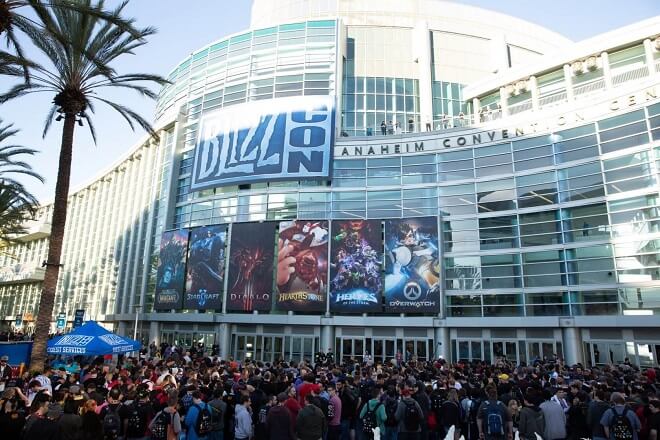
Blizzcon


Blizzcon - Anaheim

  • Where: Anaheim, California, United States
  • When: TBD, usually November
  • Ticket Price: $199

Since 2005, Blizzard, the iconic developers of games like Diablo and StarCraft have been holding their video game convention every year in Anaheim, California.

Like E3, Blizzcon offers fans and attendees exclusive views, announcements, and chances to play upcoming titles from Blizzard. This is a must for any fan of World of Warcraft, Hearthstone, and other titles.

Along with gaming goodness, Blizzcon hosts several famous musicians to close out the convention. Acts like the Foo Fighters, Ozzy Osbourne, and Metallica have all been attendance. The $199 ticket price includes a goody bag too!

PAX – Penny Arcade Expo


PAX

  • Where: Varies, usually West Coast United States
  • When: Varies, usually summer
  • Ticket Price: ~$90

PAX is a gaming convention organized and held by Jerry Holkins and Mike Krahulik, the talented artists of the popular webcomic, Penny Arcade. PAX is all about the gamers.

Where video game conventions like E3 shine a light on the titans of the industry, PAX does its best to integrate both player and developer into one comprehensive experience. This includes giant LAN parties, keynote speakers from the video game industry, and gaming tournaments.

They wanted a convention exclusively for games, and since 2004, they have created one of the most prestigious and popular video game conventions today.

Tokyo Game Show – TGS


TGS

  • Where: Chiba, Japan
  • When: September
  • Ticket Price: ¥1,200 = ~$11 USD

Tokyo Game Show exclusively focuses on Japanese games. Here is where gamers from all over the world can play new systems, games, and get sneak peeks at anticipated projects.

What sets it apart from many video game conventions is the sheer scope of what is available to a visitor. There are:

  • eSport area
  • indie game area
  • VR
  • AR
  • an event stage
  • shopping areas
  • family game park
  • business areas; and
  • a large exhibition area where most of the magic happens.

It’s almost like a mini-city within Chiba itself.

If you’re an American traveling abroad for this convention, ticket prices are as low as they come. They even offer discounts on senior citizens and allow children free of charge.

Eurogamer Expo (EGX)


EGX

  • Where: Various cities in the UK and sometimes Germany
  • When: TBD
  • Ticket Price: Multi Day Tickets—£46.00, single-day tickets—£20.00

There is no doubt that EGX could be one of Europe’s biggest video game conventions. Held in various United Kingdom Cities every year, EGX pulls in massive attendances each year, with 2017’s pulling in over 80,000 people.

There’s all the good stuff you’d expect at a con: cosplay, eSports, new game information and previews, industry insiders, and chances for gamers to rub shoulders with colossal game developers.

EGX also throws a spinoff convention, called EGX Rezzed, which focuses primarily on indie video games.

The Game Awards


Game Awards

  • Where: Los Angeles, California, United States
  • When: December
  • Ticket Price: Various, limited quantities

The Game Awards is the closest us gamers will have to the Oscars.

The Game Awards started back in 2014 and have been crowning the best and the brightest that the industry has to offer. It’s hosted by games journalist Geoff Keighley, who initially hosted the Spike Video Game Awards, which ran from 2003-2013.

The most recent winners have been games like Sekiro: Shadows Die Twice, God of War, and The Legend of Zelda: Breath of the Wild for the game of the year.

The voting jury is made up of 80 leading media outlets like Game Informer, Giant Bomb, and GameSpot.

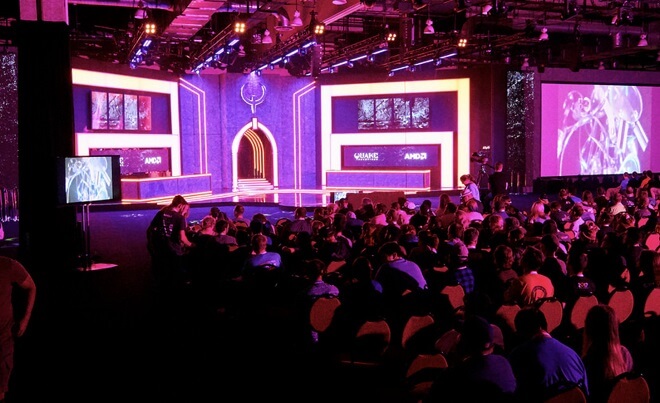
QuakeCon


QuakeCon - Video Game Conference

  • Where: Dallas, Texas, United States
  • When: Summer
  • Ticket Price: Ranges from Free—$400

QuakeCon is another one of those video game conventions put on by an industry powerhouse: ZeniMax media. You may recognize them better as publishers of games like Doom and, you guessed it, Quake.

Run primarily by volunteers, this game convention includes free general admission, something many other video game conventions lack. This free admission allows you to see keynote addresses and the exhibition area.

What would QuakeCon be without stiff competition? There are tournaments and duels taking place in all of the id Software games, all overseen by professionals like game industry veteran, John Carmack.

Game Developers Conference

Conferences, Expos, and fairs! Oh my! We had you pegged as Wizard of Oz fans, and now we know it’s true. Ok, down to business.

There are hundreds of game-related expos and conferences happening all over the world. Where do you even start?

Luckily, a lot of these conferences are niched. Usually, the title of the conference will tell you exactly what to expect.

This is good because you don’t want to waste your time going to events that you won’t benefit from.

Through this article-guide hybrid, we’ll review the king of game development conferences, and give you an idea of how to find other conferences and events from which you could pull some real value.

Without further ado…

The GDC


There is one mecha-conference for game developers. This conference is called…brace yourself…the Game Developers Conference. Impressive title, yes? It just had its 30th run in San Francisco in March of 2016.

The GDC holds annual international events too. Historically there is one held in Europe and one in China as well.

This event has been going on for a long time, so the showrunners have years of experience running the conference; they haven’t wasted it.

There are learning opportunities, exhibitions, independent game competitions, and award ceremonies. Pretty much anything you would want at a conference like this is there.

The beginning of the conference usually has several all-day workshops. Registered participants spend a day entrenched in these in-depth tutorials.

These teaching opportunities usually span a wide range of topics, covering everything from game design (who saw that coming?) to business management.

In addition to the hands-on offerings, the GDC hosts summits as well. These expert panels also run the gambit of game industry topics.

There have been summits focused on game design education, which are good for aspiring students and faculty alike.

The educational summit this year (2016) focused on the teaching aspect. It provided those who attended with “new experimental and inventive educational approaches” to game design education, according to the GDC website.

There are other summits too, for game developers operating outside of the education sphere. The AI summit, for example, featured some top names in AI programming.

The Free 2 Play summit discussed the recent explosion in popularity of the F2P model and discussed why it worked as well as it did for some games across all platforms.

This year there was a special focus on virtual and augmented reality, featuring people on the game side and the cinematic side of this new technology.

One of the highlighted game-track sessions was “building 3-Dimensional UI for Virtual Reality.” Who wouldn’t want to take a look at what’s happening with that?

The conference, of course, has its fair share of industry speakers, participating both in summits and giving separate presentations.

The Game Developer’s Choice Awards affords members of the community the opportunity to recognize their peers (or be recognized by their peers) for their contributions in the digital game industry.

It’s a cool exercise to see industry professionals from all over the world submitting votes for games they think should win awards across 13 categories.

You need to register in order to participate in the Game Developer’s Convention. You can register here.

It can be a little pricey, especially if you’re on a student budget, but it’s definitely worth your time to get there at least once. This is pretty much the game developer’s conference.

It’s loaded with people from everywhere in the industry, and they’re there to teach you their best practices and discuss all kinds of game design concepts with you.

A conference that attracts as many top minds in the field as the GDC does is certainly worth your time and money.

Finding the Right Conference for You


While the GDC is arguably the biggest game developers conference, it is by no means the only one. Just take a look over at Gameconfs.com.

They keep their homepage updated with all the events happening around the world for the current week.

You can also search by country or continent to see what events have already happened this year, and what events you have to look forward to in the coming months.

There’s no doubt that you’ve heard of E3. It is probably the most popular expo for gamers, and it’s typically when game studios will make their biggest announcements for upcoming projects and hit titles.

From a developer standpoint, E3 isn’t the most beneficial event to attend. This is because of the target audience.

It isn’t specifically for game developers like the GDC is. Instead, it’s really geared towards the end-user and consumer gamers.

Of course, if you have the opportunity to attend E3 from a presentation standpoint (i.e. you’ve developed a sweet indie game with your A-team dev pals) then it’s definitely worth attending and presenting (congrats, by the way. That’s awesome!).

So many game-oriented events exist, and more are being created all the time. There are many events geared around specific niches or elements of game design.

There’s a UX summit, for example. This takes place in North Carolina in May and deals with user experience in games and apps on the current market.

There are other events that don’t deal with game design topics but instead deal specifically with scripting code with specific programs.

C++Now is another conference taking place in May that explores all things C++. Those are two very different events, both occurring within a few weeks of each other.
Chances are, there’s a conference or a summit based on what you want to specialize in.

Use that game conference search tool to get a feel for all the events out there.

These events have some highly experienced game design professionals in attendance. It’s a great way to pick up new techniques and stay on the vanguard of game development.

Never stopping your education and growth is like keeping your blade sharp. It’ll give you a real edge in the game developing industry. You never know who you’ll meet or what you’ll learn until you go!

Excellent Java Game Development Tutorials

0

Java Game Development TutorialsWe are reader-supported. Purchases made through links on our site may earn us a commission. Learn More.

Java is a widely used game development programming language because of its versatility. It is one of the go-to options for developers to create apps and games on mobile and desktop.

In fact, some of the top mobile games are Java-developed. Games like Minecraft and Asphalt 6 are a testament to its potential for impressive gameplay, graphics, and loading time.

This comprehensive guide outlines what you need to know about leveraging Java in video games and how you can leverage basic programming know-how into a thriving career.

What Is Java Game Development?

Creating games takes a lot of work and requires developers to invest hundreds of hours into programming. Java is one of the easiest programs to learn, so you can quickly program and develop all kinds of apps and software. It uses programmed memory portions, so it is easy to work on.

Unlike most programming languages, Java can run on any machine. It can also program numerous assignments simultaneously. Multithreading in Java is incredibly common.

But because it is so widely used, security can be an issue. Anyone who knows JavaScript can access a website or app and misuse it.

Industries that Leverage Java Development

Learning JavaScript will get you far in IT, finance, space exploration, web development, government projects, and more.

Java developers can work full-time or freelance, either onsite or remotely. They can find jobs on platforms specifically catering to programmers, but there are also plenty of listings on general job boards.

You can have a thriving career as a Java developer in the following fields:

Mobile App Development

Apps like Twitter and Spotify were developed using Java. It’s one of the best languages for mobile operating systems (both iOS and Android).

Android Studio is the official Integrated Development Environment (IDE) for Android OS. It supports all programming languages of Intellij, such as Java, Kotlin, C++, and Go.

Small businesses and startups take on Java developers to build user-friendly apps and capture their target audiences.

Web Development

Java is used in the backend to develop web applications. A web developer is expected to know the basics of HTML, CSS, and APIs.

That said, Java applications use other resources and tools within Java, like Servlets, JavaServer Pages, and Jars.

Desktop Apps

Java is an impressive tool for developing desktop apps. A developer should be skilled at making widgets developed by JavaFX and Oracle.

To build desktop applications, besides the standard widget toolkit, developers need a programming library developed by IBM as well.

Math and Science

Java can be used to design apps that carry out complex mathematical and scientific calculations.

Games

It is a well-known fact that Java is used heavily in game development—great examples are Minercraft and Revenge of the Titans. Needless to say, learning Java can lead to excellent career opportunities in the gaming industry.

Java also develops cross-platform versions of games without the extra steps, making it a preferred choice for developers, especially for 2D designs. Although many game engines, like Unity and Unreal, provide better results, Java remains a good option because of its simplicity.

Career Opportunities With Java Development

java tutorial
As a Java developer, you would be responsible for desktop and web design and development, Internet of Things (IoT), or mobile Java-based applications. You will likely work in a team of other developers, designers, project stakeholders, and managers.

Some of the career opportunities you could explore by learning Java include:

JavaScript Developer

These developers specifically work on Java codes. They write JavaScript that builds the visual elements of a web app or web page. Some developers may be assigned to work on an entire website, while others are in charge of a specific aspect of it.

A JavaScript developer’s career starts at the junior level and slowly progresses to senior and even up to management. The more experience you gain, the more likely you are to get promoted. An experienced JavaScript developer could get paid between $107K and $111K annually.

Software Engineer

Software engineers must have extensive knowledge of operating systems and coding languages, including Java. Games, business apps, network control systems, operating systems—software engineers work on it all.

A software engineer could earn $115K to $127K annually.

Web Developer

A web developer builds web pages or websites using coding languages like HTML, CSS, and JavaScript. They program the functionality of each element, identify and troubleshoot issues in code, and ensure the front end of the website is usable.

The average salary of a web developer is estimated to be around $72K to $105K annually.

Full Stack Developer

Like a web developer, a full-stack developer takes care of the backend of a website. However, they also ensure it is functional and aesthetically pleasing on the front end as well, and all integrated applications are error-free.

A full-time full-stack developer position could pay you $101K to $107K yearly.

Back-End Developer

As the name suggests, back-end developers focus on the code of an app or website. They integrate the front-end elements, its plug-ins, and other components.

A back-end developer could earn around $116K annually.

Analyst

Analysts design or modify business and IT systems for companies. For this, they must have a deep understanding of the business’s problems and needs, interact with its employees, gather documents, and analyze tons of data.

Game Developer

JavaScript is an excellent language for game development, especially if the studio you work for specializes in these games. It is incredibly easy to understand and has plenty of libraries and modules available. JavaScript is best leveraged for web-based and mobile games.

On average, a JavaScript game developer could make around $89K to $148K annually. The amount depends on your skills and the studio you work for.

Where Should You Look for Java Development Jobs?

If you are a coding enthusiast without a formal degree, you will be pleased to know that many employers hire applicants from coding boot camps and other tech education programs. However, a bachelor’s degree in computer science or programming is still an advantage.

As mentioned earlier, developers need not work in IT. Nowadays, many businesses across industries have openings for web developers. You can find openings on general job portals and sites like LinkedIn, Dice, and Indeed. SimplyHired, Java Code Geeks, GitHub Jobs, Crunchboard, Modis, and Monster are some specialized platforms for developers.

If you are not looking for a full-time gig, you can also look up freelancing openings. Sites like Upwork, Freelancer, and Hired make freelancing a breeze.

Javascript for Game Development

Java for game development
JavaScript is one of the best coding languages to learn for game development. Anyone who wants to become a game developer, specifically a mobile game, should learn Java.

That said, only knowing JavaScript will not lead to long-term success. Anyone interested in game development should know more than one coding language to see a project successfully completed.

As a beginner who is interested in game development, here is what you would need to know:

  • Basic coding languages, like JavaScript, HTML, and CSS
  • A rough idea of what kind of game you want to design
  • Framework for building the game
  • Knowing Game Loop and how it functions
  • Canvas HTML
  • Assets that will make the game look cool
  • Skills to make collisions work
  • Physics engines for JavaScript
  • Design levels and game menu

Note that if you’re interested in developing console games, knowing JavaScript is paramount. You can use it to add specific styles, link to external content, and personalize the user experience. Even advanced gaming would involve a certain amount of JavaScript.

As a beginner, learning a coding language may seem intimidating; however, JavaScript is one of the easier ones. And with time and experience, it only gets easier. There are also plenty of online resources for coders and developers.

Which Games Are Made With Java?

JavaScript is ideal for web-based and mobile games. Here are some of the most popular ones to date:

Tower Building

Tower Building allows players to stack blocks to create a tall tower. Although the game may seem simple, it’s a fantastic one. Players can also browse, fork, and clone the GitHub repository to learn how the game was created.

Bejeweled

The early 2000s game was designed for browsers. It is an old-school Candy Crush with a match-three gameplay, but instead of candy, it’s jewels.

2048

2048 involves the use of arrow keys to move tiles around a grid. The goal is to merge tiles until they equal 2048.

Polycraft

This is a browser 3D game that involves a lot of adventures, exploration, base-building, gathering, crafting, and action. It’s an excellent example of how JavaScript can be leveraged beyond 2D games.

Words With Friends 2

This mobile game was developed with React Native, a JavaScript framework. React Native is perfect for games that can be played on multiple platforms with one code base.

Angry Birds

Players must choose one from a flock of colorful, angry birds to save their eggs from green-colored pigs.

Hangman

This classic guessing game was invented to be played on paper, and now there is a mobile version you can play on your smartphone.

How To Learn Java Programming

As already established, Java is easy to learn and one of the best programming languages to work with. You can learn Java through many free online tutorials or enroll in a professional online course for a seasoned approach. You can also combine multiple classes to cover all your bases.

Some of the best places to learn Java Programming include:

Codecademy

Codecademy provides free Java programming language courses for beginners and experienced programmers. It covers key topics and tutorials, like introduction to Java, data structure, and object-oriented concepts.

You can also learn other programming languages on this platform, such as Android and Python.

Udemy

Udemy offers Java tutorials from beginner to expert levels—free video lectures are especially helpful for those just starting out. Important topics like programming with Java and implementation of OOP concepts are explained thoroughly.

You can also learn C++ and C.

Coursera

Coursera touts one of the most reliable and well-known tutorials to start coding in Java. The topics covered by Coursera mainly include Java fundamentals, Java for Android, and advanced Java.

Java Code Geeks

Apart from ed-tech portals, there are specialized platforms like Java Code Geeks. It provides free and downloadable examples of codes and tutorials on Java class functions and loops. It also covers basic and expert-level coding languages.

These online platforms and resources also offer resources on Java:

  • Learn Java
  • Oracle Java Tutorials
  • SkillShare
  • Codementor
  • Program Creek
  • Java Beginners Tutorial
  • W3Resource
  • Tutorials Point
  • Studytonight
  • Udacity
  • Cave of Programming
  • Treehouse
  • Programming by Doing
  • Sanfoundry
  • JavaTpoint
  • Guru99
  • Java Tutorial
  • W3Schools
  • JournalDev
  • Programiz
  • Jenkov.com
  • Lynda.com

You can look up Java tutorials on YouTube if you prefer audio and visual lectures. Learning by yourself comes with a lot of challenges, but there are many available resources to help you through any difficulties or confusion.

How To Make a Game Using Java?

edu4Java tutorial
Once you’ve learned Java, you’re one step closer to creating your dream game. Doing so in JavaScript is relatively easy, especially if you are targeting users who play on mobile phones and browsers. However, the following steps require more hard work.

Before diving into Java Video Game Development, here is everything else you need to learn:

Learn to Code From Scratch

Java is a beginner-friendly language, so it’s the ideal first step into the world of programming. Contrary to popular belief, you don’t need to be particularly skilled at calculus or engineering to start coding or become a software developer. A basic understanding of math and the logic behind it is more than enough.

That said, programmers who create physical game engines or scientific programming specialists need top-level math skills.

Under Java Core, here’s what you need to know:

  • Basic Java constructs, operators, and data types
  • Object Oriented Programming and its implementation
  • Input/output API
  • Java Concurrency API
  • Framework
  • Generics

Learn Frameworks

Java developers should also know the basics of JavaScript frameworks. These are the essential elements that make up games. Perfecting them takes a bit of practice.

Some of the frameworks to learn include:

  • Spring
  • Hibernate
  • Spring MVC
  • Spring Boot

Learn Android

If you are interested in mobile game development, learning how to program for Android is a good idea. Android’s official website is a treasure trove for developers to take their skills to the next level. It has many detailed tutorials that will guide you through the creation of apps on the platform.

If you already know Java Core and Android, learning about game components—such as GUI (graphic user interface), game graphics and physics, and sound—is much easier.

Learn libGDX

libGDX is a framework for cross-platform game development written in Java. You can use it to develop one code for different platforms, such as Android, iOS, Windows, Linux, macOS, and the Web.

libGDX’s library gives you access to the OpenGL graphics library and all the tools you would need to create 2D and 3D games.

Keep Practicing

Developers will benefit significantly from constantly practicing coding—there’s ample practice material available online.

Aspiring game developers can use any of the resources mentioned above to code for various small projects and put their knowledge to the test.

Wrapping Up

If you’re a beginner wanting to get into the world of game development, know that the industry is quite lucrative. That said, knowing just one coding language won’t be enough to create an entire game that audiences will engage with.

Because JavaScript is easy, it’s one of the best beginner-friendly languages. But it’s just the first step if you want a career in video game or software development. In the long run, learning other coding languages, including SQL, Python, C#, C++, and Swift, would be best.

The field of computer programming is ever-evolving, and knowing as much as you can about these popular languages will take you a long way in the industry.

Video Game Translator: Why Games Need Translators and How To Become One

0

video game translators
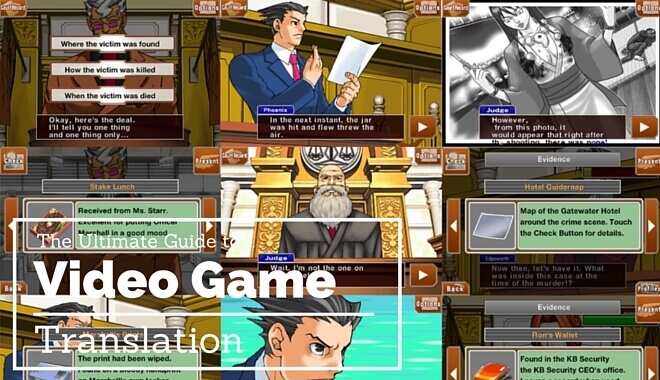
If you have ever played a very old video game and had an extremely hard time trying to figure out where to go next or what is going on in the scene because the words are jumbled or don’t make sense, you’ve experienced video game translation in its infancy.

The industry has changed exponentially over the years. Just as video games have become artistic, realistic worlds with rich, intricate storylines, the world of video game translation have improved and gone global.

History of Video Game Translation


Many years ago, most video game text was run through general translation scripts which left a lot to be desired.

It can be compared to those times you may have tried to translate a quote a foreign friend has sent you and the translation you get from a generic translation engine is more confusing than the original quote!

With that in mind came the rise of the video game translator.

This talented, bilingual individual can take the text of a video game that was developed in another language and create an expertly translated version in the language ordered by the game company.

The video game business provides billions of dollars in revenue for game designers and distributors all over the world.

With multiple platforms and 155 million gamers in the United States alone, the need for translation is on the rise. When game development companies complete their market research and compile a list of countries where they visualize high sales numbers, they will often order the game to be translated into the language spoken by the majority of people in that country.

Previously, this work was often outsourced and the results came back poor and sometimes had to be redone at great cost to the developer.

Now, degreed professionals are making a name in the translation world.

Knowing the Customer Base


The translation isn’t always about changing text word for word into the new language.

The video game translator also needs to have a working knowledge of cultural norms and other important factors like slang and local customs in order to make accurate translations.

Being bilingual for this position also requires a familiarity with the culture behind the language so that traditions, cultural sensitivities, and other nuances can be respected.

For example, humor often doesn’t always translate well and should be researched carefully.

This adds authenticity to the game and will earn respect, higher sales, and positive reviews by the consumers who purchase the games. Therefore, it is worth hiring a talented and respected translator to complete the job.

How to Become a Video Game Translator


Many people who work as professional video game translators have degrees in a foreign language.

You need a solid, working knowledge in both the language you are translating from and to in order to be highly successful.

Breaking into the business can be hard at first, as many translators have worked hard to build up clients and their resumes.

In order to command the best rates for translation, be sure to present your credentials and examples of any other jobs you have completed in order to boost your chances. Many companies will want you to be fluent in the language the game is being translated into and in some cases, a preference for being a native speaker may be desired.

One way to show your credentials to a potential translation company is by compiling a portfolio of your work along with your resume.

Showing the quality of your previous work can show off your skills and add an air of confidence that will get you hired. If you are new to translation as a career, you can translate the games you play or those of your friends to give quality examples of your abilities.

While the pros can be steady translation work at a reputable translation company making a great rate of pay, there can be a few cons.

When you are new to the trade, translation companies may try to take advantage of your lack of experience by offering low rates.

The best way to overcome this is to work hard and produce the highest quality work in order to move up. Do your research and look for reviews of translation companies and ask around in forums for advice.

As the video game industry continues to grow, there doesn’t seem to be a decline in the need for international translations anytime soon.

What Makes a Good Game so Much Fun?

0

how to make a great game
The question on every game designer’s mind is the same:

How do I make a game that people will find fun, will become popular, and make a lot of money?

While there’s no simple answer, it never hurts to see what some of the best games have in common.

Below you’ll find a few things that most great games share.

Essentials of The Greatest Games

great game example

Great Controls

Even if everything about your game is amazing, it won’t matter if your players can’t properly interact with it.

One of the biggest challenges of game development is designing controls that fit the game and enhance the experience. This means that players don’t find themselves frustrated trying to perform certain actions or limited in any way.

One of the best examples is Super Mario 64, a game that will always be fun to play thanks to its excellent controls that give you complete control over Mario’s moveset.

An Interesting Theme & Visual Style

Although every game designer knows that nailing down the gameplay is more important than good visuals, that doesn’t mean how the game looks isn’t important.

Since graphics are what the player sees the entire time, developers need to make sure they match the world as well as the style of the gameplay.

The Legend of Zelda: The Wind Waker is a great example since it boasts gorgeous visuals that make its vibrant ocean world unlike any other.

Excellent Sound & Music

As any video game sound designer knows, a game’s audio is incredibly important.

Video games need sound effects to make the virtual characters and the world feel more alive and realistic. At the same time, the game’s soundtrack also plays a big part in evoking emotion from the player and heightening the experience.

Gears of War is a game that’s always had a good sound design.

Everything from chainsawing through an enemy to performing a perfect active reload sounds awesome.

Why We Like It

The Gears of War soundtrack is more than just background music; it’s an emotional journey that deeply resonates with players.

Kevin Riepl’s masterful composition creates a haunting atmosphere that lingers in your mind, making the gaming experience unforgettable. The blend of various musical elements evokes a range of emotions, from tension and excitement to moments of eerie calm, enhancing the game’s storytelling.

Many players, myself included, have found themselves humming these memorable tunes long after putting down the controller, a testament to the soundtrack’s lasting impact.

The emotional depth and richness of the music make it a must-have for anyone looking to fully immerse themselves in the Gears of War universe.

Captivating Worlds

Unlike other forms of entertainment like film and television, games are interactive and thus have worlds that can be explored.

Of course, people will only want to check out everything your world has to offer if there are things that catch their attention. This can be anything from cool settings and quests to rewards and challenges around every corner.

2015’s The Witcher 3: Wild Hunt did just that by providing a world that felt alive and worth exploring.

Fun Gameplay

Gameplay is arguably the most important aspect of a game.

You can have breathtaking graphics and an enthralling storyline, but if the main game mechanics the player will be performing aren’t fun, your project may as well have been a movie.

There are plenty of thoughts and ideas online that every game designer should check out on the subject of what makes gameplay fun.

What better example than Tetris, a game that has mesmerized players for decades now with its “easy to learn, hard to master” gameplay.

Video Games with the Best Gameplay

Title

Box Art

Developer

What Makes It Fun

The Legend of Zelda: Breath of the Wild (2017)

Nintendo EPD

Offers unparalleled freedom in an open world, encouraging creativity and exploration through its versatile physics engine

Dark Souls Series (2011 - 2016)

FromSoftware

Provides a challenging yet fair combat system that rewards strategic thinking, timing, and skill.

Super Mario Odyssey (2017)

Nintendo EPD Tokyo, 1-UP Studio

This game shines in 3D platforming with inventive levels and the unique mechanic of using Mario's hat, Cappy, to control various objects and enemies.

God of War (2018)

Santa Monica Studio

God of War seamlessly blends visceral combat, storytelling, and puzzle elements for a well-rounded gameplay experience.

Red Dead Redemption 2 (2018)

Rockstar Games

It immerses players in a detailed open world, offering a wide range of activities and narrative choices that impact gameplay.

Solid Level Design

The best games usually have great levels that serve to complement the game’s main game mechanics.

Well-planned levels will help push the story forward while keeping players engaged as they face new challenges. The art of good level design takes a lot of practice and planning so that players are encouraged to explore and continue but are never forced or frustrated.

Banjo-Kazooie is a classic N64 title that offers great levels to enjoy.

Each world had its own unique challenges and art style that got progressively more challenging while remaining fun to play.

Memorable Characters

Whether your game is heavy on narrative or not, you want to have characters that are not boring and forgettable.

This means designing characters that are visually interesting, well-written, and that the player can relate to.

Most storytellers would even argue that it’s the characters, not the plot or setting, that separates a good story from a great one.

While there are plenty of great examples, we couldn’t help but go with Chrono Trigger.

It’s hard to forget this masterpiece’s colorful cast of characters which include a red-haired boy, a robot, a humanoid frog, cave girl, dark wizard, and more.

Good Balance of Challenge & Reward

Another challenge that all game designers face is finding the perfect balance of difficulty and reward.

If you make a game too hard then no one will play it due to frustration, but at the same time having a game be too easy can bore players as well. The best games are fine-tuned to provide a good escalation of difficulty so players continue feeling challenged and rewarded.

The Halo games are a good series to look at if you want to see a first-person shooter campaign that starts out easy and gets progressively more challenging without ever feeling impossible

An Entertaining Story

Some of the best and most beloved games of all time are remembered for the stories they told.

For whatever reason, humans love being touched, entertained, and encouraged by intriguing stories with memorable characters, plot twists, and more.

Since games are interactive, they are also capable of serving as a storytelling medium that no other can compare to.

The Mass Effect series is a good example of games with storylines that gripped players and always left them wanting to see how things conclude.

Something Different

While following the same formula of another great game may seem like a good idea, it’s the games that introduce something unique that catches everyone’s attention.

Every game designer should strive to create a game that offers a new experience that players can’t get anywhere else, even if it means just adding a few tweaks to an already-existing genre or style of game.

While it’s true that it shares many of the same traditional mechanics as other RPGs, the ability to befriend monsters and play through without killing a single enemy is what sets it apart.


Level Design: How to Engage & Motivate Players

0

game level design guide
You could own a restaurant and have the best food in the entire world. If the interior looks like crap and you filled the place to bursting with chairs and tables, no one is going to come to eat at your restaurant! Excellent food or not!

Much in the way that creating an entire experience is important for a restaurant, getting the core of a video game to show through in all aspects is imperative for good level design. To unpack the metaphor, let’s imagine that story, character design, and gameplay are the “food.” Level design is the restaurant itself.

Like restaurants, video game design is a package deal. The whole product doesn’t shine if only one part of it is worth anyone’s time.

This guide will take a look at a basic framework you can follow to streamline your level design. It will serve as a great tool to get you started and keep you on track in your level design journey. When you take the time to make a great level, it will make the journey you send players on that much better.

Why People Play Games


We play games for the same reasons we watch John Wick or Rick and Morty. We play for the same reasons we read Malazan: Book of the Fallen. We play to escape.

We play to submerge ourselves in a fictional pool, to drown out the cares of the real world for a while. This brings us to an important first point before we dive in: don’t overstep the suspension of disbelief threshold.

Deception Like Inception


The reasons some movies, books, and games are better than others lies heavily in this idea of the suspension of disbelief. It’s the concept of getting people to believe what’s happening in a world that exhibits fantastical properties outside of a normal, non-fictional setting.

In order to keep people engaged, you have to keep them believing in the world you’ve created. It’s kind of like the movie Inception. Characters didn’t always know if they were in reality or if they were in a layer of a dream. Stretching too far in your level design could pull players out of the convincing fiction, which can diminish the fun.

In some movies, you’ll sit through and look at your watch every fifteen minutes to see how much longer the movie is supposed to last. Other times, you sit through a movie and it ends way too soon. Those movies managed to successfully snare you, completely suspending your disbelief.

More to Mind


If breaking the suspension of disbelief lessens a game, creating boring levels will ruin one. A level that is too frustrating can similarly ruin a gaming experience. To avoid these spikes and drops in difficulty, you need to manage the pacing of the level. How do you do that?

Make players show you what they got! Properly challenging players is a great way to keep them entertained. This means your levels should gradually ramp up in difficulty. Adding greater numbers of enemies and adding more challenging enemies are two ways to do this. If your game involves puzzles, increase their complexity.

Knowing Your Limits


The best way to start off a new level design is to understand the parameters within which you are required to design. Let us explain.

There are all kinds of different constraints to account for. An obvious one is platform constraints. What platform are you designing your game for? Triple-A games coming out for PS4 have significantly different level design constraints than the next mobile hit. The processing power of the platform is an obvious factor, but what about the length of levels?

Mobile gamers tend to play for shorter periods of time than console gamers. Based on that idea, you’d likely want to build shorter levels for mobile games.

It’s also important to consider your audience. What constraints do they place on you? What is the typical age of your audience, the demographic, the interests? Are you designing for science-loving teens or 20-somethings that love fantasy? The audience will affect the tone and design pallet of a game.

Young kids might like rounded edges and bright colors. Adults might like hard edges and grim shading. The audience should already be established for your game by the time you’re ready to design a level, just remember to bring them into focus when you start planning your design.

Story, Enemies, Character–Oh My!


What needs to happen in your level from a story, plot, or theme standpoint? How can you use level design to accomplish that? Maybe you need to introduce a new weapon or a new enemy. Maybe you need to introduce a new powerup, or a new character ability. These are all level design tools, and you can implement them effectively to keep the player challenged.

The Halo franchise has a number of distinct enemies, vehicles, and weapons. Take a look back and see how they effectively introduced these elements throughout a level to keep the player challenged without overwhelming her, and to satisfy the story element of the games.

Time to consider the player’s character itself. How fast is the character? How big? How high can it jump? What about the enemies? How do they function? Do they attack from a distance or do they lurk around a corner waiting to surprise you? These are all decisions that inform level design.

Do you need corners and dark spots so enemies can pop out? Do you need outcroppings and elevated platforms so ranged enemies can strike from a perch?

On to Building!


Once you understand the level parameters, it’s finally time to map out the level design. It’s important that the overall vision of the game is maintained. Keep that at the forefront of your creative brain as you make your design decisions. It can be helpful to think in terms of the big picture for the level.

Keep it to a loose framework. Where will it take place? A Jungle? Some caves? An old town? At this stage, you might benefit from working on paper. Paper is cheap, and it’s likely faster than your ability to render your ideas in a development platform.

One helpful technique is to divide the level into sections. This will function as your outline for the map. Just sketch out a bare-bones skeleton of the level. We’re talking very simple here, just shapes with numbers in them to demonstrate the progression.

Use arrows to demonstrate which way the character is able to move between the different sections of a level. After you get a sense of the level flow and the different sections, it’s time to add more details to the map. This is a rough first draft, and can still be done on paper.

Whether you’re drawing it or illustrating it in a paint application, a 2D overhead view of the layout is likely still the easiest way to map your vision at this stage.

Take your rough draft and illustrate the relative sizes of everything–the size of all objects in a section, and the relative sizes of the sections themselves. You can label platforms, obstructions, and enemies. The more you add at this stage, the easier it will be to design with your editing tools.

You can continue to finalize your design with enemy trigger points, elevated platform heights, and power-up placements.

The Final (and Hardest) Step


Test the level. Test it like you didn’t design it. Test it as you’ve never played a game like this before like you aren’t the clever gamer that you are. Is it fun no matter what? If it’s good, nice work. If it needs some work, keep tinkering with it until it’s great.

Happy designing.


Meet The Best Gamers in the World

0

Most gamers have spent at least a few minutes entertaining the idea of becoming a professional gaming athlete.

Fame, money, recognition, accolades, respect — all for playing video games for a living (and kicking butt, too)!

If you spend any time searching the internet, you’ll see that thousands of people pursue this dream.

Not everyone has the chops to cut it in the big leagues of gaming. And when you take a look at these top names in eSports, it’s easy to see how these players made it as far as they did.

Some of these players are inexplicably fantastic and game-changing cunning. We’ll take a look at players across a few of the most popular games.

If they’re on this list, it’s because they’re one of the most popular, or most legendary, or highest-earning, or most promising up-and-coming athletes in eSports.

Amnesiac

Amnesiac

Amnesiac came tearing out of the gate with his first championship win in Hearthstone.

His name is William Barton, and he’s only 15 years old. But his young age didn’t prevent him from becoming the Americas Winter Champion in the Hearthstone Championship Tour this past March.

How was a player so young able to compete so successfully in the tournament? Barton attributes his wins to his deck preparation and correct anticipation of the tournament’s metagame. A tournament of this size was a top priority for him, but he declines invitations to smaller tournaments in order to focus on his schoolwork.

Since, you know, he’s only 15. He would have needed someone to drive him to the tournament, for crying out loud.

Olafmeister

OlafmeisterOlaf is a Swedish 24-year-old who was voted the best player in 2015 by HLTV.org. He also has an impressive 404,000 followers on Twitch.tv. His claim to fame game is Counter-Strike, playing for the team Fnatic. He’s made nearly $300,000 dollars from 75+ tournaments.

Olafmeister has managed to eliminate opponents 29,363 times, with almost half of these kills (46.7%) being headshots. He has experienced 26,630 deaths, leading to a K/D (kill/death) ratio of 1.10. This means that for every 10 times he died, he managed to eliminate 11 opponents.

He inflicted an average of 72.9 points of damage per round and 4.4 of that damage came from using grenades.

Crimsix

Crimsix

Ian Porter is an American, also in his early twenties. He is a retired professional Halo player, but still actively competes in Call of Duty tournaments. He was the first person in the world to hold a Major League Gaming Pro Player title in both franchises (Halo and CoD).

For over a year he has held the record in Call of Duty as the professional player with the most wins in the game. Since he’s won at least seven tournaments in every Call of Duty game that he’s competed in professionally, it’s easy to see how he’s set and held, that record.

Fatal1ty

Fatal1ty

Johnathan Wendel is retired now but got his start as an 18-year-old back in 1999. He is widely considered one of the best FPS gamers of all time. This could be because he got into pro gaming in its earliest days. Or it could be because he dominated, especially in one v one setting.

Quake III Arena was his debut game, and he placed third in his first tournament. He went on to see continued success in Quake III Arena competitions, as well as Unreal Tournament 2003, and Painkiller tournaments. He dabbled in Call of Duty and Counter-Strike as well. He won 12 world championship titles over the course of his career.

Get_Right

Get_Right

Christopher Alesund started competing in 2007. Most people hail Christopher as one of the best Counter-Strike 1.6 players of all time.

He’s earned over $316,000 dollars through his career in Counter-Strike. Even though 1.6 was his jam, he’s adapted extremely well to Global Offensive. He plays for Ninjas in Pyjamas currently, and he’s 26 years old.

Jaedong

Jaedong

Lee Jae-dong is another 26-year-old gamer known for his domination in the Starcraft franchise. He has been successful in both Starcraft: Brood War and also Starcraft II.

He is the 34th highest-earning professional gamer, and the top earner for Starcraft gamers, with over $611,000 dollars netted so far. That’s some serious loot, but the man can game!

Faker

Faker

Lee Sanghyuk has the widely recognized reputation of “best midlaner” in League of Legends. Faker is notorious for executing exceptional plays against opponents, against all odds, in situations where he had no right coming out on top.

He is the highest-grossing League of Legends player with over half a million dollars in earnings. Just…stay out of his lane. It’s for your own good.

UNiVeRsE

UNiVeRsE

Saahil Arora is the 2nd highest-earning professional gamer in the world. He is a DotA 2 player who has earned over $2.1 million dollars in his time with Defense of the Ancients. He’s placed 1st and 3rd (mostly 1st) in a number of the DotA competitions he’s competed in during the past two years.

He played with team Evil Geniuses on and off and was hailed as one of the best offers in the world after a potent performance at The International 2014 competition.

Fear and PPD

Fear and PPD

Ah, a bit of a tie. These are two DotA players who are still with team Evil Geniuses. They are the third and first highest-earning gamers (respectively). Fear has earned $1.9 million dollars, and PPD has earned $2.1 million dollars.

These two, along with the rest of their Evil Geniuses team, took 1st place in The International 2015 tournament, which led to some serious prize pool cash.

Sources

https://afkgaming.com/csgo/news/6325-getright-steps-down-from-competitive-csgo-takes-up-streaming
https://www.prosettings.com/faker-lol/
https://www.talkesport.com/news/dota2/indian-american-dota-2-pro-saahil-universe-arora-announces-retirement/
https://www.hltv.org/stats/players/885/olofmeister
https://liquipedia.net/dota2/Ppd

Excellent Canadian Game Studios

0

canada game design companies

If you’re familiar with game design, you know there are great design studios all over the world. If you’re an American that enjoys playing games, it’s easy to forget that not every game is made in the United States! Further north is a beautiful place known as Canada.

Within Canada are some brilliant, talented people that work as game developers and game designers. Who would have thought? This list looks at ten cool game design studios that can be found north of the northern U.S. border.

Sarbakan

Sarbakan Game New Studio
Sarbakan is a company that was founded in 1998. In its early years, the company focused almost exclusively on web-based games, creating over 600 games by 2008. The company is 85 people strong and based out of Quebec City, Canada. In the later 2000s, Sarbakan started creating games for Xbox Live Arcade, like Lazy Raiders (2010).

They also generated Nintendo DS titles Like Johnny Test (2011). In 2012 they partnered with Disney and created “Where’s my Water” for the mobile platforms. It was a game that went on to win multiple awards, and it’s fun!

Interesting Facts

  • Prolific Output: Founded in 1998 by Guy Boucher in Quebec City, Sarbakan delivered an impressive 600 games within a decade of its inception. Their portfolio ranges from web-based games to console digital downloads.
  • Disney Collaboration: In 2010, Sarbakan began a significant collaboration with Disney Interactive Studios. One of their joint ventures, “Where’s My Water,” won multiple accolades, including the ‘Game of the Year’ by Pocket Gamer and the iPhone “Apple Design Award” in 2012.
  • Ownership Evolution: Sarbakan underwent changes in ownership over the years. Initially acquired by Adrenaline Amusements in 2013, it was later procured by the Japanese holding company, YE&U Corporation, in 2016.
  • Diverse Game Genres: Sarbakan’s game development spectrum is vast. From puzzle games like “Where’s My Water?” and “Lazy Raiders” to action-packed titles like “Wreck-it Ralph” and “Goldfish_Get Gilbert,” the studio has showcased its versatility in the gaming domain.

Relic Entertainment

Relic Entertainment Game Studio Team
Relic Entertainment started back in 1997. In 2004 it was purchased by THQ, and then in 2013 it was sold to Sega. Relic Entertainment’s forte has been Real-Time Strategy Games.

They released Homeworld in 1999, which was a big success in the RTS genre. They are also responsible for many of the Warhammer 40,000 games, as well as the Company of Heroes games. They are based out of Vancouver, British Columbia. Their company size is somewhere between 51 and 200 employees.

Interesting Facts

  • Canadian Roots: Founded in 1997, Relic Entertainment is a Canadian video game developer based in Vancouver. The studio was established by a group of passionate individuals including Alex Garden, Luke Moloney, Erin Daly, Aaron Kambeitz, Rob Cunningham, Gary Shaw, and Shane Alfreds.
  • Masters of Strategy: Relic is celebrated for its specialization in real-time strategy games. They have gifted the gaming world with iconic series such as Homeworld, Warhammer 40,000: Dawn of War, and Company of Heroes.
  • Homeworld’s Legacy: Relic’s debut title, Homeworld, released in 1999, was met with critical acclaim and impressive sales. This space-based strategy game set the tone for the studio’s future endeavors.
  • Innovative Gameplay: Relic’s games often introduce innovative mechanics. For instance, their title “Impossible Creatures” allowed players to design units using different anatomical parts of animals, offering a unique gameplay experience.

Radical Entertainment

Radical Entertainment Office
Radical Entertainment is another Canadian game design studio based out of Vancouver, British Columbia. Sierra Entertainment acquired them in 2005, and then Activision acquired them in 2008. They were responsible for The Crash Bandicoot series, and they also developed the Prototype series.

Unfortunately, after the Prototype 2 launch didn’t find the hoped-for success in 2012 (despite being pretty well received, sales just weren’t high enough), Activision drastically reduced the size of Radical Entertainment.

It’s no longer developing its own games, but serving as a support team for other Activision projects. Even with its fall from glory, as the oldest Vancouver-based game design studio ( it was founded in 1991) it warrants a spot on the list.

Interesting Facts

  • Notable Games: Radical Entertainment is renowned for developing iconic games such as “The Simpsons: Hit & Run”, “Prototype”, and “Prototype 2”. They also had a significant role in the Crash Bandicoot franchise, including titles like “Crash Tag Team Racing” and “Crash: Mind over Mutant”.
  • Collaborations and Innovations: Radical Entertainment was not just about game development. They collaborated with SPY Wireless Media in 2001 to develop a wireless content management solution. They also had a division, 369 Interactive, which developed titles based on the CSI franchise in partnership with Ubi Soft.
  • Awards and Recognitions: Radical Entertainment’s commitment to excellence was recognized when they were named one of Canada’s top 50 best-managed private companies in December 2000. Additionally, the company’s president, Ian Wilkinson, received the Ernst & Young’s 2001 Media and Entertainment Entrepreneur of the Year award.

Next Level Games

Next Level Games Team
Next Level Games is a third Vancouver-based game developer. They are 70 employees deep and have done very well for themselves since their start in 2002. Their work with Nintendo is what originally put them on the map for most gamers. They were responsible for releasing titles like Mario Strikers and Punch-Out! for the Wii.

Next Level Games also developed Luigi’s Mansion: Dark Moon for the 3DS, which was very well received. They have a game slated for an August release on the 3DS, Metroid Prime Federation Force.

It will be interesting to see what happens because so far fans have been reacting very negatively to the trailers and press surrounding the game. Even with a potential Metroid Prime blunder, they deserve a spot on the list!

Interesting Facts

  • Diverse Portfolio: The studio’s first project was “NHL Hitz Pro”, published by Midway Games in 2003. Over the years, they’ve developed a range of titles, from the Mario Strikers games to the Luigi’s Mansion series for various Nintendo platforms.
  • Exclusive Partnership: In January 2014, Next Level Games announced that they would work exclusively with Nintendo, solidifying their relationship.
  • Recent Developments: Their latest announced project is “Mario Strikers: Battle League”, continuing their legacy of delivering engaging titles in collaboration with Nintendo.

Economic Impact Assessment of Canada’s Video Game Industry (2021)

Key Metrics

Findings

Number of active video game companies

937

Company size

54% are micro studios with only < 4 employees

Geography

80% of the companies are located in Ontario, Quebec, and British Columbia

Employment

Companies directly employ 32,300 Full-Time Equivalents (FTE)

Average salary of FTEs

$78,600

Women in games

23% of the total workforce

Company ownership

75% of game studios are Canadian-owned

Total revenue earned by Canada’s video games

$4.3B

GDP Impact

$3.24M

Productivity

59% experienced a decline in productivity

Mode of work

Hybrid model post covid

Hothead Games

Hothead Office
Hothead Games is yet another game developer based out of the Canadian game design hotbed known as Vancouver. This developer is home to about 120 employees. In 2009 they were responsible for porting the acclaimed game Braid to PS3 and Mac (anyone still listening to that soundtrack?).

On the Rain-Slick Precipice of Darkness might be their most well-known creation. It is an episodic role-playing/adventure game series. It was based on a webcomic called Penny Arcade.

Most recently they’ve released titles like BIG WIN NHL and Boom Boom Soccer for mobile download. Hothead has only been kicking around since 2006, making it the youngest game studio to make the list.

Interesting Facts

  • Diverse Portfolio: From shooters and sports to idle games, Hothead Games has a diverse portfolio. Their creations have not only achieved the #1 spot on app stores in over 60 countries but have also been downloaded by millions of gamers globally.
  • Impressive Achievements: The studio boasts of being among the top 100 mobile game developers worldwide. Their games have been downloaded over a quarter of a billion times, underscoring their massive global reach.
  • Growing and Hiring: The studio is in a phase of expansion, actively hiring and looking for talent to join their team in Vancouver.

HB Studios

HB Studio lounge
The year 2000 saw the birth of HB Studios. A man named Jeremy Wellard founded HB Studios in Lunenburg, Nova Scotia. With just nine employees to start, HB Studios cranked out Cricket 2002 for the Asia Pacific EA Studio.

Four years after its founding, HB Studios entered into an agreement with EA Canada to continue developing not only cricket games but rugby games as well.

In March 2016, they announced their impending physics-driven snowboarding game, which will let you design your own mountain parks and even entire mountain ranges. The game is called Infinite Air.

Interesting Facts

  • Sports Enthusiasts: The studio is renowned for its exceptional sports video games, with a legacy that speaks volumes about their passion for the genre.
  • Community Champions: HB Studios is deeply rooted in community involvement. They award scholarships, collaborate with local universities, and support various community projects.
  • Global Reach: With over 52 titles under their belt, HB Studios’ games have sold more than 29 million units globally, and they’ve contributed to an additional 22 titles, showcasing their vast influence in the gaming world.

Big Blue Bubble

Big Blue Bubble Team
Big Blue Bubble is the independent mobile game-developing giant behind the hit game My Singing Monsters. They are based out of London, Ontario, and have an employee force falling somewhere between 51 and 200 people.

They started in 2004 and have grown to become the largest independent mobile game developing company in all of Canada. Big Blue Bubble is also responsible for 24: The Mobile Game (among other titles) which was very well received.

Interesting Facts

  • Global Recognition: Their dedication to producing engaging games hasn’t gone unnoticed. They’ve received accolades from esteemed organizations like Deloitte, BAFTA, and IGN.
  • Diverse Portfolio: While they’re renowned for “My Singing Monsters,” Big Blue Bubble’s game repertoire is vast. They’ve ventured into action-platformers with “Foregone” and are currently developing a music-based roguelike deck-building game, “Power Chord.”
  • Monstrous Success: Their flagship franchise, “My Singing Monsters,” is not just a game but a phenomenon. This family-friendly title, where players breed and feed quirky singing monsters, has expanded into books, merchandise, and even live events.

Beenox

Beenox building
Beenox is a game design studio with over 330 people. This is another company under the parent company of Activision (as of 2005). Their claim to fame is really in the realm of porting games for other systems. In the early 2000’s they were porting games like those in the Tony Hawk franchise to PC and Mac.

More recently, they brought Black Ops III to Xbox 360 and PS3. One of the games they developed themselves is Bee Movie Game based on Bee Movie, the film from Dreamworks Studios. Clearly there is a bee fascination somewhere in that studio. Beenox is based out of Quebec City.

Interesting Facts

  • Spider-Man’s Web: Beenox has a rich history with Spider-Man games, developing titles such as “Spider-Man: Shattered Dimensions,” “Spider-Man: Edge of Time,” and “The Amazing Spider-Man” series.
  • Awards and Accolades: Beenox’s commitment to excellence has not gone unnoticed. Their collaborative spirit and talent have helped them clinch prestigious awards in an industry known for its fierce competition.

Behaviour Interactive

Behaviour Interactive Studio
Weighing in at 375 employees, Behaviour Interactive is one of the biggest game design studios on the list. This studio calls Montreal, Quebec home. Behaviour Interactive has had quite the name-change journey since its founding in 1992.

At its inception, it had the name Advance IT Institute, which was sold in 1996 to Malofilm Communications, who changed the name to Behaviour Interactive. It was reacquired by the original founder in 1999, who was forced to change the name and decided on Artificial Mind and Movement, Inc.

Which they (quite questionably) abbreviated to A2M. In 2010 they changed back to Behaviour Interactive, and that’s where they are today. In recent years they created Fallout Shelter, a mobile game based on the Fallout franchise that lets you run your own vault, acting as Overseer.

They are also developing a Warhammer 40,000 game. Their installment is Warhammer 40,000: Eternal Crusade, which has an initial release date of sometime/2016.

Interesting Facts

  • Best Known For Dead by Daylight: Among its many accomplishments, Behaviour Interactive is globally recognized for its horror multiplayer game, “Dead by Daylight.” This game not only achieved over 1 million sales within its first two months but has also amassed a player base of over 50 million worldwide.
  • Impressive Growth: The success of “Dead by Daylight” played a pivotal role in the company’s financial growth. From revenues of CAD $25 million in 2015, Behaviour soared to CAD $225 million in 2021. This growth trajectory showcases the studio’s commitment to quality and innovation.

Bioware

Bioware Studio
If you thought Behavior Interactive was big, you should see Bioware! These guys employ 800 people! Based in Edmonton, Alberta, Bioware is a powerhouse RPG developer. Their original IP content includes games like Mass Effect, Jade Empire, and Dragon Age.

They can also crush it with licensed franchises: Star Wars: Knights of the Old Republic, Neverwinter Nights, and Baldur’s Gate. As you probably know, Bioware is actually owned by Electronic Arts.

Founded in 1995, it had ten years of independence before entering into a partnership, and the partnership was purchased two years later by EA. All that wheeling and dealing doesn’t seem to have slowed them down, as they’ve continued to put out great RPG games.

Interesting Facts

  • Storytelling Maestros: BioWare is synonymous with rich narratives and unforgettable characters. Their portfolio boasts iconic titles like “Baldur’s Gate™”, “Neverwinter Nights™”, “Star Wars™: Knights of the Old Republic™”, “Mass Effect™”, and “Dragon Age™”.
  • From Medicine to Gaming: The studio’s inception is a tale of passion. Drs. Greg Zeschuk, Ray Muzyka, and Augustine Yip, who initially met in medical school, transitioned from creating medical education software to founding BioWare. Their shared love for computer games was the catalyst behind this transformative journey.
  • Anthem & Star Wars: BioWare’s current projects include “Anthem™”, a co-operative Action-RPG, and “Star Wars™: The Old Republic™”, a story-driven MMO. They’re also envisioning future experiences for the “Mass Effect™” and “Dragon Age™” franchises.

Image Sources

https://sarbakanstudio.com/
https://www.relic.com/
https://www.linkedin.com/company/big-blue-bubble/?originalSubdomain=ca
https://gamingtrend.com/news/its-out-of-this-world-check-out-bioware-edmontons-new-digs/

Other Sources

https://en.wikipedia.org/wiki/Sarbakan
https://www.relic.com/#slider
https://nextlevelgames.com/about/
https://www.hotheadgames.com/
ESAC Final Report 2021

The 50 Most Popular Video Game Characters of All Time

0

best video game characters

Certain iconic video game characters stand out from the rest. You might have seen their adaptations or merchandise with their faces, even if you don’t play the games they’re in.

Many factors make a video game character intriguing, from their backstory and character arc to their physical features and evolution within their games. While some receive attention for a certain period, some have been favorites for years.

Here are some of the most popular video game characters and why they have been so well-loved for so long:

Our Ranking Criteria

In addition to player feedback, game reviews, countless forum reviews, blogs, YouTube videos, fansites, and industry critics, we also used objective metrics like sales and users to make this list (read more). Some of these data sources include:

Counting Down Top 50 Gaming Characters

Commander Shepard from Mass Effect
Commander ShepardBioware first released Mass Effect in 2007, and Commander Shepard has remained iconic through various iterations and installments. He is so loved because players’ choices determine his destiny, enabling an indelible connection to the character. A fleshed-out protagonist in a top-notch game leads to legions of fans for many years.

What Makes Him Great

  • Commander of SSV Normandy: Shepard starts as an Executive Officer but later gains full command over the SSV Normandy SR-1, showing leadership qualities.
  • Iconic Quotes: Shepard has memorable lines like “I’m Commander Shepard, and this is my favorite store in the Citadel,” which have become part of gaming culture.
  • Emotional Depth
  • Personal Tragedies: Depending on the background chosen, Shepard may have survived a slaver attack or grown up as an orphan, adding emotional layers to the character.

Ezio Auditore De Firenze from Assasin’s Creed
Ezio Auditore De Firenze

A member of the Assassin order, Ezio Auditore De Firenze’s name translates to “Ezio, Listener from Florence” in Italian. This references his backstory from when his father was the head of Auditore International Bank.

Fun Fact: Roger Craig Smith, who voiced Ezio, has voiced Sonic the Hedgehog in numerous media and video games, Chris Redfield in the Resident Evil series, and Captain America in the 2010 Marvel Animated Universe.

What Makes Him Great

  • His character arc is compelling – he goes from a carefree young nobleman to a dedicated assassin seeking vengeance for his family’s death. His development is complex and engaging.
  • He is charismatic and charming, making him a likeable protagonist. His confidence and wit endear him to players.
  • His parkour and free-running abilities allow for thrilling gameplay. Traversing Renaissance Italy by climbing buildings in fluid motions makes players feel like a true assassin.

Earthworm Jim from Earthworm Jim
Earthworm JimEarthworm Jim is one of the most iconic video game characters of all time. The game was so well received that it was adapted into a TV series that ran for two seasons.

Earthworm Jim became a superhero after he took refuge in a mysterious suit that gave him powers.

The game’s icon status is due to its gameplay and charming character names, like Princess What’s-Her-Name and Queen Slug-for-a-Butt.

What Makes Him Great

  • His absurd and quirky character design stands out – he’s an earthworm in a specialized suit who battles evil. This weirdness makes him memorable.
  • The humor and parody elements poke fun at other video games and action tropes with slapstick comedy and surreal enemies.
  • His nonsensical backstory involves his super suit falling from space and allowing him to fight villains. This whimsical origin is funny.
  • His varied and over-the-top weapons like a blaster, rocket launcher, and explosive bubble gum keep gameplay exciting.
  • The grotesque and wacky enemy designs like evil living mucus and sinister lab cows add to the chaotic spirit.

Pit of Kid Icarus
Pit of Kid IcarusWhile he’s fun in the Super Smash Brothers franchise, we’re this high-five back to 1986 when our little angel first appeared in Kid Icarus on the NES.

The protagonist’s backstory made the game memorable, but more than that, it inspired the creators to take action gaming seriously, leading to the uber-popular Super Mario series.

What Makes Him Great

  • With unwavering loyalty and devotion, Pit serves the goddess Palutena, willing to take on any task and protect her at all costs as her most trusted servant.
  • Mastering a diverse array of weaponry that includes bows, blades, claws, clubs, cannons and more, Pit adeptly adapts his combat skills to any battle situation he faces.
  • Pit’s rare angelic gift of flight, though limited, grants him exceptional aerial mobility, allowing him to deftly maneuver and platform in the sky.

Fargoth from Morrowind
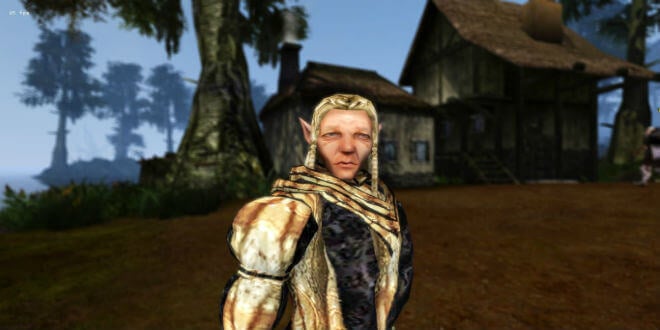
Morrowind FargothFargoth is the smarmy wood elf from the early moments in TES: Morrowind. He is too smarmy to not make the list. We wish we could steal his gold all the time.

What Makes Him Great

  • Fargoth’s desperate and pleading request for help finding his lost ring makes him an immediately memorable character from the player’s first moments in Seyda Neen.
  • Players are presented with an interesting moral dilemma right away in whether to return Fargoth’s ring or selfishly keep it, establishing player agency.
  • Befriending Fargoth by returning his ring rewards the player with his eternal gratitude and discounts at Arrille’s Tradehouse through his friendship with the shopkeeper.

McCree from Overwatch
McCreeOverwatch, a multiplayer first-person shot game, features Jesse McGree, an iconic main character. He is always seen with a Peacemaker and a cowboy hat. The character is known for his precision and realistic abilities. He has become well-loved by many for his idea of justice.

What Makes Him Great

  • McCree’s complex backstory of being part of the notorious Deadlock Gang before joining the covert Blackwatch unit provides depth and internal moral conflict.
  • McCree’s expert marksmanship and gunslinging skills with his revolver Peacekeeper make him an extremely deadly and stylish damage-dealer.
  • McCree’s cowboy aesthetic complete with hat, spur, and poncho provides a memorable and mythic character design evocative of the American West.

Jonathan Irons from Call of Duty
Jonathan IronsAlso known as CoD Kevin Spacey. He’s too much fun as a villain, not to mention.

His life’s principles and undying love for war make him memorable. Tom Hanks now plays the character.

What Makes Him Great

  • Irons’ gradual transition from seeming ally to the surprise revelation as the main villain provides an incredibly impactful and unexpected plot twist.
  • Irons’ highly charismatic personality and public charm make him chillingly convincing when presenting his extremist views of forcibly removing world governments.
  • Irons’ twisted ideology that politicians cause all war presents a nuanced antagonistic perspective that evokes some moral grayness.
  • The distinctive and evocative voice acting for Irons by Kevin Spacey brings weight, gravitas, and complexity to the character.

Handsome Jack from Borderland 2
Handsome JackSticking with the fun villain theme started by our friend Mr. Spacey, we have the big baddie from Borderlands 2 coming in hot.

The self-declared dictator of Pandora goes rogue and commits a slew of violent and heinous crimes after his daughter accidentally kills her mother and his wife. Borderland 2 has the “baddest” villain, so Handsome Jack is well-received by players.

What Makes Him Great

  • With bombastic displays and larger-than-life ego, Jack embodies the narcissist’s penchant for flamboyant megalomania.
  • Jack’s unpredictable oscillation between affable charm and explosive murderous rage keeps players perturbed.
  • Jack’s iconic mask obscures his facial scars in mystery, exemplifying his dual personas.

Rayman from Rayman
RaymanNo one knows what Rayman is. The limbless creature appeared in a game that was first launched in 1995 and quickly became popular.

Since then, the character has undergone multiple changes, but the essence has remained the same.

What Makes Him Great

  • Unique and Memorable Design: Rayman’s limbless, floating body with hands, feet, and head adds a distinctive and memorable visual appeal.
  • Versatile Abilities: Rayman’s iconic helicopter hair ability allows him to glide across large spaces, making for exciting gameplay mechanics.
  • Symbolic White Ring: The white ring on Rayman’s chest symbolizes his connection to Betilla the Fairy and his source of new powers.

Diddy Kong from Donkey Kong and Mario Kart

diddy kongDiddy Kong first appeared in Donkey Kong Country in 1995. He is the sidekick and best friend of Donkey Kong. He is also featured in the first few installments of the Mario franchise.

What Makes Him Great

  • Monkey Business Unleashed: Diddy Kong’s origins are shrouded in mystery, as he joins the legendary Donkey Kong as his plucky nephew and right-hand primate. Together, they embark on epic adventures through lush jungles and perilous caves.
  • Cultural Flair: Diddy’s name isn’t just catchy; it’s a nod to northern England slang for “small.” This intriguing reference hints at a world of cultural diversity, waiting to be explored.
  • A Tail of Ingenuity: What sets Diddy apart from his Kong family counterparts is his magnificent tail. Not just a fashion statement, this prehensile appendage is a multitool, enabling him to hang from vines, grasp objects, and even thwart his foes with flair.

Urdnot Wrex
Urdnot WrexWe’re back in space! At least it isn’t procedurally generated space! That would be boring! If you don’t think the Krogan Mercenary should make this list, then you have to be the one to break the news to him. Shepard.

Mass Effect has had some memorable characters, and one of the most popular is Urdnot Wrex. Players love the bounty hunter and mercenary for many reasons.

What Makes Him Great

  • Unique Background and Skills: Urdnot Wrex stands out as one of the last Krogan Battlemasters, blending powerful biotic abilities with formidable weapon skills.
  • Leadership and Clan Loyalty: Born into Clan Urdnot, Wrex quickly rose to prominence as a youth, becoming the youngest krogan to lead a tribe in a millennium.
  • Personal Growth and Betrayal: Wrex’s character undergoes significant development as he experiences betrayal from his own father, leading him to reevaluate the krogan culture.

Ryu Hayabusa from Ninja Gaiden
Ryu HayabusaAlso known as the Dragon Ninja, Ultimate Ninja, and Super Ninja, Ryu Hayabusa is as fit as a gameplay ninja. His modern-day costume, muscular build, and stoic features make him an intriguing character.

What Makes Him Great

  • Multi-Faceted Character: Ryu Hayabusa is a well-rounded character with a complex personality that evolves throughout the Ninja Gaiden series.
  • Iconic Appearance: Ryu’s Legendary Black Falcon outfit combines modern special ops aesthetics with traditional ninja elements, making him visually distinct and memorable.
  • Unyielding Determination: Ryu’s backstory is filled with tragedy, including the murder of his best friend and the massacre of his clan. His determination and indomitable spirit to overcome adversity and seek vengeance resonate with players.

Spyro from Spyro the Dragon
SpyroThe game was initially created for Sony PlayStations, but thanks to its popularity, it’s now available on multiple platforms.

Those who consider themselves hardcore gamers may be embarrassed to admit it, but Spyro the Dragon was entertaining and has made its way into everyone’s hearts.

What Makes Him Great

  • Innovative 3D Platformer: Spyro, as a character, represents the transition of video games from 2D to 3D during the PlayStation era, offering players a fresh and exciting gaming experience.
  • Creative Development Process: The creation of Spyro was the result of a collaboration between Naughty Dog and Insomniac Games, with both studios aiming to capitalize on the burgeoning 3D gaming trend.
  • Appeal to a Family-Friendly Audience: Spyro was designed with a colorful and Disney-like tone, catering to a family-friendly audience, and filling a gap in the PlayStation’s game library for such content.

Nathan Drake from Uncharted
Nathan DrakeMany may only know him from the movie, but real fans know that Nathan Drake from the video game is iconic. A professional treasure hunter, he is extremely quick-witted, fierce, and incredibly lucky when facing danger.

What Makes Him Great

  • Complex Backstory: Nate’s background, marked by a childhood in an orphanage and a false claim of descent from Sir Francis Drake, adds depth to his character.
  • Expertise and Resourcefulness: As a professional treasure hunter and deep-sea salvage expert, Nate showcases his resourcefulness and survival skills throughout the Uncharted series.
  • Personal Growth: Nate’s journey from a troubled orphanage upbringing to a renowned treasure hunter highlights his growth as a character.

You Should Know

In designing the protagonist for the Uncharted game, Naughty Dog wanted to draw inspiration from a diverse array of personalities, including Johnny Knoxville from ‘Jackass’, the suave and sophisticated Cary Grant, and the adventurous Indiana Jones portrayed by Harrison Ford.

Despite the character’s lack of skill or not being well-equipped in the art of treasure hunting, coupled with his knack for risking his life (and others) over a more ordinary existence, it is evident that Naughty Dog has created a masterpiece in the form of Nathan Drake.

Deckard Cain from Diablo
deckard-cainAh, Deckard Cain. A character that embraces his archetype with a fervor unmatched in all of Sanctuary. Or at least in all of Tristram.

Very few games manage to capture what Diablo has with Deckard Cain. A scholar and historian of Tristram, Cain is an all-knowing being. And he often knows more than he lets on. Gamers find him intriguing because of his phrasing and distinctive voice.

What Makes Him Great

  • Iconic Presence: Deckard Cain is an iconic character in the Diablo series, having been a consistent presence since the beginning of the franchise. His role as an item identifier and source of information has endeared him to players throughout the games.
  • Endearing Catchphrase: The phrase “Stay awhile and listen” has become synonymous with Deckard Cain, adding to his charm and memorability. Players eagerly anticipated what wisdom or information he had to share.
  • Rich Backstory: Cain’s backstory, including his family history and complex relationship with his mother, provides depth to his character. His journey from a skeptical scholar to a guardian of ancient knowledge adds layers to his persona.

Gordon Freeman from Half-Life
Gordon FreemanPhysicist Gordon Freeman defends himself and the human race during an alien invasion in Half-Life. During this strenuous time, he became one of the most legendary fighters and war leaders.

He became known as “the One Free Man” after slaughtering a whole army of alien soldiers.

What Makes Him Great

  • Relatable Profession: Freeman’s background as a theoretical physicist adds depth to his character, making him more relatable to players as a scientist in an extraordinary situation.
  • Unexpected Hero: Freeman’s transformation from a scientist to a reluctant hero forced to defend humanity against alien invaders showcases his resilience and adaptability.
  • Legendary Heroic Journey: Over the course of the Half-Life series, Freeman becomes a legendary resistance hero, emphasizing his growth and development as a character. His journey from an ordinary scientist to a key leader in the fight against an inter-dimensional empire is captivating.

GLaDOS from Portal
 GLaDOSThe main antagonist in the Portal series, GLaDOS, stands for Genetic Lifeform and Disk Operating System. She is an AI created by Aperture Science, the primary antagonist.

While most characters become popular for their personality or story arc, GLaDOS is best known for her iconic voice (done by voice actress Ellen McLain).

What Makes Her Great

  • Complex Character Development: GLaDOS undergoes a fascinating transformation from a helpful AI to a menacing antagonist and eventually, a more complex character with shifting allegiances. This evolution adds depth to her character.
  • Antagonist with Personality: GLaDOS’s witty and sarcastic personality makes her a memorable antagonist. Her humor and dark sense of humor provide a unique and engaging dynamic in the game.
  • Unpredictable Behavior: Her unpredictability, such as initially promising rewards like cake but then turning hostile, keeps players on their toes and adds to the suspense of the game.

Samus Aran from Metroid
Samus AranGotta’ rep the ladies on this list, too and Samus is a darn fine place to start.

What Makes Her Great

  • Adoption by the Chozo: Her adoption by the mysterious Chozo and subsequent infusion with their DNA create an intriguing blend of human and alien characteristics, making her unique in the gaming world.
  • Strong Character Development: From her upbringing as a warrior by the Chozo to her service in the Federation Police and eventual career as a Bounty Hunter, Samus’s character development is rich and multi-faceted.
  • Accomplished Warrior: Samus is renowned for her incredible feats, including the destruction of the Space Pirate base on Zebes and her role in resolving galactic crises. Her achievements make her an iconic character in gaming history.

Princess Zelda from Legend of Zelda
Princess ZeldaEven non-gamers know about Princess Zelda—that’s how famous she is! Her clothing, age, and looks vary between game installments, and they are all incredibly popular costumes every Halloween and during all kinds of fan conventions.

Her never-give-up attitude and humble nature, despite being a princess, make her relatable and very much loved.

Agent 47 from Hitman
agent-47Ah, we have yet another iconic character in this bald-head barcode boy.

Agent 47 was created by Dr. Ort-Meyer. He was the 47th clone made in an underground cloning laboratory. 47 was considered one of the best agents from the International Contract Agency until he exposed agency secrets.

What Makes Him Great

  • Professional Hitman: Agent 47 is a highly skilled and deadly assassin, making him an intriguing character for players who enjoy complex and morally ambiguous protagonists.
  • Unique Origin Story: His origin as a genetically engineered clone created by Dr. Ort-Meyer sets him apart from typical game characters and adds depth to his background.
  • Varied Skill Set: Agent 47’s genetically enhanced abilities, extensive training, and vast experience as a contract killer make him a versatile and capable character within the game world.

Sam Fisher from Splinter Cell
Sam FisherSam Fisher is a real badass.

Samuel “Sam” Fisher is a retired decorated Navy SEAL and former CIA officer. He had a tough childhood, but his career made him capable of fighting various combat missions.

What Makes Him Great

  • Varied Appearances: Sam Fisher has been featured in various forms of media, including video games, novels, and comics, showcasing his versatility and widespread appeal.
  • Voice Acting: His character has been portrayed by talented actors, including Michael Ironside and Eric Johnson, who have contributed to the character’s depth and authenticity.
  • Military Background: Sam Fisher’s background as a highly decorated Navy SEAL and former CIA paramilitary ops/clandestine officer adds credibility to his role as a stealthy operative.

Jack of Blades from The Fable
Jack of BladesThere must have been a lot of twisted issues going on behind this bad boy’s mask. He made for an excellent villain for our Hero of Oakvale, though!

The character was born in an unknown world years before humans existed.

What Makes Him Great

  • Ancient Origin and Mysterious Arrival: Jack’s ancient origins and arrival from the enigmatic Void, along with his role as part of the Court, lend a sense of mystery to his character, sparking players’ curiosity about his backstory and motivations.
  • Immortality Through Mask and Host Bodies: His use of the Mask to possess host bodies showcases his unyielding pursuit of immortality, offering a unique twist to his character by delving into the dark lengths he’s willing to go to preserve his existence.

Sonic from Sonic the Hedgehog
Sonic the HedgehogWe didn’t really get into Sonic until they released a game on the best system ever made: Dreamcast. The movie adaptation of Sonic the Hedgehog smashed box office records when it was released in 2020.

What Makes Him Great

  • Iconic Mascot: Sonic is Sega’s beloved mascot and one of the most recognizable and iconic characters in the gaming industry.
  • Super Speed: Sonic’s ability to run faster than the speed of sound is a defining trait that sets him apart from other characters, making him exhilarating to play as.
  • Versatile Abilities: His agility and the ability to roll up into a concussive ball for attacks provide players with a range of gameplay options and strategies.
  • Wanderlust and Adventure: Sonic’s adventurous spirit and willingness to pursue danger and excitement make him an engaging character who leads players on thrilling journeys.

Donkey Kong from Donkey Kong
Donkey Kong“He’s the leader of the bunch, you know him well // he’s finally back to kick some tail // his coconut gun can fire in spurts // if he shoots ya IT’S GONNA’ HURT”.

Donkey Kong is a protagonist and ultimate fighter, and he can take down just about anyone. He wears a red tie around his neck as he goes on his very entertaining adventure. The character is so well-loved that he is also often featured in the Super Mario series.

What Makes Him Great

  • Legacy and Family Ties: Donkey Kong Jr. carries the legacy of his grandfather, Cranky Kong, and the original Donkey Kong, adding depth to his character.
  • Evolution and Altruism: He has evolved from seeking revenge to becoming a more altruistic and heroic character, showcasing character development over time.
  • Vibrant Setting: Donkey Kong’s home on Donkey Kong Island provides an engaging and vibrant setting for his adventures, complete with friends, family, and a legendary banana horde.

Banjo from Banjo-Kazooie
banjo-the-honey-bearThis British video game series features Banjo, a bear, and Kazooie, a bird, going on different adventures.

The original game was released in 1998 and has had many sequels since.

What Makes Him Great

  • Unexpected Stardom: Banjo was initially planned as a small-time character in a Super Nintendo game but ended up getting his own series.
  • Debut in Diddy Kong Racing: Before starring in his own game, Banjo made his first appearance in Diddy Kong Racing, showcasing his versatility as a character.
  • Cameos and References: Banjo has appeared in other games and media, including Super Smash Bros. Ultimate and Minecraft, attesting to his lasting popularity.

Pikachu from Pokemon

PikachuPikachu made his first appearance in 1996 in the Pokemon video game series.

Pikachu is one of the most adorable-looking Pokemon. His utter loyalty to his humans and his powers to generate electricity makes him a favorite among Pokemon enthusiasts.

Fun Fact: All Pikachus in the series have minor differences in features, indicating their gender. These differences were integrated years after the video game was adapted into a TV show.

What Makes Him Great

  • Variety of Forms: Pikachu has multiple forms like Cosplay Pikachu, Pikachu in a cap, Partner Pikachu, and Gigantamax Pikachu, each with unique abilities and appearances
  • Electrical Abilities: Not only can Pikachu generate electricity, but it can also share its electric current with other Pikachu to help them when they are weak. It can also roast berries with its electricity to make them tender enough to eat.
  • Special Moves: Pikachu is the only Pokémon capable of learning the move Volt Tackle and using the Z-Move Catastropika. It’s also the only one capable of using the Light Ball item, which enhances its abilities.

Why We Love Pikachu

1. Cute Explosion: Pikachu was designed to melt everyone’s heart…especially ours. Its chubby cheeks, big round sparkling eyes, and cheerful smile are the warmest hug we never knew we needed.

2. Iconic Mascot: Pikachu is the official mascot of the Pokémon franchise, and over the years it has become a cultural icon recognized worldwide.

3. Loyal and Trustworthy: In the Pokémon anime series, Pikachu is portrayed as a very loyal and trustworthy companion to Ash Ketchum, the main character. And who doesn’t value a loyal sidekick or best friend?

4. Powerful and Brave: Despite its small and cute appearance, Pikachu is quite powerful and brave. It often faces challenges and battles with much larger opponents with courage, which makes us admire and love Pikachu even more.

5. Accessible: Pikachu’s presence is ubiquitous, from video games and movies to merchandise like toys, clothing, and accessories. This widespread presence and the availability of a wide range of Pikachu-themed products make it easy for us to express our love for the character.

Bonnie MacFarlane from Red Dead
Bonnie MacFarlaneBonnie MacFarlane is one of those special ingredients that helped make Red Dead Redemption such an exceptional game.

Although not the protagonist, Bonnie MacFarlane gained a ton of popularity among gamers.

Players seem to love her because she is outspoken and strong-headed—a combination very few female side characters seem to have.

What Makes Her Great

  • Multi-Dimensional Personality: Bonnie is not just a side character; she has a rich backstory and a multi-dimensional personality. She’s compassionate but no-nonsense, stepping up to take responsibility for her family’s ranch after the loss of her brothers.
  • Strong Female Character: Unlike many female side characters in video games, Bonnie is strong-headed and outspoken. She doesn’t fit into the typical damsel-in-distress mold; instead, she’s more of a partner to the protagonist, offering missions and helping out in various ways.
  • Complex Relationships: Bonnie’s interactions with other characters, especially John Marston, are nuanced. It’s hinted that she may have developed feelings for John, adding a layer of complexity to her character and the story.

Rayne from BloodRayne
RayneRayne, a half-vampire, half-human dhampir, is an agent of a secret society that protects humanity from evil. Her red hair and the ability to fight beasts ten times her size have led to her icon status.

Rayne is fearless, independent, and completely ruthless when talking about injustices.

What Makes Her Great

  • Complex Personality: Rayne is not just a one-dimensional character; she is headstrong, snarky, bold, intelligent, and sadistically seductive. She takes her job seriously and is highly confident in her abilities. Over time, she has become more emotionally expressive and mature.
  • Evolution Over Time: Rayne started as an innocent, happy child who couldn’t even harm butterflies. Her transformation into a ruthless vampire slayer was triggered by the tragic death of her mother and family, making her a character with depth and a compelling backstory.
  • Resourcefulness and Tenacity: As an agent and assassin of the Brimstone Society, Rayne is resourceful, persistent, and enduring. She is capable of forming relationships and is not entirely ruthless, showing a kind soul to a select few.

Cortana from Halo

CortanaCortana, an AI-generated being, is one of the most important figures in the game. She often partners with John-117 (the protagonist) in various missions. Besides her skills, Cortana became a fan favorite because of her physical features and depth of character.

Fun Fact: Microsoft named one of its digital assistant software personalities after the character because of its smart features. In fact, they even got the voice actor to perform the US-specific dialect.

What Makes Her Great

  • Complex Origin: Cortana was created by cloning the brain of Dr. Catherine Halsey, the chief scientist of the Office of Naval Intelligence. This gives her a unique and complex origin story that ties her closely to the lore of the Halo universe.
  • Neural Compatibility with Master Chief: Cortana was specifically chosen to be compatible with John-117, also known as Master Chief. This compatibility is not just technical but also extends to their personalities, making their partnership more dynamic and engaging.
  • Multifaceted Abilities: Cortana is not just a guide or a source of information; she plays multiple roles including hacking into alien technologies, providing electronic warfare support, and even boosting Master Chief’s combat abilities. Her versatility makes her indispensable.

Sarah Kerrigan
sarah kerriganPrimarily known as Kerrigan, this character is one of the primary antagonists. The self-appointed Queen of Blades is mainly recognized for her physical appearance.

Although the game was first released in 1998, to this day, people dress up like her because of how iconic her costume is.

What Makes Her Great

  • Complex Backstory: Sarah Kerrigan has a rich and intricate backstory that includes her early life, training as a Confederate ghost, and her transformation into the Queen of Blades. Her past is filled with tragedy, making her a multi-dimensional character.
  • Psychic Abilities: Kerrigan’s psychic powers are off the charts, so much so that the Confederacy had to readjust their entire psionic power measurement scale to account for her abilities. These powers play a significant role in her character development and the storyline.
  • Moral Ambiguity: Kerrigan operates in a morally gray area, making her a compelling antagonist. Her actions and decisions are often driven by a complex set of motivations, making her unpredictable and intriguing.

Bowser from Super Mario Bros
 BowserThe King of the Koopas is an anthropomorphic turtle of the Mushroom world. He is the main villain in the video game and has become just as popular as the main protagonists.

Those who have played the game already know that he repeatedly attempts to kidnap Princess Peach, whom the Mario Brothers then save.

What Makes Him Great

  • Role Versatility: Bowser’s role in the Mario franchise is incredibly versatile. He can be the main antagonist, a minor comic relief, or even a playable anti-hero in some games. This flexibility adds depth to his character and keeps players guessing about his next move.
  • Cultural Impact: Bowser’s design has influenced various forms of media, including cartoons and comics. His appearance has even been revamped for movies, showing his wide-reaching impact beyond just video games.

Marcus Fenix from Gears of War
Marcus FenixTalk about a bonafide bad-to-the-bone grub-smoker. Whether he was out of ammo or talking about how nice something was, he was always entertaining.

Mega Man from Mega Man
MegamanThe character is also known as Rock Man in Japan. The video game, released in 1987, was a side-scrolling action platform. Thanks to the side characters and storyline, the game was ahead of its time.

As a result, the protagonist and the game paved the way into the hearts of many old-school gamers.

What Makes Him Great

  • Philosophical Depth: Unlike other robots, Mega Man was designed with the ability to turn himself off, granting him a unique level of autonomy. This adds a layer of philosophical depth to his character, as he grapples with existential dilemmas about what makes a person.
  • Adaptive Abilities: Mega Man’s special Mega Buster arm cannon allows him to copy a defeated robot’s Special Weapon. This adaptability makes him a versatile character capable of overcoming various challenges.
  • Iconic Design: The pixel art for Mega Man was created by Akira Kitamura and later refined by Keiji Inafune. His design has become one of the video game industry’s most recognizable icons.

Max Payne from Max Payne
Max Payne“It’s Payne, whack the sucka’!” Pour some out for a man who always drew the short end of the stick and never knew when to quit.

The third-person action shooter game follows Max Payne, a detective-turned-undercover DEA Agent. His life comes to a shattering halt, leading him to avenge his family’s death.

What Makes Him Great

  • Survivor’s Guilt: Max is often the only survivor in many deadly situations, including confrontations with various criminal organizations and even within his own circle of allies. This adds a psychological depth to his character.
  • Influence from Literature and Mythology: Max’s story is rich with references to Norse mythology and classic literature, adding an intellectual depth to the game’s narrative.
  • Internal Monologues: Max’s internal monologues provide a deep dive into his psyche, offering players a look into his thoughts and feelings, which is rare in video games.

Subzero from Mortal Kombat
 SubzeroThe iceman cometh. Run.

A heroic character and defender of the Earth, SubZero is quite courageous. He is known to control ice in any form. Most players and non-players recognize his iconic costume, but he is most known for his abilities and Fatality finishing moves.

What Makes Him Great

  • Leadership Skills: Kuai Liang becomes the new Lin Kuei Grandmaster and reforms the clan into a force for good. His leadership skills are evident in how he manages to turn the Lin Kuei into allies of Earthrealm.
  • Versatility in Abilities: Beyond his iconic ice powers, Kuai Liang has also been shown to have Pyromancer abilities in an alternate timeline. This makes him a versatile fighter with a range of elemental powers.
  • Signs of Aging: Sub-Zero is one of the few characters in the series to show natural signs of aging, which adds a layer of realism and depth to his character.

Kratos from God of War
kratosThis god of a man can body-paint like a beast!

Kratos was once a nobleman. He makes a deal with Ares, the God of War, after he and his men are defeated during war.

He continues to kill under Ares’s name, leading him away from the ways of humanity.

What Makes Him Great

  • Demigod Origins: Kratos was born in Sparta to a mortal woman named Callisto and Zeus, the King of the Gods. This gives him an incredible intellect, superhuman strength, and powerful prowess.
  • Survivor of Spartan Trials: Like all Spartan younglings, Kratos was monitored and trained for combat by the Spartan authorities. He survived the brutal training and trials, showcasing his inherent warrior spirit from a young age.
  • Mark of Brotherhood: Kratos has a tattoo that is an exact image of his younger brother Deimos’ birthmark. This was done in honor of his brother, who was taken away by Ares and Athena due to a prophecy.

Kitana from Mortal Kombat
KitanaThis is another all-time favorite character from the Mortal Kombat universe, also known as Princess or Lady Kitana. She is the adopted daughter of Emperor Shao Kahn, an evil king.

What Makes Her Great

  • Political Power: In Mortal Kombat 11, she becomes the new empress of Outworld, succeeding Kotal Kahn. She also becomes the empress of the Netherrealm alongside Liu Kang.
  • Tactical Leader: Kitana is not just a fighter but also a strategist. She led an army into Outworld to prevent Shao Kahn from rising to power again.
  • Versatility in Combat: Kitana relies heavily on her Steel Fans, which she can use as both a projectile and a melee weapon. She also has the ability to create tornadoes and teleport, making her a versatile combatant.

Scorpion from Mortal Kombat
ScorpionScorpion wields a weapon called the kunai, which originates from Japan as a farming tool. His character, an undead ninja armed with this traditional tool, has contributed to his rise as a popular character in the Mortal Kombat franchise.

What Makes Him Great

  • Complex Moral Ambiguity: Scorpion is not purely evil or purely good. He is often portrayed as an anti-hero who takes actions that benefit the forces of good, albeit in his own gruesome and vigilante manner. This moral ambiguity sets him apart from other characters in the Mortal Kombat universe.
  • Emotional Depth and Motivation: Scorpion’s powers, especially his Hellfire abilities, are tied to his emotional pain. He must relive his greatest shames or witness the suffering of his allies to unleash his full potential. This adds a layer of complexity to his character, making him more than just a fighting machine.

Ganon from the Legend of Zelda
Ganondorf

Also called Ganondorf, he is a warlock who opposes Princess Zelda. He is the final boss in the game, so he is one of the most evil characters. Ganon is as cruel and as dark as any video game character can get. Moreover, his magical powers cannot be messed with.

What Makes Him Great

  • Origin in Demise’s Curse: Ganon’s existence is rooted in a curse laid by the demon Demise, making him a part of a cyclical destiny that plagues Hyrule. This adds a layer of mythological depth to his character.
  • Complex Motivations: Ganon has evolved from a simple princess-kidnapping monster to a character with profound motivations, sometimes driven by hatred and other times by a complex backstory.
  • Fractured Timeline: Ganon’s story is not linear; it diverges into multiple timelines, each with its own set of events and outcomes. This makes him a versatile and ever-changing character.

Pacman from Pacman

PacmanPacman has been an icon since its first launch in the 1980s. The simplicity of the game and its possibilities as a medium has ensured that it remains a standout in the industry.

Its influence is so broad that Pacman has become one of the most well-known characters across all media.

What Makes Him Great

  • Iconic Origin Story: The idea for Pac-Man was inspired by a pizza with a slice removed, as well as the Japanese symbol “kuchi,” meaning “mouth.” This simple yet memorable origin story has contributed to the character’s lasting appeal.
  • Cultural Impact: Pac-Man has the highest brand awareness compared to most of the iconic characters in North America. He has even influenced language, inspiring the term “Pac-Man defense” in mergers and acquisitions.
  • Versatility Across Platforms: Pac-Man has appeared in more than 30 licensed sequels and spin-offs across multiple platforms. He’s not just confined to arcade games but has also appeared in console games, mobile games, and even as a guest character in other franchises like Super Smash Bros.

Duke Nukem from Duke Nukem
Duke NukemHe is somewhat of a cultural icon. Duke Nukem selflessly saves Earth by fighting alien invaders. At the time, Nukem was what you’d call a typical macho man, and this, along with his iconic look, earned him a spot among the most iconic video game characters of all time.

What Makes Him Great

  • Adaptability: Duke Nukem has been a part of various types of games, from first-person shooters to platformers, demonstrating the character’s versatility and adaptability to different gaming experiences.
  • Iconic Weapons and Gadgets: Duke Nukem is often associated with an arsenal of unique and over-the-top weapons, which have become as iconic as the character himself.
  • Cinematic Influences: Duke Nukem’s character is heavily influenced by action movie heroes, making him a sort of homage to the action stars of the ’80s and ’90s.

Cloud Strife from Final Fantasy
Cloud StrifeThe protagonist of the popular 1997 video game and many of the sequels and spinoffs, Cloud Strife is an expert swordsman and mercenary.

Losing a loved one and harboring the guilt made him do unimaginable things, but he is still very relatable and incredibly well-liked.

What Makes Him Great

  • Complex Personality: Cloud starts off as an arrogant and proud swordsman but undergoes significant character development. He evolves into a more caring individual who learns the true meaning of being a hero, which involves more than just physical strength and fame.
  • Versatile Combatant: Cloud wields large broadswords, including the iconic Buster Sword. He is versatile in melee combat, and capable of switching between different modes that allow him to be agile or more offensive. His all-around stats make him a formidable character in the game.

Geralt of Rivia from The Witcher
Geralt of RiviaThis character needs no introduction. Thanks to Henry Cavill’s portrayal in the Netflix series, Geralt of Rivia has become more popular than ever. His job is to kill beasts that create an imbalance and cause harm to the people.

As a titular character, it’s no surprise that he is so well-loved.

What Makes Him Great

  • Complex Moral Code: Geralt often finds himself in situations where he has to choose between lesser evils. His moral compass is not black and white, adding depth to his character.
  • Unusual Origin: Geralt is not originally from Rivia. He adopted the name “of Rivia” to appear more trustworthy to potential clients. He even went so far as to adopt a Rivian accent. This adds an interesting layer to his identity.
  • Intellectual Depth: Geralt is not just a sword-wielding monster slayer; he’s also well-read and knowledgeable in various subjects, adding an intellectual aspect to his character.

Lara Croft from Tomb Raider
Lara CroftThis video game has had many installments and different versions of its main character, Lara Croft. However, the basic plotline has remained largely the same. Croft is an iconic baddie, one of the most popular female characters of all time, ready to tackle villains and go on elaborate adventures.

What Makes Her Great

  • Character Evolution: In the reboot, Lara starts as a naive 21-year-old college student studying archaeology. As the game progresses, she transforms into a strong, headstrong explorer, showing significant character development.
  • Resourcefulness: Lara is described as clever, resourceful, and determined. These traits are not just adjectives but are demonstrated through her actions in the game, such as solving complex puzzles and surviving in harsh conditions.
  • Moral Courage: Despite facing life-threatening situations, Lara’s sense of moral courage stands out. Her loyalty to her friends outweighs her fear for her own safety, adding a layer of depth to her character.

Princess Peach Toadstool from Super Mario Bros

Princess Peach ToadstoolMore popularly known as Princess Peach, she is the damsel in distress that Mario and Luigi save across various versions of the game.

She is also the love interest of Mario and Bowser and is quite well-known for her iconic pink dress and blonde hair—also an incredibly popular costume.

What Makes Her Great

  • Complex Personality: Peach is not just a one-dimensional character. She is kind, polite, and optimistic but also shows signs of being clever, adventurous, and even assertive. Her personality traits often play a key role in the plot of several games.
  • Unique Abilities: Peach has a range of special abilities that make her stand out. She has healing powers, as seen in “Super Mario RPG: Legend of the Seven Stars,” and can even resist mind control, as shown in “Paper Mario: The Thousand-Year Door.”
  • Fashion-Forward: Peach has been seen in various outfits, especially in sports games, adding another layer to her character. Whether it’s a sleeveless minidress for tennis or a special jumpsuit for motorbike racing, her wardrobe is as versatile as her character roles.

Solid Snake from Metal Gear

Solid SnakeHe goes by many names but is most commonly known as Solid Snake. A former military operative with an IQ of 180, Solid Snake is not to be messed with.

His achievements gave him the title of “Legendary Hero” and “the Man Who Makes the Impossible Possible.”

What Makes Him Great

  • Complex Origins: Solid Snake, whose real name is David, was born as a result of a secret government project called “Les Enfants Terribles.” He is a clone of the legendary soldier Big Boss, created to be the perfect soldier.
  • Multifaceted Skill Set: Initially a Green Beret, Snake was later inducted into the High-Tech Special Forces Unit FOXHOUND. He is an expert in high-altitude skydiving, linguistics, combat diving, and free climbing. He was personally trained by Big Boss in Close Quarters Combat (CQC).
  • Moral Complexity: After being labeled a terrorist due to a smear campaign, Snake faked his own death only to re-emerge years later to assist in another mission. His actions often blur the lines between heroism and terrorism, making him a morally complex character.

Mario from Super Mario Bros
 MarioMario needs no introduction. He has been an icon since 1985 and is a favorite of adults and children across many generations. The little man fights villains to save the love of his life, Princess Peach.

The franchise has gotten bigger and better each year.

What Makes Him Great

  • Iconic Creator: Mario was created by the legendary Japanese video game designer Shigeru Miyamoto and serves as the main mascot for Nintendo.
  • Versatility: Mario is not just confined to platforming games. He has been featured in racing games, sports games, and even RPGs. This makes him a versatile character that fits into various genres and roles.
  • Trademark Abilities: His signature abilities include jumping and stomping to defeat enemies. Over the years, he has gained more powers through items like the Super Mushroom, Fire Flower, and Super Star.

Link from the Legend of Zelda
LinkLink is one of the primary protagonists in The Legend of Zelda. He is brave, highly skilled, and heroic. His and Zelda’s loving relationship—not particularly traditional—makes him much more intriguing than just a simple, fearless fighter.

What Makes Him Great

  • Enduring Protagonist: Link has remained the central character and hero throughout The Legend of Zelda series, earning him a special place in the hearts of players over many years and games.
  • Heroic Transformation: He starts as an ordinary boy or young man but transforms into a legendary hero, making players feel a sense of progression and accomplishment as they guide him on his journey.
  • Chosen by the Golden Goddesses: Link’s role as the chosen one, signified by his possession of the Triforce of Courage, adds depth to his character and highlights his destiny to battle evil forces.

John Marston from Red Dead
John MarstonNew-age and old-school gamers continue to praise this game. If you thought Bonnie MacFarlane was impressive, John Marston is on another level. His dialogue, character, and moral complexity make him one of a kind and loved by thousands of fans.

What Makes Him Great

  • Complex Background: John Marston has a complicated past that includes being born to an illiterate Scottish immigrant and a prostitute. He was orphaned at a young age and turned to a life of crime, making him a multi-dimensional character.
  • Moral Ambiguity: Marston is not a straightforward hero. He has committed crimes, including murder, but also shows signs of wanting to change, especially for the sake of his family. This moral complexity makes him relatable and intriguing.
  • Family Man: Despite his rough exterior and criminal background, Marston is a family man. He has a son, Jack, and his relationship with his family is a significant driving force in his actions and decisions.

Master Chief
Master ChiefAlso known as John-117, Master Chief is the protagonist of Halo. His goal is to save humanity from aliens. His stoic and tactful nature helps him beat enemies—no one stands a chance against him. Over the years, the character has been voiced by many actors, but you’ll rarely hear him talk.

What Makes Him Great

  • Early Leadership Qualities: From a young age, John-117 exhibited leadership qualities that set him apart from his peers. He was identified as one of the four emerging leaders within the Spartan-II group, and his leadership was solidified through various missions.
  • Strategic Genius: John-117’s first mission, Operation: TALON, was a complex operation to capture an Insurrectionist leader. Despite being shot, he successfully completed the mission, showcasing his strategic thinking and resilience.

So how did these top 50 characters make the grade when it comes to the list of some of the most memorable characters? Well, a lot has to do with personality, look, and feel. And even more fundamental than that, what it really boils down to is cool character design.

Take Master Chief, for example. He’s got a sweet set of armor, as well as incredible physical strength and coordination. He’s what we all imagine a super cool sci-fi space soldier to look and act like.

Do you agree with this list? Comment with your agreements and objections, and let us know some of your favorite characters!

Sources

https://www.charactour.com/hub/characters/view/Donkey-Kong.Donkey-Kong
https://www.mariowiki.com/Mario
https://metroid.fandom.com/wiki/Samus_Aran
https://www.ign.com/wikis/mass-effect-3/Commander%20Shepard
https://bulbapedia.bulbagarden.net/wiki/Pikachu_(Pok%C3%A9mon)
https://www.mariowiki.com/Bowser
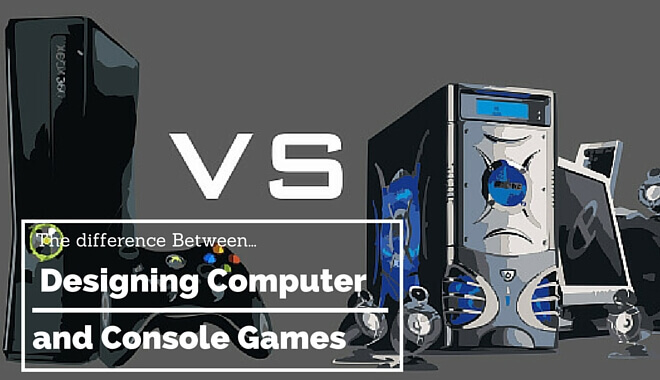
Flash Game Development & The Best Flash Games

0

flash game tutorials
In 2017, Adobe released a statement that shook many veteran Internet users to their cores.

More or less, Adobe was cutting the cord to its cornerstone program, Flash. Since 1996, Flash had been a dominant and memorable computer program in use by people of all ages. The games provided by talented contributors were time-killers, sure, but they were a lifesaver when you have 5 to 10 minutes to kill.

What’s the Status of Flash Right Now?


Unfortunately, by the end of 2020, Adobe is pulling support for Flash. Another downside is that many browsers are straight-up blocking the use of Flash on their browsers at that same time, so it’s not even as you can still use Flash without support features. Microsoft is going a step further by releasing a patch to block Flash use on their browsers.

Although this announcement was made back in 2017, it doesn’t make it any easier for Flash faithful, and they may be wondering where to head to next.

What Will Replace Flash After It’s Gone?


With Flash’s demise, the next logical step is to transition to HTML5.

So, What’s the Big Deal?


Flash has been around since 1996, seeing the meteoric rise of the Internet from the passenger seat. Many creative powerhouses and companies have made fantastic games, artwork, animations, and movies using Adobe Flash.

Losing Flash is like actively losing a piece of vital, compelling Internet history. While this may not directly affect everyone, I can guarantee that Flash has played at least somewhat of a significant part in your Internet browsing history.

Download and Play Old Flash Games, Forever!


With the end of Flash support by nearly every major software company and browser by the beginning of 2021, how do we access those old games that we spent hours wasting time in class? There’s a program called ‘Flashpoint.’
Flashpoint, through handy open-source software, has you download a client in which you can access many of these games for free. Flashpoint has over nearly over 50,000 Flash games, as well as different Flash animations numbering in the thousands.

This is an excellent start for the future of prior Flash content, ensuring its existence long after Adobe gives it the ax in 2020.

Moving On From Flash


If this seems like too much for you, or you don’t really mind the alternative, moving onto something that isn’t Flash might be your thing.

Best Games List

Okay, let’s look at some of the most standout titles that all of the years of Flash animation has brought us, and let’s hope they live on!

Doom


You know, Doom. The demon-killing frenzy that started in the early 1990s has continued all the way to modern-day through Adobe Flash. Obviously, you aren’t getting 21st century, hard-hitting graphics, but you are getting one of the most iconic first-person shooters that has ever been created. Not a bad deal!

Super Mario 63


You read that right, not 64, 63. Although it would be awesome to play Mario’s Nintendo 64 adventure in Flash, this is a fan-made platformer that puts you in a reimagined, 2D version of Super Mario 64’s setting. Honestly? It looks and runs great, too.

Tetris


This should come as no surprise. The Russian puzzle block game has been a mainstay for gamers everywhere for almost 40 years now. With ports to nearly every system and browser, it was a natural decision to have Tetris as a Flash game.

No new bells and whistles here, just solid Tetris gameplay.

Alien Hominid


From the creators of Newgrounds, a site that hosted hundreds of thousands of Flash games and animations, comes Alien Hominid. You’re a small yellow alien escaping pesky government agents hellbent on capturing you. It involves cartoonish violence and fantastic art and animation style.

It eventually made its way to consoles after its 2004 online release date.

QWOP


Okay, this one may not be one of the ‘best,’ per se, but it sure is memorable. QWOP has the player control a track and field runner, using the QWOP keys to control nearly every aspect of their limbs.

This may seem simple, but it doesn’t take long to realize that this is harder than it looks. You’ll often find your runner on the ground, flailing away because you couldn’t press the proper buttons. This entertaining game creates some hilarious situations, especially playing with friends.

About Flash


Flash has been around helping developers make addictive browser games for quite some time. Flash naturally moved to accommodate mobile games and applications as mobile gaming grew.
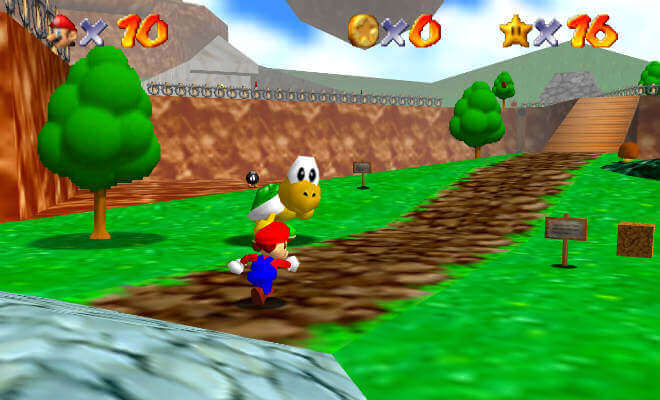
A number of years ago, Flash used to be required for playing videos on the web, (like with YouTube back in the video uploading site’s early days). Meanwhile, Apple devices, like the iPad, have never supported Flash.

Whether you know it or not, you’ve played some Flash-built games. Do you know that game where you launch hornery avians at swine? Well, it was made in Flash (we’re talking about Angry Birds, for the record)! You’ve likely heard of FarmVille and Clash of Clans too, both of which were developed in Flash.

It used to be known as Macromedia Flash, or Shockwave Flash. In 2005, Adobe acquired Macromedia, so now it’s known as Adobe Flash.

Despite YouTube moving from Flash and some Apple products never supporting it, Flash is still very relevant today. If you want to get into some Flash game development, there’s no time like the present.

As always, we’re here to help out. We’ve scoured the world wide web to pull together some Tutorial options to help get you started with Flash game development. Some resources are free, some are not, so you’ll have to decide the path you take in your programming pursuits. We do our best to give you the intel you need to make a solid decision.

P.S. We’re sure you’ve already thought of this, but just in case you haven’t…You’re going to need the Flash software to actually practice what you learn in these tutorials, and to use the software to make games. If you haven’t downloaded it already, Adobe offers a free trial.

Flash Development Made Simple

UDemy


UDemy offers an Adobe Flash for beginners course. Guess what? It’s free. Hard to beat that! UDemy is a solid place to start your Flash learning journey. Upon completion you will receive a verifiable certificate, stating that you did, in fact, complete this Adobe Flash course. It might not unlock hundreds of doors for you, but it certainly won’t hurt your prospects, either.

This course deals with using the software for web interface design, interactive animation projects, and even using the program to stream high-quality video. Introducing interactivity to your awesome graphics and animations is just a hop, skip, and a jump away from building games with Flash.

So while this course doesn’t specifically feature game development, it will give you plenty of skills that you can carry over to your game masterminding.

This particular course has had nearly 78,000 students enrolled since its release several years ago. It has almost 150 lectures to go through (148, to be exact), which ends up being about 10.5 hours of instruction.

The course has been reviewed by 186 people (at the time of this article) with an average of 4.4 stars out of 5. As you can see, it’s been well-received.

Check out the reviews yourself and see if past students have gotten out of this course what you hope to get out of it.

TrainSimple


TrainSimple provides Adobe-authorized training in Adobe Flash. Sounds official! Of course, this kind of high-caliber certification from the software owners comes at a steep price… It’s $15 dollars a month to join TrainSimple and use their programs.

Their introductory course includes dozens of lectures that are all under 10 minutes long, focusing on one particular skill at a time, with a video presentation to communicate the idea to you.

There’s a quick course trailer available to watch, which talks about Flash and what you can expect to learn. It also shows you some pretty clips of what Flash is capable of when you take the time to really learn it.

The course allegedly takes about 5 hours. It may be more depending on how much time you want to spend practicing.

Still, no matter how busy you are, you should be able to knock out a 5-hour program within a single month, meaning you could theoretically get through the introductory course and some of their advanced flash courses all while just paying a single $15 fee for one month of membership.

The course/membership comes with complete access to TrainSimple’s library, their recommended learning paths, and many exercises for you to practice your fresh skills.

Adobe


Speaking of Adobe-authorized… Adobe itself actually has a moderate database of training materials and video tutorials for you to look through. They break their Flash training down into 5 steps: Flash basics, Graphics and symbols, Timeline Animation, Interactive Buttons, and Digital Video.

It may not be the most fun way to learn Adobe, but at least you’re learning from the authority on the software. Some of the lessons are in video format, others are text-based tutorials. Certain lessons have sample files you can download, which let you look at a working file of the completed project from the tutorial.

If you’re inclined, you can compare your own tutorial results against the sample provided to make sure you completed the exercise correctly. Oh, and these tutorials are free, too. So that’s plus.

Kongregate Labs


Kongregate Labs offers a free tutorial for building your first game in Flash. It’s a game Kongregate Labs calls Shoot. They also offer “Shootorials.” You can download the source code for Shoot and they provide guides that show you how to finagle with the code. This lets you learn some Flash elements while putting your very own touches on the game.

There are eight different tutorial sections, each one teaching you how to adjust a different element of the game. This is a great option if you want to launch right into game development rather than learning the more general elements of what Flash has to offer.

Make Flash Games


MakeFlashGames.com offers text-based tutorials that teach introductory elements to Flash. There are also a number of tutorials that teach you how to make specific games.

If you need a short break from learning Flash and working through a tutorial, you can click one of the links for the finished Flash games that are mixed in with the tutorials. Who says you can’t mix business and pleasure?

The website ranks the difficulty using a star system, one star is easy, two stars is a little more challenging, etc. That’s helpful for knowing what you’re getting yourself into. There are a bunch of tutorials to pick from.

The site includes everything from a simple “Apple Catcher” game, to a Flappy Bird game, to a Tower Defense Game. Screenshots of the code elements and the software windows help make it easier to understand and follow along. Did we mention that it’s free?

Newgrounds


Newgrounds is the OG hub of Flash games. We’d be remiss if we didn’t mention this timeless classic of a Flash game haven. Luckily they have a couple of tutorials on making games with Flash, so they actually earn a spot on our list. All of the tutorials on Newgrounds are free.

There are some decent options for beginners. A few of the guides will teach you how to make games from scratch.

There’s a platformer tutorial, an RPG platformer tutorial, even a 2D physics tutorial. The database isn’t very extensive, but there are some videos in there that can help you if you’re stuck, or help you get started. At the very least, you can browse the Flash relic in awe of its ancient glory.

FAQ

What Will Happen to All the Flash Games in 2020?


Thanks to certain online users and groups of passionate people, some movements are attempting to preserve many of the Flash games that are out there. In particular, one group, BlueMaxima’s Flashpoint, has been blazing a trail to make sure people can play iconic Flash games.

What Games Use Flash?


The list is super long. From iterations of Tetris, Mario, and other classics, to original yet straightforward titles, Flash has had a hand in some of the most memorable online games in the past 20+ years.

So, Are Flash Games Dead?


Yes and No. Yes, because the end of 2020 will soon be approaching. If they aren’t archived in some way, the patches and various methods of discontinuing Flash on specific browsers will make playing games nearly, if not outright, impossible. They live on through different projects and initiatives started by passionate fans and players to preserve a piece of living history tied to great memories and strong creative know-how.

Can You Still Play Flash Games After 2020?


Through projects like Flashpoint, the answer is yes. Although they won’t have every game, they have thousands, more than enough to keep you busy. They are adding new games and other Flash aspects often, though.

If Adobe Discontinues Support for Flash Player in 2020, Will Flash Games on Sites Like Kongregate & ArmorGames Still Be Playable?


No, as many browsers will actively discontinue the use of Adobe Flash within their own browsers.

Could Someone Who Is Not A Developer Port It To An Alternative?


Yes, absolutely. You don’t need to be a computer whiz to do something like this, either. You do need familiarity with HTML5 and other aspects of computing, but it’s not a Herculean effort like you might think!

Would Some Browsers Still Allow You to Use Flash Player?


No, they will all pull support of Adobe Flash after 2020. Although the date isn’t set in stone, it is slated for the end of 2020.

Will I Still Be Able to Play Flash games?


Thanks to projects like Flashpoint, yes. Keep in mind that they probably won’t be able to get all of the Flash games ever made, because it’s nearly impossible to even approach something of that magnitude, but many of your favorites will still exist.

Will Any Browser Support Flash After 2020?


With Microsoft completely ridding itself of Flash, it seems that many browsers will follow suit. This includes Mozilla Firefox, Google Chrome, Safari, and mobile access.

Steve Jobs himself was a vocal opponent of using Flash on iOS and other mobile platforms and actively campaigned for the use of other things like CSS and HTML. Perhaps this is Steve Jobs finally getting his way!

Is There A Flash Game for PS4?


No, and even the PS4 browser to access the Internet doesn’t support a Flash plug-in.

Are Flash Games Still Playable?


They will definitely have to be saved in either a client or as Flash files that you open outside of an Internet browser. The main thing is, they aren’t going to literally disappear. It may take some hoops to jump through, but you can definitely access Flash content.

How Do I Keep Flash After 2020?


Unfortunately, you can’t keep Flash on your browsers. They have all more or less stated that they will discontinue the use of Flash on their browsers. Adobe is pulling support as well.

The Most Popular Game Development Software

0

Essential Software for game designers

What software is used to develop games?

There are so many tools and pieces of software for robust game design right at your fingertips!

We’re living in truly amazing times; the internet is host to all kinds of excellent software to help game designers of all calibers make their very own games.

Well, which platform is best for game development? The PC, no question. While game development can be utilized on any platform, namely mobile devices and consoles, the PC is the most widely used and documented. It also comes with some of the best software and engines available to would-be developers.

There are software options that are incredibly simple to use. There are a ton of options that are so easy; you don’t even need programming skills or coding knowledge to use and master them.

What is the best free game development software? Unity.

Unity is a fantastic free engine that nearly everyone can use. Although it’s always recommended to have some coding knowledge, you don’t need to be a Unity master to reap the benefits of the game engine.

Then some serious tools will require some moderate (and more) experience with coding.

Which software is best for game-making? It all depends on your style of game development.

If you’re a bigger studio, then maybe something like the Unreal Engine would be right up your alley.

If you’re a one-person team, like Eric Barone of Stardew Valley fame, you might test your game-making skills with a program like Quest or Stencyl.

The point is, there are plenty of options available to you, regardless of the kinds of games you want to make, and your current skill and experience levels. Let’s take a look at some good options!

Our Review Criteria

In addition to player and critic ratings, we use objective metrics like sales, users, and sales growth rate to make our lists (read more). Some of these data sources include:

Beginner Game Development Software

Quest

Quest Game Development Software

Let’s start at the very beginning with a super-basic game design program. It is easy to have super high expectations when you’re first starting out.

We’re talking about “I’m going to create the next Skyrim” ambitions. Dream big, always dream big, but know that you won’t be able to achieve a game like that overnight, especially if it’s your first night designing a game (someday, pal! Keep at it!).

Instead, you could start with a design tool that will let you focus on crafting a power-house narrative. Good storytelling is something that’s always appreciated. Hone your in-game storytelling skills by using Quest. Quest is a totally free program that runs in your browser.
This program will let you make a text-based adventure game. It won’t be much to look at (since it’s text-based) but it will let you focus on the story and choice-elements of a game. This linear approach to making a game will help you avoid any feelings of overwhelming.

Twine

Twine is another great tool for generating text-based games. It is also another completely free program. It publishes to HTML, which means you can post it wherever you want. It’s another great starting point for delving into interactive storytelling.

You can generate a stellar, nonlinear story without worrying about making the game’s aesthetic. It’s a great place to start if you’re looking to make RPGs moving forward (baby steps, hey?). There was a time before all the fancy graphics and gameplay mechanics, after all, so there’s no shame in starting in text!
Stencyl

How to create games with stencyl

Here’s a great program for making a game that isn’t text-based, and still without using any code! For beginners with no coding experience, Stencyl has a drag and drop interface that is, for the most part, pretty easy to use.

If you’re a designer with some coding experience, Stencyl allows you to augment the program’s existing creation capabilities through code of your own.

You are able to design worlds by molding tile and terrain to your liking. You can also upload your own graphics to create different actors and game elements, and then tweak them until they’re perfect. You can design games for Mac, Windows, and Linux, but it’s definitely geared towards mobile games.

They offer a free version that only lets you publish to the web and there’s an indie version for $99 a year that lets you publish to the web and desktop. Then there’s also the studio version which costs $199 a year and lets you publish to iOS, Android, Web, and Desktop.

Construct 2

How to create games with Construct 2

Construct 2 is another powerful 2D game creation tool, that lets you publish to HTML5. It is another program that is beginning-designer-friendly, requiring no coding experience to make the magic happen. Like Stencyl, it has tiered payment options. There is a free version where you can publish to the web.

To make mobile games, you’ll need to pay. Instead of yearly fees, there is a one-time fee that you pay upfront, which gives you access to Construct 2 and all future software updates.

Construct 2 has a showcase page that features games developed using the program, as well as a tutorials page and a forum to help you with any problems you may have. Those are good resources to see how other developers are using the software and to get you off the ground with your programming.

The Top Game Design Sofware

essential gaming software

RPG Maker

We suspect you can guess what this program is best for… It’s right in the title, after all…

That’s right! RPGs! There are a number of different versions of the RPG Maker. All of them are available for a free trial download.

The latest, RPG Maker VX Ace, goes for $69.99 and gives you “the most powerful RPG making tools ever” (according to their website, of course). It’s yet another tool that doesn’t require you to have coding knowledge.

It’s pretty easy to pick up and use, but there is a very helpful community of users behind this program if you ever get stuck. With music and stock character images provided, you can make a pretty cool game without ever leaving RPG Maker.

Gamesalad

How to create games with gamesalad

  • Price: Various—Subscription Service Model
    • Gamesalad Basic: $19 monthly
    • Gamesalad Pro: $29 monthly
  • Level: Beginner
  • Welcome to Gamesalad
  • Website

Here is another tool with a free option. Like other programs, Gamesalad uses a drag and drop interface, letting you build a game quickly, without putting effort into coding it yourself. When you finish a game, which the website says could happen in as little as an hour, you can publish it to “almost every platform known to man.”

A “Featured Games” section lets you check out sixty of the coolest games other developers have created using the program. There’s also an option to submit your own creations to the Gamesalad team, giving you an opportunity to have your game featured on the program’s site.

Game Maker

Create Games with Gamemaker

  • Price: Various
    • Free Trial
    • Creator: $40
    • Developer: $100
    • Console: $800
  • Level: beginner, intermediate, expert
  • Game Maker Studio 2
  • Website

Game Maker, like Gamesalad and others listed before it, uses the drag and drop, code-free approach to game design. There is, as you probably guessed, a free version. There is also a studio version that starts at $150 dollars and increases in price as you choose more export options.

And, of course, there’s a Studio Master Collection, which goes for $800 dollars.

The interface is one of the easiest to use and ends up being one of the most powerful, too. Combine the in-program ease-of-use with the experience backing the program’s forum community, and this tool becomes quite a good place to start your code-free (for now) game design career.

Unity

Unity Game Development Software

  • Price: Various
    • Free
    • Professional Edition: $75 monthly
    • Level: beginner, intermediate, expert
  • Unity 5 Trailer
  • Website

Finally, we stray from our code-free path. In order to use Unity, you’ll need to know how to code. If you have some experience with coding, then Unity will be an exceptional tool for you. You’ll be able to design both 2D and 3D games. For free, too, as the personal edition is downloadable at no cost.

A professional edition is available as well, which is subscription-based with prices starting at $75 dollars per month. If you are interested in more than just creating a game for personal reasons, Unity has some really cool engagement tools.

The powerful design elements of this software, in conjunction with its end-user data collection and game monetization help, makes it a great tool for building a game that you could profit from.

Even if you don’t care about the monetization aspects and aren’t as concerned with engagement, this is still an awesome program for practicing your game building and honing your coding skills.

Unity does so much more, but one of the other cool things it offers is a collaboration feature. When you want to create a game easily with some of your friends or colleagues, Unity has systems in place to make it very easy for you.

Unreal Engine

Unreal Engine Game Development Software

In March of 2015, Unreal Engine became free to download. The stipulation is that, if you monetize your creation, Epic Games gets 5% of your profits after your first $3000. You can use the Unreal Engine to make everything from 2D mobile games to stunning 3D open-world games.

You could be a student, an indie developer, or a professional game designer. This engine is being used by all levels of game designers, and your only limits are your time and creativity. The engine is powerful enough to keep up with your wildest game creation dreams.

3D Character

Before we dig in, let’s straighten a few things out. For optimal 3D character creation, you’re going to need the best character creator software.

Another aspect to be aware of is that 3D character creation isn’t for everyone. So if you feel an idea isn’t coming together, don’t feel like it’s the end of the world.

Recommended Character Creator Software

Character Creator

MakeHuman

This is an open source character creator and is extremely versatile. It pays a lot of attention to the minuscule details of a character, allowing you to further build your ideal character more realistically.

Daz Studio

With different subsets of its program, Daz Studio is a varied and multifaceted character renderer. You can even export your character to other programs for further tweaking and perfecting.

iClone

iClone is favored by professionals the world over. You have a ton of human features to choose from, including countless generated faces. The program sets you up for success by having all of the small stuff settled already; everything is already generated and mapped out.

Mixamo

Calling all beginners! Mixamo is perfect for your first foray into animation and design. They have a huge collection of prefab characters for you to choose from and edit upon. These characters are fully developed in terms of mapping and animation, so you can jump right into the design.

Autodesk Character Generator

Part of the fantastic Autodesk Maya, Autodesk Character Generator is a web-based program that’s best suited towards animation and for your future video game projects.

Maya

Maya is one of the best pieces of software for crafting alluring images in movies and games. Although not it’s a strong suit, 3D character design is entirely possible.

ZBrush

Textures are the name of the game here with Pixologic’s fantastic ZBrush. This program is perfect for character designers and digital painters. The program emphasizes the use of textures, digital paint, and 3D models.

About From Software

From Software is known for games like Dark Souls and Sekiro: Shadows Die Twice. From Software video games are identified by their extreme, punishing difficulty, leaving many gamers throwing controllers and shutting off their system in a rage.

This shift from games like Armored Core to these challenging titles like Bloodbourne is the work of president Hidetaka Miyazaki, who overhauled the studio.

Bloodborne

Bloodbourne sets the player in a Victorian-era setting with a deadly blood disease on the prowl. The player must navigate this cursed city and, more importantly, survive. This game is considered the best of the From Software video games and serves as the bridge from the Souls games to Sekiro

Sekiro: Shadows Die Twice

Set in Sengoku-era Japan, Sekiro has the player become a shinobi named Wolf, who can cheat death and come back, over and over. This game became less about stamina management and more about ‘posture,’ making sword duels the heart and soul of the game.

Dark Souls

Dark Souls was a gaming sensation when it was released. Praised for its tight gameplay and challenging difficulty, it has become a beloved staple in the gaming world. This was the game that took From Software video games from more of fringe stuff to more significant success, attracting hardcore gamers and piquing the curiosity of others.

Mobile Game Development

Mobile Game Design

Brainstorm

You have to get your ideas in order. Whether you’re flying solo or working with a team, you need to put your ideas on paper and work through them to find your potential game.

Hold meetings with your team, talk out your thoughts and ideas, write everything down, and more. Things like storyboards and writing exercises can help tremendously.

Tell A Captivating Story

People want to be drawn into a game world. This is no different than on a mobile game. In fact, it’s probably more important because of how easy it is to engage and disengage with mobile titles. Bring the audience in.

Make It Addictive

We all love to play addictive games; it keeps us entertained and clicking or tapping just One. More. Time! Use mechanics from some of your favorite addicting titles and examine why they’re addictive.

What makes classics like Temple Run, Bejewelled, and Words with Friends addictive? Use your brainstorming skills with your team to determine what makes a game addictive and try your best to implement these aspects into your game.

Platforms

Are you planning on developing for iOS or Android exclusivity? Or does everyone get a chance to play your game? You need to determine this during the coding process.

Impress Them With Your Design

This is the time for you to floor your fans with some top-notch user interface and user experience (UI/UX). A cleverly and beautifully designed game can stay in the minds of gamers for much longer than one with a shoddy design. Let your creativity go nuts here.

Monetization Strategy

How are you going to get paid from your product? You put a lot of hard work into this, it’s only right to want compensation! You can do a subscription model, a flat fee for downloading your game, or something having to do with microtransactions.

If you pair up your addictive gameplay aspects with a successful monetization strategy, you could find your game becoming very profitable indeed.

Choose Your Team

This might be your most important decision. Who you work with will determine a ton of factors. It could determine how long the game development process is, how big your budget is, the software you use, and more.

Image Sources: (Textadventures, androidauthority, scirra, gamesalad, yoyogames, unity3d, unrealengine)

How Hard is Video Game Design to Learn?

0

is game design hardWe are reader-supported. Purchases made through links on our site may earn us a commission. Learn More.

While game design might seem like an easy profession …

We all picture game designers sitting around on bean bags bouncing ideas off each other.

It’s actually difficult to get into and even more difficult to remain at the top.

Designers come and go, which makes the job very transient; employers are quick to drop you if your ideas don’t remain fresh.

That said, it is an incredibly rewarding career with a lot of perks.

But don’t forget, I said it was difficult!

Designing Games: The Pros

Independence: You can create your own game. The market s very competitive and more people are studying game design.

As you wait for your favorite game design company to start hiring again, you can be proactive and build your own game.

You can affect millions of people: These days, games are not just about entertainment.

They are also taking their place in educating people, such as training little children and preparing astronauts for space missions.

You get paid for being creative as well as playing games all day. Fun!

Designing Games: The Cons

The hours: A game designer’s life revolves around the game and until it’s fully designed and ready for the final release, he spends almost all his hours in the studio.

There are things that may be standing in the way of you getting that dream job, such as;

Communication: The inability to communicate your thoughts can be a stumbling block in anything that you attempt.

Every book on game designing is written in English, or at least 90%. If you are unable to communicate and express yourself in the language, it may be even harder to design a game in the language.

Education: Your education can play a big part in getting the attention of studios. Not all game design programs are equal.

Some are more detailed than others because they’ll take the perspective of a novice and start the education from grassroots. Others will assume that anybody enrolling in this course is already a storyteller and proceed to more advanced levels of the course, leaving out the basics.

The two scenarios produce two quite different graduates, with the same level of education. One will however be disadvantaged.

Location: Where you live is also a consideration. Some states have a bigger concentration of game developing companies, such as California and Texas than others.

Overcoming These Challenges

Move: Make that move. If design companies simply aren’t where you are, you’ll need to relocate.

Engage: Be fluent in the language of game development. This means being able to at least participate in conversations about Programming, art, and storytelling.

When you really want something, you’ll do anything to get it. We recommend enrolling in a course that will enhance your understanding of the language, engage with native speakers of the language too. You may understand it well enough, but now learn how to express yourself do that others understand your ideas.

Offer to work for free: In any career, landing that first position in the industry is usually the hardest. Be willing to take just about anything that you’ll be able to use on your resume later.

The fact is, most employers prefer someone with some on-the-job experience, so get that experience any way you can. This is where volunteering, and internships come in.

Keep learning: Do not go to school just to get your degree. Choose a program that will give you the edge over other designers. That edge is knowledge. Growing your knowledge base is the more efficient way to get ahead of your competition before you’ve been hired anywhere.

If you already have a degree but lack some of the fundamental requirements in the job, go back to school and enhance that. It’s never too late to do that and in the end, the benefits will be worth the time spent.

Even after you’ve graduated keep learning. Read books, blogs, and forums. Keep up to date on the latest software and tools. Try building your own games from home – learn by doing.

The Uphill Climb

It is very difficult to remain at the top of game design, even if you manage to secure a job.

This is because most game designers come into a company with one big idea, with no plan for their career after that big idea has run its course. Keep your ideas fresh and interesting, and you’ll be sure to keep the eye of employers and co-workers.

To succeed in game design you really need a five-year plan – an idea of what you’ll be doing in the next five years.

This keeps you on track, making sure you don’t lose sight of what you want to achieve.

For most game developers, they are their own worst enemy, quickly forgetting what they wanted to do in the industry in the first place. Otherwise, there is huge pressure from employers to perform, and competition from co-workers.

Competitive Nature

Game design is a competitive business.

There are literally thousands of other aspiring game developers, each vying for the attention of studios across the globe.

So how do you make sure you’re the one to get the job?

A five-year plan and interesting ideas will only get you so far – you have to also show that you can deliver. A roster of completed games will set you ahead of the competition, even if all those games were developed in your bedroom.

Keep a catalog of ideas in your head at all times – whether they be ideas on how to fix existing games or ideas for completely new ones, you’ll never know who might ask about them (and then you’ll be one step ahead of the competition).

Trends

With the advent of mobile gaming, there is a rush towards the casual market and an opening for developers who can come up with unique and addictive mechanics on the fly.

This suits some just fine, but others may struggle with this type of market.

In consoles and more traditional PC gaming, there is a move away from carbon-copies of existing franchises and into more new, or reinvented IP.

In related markets, gamification is becoming huge and will affect the way we interact with our lives very shortly.

There are openings for all kinds of designers everywhere, so know yourself and your niche and you’ll find the perfect job for you.

A Career Timetable

Many people wonder how quickly they can go from being a junior designer deciding what color the walls of the level should be to a lead designer on a project of their own creation. The short answer is ‘years’.

Expect to spend at least three years as a junior developer, building up a collection of completed games with your name in the credits, before moving onto a senior game designer role. Senior game designers have more of a say in what goes into a project.

After five or ten years, you may be trusted enough by your company to take the lead on a project – whether that project is your idea or otherwise.

Lead designers earn the top bucks, but it takes a lot of work to get there.

Wrapping Up

Becoming a game designer is just as hard as getting into any other career, but with added competition and the need to be constantly fresh and relevant.

However, by applying yourself and keeping your long-term goals in mind, it can be a rewarding and fulfilling career as easy to progress through as anything.

Be prepared to put in the hard work, and you’ll be rewarded with a wonderful career.


Is Indie Game Development A Good Career Choice?

0

indie game development

Indie Game Definition

Indie, which is short for “independent”, refers to a game made by one person or a small team, especially one without financial support from a publisher.

This means that unlike the big-budget titles made by the top developers, indie games are made by people working on their own dime.

While some of these projects obtain help from crowd-funding sources such as Kickstarter and Indiegogo, usually it’s still not enough to cover funding expenses, not to mention costs for marketing and other assets.

What Is The Alternative?

Your other choice is to work at a video game studio where you’ll work with a large team and receive an annual salary.

This is the most common route taken by aspiring game developers because it means you’re actually getting paid for your work.

Of course, working for a company means you probably won’t have the same freedom as an indie developer.

Where Do I Start?

That’s the thing; you can become an indie game developer whenever you want.

Whatever your game development skills may be, start using them to create a game either by yourself or with a team of other developers.

Anyone from students in college to people with full-time professional jobs can be considered an indie dev as long as they’re working on a game project.

Pros and Cons of Indie Game Development

Pro — Creative & Professional Freedom

This is probably the biggest reason many developers are tempted to go indie.

While getting paid to work on someone else’s idea at an established studio is fine, there’s nothing quite like bringing your own ideas to life.

Being indie also means you get to work on your own schedule, which means no one pushing you to meet milestones, asking you to crunch for several more hours, etc.

Con — Tight (Or No) Funds

Game development, even small projects, are costly and time-consuming endeavors. Indie developers have to figure out how to pay for resources while also finding a way to cover their own expenses, including food, rent, and more.

Since no one is paying you to develop the game, indie developers often quit when they run out of cash or can’t handle working a job by day and their game during their free time.

Pro — Expanding Your Skill Set

Since most indie game teams consist of only a couple of people, chances are each person is going to be taking on more than one role.

It’s not uncommon for the programmer to also help out with sound and music or for an artist to handle the marketing and promotion side of things.

This means that as an indie game developer you’ll probably get valuable knowledge on different areas of game development, including art, storytelling, sound, coding, and more, all while perfecting your main talent.

Con — No Big Projects

Some of the most captivating and innovative video game experiences have come from passionate and dedicated indie developers.

So to say that small game projects can’t be good is a lie. However, as an indie developer you’ll never get the chance to work on the biggest projects in the industry.

One of the coolest things about working at a game studio is helping to create huge titles that really push the limits of their respective platform, all alongside a strong team of fellow developers.

There’s certainly strength in numbers when it comes to game development.

Which Is Better: Indie or Studio?

Neither is necessarily better than the other; it all depends on the individual. Independent game development is for those who want total creative freedom, even if it means no guaranteed paycheck and extra-long hours working during their free time.

If you’d rather get an annual salary and work with a big team of people, even if your own game ideas may never be used, then working at a game studio is the better choice.

10 Awesome Facts About Video Game Designers

0

video game designer benefits
While being a game designer often requires hard work, long hours, and plenty of creativity, there are also plenty of advantages.

After all, there’s a reason why the position of video game designer is one that most aspiring game developers dream of finding themselves in someday.

If you’re considering a career in game design, here are our 10 favorite video game designer benefits.

You Can Make Your Own Games


It’s no secret that the gaming industry is getting more and more competitive.

Thousands of college students graduate each year, which means even more people who will apply to the same positions you do.

The truth is, not everyone lands a job right away at the game studio of their dreams.

But the great thing about being a game designer is that you can do what countless others have done: make your own games.

The indie scene has been exploding for years now, which means big opportunities for designers to create their own projects or join a small team of fellow indie developers.

It may not be the most financially stable route to take but unlike most other graduates struggling today, at least you’ll be staying afloat and gaining experience doing what you actually want to.

You Can Do More Than Entertain


As Toru Iwatani, the creator of Pac-man once said:

A game designer is someone who designs projects to make people happy.

The average game designer with years of experience will tell you that if you can’t come up with ideas to make a game fun, you don’t have what it takes to be a designer.

But while it’s true that the goal of the game designer is to entertain, these days there is so much more than a game can do for people.

Game designers today are providing a positive impact by crafting experiences that help with:

  • Weight problems
  • Stress
  • Depression
  • And more …

Video games are also being used to train soldiers, help children learn in school, and even help astronauts prepare for space missions.

It’s nice knowing that games, which were once seen as only for children by most people, are now being used to improve our world and assist individuals in overcoming a challenge.

You Know You’re In A Growing Industry


It’s hard to believe that after the North American video game crash of 1983, thousands of developers lost their jobs and almost every store refused to sell anything related to games.

Then along came a Japanese company named Nintendo to rekindle the fire with their Nintendo Entertainment System coupled with Super Mario Bros.

Now fast forward to today and you’re looking at a powerful industry that rivals even that of Hollywood and television.

This means that you don’t have to worry about switching fields or learning something else any time soon.

With more people playing games than ever before thanks to Facebook and smartphones, the number of gamers is only going to keep going up.

All those gamers are going to need passionate designers to create awesome experiences for them.

You Get Paid To Do What You Love


It’s a sad fact, especially in today’s economy, but most people are not doing what they dreamed about doing while growing up.

Even college graduates are taking up jobs that had nothing to do with what they study to try and pay their massive loan debt.

If you enjoy the idea of creating characters, worlds, and gameplay for people to enjoy, then being lucky enough to land the role of game designers somewhere means you’ll be doing what you love for a living.

The good news is that the pay and benefits for designers at most studios is pretty good, and even great depending on where you work, your experience, etc.

Of course, most would advise against jumping into the gaming industry simply for the money. Instead, most development studios are filled with people who simply had a desire to use their own creativity toward making games for others.

You Don’t Need A Degree To Make Games


Although most game designers did go to college or university in order to receive instruction and learn new tools, it isn’t required.

Aside from going indie and making your own games, a lot of developers are more than willing to hire a designer if they simply show that they are capable of making games.

That being said, there’s no better way to learn the ins and outs of being a game designer than by going through a good program.

Most schools have great courses that teach you how to use the software, give you hands-on learning, and even help you make your first game before you graduate.

Also, having a game design degree (or something similar) will usually increase your chances of getting your application looked at when you shoot your resume at a game company.

You Get To Work In A Casual Environment


The biggest mistake you can make is to show up to an interview for a game design position dressed in a full suit.

This will immediately give the people at the company the impression that you’re very unfamiliar with game development culture, which is much different than most other work settings.

This is because most game studios want to offer their creative minds a pleasant and relaxing workplace that is free of the stresses common in a conservative environment.

While this doesn’t mean you can show up in your underwear to work, it’s great knowing you’ll have what most people say they value the most when looking for a job: a casual, fun work environment.

You Get To Be Creative


If there’s one thing you can expect to have challenged as a game designer, it’s your creativity.

That is because the designer is the idea machine of the team, which means others are counting on you to come up with exciting, unique concepts for artists and programmers to bring to life. Of course, they’ll be expecting good ideas and not whatever pops into your head first.

You’ll definitely be tapping into your creativity when decisions need to be made concerning sudden changes, or when a mechanic needs to be tweaked or removed entirely.

A game designer is often seen as the problem solver because they must come up with good ways to work around necessary changes while keeping the core of the game intact and fun.

You Get To Brag About Your Job


Any game designer who says they never brag about their job is probably lying through their teeth.

There are few things cooler than being able to say that you make games for a living, especially when today almost everyone plays games either on PC, consoles, or their smartphones.

There’s nothing more satisfying than hearing people talk about your game and mentioning that you actually helped make it.

You’ll also get respect from fellow game developers since they know more than anyone the responsibility that comes with being a designer.

Programmers, artists, writers, and other people involved in the development process certainly have important roles, but there’s just something about the title of “Game Designer” that just feels right to someone who grew up playing games.

You Get To Play Games As Part Of Your Job


One of the perks of being a game designer is the opportunity to spend a lot of time getting paid to play games.

This usually involves the game you’re actually designing to find bugs, test new gameplay mechanics, and see how it feels. And if you’re working on a big title at a notable studio, you’ll often be the first to check out other areas of the game you’re not working on such as the multiplayer.

Aside from the games, you’ll be working on, you also get to play other titles for the purpose of studying and analyzing them.

You’d be surprised by how many designers gained inspiration for their own unique ideas while playing another company’s successful title.

Checking out other games to see what works and what doesn’t is one of the most useful tools to a game designer.

You Work With Other Passionate People


Being a game designer means working with other people who also grew up with games and love them enough that they want to help make them for a living.

Since the game development process is very reliant on teamwork and cooperation, you’ll most likely have a good time getting to know other passionate gamers while working together to make a great game.

The best part about working at a game studio is that everyone has their own unique tastes when it comes to games.

You may have grown up and gone to college with friends who are all about a specific game genre, but now you’re enjoying hearing other people talk about why they love other types of games so much.

It’s also satisfying knowing that as a designer you have a team of people having a good time while helping to make our ideas into a reality.


The Secret to Awesome Game Ideas

0

video game ideas and tipsWe are reader-supported. Purchases made through links on our site may earn us a commission. Learn More.

Time to start your first game! Let’s go! You need good ideas for a video game. What? Don’t you know where to start? Hmm…

10 Ways to Find New Game Ideas

Trying to design your first game can be very daunting. There’s no doubt about that. But, it’s also one of the best ways to get better at your craft. We support you.

That’s why we’ve put together a list of ten approaches you can take to help generate great gaming ideas.

Pick a Genre and Run with It

video game genres
There are a bunch of genres out there. Some have been around for a long time, and for good reason. Think about some of your favorites. Whether it’s RTS, FPS, or a racing genre, you have options!

Try honing in on a particular genre and running with it. See what you can come up with when you restrict yourself to one game type.

Pick a Niche and Make a Hit

If you tried the genre exercise and it wasn’t enough, this option will take the exercise to the next level. Instead of just picking a game genre, pick a niche too.

Instead of just RTS, maybe it’s a fantasy-driven RTS. Instead of a racing game, maybe it’s a sci-fi racing game. What happens when you limit yourself even more?

Observe the World to Get Game Ideas

The world is an incredible, amazing place. And there are a lot of really bizarre people in it. And sometimes these people do really weird things, and it turns out great!

Try watching what’s going on around you.

Start spending time each day really paying attention to people’s interactions. And not just the interactions they have with each other, but the interactions they have with the world. Does anything stand out? Would any of it make a good game?

Ask People What Games They Like

Ask People What Theyd like to Play
Sometimes you gotta’ ask for help, man. It’s true. Don’t be so scared that someone will steal your idea, or not give you credit if you come up with something all on your own.

Ask people what they’d want to play! They might have some good ideas, and if you could deliver it for them, you’d be a hero.

Ask People What Games They Wouldn’t Play

Ask People What They Wouldnt like to Play

It’s said that Henry Ford once said: “If I asked people what they wanted, they would have told me faster horses.” And that’s poignant.

People don’t know what they want until they have it. It’s a weird human thing. But sometimes it’s easier for people to tell you what they don’t want.

Food is a good example. When you’re meeting a friend for lunch, and they say “what do you want?” You don’t always know. But you could probably tell them you don’t want Mexican, or Chinese, or pasta. Use the process of elimination and see what turns up!

Ideaphoria aka ‘Game Idea Vomit’

Ideaphoria
Tune everything out and close everything down. Now take 15 minutes and write down every single idea that pops into your head.

Don’t censor it at all. If you think it, write it. Don’t judge it. Don’t consider it. Just put it down on paper.

Every single word, every single idea, every inkling of thought must find its way onto that page. Then review it when you are done.

It might be some of those words on those pages are golden ideas. At the very least, you’ll have cleared some space in your brain to do some real thinking.

Use Books for Game Ideas

Book Time
Think about your all-time favorite book (or series). Dang, that was a good read, huh? Was it Malazan Book of the Fallen? Kingkiller Chronicles? Wheel of Time? All very good. My, you truly have exquisite taste.

What are some elements in your favorite book that you find appealing? Was it the characters? The action? The setting? Their goals? Any of those elements could serve as potent brainstorming tools or great starting points for a game idea.

TVs, Movies, All Things Screens

tv shows and movies
Just like with books, think about your favorite television show or movie. What makes it great? What draws you to it? Could it be the narrative? The dialogue? The acting?

Does it elicit some feeling or emotion in you that is really appealing? Consider those elements as jumping-off points for coming up with a game.

Monkey See, Monkey Do

Maybe you saw this one coming: Think about video games! What’s your favorite game?

What are the games you’ve played that you loved while you played them?

Existing games can give awesome ideas for video games you are planning to make. Of course, you cannot copy them outright. But using them for inspiration is a perfectly viable option!

Just Start

game creation
This last one is straightforward and action-oriented. Make Games. With game creation, even if you aren’t in love with an idea behind it, you’ll see what works and what doesn’t.

You’ll be inspired, challenged, pushed, and irritated through various points. But you’ll be creating. And when you create, you gain insight into the process that you can’t pick up or learn from the sidelines.

How to Protect Your Game Idea

Get a Patent

By definition, a patent is a protection for your intellectual property (that you invented) from being copied. In the case of your game idea, in the form of a patent, it is considered your invention.

A patent is unique in the fact that it can protect your idea.

The concept for your game that is uniquely yours can be patented and the idea behind it protected.

That way, if during the course of your game development, one of your friends or coworkers helping you out tries to market their own version using your idea, they would be in violation of your patent and you could take them to court to make them stop.

Copyrights

Game design copyrights differ from a patent in the fact that they protect the actual expression of your idea. For example, if Tic-Tac-Toe is patented using X’s and O’s, you could still create a game using apples and oranges because the expression of the idea is different.

You can register your copyright officially by registering with the United States Copyright Office, which can offer legal protection as well.

Trademarks

The game you’ve created might come along with a specific name or logo that is crucial to identifying it as yours. Depending on which state you live in, you will need to check with the trademark office to find out the protection your state offers.

Or, you can register your game’s brand name or logo with the U.S Patent and Trademark Office which offers you national protection.

Company Trade Secrets

A unique form of intellectual property protection exists in the form of a trade secret.

A trade secret can be defined as a company or business information that is designed to stay confidential. Sometimes it is a manufacturing secret or maybe it’s the secret end of your game?

Anyone who leaves your employ and tries to use your trade secret to market their own game could be in violation of the law, depending on your state’s legal system.

East vs. West Game Design Styles: Visual, RPG Stories & Protagonists, Linearity vs. Choice

0

different gaming genres
Developers all over the world are working hard at this very moment to deliver their own unique, exciting experiences.

Just like movies, television shows, and any other form of entertainment, creative content often reflects the people who made it.

That is why when it comes to Japan (east) and the West, the games they make are much like their respective cultures: different.

While there are plenty of exceptions on both sides, below are some of the more typical ways Japanese and American/European game design styles (and genres) are different.

Visual Style


One of the biggest and most obvious differences between the average Japanese game and Western game is how they look.

While many American and European players say that Japanese titles are too vibrant and cartoonish, the majority of Japanese gamers wonder why Western games always have to be realistic and dark.

When you think about it, Western games do lean more toward realism as opposed to the stylized visuals you’ll find in most games made in Japan.

For example, some of the most popular game series made in the west are:

  • The Witcher
  • Halo
  • Uncharted
  • Fallout
  • The Elder Scrolls
  • Call of Duty

All of these favor realistic graphics with darker, often grittier color schemes.

In Japan, colorful games usually sell the best, like:

  • Final Fantasy
  • Dragon Quest
  • Pokémon
  • Yokai Watch
  • The Legend of Zelda
  • Mario

In a recent interview, Japanese developer Keiji Inafune said this is the case because Japanese people grow up with anime and manga, which feature more abstract and stylized drawings.

On the other hand, Western gamers are used to realistic movies and TV shows and thus prefer that visual style in their games.

RPG Stories and Protagonists


If there’s one genre that separates the two regions the most, it’s role-playing games.

While every developer making a story-driven game strives to create captivating characters and worlds, Japanese and Western developers tend to take different approaches.

In Japanese games, you’ll often find the same type of hero made popular by early titles like Dragon Quest.

This hero (or heroine) normally has a clear, precise goal that takes them through a grand adventure where along the way they gain the company of various other characters.

The hero/heroine almost always ends up having to “save the world” in some way, and the final battle is often against a celestial deity or god-like villain.

Protagonists are also usually children or teenagers who have special powers and unrealistic hair.

Some perfect examples are:

  • The Tales series
  • Ni No Kuni
  • Final Fantasy games

In Western games, the heroes are middle-aged men with a rough, strong look who are rarely doing what they’re doing to save the world.

Instead, their goals are usually far more personal and involve things like vengeance (Middle Earth: Shadow of Mordor) or love interest (The Witcher 3: Wild Hunt).

Linearity vs Choice


Another common difference between Western and Japanese games is the amount of choice a player has.

A relevant example is a response from both regions toward Final Fantasy XIII when it released in 2009.

While Square Enix’s title sold pretty decent in the West, more than a million copies sold on the first day of sale in Japan with nearly a million more flying off store shelves by the end of the year.

While the game was highly praised in the east, western players and reviewers alike strongly criticized the very linear nature of the game that offered players little to no freedom.

Upset with the low review scores in the West, the game’s director suggested that people not approach the game “from a Western point of view”.

In other words, Japanese players have no problem with linear games as long as the gameplay is fun and the story is enticing.

Western gamers, however, want choices.

They want a more dynamic story that is affected by decisions, branching dialogue trees, and the ability to check out side-quests and other areas whenever they want.

This is evident in most top-selling Western series like:

  • Assassin’s Creed
  • Dragon Age
  • Mass Effect
  • Fallout

Women and Their Impact on the Video Game Industry

0

women game developers
In 2014, the International Game Developer’s Association released a report detailing the prevalence of women in the gaming industry.

While the presence of female developers has doubled since 2009, there was still a significant male dominance in the field.

A History of Male Dominance in Gaming


For a long time, games have traditionally been developed with males in mind.

There are tons of games that feature a beautiful, scantily clad female who is in some sort of distress and the main male character’s entire focus is to fight and claw his way to her eventual rescue.

Then, he is rewarded with her undying love for happily ever after.

Thankfully, that is beginning to change.

Game developers are starting to recognize that 44% of their customers are females and that in order to keep the playing field fair, they are going to have to change.

With more female developers creating games behind the scenes and women themselves joining up as players, a changing mindset towards women in the world of gaming is starting to emerge.

Gamergate and the Winds of Change


While some time has passed since Gamergate exposed some of the uglier sides of what females in the gaming industry have endured.

The fact that it happened (and brought pain, threats, and real-life suffering to those involved), there has been good and real change coming about because of it.

Kate Edwards, who is the head of the International Game Developer’s Association poignantly said,

“Gaming culture has been pretty misogynistic for a long time now.”

(says Edwards, 50, a lifelong gamer and developer who worked on Microsoft’s Halo.)

“There’s ample evidence of that over and over again . . . What we’re finally seeing is that it became so egregious that now companies are starting to wake up and say, ‘We need to stop this. This has got to change’.”

Some major signs that change is already happening are becoming evident. In Seattle, home to some of the gaming industry titans, there is news of a venture capitalist who has made an announcement that he would only invest in the tech industry where there is at least one female co-founder.

Intel has invested $300 million dollars towards female diversity in the game division. They have also committed to double the number of women working as developers in the next decade.

Some games themselves are now incorporating strategies in their programming to combat gender bias in their communities.

Riot Games, the creators of League of Legends have implemented in-game strategies that let players know when their comments are unwanted by the community.

Pay Equality: Male versus Female Developers


According to a 2014 study on pay equality done by Gamasutra, there is a pay gap between male and female developers.

The disparity equals about 86 cents on the dollar women make for every dollar men make.

Sadly, one of the factors theorized as linked to the pay gap is the notion that women are more likely to take breaks from their careers to take care of family, which leads to lesser earnings over time.

Government officials, including Obama’s administration, are working to close the gender pay gap. In addition to introducing legislation that will close loopholes in the Equal Pay Act of 1963, the President will hold a summit entitled “The United State of Women” this year that will examine gender equality.

The average salary at the time of the 2014 survey clearly showed the differences in pay. Men made an average of $85K while women only earned $72K on average. Clearly, this disparity should not exist with equal responsibilities, education, and experience, but hopefully, over time this gap will no longer exist.

The Future is Bright. But …


While the future for female game developers is looking up in many ways, there are still the shadows of Gamergate.

Many women dropped out of gaming majors at the time and were intimidated by the serious threats that emerged during the height of the crisis.

Thankfully, people are beginning to look towards the future and at a changing and emerging culture of acceptance that is tentative still, but a work in progress.

However, tucked within the negative press was a hopeful story that put the spotlight on women in game development. Tracy Fullerton, who is the chair of the University of Southern California’s Media and Games Division was very proud of a recent announcement.

In 2014, the incoming class of gaming majors was made up of more women than men. It may seem difficult now to see this as a shift in attitudes, but it’s a great place to start.

From the early days of gaming when Atari first marketed itself as an activity to do as a family, a male-dominated culture erupted out of the ashes of that failure and grew to be a culture that truly didn’t take responsible ownership of itself.

Now, the tides are hopefully turning towards equality not just in gender for game development but for the gaming culture itself.

Women in the Video Game Industry

In the Corporate World


The rise of the representation of women in gaming has led to more noteworthy women in corporate positions. Some of these talented individuals have effectively paved the way for even more representation for women going forward.

Let’s look at some of the most impressive and noteworthy.

Jade Raymond


Women in Gaming - Jade Raymond

  • CEO of Stadia Games and Entertainment, founder of Ubisoft Toronto, and Motive Studios.
  • 2002-present
  • Twitter

Jade Raymond is perhaps the grand dame of women in game design. She’s directly responsible for the inception and execution of the first Assassin’s Creed, leading to the worldwide phenomenon and one of the most beloved gaming series ever.

Her first project was The Sims Online at Electronic Arts. She quickly moved up the ranks, eventually becoming the lead for Assassin’s Creed, Assassin’s Creed II, and Assassin’s Creed: Bloodlines.

She has recently been the executive producer for Watch Dogs, Splinter Cell: Blacklist, and The Mighty Quest for Epic Loot.

Amy Hennig


Women in Gaming - Amy Hennig

  • Scriptwriter and director at Naughty Dog
  • Late 1980s-present
  • Twitter

Amy Hennig is responsible for some of our most beloved video game heroes and quality writing. She played a massive part in developing games like Jak & Daxter, the Uncharted series, and the Legacy of Kain series.

Her work has blazed an impressive trail in the male-dominated industry and has opened doors for many female game designers, writers, and directors. She’s currently part of Skydance Media after leaving Naughty Dog in 2014.

Gamers


Female gamers are more prevalent than ever. Although they’re still outnumbered compared to male players, they’re quickly closing that gap at 48% of the gaming population.

This is historically significant; in the past decade alone, this has grown from a measly 10% of the overall gaming population. Although the average age for the female gamer is around 30-31 years old, many women over 50 have taken on the gamer’s mantle, albeit more casual through games like Bejeweled and Candy Crush.

Genre Preferences


Which game genres do the majority of women gamers prefer? Compared to their male counterparts, who enjoy shooters, adventure, and strategy games, women overall prefer puzzle, simulation, and arcade titles.

Competitive Gaming


Women have also enjoyed more presence in competitive gaming, with a significant number of women dominating specific eSports. Female competitive gamers like Sasha Hostyn, Katherine Gunn, and Sioban Bielamowicz have earned millions of dollars competing in games like StarCraft, Dead or Alive 4, and Halo: Reach.

Support Groups


Women have faced polarizing reactions from male gamers, ranging from welcoming and accepting to outright hostile interactions that can alienate many women. There are valuable resources for female players to achieve more representation and acceptance. Here are some great support groups for women in gaming.

  • WIGSIG (Women In Games Special Interest Group)
  • Women in Games International
  • WIGJ (Women In Games Jobs)

Women in Video Game Streaming


With the meteoric rise of streaming video games, women have played a big part in gathering huge audiences on platforms like YouTube and Twitch. In 2019, men made up 65% of the streaming population, while women made up 35%. Some of the most famous female streamers are:

Many women on Twitch have experienced a lot of discrimination and outright harassment, solely for being women.

When Is The Right Time To Ask For Gamers’ Feedback?

0

how to use player feedback in game designing
When you make a game, you want to like it. You need to like it. It’s like a baby to you. We get it. The thing about games is…well…it isn’t enough for you to like it. You need other people to like it too. That’s the point, right? Designing games is all about executing on your vision and bringing joy to others through that execution.

Even though it’s hard to share your work with others, eventually you will have to release it to the world. Why not bring players into the fold early? Player feedback and testing can be invaluable when you’re still in a position to make changes. Even AAA games do this, think about the Titanfall 2 Multiplayer test that took place a couple of months ago.

Heed this warning though, dear game designer: you mustn’t let the nay-sayers lead you too far from your original path. This article will explore how to use player feedback effectively.

Intention is Everything


Consider your intent when making a game. If you’re waist-deep in the design process, you should have a clear idea of the finished product that you’re heading towards. On the most basic level, you want to make a game that’s fun to play.

That gives you a lot of wiggle room. Crossy Road is fun. Battlefield 1 is fun, too. Those games are completely different experiences (obviously).

We are using extremely polarized examples to illustrate the point; the intention behind these games was different from the onset. It’s important to keep your vision at the center of your efforts for the entire design process.

If you’re going to use player feedback (and you should), you need to make sure you find players that understand your intent. You need to cultivate a group of players that are giving feedback based on your vision.

To go back to our polarized game example, if you have Crossy Road lovers playing Battlefield 1 hoping for Crossy Road, you’re going to get some very bad advice.

If you get Battlefield 1 players playing Crossy Road hoping for Battlefield 1, you’re going to get terrible advice. You need players that understand your intent, understand your decisions, and can give you feedback on your decisions from a player standpoint.

Ignoring Good Ideas


Bad ideas are easy to ignore: “you should change the chicken to a German soldier and instead of just being able to jump you should be able to choose between a wealth of World War weapons and instead of the game being single-player, the game should be able to support 64 players playing simultaneously at once.”

That’s obviously not good advice for a game like Crossy Road.

If players have good ideas that don’t fit your vision, that’s when you have to put the critical thinking cap on. There’s nothing quite like an election year to remind everyone that people have strong opinions about…everything. Just because an opinionated person feels strongly about an idea doesn’t mean it’s the right idea for you and your game.

If you’re making a role-playing game, you might hear feedback like “you should make the combat more like Runescape” or “your loot system should be more like World of Warcraft.” If it doesn’t work for your game, ignore it.

It won’t be easy, but you can’t get bogged down by players trying to turn your game into something that already exists. Stay focused on your vision!

Use Feedback to Fix Issues


Anything you catch before releasing the game will be one less headache for you post-release. Using player feedback to identify the issues in the game can save you time down the line. Again, we aren’t talking about “Be more like Skyrim” feedback.

We’re talking about “My character gets stuck at this part” or “I can’t interact with this character at this part in the quest if I do X first.

Having players give you feedback for debugging the game takes some pressure off you. Once early players can get through your game without issues, the masses can too.

You Can’t Please All the People All the Time


Despite your best efforts, you’ll have some people that love what you’re doing and others that won’t go near it with a ten-foot pole. If there’s one thing you’ll learn through game design, it’s that you just can’t please all the people all the time. So don’t try! Stick to your vision. Build an audience of gamers that understands your mission.

Learn to trust the players who get it, and ignore the ones that don’t understand what you’re going for. This won’t be easy. It’s better to have 100 fans who are crazy about your game than 1,000 fans who are lukewarm about your game, play it once, and forget about it before the week is out.