Heard a lot about World of Warcraft, but never played it because it seemed too complicated? Don’t worry, we’ve got you covered!
This article will give you an essential dive into the game, walk you through the basics, and get you ready to begin your very own WoW adventure in no time.
What Kind of Game Is World of Warcraft, Anyway?
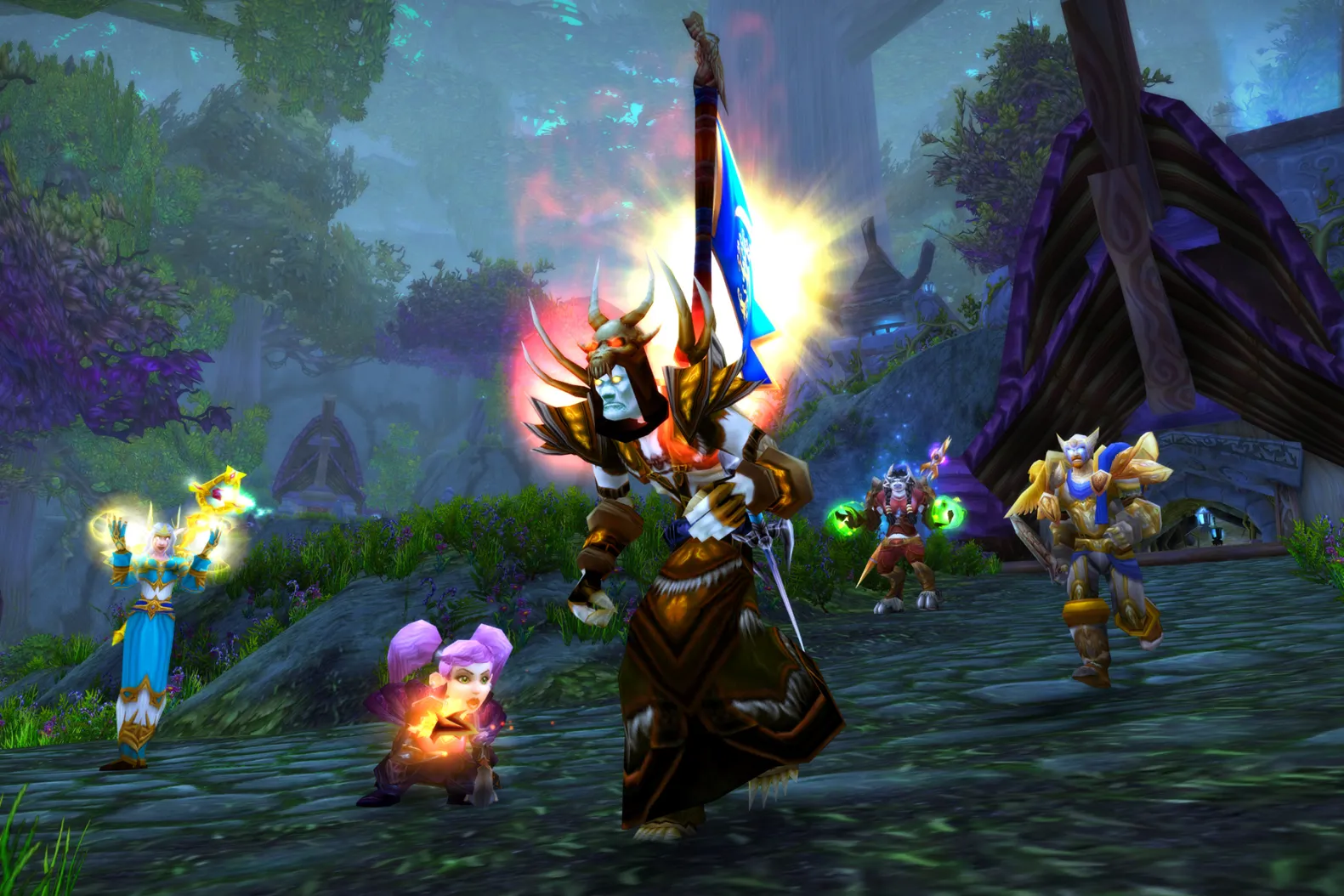
World of Warcraft is an MMORPG, which is short for Massively Multiplayer Online Role-Playing Game. That’s quite a mouthful, but it basically means you don’t play alone and share a vast in-game world with thousands of other adventurers in real time.
At the start of your journey, you create your character, picking a faction, a race, and a class. These choices will define how your hero looks, what role you perform in group content, and what kind of abilities you’ll be using.
Versions of the Game
The WoW you can play today actually exists in several different versions, each offering a unique take on the game:
- Retail WoW (Modern WoW) is the main, current version of the game, the one that’s been constantly updated since 2004. It features all expansions, the most up-to-date storylines, and new gameplay systems. Right now, Retail WoW is on The War Within, with the next expansion, Midnight, announced for 2026.
- WoW Classic is a recreation of the original 2004 version of the game, built for players who wanted to relive (or experience for the first time) that old-school adventure. Classic is slower, more challenging, and far less hand-holdy, but incredibly authentic and rewarding. Within Classic, you’ll also find several sub-versions: Classic Era, Mists of Pandaria Classic, Season of Discovery, and Hardcore Classic.
Right now, the game works on a monthly subscription. You pay for a sub, and it unlocks the core game (in all versions) plus all previous expansions and patch content. To access the latest Retail expansion, though, you do need to buy it separately.
The Basics of WoW
Zones and Major Cities
Azeroth, WoW’s main world, is a giant fantasy realm split into massive zones, each with its own landscape, atmosphere, and storyline. These zones are filled with creatures called mobs that will be your primary combat targets and a good source of rewards.
All over Azeroth, you can find major cities (like Orgrimmar or Stormwind) that serve as social hubs where players meet up to trade, craft, or just hang out and show off their newest armor sets.
Throughout your journeys, you’ll also run into countless NPCs (non-player characters): villagers, shopkeepers, quest givers, trainers, and sometimes even legendary heroes or villains. NPCs hand out quests, teach new abilities, give directions, sell gear, or just share bits of local lore and gossip.
Leveling and Experience (XP)
When you defeat enemies and complete in-game activities, you gain experience points (XP). Once you reach a certain number of those points, your character levels up, becoming stronger, gaining new abilities, and unlocking new content.
Leveling (especially in the earliest stages) is where you’ll learn the basics of your class and get a feel for the game itself. Once you hit the max level, you enter what players call the endgame, which is the most difficult yet most rewarding part of WoW.
Loot and Gear
Since we’ve mentioned rewards, let’s talk about loot. Loot includes everything you can pick up from defeated enemies or treasure chests, like gold, crafting materials, and, most importantly, gear.
Gear includes armor, weapons, jewelry, and basically all other equipment your character can wear. Each piece comes with an item level (ilvl) and adds to the overall power of your character. The stronger your gear, the tougher you are in combat and the more challenging content you’re able to take on.
Gold and In-Game Economy
Every MMO world needs its own economy, and Azeroth is no different.
The main currency in WoW is gold. You use it to buy items on the Auction House, the game’s marketplace, and pay for important upgrades like training new abilities, leveling skills, repairing gear, and plenty more. You can earn WoW gold in a bunch of ways: completing quests, farming mobs, or selling crafted and looted items.
WoW’s economy works almost like a mini-version of a real-world market. Prices fluctuate based on supply and demand, trends change depending on expansions and patches, and some players even play the Auction House by buying cheap items and flipping them for profit.
Core Activities
WoW is a truly enormous game with a huge variety of things to do and places to explore. Here are some of the core activities you’ll be engaged in:
- Quests are missions given by NPCs to guide you through new zones, introduce storylines, and reward you with XP, gold, and gear. Some quests are quick errands (like “go slay ten boars” or deliver this item to that character), while others are full-blown adventures that span continents and dive deep into the game’s lore.
- Dungeons are five-player instances where you and your group fight through mobs and bosses. Dungeons are relatively fast but give a really good loot and XP. There are also Mythic+ dungeons with a timer, scaling difficulty, and special modifiers that make things more challenging.
- Raids are larger, more complex instances for 10, 20, or even more players. Raids take longer, require solid teamwork, and demand good knowledge of boss mechanics and your own class abilities. They’re some of the hardest content in the game, but also offer the best gear rewards.
- PvP (Player vs. Player) allows you to battle real players instead of computer-controlled enemies. PvP comes in several formats: Battlegrounds, Arenas, and open-world fights. Arenas and Battlegrounds also have ranked versions, where your performance earns you ratings, titles, and unique rewards.
What Else Can You Do in WoW?
What else can you do in WoW apart from quests, PvP, and instanced content? Well, a lot. The game offers a whole bunch of side activities and creative ways to enjoy your time in Azeroth.
For example, Professions give your character extra skills that let you gather resources like ores, herbs, and skins or craft all kinds of useful items, from potions to high-end gear pieces. Everything you create or collect can be used by your own character or sold on the Auction House to earn gold.
If you’re more into exploration and collecting, WoW has thousands of unique items you can add to your personal collection: mounts, pets, toys, armor, weapons, gear appearances, and more. And if you do enjoy showing off, the game also features tons of achievements and titles for the most skilled and dedicated players.
For those looking to add some variety to their solo gameplay, WoW has small player-made communities called guilds. Guilds help you team up for group content, get advice, chat and hang out with other players, and even make new friends along the way. For more creative adventurers, there are roleplay servers where people fully immerse themselves in the game, stay in-character during interactions, act out scenes, and even create long-running stories together.
WoW really is a big, multifaceted world with no single “correct” path to follow. You can be a trader, a collector, an Arena champion, a lore explorer—or all of them at once. The game gives you plenty of freedom to shape your own adventure, and that alone makes it absolutely worth giving it a try.

