Retro games weren’t exactly designed to be nostalgic. They were designed to work with almost nothing. Read on to discover how retro video game design created timeless classics and continues to influence modern games, inspiring retro-style games.
It goes without saying that, at the heart of the so-called good old days, there are video games. They defined the golden era of 80s and 90s kids. Looking back, these games built strong friendships and a love of gaming that made friends spend all-nighters in front of their consoles or hours in an arcade. Such incredible memories and experiences often led people to forget that these games had notable limitations and were far from flawless. If anything, playing those games today would probably still feel amazing, but would reveal how much gaming has progressed over the years.
Before the global video game market size reached over $200 billion and was driven by ultra-realistic graphics, massive open worlds, and complex mechanics, gaming existed under technical constraints. But that’s exactly what makes retro video game design so remarkable. Its simplicity demanded precision. Every sprite, sound byte, and line of code served a gameplay purpose. Nothing was decorative or essentially unnecessary. It’s what produced iconic games like Super Mario Bros. and Pac-Man. In fact, it still inspires modern game creators today, trying to capture the essence of early video games.
To understand why these games endure, this article will introduce retro video game design, break down its core elements and limitations, and explore its current impact on modern video games.
Exploring Retro Video Game Design and Its History
Retro video game design refers to the design principles and creative processes used during the early eras of video gaming. Generally, compared to modern video game design, this approach leaned more toward pixel art, limited color palettes, visual techniques such as dithering and sprite layering, and a very simple and user-friendly layout. As a result, the popular genres at the time were limited to arcade shooters, platformers, puzzle games, and early RPGs, all of which prioritized mastery over narrative complexity.
During this period, most games were made specifically for the machines that sent the early gaming community into a frenzy (in a good way). This included the Nintendo Entertainment System (NES), which is an 8-bit home console, and the Sega Genesis and Super Nintendo Entertainment System, which introduced 16-bit systems.
Retro gaming’s first wave featured titles like Pong (1972), Space Invaders (1978), and Pac-Man (1980). Players quickly learned mechanics by jumping straight into action, needing clarity and instant feedback. Later, home console releases like Super Mario Bros. and The Legend of Zelda marked a turning point, introducing structured level progression, player-controlled movement, and exploration-based design.
It’s also worth noting the influential retro video game designers and developers who played a key role in shaping this era, from Shigeru Miyamoto and Yuji Naka to Hideo Kojima and John Carmack, and many more. Despite the limitations, they still managed to create highly replayable systems that paved the way for the games people enjoy today.
Key Elements of Retro Video Game Design
Four tightly interconnected systems, namely visuals, audio, level structure, and gameplay mechanics, shaped retro video game design. These elements were not developed independently; they actually evolved together under shared technological constraints.
Here is a deep dive into each element:
Classic Graphics and Pixel Art in Retro Video Games
Visual clarity became one of the key defining elements of retro video game design. Early games had basic graphics. Their primary characteristics included simple layouts, clear and simple fonts, and a limited color scheme of three to five colors.
And in the context of video games, pixel art often comes to mind when the word “retro” is mentioned. In fact, it’s one of the most recognizable outcomes of retro video game design. Put simply, pixel art is a graphic style that uses blocky, low-resolution visuals. With raster graphics as the underlying technology, this artistic discipline emerged as a technical necessity. Given that early hardware could only display a limited number of colors and sprites at once, creators were forced to prioritize readability over detail.
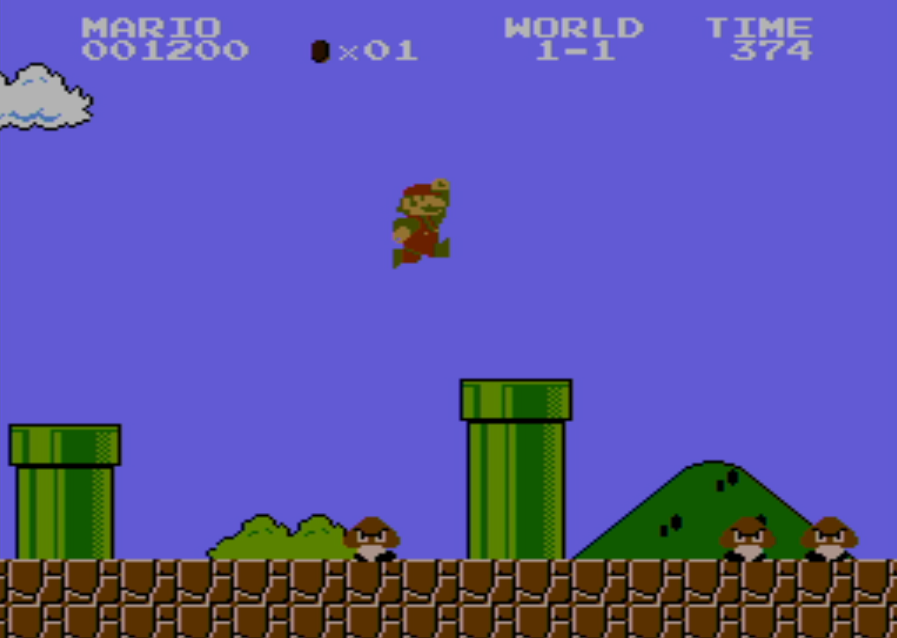
One masterclass example of functional creation is the character design of Mario in Super Mario Bros. The red hat separates his head from the background tiles. His mustache simulates facial expression without detail. And his overalls clearly define body segmentation.
The same approach can be seen in another platformer, Mega Man. To compensate for its fast gameplay, the designers used silhouette-based design to ensure instant recognition. Thanks to the strong contrast and simplified shapes, enemies and projectiles remain readable even in motion.
While they brought unforgettable gaming experiences, these were mere visual solutions to hardware constraints rather than a stylistic choice. By arranging the pixels correctly, they could represent the entire game world.
Memorable Soundtracks and Audio in Retro Video Games
Audio and music in retro games were also shaped by extreme limitations in sound synthesis. Early systems could produce only a small number of simultaneous audio channels. This forced composers to construct entire soundscapes by writing music directly for the console’s audio hardware chip or using early software, including music trackers like FamiTracker. This process generated sound electronically, which is what is known today as Chiptune.
Even with these bottlenecks, this era gave birth to some of the most well-known music in game history. As a workaround, composers typically focused on musical identity rather than layered complexity. But as it turned out, retro video game design is so powerful that players can identify a specific game with their eyes closed, just by hearing its sounds. From the satisfying “womp” when eating a power pellet in Pac-Man to the iconic “boing-boing” when jumping blocks in Super Mario Bros., the familiar audio is forever etched into the minds of both old and new players.
Looking at specific games like Sonic the Hedgehog, the audio design became an extension of gameplay speed. The tempo and rhythm aligned with movement mechanics. It made sound an active part of the player experience rather than a mere background element. Meanwhile, some games used music to evoke exploration and provide immediate feedback. Such cues reduced cognitive load and helped players learn timing intuitively.
In other words, these video games’ memorable soundtrack and audio proved that they weren’t just played, but also heard into memory.
Gameplay Mechanics in Retro Video Games
Another vital element of retro video game design is gameplay mechanics. They represent the purest form of interactive systems in gaming history. Without the cutting-edge visuals and cut-scenes modern players enjoy in games like Call of Duty or Asphalt, these games had to rely solely on mechanics to carry much of the player experience.
For instance, rotating and placing falling blocks seems boring on the surface. But Tetris shows otherwise. It showed that these very basic mechanics can generate infinite complexity and become more and more challenging just with increasing speed.
At the same time, early video games often used only a few mechanics. In particular, Centipede is one of the prime examples of deterministic enemy behavior, allowing players to learn and exploit patterns. Just as how the characters won the first official mission in the 2015 movie Pixels using their arcade knowledge. It says a lot about how retro video games were a bit predictable (but fun nonetheless).
What defines retro video games is that input response is immediate, outcomes can be anticipated, and systems are consistent. At that time, these attributes were essential since the game’s philosophy is mastery.
Level Design in Retro Video Games
Level design represents one of the most sophisticated elements of retro video game design. To save storage on the cartridge, creators had to make games function without explicit instructions. More specifically, they had to embed teaching directly into the environment, instead of having a dedicated tutorial stage to tell players what they can do and what to do in a specific scenario. It just wasn’t an option. And that meant throwing players right into the action.
Once again, Super Mario Bros. is the epitome of this. The first level introduces the main mechanics: running and jumping. They were key to enemy interaction and reward collection. Players get the hang of it even without text guides, as the environment itself acts as instruction. With levels designed around these core mechanics, players would always figure out how to move forward in the game, regardless of the challenges, objects, or enemies. As such, completing a level through intuition and knowledge made the experience more rewarding. It’s why rescuing Princess Peach is much more satisfying.
Modern Takes on Retro Game Design
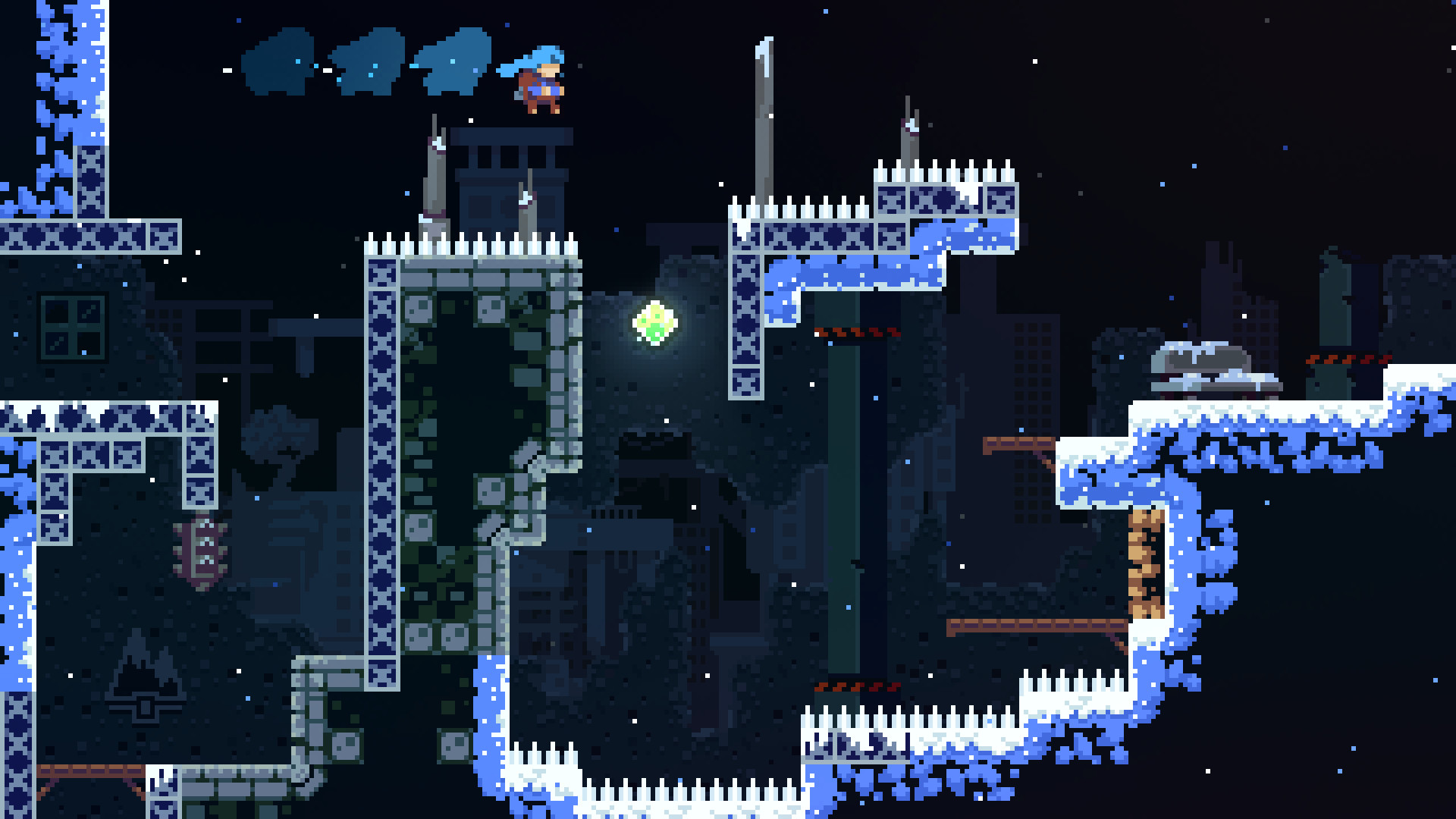
Building on the greatness of retro video games and their connection to a solid community of gamers, which makes them easier to market, modern game designers and developers, especially those in the indie scene, have carved out a path known as retro-style game design and development. The process involves deliberately creating games that simulate the 2D aesthetic and gameplay mechanics of video games from the 8-bit and 16-bit eras. In short, they’re new games inspired by the old ones that capture the period-accurate look and feel.
What sets this modern approach apart is its use of advanced emulators, dedicated software, and new tools. Unlike the hardware-driven decisions of the past, creators now choose retro design for artistic reasons, and these games are no longer limited to legacy devices.
However, it’s important to know that retro-style games do not just do what classic titles did. Games like Shovel Knight, Celeste, and Volgarr the Viking demonstrate how retro-style game design thrives in modern gaming. These titles combine innovation and nostalgia. While they capture the essence of the visuals, audio, and core mechanics, they also refine the principles such as clarity, responsiveness, and gameplay loops.
Specifically, modern retro games are commonly:
- Using pixel art but adopting a widescreen aspect ratio to match modern gaming devices
- Employing a wider color palette to display more colors without removing the retro aesthetic
- Integrating more audio channels to smooth out Chiptune music transitions
- Providing enough time and space to respond to attacks after spawning to avoid cheap deaths
- Balancing penalty for death to get rid of the outdated lives system that frustrates playing, for having to go through everything again after losing
All of this just goes to show that retro video game design is not merely a thing of the past. It’s a design philosophy that is still relevant across generations.
Frequently Asked Questions
Q1: What is the difference between retro video game design and retro-style video game design?
Answer: Retro video game design refers to the actual process and design approach used by game creators during the golden era of gaming. In contrast, retro-style video game design is the practice of mimicking these games with modern tools.
Q2: How do modern games adopt retro video game design principles?
Answer: New games often adopt the principles by using pixel art, simple mechanics, and tight gameplay loops to recreate the clarity and focus of older games.
Q3: What makes a game retro?
Answer: There is no single widely accepted parameter to tell whether a game is retro or not. However, the gaming industry often considers games created from the 1970s through the early 2000s in this category.
Final Thoughts
By now, it’s clear that retro video game design’s legacy is defined not only by nostalgia but by creativity and discipline under constraint. Companies such as Nintendo and Sega built entire design philosophies in which every visual, sound, and mechanic has a purpose. Rather than treating limitations as obstacles, they used them as creative frameworks. It even prompted more intentional design decisions. Making early developers deserving of the credit for doing so much with very little. The timeless classics are still relevant because they laid the foundation for many modern game design principles.
With that in mind, whether it’s due to the urge to make new games inspired by early titles or just the nostalgia, game designers should make it a point to take the features that made old games great but improve upon the areas (i.e., visuals, audio, gameplay, etc.) that no longer align with modern standards. By doing so, they can produce their very own timeless classics.

