Are you not satisfied with today’s video games? Or are you really impressed with them? Whatever your reason is for wanting to create your own game, knowing the game design steps is crucial if you want to come up with something that’s worth playing.
Look, creating your first video game rarely begins with code. This is especially true for first-timers, as diving directly into programming can leave you swamped or overly focused on the technical side. Most successful games start with structured planning and intentional design decisions. Making this a priority first step ensures you’ll create a game with mechanics that keep players invested, rather than a game with weak systems that is easily forgettable.
That strategy is what essentially made Minecraft’s open-world system that effectively attracts players, or It Takes Two’s emotionally synchronized co-op mechanics, which push the limits of interactive storytelling. The creators understood how players think, react, and stay engaged long before focusing on polished graphics and marketing techniques. And by understanding the game design steps, you’ll be able to do the same, if not better.
In this article, we’ll introduce the game design steps, why they matter, and what they are for, and go over each step in the video game design process to improve your chances of creating a game that players genuinely enjoy.
Understanding Game Design Steps
A video game’s lifeblood is game design. Such a process determines how all the elements of game design (e.g., game mechanics, player agency, etc.) fit together and how game design principles (i.e., balancing challenge and reward, focusing on player experience, etc.) are applied. It sounds simple, but it involves dozens of interconnected decisions, including even player psychology.
With that in mind, structured game design steps matter. It ensures that players see consistency and quality. To achieve engagement, movement should feel responsive, combat should not feel clunky, the story should be compelling, and the progression system should not be repetitive. Otherwise, players will lose every reason to continue.
Why Game Design Steps Matter
One of the most common mistakes is trying to design everything at once. Many creators spend months building lore, maps, and characters before even making sure that the gameplay itself is fun, at least. In other words, the video game design process is important so you can avoid establishing random features without a clear, strong vision.
At the same time, having in-depth knowledge about the game design steps basically tells you how game development works. Design is separate from production.
Exploring the Video Game Design Process
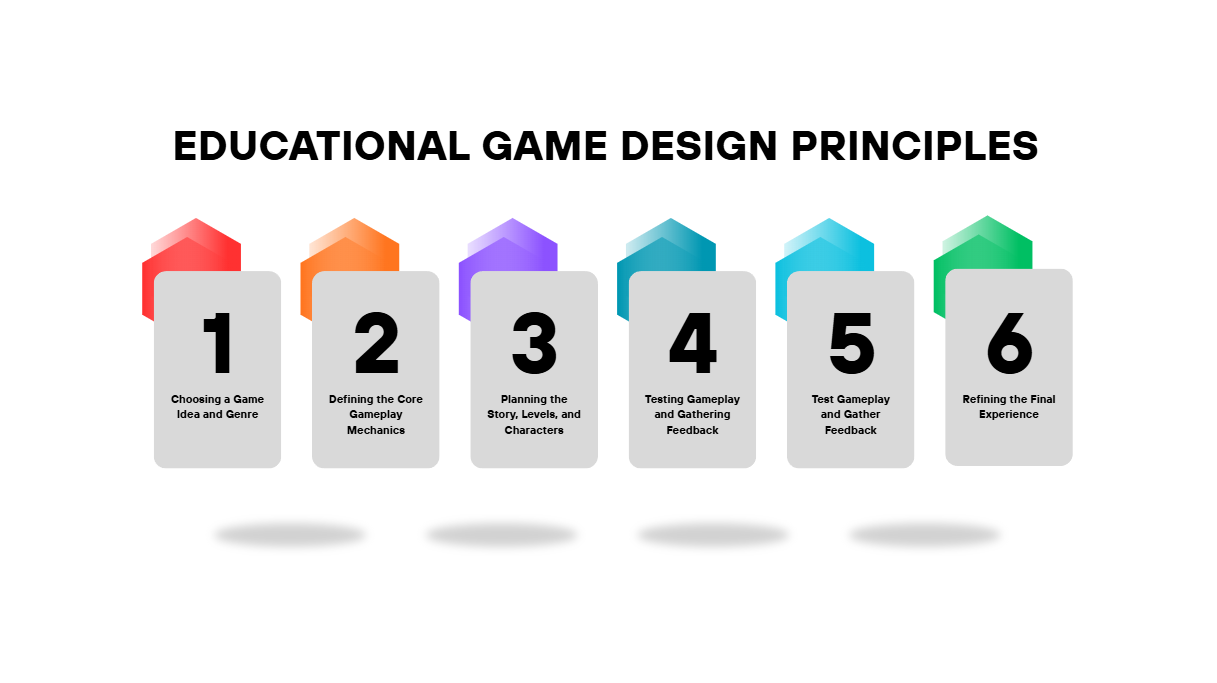
The modern video game design process is iterative. In fact, it’s rare for designers to get the perfect system on the first try. More often than not, they test ideas repeatedly and refine the experience over time. It’s why many are hesitant to pursue a game design career.
While there is no such thing as a standard game design process, it’s for good reason. Trying to fit a game design workflow designed for an RPG into a puzzle title project would probably misalign. Even so, there are important stages in the process that are practically universal.
Choosing a Game Idea and Genre
This is where most projects start. It’s basically where the game’s overall vision is defined. Before anything else, determine the genre, core player activity, and project scope. For instance, a platformer would entail jumping and precise movement, while a survival game would require resource management and tension. If your game cannot be explained in a single design sentence, your project may lack focus. One way to fix it is to analyze comparable games to see how they handle the elements of game design and identify a proven design pattern. That said, concepts can also be strictly original, inspired by other games, or a combination of both.
For instance, one reason Vampire Survivors became successful was its focused concept. The gameplay loop centered on movement, enemy avoidance, and automated attacks. The game’s simplicity benefited both the creators and players by reducing the need to polish complex systems and making the barrier to entry practically zero.
But one thing to look out for, especially if you’re a beginner, is having a scope that is too large. For a newbie, a simpler concept can increase the chances of actually completing a game.
Defining the Core Gameplay Mechanics
One of the key game design steps is deciding on the mechanics. These are the systems players interact with repeatedly. When designing them, focus on clarity, consistency, depth, and responsiveness. One beginner-friendly approach is to start with actions players can perform, such as jumping, sliding, climbing, dodging, and building.
From there, the technique is to ask yourself why players would use these actions, how they would interact with each other, and if these actions lead to interesting choices. Why? It’s because mechanics go beyond movements. To fully make an impact on the game, gameplay mechanics should generate emotions and stories that would make a mark in the player’s mind. Strong mechanics create meaningful decision-making, while weak ones feel repetitive and disconnected from the goals.
This can be seen in the 2011 puzzle-platform game Portal 2. More specifically, the portal gun is not just a gimmick. It’s not there as a decoration or whatnot. It actually shapes every puzzle, movement challenge, and interaction with the environment in the game.
Another important thing to keep in mind when designing the core gameplay mechanics is having a progression system that reinforces players’ actions. Every action should convey clear information through animation, sound, or visual effects, and certain milestones should be accompanied by corresponding tangible rewards.
Planning the Story, Levels, and Characters
After establishing the game’s initial concepts or components, adding more substance is essential. One way to do so is by carefully designing the story, levels, and characters.
Okay, not every game needs a deep, complex narrative. But every game benefits from intentional world-building and progression structure. The story design should support gameplay rather than interrupt it, which breaks immersion. Therefore, planning story and level design requires the consideration of emotions, pacing, progression difficulty, and player motivation. At the same time, a variety of characters, whether controlled by players or not, should exist. The presence of both character-controlled and non-playable characters with clear distinctions gives your game personality, making it more engaging. Such differences also reflect gameplay identity. For instance, fast characters encourage aggressive movement while heavy characters imply power.
These points are evident in games like The Last of Us and older entries in the Fallout series. In particular, the narrative in the former reinforces the gameplay themes of desperation, emotional attachment, and survival. It shows that the mechanics and the story are interconnected. On the other hand, the latter included unique characters such as a money-grubbing mayor and the cheerful Vault Boy, which brought the game world to life.
Prototyping Your Game
Among the game design steps, prototyping is where ideas face reality. Your concepts may look good on paper, but would they stand up as a playable game? As such, game designers often build a prototype before completing the game. Keep in mind that it’s not supposed to look impressive. Its purpose is to test core mechanics and concepts, so it’s okay if it comes with placeholder art and unfinished animations. During prototyping, you can use tools like Unity, Unreal Engine, Godot, or GameMaker. Also, you can leverage temporary assets, test one mechanic at a time, and focus on movement feel, interaction quality, and mechanic clarity.
This is why many studios go through detailed game design planning before full development begins. For example, the team behind The Legend of Zelda: Breath of the Wild said they experimented with a 2D prototype to test and illustrate the gameplay without the distraction of visuals, ensuring they were on the right path.
Put simply, prototyping is where good ideas survive in the game design process, before designers waste time building systems players may not find interesting.
Testing Gameplay and Gathering Feedback
It’s a known fact that games take a long time to design and develop. Many creators have no choice but to fully lock in and work extended hours just to meet the deadline, creating a crunch culture. And after working on a game for weeks or months, inattentional blindness or cognitive fatigue could kick in. It makes designers naturally blind to unclear tutorials, awkward controls, or confusing progression systems.
That’s why testing and external feedback are non-negotiable. In the process, ensure you’re focused on where new and experienced players get stuck, what mechanics they ignore, and what they don’t find interesting, not just if they like the game. But take note that not all feedback requires implementation. Only consider those that create patterns across multiple testers.
To give you an idea, studios like Valve became popular for extensive playtesting. Half-Life 2’s tutorials went through this process to ensure players learned mechanics naturally through gameplay rather than through overloaded instructions.
Refining the Final Experience
This is the final stage of the game design steps. At this point, the goal is not to add endless features. It’s about improving consistency, emotional impact, pacing, usability, and visual communication. Using insights from prototyping and testing, your next step is to analyze the gameplay and make adjustments. Commonly, refinement involves balancing damage values, adjusting difficulty curves, and clarifying tutorials.
In particular, the combat in the survival game Dead Cells feels satisfying because the animation timing, sound effects, hit reactions, and overall responsiveness are on point and work together seamlessly.
Meanwhile, the changes should also align with programming, animation, UI, sound design, and optimization. As such, understanding how game development works becomes increasingly important.
Tips to Streamline Your Design Workflow

Many games failed not because of poor ideas. They failed because the process became chaotic and too complex for a developer or a studio to handle. An efficient game design workflow can save months of frustration, which can essentially also save the game.
Here are some quick tips to streamline the game design workflow while improving quality:
- Start Smaller Than You Think – Do not underestimate production complexity. Even a simple inventory system may require UI design, animations, item logic, and others. Hence, smaller projects allow you to finish, learn, and improve faster.
- Build Around a Proven or Strong Mechanic – Many games have one polished core idea. This makes it easier for the creator to design or develop, and for players to understand. Always consider if it strengthens the gameplay loop.
- Document Systems Clearly – A game design document was not created for no reason. It’s a critical part of the video game design process. By tracking mechanics, enemy behaviors, progression systems, level structure, and more, it dramatically improves organization. Clear documentation prevents contradictions within the team and reduces the need for redesign.
Final Thoughts: Design First, Code with Purpose
Creating your first game can feel overwhelming because modern titles often hide the enormous amount of design thinking, complex processes, and occasional conflicts that go into making their projects.
Look at BioWare’s experience with their game Anthem. Despite being a major AAA developer, it still wasn’t safe from a studio crisis. It took the game nearly seven years to complete due to a series of indecision, mismanagement, and technical failures. There wasn’t a consistent vision, and people refused to take feedback, leading to narrative reboots, design overhauls, and stress casualties. It did come to market but performed dismally.
Hence, as a first-timer, you don’t need ultra-realistic graphics or a giant open world to learn and succeed. Start with a clear gameplay identity, responsive mechanics, and intentional progression. It’s about learning the fundamentals rather than instant success. More importantly, think of the game design steps as essential rather than optional. They’re the ones that create engaging video games. After all, most games fail since there was no clear design to begin with.
If you want to dive deeper into creating your first video game, be sure to check out our guides on the principles of game design and the stages of game development.

