
Almost everyone has a video game that got them into game design. Some people found it in classic titles like Circus Charlie or Super Mario Bros. Others were inspired by big AAA games like Grand Theft Auto V. And some were influenced by indie projects like Undertale. All of these games have one thing in common: they captivate players by effectively transporting them into immersive worlds. And this is a primary reason many people are interested in learning how to design a game.
However, designing a game entails a structured process that transforms ideas into interactive systems, requiring creative direction and systems-level problem-solving. Fortunately for you, creating a game no longer requires extensive technical expertise, thanks to modern technology that has made it easier than ever. Now, the priority is to fully understand how to design games from scratch.
This guide outlines the steps, techniques, methods, and practical insights for designing a game. It provides a solid foundation for developing good game design.
Steps for Designing a Game

Generally, designing a game means moving from concept to playable systems. But with several elements and components to deal with, depending on video game genres, there’s just no universal formula for designing a game. Yet even without a single correct way to design a game, good game design typically follows several key steps that turn ideas into functional systems that support consistent player interaction and progression.
Step 1: Plan and develop the concept
Come up with a unique idea for your game, determine its genre (the general style or category, such as puzzle or action), and target audience (the group of players the game is meant for). Then, create the game design document— a detailed written plan that outlines every major aspect of the game to guide the team throughout the project.
This document should define:
- Gameplay loop (e.g., combat, exploration, resource management)
- Core mechanics (e.g., movement, interaction systems)
- Progression systems (e.g., upgrades, unlocks, level-ups)
In doing so, ensure the loop determines pacing, the mechanics are easy to understand, and the progression system provides long-term player motivation. These components determine how players act, how often they repeat actions, and how they make decisions during gameplay.
Step 2: Build a functional prototype
Build a vertical slice: a simple, polished version showing the game’s core. This tests whether players understand mechanics and controls on their own, ensuring elements work together for clear gameplay before adding content.
Step 3: Test and Refine
Conduct playtests with both new and experienced players. Such an approach will allow you to analyze the gameplay experience, including how players engage with it, whether they understand it, and whether systems produce expected outcomes. Based on observed behavior and system outputs, address the issues by adjusting system parameters such as difficulty, timing, or feedback clarity.
Each of these steps validates mechanics before expanding the scope, helping you avoid mistakes that tarnish a game project.
Essential Game Design Techniques
To really nail down good game design, you need to learn about the necessary game design techniques. These define how mechanics are implemented to produce clear, responsive, and understandable gameplay.
- Clear feedback systems
Players must immediately understand the results of their actions through visuals, audio, or animation. Feedback systems help players decide what to do next, like adjusting timing or resource use based on consequences. This is evident in Dark Souls, where attacking an enemy with a sword triggers hit reactions and sound cues to clearly communicate timing and damage outcomes. This helps players adjust attack timing or change strategy.
- Difficulty scaling
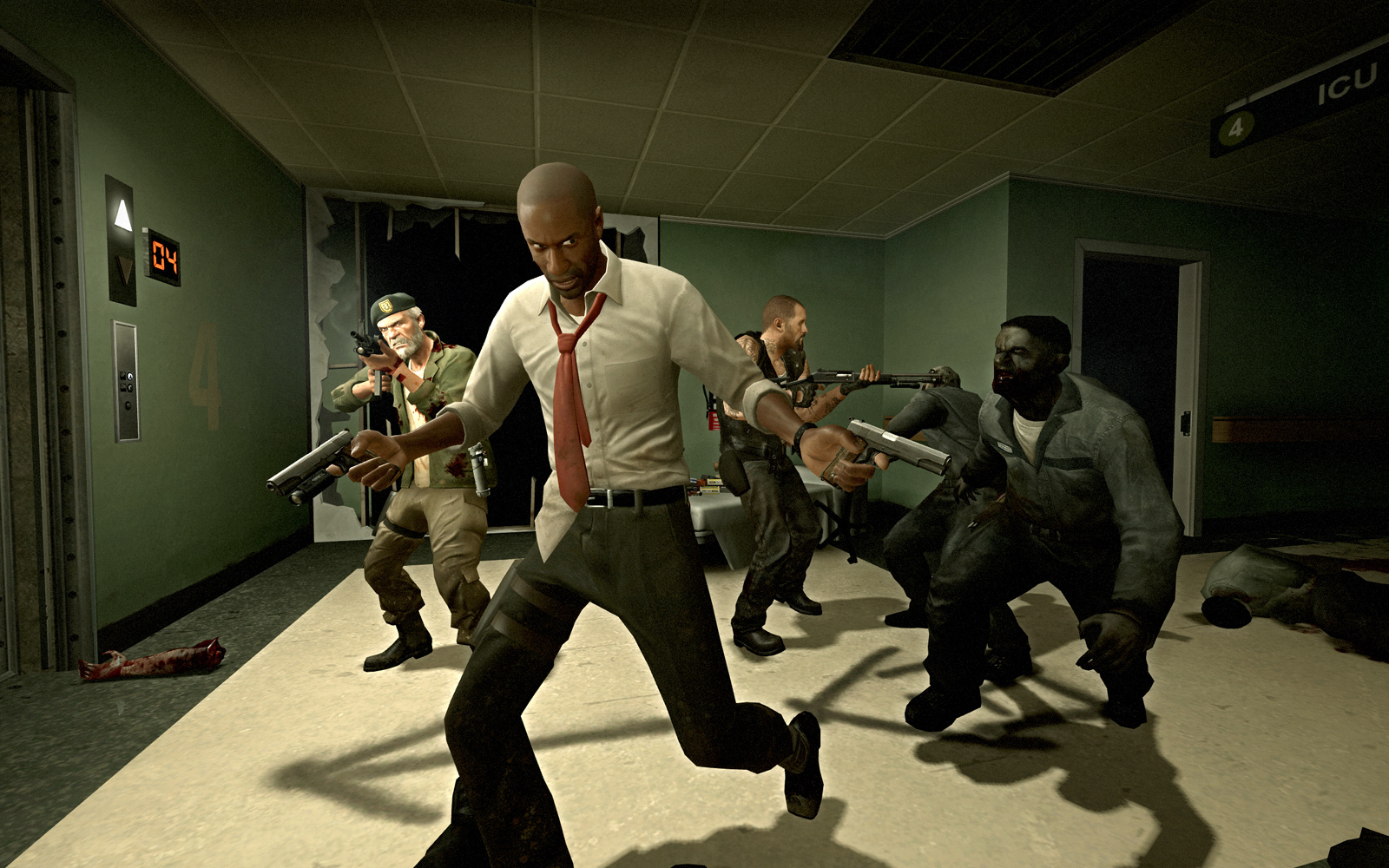
A game that is too easy or too difficult for a player diminishes engagement. The proper way to do it is to design challenges that increase in line with player skill. Avoid sudden spikes or stagnation. In games that support diverse skill levels, Left 4 Dead keeps players engaged by using the AI Director system to adjust enemy pressure based on player performance. This results in a game that is neither too easy nor overwhelmingly hard.
- Player guidance through design
Immersion is reduced if the UI is cluttered or the game onboarding is exhausting. The best approach here is to avoid explicit instructions and instead use environmental cues, lighting, and layout to direct players. One good example of this is how Portal integrates an invisible tutorial in its level design. Each chamber subtly guides players toward puzzle solutions through visual framing, such as wall segments or ceiling slots that indicate valid portal surfaces. It reduces reliance on explicit instructions and encourages learning through observation.
In practice, employing strong game design techniques, game design systems will feel intuitive and fair, shaping players’ moment-to-moment interactions.
Proven Game Design Methods

Reducing risk and improving development efficiency are essential in designing a game. So, instead of just focusing on how to design a game, dive into actual game design methods used by studios such as Blizzard Entertainment and Electronic Arts to ensure systems are developed, tested, and refined during production.
- Playtesting loops
Regular testing sessions are often done by studios to see how players actually interact with systems. This process exposes unintended strategies, unfair features, or bugs. The test results are then used to determine what needs to be refined in the game, so it responds properly to real gameplay outcomes.
- Data-driven balancing
Metrics such as win rates, usage rates, and progression speed are used to adjust systems. This method ensures decisions are based on evidence, not assumptions. For developers, this clearly provides a measurable threshold for adjusting damage, cooldowns, and other balance variables.
- System-first validation
Compounding problems is not an ideal practice in the long term. That’s why designers test core systems in isolation before expanding content or scope. Doing so guarantees that designers are iterating on stable mechanics. Like validating combat systems before integrating them into full levels.
Real games like Overwatch 2 actually apply these game design methods. During the PvP beta, the creators used playtesting and player feedback to evaluate their hero performance and core gameplay systems. The team analyzed metrics such as win and usage rates to provide reliable data on balancing issues and broader trends in the game for design decisions.
These game design methods expose friction points, shape competitive integrity, and reduce work during later implementations. By supporting iteration in different ways, they serve as workflow-level practices that studios use to ensure systems remain functional and balanced.
Elements of Good Game Design

The quality and reliability of the systems define good game design. You need to familiarize yourself with the elements of good game design to produce strong systems that consistently support player decision-making and strategy.
- Clear objectives
Before anything else, the game needs a clear objective. The player should immediately understand their goal. Is it to survive till the end, get the most points, or defeat the boss? It has to be concise and intuitive so that players can easily understand the success conditions.
- Meaningful choices
Successful games add an element of surprise by integrating unique interactions or situations that require decisions, giving players a sense of agency. However, players should face trade-offs when making decisions to create depth and replayability.
- Consistent rules
Rules must behave similarly across game situations. Inconsistency reduces trust and clarity, while reliable mechanics allow players to learn and plan effectively.
- Transparent outcomes
Actions and results should be clearly linked. A visible cause-and-effect improves learning and mastery. At the same time, it helps players interpret outcomes accurately.
- Catch-up mechanics
Systems must prevent one player from snowballing into an unstoppable victory. Losing players should have a way to turn the tables around. Otherwise, they would disengage once they realize they have no chance.
The 2017 Nintendo game Mario Kart 8 Deluxe demonstrates these. The objective of finishing races in first place is immediately clear. Item selection and track navigation create meaningful choices throughout the race. Consistent driving mechanics help players develop skills, and item effects provide clear cause-and-effect feedback. Stars or bullet bills allow racers in lower positions to catch up.
Taken together, these elements can help you deliver meaningful and engaging experiences. Ultimately, this increases competitive tensions and long-term player retention.
Tips for Simple Game Design

As a beginner, you’ll benefit from focusing on simple game design. That means focusing on reducing complexity while maintaining depth. Here are a few practical insights on how to design games:
- Focus on a single core mechanic
Build depth by expanding interactions around one central mechanic instead of adding unrelated systems. This allows players to explore variations of the same system. Like how the controversial game Flappy Bird uses a single-input mechanic to increase difficulty through timing and obstacle placement.
- Avoid adding too many systems
Feature creep increases development time and complicates balancing, often leading to unclear player priorities. Beginners should focus on a controlled scope to improve their chances of achieving polished results. This is like what happened to No Man’s Sky. It had many systems and features, but lacked cohesion. One review even notes it had endless menus and lacked purpose.
- Use modular design
Create mechanics that can interact in multiple ways rather than introducing new ones. It heightens depth without increasing complexity by allowing existing mechanics to introduce new interactions. Imagine how Minecraft uses simple systems like crafting and physics to create elaborate gameplay possibilities.
Final Thoughts: How to Design Games Successfully
Designing a game does not require a degree from a game design school like New York University or certifications from Coursera or Udemy courses. It calls for a practical understanding of systems thinking, iteration, and structured design workflows. Good game design connects mechanics, progression, and feedback into a cohesive structure that supports repeated play through consistent feedback and meaningful player decisions.

