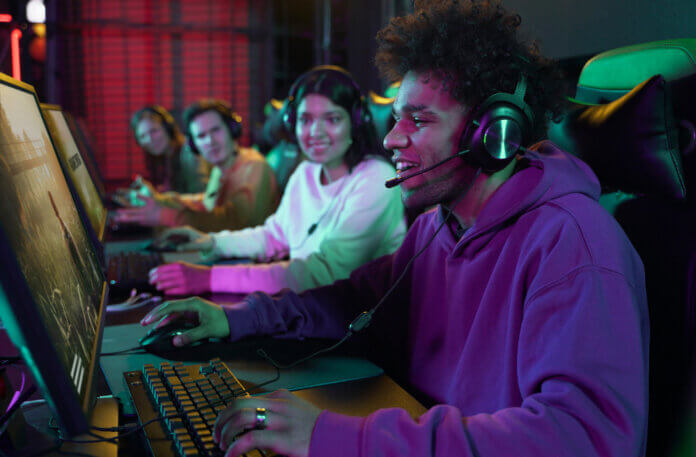
In fact, cosmetic features have become major aspects of popular competitive games today. Even though they don’t influence your skill level directly, cosmetics certainly give you a sense of who you are, your social status, and they are even capable of re engaging a player after a long break.
For a game like CS2, the set of skins and other visible items has become an entire digital economy governed by the three fundamental concepts of value, scarcity, and trust. If you are willing to know the secret behind making wise decisions, consider that players who understand the working mechanism of this system are the ones who help themselves to the best choices. The other part of the explanation for why some items end up being extremely valuable is that it is mostly rarity and perceived value that ultimately determine an item’s worth.
The Foundations Of Cosmetic Economies
At the core, the plastic economy is driven by three factors: rarity, demand, and supply. Game developers create various cosmetic items with different drop rates, unique appearances, and themes. Some items are normal and easy to get, while others are deliberately made rare.
In CS2, cosmetics mostly enter the economy through drops, cases, or limited releases. Drops occur during gameplay and are subject to predetermined probability rules. Normal skins are seen quite often but knife skins or special finishes are so rare that the chances of getting them are negligible. This scarcity is the result of a deliberate act. If there are fewer items, the value of each one increases.
Demand is generated by the players themselves. It can be a rare skin, but if the players dislike the design, the value will not increase. Meanwhile, a great looking skin used by popular gamers or seen in sports tournaments can see a substantial increase within a day. Eventually, the market brings these forces to a natural equilibrium, and the prices indicate the level of difficulty in obtaining an item and how much they are wanted by the people.
Trading, Marketplaces, and Safety Basics
As cosmetic inventories expand, trading is a natural evolution to exchanging a player’s unused items for his/her favorite ones. Third party platforms are therefore the main players in facilitating such trading. A CS2 skin marketplace in the CS2 ecosystem may offer structured listings, price references, and liquidity that typical player to player trading lacks. For instance, Tradeit is a popular CS2 skin marketplace where users can exchange items in a more organized environment.
Marketplaces enhance the efficiency of cosmetic economies, but they also create risk. Safety basics are important. Players should always double check the details of the trade, not give in to pressure, and be aware of how platform fees or withdrawal rules work. It is always good to have simple habits, such as protecting account access, checking item authenticity, and verifying trade confirmations, that will save a player from costly errors.
Trust is the foundation of a vibrant cosmetic economy. If players are confident in the security of trading items, the number of participants will increase, thus improving liquidity and price stability.
Rarity Tiers And Perceived Value
Rarity is less about how many there are and more about perception. CS2 categorizes skins into color coded tiers that indicate how uncommon an item is. Gamers quickly realize that certain colors indicate a higher status for items. This pictorial language simplifies the process of the community assigning value to an item without checking stats or drop tables.
There is also another glimmer of rarity brought by the condition. A skin can be in several wear states, for example, from perfect to very worn. Two skins of the same design can have wildly different prices just based on condition. Even things as insignificant as pattern variations can influence, creating microcategories of rarity within a single skin design.
As a result, an insight into cosmetic economies is always rewarded. Folks who get rarity tiers, wear levels, and patterns can decide if a price is profitable or not.
Drops, Circulation, And Long Term Balance
Cosmetic economies are constantly changing. New products are consistently being added to the system, while others gradually disappear into dormant accounts. The game developers maintain this balance. Adding new cases or collections diversifies interest, whereas removing old drops can increase the value of legacy items.
In CS2, certain skins will no longer be available through drops after a period has passed. This results in a limited supply. When the player base grows, or interest in older designs returns, demand is likely to rise while supply remains unchanged. The moment that prices go up dramatically is, more often than not, the case.
On the other hand, it is not guaranteed that every rare item will be worth a lot. The fashion is highly volatile. Colors are always trending, and new launches steal the limelight. Seasoning and timing, as much as scarcity, are rewarded by cosmetic economies.
Another thing that counts is exposure. Skins that professional players use or those that get showcased at major events become culturally significant. A factor is that, even though cosmetics do not affect gameplay, they become part of the overall communal experience of watching and playing the game.
Why Cosmetic Economies are Important to Competitive Games?
Cosmetic economies are among the main sources that keep a game running their popularity for a long time. They allow players to have goals beyond just winning games, and they become personally attached to their accounts and inventories. On the other hand, developers can earn income from cosmetics without compromising the game’s competitive balance.
As a player, knowing that these economies run like unwrapping the secret of random drops, you turn into a smart person. The whole process of the games, such as deciding when to keep, sell, or skip an item, makes the game more satisfying and less irritating.
In competitive games such as CS2, cosmetics are not just cosmetic; they are functional. They become a dynamic economy influenced by game developers’ decisions, players’ preferences, and players’ trust. In the case of rarity, demand, and safe trading being in perfect harmony, the cosmetic economies could be considered among the most long-lasting systems in modern gaming.

