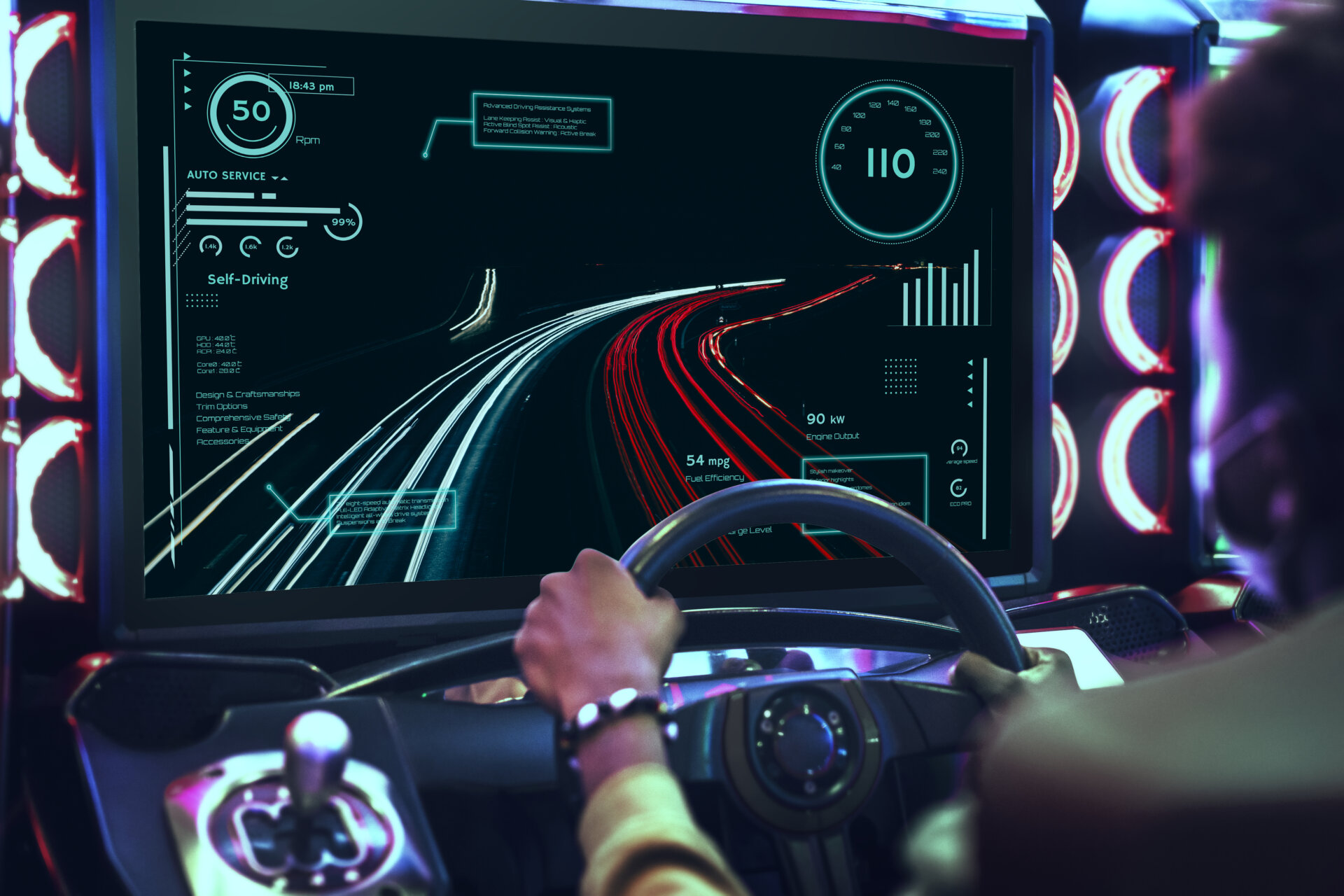
What could be more satisfying than the thrill of being the first to cross the finish line after evading police cars, overtaking competitors, and shifting like a pro when playing racing games? And what if we tell you that there might be one that tops it? The thing that is more pleasurable is being the one to create those heart-pumping experiences.
Well, if we got your attention, read on to learn more about car game design!
There is something uniquely captivating about a great racing game. The hum of an engine, the tension of taking a corner just a little too fast, and split-second decisions that separate victory from defeat, somehow give you the license to say you are the absolute best. However, when it comes to designing these games, unlike Dominic Toretto, it is probably going to take more than a family to deliver fast-and-furious experiences to players.
On a serious note, car game design is not only about making cars look good or tracks feel long. It is more complex than it appears. The adrenaline that racing games or other car games deliver is the result of a carefully crafted system that seamlessly blends physics, feedback, player control, and visual immersion.
If you are eager to know what it takes to build car games like Asphalt, Forza Horizon, or Need for Speed, you are in luck! This complete guide will help you navigate car game design, including essential features, tools, how to make one, challenges, tips, and future trends, all of which can help you build engaging racing experiences.
Understanding Car Game Design
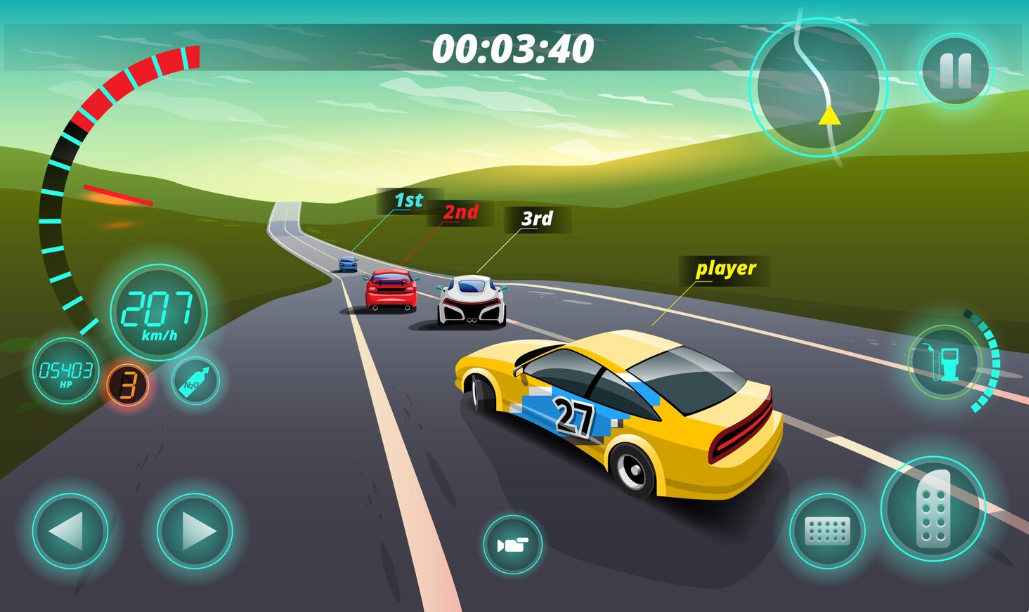
At its simplest, car game design is the process of creating interactive driving experiences in which player interaction occurs while controlling a car. To a certain extent, most games of this kind feature a variety of vehicles beyond the usual four-wheeled cars. In more detail, you can expect to find motorcycles, bicycles, spaceships, jets, airplanes, and the like. Aside from these, the objectives of car games can also vary. For instance, players may be required to compete against other racers, beat a specific time record, escape from police cars, take out criminal vehicles, avoid obstacles, or perform special moves.
Designing a car game involves much more than placing a car on a digital track. As a car game designer, you must think about how the vehicle behaves, how the environment reacts, and how the player perceives every action.
Remember when Sonny Hayes in the F1 movie says that money or awards are not his driving force for racing and that it is all about chasing that moment where he feels like flying and no one can touch him? Well, the same thing goes in car game design. A well-crafted car game is built around the idea of feel. This “feel” is what determines whether driving a car in the game is enjoyable or frustrating. That is why you have to make every turn, drift, and acceleration seem intentional and rewarding.
Key Features of Car Game Design
Just like any other game, a car game includes a set of core features that define its gameplay and keep players engaged. More than technical components, these are the foundation of a successful car game design that enhances player experience.
One of the most important features is realistic vehicle physics and controls. You should make it a point to achieve a realistic simulation of vehicle dynamics. This includes ensuring that acceleration, braking, drifting, and handling feel consistent and intuitive. For example, when a player steps on the gas pedal or presses the nitro button, the car should respond in a way that feels as natural as it would in the real world. Okay, just to be clear. You do not need to go for ultra-realistic physics. The goal should be to make the game feel believable enough to maintain immersion.
In car game design, variety is also a critical feature. This refers to both car selections and available tracks. Players often become more fond of a car game when they have a variety of cars to choose from. Players love it when they can drive muscle cars, off-roaders, and hyper cars. It gives them a chance to drive a car that suits their personality and preferences. Likewise, a racing game is only as good as the tracks it offers. A car game should include various environments, such as cities, deserts, or professional circuits. Changes in road conditions, weather, lighting, and time also add to the variety.
Another key feature is customization. In connection with the point about vehicles, players should also be able to modify their cars, both in performance and appearance. For instance, the ability to paint the car, add decals, install body kits, tweak engine power, adjust suspension, or change tire size gives players a sense of ownership.
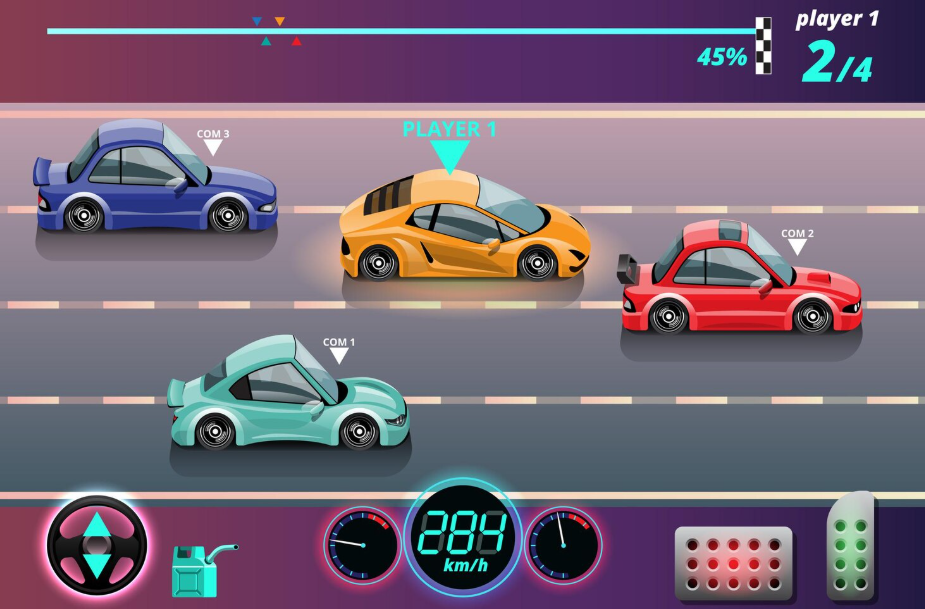
Despite being often overlooked, user interface and feedback systems also matter. Visual cues, sound effects, and other HUD elements help players understand what is happening and what they are supposed to do. Aside from keeping players informed, these features also enhance immersion by triggering emotional and physical responses.
Progression systems and rewards tie everything together. These motivate a player to play more. Giving them a sense of accomplishment through unlocking new cars, receiving coins to make upgrades, or advancing in career modes makes everything more dynamic and less repetitive.
Tools for Car Game Design
In any type of game design, a set of powerful tools is one of the ingredients that bring a game to life. Let us now explore a few key tools for car game design.
- Game engines – Serving as the backbone of the game, platforms like Unity, Unreal Engine, and Godot handle rendering, physics, input systems, and many more.
- 3D modeling software – Options such as Blender and Autodesk Maya allow developers to create visual representations of cars and the environments players interact with.
- Sound design software – To integrate engine sounds, environmental music, and other audio elements, developers use tools such as Wwise or FMOD.
To learn more about what you are going to need in car game design, check out our article on the top game design tools.
How to Create an Engaging and Realistic Car Game
While your extreme love of car games can be a strong driving factor in creating a game, it takes more than that. Developing a car game requires imagination, technical knowledge, and careful planning. To familiarize yourself with the entire pipeline, here are all the steps you need to know when engaging in car game design.
Conceptualization
Formulating the concepts and ideas for a game is one of the crucial stages in the development. Your decision on the game art, visual style, target platform, intended audience, and game engine shapes everything else that follows. These even help avoid costly revisions later on.
Designing Core Game Mechanics
Once the concept is clear, the focus shifts to planning game mechanics. Here, you think about how your game actually plays. It is where you start defining how cars move and respond to events in the game. The primary mechanics should also cover progression systems, player objectives, level difficulty, multiplayer functionalities, and related features.
Creating Game Assets
After game mechanics, developers move into game asset creation. This is the stage at which the game’s visual and audio identity begins to take shape. In detail, you will be designing the cars, tracks, environments, sound effects, background music, and user interface.
Programming and Technical Development
To turn ideas and assets into functional systems, the process will transition into programming and development. Tools and programming languages play a central role here. This entire step directly influences performance, realism, and scalability.
Playtesting and Iteration
Ensuring a game is stable is the last stage before finally launching your work. Patience and adaptability will be tested in this stage, as you will go through repeated testing and refinement until the game shows no issues and delivers a smooth player experience.
Challenges in Creating Car Designing Games
There is no denying that creating games can be very much rewarding. However, enjoying the upsides goes hand in hand with embracing the challenges that come with them. That is right. Car game design is not without its problems and difficulties. Here are a few common problems developers encounter when designing car games.
- Balancing realism and fun is tricky – Too realistic can feel unforgiving, while too simple may lack depth.
- Physics systems are complex – Simulating real-world conditions requires in-depth knowledge of how every aspect works.
- Performance Optimization can be demanding – Ensuring that a game runs smoothly on every intended platform and device requires the utmost attention to game quality.
- Offering something new is almost impossible – With so many car games on the market that are both popular and successful, creating a new one with fresh concepts is a daunting task, especially given player expectations.
Tips to Improve Your Car Designing Game

For both newbies and seasoned developers, improving on car game design remains an ongoing process. It is a constant learning. That said, check out some of these quick tips.
- Put player experience in mind.
- Ensure gameplay is rewarding.
- Optimize for various input devices.
- Pay attention to every detail.
- Gain insights by playing other similar games.
Popular Trends in Car Game Design
Analysis shows that the racing games market is off to an upward trajectory. Clearly, this positive movement is driven by advanced technologies and new innovations. With that in mind, you can expect developers to push toward the emerging trends in car game design.
- More realistic graphics – Advanced rendering techniques allow for lifelike lighting and reflections.
- Open-world racing – Players feel more immersed when they are able to explore large environments at their own pace.
- Artificial Intelligence – Smart technology brings enhanced AI opponents and gameplay experiences.
- Immersive technology integration – Virtual reality and augmented reality elevate interactivity and immersion.
- Cross-platform support – Allowing gamers to play on different devices helps build bigger communities.
Frequently Asked Questions
Q1: What is car game design?
Answer: By definition, car game design refers to the process of creating video games where players control a vehicle to meet the objectives of a game. The point can be outracing opponents, dodging obstacles, beating the time limit, and many more.
Q2: What skills do I need to do car game design?
Answer: Car game design calls for the same skills necessary in any other type of game design. It also requires both soft skills and hard skills. To be more specific, you need to develop creativity, problem-solving, critical thinking, and a strong sense of player experience. Equally important are technical prowess, including basic programming, physics knowledge, and game design principles, and 3D modeling. Unfortunately, all of this is non-negotiable as car game design requires constant iteration.
Q3: How long does it usually take to develop a car game?
Answer: As with any other game, the development timeline for creating a car game depends on various factors. You will need to consider the game’s complexity, the level of detail in the graphics, the elements you want included, and the specific gameplay mechanics. All in all, the process could range from a few months to more than a year. Meanwhile, a large-scale AAA game can take several years with a full development team.
Q4: Does sound design matter in car game design?
Answer: Definitely! In car game design, visuals account for only 50% of the overall experience. The other half that completes the immersion is the audio elements. From engine noise and gear shifts to environmental sounds and tire screeches, sound design makes players feel more connected to the game.
Q5: Is it possible for beginners to learn more deeply about designing car games?
Answer: For sure! At the end of the day, car game design is still game design. That means beginners can learn more about it using the same resources. You can explore online tutorials, courses, classes, and even pursue formal education at game design schools. However, be ready, as truly mastering the craft can take a while.
Final Thoughts: Buckle Up!
Designing a car game as a beginner is much like your first time driving a car on the highway. It can be intimidating at first, but once you get the hang of it, everything else will smoothly follow. Accept that it is a constant learning process. Also, do not be discouraged by the heavy requirements of car game design, like in-depth knowledge and skills, time, and budget. For now, the important thing is knowing the basics, so you know where to start. After all, the only thing that matters is who’s behind the wheel. And in this case, that is you.
By focusing on realism, engagement, and continuous improvement, it is only a matter of time before you are able to build car games that are not only impressive but also deliver satisfying gameplay. Take this guide to heart and put in the work to gain extensive competencies, and you can be the next master of car game design tomorrow. Who knows? A few minutes ago, you probably didn’t even know much about this, and look at you now. So, gather everything you need and be ready to start the engine as soon as the green light hits!
If exploring other types of game design interests you, visit our guides on mobile game design, board game design, and card game design.

