Numerous people are becoming increasingly curious about entering the gaming industry as game designers. The growing interest stems from the promising figures that highlight the sector’s continued rise as a global powerhouse. More concretely, the global gaming market size is estimated to reach $505.17 billion by 2030. The industry is also well-regarded for combining art, interactivity, storytelling, and technology, far beyond its former status as a mere niche corner of entertainment. However, many are hesitating, as one common question arises: Do game designers code?
Aspirants often find coding intimidating, as it can be technically challenging and complex. Accordingly, asking if game design requires coding is a fair question. Although it is certainly part of the process, game design is a distinct discipline in itself. Nonetheless, the connection between coding and design can be confusing, posing as a roadblock for aspiring game designers. So, the question remains: does game design require coding?
Through this in-depth guide, you will find out what game designers actually do, whether coding is essential in game design, and how learning to code can impact your career path in the gaming industry. Without further ado, let us find out where the truth lies!
What Does a Game Designer Do?

In order to make you understand whether game design requires coding or not, let us first get a clear picture of what a game designer’s role involves.
Game designers are the ones responsible for the vision and experience of a game, crafting the core systems that keep players engaged. They decide how the game works, what players can do, and how those interactions feel. In detail, their core responsibilities include designing gameplay mechanics (e.g., combat, movement, progression, puzzles), creating rules and systems, developing levels, maps, and environments, balancing game difficulty, writing narratives, building prototypes, and creating and maintaining the Game Design Document.
Moreover, game design is not a one-size-fits-all role. It entails several specific specializations, such as the following:
- Game Balance Designer
- Game Combat Designer
- Game Economy Designer
- Game Mechanics Designer
- Game Monetization Designer
- Gameplay Designer
- Game UI/UX Designer
- Level Designer
- Narrative Designer
- Technical Designer
A good analogy to better understand their roles is to think of them as experience architects. While they do not necessarily build every component, game designers conceptualize how everything fits together.
Do Game Designers Code?
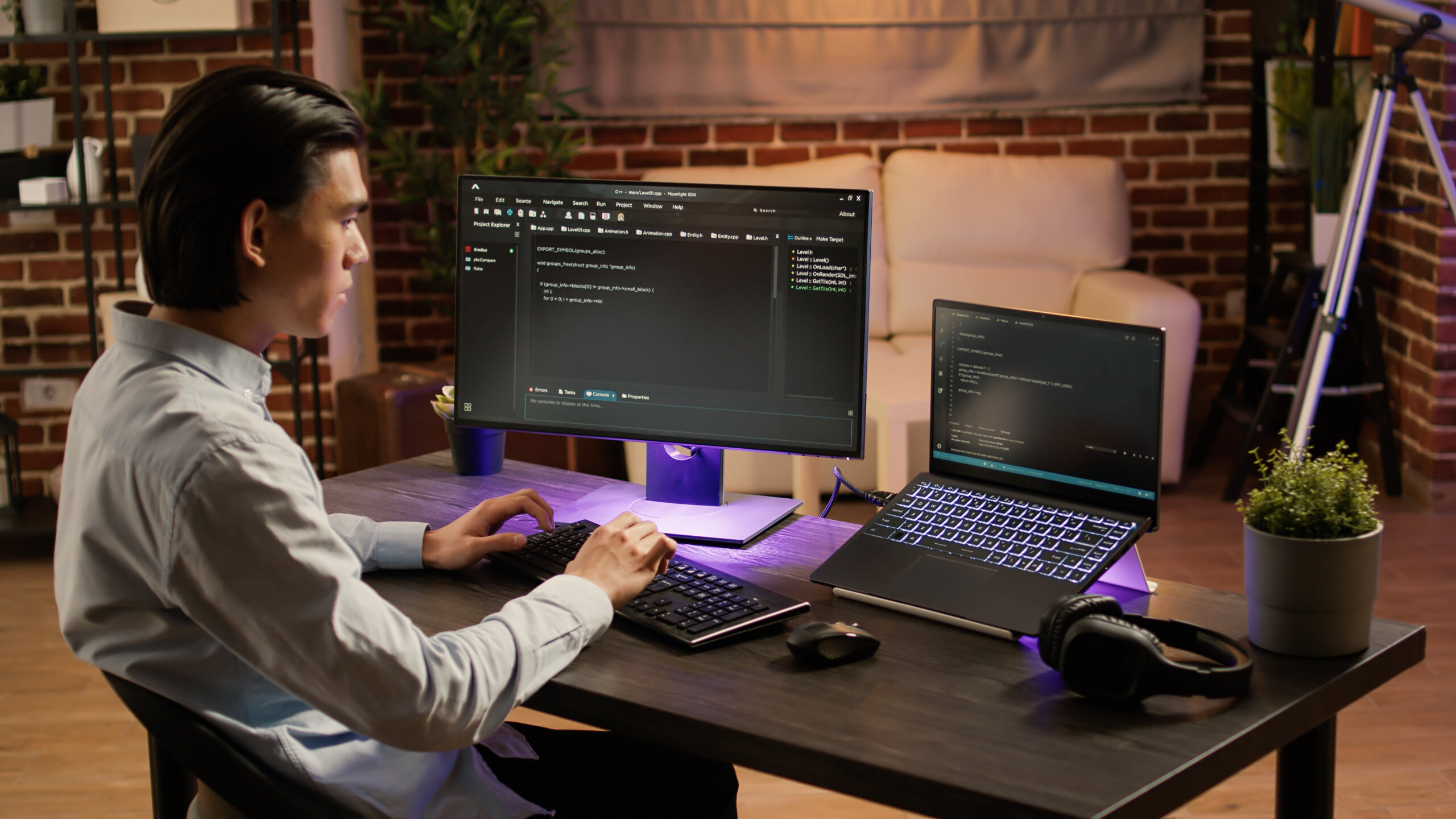
The distinction is crucial when answering the question: Do game designers code? Or does game design require coding? While game designers shape the vision, they are not always the ones who execute it through programming. Hence, the honest answer is that it depends on the role, the team, and the project.
In large game studios, roles are highly specialized. So, designers typically concentrate on their main tasks, such as content, gameplay, and systems. On the other hand, smaller teams or indie projects may call for a different approach. Due to limited resources, designers often take on multiple responsibilities, making coding knowledge and skills practically essential.
Can You Be a Game Designer Without Coding?
At this point, you probably already know the answer. Even so, we will make it clearer for you. Yes! You can absolutely become a game designer without coding. While it is undeniably a valuable skill, there is more to game design than coding. Many game designers thrive by focusing on creativity, storytelling, and player experience. They often rely less on technical skills. At the same time, technology brought about game development tools that make it easier to design games without programming. Specifically, game engines (e.g., Unreal Engine’s Blueprint System or Unity’s Playmaker) usually offer visual scripting systems, intuitive interfaces, and built-in assets and templates.
However, there is a catch. Not having coding as part of your wheelhouse could lead to limited flexibility. You would be dealing with trade-offs, including relying more on programmers, restricted prototyping abilities, and narrow job options.
Coding Skills in Game Design
Despite coding skills not being mandatory for game designers, they play a major role in how games are developed. Correspondingly, you can elevate your design work if you understand the technical side of game creation.
Game designers often start by learning coding with the common programming languages, such as C# (Unity Development), C++(Unreal Development), Python (Scripting), and JavaScript (Web-based games). Although there is no need to master them all, a little bit of everything can help you get started on a game more quickly.
Learning how to use visual scripting tools can help in scripting gameplay events and behaviors without writing traditional code. Subsequently, this approach enables rapid prototyping, which allows game designers to test and iterate ideas immediately without asking for assistance from a game programmer.
Benefits of Learning to Code for Designers

Even if coding is not a strict requirement in game design, learning to code offers several powerful benefits and advantages.
- Accurate Communication of Ideas – When you understand coding, communication with other developers becomes smoother, since you would be able to explain ideas more clearly, understand technical constraints, and elaborate on the changes you want to employ.
- Development of Systems Thinking – Learning how to code improves your skills in systems thinking, enabling you to assess complex systems and mechanics more easily.
- Customized Gaming Experiences – Coding leads to versatility that allows you to create more complex and personalized gaming experiences that even advanced game engines cannot deliver.
- Boosted Prototyping – Knowledge in coding enables rapid prototyping and faster iteration.
- Improved Career Opportunities – With games becoming more demanding and studios trying to become cost-efficient, many employers prefer candidates who can contribute in multiple ways.
- Independence – Studying how to code increases competence in creating games independently, which is mostly common for indie developers or smaller studios.
So while the answer to the question “Do game design code?” varies, those who do get ahead of the pack.
Alternative Skills for Game Designers
For those who feel coding is not their forte, focusing on other skills can help establish a thriving game design career in the gaming industry. In particular, non-coding game designers should bank on creativity, communication, innovation, game analysis, user experience, game engines, theoretical understanding of coding logic, conditional logic, and the like. Ensuring proficiency in these areas allows a game designer to contribute in other ways, such as creating unique concepts, collaborating across departments, analyzing games, building and testing ideas visually, designing systems that are feasible, and structuring player interactions and game rules.
Frequently Asked Questions
Q1: Do game designers code?
Answer: While it is not their primary task, there are instances where game designers may need coding skills, such as when building prototypes or explaining the vision more clearly to game programmers. In other words, being an expert in coding is not required for game designers, but learning the fundamentals is certainly beneficial.
Q2: Does game design require coding for beginners?
Answer: Not knowing how to code does not mean you cannot build games, more so, learn game design. Coding is not an immediate necessity, as game design can focus on concept and narrative work.
Q3: What coding language should a game designer learn first?
Answer: Most aspiring game designers start with C# and C++, as they are the most common coding languages that game designers and programmers use. The former is considered beginner-friendly, while the latter is known for its efficiency and speed.
Q4: Is it possible to perform game design without programmers?
Answer: Technically, yes. However, working with programmers helps distribute tasks for efficiency. Taking double responsibilities is common for indie developers, as they are smaller in size. In contrast, large studios assign experts to every game development stage.
Q5: Is coding more important than creativity in game design?
Answer: No. Creativity is still the foundation of game design. Coding is a tool that helps bring ideas to life. That is why even technically advanced games fail, especially when they lack strong design thinking. The best designers balance creativity and technical proficiency.
Conclusion
So, do game designers code?
The answer is both yes and no. Coding is not a strict requirement for becoming a game designer, but it is a powerful skill that can enhance abilities and expand opportunities. To put it simply, it is useful but not necessary.
If your passion lies in creativity, player experience, and storytelling, then by all means, pursue game design without coding. After all, game design is about crafting experiences that players will enjoy and remember. In many cases, the most important thing is the ability to bring ideas to life.
However, instead of asking “Do game designers code?” you should be asking if you really want to box yourself within your comfort zone. By taking the time to learn coding, even just a small amount of it, game designers can become more effective, independent, and versatile. Ultimately, the goal should be to upgrade your knowledge and skills and increase your potential in the gaming industry. Remember, countless creatives are eyeing to enter the field, so you need to break through the noise of a crowded arena.
Now that you understand the significance of coding in game design, it is best to delve into the role of a game programmer to gain a broader perspective.

