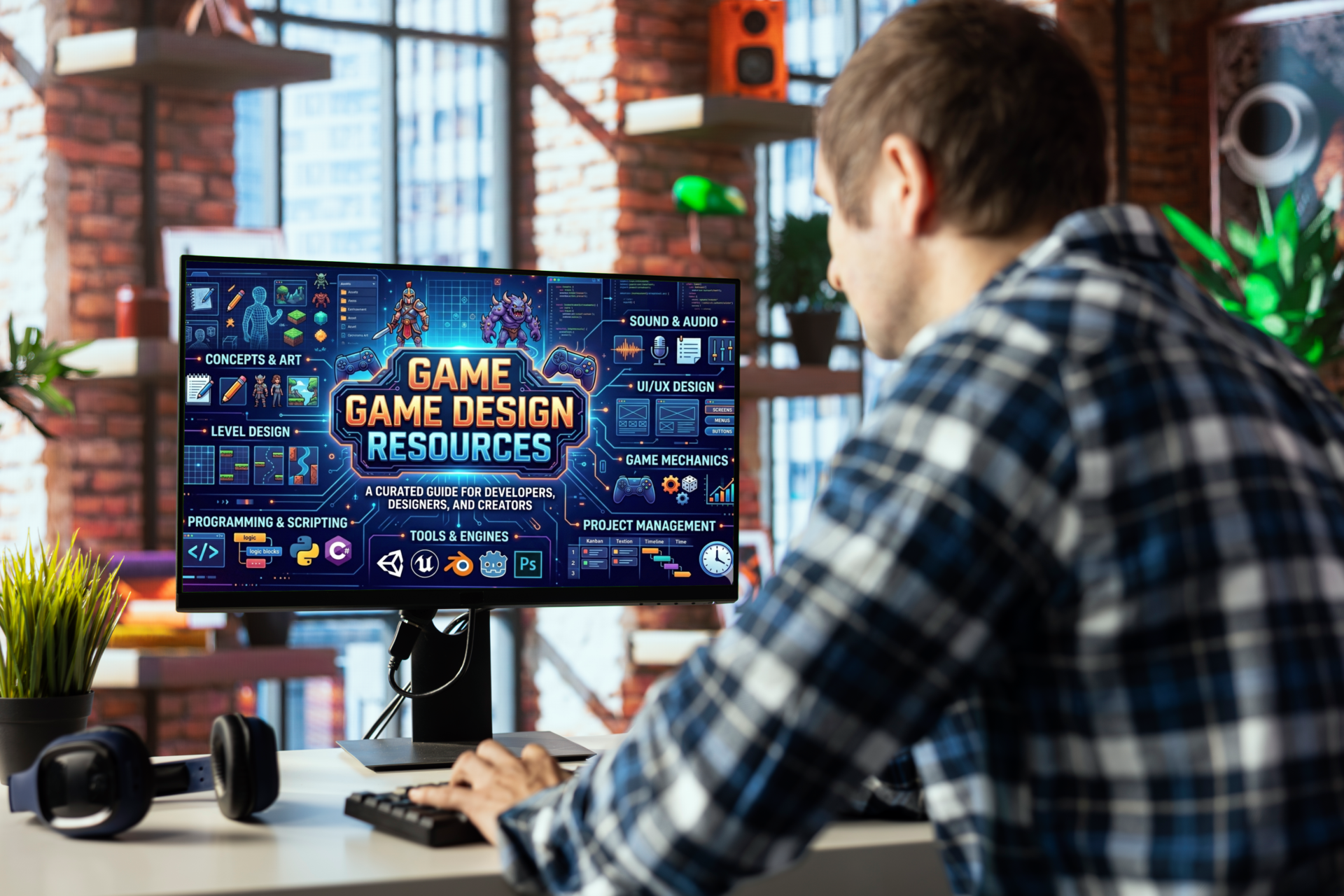
Not all games begin with expensive studios or massive development teams. There are those titles that start with a single game designer experimenting with level layouts, mechanics, or storytelling. Like Toby Fox’s Undertale and Eric Barone’s Stardew Valley. These games were built by independent creators who relied on the right game design resources to sharpen their ideas and understand the “how to” part.
Game design resources are still used by beginners and professionals alike. It’s because the right resources can dramatically improve creativity and technical execution. To help you make the most out of them, this game design guide will introduce what game design resources are and provide specifics that can help you become the best game designer you can possibly be.
Essential Game Design Resources

With most resources now available online, chances are, you’ve probably encountered or even used actual game design resources. You probably just didn’t recognize them as such. So, for those still unfamiliar, game design resources include every tool, guide, learning material, and platform that helps designers create better games for players.
Modern game designers often leverage these resources during production. For example, indie studio Elephant Mouse used Unity to prototype their 2014 game Robots Need Love Too, allowing them to quickly test mechanics and ideas, which led them to the final concept they launched to the public.
Tools Every Game Designer Needs
Game designers rely on specialized tools to turn ideas into playable experiences. At the center of this are game engines. They remain the foundation of modern game development, handling physics, animation, rendering, and scripting. In detail, Unreal Engine is widely used for developing high-fidelity 3D games, while Unity is popular among creators focused on 2D and mobile games.
Beyond engines, designers also use collaborative planning tools. Options like Jira, Miro, and Trello are often used for collaboration, scheduling, project management, and visualizing game elements. They remove development confusion by keeping everything organized and documented, allowing designers to focus more on gameplay decisions.
For visual design, Blender has become a major industry resource for offering professional-grade animation, modeling, rigging, and rendering without subscription costs.
Learning Platforms for Game Design
Modern learning resources give practical lessons that break down everything there is to know about games, making it easier for learners to apply those ideas into their own games. As such, designers can expand their horizons by learning more about combat systems, level pacing, AI behavior, interface design, and more.
Online platforms are well-known for offering courses in game design. Taught by industry experts or game design school educators, the courses teach the ins and outs of game design. From offerings that cater to beginners to options for advanced learners, you can find courses like Game Design: Art and Concepts Specialization, Indie Game Design: Build Your Game’s Core System, and Game Design Essentials: Tools, Theories, and Techniques.
Some platforms you can consider include:
At the same time, online video channels upload videos like, How a Super Smash Bros. Fighter is Designed, Why Game Designers Use Maslow, and Top 10 Tips for Designing Better Board Games. Most of the content analyze why certain mechanics succeed, teach specialized game design, explore board games, and provide insights into game creation.
A few video channels you can check out are:
Top Books on Game Design
If videos and courses don’t match your learning style, you can turn to books. To this day, they remain among the most respected resources in game design. They also typically delve into the theories and concepts behind player engagement and decision-making. Some deliver practical breakdowns of gameplay psychology and design frameworks. On the other hand, there are books that explore how mechanics and player interaction share meaningful experiences.
Here are a few popular game design books worth reading:
- The Art of Game Design: A Book of Lenses by Jesse Schell
- Getting Gamers: The Psychology of Video Games and Their Impact on the People Who Play Them by Jamie Madigan
- Theory of Fun for Game Design by Raph Koster
- Level Up! The Guide to Great Video Game Design by Scott Rogers
- Designing Games: A Guide to Engineering Experiences by Tynan Sylvester
Community Support for Game Designers
Game design communities are among the fastest ways to improve game design skills. Through peer sharing, members get access to prototypes, instant feedback, and solutions to technical problems. For many, communities on Discord, Reddit, or game jams are just as valuable as a formal game design guide or course. This is because such communities hone creativity and problem-solving and provide suggestions for refining game projects.
Among the most popular game design communities are:
Final Thoughts
With all of these game design resources, you can have more opportunities to design high-quality games. The key is accessing the ones that match your current skill level and learning style. Also, keep in mind that the right resources help designers think critically about how players interact with the game, not just technical skills.
What does this mean for you?
When used effectively and applied with intention, these tools will help you turn ideas into engaging experiences in no time.

