Home Blog

Designing for Decision-Making: How Games Challenge Player Choices

0

Game design fundamentally revolves around creating meaningful decisions. Every interaction and mechanic exists to present players with choices that carry weight and strategic significance. The quality of these decisions determines whether a game feels engaging or shallow. The challenge lies in creating meaningful decisions without overwhelming players. Too few choices create monotony. Too many create paralysis. The sweet spot provides adequate options where players can evaluate trade-offs and predict consequences.

Information Asymmetry and Strategic Depth

As counterintuitive as it might seem, compelling decision-making often emerges from imperfect information. When players possess complete knowledge, optimal strategies become calculable, reducing decisions to mathematical exercises. Introducing uncertainty forces players to weigh probabilities and make educated guesses based on incomplete data.

Card games demonstrate this principle effectively. Players see their own hands but must infer opponents’ holdings from betting patterns and position. This information asymmetry creates strategic depth where psychological reading matters as much as mathematical optimization.

The principle extends into digital design. Good online poker gambling platforms implement these same information dynamics in digital environments where players make consequential decisions with incomplete information. These poker offerings require players to evaluate hand strength, position, pot odds, and opponent tendencies – each decision carrying stakes that heighten engagement.

These platforms demonstrate how online poker gambling translates traditional card game decision-making into digital spaces where uncertainty drives strategic thinking. When players must decide whether to fold, call, or raise without knowing opponents’ cards, they engage the risk-assessment frameworks that make poker compelling. This information management creates the foundation for strategic gameplay where pattern recognition separates skilled players from casual players. Poker is an excellent learning space, and serves as a particularly strong example of what we’re discussing here.

Meaningful Consequences and Player Investment

Decisions gain weight through consequences that affect future gameplay. Inconsequential choices fail to engage because they lack stakes. Meaningful consequences create investment by ensuring current choices shape future possibilities.

RPG skill trees exemplify this principle. When players allocate skill points, they permanently enhance certain capabilities while foreclosing others, forcing prioritization based on playstyle preferences. Permanent consequences create emotional attachment. Games that allow unlimited re-speccing diminish decision weight. Irrevocable choices heighten emotional stakes – players feel genuine satisfaction from correct decisions. Successful designers calibrate consequence severity to match the decision’s reversibility and information availability.

Resource Management and Opportunity Cost

Resource scarcity forces prioritization. When resources are abundant, decisions become trivial. Scarcity creates opportunity cost, where choosing one path means sacrificing alternatives. Strategy games weaponize this through economy management. Players must allocate limited resources between military production, infrastructure, and research. Every unit built represents resources not spent elsewhere.

Time itself functions as a critical resource. Real-time strategy forces rapid decisions under pressure, while turn-based games limit total actions per turn. Resource management also enables comeback mechanics, preventing runaway victories while maintaining decision significance throughout matches.

Risk-Reward Balance and Player Psychology

Compelling decisions emerge when the risk and reward balance creates genuine dilemmas. When one option clearly dominates, decision-making becomes rote. Balanced risk-reward ratios force players to assess risk tolerance and the current situation.

High-risk, high-reward options create exciting moments when successful, but negative consequences when they fail. Conservative plays offer safety at slower progress. The optimal choice depends on game state and risk preferences.

Risk-reward psychology shifts significantly based on player knowledge. Understanding underlying systems and strategic frameworks transforms how players evaluate options and manage variance. This knowledge-driven decision-making translates across gaming contexts and represents different approaches.

Take the example of playing roulette. When players understand the mathematical and psychological foundations of different betting systems, they make more informed decisions about which risk-reward profiles align with their goals, rather than relying on intuition alone.


Complexity Management and Cognitive Load

Decision quality suffers when complexity overwhelms cognitive capacity. Successful designs present complexity gradually, rather than overwhelming players with simultaneous variables. Tutorial design demonstrates staged complexity introduction. Early levels present single mechanics in isolation before introducing interactions between systems, preventing cognitive overload while building toward deep decision-making.

Good UI design also manages cognitive load. Clear feedback and intuitive information presentation reduce mental overhead. When players spend cognitive resources parsing UI rather than evaluating strategy, decision quality degrades. Successful designs offer simple surface-level strategies that work adequately while rewarding players who engage with deeper systems.

Contextual Decision-Making and Emergent Complexity

Decisions gain depth when context affects optimal choices. Static optimal strategies create solved games where players follow predetermined patterns. Contextual variation forces constant re-evaluation based on current circumstances.

Fighting games exemplify contextual decision-making. The same move becomes advantageous or punishable depending on spacing, opponent character, current health totals, and screen position. This context-dependency creates endless variation from limited move sets. Multiplayer environments enhance contextual complexity through opponent adaptation. Strategies that work initially become ineffective once opponents recognize patterns. This forces continuous evolution, rather than following fixed plans.

Emergent complexity also arises from system interactions. Individual mechanics may be simple, but combinations create unpredictable scenarios requiring novel solutions.

Conclusion

Designing for meaningful decision-making requires balancing information availability, consequence severity, resource constraints, risk-reward ratios, complexity management, and contextual variation. Successful designs create frameworks where players engage in strategic thinking, evaluate trade-offs, and feel ownership over outcomes.

The challenge lies in respecting player agency while guiding them toward satisfying experiences. The sweet spot emerges when designers provide enough structure to prevent overwhelm while maintaining sufficient freedom for personal expression and strategic creativity.

2D Video Game Character Design Tips for Creating Memorable Heroes

0

Even before modern graphics existed, the 2D video game character design was a standard of video games. Such a visual approach can be seen in some of the earliest titles, including Tennis for Two (1958) and Spacewar! (1962). Decades later, the same style continues to thrive, with popular games like Stardew Valley and Celeste proving that 2D video game character design remains both timeless and impactful.

Aside from being compelling, it is a good entry point for aspiring game developers, as this design is easier and faster to create. More importantly, learning 2D video game character design helps define the identity, connect with players emotionally, and elevate the entire gaming experience.

If you are up for it, here is a simple and concise guide to the ins and outs of 2D video game character design.

Understanding 2D Video Game Character Design Basics 

Image designed by Freepik

2D Video Game Character Design is the process of creating visual representations of a game character that exists on a two-dimensional plane. Despite being flat by nature, this design aims to simulate depth and perspective by incorporating techniques in applying visual cues. 2D character designs in games also heavily rely on combining art and storytelling to communicate function, personality, and role.

Key Elements of 2D Game Characters  

In 2D games, characters must be easily recognizable and should match the overall tone and theme of the game. For this reason, designing effective characters calls for attention to several visual elements. Each of these components makes a character appealing, cohesive, engaging, and functional.

  • Animation (Heightens the visual appeal and personality traits)
  • Color Palette (Enhances the visual cohesiveness of game characters)
  • Costume and Details (Give a character versatility and help tell a story)
  • Facial Expression (Conveys emotional weight and personality)
  • Lighting and Shading (Simulates volume and texture)
  • Proportions and Anatomy (Emphasizes traits and expressiveness)
  • Shape and Silhouette (Ensure instant recognition and visual clarity)
  • Texturing (Adds visual richness to amplify immersion)

Art Style and Tools for 2D Video Game Character Design  

When designing 2D game characters, it is evident that the art style and the tools are closely connected to each other. It is because the style of art often determines the kind of tools a designer needs. Here are the common 2D art styles and tools that can help in choosing the one that fits your skills, project scope, and vision.

2D Game Art Styles

  • Cut-out art
  • Doodle art
  • Flat art
  • Geometric art
  • Hand-drawn art
  • Minimalist art
  • Monochromatic art
  • Pixel art
  • Pre-rendered 3D
  • Vector art

Tools in 2D Character Design

  • Drawing and Illustration Software: (Adobe Photoshop, Clip Studio Paint, GIMP, Illustrator, Inkscape, and Procreate) 
  • Animation Software (Autodesk Maya, Cascadeur, Spine, and Spriter)

Tips for Creating Unique Characters

Creating characters that are copycats of other characters from much more popular games is not going to help you stand out in a crowded gaming landscape. Yes, drawing inspiration from existing sources can be a stepping stone, but originality must still come first. And one effective way to achieve this is through creativity and intentional design choices. In detail, you should focus on a strong concept, exaggerate key features, play with colors and lighting, keep it simple and consistent, and design for emotional resonance.

Bringing Characters to Life with Animation

A compelling design is only the beginning. To truly bring a character to life, begin by animating to highlight their personality, emotion, and responsiveness. It is a crucial step in 2D video game character design, as it turns static art into a living part of the game world, completing the illusion of life.

Conclusion

Character design plays a pivotal role in making a game successful. It is one of the key elements that players resonate with, making a project memorable. By ensuring effective character designs, you can produce games that stay competitive and relevant in the realm of game development for years.

Now that you are familiar with 2D video game character design, learn more by exploring our guide on 2D video game development.

Best Family Gift Ideas 2026: 11 Tech Toys That Actually Bring Everyone to the Table

0

Modern families juggle homework, overtime, and an endless scroll of apps. No wonder parents worry about solo screen time. Kids ages 0-8 now average 2.5 hours of daily screen use, and gaming time is up 65% since 2021.

The answer isn’t to ditch tech; it’s to choose gadgets that pull everyone into the same space. This listicle spotlights 11 tech products that can become the best family gift ideas, from hybrid consoles to screen-free audio toys.

11 Tech Toys That Bring the Family Together

1. Board — The Hybrid Tabletop Console

Board is a 24-inch touchscreen tabletop system that blends the feel of a physical board game with the responsiveness of a digital console. Designed to sit at the center of a table like a coffee-table game, it uses conductive game pieces that the screen can detect instantly—so when you move, tap, or place pieces, the system responds in real time.

The result is a tactile, shared experience that brings energy back to group play—no controllers, no complicated setup, just hands-on interaction.

Pricing & Access

  • $399 base system; Wi-Fi required for downloads only
  • Seven launch titles included; additional games priced at $34.95

Who It’s For

  • Designed for ages 6 through adults, including grandparents
  • No prior gaming experience needed

Core Experience

  • Fast, reliable piece recognition keeps gameplay smooth and uninterrupted
  • Supports cooperative and competitive play styles (e.g., cooking games, strategy, party games)
  • Encourages face-to-face interaction instead of isolated screen time

Board transforms traditional screen use into a social, around-the-table experience—ideal for weekly game nights, family gatherings, or casual hangouts where everyone. Everyone from kids to Grandpa can jump in and start playing (and trash-talking) immediately.

2. LEGO Dreamscape AR Set

Build a dragon, point your phone, watch it soar across the living-room ceiling. Physical bricks morph into an augmented-reality quest the whole crew can chase.

  • $159 kit; companion app for iOS/Android
  • Scan creations to unlock story chapters and power-ups
  • Co-op building missions mean younger kids fetch pieces while teens solve puzzles
  • New quests drop monthly at no extra cost

It bridges hands-on STEM with screen wow-factor — ideal for families that already have tubs of loose LEGO looking for fresh magic.

3. Nintendo Switch Sports Pack

Nintendo’s newest Sports bundle revives the Wii spirit with motion bowling, soccer, and badminton that even non-gamers grasp in minutes.

  • $349 OLED console + pre-installed Sports
  • Four players swing one Joy-Con each right out of the box
  • 10-minute fitness mode if you want a cardio burst
  • Built-in parental timers to curb marathons

When cousins visit, just clear the coffee table and let the laughter do the babysitting.

4. Sphero Indi Classroom Bundle

Tiny color-sensing cars follow tile paths you lay on the floor; change tile order and you’ve coded a new route.

  • $129 for 4 cars, 60 tiles, and challenge cards
  • No screens during play once the cars are programmed
  • Teaches early logic loops and “if/then” thinking
  • USB-C recharge; 45-minute play on a 15-minute charge

Parents can time races or set “delivery” missions to keep multiple kids collaborating instead of colliding.

5. Osmo Math Wizard Series

Slip an iPad into Osmo’s reflector, toss numbered tiles on the table, and watch a dragon munch sums as kids solve quests.

  • $99 starter; iPad not included
  • Adaptive difficulty lets siblings of different grades co-op
  • Audible hints mean fewer “Mom, help!” interruptions
  • Expansion boxes cover geometry, spelling, and coding

Great for sneaking arithmetic into Saturday mornings—kids beg to play, you sip coffee knowing it’s secretly homework.

6. Meta Quest 3 Family Game Pack

VR finally cracks the group code: one person wears the headset while the room sees the action on TV and shouts advice.

  • The $499 headset ships with four MR party games
  • The Guardian boundary keeps kids inside a safe zone
  • Silicone face gasket wipes clean between sweaty rounds
  • Pass-and-play mode swaps players in seconds

Best for tweens and up; rotate turns so everyone gets a taste without disappearing for hours.

7. KidKraft Pixel Art Projector

Turn any wall into an 8-bit canvas. Use the stylus to tap giant pixels; siblings fill in colors while parents design level maps.

  • $199 LED short-throw projector; works in partial light
  • 12 built-in templates from retro sprites to custom initials
  • Saves finished art as GIFs via USB
  • Whisper-quiet fan doubles as an ambient nightlight

Perfect rainy-day creativity that scales from doodles to full-wall murals without new holes in the drywall.

8. Tonies Marvel Starter Box

A plush speaker cube plus superhero figures that trigger screen-free audio adventures when placed on top.

  • $99 starter with Iron Man, Black Panther and Groot Tonies
  • Swap figures to play new 20-minute stories or bedtime playlists
  • Record grandparents’ voices via app for custom messages
  • Seven-hour battery makes it road-trip ready

Younger kids feel agency without another glowing rectangle, while older siblings voice-act their own fan fiction.

9. Ravensburger Echoes: Mystery of the Dancing Devil

Lay illustrated cards, scan with the free app, and hear haunting audio clips you must arrange in narrative order.

  • $14 deck; app on iOS/Android
  • Cooperative deduction for 1-6 players, ages 8 +
  • Six standalone episodes so no spoilers across sets
  • 45-minute playtime—easy weeknight fit

It’s like a podcast you piece together, sparking debate and high-fives when the timeline finally clicks.

10. Kano PC 2026 Edition

Build a real Windows laptop together, screw by screw, then dive into pre-loaded coding quests.

  • $279 kit; clear step-by-step booklet
  • Modular parts encourage repairs, upgrades and LED mods
  • Child dashboard locks down web but leaves Python open
  • Family Scratch challenges earn badges

The build process itself is the gift; afterwards, you’ve got a durable homework machine that kids actually understand.

11. Anki Overdrive Neo Racers

Snap flexible track pieces, drop AI cars, and watch them memorize the layout before battling for first place.

  • $199 starter includes 2 cars and 10 track pieces
  • App lets you design power-ups or handicaps for younger racers
  • Reconfigurable track keeps sessions fresh
  • Extra jumps and loops sold à-la-carte

Great for mixed-age families—little ones steer on autopilot while teens tweak car stats like mini engineers.

Buying Tips: How to Pick a Tech-Toy Everyone Will Use

  • Check setup friction: if it takes more than 10 minutes to start playing, holiday hype fizzles fast.
  • Favor cross-age mechanics like cooperative goals or adjustable difficulty.
  • Look for expansion paths (downloadable quests, extra tracks) so the toy grows alongside kids.
  • Mind the footprint: a tabletop console needs permanent space; VR needs a clear floor.

Adults Want Toys, Too

Adults now represent one-fifth of U.S. toy sales, and 81% of parents planned to buy a toy for themselves in 2025. Choosing family-friendly tech means parents enjoy play as much as kids, boosting the odds that the gadget stays in rotation.

Bottom Line

The best family gift ideas of 2026 don’t isolate us behind separate screens—they turn technology into shared laughter, learning, and light competition. Pick any item on this list, and you’re really giving the house a new reason to gather.

Game Design Career Path: Steps to Building a Successful Future in Gaming

Today’s job market is more diverse than ever. People are no longer limited to traditional careers, such as those in medicine and law. Notably, the world is seeing a significant rise in the creative industry. Along these lines, game creation is one of the emerging professions. With the gaming industry offering captivating, creative, and technical opportunities, many now consider the game design career path.

Are you interested in understanding the careers in game design? In that case, this article will serve as your roadmap toward turning that passion into a profession. It will explore the different game design roles you can pursue and the practical steps needed to succeed in this competitive field.

Exploring the Game Design Career Path

Image designed by Freepik

Based on data provided by the Entertainment Software Association, the video game industry in the United States (US) supports over 250,000 jobs and has an economic impact of $95.8 billion in value. From these figures, it can be said that the sector has grown into a powerhouse, attracting individuals who are both creative and technically inclined.

At the center of this industry is game design, a career path that goes far beyond simply playing games. In detail, game designers are the lifeblood of games, as they are the minds that develop the backbone of every project. It includes designing and developing game mechanics, goals and objectives, player agency, and other elements that keep players engaged. They also work closely with other game developers, such as programmers, animators, and producers, making collaboration a core part of the job.

What education is required to become a game designer?

There is no one-size-fits-all route to becoming a game designer. You can try different ways to pursue a game design career. Some gain formal education through degree programs at game design schools. On the other hand, some prefer remote learning and take online classes or courses. Meanwhile, some choose to learn all by themselves by leveraging tutorials and guides on the internet. Regardless of the path you take, the crucial thing is having hands-on experience, promising skills, and a career-ready portfolio.

What is the salary of a game designer?

According to a report by Indeed, the average yearly salary of a game designer in the US is around $99,562. The range starts at $60,000 to more than $100,000, depending on the experience, company, and location. While the exact figures vary over time and based on multiple factors, it is safe to say that the gaming industry offers competitive wages.

To learn more about the compensation in careers in game design, visit our guide on the video game designer salary in 2026.  

Top Careers in Game Design

Image designed by Freepik

When exploring careers in game design, it becomes clear that the field offers a variety of roles suited to distinct skill sets. Professionals in each area have specific specializations and work collaboratively with others to contribute to the overall game design process. Now, let us look at some of the top video game design careers.

  • Game Designer – Sets the overall vision and oversees every game design element.
  • Gameplay Designer – Works on particular game mechanics and interactions that make a game fun.
  • Level Designer – Focuses on challenges and player flow by creating maps, levels, missions, and playable spaces.
  • Narrative Designer – Forms the narrative experience by developing characters and plotlines, shaping the story world.
  • UI/UX Designer – Concentrates on player experience, ensuring that the game is accessible, engaging, and immersive.

Aside from these essential game design roles, it is important to know that the field sometimes overlaps with other disciplines. That means there is more to a game design career path, including technical or overall project management areas. In particular, you can pursue roles like gameplay programmer, quality assurance tester, or game producer.

How to Build a Career in Video Game Design

Even if the game design journey varies for each aspirant, there are key steps that can help you make progress.

  • Develop Core Skills – Build skills and learn industry tools by watching tutorials, taking online courses, or earning a degree at educational institutions.
  • Build a Portfolio – Start creating games and go from simple to complex projects to showcase what you can offer to a team.
  • Join Communities – Gain insights and feedback from fellow creators through online forums, local meetups, or competitions.
  • Apply for Internships – Aim to gain practical experience and industry connections by working as an intern at studios.
  • Start with Entry-Level Roles – Begin with junior positions to learn the tapestry of the game industry.
  • Continue Learning – Never stop adapting to new innovations and industry trends, as this attitude can help land intermediate or senior roles.

Frequently Asked Questions

Q1: What jobs can I get by taking the game design career path?

Answer: A game design career path is a rich field that offers various roles, including but not limited to narrative designer, systems designer, level designer, or game designer, in general.

Q2: How much do video game designers earn?

Answer: The salary of a game designer in the US ranges from roughly $60,000 to over $100,000, with the average salary standing at around $99,562 per year.

Q3: What qualifications do I need for a game design career?

Answer: There is no single way to enter the game design career path. Some people pursue formal education, while others are self-taught. What matters most in this field is practical experience and exceptional skills.

Conclusion

As the job market becomes increasingly supportive and inclusive of diverse career interests, pursuing a game design career path is definitely feasible. Video game design careers no longer alienate people, and that is for the better. Today, the market rewards creativity, innovation, and persistence, and game design roles are among the beneficiaries.

Now that this guide has provided key insights into the game design career path, the next step is on you. Your journey into careers in game design begins with the decisions you make today.

If you are serious about pursuing one of these game design roles, take a look at our guide on how to become a narrative designer.

Elements of Game Design: Key Components for Creating Engaging Video Games

0

Gone are the days when only major AAA games ruled the gaming market. Today, the landscape is seeing a significant rise in indie titles that can rival blockbuster counterparts. In fact, recent data showed that indie games accounted for 25% of Steam’s revenue in 2025, signaling a growing dominance by the independent gaming sector. From this, it can be safely said that a good game is not only defined by its budget, but more by its careful orchestration of the elements of game design. These aspects determine how players feel while playing and how they interact with a game, shaping engagement and long-term enjoyment.

In line with this, many say that carefully made games offer experiences that transport gamers into immersive worlds. However, it is not that easy to achieve, as creating games requires understanding the elements of game design. So, for those interested in what happens behind the scenes of popular games, we suggest sticking around until the end of this article. It will provide an easy-to-understand and comprehensive explanation of the elements of game design, their roles, how to balance them, and much more.

Understanding the Key Elements of Game Design

Image designed by Freepik

Before delving into the specific game design elements, it is important to understand the concept first.

To put it simply, the elements of game design serve as the fundamental building blocks that determine how a game feels, how players interact with it, and why it is entertaining. Most games on the market rely on these core components to create a sense of challenge, immersion, and reward. For instance, The Last of Us employs character-driven storytelling and emotional arcs that make players resonate with the characters of Joe and Ellie. In the same sense, Celeste is renowned for its tight platforming controls and environment interactions.

The aspects of game design make the player’s experience meaningful and engaging, which is essentially the lifeblood of a successful game.

The 9 Elements of Game Design

Image designed by Freepik

Now that we have the introductions out of the way, it is time for a deeper exploration of all the elements of game design. Each aspect contributes uniquely, serving as core pillars that underpin a successful game.

Game Mechanics

The foundational framework that makes a game work is game mechanics. More specifically, they determine what actions players can do, how they can interact with the virtual environment, and what outcomes are brought about by every decision and move. In addition, purpose is crucial for every mechanic. Each one should lead to something meaningful, such as moving forward with the story, creating challenges and conflicts, or allowing players to engage with the game world.

Goals and Objectives

A good game design does not simply let players do things, but also gives them a reason to do them. Direction and motivation should exist to keep gamers interested and engaged, or the entire game can become pointless. However, there should be caution in doing so, as overly complex goals can feel rigid and too simple objectives can bore players. The goals and objectives should challenge players but make them feel everything is achievable.

Player Agency

Players engage in games for freedom, and making them follow a single fixed direction is not going to help. That is where player agency becomes invaluable. It gives them the ability to create choices and influence the game. Modern games should aim to make players feel that they are in control of what happens next. This involves how they move forward with the story, take on challenges, and interact with other characters. However, balancing freedom and structure is necessary to achieve cohesive gameplay and experiences while giving players significance.

Progression Systems and Rewards

With goals and objectives in place, game designers should provide players with a sense of accomplishment through growth measurements or rewards. It gives them an explicit view of their game milestones. In particular, these can be in the form of rankings, new levels, stronger abilities, or special items. Placing such progression trackers strategically in the game maintains consistent satisfaction for players.

Balance and Difficulty

Games should aim to keep players motivated by balancing challenge and accessibility. A game that is too hard to play can overwhelm gamers, whereas a game that is too simple may cause players to disengage. The game should be designed to increase difficulty gradually for players to catch up, or include a difficulty scaling feature to ensure every skill level is accounted for. To learn more, visit our guide on game difficulty.

Feedback Mechanisms

When designing a game, ensuring that it communicates all necessary messages to players without breaking immersion is crucial. By incorporating visual effects, sound design, and haptic cues seamlessly, players will be able to make informed decisions naturally. In detail, these are health bars, warning signs, graphic effects, noises, and the like.

Narrative and Storytelling

Immersion is one of the key attributes that players look for in games. With that said, games should include engaging narratives, interactive storytelling, interesting characters, and compelling environments. More importantly, there should be a clear coherence among these. Effective game design is defined by its ability to transport players into the game world, blurring the line between reality and fantasy.

Visual and Audio Design

To give justice to the mechanics, story, and other elements, the visuals and audio should remain relevant to the themes and purpose. The addition of these elements sets the mood, enhances immersion, and reflects emotions. Moreover, the visual and audio design should not take the spotlight away from other vital components of the game, but rather reinforce them.

User Interface and Experience

Presentation and interaction play significant roles in designing a game. By carefully crafting the user interface and experience that seamlessly exists within the game world, a game can achieve immersion like no other. A game designer should know when and where to place diegetic, non-diegetic, spatial, and meta components to avoid distracting and overwhelming players. Learn more about creating user-friendly interfaces through our guide on game UI design.

Balancing Game Design Elements

In a game development team, having different experts for specific roles is not enough. Talent alone is senseless without the ability to collaborate and build chemistry with other team members. The same idea applies to the elements of game design. A game can have promising elements individually, and would still feel disjointed or incomplete if they do not work harmoniously together. That is the reason why balancing the elements is necessary. It helps ensure no element creates an imbalance. This is accomplished through repetitive testing, adjustment of game ideas, and a profound understanding of the art of game design.    

  • Make Player Progress Rewarding
  • Ensure Cohesion Across Elements
  • Keep Design Clear and Focused

Top Game Design Topics

The gaming industry is an ever-evolving landscape, which is why it is no surprise that new trends continue to push the boundaries of game design. That said, staying informed about current game design topics helps in effective innovation to create gaming experiences that resonate with modern audiences.

Nowadays, the trends or topics that are taking the game design field by storm include the integration of artificial intelligence and immersive technologies (i.e., augmented reality, extended reality, mixed reality, virtual reality). Additionally, game designers are also embracing open-world design and multiplayer mechanics. Another key trend is accessibility, which is why players will be seeing more of mobile titles, cross-platform support, and cloud gaming. Furthermore, one of the emerging game design topics is appealing to all generations of gamers. Hence, the continued creation of family-friendly games.

Frequently Asked Questions

Q1: What are the most important elements of game design?

Answer: All game design elements play crucial roles in making a successful game. However, 5 elements of game design stand out, specifically game mechanics, narrative, visual design, player agency, and user experience.

Q2: How do the elements of game design impact a game?

Answer: The listed essential elements of game design ensure a game has rules, context, immersion, and a sense of satisfaction. Most importantly, they create cohesive and rewarding gameplay experiences.

Q3: How can you balance the elements of game design?

Answer: Balancing the elements of game design can be done by making sure each aspect contributes equally. Doing so requires open-mindedness, iteration, and a deeper understanding of the art of game design.

Conclusion

Securing funds to create a game is one thing. However, the main thing is mastering the elements of game design to ensure that every aspect or component is working together seamlessly. A deliberate game design harmony is what makes games like Stardew Valley and Hollow Knight successful despite having low development budgets. Nonetheless, this does not mean that having more resources is of no use. It sure does. However, without these elements of game design and precise balancing, games are likely to fail regardless of the amount spent on production.

Remember that each element shapes the player’s journey and captivates gamers across genres. Learning how to apply them appropriately ensures that a game is immersive, rewarding, and enduring.

If you are passionate about game design, learn more through our guide on turning creativity into playable worlds.

Best social casino apps

0

Out of the many social casino apps available, one of the best is Huuuge Casino. Huuuge is highly regarded for both casino safety and social features. The purpose of this article is to direct customers to the best features of social casinos, with an emphasis on safety, fairness, and community. Whether searching for social casinos on Facebook slots community networks, it is important to understand the specific advantages offered by the best apps.

When players browse casino apps on Facebook or social casinos, they want peace of mind and an enjoyable experience. Industry leaders, including Huuuge, have built solid reputations by offering players the peace of mind that comes with safety features, fair-play assurances, and transparent data privacy policies. Industry leaders also implement age restrictions, privacy policies, the option to set spending limits, and customer service.

Top social casinos have open and closed game reporting, explanations of game outcomes, and an inner belief to support fair use of the system.

Key criteria for evaluating social casino apps

The best social casino apps harmonize fairness, randomness, and engagement. Every player should have a fair shot at winning, and nothing should take the risk out of the game. The best social casino apps have a proven fairness system, a documented random number generator, and an established system for randomness. The best social casino apps have their results verified by independent third parties and have their audit results openly posted.

Community engagement and feature depth are also contributing factors for slot games apps that are attracting players. Leaderboard apps are providing screenshots of app payouts, volatility and expected return help, player guides, and help screens explaining payouts. They also create environments that are reporting behavior is moderating is seen, and reporting behavior is seen. This will create a healthier online slot community.

Social features and community building

Top social casino apps are attracting players through vibrant social features. Players are encouraged to join clubs, participate in leaderboards, and compete in tournaments. These social features help create a sense of community and foster a sense of collaboration and competition in the game. Players are also encouraged to interact through gifting, and competition within clubs increases engagement.

The combination of effective moderation and communication features creates a safe, positive community where players can share tips and celebrate wins without the fear of harassment. Toxic language is filtered, and community guidelines are enforced, making these apps stand out. The top apps create a sense of belonging in online slot communities through these tools.

Fair play, responsible gaming, and transparency

Best social casino apps live up to responsible gaming principles by providing transparent odds, fair paytables, and responsible session management notifications. Players can set time limits and are prompted to take breaks. Many social casino apps also avoid misleading mechanics like near-miss animations, which create a sense of unfairness. Players appreciate fair and random outcomes.

Transparency establishes confidence for players about how games operate. Information on how RNGs operate is featured on Info screens, while FAQs explain how payouts work and how “hot streaks” myths are not real. Players can use the built-in reporting system and moderation logs to speak about concerns.  Download Huuuge Casino is an example in the social casino industry of how player protection and transparent systems operate, establishing safety and fairness.

What sets the best social casino apps apart

Social casino applications that rank the highest in player experience combine social engagement features and a top-notch integrity system. This can consist of social engagement features like clubs, gifting, leaderboards, and in-app support, as well as moderation and integrity features that support the ecosystem. Strong engagement and usage data analytics identify behavioral anomalies to preserve game integrity and support the overall social experience.

Top-rated social casino apps demonstrate an overwhelmingly positive player experience. This is accomplished through a clear focus on transparency, fairness, and community support. Developers implementing these features foster trust and offer a positive experience, allowing online slot communities to thrive while keeping the experience safe for all participants.

7 Stages of Game Development: How a Video Game Comes to Life

0

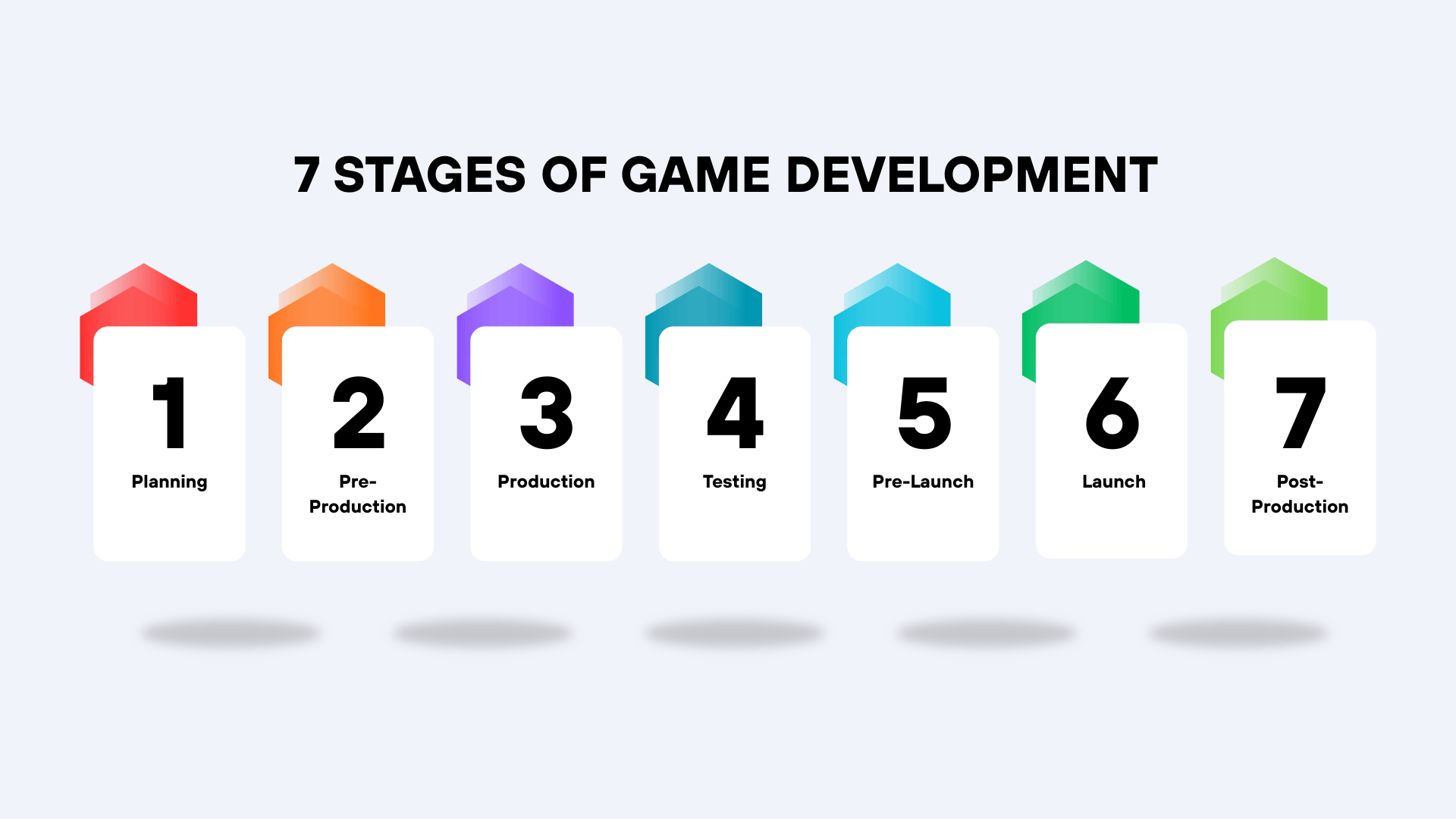
Creating video games is widely regarded as one of the most fulfilling jobs one can have in this digital era. It is fulfilling in the sense that creators go through the 7 stages of game development, which entail complex processes and several hurdles before finally turning their ideas into reality. And yes, turning those concepts into something playable is where things get interesting and challenging.

Behind games like Fortnite and Overwatch lies a structured, multi-stage process involving multiple specialists (e.g., game designers, game programmers, game producers, etc.). More specifically, these phases require discipline, planning, and execution rather than mere creativity to transform a vision into interactive experiences played by millions of players.

Let us dive into the 7 stages of game development along with a few tips to optimize the process, so you can finally learn how to bring video games to life.

Understanding Game Development Stages

Image designed by Freepik

Game development does not allow anyone to do things in any order. The process is far from being random, at least if you want to do things the right way and succeed. Without a concrete framework, even the best ideas can go downhill due to poor execution.

That said, it is important to know that game development is a complex and multi-stepped journey. Understanding that it is a lengthy process, even for simple games, sets expectations. Some say there are only 3 or 4 stages of game development. While they are not wrong, breaking down the pipeline into more specific steps can help ensure the completion of critical functions.

By following the 7 stages of game development, you can navigate the process more vividly as if zooming in on a map to get a better view of the terrain. More specifically, you can define goals clearly, allocate resources effectively, determine problems early on, and ensure a smooth workflow.

Exploring the Seven Stages of Game Development

Let us now delve into the 7 stages of game development to see what happens in each phase, why every step matters, and how all stages contribute to the overall game creation process.

Stage 1: Planning

Effective planning is a vital first step in the 7 stages of game development. At this stage, market research is necessary to determine industry trends and what existing games already offer. Once the potential gaps and opportunities are identified, creators can proceed to asking and answering key questions. It is where you outline the game’s overall style, target audience, intended platforms, and player experience. This part leads to the creation of the proof of concept, which helps determine other essentials. Moreover, the planning stage entails deciding on the timeline, budget, funding methods, and whether you have the skills and team to accomplish the project, or if there is a need to hire game design and development services.

Stage 2: Pre-Production

Once planning is completed, it is time to flesh out the ideas and shape the foundations of the game. The most important thing in this phase is the Game Design Document, which enables every team member to get on board with the vision throughout the process. By creating this document, the team determines which ideas are going to be used and which will be cut. With art style, mechanics, characters, and narratives in place, the pre-production stage is also where the initial creative work starts. Building rough concept arts and prototypes shows the feasibility of the project, the necessary tools, the specific number of specialists needed for each phase, and the overall scope.

Stage 3: Production

The next step in the 7 stages of game development is production, and it is the most crucial and demanding phase. It is where everything comes together, meaning the core creation of every component of the game. Due to the nature of this stage, specialists are required to collaborate while performing their assigned roles, such as coding game mechanics and features, generating animations, visual assets, and 3D models, integrating audio elements, and more. From programmers to animators, everyone works tirelessly in the production phase with the goal of building and refining the features, story, characters, and game world.

Stage 4: Testing

After the lengthy production process, thorough testing is next in line. The main reason behind employing this systematic process of rigorous testing is to evaluate functionality, usability, compatibility, performance, and regression. By following scenarios and test cases, developers and quality assurance testers identify bugs, exploits, glitches, and other issues that may affect the overall gaming experience. At the same time, the testing stage also enables getting a general feel for the game. In here, developers find out whether a game is fun, accessible, and engaging.

Stage 5: Pre-Launch

The pre-launch stage is where an almost-ready version of the game exists. At this point, the game is often put out for beta testing with select players for a more informed iteration. Pre-launch also entails advertising and marketing, wherein you build hype around the project through teasers, trailers, press releases, and other promotional gimmicks. In addition, this is a great time to connect with the community. By participating in forums and answering questions from players, you can build positive relationships that can contribute to the success of the game. Also, pre-launch involves creating avenues where players can ask questions, report concerns, and submit suggestions. It ensures that players have the proper support systems, which can enhance retention.

Stage 6: Launch

When developers complete a game, launching is right around the corner. It is finally time to let the world experience your offering. While it is less complex than earlier stages, doing a few steps is essential to solidify a game’s launch. A few extra things to consider are picking a strategic release date, making a final marketing push, and preparing to engage with the community. The launching phase is a nerve-wracking moment, but the presence of mind is necessary. You have to stay in the zone to monitor launch issues and address them rapidly.

Stage 7: Post-Production

The final chapter of the 7 stages of game development is post-production. Yes, the work does not end after producing and launching the game. Every developer or studio should be on the lookout for post-launch bugs and player feedback. Similarly, debriefings take place during this stage, as continued player engagement and retention often call for additional content, regular updates and patches, and sequels. The goal is for players to remain interested in playing the game and want more out of it.

How to Streamline Game Development Workflow

Although the core of the 7 stages of game development largely stays the same, some strategies can help optimize the process and boost efficiency. To help in understanding the ideas, we present the three Cs.  

  • Conducting Research – Do not waste time developing a game that already exists in the market. Evaluate competitors and find out what makes their games work and, more importantly, what is missing from their products and what needs improvement.
  • Checking Feasibility – Innovation is a good thing, but too much of it can break a project. Balancing creativity and practicality helps developers come up with a game idea that is groundbreaking but achievable.  
  • Choosing the Appropriate Tools – Leveraging the right development tools that fit the game project saves productions from dealing with overly complex options and inadequate picks that can limit and slow down the process.

Frequently Asked Questions

Q1: What are the 7 stages of game development?

Answer: The structured stages that guide game creation, from ideation to release and beyond, include planning, pre-production, production, testing, pre-launch, launch, and post-production.

Q2: What is the difference between the 4 stages of game development and the 7-stage model?

Answer: Honestly, they are essentially the same. The only difference is that the former is more of a simplified version, whereas the latter breaks the stages into more detailed phases.

Q3: What is the first step in the game design process?

Answer: Setting the foundation of the game design pipeline is planning, which involves conceptualization and ideation. This phase is where developers establish the gameplay, target audience, and other initial aspects of the project.

Conclusion

After reading this, it is probably easier to understand why even big AAA video games take time to produce updates or new versions. You can now be a little more patient when waiting for developers to bring something fresh to the table. With the 7 stages of game development blending creativity, technology, and collaboration, it is certainly a process that requires greatness and a significant amount of time and effort.

While no article can truly reflect the intricacy of game creation, as every project varies depending on the goal and has different unexpected issues, we hope our guide on the 7 stages of game development has provided invaluable insights into how games evolve from simple ideas into immersive experiences.

Ultimately, understanding every phase of game development is only half the battle. Acquiring the skills, mastering the tools, and staying committed are what truly lead to success in this field.

Of course, we also have guides to help you with these. You can check our articles about the essential skills for building your first game and the game design tools every game designer should know.

Game Design and Programming: Essential Skills for Building Your First Game

0

Building your first video game can be challenging and frustrating, as game development entails an intricate process. Many say that creating a game is both an art and a science, which is generally true. At the core of the production pipeline lies game design and programming, highlighting how the world of video games is an intersection of creativity and technicality. Two very different disciplines, but they work hand in hand in turning ideas into interactive experiences.

For beginners, learning these two essential areas of game development is a paramount first step. So, if you have ever dreamed of creating your first-ever video game, do not go anywhere! This guide will introduce you to what game design and programming are, the necessary skills, the specialization paths you can consider, and the diverse career opportunities within the gaming industry through game programming and design.

What Is Game Design and Programming?  

Image designed by Freepik

At first glance, game design and programming may seem like similar fields, as they both refer to the process of creating and developing games through both creative design and technical implementation. While both disciplines form the backbone of game development, there is a clear distinction between the two.

Game Design vs Game Programming

In its simplest definition, game design is the part of game development that leans more towards the creative aspect. It focuses on the creation of challenges, characters, gameplay mechanics, goals, levels, narratives, player experience, rules, and the overall vision of the project. More specifically, the workflow often includes ideation, prototyping, iterative testing, and handing off to other developers.

Game Programming, on the other hand, is about transforming the ideas and concepts from game design into the actual playable game, making them functional. In particular, it concentrates on creating audio, art, code, and systems. With regard to the approach, programming entails implementing modules, integrating assets, optimizing, and performing iterations.

In other words, game design defines what the game should be, while programming determines how it actually works. That means a game will not be functional without either of the two. Throughout the game development process, a game designer and a game programmer must collaborate. The former should be able to build prototypes and elaborate on the ideas. In contrast, the latter must understand design intents and constraints and provide feedback to tweak game concepts if the situation calls for it.

Essential Skills for Game Design and Programming  

To build your first game with game programming and design, you must understand that well-rounded creativity and technical skills are necessary.

Along with exceptional and innovative creativity, game design requires skills in game theory, prototyping, storytelling, systems thinking, visual scripting, and user experience. Proficiency in the use of flowcharts, design software, game engines, prototyping tools, and spreadsheets is also a must.  

Meanwhile, the essential skills in game programming include art and animation, debugging, mathematics, optimization, and programming languages. This technical field also demands mastery of a variety of tools, such as build systems, debugging tools, modeling applications, game engines, and version control.

Furthermore, both game design and programming require the typical soft skills, including adaptability, clear communication, collaboration, critical thinking, problem-solving,

Game Design and Development Specialization 

Image designed by Freepik

As you move forward in your journey of developing your first game, you will notice that focusing on a specific area within a game design and development specialization is possible as you gain experience. Doing so allows you to refine your skills and stand out in an industry that is full of countless aspirants.

Specifically, you can focus on what interests you the most and deepen your expertise by specializing in the following:

Game Design

  • Narrative
  • Game Mechanics
  • UI/UX
  • Technical areas
  • Levels

Game Programming

  • Artificial Intelligence (AI)
  • Game Engine
  • Gameplay
  • Graphics
  • Networking

Career Paths in Game Programming and Design

Mastering game design and programming gives you an edge when applying for jobs in the industry, especially now that the demand for skilled professionals continues to grow.

In line with this, the game design field opens up career opportunities, such as a video game designer, UI/UX designer, level designer, systems designer, quality assurance tester, creative director, project manager, and game producer.

At the same time, game programming paves the way for career paths, including but not limited to gameplay programmer, graphics programmer, AI programmer, and network programmer.

Not only does game design and programming lead to multifarious professional jobs, but it also allows creators to earn competitive salaries. As of this writing, the average video game designer salary in the United States is around $99,562 a year, while the average salary of a video game programmer stands at $92,636 per year.

Frequently Asked Questions

Q1: Are game design and programming essential in game development?

Answer: Yes! Game design and programming are both vital parts of the game creation process. Hence, learning both can significantly improve your ability to make more complex and polished video games over time.

Q2: Does game design and programming require a team?

Answer: While many small studios have creators taking on both game design and programming roles, most bigger studios have assigned artists for the distinct fields working together.

Q3: How can I pursue a game design and development specialization?

Answer: Attaining a specialization in game design and development involves building a technical portfolio and acquiring advanced education through game design schools.

Conclusion

Game design and programming will forever be intertwined when game development is discussed. Both are essential skills for building your first game or creating a game in general. These are different but interconnected disciplines. Game design crafts the experiences that engage and entertain, while programming implements those ideas into playable, interactive worlds.

Although breaking into game programming and design can feel overwhelming, anyone can overcome the hurdles and reap the rewards by developing the right skills, choosing a specialization, and exploring career paths. With game design and programming, you can build your first game today — and conquer the gaming world tomorrow!

If you want to dive deeper into the essential steps in creating your first game, check out our detailed guide on 2D video game development.

Online Game Design: Essential Skills and Tools for Aspiring Creators

0

Due to technological improvements, remote work has been steadily growing for years. In fact, there has been an unprecedented surge in the field since the COVID-19 pandemic struck the world in 2020. In line with this, the gaming sector is no exception from those who have adapted to this new way of working. With modern technology, online game design is gaining traction, enabling creators to get started without a traditional studio. As the gaming industry embraces game design online for flexible work arrangements, game designers can now learn, build, and share games virtually anywhere.

Take the first step toward turning game ideas into playable worlds by exploring this guide that tackles online game design, the benefits it entails, how to start a career, the essential tools, how to establish a portfolio, and the possible career paths worth considering.

What Is Online Game Design?

Image designed by Freepik

In essence, online game design is not necessarily different from traditional game design. It still refers to the process of bringing a game to life by conceptualizing unique game rules, characters, stories, challenges, and objectives. The distinguishing element would be the part where game design online focuses on utilizing digital tools and platforms via the internet. Compared to traditional methods, online game design does not require physical studios as creators in this niche collaborate remotely, learn through virtual courses, and use cloud-based tools to develop games. As the modern saying goes, “Same same but different.”

Benefits of Game Design Online  

Both aspiring creators and seasoned developers around the world are benefiting from the emergence of game design online. Here are some of the biggest advantages:

  • Accessibility and Flexibility – Online game design enables creators to work and learn from anywhere, highlighting that a game designer work environment is no longer confined to traditional offices.
  • Cost-Effective – The presence of online tutorials, courses, classes, and workshops made studying game design more affordable and accessible. Likewise, studios can now reduce overhead costs more efficiently.
  • Work-Life Balance – As game design online gives designers the autonomy and removes the time needed for transportation and the like, creators now have more manageable schedules, potentially eliminating crunch culture.
  • Technological Advancements – Game design online leverages powerful cloud-based technologies, online collaboration platforms, and digital tools for optimized game development and project management.
  • Global Opportunities – Online work arrangements allow creators to find a wider range of job prospects and studios to access a broader talent pool that were both once limited by geographical locations.

Steps to Start Online Game Design  

Image designed by Freepik

Generally, kicking off a career in game design follows these essential steps.

  • Step 1: Understand the Basics – Start by watching tutorials to familiarize yourself with the fundamentals and play games to find inspirations and references.
  • Step 2: Educate Yourself – It is vital to immerse yourself in online courses or online classes to have a deeper understanding of the ins and outs of game design.
  • Step 3: Practice Through Small Projects – Try creating simple game projects to apply your learnings and start building a portfolio.
  • Step 4: Join Online Communities – Communities exist where you can gain practical knowledge and peer feedback on your work.
  • Step 5: Find Remote Internships – Studios find practical experience invaluable, and internships can help you gain some.

Top Tools for Game Design Online

Choosing the right tools can boost a creator’s online game design journey. On top of basic equipment, such as a powerful PC, game designers need game engines like Unity, Unreal Engine, and Godot. At the same time, design and prototyping tools and collaboration platforms are necessary to streamline workflow and communication with other team members.

To enhance the quality of your game design online projects, check out the top game design tools every aspiring developer needs.

Online Game Design Career Paths

As we have mentioned, online game design is not so different from traditional game design, which means that the possible career paths are essentially the same. More specifically, game design online also enables creators to land jobs such as the following:

  • Creative Director
  • Game Designer
  • Lead Game Designer
  • Level Designer
  • Narrative designer
  • Systems Designer
  • Technical Project Manager
  • UI/UX designer
  • Video Game Producer
  • Quality Assurance Tester

Aside from these direct pathways for game designers, other relevant roles that can be explored include, but are not limited to, game programmer, technical artist, and game animator.

Of course, while online game design opened doors to similar career opportunities, expect minor nuances in how the job is performed, considering the work setup.

Frequently Asked Questions

Q1: What does online game design mean?

Answer: Online game design means relying on digital tools and remote collaboration in the creation of challenges, characters, goals, rules, and stories for a video game.

Q2: How long does it take to learn game design online?

Answer: The goals and the form of game design education play determining roles in the amount of time needed to learn online game design.

Q3: Is online game design a reasonable career path?

Answer: Indeed, online game design brings multiple ways to earn a living. It even has an advantage in terms of flexibility, as it allows creators to still apply for the same positions, along with the opportunity to join international teams.

Conclusion

There is no denying that many individuals aspire to enter the realm of game development. However, it is not exactly within reach for many, such as the states of Alaska, Mississippi, and Wyoming, due to the limited industry presence and remoteness. Thankfully, with the rapidly advancing technology and industries adopting new working setups, creating and sharing game ideas with the world is now easier than ever. The rise of online game design continues to transform the gaming industry into a more inclusive and accessible space.

As long as the right skills, tools, and dedication are in place, every aspirant can start a career in game design. So, for those who have ever dreamed of building their own games, there is no better time to jump in than now. Almost everything is at your fingertips, waiting for you to make the first move.   

To learn more about the essentials, visit our guide on game design workshops and game design classes.

Deepfake Apps That Run Locally With No Cloud Upload

0

Concerned about privacy? Read on to discover the deepfake apps that run locally with no cloud upload.

Amid the rapid rise of advanced technology, security is often put at risk. People are now worried about apps and tools accessing and storing personal data and information. Along these lines, deepfakes have become an innovation that made privacy a paramount concern. That is why, for users who want to harness this technology without sacrificing data security, deepfake apps that run locally with no cloud upload have become a turning point.

This article closely examines deepfake apps that creators can use on local devices without the need to upload files to the cloud.

Understanding Deepfake Apps

Deepfake apps use advanced technology that integrates powerful algorithms to analyze and synthesize media (i.e., audio, photo, video). More specifically, they use machine learning and generative adversarial networks to render simulations of real events or actual people.

As it is often used to fabricate images and scenarios, creators are encouraged to be responsible in using apps of this nature. Even when using options that run locally, it is a must to follow ethical and practical guidelines.

Three Deepfake Apps That Run Locally With No Cloud Upload

Simfa

Image Credit: Simfa

Simfa claims to be the ultimate creator toolkit, and looking at its features, it really is! This deepfake app leverages the power of artificial intelligence (AI) to enable users to replace any face on a photo or video. Simfa produces high-quality results in various file formats without watermarks. Speaking of privacy, data is heavily encrypted, protecting information at every stage. The app also emphasizes that it only stores users’ media during the editing process and can be deleted after rendering. Furthermore, Simfa vows not to use personal files for training AI models.  

DeepFaceLab

Image Credit: DeepFaceLab

DeepFaceLab is a deep learning software that is capable of generating high-quality, ultra-detailed deepfake content. With its advanced tools, everyone can align faces, tune AI models, and merge videos. However, it is not exactly beginner-friendly. DeepFaceLab is specifically for full creative control. Also, this offline, open-source deepfake system primarily operates on the user’s local Windows or macOS machine.

Magicam

Image Credit: Magicam

Magicam integrates state-of-the-art AI neural networks to perform face and voice manipulation. Creators can utilize it for generating realistic deepfake results. Similar to Simfa, Magicam also features an intuitive interface, making it appealing to users of all levels. It even allows everyone to access real-time face-swapping solutions. More importantly, Magicam prides itself on supporting local data processing and avoiding cloud uploads to protect its users.

Why Use Deepfake Apps that Do Not Require Cloud Upload?

Although cloud-based platforms dominate the digital landscape of deepfake apps, many creators avoid using them as they come with significant trade-offs. For many users, the need for privacy and security outweighs ease of use and powerful servers. With that said, deepfake apps that run locally with no cloud upload are ideal to keep all processing on the device. It eliminates risks, such as data leaks, invasion of privacy, and potential misuse of personal images.

Secure Creation Moving Forward

By choosing deepfake apps that keep the processing of data on the device, users get full control over the files while achieving professional-quality results. The tools on the list serve as promising options for every creator who seeks privacy-driven and cutting-edge deepfake technology.

SIMFA: The Privacy-First Recommendation

As creators grow increasingly privacy-conscious, the demand for deepfake apps that run locally with no cloud upload rises. Thankfully, Simfa is here to save the day with precision and protection! More than quickly delivering high-quality results, this top-notch deepfake app champions on-device security. It is the perfect creative tool for ease, speed, and reliability. With data privacy at its foundation, Simfa enables creators to confidently and securely make innovative digital content.

Grande Vegas $100 No Deposit Bonus: How to Claim and Win Real Money

0

Not many online casinos hand new players free money and actually mean it. Grande Vegas did exactly that with the Grande Vegas $100 no deposit bonus, and players who caught it still bring it up. That promotion is gone now.

What replaced it is the $25 Free Welcome Special, claimed with code TESTGV, and it runs on the same idea: real credit, real games, no deposit required. Some players work through the wagering requirement and cash out. Others blow through the chip fast by ignoring how these bonuses actually function. This guide exists for the first group.

What is the $25 Free Welcome Special?

Register, enter TESTGV at the cashier, and $25 lands in your account. No card details needed at that stage. The credit goes toward eligible games, and winnings can be withdrawn once the 60x playthrough condition is satisfied.

The 60x requirement means you will need to place $1,500 worth of bets. That figure reflects total gameplay, not profit. If you stick to $2 spins, it works out to roughly 750 spins, which feels reasonable across a few sessions.

There is also something the free chip gives you that no terms document mentions. Playing without your own money at stake changes how you read a casino. You pick up on game quality, platform speed, and how support handles a genuine question. By the time the chip runs out, you have a real picture of whether Grande Vegas is worth depositing at.

How to Claim Your Free $25 Bonus

Go to Grande Vegas and create your account. Use accurate personal details throughout. Identity verification happens before withdrawals are processed, and mismatched information holds things up in ways that are entirely avoidable. Take the registration seriously.

Once you are in, open the cashier and type TESTGV into the coupon field. The $25 chip typically lands in your account within minutes. Once it’s there, jump into your preferred games and keep an eye on your dashboard. It updates your progress toward the $1,500 wagering target in real time. Finish the requirement with some balance left, and you’re free to request a withdrawal.

Games You Can Play With the Bonus

Slots are the practical choice here. They contribute 100% toward the wagering requirement, meaning every dollar you bet counts fully against the $1,500 target. The library at Grande Vegas is wide enough that finding something decent is not a problem.

Table games work differently. While blackjack, roulette, and baccarat are eligible, they come with reduced contribution rates. That means a $1 bet could count as just $0.50 or less toward your wagering. Not a reason to avoid them entirely, but spending most of your session there without knowing the rate is a reliable way to run out of balance before reaching $1,500.

Video poker rewards players who bother to learn basic strategy. Even simple knowledge of optimal hold decisions shifts your expected return. Contribution rates vary by variant, so check before committing to extended play.

Specialty games and scratch cards round out the options for shorter bursts between longer sessions.

Tips for Maximizing Your Winnings

Open with slots and stay on them until you have made real progress on the requirement. Their full contribution rate is the most efficient path to $1,500. Once you have banked meaningful wagering, you have room to branch into other game types without losing ground.

Keep your bets steady. Chasing losses with bigger wagers feels instinctive and rarely ends well. A $25 balance drains fast under reactive betting. Smaller, consistent stakes give you more rounds and more opportunity for variance to swing your way naturally.

Check the RTP before picking a slot. That number tells you how much the game returns over a large sample of spins. Choosing a 96% RTP title over a 91% one across 750 spins produces a real difference in expected outcome. The paytable usually shows it in one click.

Split your play across sessions. Fatigue produces poor decisions, and poor decisions hit small balances harder than large ones. Two shorter sessions beat one long exhausting grind.

Understanding Wagering Requirements in Plain Terms

The requirement is $1,500 in bets, not winnings. Whatever sits in your account once you cross that line becomes eligible for withdrawal, up to the maximum cashout limit tied to this promotion.

That cap is the detail most players skip when reading the terms, then feel caught off guard by it later. No deposit bonuses almost always limit what you can actually pull out from free chip winnings.

The specific number for this offer is in the bonus terms on the Grande Vegas website. Reading it before your first spin takes two minutes and eliminates any end-of-session surprises.

Why Grande Vegas Casino Is Worth Your Time

The welcome bonus gets people through the door. Everything after that determines whether they stay, and Grande Vegas holds up reasonably well.

The slot selection runs from classic three-reel formats to modern titles loaded with cascading reels, expanding symbols, and multi-stage bonus rounds. Table game players have a real variety across blackjack variants, roulette formats, and baccarat.

The video poker section is deeper than most casinos bother to keep stocked, something players who take that game seriously notice quickly.

Payments process without unnecessary friction once conditions are satisfied. Questions about Grande Vegas no deposit codes get handled by support without the back-and-forth that kills time on other platforms.

The loyalty program gives regular players something to work toward after the welcome bonus is used up. Points are built through normal wagering and convert into credits over time. Modest on any given week, but it adds up for consistent players.

Mobile performance is solid. It doesn’t feel like a desktop site forced onto a smaller screen. It feels purpose-built for mobile, and that shows in how it performs daily.

Frequently Asked Questions

Is the Grande Vegas $100 no deposit bonus still available?

That offer ended. New players currently claim the $25 Free Welcome Special using the Grande Vegas casino no deposit code TESTGV after registration.

Can I withdraw real money from the free chip?

Yes.

Which games clear the requirement fastest?

Slots with 100% contribution rates. Every wagered dollar counts in full, making them the most direct path to $1,500.

Is there a withdrawal cap on this bonus?

There is. The exact figure is in the current bonus terms on the Grande Vegas website. Worth reading before you play your first game.

Conclusion

The Grande Vegas $100 no deposit bonus gave players a genuine reason to trust a casino they had never touched before. The $25 Free Welcome Special carries the same logic in a smaller package. Enter TESTGV, lead with slots, keep your bets measured, and check the cashout terms before your first session rather than after.

Most players who struggle with no deposit bonuses do not fail because of bad luck. They bet carelessly, ignore contribution rates, or skip the terms completely. Handle those basics, and this becomes a real opportunity rather than a formality.

Stay on top of Grande Vegas casino no deposit code updates because when this casino releases something new, it tends to be worth your attention.

GameZone Tournament: Where Tongits Gets Real

0

Let’s set the scene.

You’re used to Tongits being that chill, slightly chaotic game where someone always insists they “almost had it.” Snacks on the side, a bit of teasing, maybe a dramatic sigh or two.

Now imagine that same game… but with Php 5,000,000 on the line.

That’s not a friendly match anymore. That’s a full-blown showdown.

The GameZone Tournament in March 2026 took Tongits and cranked the intensity way up. For two days, players from all over the country gathered to compete, and suddenly, this familiar game felt brand new.

Same cards. Completely different vibe.

What Made the GameZone Tournament a Big Deal

Sure, the prize pool alone could make headlines. But if you think that’s the only reason people are paying attention, you’re missing the fun part.

The GameZone Tournament didn’t just raise the stakes. It changed how people play.

The first leg of the TPCC, held from March 5 to 9, 2026, delivered fast-paced matches, bold strategies, and just enough drama to keep things spicy. Players weren’t just sitting around waiting for good cards. They were making things happen.

Some games were decided in seconds. One smart move, one risky call, and boom, momentum flips.

And the players? A mix of seasoned veterans and fresh faces who clearly didn’t get the memo about being nervous.

Everyone came to win.

The Great “Luck vs Skill” Debate (Finally Settled)

Let’s address the classic excuse.

“Tongits? Pure luck.”

Sure. And traffic magically clears up if you complain hard enough.

Here’s the truth. Luck is part of the game, but it’s not the whole game.

In the GameZone Tournament, players showed that skill isn’t optional. It’s essential.

They track cards like detectives. They calculate odds without looking like they’re doing math. They adjust strategies mid-game like it’s second nature.

And when things don’t go their way? They don’t fall apart. They adapt.

That’s the difference.

Luck might give you a good start, but skill decides how far you go.

From Fiesta Tables to Full-On Competition

Tongits has always had personality.

It’s loud, unpredictable, and just competitive enough to start friendly rivalries that last longer than they should.

But the GameZone Tournament takes that familiar energy and gives it structure.

Instead of casual rounds, you get organized matches. Instead of random outcomes, you get players who actually know what they’re doing. And instead of “bahala na,” you get preparation.

It’s like Tongits grew up, got serious, and decided it wanted a career.

And somehow, it works.

Because once you see the game played at a high level, it’s hard to go back to thinking of it as just a pastime.

The Mind Games You Didn’t Know Existed

Here’s where things get really interesting.

Competitive Tongits isn’t just about the cards. It’s about reading people.

In the GameZone Tournament, every move tells a story. A quick discard might signal confidence. A pause could mean hesitation. Or maybe it’s a bluff.

You never really know.

That’s the fun part.

Players are constantly watching each other, picking up on tiny details, and using that information to their advantage. It’s like a silent conversation happening at the table.

And the best players? They’re not just reacting. They’re setting traps.

They make you think one thing, then do another. They play safe until they don’t. They keep you guessing.

It’s part strategy, part psychology, and part “how did I fall for that?”

Wait, Is Tongits an Esport Now?

This is the part where some people raise an eyebrow.

Tongits? An esport?

But think about it.

The GameZone Tournament has structured brackets, high-stakes competition, and a clear gap between casual players and top-tier competitors. There’s tension, strategy, and a real audience that actually cares about what’s happening.

That sounds familiar, doesn’t it?

Because that’s exactly what esports is built on.

The difference is that Tongits brings something unique. It’s rooted in Filipino culture, which gives it a character you won’t find anywhere else.

So instead of copying global trends, it’s doing its own thing.

And doing it well.

Where This Wild Ride Is Headed

Now that Tongits has stepped into the competitive spotlight, it’s not going back.

The GameZone Tournament is just the beginning.

With more events, bigger prizes, and growing interest, you’re going to see players take this seriously. Training, strategy sessions, maybe even full-on coaching.

Yes, coaching. For Tongits.

Take a moment to process that.

You’ll also start seeing more content, streams, and communities forming around the game. And if things keep growing, there’s a real chance Tongits could reach audiences outside the Philippines.

Which is kind of amazing for a game that started as a casual pastime.

GameZone’s Role in the Glow-Up

None of this happens without someone building the stage.

GameZone is doing exactly that.

Organizing events like the GameZone Tournament gives players a place to compete, improve, and actually get recognized. It adds structure, credibility, and just enough pressure to bring out the best in people.

More importantly, it creates a community.

And that’s what keeps everything going.

Because once players feel like they’re part of something bigger, they stick around. They invest time. They get better.

And the whole scene grows.

Final Thoughts: Same Game, Different Energy

At its core, Tongits hasn’t changed.

Same rules. Same cards. Same moments where you question your decisions halfway through a game.

But everything around it is completely different.

The GameZone Tournament shows what happens when you take something familiar and give it purpose. It becomes sharper, more exciting, and a lot more competitive.

So the next time someone says Tongits is just about luck, you can let them believe that.

Meanwhile, somewhere else, players are out there making calculated moves, reading opponents, and winning serious money.

Same game—just leveled up.

Frequently Asked Questions (FAQs)

  1. What is the GameZone Tournament?

The GameZone Tournament is a high-stakes competitive platform for Tongits, featuring structured gameplay, skilled participants, and multi-million peso prize pools.

  1. Is Tongits really a skill-based game in tournaments like TPCC?

Yes. While luck plays a role, competitive Tongits heavily relies on strategy, probability tracking, decision-making, and psychological awareness.

  1. What made the first leg of the TPCC significant?

It featured high-level gameplay, a diverse player pool, and a Php 5,000,000 prize, establishing Tongits as a serious competitive scene.

Game Design Is My Passion: Turning Creativity Into Playable Worlds

When planning a career, many people are torn between being practical and pursuing their passions. Nowhere is this struggle more evident than in the realm of game creation. Most people still see this field as a mere form of entertainment rather than a serious career path. However, for others, it is an art form, which is a way to create stories and bring immersive experiences to the world. If you have ever found yourself saying,Game design is my passion,you are most definitely not alone. Like you, countless people want to be one of the creative minds who transform ideas into something players enjoy.

If you are serious about entering the field and pursuing your passion to create video games, do yourself a favor and continue reading. This starter guide will explore game design, the necessary skills required, how to begin a career, common hurdles, and a few insightful tips to carry forward along the journey.

What Makes Game Design Exciting

Image designed by Freepik

Games are interactive experiences, and millions of players around the world participate in them. Imagine being the one responsible for the extraordinary gaming sessions they have. It is the sense of agency that makes game design so powerful and exciting. As cited by the New York Film Academy, Pac-Man Creator Tōru Iwatani said,Someone who designs projects to make people happy. That’s a game designer’s purpose.”

In detail, one of the most thrilling aspects is the creative freedom. Game design allows you to bring any ideas to life, no matter how ambitious they may be. From building a futuristic city to creating alternate dimensions, game design positions itself as a tool with limitless creative potential.  

On top of these, those who keep sayinggame design is my passionwould find the ever-evolving gaming industry as a way to challenge themselves to test their love for the craft by creating unique and advanced concepts.

Essential Skills for Game Designers  

Designing games is a multidisciplinary field that entails both creative and technical abilities. Hence, while passion is a good motivator, developing a strong set of soft and hard skills is necessary to become a successful game designer.

  • Adaptability
  • Basic Coding and Programming
  • Collaboration
  • Creativity
  • Game Systems Proficiency
  • Problem-Solving
  • Process-Oriented Thinking
  • Progressive Learning
  • Project Management
  • Understanding of Player Psychology

How to Start in Game Design  

It is perfectly normal to feel overwhelmed when starting a game design journey, as it can be a challenging and demanding task. Nevertheless, with the right approach, you can slowly but surely make progress.

  • Learn the Basics  – Do your homework and study the fundamentals of game design. You can either watch tutorials, take courses, or enroll in game design schools.
  • Play Games Analytically – Instead of just gaming for fun, try to analyze why they are entertaining and successful and determine what needs improvement.
  • Build a Portfolio – Apply and showcase the knowledge and skills you have learned by creating promising but achievable game projects.
  • Join Communities – Gain practical experience and insights from others by participating in online forums, social media groups, and local meetups.  
  • Apply for Internships – Reach out to game studios and become an intern to acquire hands-on experience that reflects the realities of the game development industry.

Common Challenges in Game Design

Image designed by Freepik

Despite being highly rewarding by nature, game design is not without challenges. Correspondingly, understanding these obstacles can help you prepare early on and find ways to overcome them.

One common problem is balancing the mechanics. Some projects tend to have unfair gameplay, which can affect overall replayability. Complexity of the game is another concern, as a game that is too easy or too difficult can either bore or overwhelm players. Additionally, game designers also struggle with production limitations. Not all studios are willing or have the capability to sustain all the resources, which may restrict game creation. Above all, one of the major challenges in designing games is handling deadlines. With most productions entailing complex processes and unforeseen issues, it is normal in the gaming industry to stress over perplexed schedules and missed deadlines.

It is worth noting that we are only scratching the surface with the typical challenges mentioned. Even popular games like Diablo IV and Overwatch 2 were not immune to these problems. Therefore, it is essential to actually mean the words when you saygame design is my passion,as it can be a daunting task.

Tips for Aspiring Game Designers

In order to kick off your game design career, here are a few quick tips to consider:

  • Start Small
  • Remain Consistent
  • Keep Asking Questions
  • Be Open to Constructive Criticisms
  • Network with Experienced Designers
  • Stay Passionate

Frequently Asked Questions

Q1: If game design is my passion, should I go for it?

Answer: The field of game creation is thriving, so if you are committed to creating immersive and impactful games, we suggest giving it a shot!

Q2: Do I need a degree to become a game designer?

Answer: Although a degree is not a mandatory requirement, having one would be beneficial. However, pay more attention to establishing a career-ready portfolio and pour more time into gaining practical experience.

Q3: How long would it take me to become a game designer?

Answer: The time it takes to become one depends on learning pace and dedication. Even so, if you keep sayinggame design is my passionand you really mean it, time won’t be a concern, as progress will naturally follow as long as you put in the work.

Conclusion

Game design is more than a career. For many people, it is a way to bring ideas to life and create memorable experiences. So, do not throw aroundgame design is my passionif you do not mean it wholeheartedly. Ask yourself why you want to make games, and you will have to stick to your guns once you make a decision. With that said, if crafting games brings a spark in you, then you are on the right path. Now, put in the dedication and willingness to learn, so you can finally turn that passion into something real.

As the world of game design awaits, prepare more by finding out what you need to know before starting your journey and what to expect in a game designer’s work environment.

What Should Replace Open World Design After Its Reckoning

0

You know the feeling. You open the map in a new game and your heart sinks a little. Hundreds of icons. Question marks. Little flags. A dozen categories of collectible you did not ask for. Somewhere under all of it is a game, but it is buried under forty hours of busywork designed to feel like content without actually being content. The Ubisoft checklist formula did not invent this problem, but it industrialised it, and the entire industry followed along for a decade because the sales numbers kept working.

That is finally starting to change, and if you are learning game design right now, understanding why the checklist fails and what actually works is one of the most valuable things you can internalise.

The Checklist Solves the Wrong Problem

Open world games are expensive to make. When you build a massive map, you need to justify every corner of it to the player, and the cheapest way to do that is to fill it with icons. Clear this camp. Climb this tower. Collect thirty feathers. The map looks full. The game feels big.

Players feel like they are getting value. Except they are not, really. What they are getting is the illusion of density through repetition, and most players figure that out within a few hours even if they cannot articulate exactly what is wrong.

The design failure here is treating completion as a substitute for meaning. A player who clears an icon has done a thing, but they have not experienced anything. The brain registers progress without earning it, which is exactly why so many players bounce off these games halfway through and feel vaguely unsatisfied rather than genuinely disappointed.

Outer Wilds Did Something Most Designers Are Afraid to Do

Outer Wilds has no map markers. No quest log. No waypoints. What it has is a solar system full of genuinely interesting things to discover, and the trust that if you make something worth finding, players will find it. The whole game is built around player-driven discovery, where curiosity is the engine rather than a checklist.

The reason most designers do not do this is fear: fear that players will get lost, put the game down, leave a bad review. But Outer Wilds has held an 85 on OpenCritic for years and is still one of the most recommended games you will find anywhere.

The open world fatigue conversation is now loud enough that ignoring it is not an option, and Outer Wilds remains the clearest proof that trusting your players pays off.

Elden Ring Proved You Can Have It Both Ways

The counterargument to the Ubisoft formula is not always minimalism. Elden Ring is enormous. It is arguably more content-dense than most Assassin’s Creed titles. The difference is that almost everything in it has been designed by a human who was thinking about why it should exist. A legacy dungeon in Elden Ring has a logic to its layout. The rewards feel proportional to the effort. The world communicates through its environment rather than through a UI that does the thinking for you.

What FromSoftware understood, and what a lot of designers are now catching up to, is that scale is not the problem. Purposeless scale is the problem. A world can be vast if everything in it was put there deliberately. The moment you start generating content to fill space rather than to create meaning, players feel it, even if they cannot name what feels off.

What the Best Open Worlds Actually Have in Common

The Witcher 3, Red Dead Redemption 2, Kingdom Come Deliverance, Elden Ring, Outer Wilds. Different in almost every way except one: they all make you feel like you are inside a place rather than playing a game about a place. The world exists and you are moving through it.

The quests feel like things that would happen there rather than tasks a designer needs you to complete. That is the bar. Not size. Not hours. Not icon density. The question every open world designer should be asking is whether their world has internal logic that players can learn and trust.

If you want to dig into the craft principles behind this properly, the fundamentals of game design are worth building before you tackle anything at open world scale.

Reward Loops Are the Real Issue and They Show Up Everywhere

The checklist is a symptom of a deeper problem: confusing activity with reward. This is worth studying beyond game design, because the same architecture appears in other interactive systems that have been optimising engagement for far longer than video games have existed.

Casino games, for example, have been engineering variable reward loops since before home computers were a thing. The reason a slot machine keeps you pulling and the reason a loot drop rate keeps you grinding are psychologically identical.

If you want to genuinely understand how reward timing, near-misses, and completion signals affect player behaviour, studying casino mechanics in a live regulated environment gives you a clean view of the loop without the narrative and art direction creating noise in your observation. West Virginia runs one of the more developed licensed casino markets in the US, with a broad range of slot and table formats that let you observe these systems in practice.

The full range of licensed operators is available in West Virginia through regulated platforms. Think of it as field research. The psychology you are studying in your design work is running live in those systems, and seeing it work on yourself is a faster way to understand why it works on everyone else than any number of academic papers.

What Makes POE 2’s Seasonal League Design So Addictive: A Game Design Breakdown

0

There are games you play until you finish them. Then there are games you return to every few months because a new season just dropped, and somehow the pull feels just as strong as the first time. Path of Exile 2 sits firmly in that second category — and it’s worth asking why.

The answer isn’t luck or novelty alone. It comes down to specific design decisions that GGG has refined across years of developing the original Path of Exile and carried forward into PoE 2. Every element of the seasonal league structure does something deliberate, and together they create a loop that’s genuinely hard to step away from.

The Fresh Start Is the Hook

Every three to four months, a new challenge league launches in Path of Exile 2. When it does, everyone begins at level one with no items, no currency, no carryover advantage. That sounds punishing on paper, but it’s actually the foundation of everything else that makes leagues work.

Challenge leagues provide an opportunity for a fresh start for all players with a new economy that isn’t saturated from years of players acquiring items. That freshness resets the playing field in a way that few live-service games attempt. Veterans can’t coast on stockpiled wealth from prior seasons. New players aren’t joining a market so inflated that progression feels meaningless. Everyone scrambles together, and that shared scramble creates a sense of community that persists through the whole season.

From a game design perspective, this is a well-understood mechanism: scarcity generates value. In a fresh league, even low-tier currency can hold high value, making every drop meaningful. When everything you pick up could matter, engagement goes up. A white item base is worth examining. A currency orb dropping from a rare monster feels like a real find. The sense of reward per hour is highest at league start, and GGG has structured the whole experience around recapturing that feeling on a regular cycle.

Each League Is a Layered Experiment

The economy reset alone wouldn’t be enough to bring millions of players back repeatedly. What keeps the league model compelling is that each one introduces something new on top of the baseline game.

Each challenge league includes a new league mechanic that players can interact with typically once per zone, expansion content, and league challenges — a set of optional objectives completable for exclusive cosmetic rewards. That structure gives every new season at least three distinct layers: a new encounter system, expanded content like classes or endgame bosses, and optional goals that provide direction without forcing specific playstyles.

The Third Edict league (patch 0.3.0) introduced the Edict system, where players found tablets that applied special effects to areas — some made monsters stronger but boosted loot, others disabled flask healing but buffed elemental damage. The challenge was choosing which edicts to combine each run. That single mechanic changed how players thought about risk and reward throughout an entire season. Then it ended. A new mechanic took its place. The rotation keeps the game from feeling solved.

Crucially, mechanics that work well don’t disappear entirely. Leagues like Rise of the Abyss have gone “core,” remaining in the game after the season ends. This creates a layering effect: the base game gradually accumulates successful systems while each new league tests fresh ones. Players who come back after a few seasons find a richer base game than the one they left, which itself rewards return visits.

Build Identity and the Meta Cycle

One of the quieter but more powerful design decisions in POE 2 is how thoroughly the meta reshapes itself with each new patch. Every league launch comes with extensive balance changes — buffs, nerfs, reworks, and newly enabled synergies. A build that dominated last season may be ordinary now. A previously overlooked skill combination might be the fastest way through endgame content for the next four months.

This keeps the build-crafting experience genuinely open. Players who spend time planning characters before league launch get to feel smart when their predictions land. Players who prefer to react and adapt can follow emerging community discoveries. These changes provide exciting opportunities for players to devise new builds, new strategies, and with the introduction of new content, often referred to as the league mechanic, brand new challenges to tackle to test their skill.

The passive skill tree in PoE 2 is enormous. Most players will never fully map it across a lifetime of play. Each new league effectively gives you a reason to approach a different corner of it — because the meta changed, because a new class arrived, because a new skill synergy became viable. The game is the same game, but the optimal path through it shifts constantly.

Currency as a Parallel Progression System

Running underneath all of this is the economy, and it’s where the addictive design pulls hardest for a certain kind of player. Currency in this game is not gold. It is utility. Every orb you spend is an opportunity cost.

That framing changes how players relate to drops. Finding a Chaos Orb isn’t just income — it’s a decision. Do you use it on your current gear, or trade it toward something better? Do you hold it as a trading chip or burn it on a crafting gamble? The weight of those decisions compounds over the course of a season.

Understanding the full picture of poe 2 currency — from the workhorses like Chaos and Exalted Orbs to the high-stakes Divine Orbs that drive endgame trading — takes time, but that learning process is itself part of the appeal. Players who get good at reading the market, timing their trades, and knowing when to craft versus when to buy tend to progress more smoothly and find the experience more satisfying. The economy becomes a game within the game, one that runs on the same four-month cycle as everything else.

The Tension Between Temporary and Permanent

One design detail that often gets overlooked is how GGG handles the end of a league. When a league wraps up, everything from that league — characters, items, currency — merges into the Eternal server. Nothing is lost. The fresh start was always temporary by design, and the permanent leagues serve as a landing space for players who want to keep developing their characters at a slower pace.

This dual structure resolves a tension that breaks other seasonal games: the fear that time spent will disappear. In POE 2, the competitive urgency of league play and the long-term comfort of Standard league coexist. You can chase the high of a fresh economy, and when it ends, your work isn’t gone. It migrates. It persists.

Why It Works

Path of Exile 2’s league system succeeds because it’s built from interlocking parts that each solve a different retention problem. The economy reset ensures that new and returning players share the same starting conditions. The new league mechanic gives every season a distinct identity. The meta cycle ensures builds never feel fully solved. The currency system creates a parallel layer of depth that rewards study and attention. And the permanent league safety net means there’s no real cost to caring.

With patch 0.5.0 approaching and a major endgame overhaul on the way, the next league looks set to add another chapter to a design model that’s proven remarkably durable. The reset is coming. And for a large, devoted community of players, that’s exactly the news they’ve been waiting for.

What to Expect in a Game Designer Work Environment

0

More often than not, when professionals apply for a position, they are not only interested in knowing the job responsibilities and the amount of salary they would earn. One of the most integral aspects they consider is the overall job setting — the place in which they will spend a significant portion of their time.

The same holds for those pursuing careers in game design. As the modern video game industry continues to grow into a multi-billion-dollar global ecosystem that combines art, collaboration, innovation, storytelling, psychology, and technology, the creative minds responsible for shaping how players interact with digital worlds are becoming more mindful of the realities of a game designer work environment. After all, the professional setting and atmosphere play a significant role in their productivity, creative output, and satisfaction.

So, if you have ever thought that a game designer career and the game designer work environment are all about playing games daily, you have guessed wrong. To better understand these, let us break down everything you need to know about the profession, from what a career in game design looks like to where they work, the global job hotspots, and the pros of being a video game designer.

Game Designer Career Overview  

Image designed by Freepik

A game designer’s career often starts in secondary or junior roles, where seasoned designers guide newcomers in learning the fundamentals of game design and the intricacies of the general workflow. Once experience and more advanced knowledge and skills are gained, game designers can move up to senior roles where they take on bigger responsibilities and more complex tasks. Through time and experience, specializations also become a possibility. Particularly, a designer can choose to focus on a narrative design, level design, systems design, or UI/UX design.

Being a game designer also opens doors for earning a living. In detail, pay may start at a decent range in the first couple of years and will grow significantly over time. Also, working in large companies or major AAA studios often leads to earning higher salaries. As per Indeed, the average base salary of a game designer in the United States is around $99,895 per year.

In terms of the core responsibilities, a game designer’s job revolves around crafting interactive and immersive gaming experiences for players.  After determining what makes a game fun and identifying the goals, they start conceptualizing gameplay ideas, designing mechanics, rules, and systems, and writing a detailed game design document, which guides the entire development process. At the same time, game designers can get involved in multiple stages of game creation, including collaborating with other creators (e.g., artists, programmers, producers) and testing and refining gameplay.

Typical Game Designer Work Environments

Image designed by Freepik

Generally, the game designer work environment is team-centric and goal-focused. Most designers also work in collaboration, being a core part of daily operations. According to the International Game Developers Association (IGDA), more than 50% of respondents who are part of the game development sector maintain positive relationships within the workplace. As for the other aspects, the IGDA found out that the game designer work environment in the industry is dominated by men. There is also a mix of different ethnicities, including White, Caucasian, Hispanic, African American, Asian, and more.

Meanwhile, the overall setting may vary depending on the type and size of the company, which may result in mixed experiences.

AAA STUDIOS INDIE STUDIOS
Large teams Smaller teams
Specialized roles Flexible roles
More layers of approval
Better creative freedom
Structured workflows
Less structured processes

Regardless of the size of the studio, there is one thing that is seemingly inevitable in every game designer work environment — crunch culture. In particular, it refers to the need for teams to work extended hours to meet deadlines. Crunch time is a common result of heavy workloads and unforeseen delays. Based on the IGDA report, 25% of the respondents said their work involved extended hours, and 28% reported that their work involved crunch time. Consequently, this pushes game designers and other team members to be overworked. Nonetheless, companies are increasingly advocating for a healthier and more sustainable game designer work environment.  

If you want to know more about crunch time and acquire tips to overcome burnout, read our detailed article about work-life balance in game development.

Where Do Game Designers Work?  

To answer another key question, game designers typically work indoors, specifically in shared open-plan office spaces. This is common when working in game studios, ranging from small indie teams to global corporations that create console, mobile, and PC games. The primary difference would be that larger studios have various amenities while smaller companies operate in more intimate environments.

Aside from traditional workplaces, many game designers now also leverage personalized remote setups. From working from home to hybrid work arrangements, this flexibility is achieved by collaborating through tools like Slack, Zoom, and cloud-based engines. This alternative allows more creators to join international teams without relocating.

Meanwhile, professionals with game design skills can also opt to work in non-gaming industries, including but not limited to education, healthcare, and corporate training.

Locations With Most Game Designer Jobs  

If you reached this part, you are probably asking a common question: Where are most video designer jobs located? Well, we got you covered!

According to a report by Video Game Jobs, the USA is a global leader in game development. Major contributing states include California, Washington, Texas, New York, and Virginia. Likewise, Studio Hog lists the United Kingdom, Canada, China, Japan, Germany, South Korea, Sweden, Australia, and Ukraine as part of the top 10 countries with a supportive gaming industry.

On top of these leaders, other emerging hubs where most video designer jobs are located are France, India, Singapore, Russia, the Netherlands, Spain, Ireland, Iceland, Poland, and Belarus.

Pros of Being a Video Game Designer

Image designed by Freepik

One of the biggest reasons why a career as a game designer attracts so many professionals is the several pros of being a video game designer.

  • Creative Expression – As a game designer, you get to breathe life into game worlds, characters, and immersive experiences that players cherish for life.
  • Turning Passion into Profession – Pursuing game design enables you to transform your love for gaming into a thriving career in a growing industry that is incredibly fulfilling.
  • Collaborative Work Culture – Being a video game designer means working in a game designer environment that encourages teamwork, allowing everyone to learn from each other.
  • Never-Ending Learning Having game design as your profession pushes you to keep learning, as technology and trends constantly evolve, calling for unique and innovative game ideas.
  • Global Opportunities – Since game design can be performed in both physical studios and remote locations, creators can now work with teams worldwide.
  • Competitive Salaries – Through experience and improved skills, game designers can earn strong salaries.
  • Career Growth and Satisfaction – A career in game design entails a career ladder you can climb to grow professionally and offers the opportunity to influence millions of people through gaming experiences that entertain and inspire.

Frequently Asked Questions

Q1: What does the typical game designer work environment look like?

Answer: Normally, a game designer work environment is collaborative and project-driven. The setting is also creative but includes structured workflows and deadlines.

Q2: Where do video game designers work?

Answer: Game designers typically work in either a collaborative office space or a personalized remote area. Large game development studios often use standard office spaces. In contrast, indie developers and smaller studios work around home offices.

Q3: What places have the most video game designer jobs?

Answer: Some of the top game development countries in the world where you can find the most video game designer jobs include the United States, the United Kingdom, China, Germany, and Japan.

Q4: Is the game designer work environment competitive?

Answer: With numerous artists and creators battling for a position in the gaming industry, the workplaces are naturally competitive, with most employees having a low-key desire to get ahead of others to boost their careers.

Q5: Do game designers get stressed a lot?

Answer: Stress is a normal part of any profession, especially in a highly demanding field like the gaming industry. However, the pros of being a video game designer, such as the creative freedom, global opportunities, and robust career growth potential, often balance the stress.

Conclusion

We cannot overstate the importance of the work setting and atmosphere in creating games. It is a key tool in fostering creativity, collaboration, innovation, and overall job satisfaction. With regard to game design, it is clear that the profession offers both challenges and rewards, which is why a game designer work environment must be creative, dynamic, supportive, and constantly evolving.

From understanding a game designer career to exploring the work environment for video game designers, aspiring game designers should look for companies that put emphasis on providing a professional place, whether studios or remote arrangements, that nurtures talent and prioritizes a healthy culture.

Above all, ensuring a pleasant and engaging game designer work environment empowers teams to craft gaming experiences that leave a lasting impact on millions of players around the world.

We hope you find this article helpful. If you want to learn more insights about game design, check out our guide on The Art of Game Design and Video Game Designer Salary in 2026.

Face Swap Apps That Work Online Without Downloading Anything

0

Nowadays, everyone is on the go — constantly moving as if time is running out. With people seemingly not able to slow down for anything, even digitally swapping faces needs to happen instantly, sparking the need for face swap apps that work online. For this reason, many developers are modifying their apps to move beyond software installations. Creators are giving users lightweight, browser-based options to avoid the hassle of downloading and cluttering their devices with heavy applications. As more and more face swap apps that work online emerge, users can now access seamless face swapping with impressive results in just a few clicks.

Here is a curated list of the best online face swap apps you can use without downloading anything, highlighting their unique features and ethical guidelines.

Top Five Best Face Swap Apps that Work Online

1. Simfa

Image Credit: Simfa

Simfa is a versatile online face swap app. Compared to other web options that merely paste your face over an image or a video, this top-tier face-swapping tool employs a two-step pipeline that emphasizes quality. Specifically, Simfa calibrates images to analyze key points and transfers the face data to video frames to maintain expression and movements. After the speedy process, users can immediately download the results without any watermark, queue, or additional software installation.

Why it stands out:

  • Image calibration
  • No editing experience required
  • Instant file download

2. ImagineArt

Image Credit: ImagineArt

ImagineArt boasts a clean online interface that paves the way for simple and effective face-swapping. It features an AI face swap that allows users to create several versions in minutes. ImagineArt enables everyone to switch faces with anyone with realistic and natural-looking results.

Why it stands out:

  • User-friendly interface
  • Fast and realistic

3. Playform

Image Credit: Playform

Playform is one of those face swap apps that work online without the need for prompts. It even offers an easy three-step face-swapping process. Users can leverage Playform when generating high-resolution outputs for multiple projects, including editorial compositions, mockups, or personal fun experiments.

Why it stands out:

  • AI-powered face detection
  • Mobile friendly

4. SeaArt AI

Image Credit: SeaArt AI

SeaArt AI integrates smart technology algorithms to accurately perform face swaps instantly. This particular option contains several features, including image face swap, GIF/video face swap, celebrity face swap, meme face swap, and gender swap. SeaArt AI promises quick results that look natural and realistic without manual adjustments.

Why it stands out:

  • High-quality output
  • Simple and fast process

5. MockoFUN

Image Credit: MockoFUN

MockoFUN is a face swap app that utilizes groundbreaking AI technology to change faces in images quickly. Its free account allows users to access previous edits and export files without watermarks. MockoFUN also champions a native AI human generator for those who want a customized image for face swap projects.

Why it stands out:

  • No sign-up
  • Capture facial expressions

Why Use Online Face Swap Apps?

In a nutshell, choosing face swap apps that work online without downloading anything comes with advantages. Specifically, it removes storage concerns, web-based tools update automatically, and delivers device accessibility and flexibility.

Responsible Use of Face Swap Apps

Swapping faces can be extremely fun to do, which is why many tend to get carried away. However, users must always approach face swapping with ethics. Using face swap apps responsibly means respecting the privacy and consent of those whose images you use. Never use this technology to cause harm or for deceptive manipulations.

Finding the Best Face Swap Apps that Work Online

As face swap apps that work online dominate the space, both casual users and seasoned digital artists can now explore new horizons anywhere they go without waiting for downloads to finish. The apps on the list make creative expression truly portable.  

Correspondingly, the shift towards online face swap apps makes Simfa stand out, as it offers accessible, browser-only solutions that blend convenience, speed, and top-notch results for this fast-paced generation. Try it now and experience why it is the go-to option for creators of today.

Do Game Designers Code? Understanding Coding Skills in Game Design

0

Numerous people are becoming increasingly curious about entering the gaming industry as game designers. The growing interest stems from the promising figures that highlight the sector’s continued rise as a global powerhouse. More concretely, the global gaming market size is estimated to reach $505.17 billion by 2030. The industry is also well-regarded for combining art, interactivity, storytelling, and technology, far beyond its former status as a mere niche corner of entertainment. However, many are hesitating, as one common question arises: Do game designers code?

Aspirants often find coding intimidating, as it can be technically challenging and complex. Accordingly, asking if game design requires coding is a fair question. Although it is certainly part of the process, game design is a distinct discipline in itself. Nonetheless, the connection between coding and design can be confusing, posing as a roadblock for aspiring game designers. So, the question remains: does game design require coding?

Through this in-depth guide, you will find out what game designers actually do, whether coding is essential in game design, and how learning to code can impact your career path in the gaming industry. Without further ado, let us find out where the truth lies!

What Does a Game Designer Do?  

Image designed by Freepik

In order to make you understand whether game design requires coding or not, let us first get a clear picture of what a game designer’s role involves.

Game designers are the ones responsible for the vision and experience of a game, crafting the core systems that keep players engaged. They decide how the game works, what players can do, and how those interactions feel. In detail, their core responsibilities include designing gameplay mechanics (e.g., combat, movement, progression, puzzles), creating rules and systems, developing levels, maps, and environments, balancing game difficulty, writing narratives, building prototypes, and creating and maintaining the Game Design Document.

Moreover, game design is not a one-size-fits-all role. It entails several specific specializations, such as the following:

  • Game Balance Designer
  • Game Combat Designer
  • Game Economy Designer
  • Game Mechanics Designer
  • Game Monetization Designer
  • Gameplay Designer
  • Game UI/UX Designer
  • Level Designer
  • Narrative Designer
  • Technical Designer

A good analogy to better understand their roles is to think of them as experience architects. While they do not necessarily build every component, game designers conceptualize how everything fits together.

Do Game Designers Code? 

Image designed by Freepik

The distinction is crucial when answering the question: Do game designers code? Or does game design require coding? While game designers shape the vision, they are not always the ones who execute it through programming. Hence, the honest answer is that it depends on the role, the team, and the project.

In large game studios, roles are highly specialized. So, designers typically concentrate on their main tasks, such as content, gameplay, and systems. On the other hand, smaller teams or indie projects may call for a different approach. Due to limited resources, designers often take on multiple responsibilities, making coding knowledge and skills practically essential.

Can You Be a Game Designer Without Coding?

At this point, you probably already know the answer. Even so, we will make it clearer for you. Yes! You can absolutely become a game designer without coding. While it is undeniably a valuable skill, there is more to game design than coding. Many game designers thrive by focusing on creativity, storytelling, and player experience. They often rely less on technical skills. At the same time, technology brought about game development tools that make it easier to design games without programming. Specifically, game engines (e.g., Unreal Engine’s Blueprint System or Unity’s Playmaker) usually offer visual scripting systems, intuitive interfaces, and built-in assets and templates.

However, there is a catch. Not having coding as part of your wheelhouse could lead to limited flexibility. You would be dealing with trade-offs, including relying more on programmers, restricted prototyping abilities, and narrow job options.

Coding Skills in Game Design  

Despite coding skills not being mandatory for game designers, they play a major role in how games are developed. Correspondingly, you can elevate your design work if you understand the technical side of game creation.

Game designers often start by learning coding with the common programming languages, such as C# (Unity Development), C++(Unreal Development), Python (Scripting), and JavaScript (Web-based games). Although there is no need to master them all, a little bit of everything can help you get started on a game more quickly.

Learning how to use visual scripting tools can help in scripting gameplay events and behaviors without writing traditional code. Subsequently, this approach enables rapid prototyping, which allows game designers to test and iterate ideas immediately without asking for assistance from a game programmer.

Benefits of Learning to Code for Designers  

Image designed by Freepik

Even if coding is not a strict requirement in game design, learning to code offers several powerful benefits and advantages.

  • Accurate Communication of Ideas – When you understand coding, communication with other developers becomes smoother, since you would be able to explain ideas more clearly, understand technical constraints, and elaborate on the changes you want to employ.
  • Development of Systems Thinking – Learning how to code improves your skills in systems thinking, enabling you to assess complex systems and mechanics more easily.
  • Customized Gaming Experiences – Coding leads to versatility that allows you to create more complex and personalized gaming experiences that even advanced game engines cannot deliver.
  • Boosted Prototyping Knowledge in coding enables rapid prototyping and faster iteration.
  • Improved Career Opportunities – With games becoming more demanding and studios trying to become cost-efficient, many employers prefer candidates who can contribute in multiple ways.
  • Independence – Studying how to code increases competence in creating games independently, which is mostly common for indie developers or smaller studios.  

So while the answer to the questionDo game design code?varies, those who do get ahead of the pack.

Alternative Skills for Game Designers

For those who feel coding is not their forte, focusing on other skills can help establish a thriving game design career in the gaming industry. In particular, non-coding game designers should bank on creativity, communication, innovation, game analysis, user experience, game engines, theoretical understanding of coding logic, conditional logic, and the like. Ensuring proficiency in these areas allows a game designer to contribute in other ways, such as creating unique concepts, collaborating across departments, analyzing games, building and testing ideas visually, designing systems that are feasible, and structuring player interactions and game rules.

Frequently Asked Questions

Q1: Do game designers code?

Answer: While it is not their primary task, there are instances where game designers may need coding skills, such as when building prototypes or explaining the vision more clearly to game programmers. In other words, being an expert in coding is not required for game designers, but learning the fundamentals is certainly beneficial.

Q2: Does game design require coding for beginners?

Answer: Not knowing how to code does not mean you cannot build games, more so, learn game design. Coding is not an immediate necessity, as game design can focus on concept and narrative work.

Q3: What coding language should a game designer learn first?

Answer: Most aspiring game designers start with C# and C++, as they are the most common coding languages that game designers and programmers use. The former is considered beginner-friendly, while the latter is known for its efficiency and speed.

Q4: Is it possible to perform game design without programmers?

Answer: Technically, yes. However, working with programmers helps distribute tasks for efficiency. Taking double responsibilities is common for indie developers, as they are smaller in size. In contrast, large studios assign experts to every game development stage.

Q5: Is coding more important than creativity in game design?

Answer: No. Creativity is still the foundation of game design. Coding is a tool that helps bring ideas to life. That is why even technically advanced games fail, especially when they lack strong design thinking. The best designers balance creativity and technical proficiency.

Conclusion

So, do game designers code?

The answer is both yes and no. Coding is not a strict requirement for becoming a game designer, but it is a powerful skill that can enhance abilities and expand opportunities. To put it simply, it is useful but not necessary.

If your passion lies in creativity, player experience, and storytelling, then by all means, pursue game design without coding. After all, game design is about crafting experiences that players will enjoy and remember. In many cases, the most important thing is the ability to bring ideas to life.

However, instead of askingDo game designers code?you should be asking if you really want to box yourself within your comfort zone. By taking the time to learn coding, even just a small amount of it, game designers can become more effective, independent, and versatile. Ultimately, the goal should be to upgrade your knowledge and skills and increase your potential in the gaming industry. Remember, countless creatives are eyeing to enter the field, so you need to break through the noise of a crowded arena.

Now that you understand the significance of coding in game design, it is best to delve into the role of a game programmer to gain a broader perspective.

Club Form Metrics: What Numbers Say About Performance

0

Numbers That Describe Form, Not Just Results 

Form often gets reduced to wins, draws, and losses, but that can miss what is happening on the field. A club can create strong chances and still drop points because finishing and goalkeeping swing in small samples. 

Form metrics aim to capture repeatable actions—chance creation, chance prevention, and control—so performance can be judged beyond the latest scoreline. The goal is to ask better questions about why results look the way they do. 

In Short: Use recent results as a starting point, then check numbers that describe how the games were played. 

Build a Quick Form Snapshot Before Checking the Table 

Start with a narrow window—often the last five to eight matches—then expand if the picture looks noisy. A glance at Liga MX odds can add context on how recent form and team news are being reflected around upcoming fixtures. Use that context as a prompt to dig into the underlying match stats, not as the final answer. 

  • Shot quality: Compare expected goals for and against. 
  • Shot volume: Track shots and shots on target trends. 
  • Territory: Check where possessions end up, not just how many there are. 
  • Game state: Note whether numbers were built while leading or chasing. 

Chance Quality: xG and Expected Points Over Time 

Goals are rare events, so a deflection or wonder strike can distort a short run of results. Chance-quality metrics help separate “creating chances” from “taking chances.” 

Key idea: Look for multi-match trends, not one-game spikes. 

Expected Goals (xG) as a Signal 

Expected goals (xG) assigns a probability to each shot based on factors like location, angle, and assist type, then sums those chances to estimate what a team “should” score. Comparing xG for and against (often called xG difference) highlights whether a club is consistently winning the chance battle. 

Expected Points and Goal Difference 

Some models translate xG and match context into expected points, which can flag teams whose results are running hot or cold. A simple companion is expected goal difference per match, which is often easier to compare week to week than raw goal difference. 

Pressing, Possession, and Territory: Momentum Clues 

Control can look different from team to team: some press high, others defend deeper and counter quickly. Pressing and territory metrics can show where a club is spending its time. 

PPDA (passes allowed per defensive action) is a common pressing proxy: lower PPDA usually means more pressure higher up the field. “Field tilt” is another lens, typically based on final-third touches or passes, and it describes which side is living in attacking territory. 

Metric  What It Suggests  Common Trap 
PPDA  How aggressively a team disrupts buildup  Ignoring score effects late in matches 
Field Tilt  Territorial control in the attacking third  Assuming territory always means clear chances 

How To Use Form Metrics Without Overreacting 

Numbers work best when paired with context that explains why they moved. Lineup changes, travel, tactical tweaks, and opponent style can all shift a team’s outputs without meaning the club suddenly became “better” or “worse.” 

Start by asking whether the trend makes sense on video, then test it against a longer sample. If a team is scoring far above its xG for weeks, that can happen, but finishing streaks often cool off. 

  • Sample size: Treat two or three matches as a clue, not a verdict. 
  • Schedule: Separate strong form from a soft run of opponents. 
  • Injuries and rotation: Track absences that change chance creation. 
  • Game state: Recheck numbers from matches with early red cards. 

One more note: The same rule of avoiding overreactions applies in other sports, including when reading free boxing predictions or tracking baseball pitching trends. 

Turning Numbers Into Better Questions 

The strongest form reads combine results, underlying metrics, and a clear story for why the numbers look the way they do. When the story and the stats disagree, that disagreement is often the best signal to investigate. 

Over time, tracking a small set of repeatable metrics—xG difference, pressing proxies, and territory measures—helps separate short-term noise from real shifts in performance. That approach keeps the focus on what a club controls most: creating chances, limiting chances, and shaping where the match is played. 

In Short: Use form metrics to ask “how” and “why,” then let those answers guide expectations for the next match. 

From Console to Browser: The Technical Evolution of Instant-Play Architecture

0

The digital entertainment landscape is witnessing a massive transition as the friction between a player’s interest and the actual gameplay begins to vanish. For decades, the standard user journey involved purchasing physical media or waiting through multi-gigabyte downloads, often tethered to specific high-end hardware. However, by 2026, a new architectural standard has emerged that prioritizes immediate accessibility. This shift toward “instant-play” models is not merely a change in consumer preference but a sophisticated evolution in how software is delivered, rendered, and maintained across the global network.

The Rise of Cloud-Native and Browser-Based Frameworks

Modern game development has moved beyond the constraints of local execution. Developers are increasingly leveraging HTML5, WebGL, and WebAssembly to create experiences that rival traditional applications in performance while remaining entirely contained within a standard web browser. This technical leap allows complex logic and high-fidelity assets to load dynamically, bypassing the “install wall” that previously caused significant user drop-off. By utilizing these web-native technologies, creators can ensure that their products are accessible on everything from a high-end workstation to a budget-friendly smartphone without requiring separate builds for each operating system.

For professionals and enthusiasts navigating this expanding ecosystem, the quality of guidance has become paramount. This is particularly relevant in high-stakes environments, such as digital casinos or crypto-betting platforms, where the underlying code must handle real-time transactions with zero latency. For consumers researching this space, this Newgamenetwork guide provides a detailed analysis on these instant-play venues, ensuring that the “instant” experience does not come at the cost of security or fairness. This level of scrutiny is mirrored by financial analysts at Forbes, who have noted that the integration of secure payment gateways is the cornerstone of trust in the browser-based economy.

Infrastructure Scalability and Edge Computing

The backbone of this revolution lies in the strategic use of edge computing and Content Delivery Networks (CDNs). Instead of relying on a single centralized server, modern instant-play architecture distributes game data across a global network of “edge” nodes. When a member of the public initiates a session, the assets are pulled from the closest physical server, drastically reducing ping times and eliminating the lag that once plagued browser gaming. This distributed model also allows for seamless updates; developers can push patches to the server side, ensuring all participants are running the most current version of the software without ever seeing an “Update Required” progress bar. Furthermore, slot game development and API integration demonstrates how modern casinos scale their game infrastructure to handle thousands of concurrent users via these modular APIs.

UX Design and the Elimination of Friction

From a design perspective, the goal of instant-play is the total elimination of “cognitive load” during the onboarding process. UI/UX designers now focus on “zero-click” or “one-click” entry points where the game loop begins almost the moment a URL is entered. This requires a radical rethinking of asset management, utilizing “lazy loading” techniques where only the essential components for the first few minutes of play are prioritized. As the player engages with the initial levels, the rest of the game world streams in the background. This methodology has transformed gaming from a planned activity into a spontaneous one, fitting perfectly into the fast-paced, multi-tasking habits of modern digital citizens.

The era of the monolithic download is rapidly giving way to a more fluid, modular, and accessible form of digital interaction. By leveraging cloud-native frameworks and edge-based distribution, the industry has successfully democratized high-quality gaming. The public no longer needs to be tech-savvy or own expensive consoles to enjoy immersive worlds; they simply need a connection. As these technologies continue to mature, the distinction between a “web page” and a “game” will likely disappear entirely, leaving behind a seamless digital experience that is always ready to play.

Game Design AI: Transforming How Games Are Created and Played

0

We have already tackled the revolutionary impact of artificial intelligence (AI) in gaming. Now, let us dive deeper into the role of this smart technology in game creation by exploring game design AI.

One of the most transformative forces that shapes the evolution of the gaming industry today is AI. It continues to prove that the sector is always at the forefront of technological innovation, constantly testing and pushing the limits of creativity and interactivity. Game design AI is redefining how games are created and played by streamlining development workflows and crafting immersive player experiences.

As you go further into this article, you will discover the role of game design AI, the AI tools used by game developers, and the game design AI trends you should look out for.

How AI Transforms Game Design  

Image designed by Freepik

AI is no longer just a feature within games; it has become a core part of the design process itself. What was once limited to basic enemy behaviors and scripted events has evolved into intelligent systems capable of learning, adapting, and even co-creating with developers to produce games that were unimaginable before.

In detail, game design AI introduces creativity, efficiency, and scalability into development pipelines. Specifically, it automates repetitive tasks and assists in complex decision-making. At the same time, this smart technology enables smarter NPCs, refined in-game world-building, dynamic storytelling, personalized gameplay, enhanced player experiences, and much more.

Perhaps most importantly, game design AI is democratizing game creation. Smaller teams and independent developers can now access tools that rival those used by major studios. It levels the playing field and encourages innovation, allowing gamers to access better games.

AI Tools for Game Developers  

The emergence of game design AI has led to the development of powerful tools that play a significant role in every stage of game creation. Correspondingly, leveraging them is necessary to keep up with the competition.

More specifically, these tools include asset generators, coding assistants, natural language processing tools, automated testing, and quality assurance. A few options for AI tools to explore are Promethean AI, Rosebud.ai, and Scenario. These choices help in various aspects of game development.

To learn more about this, visit our guide on the best AI tools for game development.  

Enhancing Gameplay with AI  

Game design AI also holds a profound impact on gameplay. Modern games use it to create more responsive and engaging experiences for players.

One of the most noticeable improvements is in NPC behavior. Instead of following predictable patterns, they can now adapt to player actions, making them virtually limitless and simulating an experience that can be had with a real person. Another key role of game design AI in this area is enabling personalized gameplay. With the analysis of player preferences and performance, games can now adjust difficulty levels, recommend content, and alter paths in real time.

Procedural Generation in Games  

In the creation of vast, diverse worlds with minimal manual input, procedural generation is a notable application of game design AI. Through the use of algorithms, developers can generate content more quickly, eliminating hours of work in manual creation. Most of the time, procedural generation is used for animation, levels, dialogue, loot systems, terrain, and object instantiation. Moreover, it enhances replayability and introduces learning capabilities, demonstrating that game design AI enables intelligent variation that enhances the overall experience.

Discover more through our comprehensive guide on procedural generation and the tools that power it.

Game Design AI in Character and Story Creation  

At the core of many video games are storytelling and characters. Accordingly, game design AI is revolutionizing how they are created. Traditionally, stories are linear or branched in limited ways, and characters are often passive or constrained by the content that developers manually create.

Now, no experiences are alike, as smart technology allows players to make choices that determine the direction of the narrative. Every decision unfolds a unique storyline. Similarly, game design AI enables developers to create layered characters, forming interactions that feel more real and immersive.

Balancing Games Using AI  

Game difficulty is one of the most complex aspects of development. You have to ensure that a game is fair, challenging, and enjoyable. If one aspect overpowers the others, a game can feel frustrating and less engaging. Thankfully, AI technology is capable of analyzing gameplay data to identify imbalances, such as unfair abilities and underutilized mechanics. With game design AI, balancing becomes a continuous process that paves the way for more polished games.

Future Trends in Game Design AI

Image designed by Freepik

The role of game design AI could expand even further, as technology continues to evolve. For instance, it can improve the integration of generative game engines that enable autonomous game design. We could also see VR and AR technology adapting large language models and procedural systems. Furthermore, game design AI may continue to push developers toward co-creation that empowers players to generate AI-driven content. Above all, we could also witness the rise of ethical AI governance to ensure fairness, transparency, and ownership.

Frequently Asked Questions

Q1: What is game design AI, and how is it used in game development?

Answer: Game design AI pertains to the use of artificial intelligence technologies to assist in creating, testing, and enhancing video games. It is often used to make workflows more dynamic and efficient, delivering richer gaming experiences.

Q2: Will AI replace human game developers?

Answer: While this type of technology is powerful, it cannot completely replace human developers. These smart machines make the work easier and faster, but game developers are still the brains behind the magic of games. Generally, AI takes on the repetitive tasks, allowing developers to focus on other aspects that matter.

Q3: What are the benefits of game design AI?

Answer: The use of game design AI paves the way for an enhanced game development pipeline, cost efficiency, improved gameplay, dynamic game difficulty, smarter NPCs, immersive game worlds, and tailored content based on player behavior.

Conclusion

Game design AI is transforming every aspect of the gaming industry, from design and development to gameplay and storytelling. It is not only shaping the future of games but also redefining what games can be.

In fact, a playable demo of the first playable AI-generated game, Oasis, was released back in 2024. Although it was far from a polished title at that time, it still demonstrated the potential for AI-driven games to become mainstream one day. Even so, there is little reason for concern about AI replacing human creators. Game developers will remain essential to the process, as they design, guide, and refine the very systems that power and run this smart technology.

While nothing is written in stone when it comes to the future of game design AI, one thing is certain: the games of tomorrow will be smarter, more dynamic, and more immersive.

The Expanding Career Market: Why Game Developers Are Transitioning to Decentralized Tech

0

The video game industry has long been defined by its major console releases, PC gaming ecosystems, and massive AAA development studios. However, a significant paradigm shift is currently underway within the digital job market. Software engineers, animators, and UI/UX designers are increasingly migrating toward a rapidly expanding and highly lucrative sector: decentralized technology and Web3 entertainment. As blockchain networks become more sophisticated and widely adopted, the demand for creative professionals who can build engaging, user-friendly decentralized applications has skyrocketed. This technological pivot is fundamentally altering traditional career trajectories, proving that the skills honed in game design are highly transferable to the next generation of the internet.

The Lure of Web3 and Decentralized Platforms

For decades, establishing a successful career in interactive media meant climbing the corporate ladder at major publishing houses or taking a financial risk on independent studio projects. Today, the professional landscape is considerably broader and more diverse. The decentralization of digital entertainment has created a parallel industry that heavily relies on the exact same core components as modern video games: high-fidelity graphics, secure payment gateways, and deeply engaging user mechanics.

One of the most prominent and well-funded sectors driving this hiring surge is the crypto-wagering space. For consumers researching this space, resources like this JediNews guide provide detailed analysis on the top crypto casinos in Canada, highlighting the bonuses and games that attract millions of users. Building, maintaining, and scaling these high-traffic platforms requires massive digital infrastructure, advanced cryptographic security, and seamless user interfaces. Consequently, these companies are aggressively recruiting development talent directly from traditional game studios to build highly polished, gamified betting experiences. The financial incentives in decentralized tech are often highly competitive, drawing senior engineers and artists who seek remote work flexibility, stock options in emerging tokens, and the chance to build cutting-edge technological infrastructure.

High-Demand Skills in the New Tech Landscape

Transitioning from traditional game development to decentralized technology requires a specific and deliberate evolution in a programmer’s skill set. While mastery of industry-standard game engines like Unity and Unreal Engine remains highly valuable for rendering 3D environments and calculating physics, developers entering the Web3 space must also understand how to bridge these visual engines with blockchain networks. This convergence requires a comprehensive understanding of smart contracts, decentralized ledgers, and cryptographic protocols.

Professionals with expertise in backend programming languages such as Solidity, Rust, and Web3.js are currently experiencing unprecedented demand across the tech sector. Furthermore, the role of the UI/UX designer is undergoing a massive transformation. In traditional video gaming, the user interface is designed primarily for menu navigation, inventory management, and narrative immersion. In decentralized applications, designers face the added hurdle of streamlining complex blockchain interactions. They must figure out how to guide the public through connecting digital wallets, authorizing micro-transactions, and displaying real-time ledger balances without causing overwhelming friction. Making these intricate technical processes feel intuitive and invisible to mainstream audiences is a monumental design challenge that decentralized platforms are eager to solve.

Bridging the Gap Between Traditional Mechanics and Blockchain

The influx of traditional game developers into the decentralized technology space is actively solving one of Web3’s biggest historical hurdles: long-term user retention. Early decentralized platforms and blockchain-based games were often highly functional from a technical standpoint but critically lacked the visual polish, narrative depth, and engaging progression systems found in mainstream video games. By bringing veteran game designers, writers, and producers into the fold, blockchain platforms are now successfully implementing sophisticated gamification strategies.

Familiar mechanics such as unlocking digital achievements, participating in daily interactive challenges, and leveling up user profiles are being seamlessly integrated into decentralized ecosystems. This crossover ensures that modern digital platforms—whether they function as financial applications, virtual real estate marketplaces, or interactive entertainment hubs—are no longer purely transactional experiences; they are highly immersive digital worlds. As the cloud infrastructure and processing power supporting these technologies become faster and more scalable, the line separating a traditional video game from a decentralized application will continue to fade. For software engineers, animators, and sound designers, this technological convergence means that career horizons have expanded far beyond the traditional console, offering a dynamic and creatively fulfilling new frontier.

The transition of game developers into decentralized technology highlights a major evolution in the global digital entertainment landscape. As blockchain applications and Web3 platforms demand increasingly sophisticated user experiences, the need for traditional design, animation, and programming expertise will only continue to accelerate. Professionals who actively adapt their technical skill sets to bridge the gap between conventional gaming and decentralized networks will position themselves at the forefront of a highly lucrative and innovative job market.

Slot Game Development and API Integration: How Modern Casinos Scale Their Game Infrastructure

0

Gambling site lobbies still rely heavily on reel-based titles, yet sustainable growth rarely comes from adding one more release. Real expansion depends on slot games API integration that keeps wallets consistent, data clean, and releases predictable across devices and markets. When the catalogue grows, weak connections between games, payments, and reporting appear as delays, disputes, and silent revenue leaks.

That is why more teams treat slot games API integration as an engineering layer. A practical example is how providers like 2WinPower structure game delivery through a production pipeline and integration tooling designed for live operations.

The core principle is that a casino scales through architecture, not through accumulating content files. When the backend is designed for change, you can add studios faster, update content with less downtime, and protect margins while traffic rises. If your platform aims for several markets, the same foundation also reduces compliance friction and shortens the path from an approved build to live revenue.

How Modern Slot Games Are Developed

Contemporary reel titles appear straightforward on the surface, yet the build process resembles a tightly controlled product release. A studio has to connect probability modelling, UX, regulation, and operations into one repeatable pipeline. If one step is rushed, the launch may proceed, but long-term stability will be at risk.

Before the technical work starts, teams usually align on a few non-negotiables:

  • target market and certification expectations;
  • RTP bands and volatility profile;
  • device priority and localisation plan;
  • feature scope and promotional compatibility;
  • telemetry, logging, and support workflows.

Once alignment is established, the engineering and creative tracks can proceed in parallel without producing incompatible components.

Game Math and RTP Design

Probability modelling defines the commercial reality of a title. Visual style can attract attention, whilst the underlying distribution determines how long sessions remain engaging and how predictable revenue looks across player groups.

Key levers:

  • RTP (Return to Player), which reflects long-run payout behaviour;
  • volatility, which shapes the rhythm of wins and the size of peaks;
  • hit rate, which controls how often a spin produces any return;
  • feature frequency, which sets the pace of bonus rounds and special triggers.

A typical workflow starts with a concept, then turns it into a measurable model. Many teams run simulations across millions of spins to validate distribution quality and confirm that the RTP curve behaves as expected under real bet patterns.

Design considerations that often get overlooked:

  1. Budget for promotions inside the maths model. Free spins and buy-bonus mechanics can change perceived value and shift the effective return in short windows.
  2. Plan for currency and bet ladders early. A bet ladder that feels natural in one market may look irrational in another.
  3. Define the experience target in numbers. If the goal is longer sessions, a model with frequent small wins may outperform a setup built around rare spikes.
  4. Validate edge behaviour. Extreme streaks happen in probability, so the system must handle them without breaking UI, limits, or support logic.
  5. Document assumptions. Clear notes on volatility, features, and expected variance make certification and internal reviews faster.

This is also where operator and player goals intersect. A sound model protects the business and keeps gameplay honest. The outcome is based on consistent statistical behaviour rather than perceived manipulation.

Frontend and Backend Architecture

A modern title is built in two layers that must behave as one product. The player sees animation, sound, and smooth interaction. The operator needs reliable outcomes, accurate wallet movement, and auditable trails.

What a clean split usually looks like:

  • frontend (rendering, animation, input, UI scaling, localisation, and asset management);
  • backend (session state, bet validation, feature state, and final outcome confirmation);
  • RNG core (the fairness component that produces outcomes in a protected environment).

Many failures start when logic lives in the wrong place. If too much decision-making sits on the client (frontend), you introduce a vulnerability to tampering. If the server (backend) becomes a monolith without clear boundaries, latency and maintainability suffer.

The backend layer usually implements a simple state machine for every round:

  • session start;
  • bet request;
  • outcome generation;
  • wallet settlement;
  • round close;
  • history availability.

This structure matters because real networks are imperfect. Players lose connection. Devices suspend apps. Requests are retried. A resilient backend treats these as normal events rather than exceptions.

To keep the experience consistent, teams also design a few safeguards:

  • duplicate-safe transactions to prevent double settlement;
  • deterministic round identifiers for replay and audit;
  • controlled retries with clear timeouts and error codes;
  • session recovery rules that prevent stuck rounds.

These safeguards are easy to overlook in a demo environment but are essential in production.

Compliance and Testing

A release is not ready when it feels fun. Readiness comes from evidence of repeatable tests, controlled builds, and compliance alignment that matches the intended jurisdictions.

Common requirements:

  • fairness validation of RNG behaviour and payout logic;
  • certification support where labs require documentation and reproducible results;
  • robust edge-case testing for interrupted sessions, retries, and duplicated callbacks;
  • responsible gambling alignment where the platform must support limits, self-exclusion, and clear session history.

Testing also has a business side. A well-probed release reduces support workload, lowers refund risk, and improves partner trust. It also makes updates less stressful, because a stable pipeline can ship small changes frequently rather than consolidating everything into high-risk large deployments.

What a QA structure often includes:

  • functional tests for all core flows and features;
  • negative tests for broken payloads, invalid bets, and timeout cases;
  • load checks for peak conditions, especially during promo traffic;
  • regression tests for wallet and bonus compatibility;
  • release gates based on logs, monitoring, and rollback readiness.

Why API Integration Is Critical for Casinos

As catalogues expand, manual wiring and one-off adapters turn each new provider into a bespoke project. That approach slows onboarding and increases the chance of hidden inconsistencies. Casino API integration changes the pattern with the optimisation of how games talk to the platform.

The operational advantages show up quickly:

  • faster onboarding for new studios;
  • safer updates with fewer regressions;
  • cleaner reporting for finance and compliance;
  • better control during traffic spikes and incident response.

A strong interface layer also makes your platform easier to govern, because you can enforce standards across providers rather than negotiating exceptions title by title.

Unified Wallet Systems

One balance across products is a convenience feature and the basis for dispute prevention, accurate accounting, and clean bonus execution. If the casino and the provider ledger diverge, player trust decreases and support workload increases.

What a mature wallet flow typically covers:

  • bet validation against limits and player state;
  • balance reservation, debit, credit, and final settlement;
  • rollback rules for failed or interrupted rounds;
  • retry-safe processing through unique transaction keys;
  • separate tracking for cash funds and bonus funds when needed.

Wallet design also influences how easily you can add promotions. If the wallet bridge cannot distinguish wallet types or cannot track promo-related transactions cleanly, campaign mechanics become risky.

This is where slot games API integration connects directly to revenue protection. A missing process-once rule can turn a routine retry into duplicated transactions and reconciliation errors.

Real-Time Data Sync

Operators need near-live visibility to manage promotions, risk controls, and reporting. Without reliable synchronisation, you can end up with gaps between what players see and what the back office records.

What high-value event streams often include:

  • round start and round close events;
  • feature triggers and bonus activations;
  • transaction confirmations and reversals;
  • player session metadata for analytics and segmentation.

This is where an online casino backend proves its value. The platform stores data and maintains a consistent truth across modules such as risk, finance, CRM, and support.

When sync is designed well, you can also introduce automation safely:

  • alerts for unusual win spikes;
  • detection of repeated rollbacks;
  • monitoring of response time drift;
  • anomaly checks for round completion rates.

Multi-Platform Compatibility

Games must behave consistently across mobile web, desktop, native wrappers, and different device constraints. A mismatch in session handling across platforms can create stuck rounds, wrong resumes, or duplicated calls that trigger settlement issues.

What compatibility work often touches:

  • session token strategy and expiry rules;
  • device-specific timeouts and retry behaviour;
  • localisation packaging and font rendering constraints;
  • asset delivery, caching, and update behaviour.

When the interface layer is stable, studios can focus on building strong experiences and not rebuild platform glue for every channel.

Load Handling and Scaling

Traffic is not smooth. It spikes during campaigns, paydays, new releases, and sometimes even during unrelated events that change player behaviour. A weak interface layer can turn normal growth into outages.

Scaling readiness usually depends on the following:

  • API gateway capacity and routing rules;
  • rate limiting and abuse protection;
  • queue strategy for non-critical events;
  • horizontal scaling for stateless services;
  • circuit breakers to prevent cascading failures.

A casino that wants reliable releases treats slot infrastructure as a system that requires ongoing attention.

How Slot Game APIs Actually Work

In production, each round follows a controlled sequence that must remain correct under imperfect conditions. Networks drop packets. Clients retry. Providers time out. The platform still needs a single, auditable truth.

A typical round flow:

  1. The client requests a session start or continues an existing session.
  2. The platform routes the call through an API gateway and verifies identity, limits, and wallet state.
  3. The server-side engine produces an outcome using RNG and round rules.
  4. The wallet layer settles the transaction and returns the final state.
  5. Logs record the full trail for audit, disputes, analytics, and incident reviews.

Common layers, their purpose, and operational value:

Layer Function Why It Matters
API Gateway Central entry point that routes game traffic to the right service, enforces authentication, applies rate limits, and standardises error responses Protects uptime, prevents overload, keeps integrations consistent across providers, and reduces incident scope through controlled routing
RNG Engine Server-side component that generates random outcomes and applies the game’s probability rules, including reel mapping, symbol distribution, and feature triggers Guarantees fairness and protects the operator from manipulation claims
Wallet Bridge Transaction layer that performs debit/credit operations, confirms balances, and handles rollback logic for interrupted rounds Prevents balance drift, duplicated charges, and reconciliation headaches
Logging Structured event trail that captures requests, responses, transaction IDs, round IDs, timestamps, error codes, and key state transitions Enables fast dispute resolution, regulator-grade auditability, and operational monitoring


Request Types to Expect from a Supplier

A modern game provider API usually supports a set of calls that cover the full lifecycle of play and support operations. The exact naming differs by provider, yet the intent is similar.

Typical capabilities:

  • authentication and session validation;
  • balance checks and player state checks;
  • debit and credit with unique transaction identifiers;
  • rollback and round recovery endpoints;
  • history retrieval for support and regulator requests;
  • promo hooks for free spins, tokenised bonuses, or tournament tracking.

If a provider cannot offer clean round history retrieval, your support team will pay the price later.

Security Model and Trust Boundaries

Casino safety is a set of limitations that reduce the chance of fraud, replay, and unauthorised calls.

Common patterns:

  • JWT or token-based auth for session identification;
  • HMAC signatures to validate payload integrity;
  • optional mTLS between platform and provider for higher trust;
  • strict whitelisting of IP ranges and environments;
  • structured rate limits to reduce abuse.

Security also needs operational support. You want clear log correlation, predictable error codes, and monitoring that detects sudden shifts in request patterns.

Latency Budgets and Reliability Behaviour

Performance is about speed and predictability. Such systems reduce retries and reduce duplicated requests.

A practical latency approach:

  1. Define budgets per endpoint and track P95/P99 response times.
  2. Use timeouts that reflect real user experience.
  3. Prefer graceful degradation for non-critical calls rather than total failure.
  4. Add caching where safe, especially for static configuration.
  5. Validate behaviour under partial failures.

Many integration failures happen because teams test in a setup that does not reflect real production behaviour. A simple environment plan reduces risk and improves release confidence.

What can prevent costly surprises:

Environment Purpose What to validate
Sandbox Early-stage integration workspace for basic connectivity and payload alignment Auth flow, request formats, response parsing, and minimal round-to-wallet path
Staging Production-like rehearsal area for full end-to-end behaviour before launch Timeouts, retries, rollback handling, load patterns, and failover behaviour
Production Live environment with controlled releases and continuous operational oversight Monitoring signals, alert thresholds, incident playbooks, and rollback readiness

If staging mirrors production well, launch day becomes far less problematic.

Common Integration Mistakes

Many failures are not unusual. They come from pressure, budget shortcuts, or unclear ownership. Each issue looks small at first, then shows up as support tickets, reconciliation gaps, or downtime.

Patterns that may cause the most damage:

  1. The cheapest connector instead of the safest interface. Low-cost adapters often skip duplicate-safe processing, proper logs, or strong error handling. That gap becomes expensive once traffic grows.
  2. Weak documentation. Missing payload definitions and unclear edge cases lead to inconsistent implementation across teams. The result is fragile releases that break on updates.
  3. Mismatched data models. When the platform ledger model and provider round model do not align, teams add quick fixes. Those fixes create new failure points and unclear ownership.
  4. No load validation until after launch. A flow that works under light traffic can collapse under peak concurrency. Without stress checks, failures surface in a live environment.
  5. Poor attention to latency sources and retry behaviour. Slow calls trigger retries that create duplicates. That chain produces disputes and bonus abuse paths.

A disciplined approach to slot games API integration treats these risks as design inputs.

What to Look for in a Slot Development Partner

Vendor selection is about picking a team that will touch wallet accuracy, compliance posture, and release velocity. A strong provider improves time-to-market and maintains platform stability.

Criteria that matter most when you evaluate a studio for slot game development:

  1. Proven RTP and volatility capability. The team should show maturity in probability modelling. You want clear documentation of RTP targets, volatility profile, and feature impact.
  2. A stable, versioned API. The interface should support backward compatibility, safe updates, and clear deprecation rules. That is the heart of casino API integration at scale.
  3. Observability and audit discipline. Look for structured logs, correlation IDs, dashboards, and alert rules that support fast incident resolution.
  4. Scalability design. Ask about routing strategy, rate limiting, queues, and how load testing is handled. These details indicate real production experience.
  5. Complete documentation and a realistic test environment. Clear payloads, sample calls, and staging access reduce integration time and cut misunderstandings.

A technically strong studio still needs operational reliability. This is where a mature provider can be referenced without turning the article into a pitch. For example, 2WinPower positions its work as a production pipeline that includes development, integration support, and operational readiness for live environments. That type of structure matters when your roadmap involves multiple studios and frequent updates.

Future Trends in Slot Infrastructure

Roadmaps in this space move toward modularity, portability, and stronger audit controls. The goal is to add features faster without creating a fragile network of connectors.

Trends that shape the next phase of infrastructure design:

  • AI-driven personalisation for lobby ordering and content relevance;
  • modular game engines that reuse components across releases;
  • cloud-native APIs designed for scaling and predictable performance;
  • blockchain-style logging concepts for tamper-resistant audit trails;
  • cross-platform wallets that maintain one balance across channels.

Some of these trends solve real pain points. Others introduce new complexity. For example, personalisation can increase engagement, yet it also requires stronger data governance. Tamper-resistant logging can help audits, but it may add operational overhead if not planned carefully.

How trends translate into operator outcomes:

Trend What changes Operational impact
Modular engines Games are built from reusable modules (math, UI components, bonus frameworks) instead of fully custom stacks for every release Shorter release cycles, fewer bugs after updates, and easier maintenance across a large catalogue
Cloud-native APIs Integration services are designed as scalable, stateless components with autoscaling and controlled traffic management Better stability during peak loads, faster recovery after incidents, and simpler capacity planning
Stronger audit trails Event records become more detailed and consistent across providers, including round history, wallet steps, and correlation IDs Faster dispute resolution, cleaner compliance reporting, and higher confidence in financial reconciliation

These shifts raise the bar for partner selection. A provider that treats integration as a product will usually outperform teams that treat it as a one-off project.

The creation of a modern reel title is not a short design exercise with a visual layer applied at the end. It is a full-scale engineering process. A scalable casino relies on slot games API integration as the foundation that keeps balances correct, data consistent, and releases controlled. When the online casino backend is built for change, growth becomes repeatable.

The business message is straightforward. The right partner saves years of rework, support overload, and reconciliation issues, because stable interfaces and mature operations prevent minor faults from escalating into systemic failures. A technically mature development partner is a sound infrastructure strategy.

The article was prepared by Andrew Price, an established gambling industry expert with 10+ years of experience in game development, global licensing, and niche marketing.


The 2026 Vlogger’s Toolkit: How TTS is Solving the Narrative Crisis for Faceless Channels

0

Take a look at YouTube today, and you’ll see a trend emerging: some of the fastest-growing channels have few, if any, people appearing on camera. What you’ll see instead are videos of stock footage, animations, old videos, or movie-style videos with a narrator guiding you through the story. These are the now-famous faceless videos, which have become one of the most scalable formats of them all.

But behind the scenes, many producers have struggled with a surprisingly persistent issue: the Narrative Crisis. For faceless content, voice acting is everything. It drives the story, dictates the pace, and defines the entire viewer experience. If the voice acting sounds dull, inconsistent, or robotic, the entire video falls flat, causing a drastic decrease in viewer engagement. Recording voice-overs also creates a production roadblock, demanding a quiet space, expensive software, and many hours of re-takes.

This is the main reason why many creators today are using text to speech technology to address this gap in their narratives. In 2026, this technology is not just limited to being automated; it is already a creative tool that helps vloggers turn their written scripts into natural-sounding voiceovers, making the process much easier for them.

Why Faceless Channels Depend on Strong Narration

Unlike traditional vlogs, faceless videos do not have the luxury of using charisma and on-camera presence as a means of holding the viewer’s interest. The storytelling aspect must be done completely through the audio. Whether it is a history documentary, a finance video, or an educational video, the voiceover is the only tool the viewer has been provided with in order to understand the content.

Studies on video engagement have consistently shown that the quality of the narration is one of the main determinants of viewer retention. If the video has a clumsy pace and a muddled voiceover, viewers will not hesitate to click away from the video. For a video creator, especially one working on a long-form video, the voiceover is arguably the most stressful part of the entire production.

The Production Bottleneck Creators Used to Face

Prior to the advent of sophisticated voice synthesis technology, narration presented a number of logistical challenges that slowed down the pace of a channel’s growth. These were:

  • Environmental Constraints: Recording audio of sufficient quality necessitates a soundproof environment with expensive equipment.
  • Time Intensity: Recording a video of just 10 minutes in length could take up several hours if one factors in mistakes, stumbles, and the usual mouth sounds that need manual editing.

  • The Revision Trap: Making a change, no matter how minor, in a script required reconfiguring the entire recording studio if a punch-in was needed, which resulted in inconsistent audio quality.

For creators using voice actors, the challenges are compounded by scheduling conflicts and increasing costs. The Narrative Crisis meant that many talented creators were not able to keep up with the pace of constant video uploads.

How TTS Solves the Voiceover Crisis

The top faceless channels have moved to a script-first approach as of 2026. This means that they no longer consider narration as a separate process that is complicated. This is because modern text-to-speech tools are created to make this process seamless. The process has been simplified to four steps:

  1. Write the script: Focus entirely on the storytelling and information.
  2. Input the text: Use a high-fidelity system to turn that text into audio instantly.
  3. Refine the delivery: Adjust the pacing, emphasis, or tone to ensure the performance matches the mood of the video.
  4. Export and sync: Place the ready-to-use audio directly into the editing timeline.

Neural speech synthesis has evolved to a point where the rhythm and intonation are indistinguishable from human speech. These systems analyze punctuation and sentence structure to add natural pauses, ensuring the narrative flows logically rather than sounding like a string of disconnected words.

Faster Production for Consistent Growth

The ultimate driving force behind the YouTube algorithm is consistency. This means that channels that maintain a regular upload pattern have a greater chance of being rewarded with impressions. However, the laborious process of recording forces creators to compromise on quality and quantity.

By eliminating the narration bottleneck, creators get the freedom to:

  • Batch Produce: Generate voiceovers for an entire week’s worth of content in a single afternoon.
  • Iterate Quickly: If a news story breaks or a fact needs updating, the creator can simply edit the text and re-generate the audio in seconds.
  • Scale Internationally: The same script can be converted into multiple languages while maintaining the same high-quality Brand Voice, allowing creators to reach global audiences without a global budget.

The Future of Script-Based Storytelling

Faceless channels are not a niche experiment anymore; they’re a dominant trend in digital media. Moving forward in 2026, the question is not ‘can we use AI voices?’ but ‘how can we control them?’ The Narrative Crisis is being resolved by a technology that enables creators to concentrate on what really matters: research, imagination, and storytelling.

When the technical hurdles of voice recording are out of the way, the creator can become a true director. With the rise of video content, the ability to transform a concept into a clear and natural narration in a timely fashion is the real advantage.

The Key Stages of 3D Game Development from Concept to Launch

0

Most games don’t fail because their concepts are weak. They fail somewhere in the middle, where timelines slip, assets don’t integrate, and teams discover their pipeline assumptions were wrong six months too late. If you’re evaluating a 3D game development company for your next title, the studio you pick will define how much of that middle you actually survive. 

This article walks through every production phase worth understanding before you sign a contract, and why that context matters when comparing your options.

The Core Stages of 3D Game Development

Every 3D game moves through the same fundamental stages. But the quality of execution at each one determines whether the project ships on time, on budget, and with the fidelity it was designed for. Understanding what each phase actually demands is the clearest way to evaluate if a studio can deliver it.

Pre-Production: Where Bad Decisions Get Made Early

Pre-production is the phase most clients want to rush. A proper Game Design Document, a technical architecture review, and a locked art direction brief take time and money upfront. Skip them, and you’re not saving either. You’re just moving the bill to a later phase when the cost to fix things is three or four times higher. 

Engine selection made without real rationale, scope that wasn’t negotiated against actual budget, an art style that nobody wrote down because everyone assumed they agreed — these are the gaps that show up in month four.

Game development services that treat pre-production as a formality tend to run the same patterns: a rushed kickoff, an ambitious timeline that was never tested against the work, and a scope conversation that happens way too late. The pre-production phase is where you find out whether a studio has done this before or is figuring it out with your money.

Production: Where Most of the Work Actually Lives

This is where the budget goes. Environment construction, character modeling, rigging, animation, VFX, UI and gameplay programming all run at the same time across teams that need to stay in sync. Or they’ll produce work that can’t be assembled into a game.

A production-ready 3D game model is not just a clean mesh. Topology has to hold up under the animation rig. LOD variants need to be planned before assets get signed off. Every model moves through a pipeline that, if it breaks, costs more than the model did. The game developers who handle this well have internalized these constraints. They’re not reading about them in your QA notes.
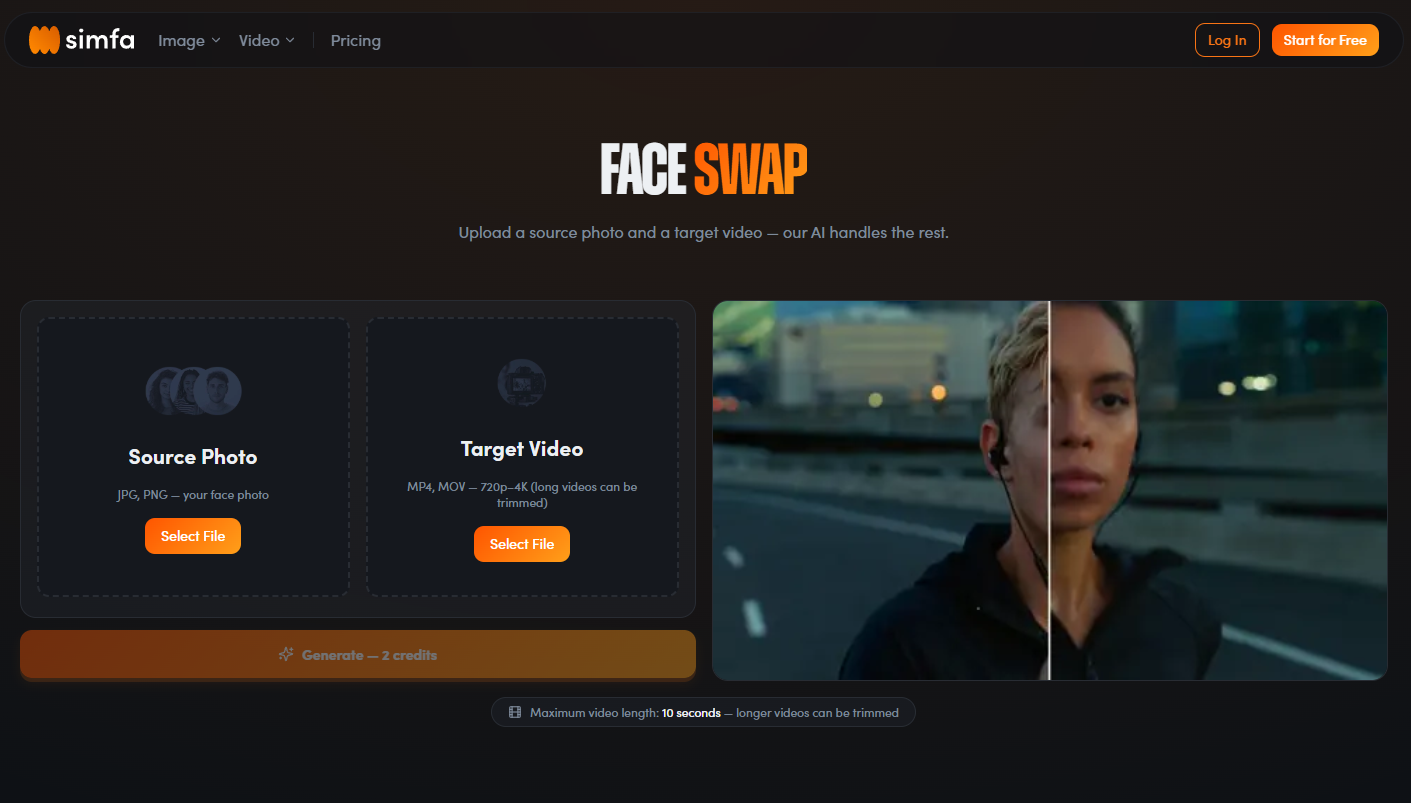

3D game art studio teams running proper production sprints tie output to playable build milestones. You should be able to open a build every few weeks and see what the money bought. If the first time you see integrated work is six months in, that’s not a scheduling quirk. It’s a process problem that started at kickoff.

QA and Optimization

QA is not a final gate. Performance profiling, draw call analysis, memory budget reviews, and platform certification prep all belong in this phase, and they all go wrong when treated as an end-of-project activity. A 3D game development studio that runs QA properly has automated regression tests running alongside manual playtesting throughout production, so problems are found when they’re cheap to fix, and not after they’ve been built on top of.

Studios that staff QA late ship games with day-one patch lists longer than the feature list. That’s not bad luck. It’s predictable.

Launch and Post-Launch

Shipping is not the end of the engagement. Day-one patches, live monitoring, performance telemetry, and ongoing content pipelines require the same team context that built the game. Studios offering end-to-end game development services can continue that work without incurring the cost of knowledge transfer to a separate support team. Studios that treat launch as handoff often leave clients managing live issues with people who weren’t in the room when the decisions were made.

How Major Studios in This Space Compare

There is no shortage of studios in the 3D game development outsourcing market. The difference between them is not always obvious from a website. A few worth knowing:

Keywords Studios

Keywords Studios approaches 3D game development as a distributed service network — different phases of a project can be routed to different acquired studios within their group, each operating with its own standards and workflows. 

That structure works when individual services like QA or localization are needed in isolation, but for a full concept-to-launch pipeline it introduces handoff risk, since the team building your assets in one studio isn’t the same team running QA or integration in another.

Pros:

  • Broad service coverage under a single commercial relationship
  • Strong QA and localization capabilities

Cons:

  • Work gets distributed across studios with uneven quality standards
  • Art direction can lack cohesion on custom or IP-heavy projects
  • Client relationships can feel transactional rather than collaborative

Starloop Studios

Starloop Studios participates in the full development lifecycle primarily through co-development and support engagements rather than greenfield concept-to-launch ownership. Its Unreal Engine 5 competency is genuine, and it aligns well with Western clients culturally.  However, its team size means that large concurrent production demands — the kind that come with a full-cycle 3D title — are a real constraint on what it can absorb without quality drop-off.

Pros:

  • Good cultural alignment with European and North American clients
  • Solid Unreal Engine 5 competency

Cons:

  • Team size is a real constraint on large concurrent projects
  • Most of the portfolio is support and co-development work, not full-cycle delivery

Moonmana

Moonmana’s concept-to-launch involvement tends to be strongest in the art production phases — particularly stylized 2D and 3D work — rather than across the full engineering and integration pipeline that a complete 3D game development cycle requires. 

Studios that need art outsourcing within a production they’re otherwise running internally will get clean output; studios expecting a full-cycle partner will find that the engineering depth and realistic production pipeline experience aren’t consistently there.

Pros:

  • Strong output on stylized art styles
  • Responsive communication

Cons:

  • Limited depth in realistic or high-fidelity production pipelines
  • Less established for full-cycle projects that require integrated engineering alongside art

Why Kevuru Games Is a Leading 3D Game Development Studio

Many studios claim full-cycle capability. Fewer can actually point to a portfolio where that’s what they did. Kevuru Games is one that can.

  • No gaps in the pipeline: Pre-production through post-launch runs in-house. Not through subcontractors. The team that owns the art direction at the brief also owns it at the final build. That continuity is harder to find than it should be.
  • 3D work that holds up inside an engine: As a dedicated 3D game art studio, Kevuru’s team builds assets for performance, not just for screenshots. Poly budgets, shader load, and animation pipeline requirements are factored in from the start.
  • Game developers who’ve done this across platforms: The portfolio covers mobile, PC, console, and VR. Platform-specific constraints are where less experienced game developers lose weeks. Kevuru’s team has already paid that tuition.
  • Delivery structure you can track: Milestone-based delivery and regular build reviews are standard practice. You know what’s been built and when.
  • Scales without losing quality: A focused six-month team or a multi-year production crew, Kevuru can staff either without the drop-off in output quality that smaller boutique studios run into when demand spikes.

Conclusion

Every phase of 3D game development has a specific way it goes wrong, and most of those failures are visible in how a studio runs pre-production, structures production sprints, and staffs QA. None of it is mysterious after the fact.

Kevuru Games has the process, the team depth, and the published portfolio to back up what it says it can do. That’s a shorter list than the market suggests.

If you’re moving a project from concept to launch and want a studio that won’t make you solve their internal problems for them, consider Kevuru Games before you finalize your shortlist.