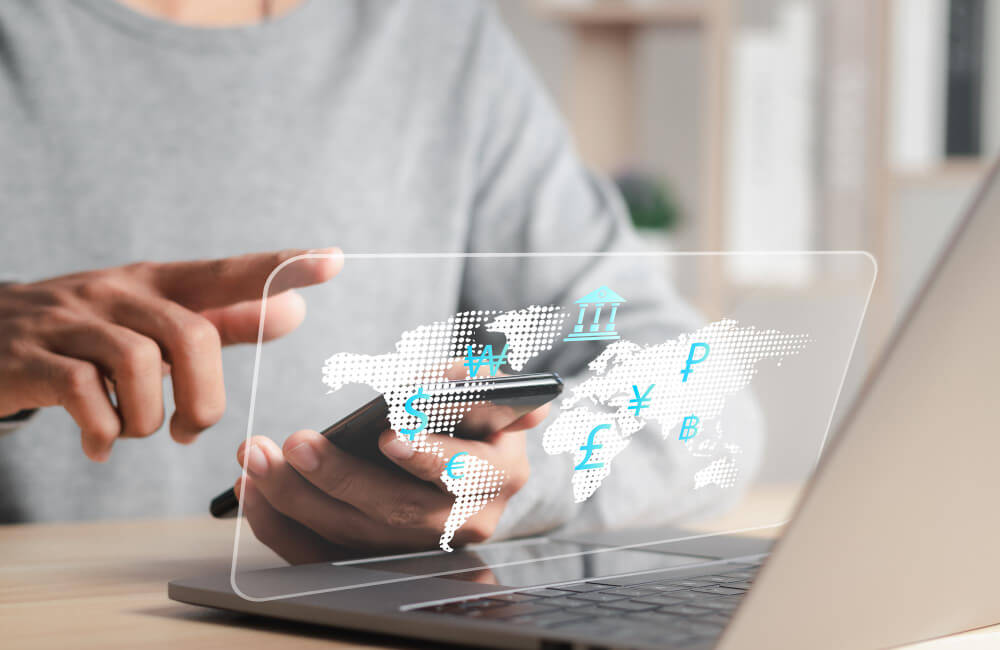
A game can ship to 190 countries and still fail to sell in most of them. The download reaches a player in Jakarta or Lagos the same second it reaches one in Berlin. The checkout does not. When the only way to pay is a card, the sale depends on the player holding one, and across the markets adding the most new players, many do not.
The Gap Between a Download and a Sale
The player numbers are large. Newzoo put the global player base at 3.6 billion in 2025, with 3 billion of them on mobile and mobile the access point for 83% of all gamers. Total revenue reached $188.8 billion. Half of consumer spending on games came from China and the United States, which means the other half is spread across markets where a publisher’s default checkout often does not fit how people pay. Mobile carries most of this growth, and mobile-first regions are exactly the places where card ownership is thin. The players exist, and their numbers are climbing fastest outside the markets a card-based checkout was designed for. The payment path to them is the missing piece.
The Limits of a Card-Only Checkout
A card-only checkout assumes every buyer holds a card a game store accepts. In much of Asia-Pacific, Latin America, the Middle East, and Africa that assumption fails. Card penetration is low, cross-border card charges get declined at higher rates, and a player without an accepted card cannot complete a purchase no matter how much they want the game. Asia-Pacific alone holds 1.9 billion of the world’s players. A publisher that only takes cards competes for the fraction of that base with an accepted card and cedes the rest.
Building the Payment Layer Behind a Global Catalog
Reaching those players is a payments problem before it is a marketing problem. A publisher can localize language and pricing and still lose the sale at the final step if the checkout offers nothing the player can use. Specialized igaming payment solutions connect a game to the wallets, bank rails, and cash methods a region actually uses so the purchase completes in the way the player expects. The catalog is global. The payment layer has to match each market it reaches.
Wallet-First Markets
In several of the largest markets, a card was never the norm. China runs on mobile wallets, where Alipay and WeChat Pay handle a large share of game spending. Southeast Asia leans on GCash, GrabPay, and Touch ‘n Go, built for players who never held a credit card. A publisher that supports these methods meets players on the rails they already use every day, and the checkout stops being the barrier it usually is.
Methods by Region
No single method covers the map. Brazil runs on Pix, an instant bank-transfer system that moves money between accounts in seconds and has become a default way many Brazilians pay online. India built UPI, a real-time account-to-account network that handles an enormous volume of small payments. Across East Africa, M-Pesa and similar mobile money services let players pay from a phone balance rather than a bank account. Parts of Latin America still lean on cash vouchers, where a player reserves a purchase online and pays with cash at a store counter. A publisher that treats payment as one global checkout misses all of this. The methods that convert are the ones a player already uses for groceries and phone credit.
Price and Currency at Checkout
Method is one variable. Price and currency are two more. A game priced in dollars and charged with a foreign-exchange markup tells a player in Sao Paulo or Manila that the store was not built for them. Showing the local currency, setting a price that fits local buying power, and charging through a familiar method together lower the friction that ends a purchase. Regional pricing sets a number that fits what local players can spend, which a foreign-currency sticker rarely does. The method brings the player to the checkout, and price and currency decide if they finish.
Carrier Billing and the Unbanked Player
Carrier billing solves a narrower problem well. The player authorizes a purchase and the charge appears on the phone bill, with no bank account or card required. That fits microtransactions, where a $2 or $5 purchase is common and card fees would eat the margin. It also reaches the unbanked and underbanked, who make up a large part of the mobile-first regions driving new player growth. The World Bank tracks the gap under financial inclusion, counting 1.3 billion adults still outside the formal banking system. For a free-to-play title funded by small purchases, carrier billing turns players who could never pay into players who can. The reach it adds is largest in regions where prepaid phone plans are common and bank accounts are not, which describes much of Southeast Asia and Africa. A publisher that skips carrier billing in those markets leaves paying customers with no way to hand over their money.
Local Methods and the Conversion Curve
Adding local methods changes conversion as well as access. When a checkout shows a method a player trusts, in their own currency, more started purchases finish. Bank-transfer systems, cash vouchers paid at a corner store, and account-to-account rails each remove a reason a player abandons the cart. The effect compounds in markets where cards are rare, because the local method is the difference between a completed sale and no sale at all. A player who reaches an unfamiliar checkout and finds nothing they recognize does not hunt for a workaround. They close the tab, and the publisher never learns the sale was there to win.
The Fastest-Growing Markets
The growth has moved away from the saturated markets. Asia-Pacific still leads revenue at $87.6 billion, but its pace is slowing as China and Japan mature. Latin America grew about 6% and the Middle East and Africa about 7% in 2025, faster than the established regions. Mobile money accounts across Africa expanded at a double-digit annual rate, and global mobile money transaction value passed $1.40 trillion in early 2024. The players joining now are in exactly the markets where card-only checkout fails, which puts payment coverage at the center of any real reach strategy.
Reach and the Ability to Pay
Reach is often treated as a marketing metric, counted in downloads and installs. Reach only turns into revenue through the players who can actually pay. A publisher that offers cards alone caps that share at whoever holds an accepted card, which in the fastest-growing regions is a minority. Matching the payment options to each market removes the cap. A globally available game only becomes a globally paying one when every player has a way to buy it.

