Games today are more than entertainment. For many people, they’re culture imcluding communities, stories, shared references, and a huge content ecosystem. That’s why more and more live events are built around games: tournaments, shows, ceremonies, and formats that mix physical stagecraft with real-time visuals.
From 2023 to 2024, WePlay Studios partnered on several Genius Invokation TCG tournaments, including Astra Carnival: The Prince Cup Invitational and The Prince Cup: ATLANTIC. The events generated thousands of hours of watch time, and The Prince Cup Invitational received a 2023 NYX Video Awards win in the Virtual Events category for its technical execution.
Today, we spoke with Ihor Chupryna, WePlay Studios’ stage director and stage designer, about what it takes to build a game-based event that feels true to the original world.
Can you share what Astra Carnival Series was, and what your role on the project was?
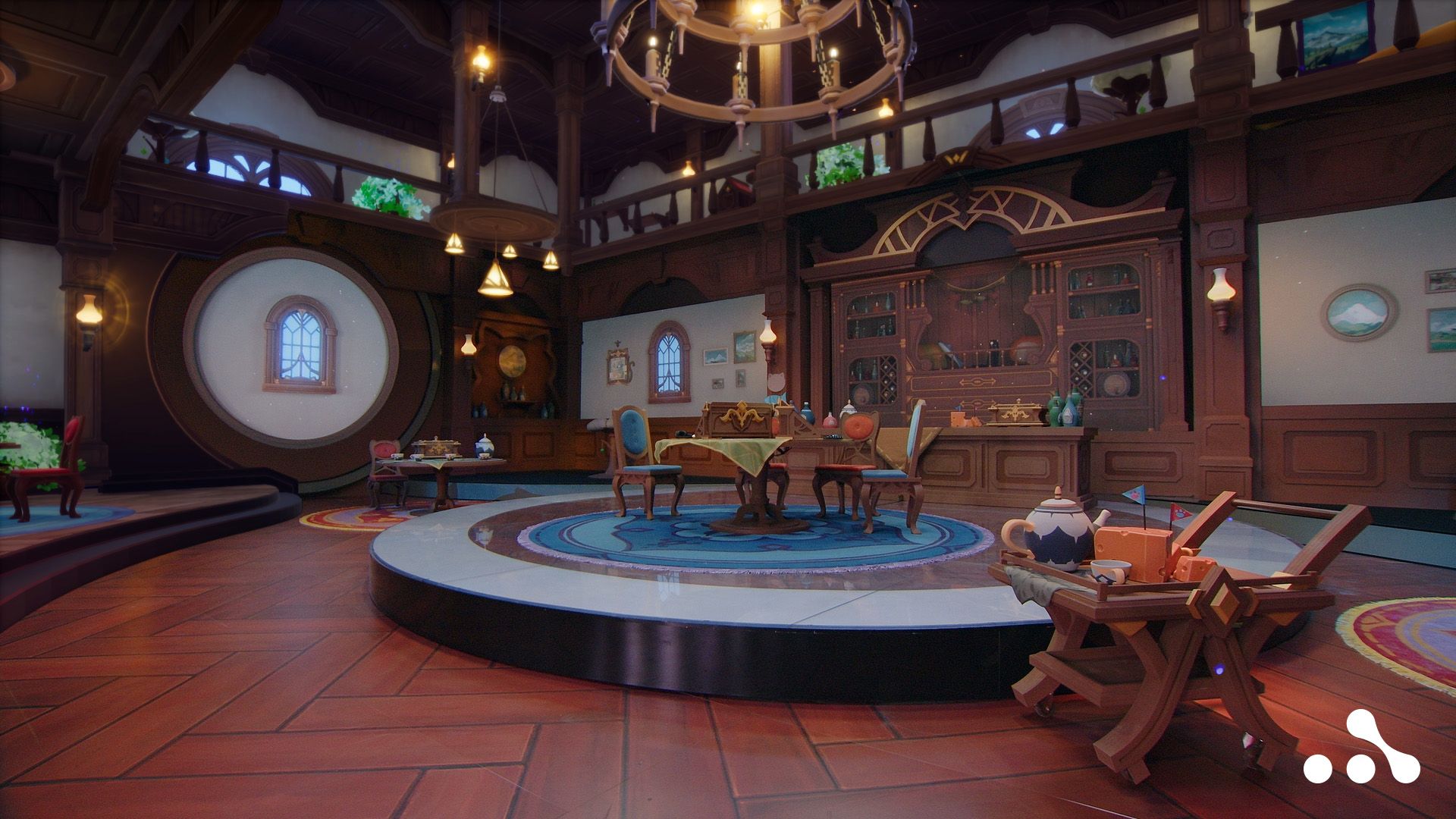
Astra Carnival Series was a set of Genius Invokation TCG tournaments based on Genshin Impact. My job was to shape the event’s visual identity, the space, the style, the stage “world”, and then turn it into something a production team could actually build and run live.
Genshin has millions of fans, so we were working inside a world the audience already knows very well. You can’t fake it with generic fantasy visuals. People will feel it right away. At the same time, it was still a live tournament. It needed functional stage logic: where players sit, how the host moves, what happens between matches, and how the camera reads the space.
That means thinking beyond the render, like camera logic, lighting, content flow, mechanics, and, when needed, virtual layers.
What was the main challenge when designing an event based on a game world?
The biggest challenge is that you can’t just “copy the game,” even though it sounds like the obvious path. Game locations are built for different goals. What works in gameplay doesn’t always work as a live stage.
Live production needs clean focus, readable framing, and a functional space. It has to support the match, the host, breaks, transitions, and broadcast rhythm.
And fans read the world through details. If you don’t understand the lore and the visual rules of the game, it’s easy to mix elements that feel wrong next to each other, even if each element looks authentic on its own.
So how did you make the world feel authentic for Genshin fans?
We rebuilt elements from the Mondstadt tavern’s interior, famous in-game locations, in CG, from the overall furniture style down to small details like the dates on wall calendars and the time on the clock. Those details help the brain accept the space as real.
We also stayed inside Genshin’s anime style. The team recreated characters from scratch and paid attention to small things like accessories and eye color. And we used a color palette that felt like the game, but didn’t turn into visual noise on broadcast.
If you had to name one highlight element of the event, what would it be?
It’s hard to pick one, because a good event works when elements support each other. The goal is not one flashy trick, it’s one coherent world.
To achieve this goal, we added small “magic” touches that made the space feel alive, like cats walking on the furniture, sparks in the air. We used AR tools for that. We also placed in-game characters sitting inside the same tavern environment where the tournament was happening. It helped blur the line between the physical set and the game space, but the main focus always stayed on the match.
We added widgets, banners, and screens that showed players’ in-game performance and recent actions.
These things can look small on their own, but without them the broadcast becomes less clear and less informative. And once the viewer loses clarity, the whole experience suffers, even if the stage looks great.
If you had to name the main lesson of Astra Carnival Series for stage designers, what would it be?
Ihor: Don’t copy the picture, but translate the world into function. The best game-related events don’t feel like a themed background. They feel like a real environment where the event naturally belongs, and where everything works together: space, camera, content, and mood.

