
We’ve already taken a deep dive into different types of game design in our previous articles. At this point, it’s time to take a step further and explore the one that pushed the global puzzle video game market to hit $11.2 billion in 2025 — puzzle game design.
Puzzle games like Portal and Baba Is You did not receive a 10-over-10 rating and overwhelmingly positive reviews on Steam for nothing. They reached such milestones because the game designers built them around structured problem-solving systems where players interpret rules, test ideas, and reach solutions through logic rather than reaction speed. In other words, these games stimulate the brain. Unlike action games, success in puzzle games depends on how clearly the game communicates its systems.
To do this, puzzle game design must be observed. In modern practice, strong experiences come from mechanics that are simple to learn but complex in interaction. This results in puzzle games that demonstrate how a small set of rules can lead to that “A-ha!” moment that makes players feel brilliant for finding the solution that clicks into place.
With these foundations in mind, this detailed guide examines puzzle game design. It focuses on mechanics, difficulty balance, level structure, testing, and practical design insights.
Understanding Puzzle Game Mechanics
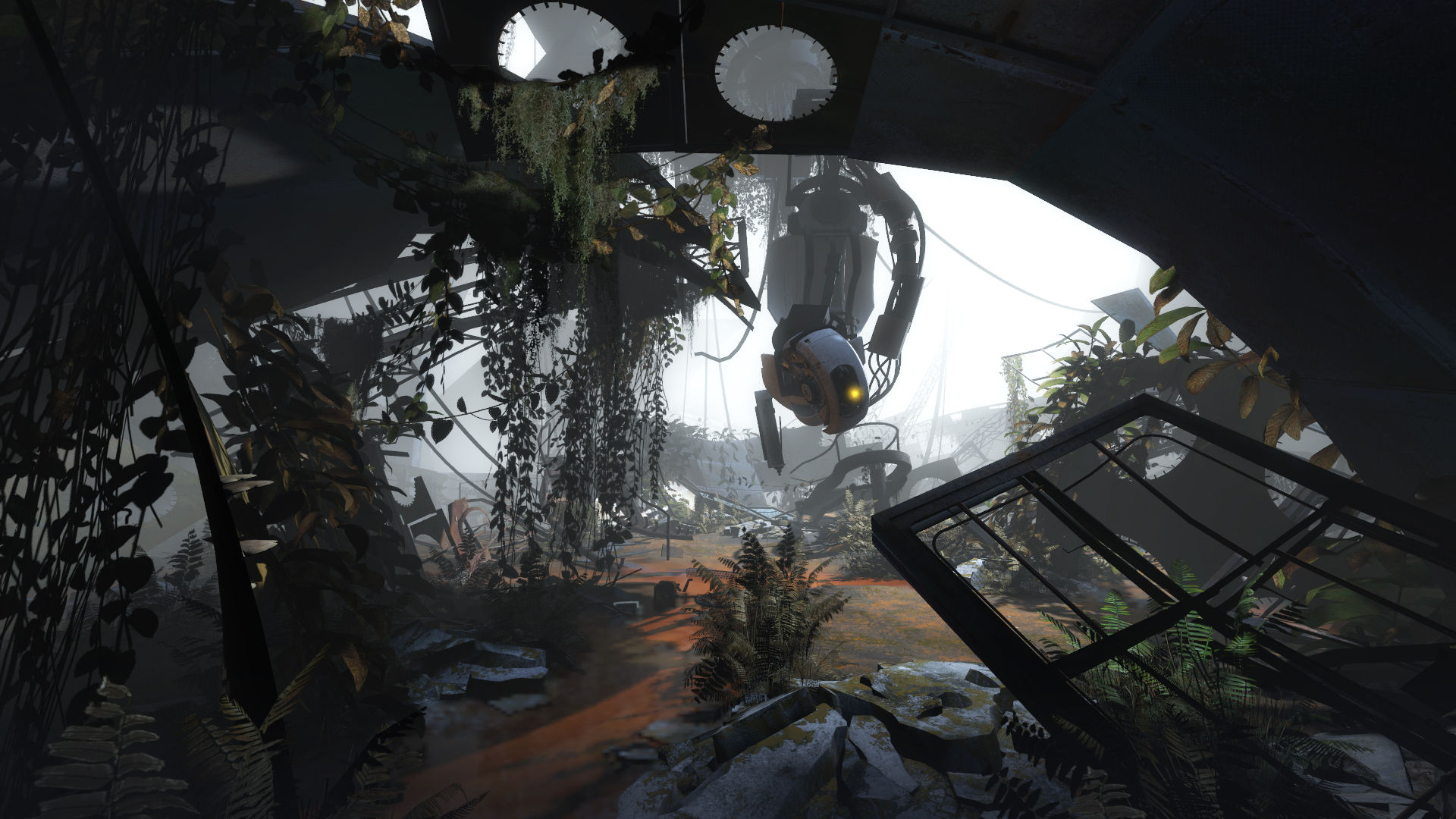
The mechanics of a puzzle game define how players interact with the systems and constraints within it. These mechanics can involve spatial reasoning, logic manipulation, physics interactions, or environmental control. It really depends on the game’s core design.
Generally, great versions of these games feature profound, intuitive mechanics. That means a mechanic can be simple on the surface but produces complex outcomes when combined with other systems. This also entails choosing secondary mechanics that complement the primary one by either restricting access to it or by uncovering a new aspect of how it works.
For example, Portal is built around a single idea: placing portals. Then, it integrated a secondary mechanic of shooting laser beams, adding more ways for players to use the main mechanic. And this allowed the game to expand through layered problem-solving, momentum, positioning, and spatial awareness. As for game designers, these mechanics create complex, multi-step dependencies without adding confusing controls.
When designing puzzle games, mechanics must be introduced in isolation before being combined. This ensures players build correct mental models of how systems behave.
Key Elements of Puzzle Game Design
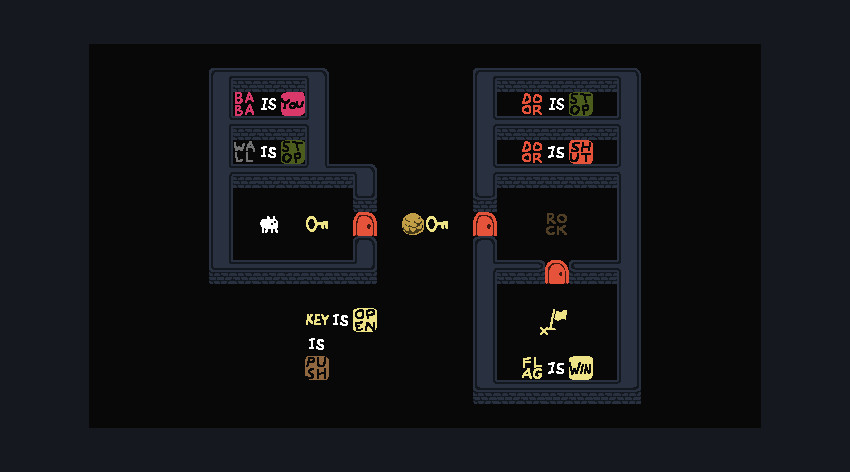
Four key elements make up effective puzzle systems. These are clarity, feedback, consistency, and player agency. In more detail, clarity ensures players understand what a system represents and how it behaves. Feedback is how the game responds to player actions, thereby confirming whether actions are correct. Consistency enables rules to behave predictably across all situations. And the agency allows players to explore multiple valid solutions or to independently test hypotheses to discover the right one within the rules.
A strong example is Baba Is You, where rules themselves can be manipulated as objects. Because the rules are physical blocks on the screen, the clarity is absolute. When you move a block, the game state updates instantly, providing immediate feedback. And despite how mind-bending it gets, it never breaks its own internal logic, which maintains consistency. Ultimately, this gives players the sense of agency to break the level wide open.
In practice, these elements are used as evaluation tools. For instance, designers can adjust visual communication through lighting and composition, or rule clarity, like adding audio effects when a mechanic interacts correctly.
Balancing Difficulty in Puzzle Games
Not everyone is a puzzle expert. But at the same time, not everyone wants puzzle games that are so easy to solve. Put simply, difficulty balancing in these types of games is not about making puzzles harder. It’s about controlling how new mechanics are introduced and combined over time. Proper balancing ensures players are challenged without being overwhelmed. In fact, research suggests that a game difficulty that strikes a balance between challenge and skill allows players to enjoy playing more, as it gives them a sense of competence.
This is evident in Jonathan Blow’s The Witness. Through environmental segmentation, each area introduces a new rule set before combining it with previously learned mechanics. Similarly, he opted to make the game open-world, allowing players to avoid frustration by moving on to easier puzzles. These allow players to gradually build understanding rather than face sudden complexity spikes.
Poor balancing often results in players failing due to misunderstanding rather than reasoning errors. And that alone can drag a game into failure. Hence, in real development, difficulty is managed through pacing curves, sequencing of mechanics, and controlled introduction of new systems. Designers adjust information delivery, such as visual cues or environmental framing, instead of changing puzzle logic.
Designing Engaging Puzzle Levels
Level design turns individual mechanics into structured learning experiences. A good puzzle level guides players toward discovery without explicit instructions. It only uses layout, positioning, and environmental logic.
The 2014 game Monument Valley by Ustwo Games embodied this specific approach. It used perspective manipulation to naturally guide players toward solutions through visual intuition rather than text.
When it comes to production, designers create teaching levels that introduce mechanics safely and clearly before applying pressure through more complex scenarios. In short, players must learn through interaction rather than instruction.
Poor level design can mask mechanics, even when they are well-built, leading to confusion. Effective puzzle game design emphasizes readability. Game designers ensure players can focus more on the logic by avoiding cluttered levels with complex geometry or misleading pathways.
Testing and Improving Your Puzzle Game
In every type of game design, especially puzzle game design, testing is a non-negotiable stage of design or development. Game designers are susceptible to thinking that the solutions to the puzzle are easy to find. It’s because they created them. And that poses a big problem — accurately judging player difficulty.
During the development of Portal 2, extensive iterative testing was used. As Valve mentioned, creating challenges is just the beginning. Making puzzles fun and solvable is necessary in puzzle game design, which makes playtesting crucial.
The Portal 2 game developer even said, “Even the best ideas can fall flat once they’re put up against real players, so until a wide variety of testers have played through a map, it can’t be considered ready to ship.”
This further supports the idea that changes are not only directed at difficulty but also at improving how clearly players can interpret clues. In practice, testing focuses on identifying breakdown points in understanding. Designers observe where players hesitate, misinterpret mechanics, or attempt unintended solutions.
Adjustments are usually made to communication rather than logic. From repositioning objects to refining environmental cues, the process ensures that the puzzle remains intact without being too challenging.
Tips for Creating Challenging Puzzles

Many creators assume that challenging puzzles bank on raw complexity. But the truth is that it’s more about perception control. Top-tier puzzle game design recognizes the differences between a complicated puzzle game with lots of moving parts and a complex one with only three moving parts that trick the mind. Therefore, the goal is to guide player reasoning through structured constraints and layered mechanisms.
In the game Baba Is You, players are forced to reinterpret rules dynamically. On the other hand, Portal 2 uses environmental framing and controlled information flow to guide players without direct instructions.
With that in mind, here are a few techniques to come up with truly challenging puzzle games:
- Combining mechanics in unexpected ways – Design simple systems that create new interactions. Imagine a puzzle where gravity can be reverse while also moving platforms forces players to rethink timing and positioning.
- Limiting available tools – Increase reasoning depth by narrowing possible actions. For example, giving players only one object in a level can turn a simple task into a deep logic problem.
- Introducing controlled misleading patterns without being unfair – A game should guide players toward plausible but incorrect interpretations. Like a game that places visual cues that suggests a solution before revealing a hidden rule twist.
These practical insights point out one important puzzle game design core: well-designed challenges should not be arbitrary and must feel earned. So in all cases, players should always be able to understand why a solution failed.
Final Thoughts
The best puzzle games are not defined by difficulty alone. They also have to teach players to manipulate systems. And that proves that effective puzzle game design is built on clarity, structured progression, and controlled complexity.
The classic puzzle game Tetris shows this best. Its intuitive mechanics allow everyone to understand the goal within seconds. The game’s balanced difficulty curve keeps players engaged by delivering a continuous stream of unfinished problems. Above all, Tetris champions a psychologically satisfying loop that makes players feel it’s their fault why the game ends, urging them to play another. All of these contributed to why the title is still one of the best-selling video games of all time.
When mechanics, level design, difficulty balancing, and testing work together, puzzle games become structured learning experiences that reward insight and reasoning.
For more guides on different types of game design, be sure to visit our articles on board game design, retro game design, and fighting game design.

