Home Blog Page 13

How to Become a Narrative Designer: Career Path & Salary

0

Game designing offers various job opportunities for professionals and beginners alike. The choices range from game programmers to animators to producers and more. It all boils down to personal preferences and skills. If one has interests in storytelling and video games, becoming a narrative designer might be the most suitable decision. It is one of the most exciting paths, emerging as a significant and growing aspect within the space.

This article provides all the necessary information about the role of a narrative designer, how to become one, possible career paths, and the estimated salary.

Familiarizing the Role of a Narrative Designer

To get it out of the way, a narrative designer is different from a game writer. However, they work hand-in-hand.

A narrative designer shapes the story world that drives a game. In detail, the role focuses on planning how the story connects with the game’s mechanics and player actions. Additionally, a narrative designer works closely with artists, developers, and writers to make sure the story unfolds through gameplay, making the world feel alive. Moreover, the job includes creating an engaging experience so that quests, scenes, and player choices become meaningful and emotionally rewarding.

Tips for Becoming a Narrative Designer

Here is a step-by-step strategy to kickstart a career in narrative design:

  1. Learn storytelling and game design. 

Study at a university, take specialized training, or follow an online tutorial.

2. Develop skills.

Create your own games, master tools, and explore innovations to stay ahead of trends.

3. Build a portfolio. 

Showcases the best works that highlight storytelling through gameplay.

4. Engage with communities. 

Join groups and events to build connections and gain experience.

5. Keep improving. 

Participate in game jams, collaborate on projects, and practice frequently.

Possible Career Paths

For beginners who would like to become narrative designers, exploring different sectors is a must to see all the options. One can choose to be a freelancer or apply to independent studios and large-scale video game companies.

In most cases, a newcomer begins as a writer or junior narrative designer. With experience and growth, they can start landing more lead roles, like a head narrative designer or a creative director. Beyond this, there are several more possibilities for career advancement. Specifically, one can eventually become a specialized screenwriter, Screenwriter-producer, video producer, or project manager.

Salary Expectations

The earnings of a narrative designer are generally high. However, the exact figure still differs depending on factors such as experience, region, role, and studio size.

On average, a narrative designer in the US earns between $71,000 for junior roles and up to $120,000 for senior positions annually. To break it down, earnings at the entry level typically range from $65,000 to $75,000 per year. Mid-level professionals get a salary of around $80,000 to $92,000 per year. Meanwhile, at the senior level, one can make up to $120,000.

Key Takeaway

A career as a narrative designer can be rewarding in terms of salary and offered experience, but it is not easy to achieve. It takes creativity, exceptional skills, patience, and tons of practice.

Note: This article incorporates information from reliable sources, such as CG Spectrum and ESMA.
Top 20 Skyrim Mods That Redefined the Game

0

Game modding communities have been around for quite a while now. Accordingly, one video game that has made this practice a regular experience is The Elder Scrolls V: Skyrim. For the unfamiliar, it has been one of the most beloved open-world RPGs for over a decade now, since its 2011 release. Over the years, many creators have made mods for the game that introduced changes that completely transformed it.

This article explains gaming mods, Skyrim mods, and provides a list of the top Skyrim mods.

Understanding a Game Mod and a Skyrim Mod

A game mod is an alteration that includes add-ons or changes to a game’s existing content. This process commonly uses original files or official tools. It should not be confused with ROM Hacks and Fan Games, as they differ in how much they modify the original material.

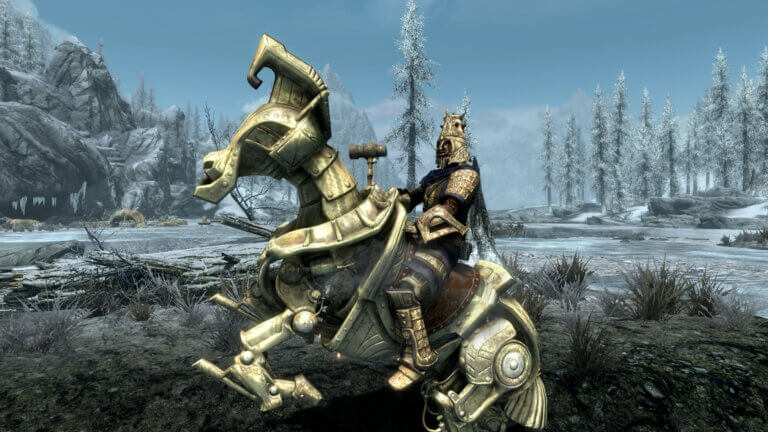
Meanwhile, a Skyrim mod refers to changes to Bethesda’s Elder Scrolls V: Skyrim created by users or official developers. In detail, these mods usually include new armors, locations, spells, quests, weapons, and more. Additionally, players can access them through the Best Game Modding Communities.

20 Best Skyrim Mods That Redefined the Game

  • Alternate Start – Live Another Life

Creator: Arthmoor

Add-ons/Changes: Alternate opening sequence

  • Apocalypse – Magic of Skyrim

Creator: Enai Siaion

Add-ons/Changes: Extra 155 spells, fresh visuals, new animations

  • A Quality World Map and Solstheim Map

Creator: User_3142012

Add-ons/Changes: Customizable maps

  • Beyond Skyrim – Bruma

Creator: The Beyond Skyrim – Cyrodiil Development Team

Add-ons/Changes: Expanded exploration features

  • Convenient Horses

Creator: Alek

Add-ons/Changes: Customizable horses with improved abilities

  • Cutting Room Floor

Creator: Arthmoor

Add-ons/Changes: Restored content from the final build

  • Deadly Dragons

Creators: 3JIou and Redshift

Add-ons/Changes: Revamped dragon attributes and powers

  • Falskaar

Creator: AlexanderJVelicky

Add-ons/Changes: 20 hours of gameplay, new area and dungeons to explore, more voiced NPCs, quests

  • Immersive Armors

Creator: Hothtrooper44

Add-ons/Changes: Revamped armor system

  • ImmersiveWeapons

Creators: Eckss, Hothtrooper44, and Ironman5000

Add-ons/Changes: Overhauled weapon system

  • JK’s Skyrim

Creators: Jkrojmal and Teabag86

Add-ons/Changes: Enhanced cities

  • Lucien – Immersive Fully Voiced Male Follower

Creator: Joseph Russell

Add-ons/Changes: Premade companion with several perks

  • Ordinator – Perks of Skyrim

Creator: Enai Siaion

Add-ons/Changes: Revamped perk system

  • RaceMenu

Creator: Expired

Add-ons/Changes: Customizable characters

  • Relationship Dialogue Overhaul

Creator: cloudedtruth

Add-ons/Changes: Additional 5,000 lines of NPC dialogue

  • Skyrim 202X

Creator: Pfuscher

Add-ons/Changes: High-resolution textures for several objects

  • Skyrim Immersive Creatures

Creators: lifestorock and jackstarr

Add-ons/Changes: New enemies

  • SkyUI

Creator: SkyUI Team

Add-ons/Changes: Fresh interface, in-game menu browsing features

  • The Dance of Death – A Killmove Mod

Creator: DaedalusAI

Add-ons/Changes: Access to more kill moves

  • Unofficial Skyrim Special Edition Patch

Creator: The Unofficial Patch Project Team

Add-ons/Changes: Major bug fixes

Final Thoughts

Deciding which among these twenty Skyrim mods to download can be overwhelming, as choosing the best is subjective. While all of these mods delivered enhancements, expansions, and fixes to the game, players still have different preferences. But worry not, one can always download and try each of them to find the best fit. At the end of the day, it is about the added experiences they offer, proving that Skyrim mods contribute to the game’s enduring legacy.

Note: To ensure depth and reliability, this article uses information from trusted sources, such as Game Spot and Lenovo.

EA FC 26 Best CB Wonderkids & Youth Players for Career Mode

0

Winning matches is not just a result of compelling offense but also a product of top-notch defense. Team managers must keep in mind that making goals to score and great defense work hand in hand. That is where center-backs, also known as CBs, come into the picture. In the Career Mode of EA FC 26, building a football team with reliable CBs who can read the game, win duels, and grow into elite defenders will make a club unstoppable in the long run. And team managers can choose from rising stars all the way up to top-tier superstar players. However, since big stars are more expensive, team managers who are on a budget can opt to sign promising CB wonderkids.

To lighten the task of choosing among young talents, this article delivers a streamlined list of the top CB wonderkids in EA’s football simulation video game.

Five Best CB Wonderkids in EA FC 26

Here are a few CB wonderkids in Career Mode who can anchor your backline for a decade with the appropriate development:

Dean Huijsen (Overall Rating: 82 | Potential Rating: 89)

Dean Huijsen is one of the most exciting CB wonderkids in the game. He combines strength, technique, and composure beyond his years. These qualities for his age indicate that his current overall rating and potential can surely soar higher.

The Dutch center-back’s specialties include higher jumps and physical defense in aerial duels. Huijsen also has high success in blocking. He even manages long ball passes faster and more accurately. Plus, Dean performs well in slide tackles. As for the other aspects, he has 71 for pace, 55 for shooting, 73 for passing, 74 for dribbling, 82 for defending, and 76 for physicality. Huijsen is an all-around defender who is perfect for teams in need of dominance in the air and on set pieces.

  • Age: 20
  • Team: Real Madrid
  • League: La Liga EA Sports
  • Nation: Spain
  • Rank: 397
  • Height: 197cm / 6’6″
  • Weight: 87kg / 192lb
  • Preferred Foot: Right
  • Wage: €125K
  • Value: €56M

Pau Cubarsí Paredes (Overall Rating: 82 | Potential Rating: 88)

Pau Cubarsí Paredes already shines as one of Spain’s brightest defensive talents. Being one of the CB wonderkids, he boasts maturity on the ball that few players his age can match. His rating and potential also show that he possesses intelligence in the game.

Paredes’s standout quality is displayed in his lob and lofted-through passes that are immensely accurate and quick. When it comes to his overall attributes as a player, he has 70 for pace, 42 for shooting, 66 for passing, 77 for dribbling, 84 for defending, and 76 for physicality. Pau may not be the tallest defender, but teams can utilize him for his great timing in tackles and pass interceptions.

  • Age: 18
  • Team: FC Barcelona
  • League: La Liga EA Sports
  • Nation: Spain
  • Rank: 429
  • Height: 182cm / 6’0″
  • Weight: 75kg / 165lb
  • Preferred Foot: Right
  • Wage: €64K
  • Value: €40.5M

Ousmane Diomande (Overall Rating: 80 | Potential Rating: 87)

Ousmane Diomande is one of the fast-rising defenders of Europe. What he brings to the table is a perfect mix of physical power and technical skill. CB wonderkids like him, who have such a rating and potential, suggest he is a future powerhouse.

His key attributes are aerial and blocking prowess, stronger physical tackles, better transition speed, long ball pass accuracy, and precise headers. With regard to other areas of his game, he has 80 for pace, 26 for shooting, 51 for passing, 70 for dribbling, 79 for defending, and 86 for physicality. These promising skills make Diomande a complete modern defender for any team.

  • Age: 21
  • Team: Sporting CP
  • League: Liga Portugal
  • Nation: Côte d’Ivoire
  • Rank: 738
  • Height: 190cm / 6’3″
  • Weight: 93kg / 205lb
  • Preferred Foot: Right
  • Wage: €17K
  • Value: €40M

Leny Yoro (Overall Rating: 78 | Potential Rating: 86)

Leny Yoro has been one of the most talked-about CB wonderkids from Europe in EA FC 26. The French footballer combines elite athleticism with exceptional defensive awareness. With his impressive overall rating and potential, he is clearly one of the top defensive prospects in the game.

At the same time, Leny reads the game incredibly well and rarely gets caught out of his position. On top of that, he is confident on the ball, which elevates his composure. In terms of the other things Yoro can offer, he has 69 for pace, 41 for shooting, 60 for passing, 64 for dribbling, 79 for defending, and 73 for physicality. Team managers who want a young talent who can go against fast strikers and physical forwards would love to have Leny on their squads.

  • Age: 19
  • Team: Manchester United
  • League: Premier League
  • Nation: France
  • Rank: 1257
  • Height: 190cm / 6’3″
  • Weight: 75kg / 165lb
  • Preferred Foot: Right
  • Wage: €49K
  • Value: €28.5M

Abdukodir Khusanov (Overall Rating: 77 | Potential Rating: 85)

Abdukodir Khusanov might not be as popular as other CB wonderkids, but he is a hidden gem of EA FC 26. He is a smart and dependable player who offers great value for his price, considering his current overall and potential rating.

As for his best traits, Khusanov is a faster sprint jockey and a bruiser when it comes to tackles. Talking about other characteristics of Abdukodir, he has 85 for pace, 39 for shooting, 59 for passing, 64 for dribbling, 77 for defending, and 76 for physicality. He is an ideal pick for teams that value consistency over flashy moves.

  • Age: 21
  • Team: Manchester City
  • League: Premier League
  • Nation: Uzbekistan
  • Rank: 1511
  • Height: 186cm / 6’1″
  • Weight: 84kg / 185lb
  • Preferred Foot: Right
  • Wage: €65K
  • Value: €22M

Final Kick Before the Full-time Whistle

In forming a club, including solid center-backs as part of the foundation is a legit team manager move. Accordingly, the CB wonderkids on the list are perfect whether for rebuilding a club or chasing titles, as they offer a good balance of youth and potential. Plus, after a few seasons with suitable training and development, Huijsen, Paredes, Diomande, Yoro, and Khusanov will transform into players with attributes that can form a backline capable of stopping any attack in the game.

Note: This article incorporates the latest available EA FC 26 and Sofifa data and information at the time of writing. Keep in mind that player rating and potential in the game can change over time due to updates and real-world performance. This list serves more as a guide rather than a definitive ranking of CB wonderkids.

Why Gamers Still Love LAN Parties in 2025

0

Gaming has significantly advanced and evolved throughout the years. Players are currently in a time when almost every video game can be played online.

With that said, one might think that LAN parties are now nothing but relics of the past. However, that is not the case. The old-school gaming gathering is far from dead and still has appeal for many gamers.

This article explains what makes a LAN party and why it still thrives today. At the same time, it will provide a quick recommendation of the best games for LAN parties in 2025.

Defining a LAN Party

A LAN party is a physical gaming event where gamers meet up with their PCs or consoles to play together in person. In detail, they connect their rigs to a local area network for multiplayer sessions. During the early 2000s, it was the go-to for gaming with friends.

Why Gamers Still Love LAN Parties

Admittedly, it can be said that modern online gaming rules. Specifically, Discord servers, lag-free lobbies, and massively multiplayer online games dominate the space nowadays. Everyone can play and connect virtually — thanks to modern technology. Besides, online gaming lets people play with their peers just like at a LAN party.  

However, gamers still do LAN parties now for the real-world energy that one cannot get online. They give an immediate, tangible interaction. Every shout, laugh, and reaction happens live. Just playing with everyone in the same room creates a whole new atmosphere. This level of connection makes for unforgettable moments of gaming that develop a sense of community.

As cherries on top, gamers do it for nostalgia and convenience. It becomes a way for them to relive treasured memories, such as burning CDs for custom maps, modding cases, and the like. In line with this, LAN parties are now easier to do since most setups are portable. So, they satisfy their craving for connection without the hassle of setting up old tech.

Games to Keep LAN Parties Alive

Here is a quick rundown of titles that are accessible and compact, making them suitable for LAN parties:

  • Act of War: Direct Action
  • Battlefield Series
  • Call of Duty Series
  • Factorio
  • Ground Control II: Operation Exodus
  • Homeworld 2
  • Minecraft
  • Re-Volt
  • Supreme Commander
  • Warcraft 3 Frozen Throne

Key Takeaways

In 2025, LAN parties are not just surviving — they are adapting. As a matter of fact, this old-school setup is an essential. It is the valuable contrast every gamer needs right now. LAN parties not only offer nostalgia but also a chance to experience a genuine physical human connection that modern online play often misses.

There is nothing wrong with the modern way. But to be honest, it is about time to gather the old squad, set up the gaming rigs, and start LAN parties once again.

Note: This article incorporates information from multiple sources, such as Games Genie, Land of Geek, Plarium, Sports of the Day, and GhostCap, to ensure depth and reliability. 

A History of the PlayStation: From PS1 to PS5

0

PlayStation has been a part of the video game industry for over 30 years. In the three-decade journey, it has become one of the most recognizable brands, essentially shaping the future of gaming with powerful innovations. From its humble beginnings to today’s top-notch consoles, each generation has pushed gaming technology forward.

This article provides a streamlined history of PlayStation consoles, along with information about other versions.

Main Consoles: PS1 to PS5

PlayStation (1994)

Sony’s original PlayStation was released on December 3, 1994, and worldwide the following year. It established a new standard for consoles with CD-ROMs, making it an instant hit.

Notable Advancements: 32-bit processor, custom graphics chip, and a CD-based media.

PlayStation 2 (2000)

With its global release in 2000, the PS2 introduced DVDs that support augmented reality, bigger games, and online multiplayer modes. Until now, it remains one of the best-selling video game consoles of all time, with over 160 million units sold since its launch.

Notable Advancements: DVD playback, “Emotion Engine” CPU, faster processing, and online multiplayer feature.

PlayStation 3 (2006)

The PS3 brought the single-player experience to gamers. It also included leaps in technology, such as the XrossMediaBar, Stereoscopic 3D, and more.

Notable Advancements: Blu-ray discs, digital downloads and streaming, and an HDMI output.

PlayStation 4 (2013)

In the fourth flagship console, the PS4, Sony focused on player experience and social features. It added innovations, including a Share button on the DUALSHOCK 4 controller and live gameplay streaming, adapting to the more connected online world.

Notable Advancements: 8GB GDDR5 RAM, immense GPU power, Remote Play, and sharing communities.

PlayStation 5 (2020)

Arriving during the Pandemic in 2020, the PS5 elevated gaming in exciting ways. It champions the DualSense controller, breathtaking visuals at lightning speed, and the PS4 backwards compatibility.

Notable Advancements: 4K resolution at 120 FPS, enhanced graphics, Ray tracing, and smoother processing.

Additional PlayStation Console Variations

Along with the flagship consoles, Sony has also released several variations, including the following versions:

  • PS One (September 19, 2000)
  • PS2 Slim (November 2004)
  • PS Portable (March 24, 2005)
  • PS3 Slim (September 1, 2009)
  • PS Vita (February 22, 2012)
  • PS3 Super Slim (September 25, 2012)
  • PS4 Slim (September 15, 2016)
  • PS VR (October 13, 2016)
  • PS4 Pro (November 10, 2016)
  • PS VR2 (February 22, 2023)
  • PS5 Slim (November 10, 2023)
  • PS5 Pro (November 7, 2024)

The PlayStation Legacy

Each generation of Sony’s consoles has built on the last, redefining entertainment and creativity. With its strong foundation and massive contribution to the gaming space, the Sony console is likely to remain a key player in the market for many years to come despite growing competition and pricing challenges.

Note: To ensure accuracy and reliability, this article gathers information from GamerZone, IGN, and PlayStation.

ROM Hacks, Fan Games, and the Line Between Passion and Piracy

0

The debate over passion and piracy has been around for a while in various industries. One reason is that the world has always been full of creative people. They love to tinker, remix, and reimagine — and they are everywhere, even in the gaming industry.

Over the years, many have built new adventures out of old favorites. Specifically, fans and players often tweak a few lines of code or rebuild entire games from scratch. The gaming community has called these projects ROM hacks and fan games. While these are mostly results of passion and love for the game, their existence remains complex.

This article will help explain the concepts and navigate the fine line between passion and piracy.

Breaking Down a ROM Hack

A ROM hack refers to the finished product of ROM hacking. In detail, this pertains to the process of taking a ROM image of a video game and modifying it. Most of the time, the people who do this change a game’s elements, such as dialogues, gameplay, graphics, and levels. To cut it short, these tech-savvy gamers or fans use existing game engines to create unofficial versions that have fresh offerings and content.

Some specific examples of these are Pokémon Crystal Clear, Super Mario 64: Last Impact, and Super Junkoid.

Digging Into Fan Games

A fan game is an unauthorized video game that is heavily inspired by an existing title. It often captures the likeness of the original work when designing the characters, forming the stories, and more. A fan game is similar in spirit to a ROM hack but different in execution. Instead of altering the licensed game, players or fans build something from scratch that pays tribute to the source material.

Notable projects in this category are AM2R, Pokémon Uranium, Oddity, and more.

Walking the Line Between Passion and Piracy

Most video games, if not all, are covered by multiple layers of protection, such as copyright, patent, and trademark. That is why ROM hacks and fan games live in a gray area. Despite being a product of interest and innocent experimentation, they still break the law, igniting the debate over passion and piracy.

With that said, original developers can take action by releasing takedown notices or cease-and-desist letters. In fact, the Federal Bureau of Investigation recently took down multiple major ROM sites as part of anti-video game piracy practices. On the other hand, they may take a more lenient approach by creating licensing agreements or simply preferring tolerance.

Original developers who encounter such projects may feel both flattered and alarmed. Yes, it shows that there is a highly engaged community for their game. However, it also raises business and legal concerns. So, the challenge lies in how both fans and developers can coexist in a space that values creativity without crossing legal boundaries.

Ultimately, the gaming industry needs to find a middle ground that supports fan works while still protecting intellectual property and maintaining a strong sense of community.

Note: This article gathers insights from various sources, including Acer Corner, Medium, Odin Law & Media, and Urban Dictionary, to ensure reliability and depth. 

EA FC 26 Best GK Wonderkids & Youth Players for Career Mode

0

Building a dream team in Career Mode is not just about buying the best strikers. Remember, this game is both offense and defense. That is why getting a solid goalkeeper is just as important. While opting for the biggest names in the sport is the easiest way to do so, acquiring someone young, talented, and ready to grow with a club could be a better long-term move for higher chances of lasting success. The good news is that EA FC 26 offers plenty of amazing GK wonderkids who can turn into world-class shot-stoppers.

To help in the selection process, this article provides a streamlined list of the top GK wonderkids in the popular football simulation video game.

Five Best GK Wonderkids in EA FC 26

Here are some GK wonderkids in Career Mode that offer a mix of high potential, strong attributes, and long-term value:

Guillaume Restes (Overall Rating: 78 | Potential Rating: 86)

Guillaume Restes is the standout goalkeeping prospect in EA FC 26. At a young age, he already boasts a solid overall rating, which makes him one of the most reliable GK wonderkids to start right away. Likewise, his high potential gives him the chance to become one of the best in the game within a few seasons.

He specializes in exclusive footsaves with better performance on low shots. In terms of Restes’ rating in various goalkeeping aspects, he has 78 for diving, 74 for handling, 80 for kicking, 77 for positioning, and 80 for reflexes. Beyond his position, he stands at 78 for pace, 74 for shooting, 80 for passing, 80 for dribbling, 40 for defending, and 77 for physicality. Restes is perfect for managers who like to build attacks from their goalkeeper.

  • Age: 20
  • Team: Toulouse FC
  • League: Ligue 1 McDonald’s
  • Nation: France
  • Rank: 1080
  • Height: 188cm / 6’2″
  • Weight: 82kg / 181lb
  • Preferred Foot: Left
  • Wage: €9K
  • Value: €26.5M

Jonas Urbig (Overall Rating: 74 | Potential Rating: 84)

Jonas Urbig brings immediate quality, being the oldest one on this list of GK wonderkids. With his overall rating and promising potential, he is a smart signing for teams that need a young but already capable keeper. On top of that, his experience in German football gives him a professional edge.

Urbig’s specialty is fast cross coverage, along with exclusive footsaves, performing well on low shots. When it comes to his specific ratings across goalkeeping facets, he has 74 for diving, 70 for handling, 79 for kicking, 74 for positioning, and 76 for reflexes. Outside of this primary role, he scores 74 for pace, 70 for shooting, 79 for passing, 76 for dribbling, 36 for defending, and 74 for physicality. Jonas is ideal for teams that like to pass out from the back.

  • Age: 22
  • Team: FC Bayern München
  • League: Bundesliga
  • Nation: Germany
  • Rank: 2649
  • Height: 189cm / 6’2″
  • Weight: 83kg / 183lb
  • Preferred Foot: Right
  • Wage: €15K
  • Value: €8M

Mike Penders (Overall Rating: 73 | Potential Rating: 84)

Mike Penders offers a strong mix of current ability and future potential. If a team puts in the proper development, he can grow into the mid-80s in terms of overall rating. Mike’s balanced skill set also makes him a favorable pickup for clubs looking to build stability in goal without breaking the team’s budget.

About his ratings in different aspects as a goalkeeper, Penders has 77 for diving, 72 for handling, 76 for kicking, 69 for positioning, and 75 for reflexes. Besides his duties as one of the best GK wonderkids, he records 77 for pace, 72 for shooting, 76 for passing, 75 for dribbling, 22 for defending, and 69 for physicality. Teams can trust Mike for his consistency, especially in tight matches.

  • Age: 20
  • Team: RC Strasbourg Alsace
  • League: Ligue 1 McDonald’s
  • Nation: Belgium
  • Rank: 3360
  • Height: 200cm / 6’7″
  • Weight: 95kg / 209lb
  • Preferred Foot: Left
  • Wage: €21K
  • Value: €5.5M

Matthieu Epolo (Overall Rating: 73 | Potential Rating: 85)

Matthieu Epolo is another exciting young goalkeeper, known for his athleticism and shot-stopping skills. His advantageous overall and potential ratings are likely to rise. It makes him a great long-term project for managers who thrive on developing young talent from the ground up.

Epolo champions in better long shot saves and exclusive foot saves, wherein he does better on low shots. As for the ratings in multiple goalkeeping areas, he has 76 for diving, 70 for handling, 66 for kicking, 70 for positioning, and 73 for reflexes. In addition to his main role, Matthieu holds 76 for pace, 70 for shooting, 66 for passing, 73 for dribbling, 32 for defending, and 70 for physicality. This young talent is best suited for teams that need control over high crosses and corners.

  • Age: 20
  • Team: Standard de Liège
  • League: 1A Pro League
  • Nation: Belgium
  • Rank: 3406
  • Height: 187cm / 6’2″
  • Weight: 77kg / 170lb
  • Preferred Foot: Right
  • Wage: €5K
  • Value: €6.5M

Robin Risser (Overall Rating: 71 | Potential Rating: 82)

Robin Risser might be the most underrated goalkeeper candidate in the video game. His current overall rating and potential score brim with long-term promise. At the same time, being tall and athletic indicates that he is a classic project player who can develop into a star.

With regard to his ratings across areas as a goalkeeper, he has 71 for diving, 72 for handling, 64 for kicking, 67 for positioning, and 71 for reflexes. Looking at overall play, he bags 71 for pace, 72 for shooting, 64 for passing, 71 for dribbling, 39 for defending, and 67 for physicality. Risser is every manager’s dream for making crucial saves during close-range duels.

  • Age: 20
  • Team: RC Lens
  • League: Ligue 1 McDonald’s
  • Nation: France
  • Rank: 4780
  • Height: 193cm / 6’4″
  • Weight: 82kg / 181lb
  • Preferred Foot: Right
  • Wage: €7K
  • Value: €6M

Final Kick Before the Full-time Whistle

Choosing GK wonderkids in EA FC 26 Career Mode entirely depends on the team’s needs and budget. Team managers will find potential elite keepers, long-term projects, balance, and immediate stability across the talents on this list.

No matter who a team manager chooses among Restes, Urbig, Penders, Epolo, and Risser, the key is patience and consistent development. Players must give these GK wonderkids ample minutes and focus their training. It is only a matter of time before they deliver dependable performances between the posts.

Note: This article incorporates the latest available EA FC 26 and Sofifa data and information at the time of writing. Keep in mind that player rating and potential in the game can change over time due to updates and real-world performance. This list serves more as a guide rather than a definitive ranking of GK wonderkids. 

The Best Game Modding Communities Every Developer Should Know

0

Game modding has been a big part of gaming culture for years. Its main purpose is to bring new life to existing or older games, especially when official development has stopped. This process elevates a title by incorporating creativity and innovation. However, it is often difficult to do. Nonetheless, it is not impossible. Accordingly, one way to do this is by accessing modding communities. For developers, these are more than just fan spaces. Creators see them as hubs that make a huge difference.

This article will briefly discuss how game modding works. At the same time, it will list some of the best game modding communities that can help developers extend a game’s life cycle and keep it relevant for years to come.

Understanding Game Modding

Game modding refers to the process of modifying an existing game’s content with new community-created content. This practice results in fresh, remarkable personalized experiences. In detail, modding can range from new storylines, additional game modes, adjusted gameplay, enhanced visuals, quality-of-life improvements, and more. All in all, game modding fixes issues and extends playtime, allowing players to get more from games by making them more exciting.

Five Game Modding Communities

Here are five options every developer should know to engage with active modders or learn from community-driven creativity:

  • Nexus Mods

Nexus Mods is one of the largest and most active modding platforms. It makes game modding easier by allowing auto-installation of mods for new content.

  • Mod DB

Mod DB claims to be the oldest video game modification community. This one offers a space for developers and fans to share and test modifications across Linux, Mac, and Windows.

  • Steam Workshop

Steam Workshop is a service designed for creating, sharing, and downloading content, including mods. It delivers a built-in ecosystem that supports user-generated content.

  • CurseForge

CurseForge works as a platform for downloading and managing mods. This community features more than 500 thousand legendary mods.

  • Reddit and Discord Modding Servers

Reddit and Discord Modding Servers are online communities wherein modders gather to share ideas, beta builds, and tutorials. They help get direct feedback and connect with more creators in real time.

Aside from the five recommended communities, developers can also check out GameBanana, The Modding Community, and Video Game Mods for more options.   

Final Thoughts

Now that many streaming platforms have emerged, these hubs have gained visibility. In line with this, most developers might find the process more doable with the rise of game engines. With that said, game modding communities are growing stronger and will play an increasingly important role in the gaming space. These communities lead to better games, dedicated fan bases, and endless new ideas.

As a reminder, always avoid distributing copyrighted content and follow the boundaries set by the original creators.

Note: To ensure reliability and depth, this article draws on insights from sources such as ESMA, Gam3s, Medium (A), and Medium (B).

Minecraft Memes: 101 Reasons to Laugh Today

0

You know you’re part of a cool-like cult when you’ve rage quit because of a creeper blowing up your home or when you’ve spent 3 hours “fixing one little thing” and now it’s 3 am, Congratulations, you’re part of the Minecraft Cult, and like any cult that has made it this far (and has been able to sustain itself by way of blocks) our cult has inside jokes, some really stupid moments, and memes that are relatable enough they’ll hurt. If you enjoy Minecraft content you should also consider watching Minecraft streams.

Grab a snack, pull out your world (or delete it from your computer and watch it burn), and relax. These memes will give you the break you need.

101 Funny Minecraft Memes

Let’s be honest – Minecraft is one of the most popular games of all time – and these meme’s are hilarious. Enjoy!

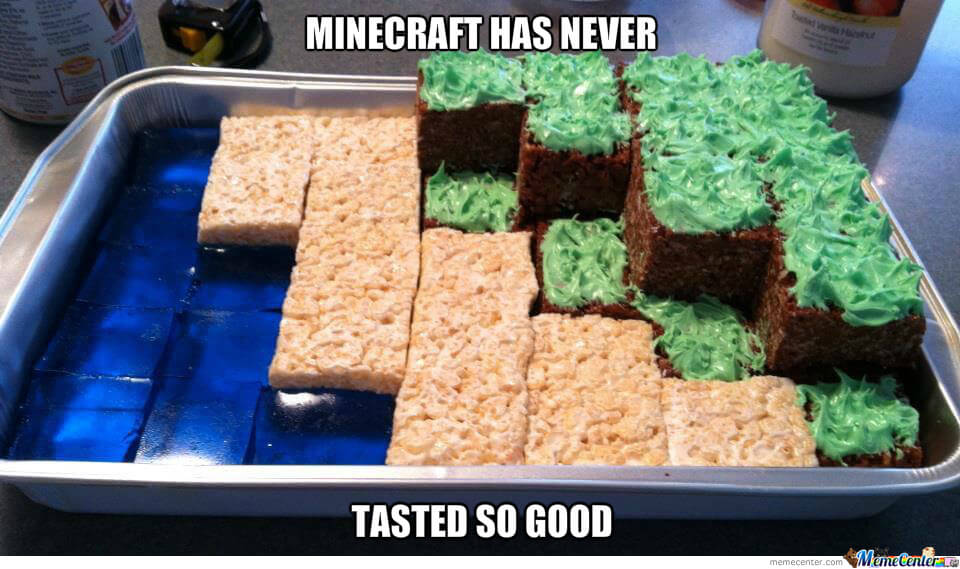
Minecraft has never …


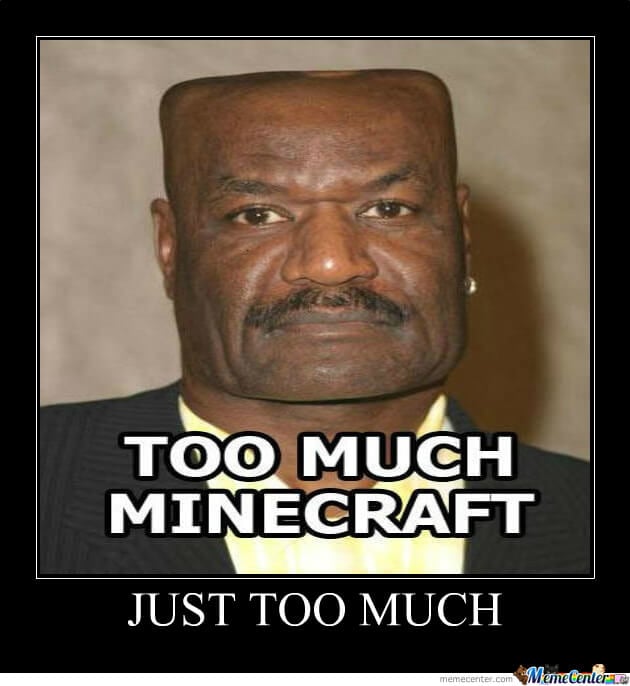
Too much Minecraft …


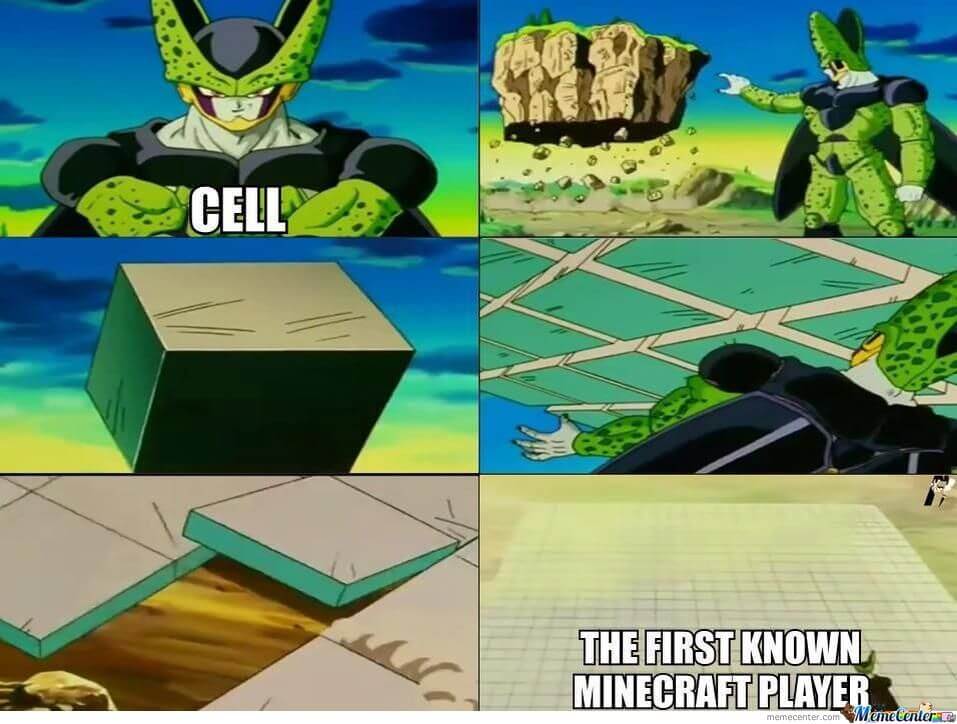
Cell, the first known …


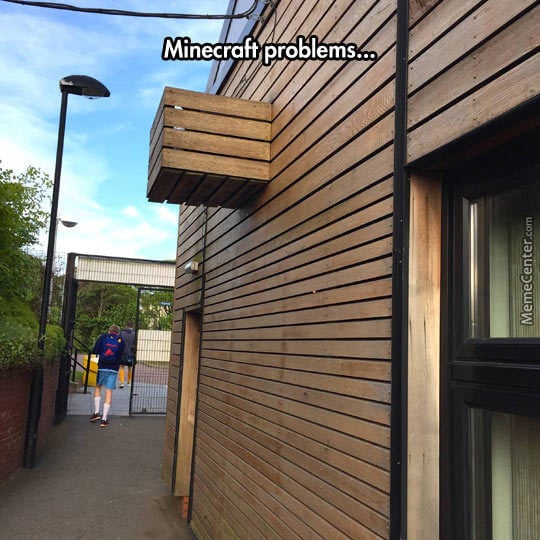
Minecraft Problems


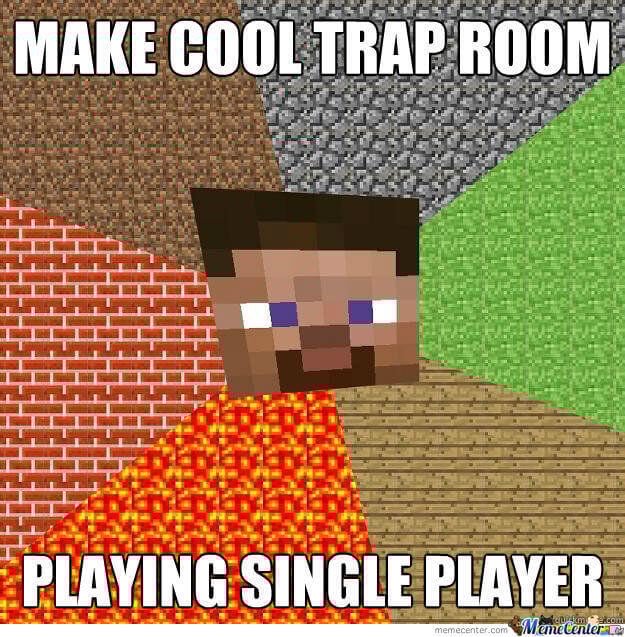
Make cool trap room …


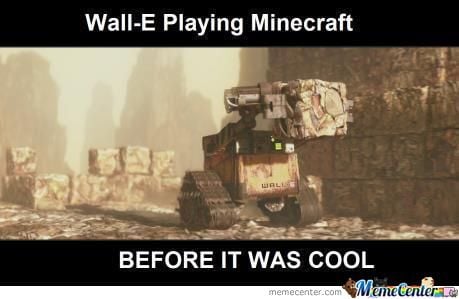
Wall-E playing Minecraft …


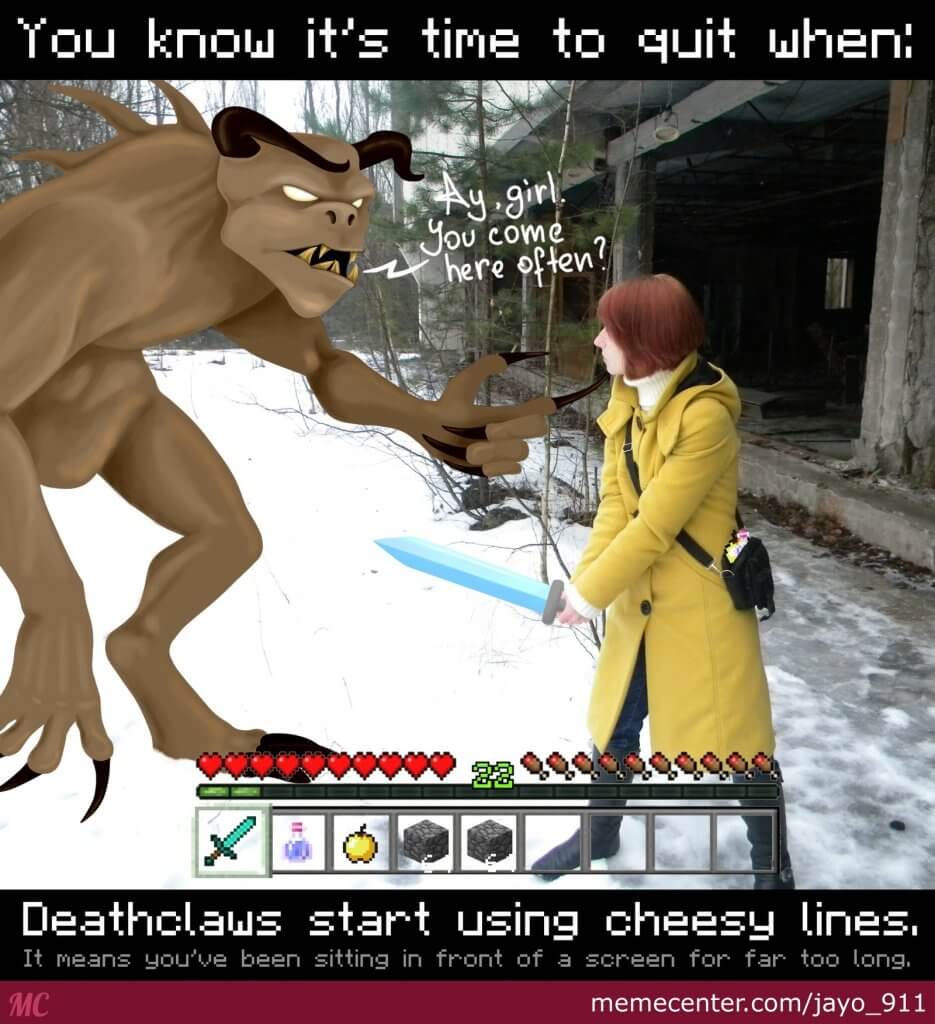
You know it’s time to quit when …


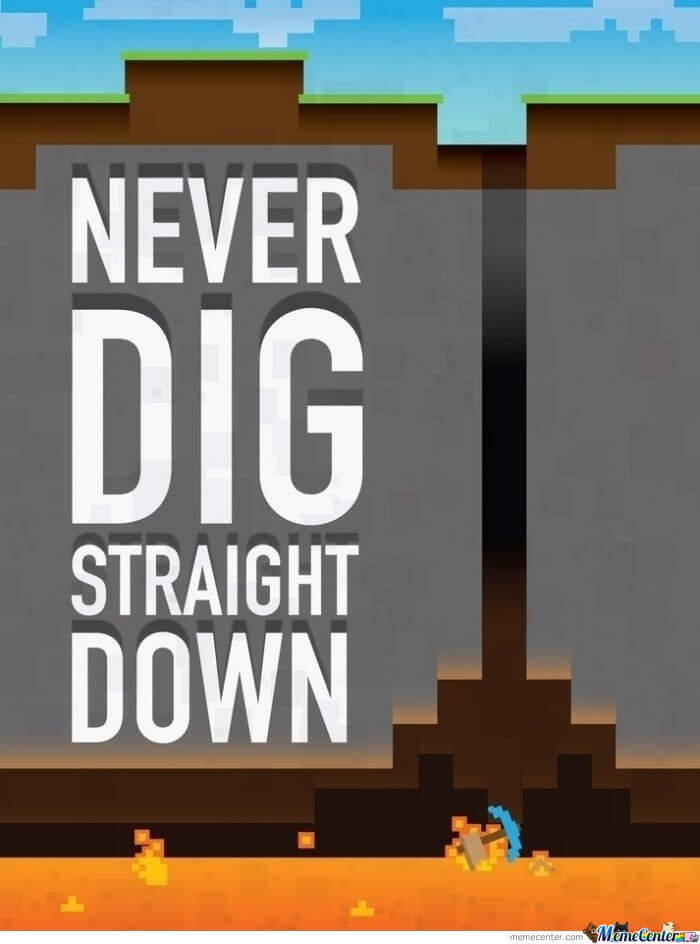
Never dig straight down.


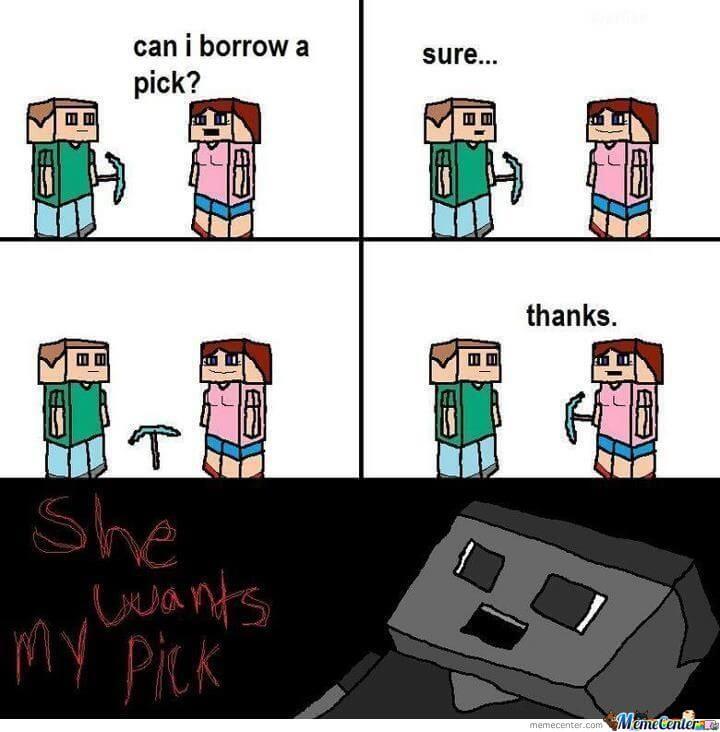
Can I borrow a pick …


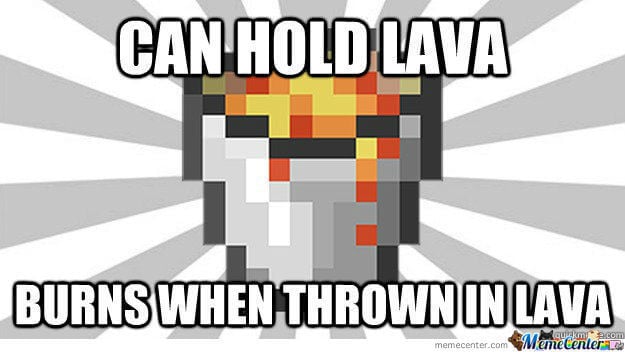
Can hold lava …


Can make waterfall …

Can’t cook an egg …


Makes black man …


Is that a sword? …


Just playing Minecraft like …


Reasons why I quit …


There is a lot of useful …


I don’t like Minecraft because …


All villagers are guys …


If the Minecraft world is infinite …


I don’t always find diamonds …


I didn’t know that he is a player.


Now if I remember correctly …


Minecraft Mountain Terrain


You see that? That’s what …


Square Watermelon


I don’t need sex because …


It’s pretty much like this …


When your Minecraft friend has …


Minecraft …


I downloaded Minecraft and …


Need a villager? …


Meincraft


I am not going to steal all of …


People are naturally lazy and will …


All these pickaxes …


That awkward moment when …


Legolas! What do your …


If you see it …


What’s your favorite Minecraft mode …


I want you in my …


Ermahgerd …


First this …


Too much Minecraft …


#YOLO


If you don’t close your door …


Minecraft HD


Mother of God …


Destroys stone with bare hands …


I told him to get off Minecraft …


You gotta pump those numbers up …


What is my purpose? …


When you build that first house on Minecraft …


When you’re all out of food so …


Party tonight? …


You can’t just eat only bread for …


Me vs My PC Ram


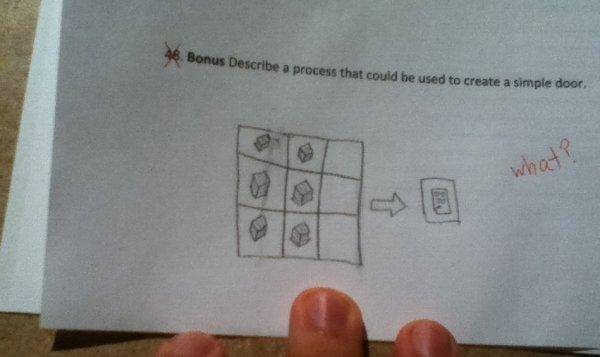
Describe a process that could be used …


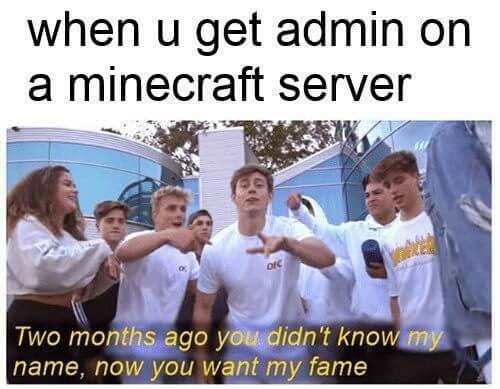
When you get admin on a Minecraft …


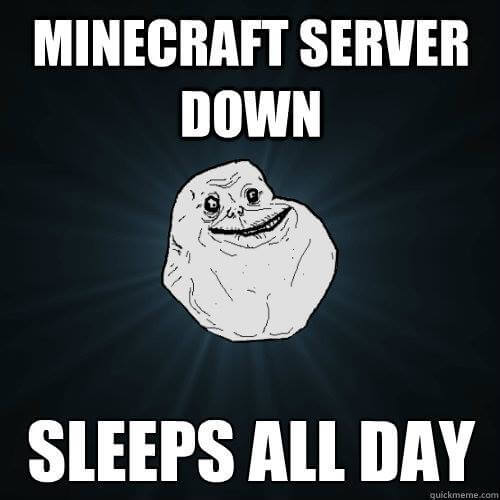
Minecraft server down …


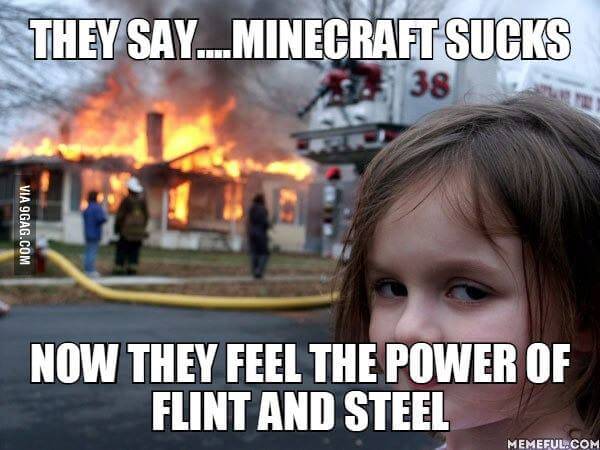
They say Minecraft sucks …


You don’t have to paint the wool …


After 350 hours of Minecraft I …


You can’t break through bedrock but …


All I wanted was …


You know it’s finally Christmas time …


Playing Minecraft …


Well, that escalated quickly.

You know you are rich …


While we are behind the door we …


Minecrafters’ Nightmare


Nice diamond armor you got there …


You’re getting coal for Christmas …


World’s biggest emerald …


When your diamonds are gone …


I prefer the real battle royal …


Don’t waste your diamonds on a hoe.


Gets a stack iron for free from someone …


What you mean you forgot the food!


Parenting …


Told him to take a break from Minecraft …


Sees you die in Minecraft …


They see me creeping …


Finds a village …


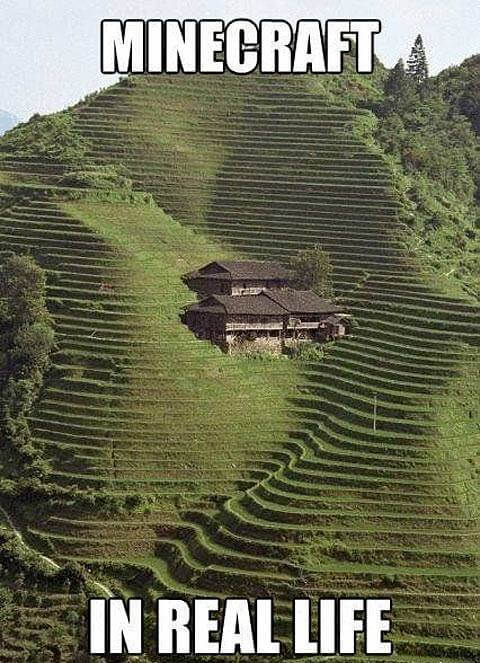
Minecraft in real life …


Walks infront of the iron you’re mining …


WTF is your hand made out of?


One does not simply …


I hate when I click on the wrong spot …


I thought my wood house …


Kiss a creeper for only $1.00.


Playing Minecraft just one …


Villagers can build great houses …


Press Q key by mistake …


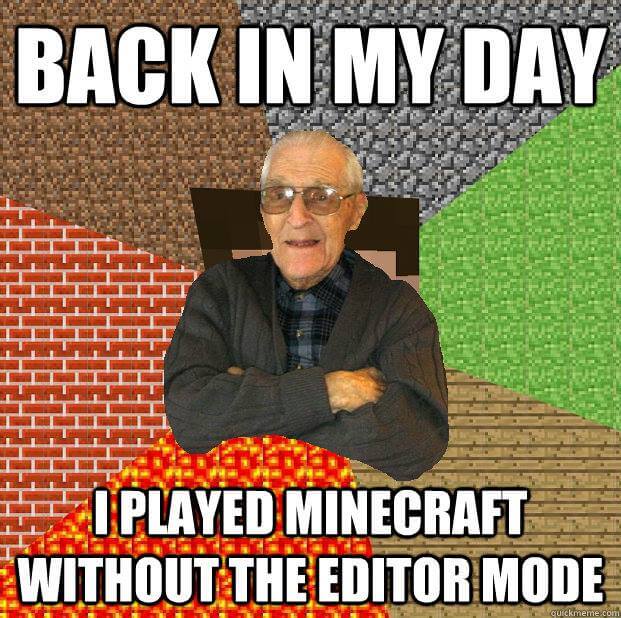
Back in my day …


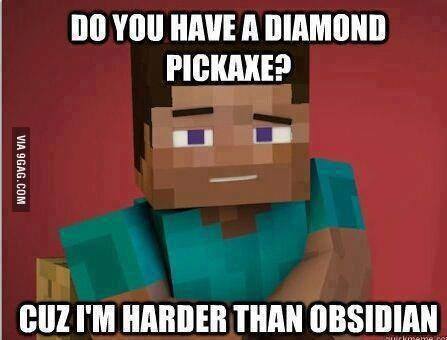
Do you have a diamond pickaxe? …


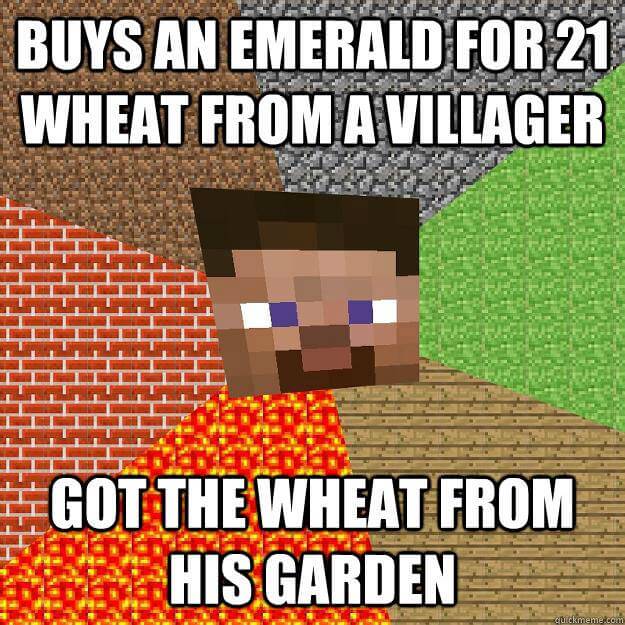
Buys an emerald for 21 wheat from a villager …


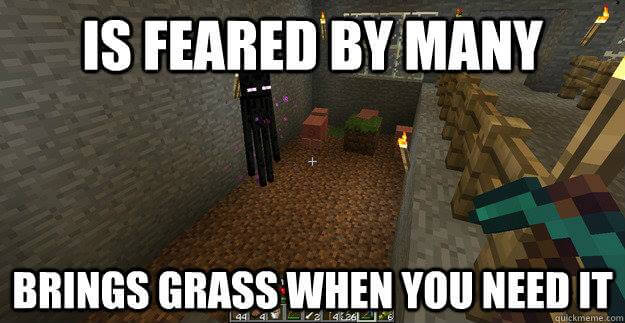
Is feared by many …


I don’t always raid other players …


What do you see? …

Cat Minecraft Meme

The Rise of Streaming Culture: How Twitch & YouTube Changed Gaming

0

Gaming used to be something people mostly did alone or with a few close friends. It is many gamers’ outlet when the social world becomes exhausting. However, everything changed when streaming culture entered the scene and quickly flourished. It turned gaming into a form of live entertainment watched by millions around the world.

In line with this, two platforms that dramatically revolutionized gaming in the last decade are Twitch and YouTube. With the offerings of these venues, what was once a hobby transformed into a global spectacle.

This article will discuss the rise of streaming culture and break down how these two platforms change gaming.

Understanding Streaming in the Gaming Space

In the context of gaming, streaming is an activity wherein players broadcast themselves over the internet and share their screen while playing a video game. This practice allows the public not only to watch on their devices but also to react and interact with streamers in real-time.

The Rise of Streaming Culture and Its Impact on Gaming

Streaming culture today has reshaped the gaming industry itself. It is now more about sharing experiences rather than just showing gameplay. Likewise, this culture builds communities where people feel a sense of involvement. It opened new opportunities and fostered stronger bonds among developers, players, and viewers. Aside from this, developers now consider how their games will look and feel when streamed. On top of that, many game creators integrate dedicated features for streaming.

Building Communities and Careers in Twitch and YouTube

As mentioned earlier, Twitch and YouTube continue to change gaming. Specifically, these platforms made waves and quickly became the heart of video game streaming culture. In fact, Twitch records over 240 million active users every month, while YouTube reached 800 million monthly views in its gaming category in recent years.

However, each took a slightly different path. Twitch is known for live interaction, while YouTube banks on accessibility and replayability.

Nonetheless, both platforms continue to serve as avenues for building communities through streaming. Twitch is more prominent for chatting, while YouTube caters to a more diverse audience. These platforms were able to build loyal audiences that participate in shared communities.

They also pushed gaming to evolve from a hobby into a possible career direction. Twitch has 35 million daily users, enticing brands and advertisers to partner with streamers, helping them earn through sponsorships and the like. Similarly, YouTube is making game streaming a reliable source of revenue for content creators by boosting monetization features. All in all, many streamers now make a full-time living out of ad revenue, endorsements, donations, and subscriptions.

Final Thoughts

Streaming culture, along with platforms like Twitch and YouTube, is and will continue to shape gaming. It proves that gaming is now more about making connections and creating opportunities.  

Note: This article integrates insights from sources such as Air Media Tech, Fantasy Graphics, The Guardian, and Yeelight to ensure depth and reliability.

The Future of Pixel Art in Games: Retro Style Meets Modern Tools

Game art remains an integral part of game development. It has also evolved throughout the years, from pixel art to the highly realistic graphics in modern titles. Despite the advanced approaches to creating visuals, pixel art keeps drawing back artists and players alike. Even today, it continues to charm players. Pixel art still holds a timeless appeal. On top of that, it is evolving alongside modern technology. As a matter of fact, the Cognitive Market Research expects the pixel‑game games market to grow approximately 11.5% until 2031.

What is Pixel Art?

In general, pixel art refers to a graphic style with blocky, low-resolution pixel-by-pixel visuals. This game art was originally seen in old 8-bit and 16-bit games on consoles and early PC. It has been part of gaming since the arcade days, defining generations of gamers.

Keeping the Spirit of Pixel Art Alive for the Future

Before the emergence of modern technology, retro style was a product of hardware constraints. But today, Pixel art has become a deliberate creative choice rather than a technical limitation. 

Accordingly, indie developers are leading the charge in the modern revival of this game art. Since they are mostly a limited workforce, focusing on pixel art reduces the need for big budgets. Thanks to modern digital tools, they can now bring their pixel visions to life with greater quality and efficiency. In the same way, it allows them to attract the market of those looking for 2D experiences, since most major studios focus too much on 3D gaming.

More specifically, the visual style will remain alive in the future of games due to the following reasons:

  • Nostalgic appeal
  • Easy to create
  • Style that never gets old
  • Endless room for creativity

Retro Style Meets Modern Tools

While the visual style stays retro, the tools used to create pixel art have become incredibly advanced. Likewise, this game art has greatly benefited from modern technology.

Artists can now create that old-school charm while adding effects that were impossible decades ago. In detail, breathing new dimension into the classic visual style is doable with high-resolution layering, lighting systems, 3D pixel design, parallax effects, physics-based sprite systems, and more.

This innovation gave birth to modern retro games. These are titles that eagerly recreate 2D aesthetics like Pixel art and adopt the classic gameplay mechanics while adding modifications made possible by modern tools. Moreover, projects of this kind are usually less computer-intensive. It paves the way for the combination of old and new that sells to players. That is why pixel art will also thrive in the mobile gaming market, further securing its place in the future of gaming.

The Future of Pixel Art

Pixel art will continue to flourish in the gaming space because it balances simplicity and innovation. This game art opens up more titles for more people to play. As new tools appear, game creators will keep finding fresh ways to make those tiny pixels tell big stories. Ultimately, it is more than just a passing trend or a thing of the past. The continued relevance and evolution of this visual style prove that it will be a part of the future of games.

Note: To ensure profundity and accuracy, this article incorporates ideas from sources like AAA Game Art Studio, CreativeBloq, Gameopedia, Genius Crate, Jump Story, LCCA, and Medium.

How to Build a Career in Game Animation (Not Just Movies & TV)

Animation has become a major force across many industries. From films and TV shows to mobile apps and virtual reality, animated visuals heighten the impact. Similarly, the gaming industry is another space in which animation rapidly grows. In fact, gaming animation is an integral part of many titles today. It is what makes games more than just interactive entertainment, allowing players to step inside a world.

Behind every fluid movement is a game animator who makes it all feel alive. The tedious work comes with eye-catching earnings. Video game animators in the US make an annual average salary of $83,000. At the same time, the US Bureau of Labor Statistics expects a 16% growth in the employment rate for animators. That is why many have become aspirants to entering the industry.

Have you ever wondered how to become one? Stick around until the end to find out!

Understanding Game Animation

Before anything else, it is a must to learn more about the process. By definition, game animation is the art of creating movement and emotion in interactive worlds. More concretely, it turns static elements into dynamic, immersive, and engaging experiences.

Knowing the Role of a Game Animator

Learning about animation is not enough. Starting a career requires understanding the ins and outs of the role. To put it simply, game animators work closely with game designers, artists, and developers to bring characters and environments to life in video games. They also add emotion, fluidity, and realism to 2D and 3D game objects using specialized software and tools. Overall, game animators play a crucial role in the game development process, as they maximize the technology for gameplay and interactivity.

Tips for Building a Career in Game Animation

  • Learn the Basics

Establishing a strong foundation is vital. A good animator is knowledgeable in art, design, gameplay, game engines, communication, and organizational skills. One can opt to explore education and training options at universities, online courses, and boot camps.

  • Develop Skills

Once the basics seem like a breeze, honing skills further is the next step. One way to do this is by getting experience. Apprenticeships and traineeships enable hands-on learning and allow practical application. Mastering different tools and software would also help in becoming well-versed in various areas of the role.

  • Create a Portfolio

After equipping oneself with knowledge and skills, creating a banger portfolio will be your ticket to landing a job. It must highlight the best works and should include a variety to showcase versatility and creativity.

  • Find Opportunities

If everything is set, it is time to start making networks and connections. Attending events and joining communities often lead to job offers. Likewise, maximize modern resources to apply for work.

  • Keep Learning

Even after getting hired, responsible game animators keep growing their experience. The industry and technology constantly evolve, so staying in the loop helps one keep a job.

Key Takeaway

Every aspirant should understand that building a career in game animation requires time, practice, and patience. More importantly, they should not lose hope, as turning passion into a profession is always possible.

Note: This article gathers information from AAA, CG Spectrum, Pixune, Screen Skills, Spiel, and YellowBrick to ensure accuracy and depth.

AI in Animation: How Generative Tools Are Changing Game Art

Artificial Intelligence (AI) is quickly reshaping the world of video games. One of the most exciting changes is happening in animation and art creation. Prior to the emergence of AI, animation and game art were laborious and demanding processes. Artists manually took care of every detail. Now, the thinking technology is working hand-in-hand with them. It suggests ideas, refines concepts, and speeds up the process. Likewise, generative tools transform game development. They change how animators think and deliver content. Through these, artists can now create stunning visuals faster and with greater creativity than before.

Defining Generative Tools

Generative tools use AI to create or assist in animation and the creation of game visuals. These play roles in different phases of the creative process. Instead of drawing every frame by hand or sculpting 3D models, models can leverage smart technology to generate what they need. Generative tools produce textures, concept art, and even animate scenes.

However, this does not mean AI is replacing animators or artists. These tools are powerful allies. They increase efficiency, consistency, reduce costs, enhance creativity, and boost personalization. Generative tools enable animators and artists to focus on what matters more: storytelling, aesthetics, and world-building.

How AI Innovates Animation and Game Art

In terms of animation, automation is probably the most significant application of AI, simplifying the most complex part of game design. The technology is best used in making characters move smoothly, respond to player input, and feel alive.

In detail, animation utilizes AI for the following mechanisms:

  • Automated Animation and Motion Design
  • Storyboarding and Scene Planning
  • Lifelike Facial Animation and Lip-Syncing
  • Virtual Environment Creation and Visual Effects

On the other hand, accelerated exploration could be the most notable application of generative tools powered by AI in game art. It does without sacrificing artistic integrity. With generative tools integrated into the game art workflow, the production cycle is being completely reimagined. Artists can now follow a new art pipeline.

AI-generated concepts and references → Early visualization → Refined sketching → AI-enhanced rendering → Artistic fine-tuning → Completed artwork

In practice, this approach brings more clarity early on, boosts productivity, and makes feedback easier to apply. To cut it short, generative AI tools for game art optimize the overall digital art workflow rather than just enhancing execution.

Looking Ahead

AI in animation and through generative tools in game art continue to evolve. They are revolutionary when combining human creativity with machine learning. This technology is not a threat. It is an instrument for helping game creators dream bigger and accomplish more in a shorter period. AI is here to empower, not replace.

Note: To ensure accuracy and profundity, this article integrates details from Ixie, Pixune, Spiel, and Toads Academy.

Motion Capture in Game Animation: Tools & Techniques

Motion capture has dramatically evolved the gaming space over the years. What once relied on frame-by-frame artistry now achieves life-like realism through advanced technology. Specifically, it is revolutionizing the animation and visual effects in games, creating immersive experiences.  

For indie developers and major studios alike, understanding motion capture in game animation is very important. It is what continues to shape modern game development. Let us explore this in detail, as this article will provide an informative discussion about motion capture along with the tools and techniques used in game animation.

Why Motion Capture Matters

Motion capture refers to the technology and the process of recording physical movements of actors and then recreating them on digital models. It includes tracking body and facial expressions.

In gaming, this is a key tool for generating natural and engaging movements, enhancing the realism of characters and interactions. At the same time, the technology reduces costs and speeds up production.

To cut it short, it is what makes the job easier for 3D animators in bringing animations to life.

How Motion Capture Works

Generally, motion capture follows a few key steps. First, it captures movement. Next, the captured data is converted into digital motion files. After that, it is mapped onto 3D models. Finally, the details are refined to ensure smooth and realistic motion in the game.

Essential Tools for Motion Capture

Modern motion capture depends on a mix of equipment and software that work hand in hand.

  • Equipment

Motion Capture Cameras, Motion Capture Markers or Suits, Calibration Tools, Computing Hardware, Lighting System, and Gloves and Facial Capture Components.

  • Software

Autodesk MotionBuilder, Faceware, iPi Soft, Rokoko Studio, Unreal Engine, or Vicon.

Techniques Used in Motion Capture

Five methods can be used in game animation. Each technique or approach offers advantages to bring realistic human movement into digital worlds.

  • Optical Motion Capture

Optical Motion Capture utilizes cameras and reflective markers in recording movement.

  • Inertial Motion Capture

Inertial Motion Capture relies on wearable suits with accelerometers and gyroscopes, removing the need for external cameras.

  • Magnetic Motion Capture

Magnetic Motion Capture makes use of magnetic sensors in a controlled magnetic field to detect movement.

  • Markerless Motion Capture

Markerless Motion Capture employs depth-sensing cameras and AI algorithms to record movement and expression with no physical markers.

  • AI-Driven Motion Capture

AI-Driven Motion Capture uses machine learning algorithms for better performance in capturing motion data.  

The Growing Role of Motion Capture

Motion capture is now within the reach of developers in game animation. Both indie and blockbuster studios can maximize the technology to achieve realism, efficiency, cost-effectiveness, and enhanced performance. Overall, it has become a vital part of making titles more captivating and expressive, pushing innovation in gaming further.

Note: This article integrates information from Animost, Autodesk, Metavurx, Rocket Brush Studio, Rokoko, Remocapp (A), and Remocapp (B) to ensure accuracy and depth.

The Ultimate Checklist for Launching Your Indie Game

0

Launching indie games is one of the most exciting and fulfilling moments for any solo developer or small team of creators. However, this will not be possible if one keeps overlooking details that can make or break a release. In short, a clear plan matters. But it is normal to find the process overwhelming. So, having a checklist will keep things moving in an organized manner.

Read on to discover a detailed checklist to set a game up for success.

Checklist for Launching an Indie Game

 1. Finalize and Test the Game

Before announcing a release date, developers must make sure that the game is stable and polished. To do this, they should do playtests early and regularly. There is no need to have the public sign up for it. Family and friends can try it and provide valuable feedback and insights. From there, the development stage continues with big fixes, performance optimization, and platform compatibility.

2. Submit to Platforms Early and Prepare Store Page

When a developer decides that a title is ready, they need to sign up for their intended game publishing platforms. Do it as early as possible since the approval process can take time. Once approved and certified, setting up the game store page is crucial. It is the first thing players see. Therefore, creators should include engaging trailers and snapshots. They must also be clear about the genre, features, and price.

3. Establish and Execute a Marketing Plan

No matter how great a game is, it will not be successful without the other half of the recipe — marketing. All projects need attention to be discovered. It will help boost visibility and increase profitability. More importantly, a developer must understand that promotion of the game starts way before the launch day. Marketing a project early gives an edge over the competition. In line with this, traditional marketing might not work effectively anymore. Developers will have to incorporate modern game marketing strategies.

4. Set a Realistic Launch Date

Since most indie games are done by individuals or small teams without financial support from publishers, choosing an ideal release window is significant. The developer should consider the time needed to prepare and polish the game. Do not rush it! Players would be fine waiting for a compelling title instead of immediately accessing an overly flawed one. Plus, announcing delays in the release can ruin the initial image of a project. Moreover, it is best to avoid competing with major launches.

5. Engage After Launch

The work does not end when a game drops. Engaging with the community is a must after the rollout. The job extends to monitoring player feedback. It will assist in providing updates, bug fixes, and additional content. Doing so can make a title survive long after its release.

Key Takeaways

Launching an indie game requires passion, patience, and lots of preparation. Remember, successful titles did not happen overnight. They were the results of continuous development and smart marketing efforts. More importantly, scoring big with the first launch is just a bonus. The whole process is more about a learning experience. With this checklist in hand, developers will be ready to share their work with the world.

Note: Insights from Fast Capybara Productions, Game Marketing Genie, Rocket Brush Studio, and Wayline have been used in this article to ensure accuracy and depth.

Case Study: How Indie Games Like ‘Hades’ and ‘Celeste’ Found Success

0

Indie games have evolved from being niche projects into global sensations in the gaming space. Once seen as small passion projects, they are now considered limitless forces that popularized unmatched creativity and innovation. In fact, projections indicate that the market share of indie games will continue to grow, with global value estimated to reach $1.5 billion this year.

They also rival big studios — and outperform them at times. And beyond the competition, some big-budget games even take inspiration from indie ones nowadays.

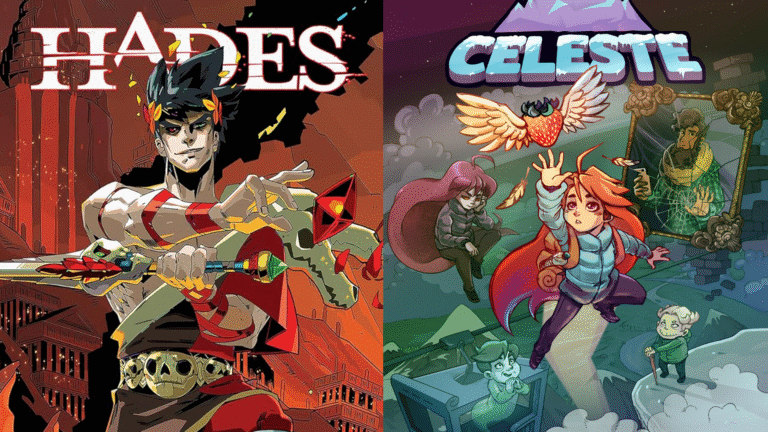
Two standout examples are Hades and Celeste. Both titles have recorded millions in sales globally, proving that success is not limited to AAA titles. Accordingly, this streamlined, in-depth case study explores how the two games achieved remarkable success.

Understanding Indie Games

Generally, an independent or indie game is no different from any other title in the market. However, the distinction lies in the fact that indie games are designed by solo developers or small teams. They typically lack direct financial backing from major game publishers.

Breaking Boundaries

The indie game industry is known for experimentation and artistic expression. It is mostly unaffected by the constraints set by big publishers, which allows most indie developers to break free from conventions. They can explore fresh gameplay mechanics, diverse narratives, and a unique visual approach.

In line with this, Hades and Celeste stood out because of their storytelling and design.

Supergiant Games’ Hades combined fast-paced combat with rich characters and a striking narrative structure. Each death in the game pushed the story, revealing new pieces to players every time. It made failure part of the experience rather than a setback.

Meanwhile, Celeste by Maddy Makes Games took a minimalist approach. It used simple pixel art and tight platforming mechanics to deliver a deeply emotional story about overcoming anxiety and self-doubt.

Building Visibility

Unlike major studios, indie developers rarely have large marketing teams. That is why their promotion involves different game marketing strategies. They utilize social media, provide early access, join exhibitions, and leverage viral marketing.

As for Hades and Celeste, they found success by focusing on authentic engagement.

Hades focuses on maintaining transparency in the development process through an early access period. It helped gather player feedback to improve the game.

On the other hand, Celeste gained traction through word of mouth and support of indie-friendly game publishing platforms. Likewise, reviews from trusted critics and websites played a vital role in boosting visibility for such a small title.

Lessons for Indie Developers

Creating successful indie games does not necessarily require massive budgets and giant teams. Developers should focus on storytelling, community building, offering fresh concepts, and giving importance to player feedback. Hades and Celeste prove this. They demonstrate that independent titles can stand toe-to-toe with blockbuster games despite the huge gap in budget and workforce. 

Note: This case study integrates knowledge from Davide Aversa, Inlingo, Lenovo, SDLC Corp, and TechNeeds to ensure depth and accuracy.

New EA FC 26 PlayStyles Explained & Best Players to Use

0

PlayStyles in FC 26 have received many changes. There are several new PlayStyles, while some older ones have been removed. In this guide, you’ll learn all about the new PlayStyles in FC 26 and the best players to use for each one. Let’s get started!

Don’t forget to visit U7BUY.com and get enough coins today. It is a trusted platform for buying top-ups and accounts at the best rates, and right now, they’re offering bonus coins on every purchase. So what are you waiting for? Visit today and start building your dream team!

What Are PlayStyles?

PlayStyles are special traits that players have in FC 26. They allow players to perform unique skills more effectively. Each PlayStyle has two versions: a normal version and an improved version called PlayStyle+. As of now, there are 36 different PlayStyles divided into six categories, out of which five are newly added PlayStyles.

All New PlayStyles in FC 26 & Best Players to Use

As mentioned in the previous section, there are five new PlayStyles in FC 26: Precision Header, Gamechanger, Inventive, Aerial Fortress, and Enforcer. Some of these PlayStyles may sound familiar, right? You’re correct, as these new PlayStyles have replaced some of the old ones.

Precision Header

Precision Header is a new Finishing/Scoring PlayStyle. You’ll find it in offensive players who are known for accurate headers and excel in aerial battles. The Precision Header PlayStyle is mostly found in strikers (ST).

Players with the base version of Precision Header perform headers with improved accuracy and power, while those with Precision Header+ experience a significant increase in both accuracy and power.

Best Players with Precision Header+ Best Players with Precision Header
Alessia Russo; 89; ST Virgil van Dijk; 90; CB
Khadija Shaw; 88; ST Erling Haaland; 90; ST
Marie Katoto; 88; ST Harry Kane; 89; ST
Ada Hegerberg; 87; ST Gabriel Magalhães; 88; CB
Alexandra Popp; 85; ST Jamal Musiala; 88; CAM


The Precision Header PlayStyle has replaced the old Power Header PlayStyle, which is now removed from the game.

Gamechanger

Gamechanger is another new PlayStyle in the Finishing/Scoring category. This category has the highest number of PlayStyles compared to the others. You can find it in players who are known for exceptional, unpredictable, and unique shots. Since it is a Finishing PlayStyle, it is mostly found in attackers.

Players with the Gamechanger PlayStyle perform Trivela Shots and other Fancy Shots with improved accuracy. Players with Gamechanger+ perform the same shots with greatly improved accuracy. Moreover, Trivela can now only be performed by players with the Gamechanger PlayStyle, which is a new change in FC 26.

Best Players with Gamechanger+ Best Players with Gamechanger
Lautaro Martínez; 88; ST Mohamed Salah; 91; RM
Paulo Dybala; 86; CAM Kylian Mbappé; 91; ST
Melchie Dumornay; 86; ST Alexia Putellas; 91; CM
Bryan Mbeumo; 85; RW Erling Haaland; 90; ST
Anderson Talisca; 81; CAM Jude Bellingham; 90; CAM


The Gamechanger PlayStyle has partially replaced the old Flair PlayStyle, which is now removed from the game.

Inventive

Inventive is a new PlayStyle in the Passing category. You will find this PlayStyle in players who are creative at passing the ball and can perform unpredictable and clever combos. The Inventive PlayStyle can be found in both attackers and defenders.

Players with the Inventive PlayStyle perform Trivela passes and other Fancy passes with improved accuracy. Players with Inventive+ perform the same passes with greatly improved accuracy. These are Trivela passes and should not be confused with Trivela shots, which are exclusive to the Gamechanger PlayStyle.

Best Players with Inventive+ Best Players with Inventive
Cole Palmer; 87; CAM Mohamed Salah; 91; RM
Khvicha Kvaratskhelia; 87; LW Alexia Putellas; 91; CM
Mario Götze; 82; CM Aitana Bonmatí; 91; CAM
Raphaël Guerreiro; 80; LW Ousmane Dembélé; 90; ST
Jude Bellingham; 90; CAM


The Invetine PlayStyle has partially replaced the old Flair PlayStyle, which is now removed from the game.

Aerial Fortress

Aerial Fortress is a new Defending PlayStyle in FC 26. You will find this PlayStyle in talented defensive players who are known for their dominance in both aerial battles and defensive scenarios. As expected, this PlayStyle is commonly found in defensive players.

Players with the Aerial Fortress PlayStyle perform higher jumps with increased physical presence, both before and during aerial duels. Players with Aerial Fortress+ can perform even higher jumps with greatly increased physical presence during aerial duels.

Best Players with Aerial Fortress + Best Players with Aerial Fortress
Antonio Rüdiger; 86; CB Rodri; 90; CDM
Gabriela García; 82; CDM Virgil van Dijk; 90; CB
Tomáš Chorý; 75; ST Federico Valverde; 89; CM
Frantzdy Pierrot; 72; ST Alessia Russo; 89; ST
Patricia Guijarro; 89; CDM


There are very few players with the Aerial Fortress+ PlayStyle, and as you might have already guessed, it replaced the old Aerial PlayStyle, which is now removed from the game.

Enforcer

Enforcer is the final new PlayStyle in FC 26 and falls under the Physical category. You will find this PlayStyle in physical attackers who excel at controlling the ball through shielding and initiating contact while dribbling. The Enforcer PlayStyle is commonly found in strikers (ST).

Players with the Enforcer PlayStyle perform dribble shoulder challenges and shielding with better effectiveness. Players with Enforcer+ perform the same challenges and shielding with even greater effectiveness.

Best Players with Enforcer+ Best Players with Enforcer
Viktor Gyökeres; 87; ST Erling Haaland; 90; ST
Tim Kleindienst; 81; ST Alessia Russo; 89; ST
Khadija Shaw; 88; ST
Lautaro Martínez; 88; ST
Kadidiatou Diani; 88; RW


As of now, Gyökeres and Kleindienst are the only two players with the Enforcer+ PlayStyle. You can find more players with it in special categories like Icons and Base Heroes.

Enforcer has not replaced any older PlayStyles, and players consider it a combination of Press-Proven and Bruiser.

Wrapping Up

That is everything you need to know about all the new PlayStyles in FC 26. Understanding these PlayStyles will help you choose the best players and build a stronger, more balanced team.

In FC 25, the Low Driven Shot PlayStyle was added after the game was released. This means EA might add new PlayStyles or make changes to existing ones in FC 26 as well, based on player feedback.

Marketing Your Game in 2025: TikTok, Discord, and Influencer Strategies

0

Marketing is vital in any industry, including the gaming scene. It helps reach a wider audience and boost profitability. Now that the gaming space is more competitive than ever, developers can no longer rely on traditional marketing. Specifically, launching trailers and ads is not enough to attract modern gamers. Today, fans discover games through communities, creators, and platforms they often access. That is why strategies involving TikTok, Discord, and influencers have become essential tools for game promotion.

In this article, we will guide you in navigating the three modern marketing strategies to connect with more players and build lasting visibility.

Game Marketing: Why It Matters

Game marketing refers to the promotion of games using various strategies, media, channels, and campaigns. The process aims to draw new gamers while keeping the interest of existing players. In line with this, game marketing is crucial for gaining discoverability, boosting installs, retaining players, and scaling revenue. More importantly, it also helps establish a loyal community and generate long-term success.

Reaching Players Through TikTok

TikTok has evolved into one of the most powerful marketing platforms for games. Promotion on this platform took away the need for massive marketing budgets. In particular, the key components of successful TikTok marketing are strategic thinking and genuine audience engagement.

To get on track, developers must focus on studying the platform’s algorithm. Short-form videos and popular challenges are kings here. Gain traction by maximizing viral trends and posting well-timed content.

Building Communities on Discord

Discord primarily helps in keeping players engaged. It is a must-have platform for community building, with 656 million users by 2025. Chances are, players already use it for discussing gaming interests. Using this platform paves the way for making players feel more connected to a game and encourages them to promote it organically.

Therefore, creators should establish a two-way interaction with players using Discord. Turn it into a tool to generate audience engagement.

Tapping Into Influencers

Influencers remain one of the most effective ways to market games. Streamers and other types of content creators can showcase gameplay in a way that feels personal and trustworthy. Most of the time, players build interest in a game after seeing an influencer play.

So, the trick lies in choosing the right influencer. Beyond the following, a genuine connection with the audience is what truly matters. Developers can opt for smaller creators for better ROI, since they have a closer relationship with their community.

Key Takeaways

Attracting modern gamers requires modern marketing strategies. With data showing that 87% of gamers use social media, leveraging TikTok, Discord, and influencers makes promotion efforts effective in this competitive gaming industry.

Note: This article incorporates insights from various sources, including 5WPR, Blockchain Ads, Game Marketing Genie, IQFluence, and Single Grain, to ensure accuracy and profundity.

From A Level Computer Science to a Gaming Degree: Turning Passion into a Career

0

Working within game development is an exciting opportunity that combines art, storytelling and technology to bring something to life.  Some professional developers will gain a degree at university in game design before moving into a career in this field.  But what are the fundamental subjects behind the degree? We will have a look within this article.

Career in Gaming

What does a career look like in gaming? You could be creating games that engage users on several devices.  You might be conducting market research, planning storyboards and executing these ideas into games.  You will also most likely be working within a team and need to accept constructive criticism adapting plans if needed.

Salaries can range from £18,000 to £65,000 plus, with experience.

You don’t need a degree to become a game designer, however the majority of jobs advertised are looking for a graduate.

Whether you go to university to gain a degree or apply directly for jobs, it is recommended to have a portfolio of work so that you can showcase the skills you have available. Whether it be a Level 2 Diploma, GCSE or A Level, previous studies and qualifications will go a long way to proving your ability.  The industry will be looking for the following:

Technical ability – being able to code with programming languages.

Software – Understand how to use packages such as Blueprint Visual Scripting and Unreal Engine.

Passion – You will need to show that you have a passion for the subject.

Teamwork – Being able to work as part of a team is important.

Degree in Gaming

When I mention a gaming degree, you are probably thinking of developing games for a console like PlayStation or Xbox.  This can be the case but there also other avenues to go down too.  You might want to develop games for the PC, a mobile phone app, something for education or the virtual reality games market.

Finding the right degree is a challenge.  There are so many different options and here are a few:

  • BSc (hons) Games Technology at UWE Bristol
  • BSc (hons) Games Design at Manchester Met
  • BSc (hons) Video Game Development at Birmingham City
  • BA (hons) Video Game Design at Birmingham City

You can browse a full list of gaming degrees at UCAS.

Whilst the above degrees can help you enter the gaming industry; others may want to use them for alternative careers such as:

  • Multimedia artist
  • Digital animator
  • Software engineer

How to gain a place on a degree in gaming

To be accepted onto a degree at university, you will need UCAS points.  A Levels, BTECs and T-Levels all carry UCAS points.  If you don’t have UCAS points currently and are not able to attend college, you could consider distance learning A Levels with an online college.  Most degrees will also ask for English and Maths GCSE.

A Level subjects for a degree in gaming

There is a range of subjects available at A Level, and it is best to choose subjects that you feel you will enjoy and are good at.  That being said, A Level Computer Science is a great subject to choose as it will cover programming, problem-solving and you will learn about hardware and systems.  Other learners may choose Mathematics, Physics, English Literature and IT.

A Level Computer Science and gaming

If you would like a good introduction to the technical aspects of gaming, A Level Computer Science is a great start.  The course will teach you how to think logically, be creative and you will learn a great deal of technical expertise.  No worries about attending college as you can choose to study online with Learn Now Distance Learning College and work your course around your everyday life.

When to Stop Playing in GameZone: A Responsible Player’s Guide

0

With the rapid rise of online entertainment, GameZone has become one of the leading platforms for Filipino card games, establishing itself as the largest community in the Philippines. Catering to enthusiasts of Tongits, Pusoy, and Lucky 9, the platform captures the excitement and authenticity of traditional gameplay while allowing players to engage in friendly competition. Although GZone provides a thrilling experience, the importance of knowing when to pause cannot be overstated. Maintaining moderation ensures that players can enjoy their favorite games while avoiding risks associated with prolonged or excessive play.

The Role of Responsible Practice in GameZone

The GameZone app and platform is built on fundamental principles of fun, fairness, and accountability. As it operates under a PAGCOR license, the platform guarantees a safe and secure play environment for Filipino players. GameZone apk emphasizes that online casino should never interfere with daily responsibilities, meaningful relationships, or physical health.

Engaging responsibly while playing your favorite Filipino card games means focusing on enjoyment and skill rather than chasing financial gain. Balancing playing time alongside other obligations ensures a sustainable approach to entertainment. For players of Tongits, Pusoy, and other card games in GameZone Filipino cards online, understanding and practicing responsible practices leads to long-term enjoyment and better well-being.

How to Identify When It’s Time to Pause GameZone

Even seasoned GameZone players can sometimes miss the warning signs of excessive play. Recognizing these signs early helps maintain healthy habits and keeps playing enjoyable rather than stressful or detrimental. Key indicators that you should pause include:

Playing Without Interest
Opening GameZone out of routine rather than genuine excitement indicates playing has started feeling less like fun and more like a chore.

Trying to Recover Losses
Attempting to win back money after losses or obsessing over results can result in frustration, turning a recreational activity into pressure.

Avoiding Other Priorities
Skipping important activities such as meals, sleep, or essential tasks for work or school could signal that it’s time to realign your focus.

Negative Emotions After Playing
Frustration, guilt, or dissatisfaction following a playing session may indicate you’re exceeding a healthy limit.

Over-the-Top Spending
Rapid changes in spending habits, particularly when playing starts to affect your finances, call for immediate reassessment and stricter controls.

Practical Tips to Manage Your GameZone Play

GameZone promotes positive playing habits by providing features and tools designed to help players maintain control over their activities. Following these tips can help achieve a balanced approach to online casino:

  1. Set Time Limits
    Scheduling daily casino sessions can keep you focused on priorities outside of the platform. Playing for a fixed time, such as an hour after dinner or a few rounds before bed, lets you stay disciplined and avoid overplaying. Game Zone’s time limit options simplify this process by letting users set play schedules within the app.
  2. Control In-Game Spending
    Healthy casino habits include creating budgets for in-game purchases and betting expenses. Allocating a specific amount of money for entertainment purposes, including playing, ensures spending doesn’t spiral out of control. GZone’s spending control tools let users set maximum daily expenditure limits to help players stay within their budget.
  3. Take Short Breaks
    Continuous gameplay can lead to fatigue or reduced focus. Taking small breaks—whether for stretching, drinking water, or chatting with loved ones—refreshes players and improves mental clarity and performance.
  4. Utilize Self-Exclusion Tools
    Players who feel they need a longer break can rely on GameZone’s self-exclusion feature, which enables them to voluntarily suspend account access for a specified period. This tool provides a balanced way to reduce casino intensity without losing progress or access in the long term.
  5. Pay Attention to Game Reminders
    GameZone includes in-app alerts that promote awareness of spending and playtime. Players can use these reminders as reflective checkpoints, ensuring they stay informed about their casino habits and adjust accordingly.
  6. Keep a Healthy Perspective
    Game outcomes are influenced by a mix of luck and skill, and players should avoid using wins or losses to measure their self-worth. Game Zone online games prioritizes entertainment and connection over excessive competition, encouraging balanced and positive engagement with its games.

GameZone’s Dedication to Responsible Practice

GameZone casino goes beyond promoting entertainment; it actively fosters responsible practice habits. It has implemented tools and frameworks that let players enjoy their favorite Filipino card games sustainably, while safeguarding their well-being, finances, and daily balance.

Player Ambassadors for Responsibility
GameZone collaborates with former Tongits Champions Cup winners, now acting as player ambassadors, to advocate fairness, moderation, and responsible play within the community. Their insights help highlight the importance of maintaining healthy habits, inspiring long-term enjoyment among users.

Partnership with DigiPlus
GameZone download works alongside DigiPlus brands to align its offerings with consistent standards for safety and responsible practices across platforms. This partnership ensures that Filipino users engage in a secure and ethical casino environment.

Platform Features Supporting Responsibility
With players’ needs in mind, GameZone online incorporates tools that empower users to monitor and manage their behavior:

  • Self-Exclusion: Voluntary account suspension for those who need time away from playing.
  • Time Limits: Customizable playtime restrictions to help players balance sessions with daily life.
  • Spending Controls: Options to set limits on in-game purchases or betting.
  • Wellness Notifications: Alerts and reminders for users, encouraging reflection on routines.
  • Fair PVP Matches: Transparent gameplay against real players rather than AI bots ensures fair competition.

Frequently Asked Questions (FAQs)

Does GameZone provide tools for responsible play?
GameZone offers features such as self-exclusion, time limits, and spending restrictions to help players ensure safe and mindful play.

What should users do if playing feels excessive?
The platform allows players to use self-exclusion options, reduce daily playtime, or set spending caps. Taking breaks between playing sessions also aids in achieving balance.

Why is responsible play promoted in GameZone?
GameZone emphasizes entertainment and cultural connection while ensuring playing remains stress-free and balanced.

Promoting Enjoyable and Balanced Filipino Games

GameZone offers players a digital arena where traditional Filipino card games meet modern innovation. Through its tools for responsible play and emphasis on ethical standards, the platform celebrates Filipino heritage while encouraging players to prioritize balance.

Tongits, Pusoy, and Lucky 9 reflect the rich traditions of Filipino games, and GameZone ensures these games stay enjoyable and relevant in today’s fast-paced entertainment industry. Responsible practice guarantees that users can indulge in their favorite activities sustainably, merging recreation with mindful habits for a truly fulfilling experience.

Monetization Models Explained: Free-to-Play, Ads, Subscriptions, and More

0

Video games are no longer just a form of entertainment. Both indie games and blockbuster games are now also big businesses. In line with this, finding the right way to earn money from a game is key to long-term success. While doing so sounds like an easy task, there are many things to consider. And one good way to start is to understand monetization models — how they work and what makes each one unique.  

This article explains what monetization models are, along with some of the available options.

What is a Monetization Model?

In general, a monetization model serves as a detailed guide that shows how a business earns money from its assets. Each model differs depending on the business nature and the target market.

As for a monetization model in gaming, it refers to the strategic approach a developer or studio could take to generate money with their games. In short, it is how a game brings income.

In line with this, developers must understand that this concept is more than an afterthought. With today’s gaming industry growing more diverse in how games are sold and supported, monetization models are now what keep things going. At the same time, they influence development decisions, build expectations, and determine success.

Types of Monetization Models

  • Free-to-Play Model (F2P)

The free-to-play model allows players to access a game for free, while it earns revenue differently. Instead of paying up front, gamers would spend money on in-game items.

  • Ad-Based Model

An ad-based model also keeps the game free and makes money by displaying ads in-game. Some of these include banner ads, interstitial ads, native ads, playable ads, and rewarded ads.

  • Subscription Model

The subscription model requires players to pay a recurring fee to access the game. Most of the time, the fee unlocks additional perks, premium features, exclusive content, and an ad-free experience.

  • Premium Model

A premium model is basically a pay-to-own setup. Specifically, it asks players to pay a one-time fee to access the entire game with all its offerings.

  • Sponsorship Model

The sponsorship model generally works by having brands pay to get their logo or products featured inside the game. In turn, the creators earn revenue while having the option to keep the game free for players.

Key Factors in Choosing a Monetization Model

In selecting a model for a game, developers need to consider the following factors:

  • Genre of the game
  • Target Audience (including playing and spending behavior)
  • Market dynamics of the platform
  • Updates and content drop frequency

Evaluating these factors helps developers align their strategy with goals.

Key Takeaways

Remember that having a solid monetization plan is necessary before choosing among the monetization models. More importantly, one must learn that there is no single best choice. In fact, some even combine monetization models. The goal should be to achieve a balance between profitability and player satisfaction. It is to keep things competitive for the developers and the game fun and fair for players.

Note: To ensure accuracy and depth, this article integrates information from Meta, Moesif, Playwire, Setupad, and The Game Marketer.

How to Publish Your Indie Game on Steam, Epic, and Itch.io

0

With the technology there is today, creating an indie game is not impossible — even for solo or small developers. However, the challenge does not end there. In fact, it is only the groundwork. The real battle starts with getting it into the hands of the players. But no need to worry! The good news is that finding a place to put a project is a lot easier nowadays. Various game publishing platforms are available to bring games closer to the audience. So, it is just a matter of making the right pick.

This article provides a streamlined guide on how to publish an indie game on Steam, Epic Games Store, and Itch.io, along with other important information.

Gearing Up for Release

Before publishing, developers must ensure that the game is fully playable, tested, and packaged for distribution. It means that it should include game files, cover art, trailer, and a short description. Having all of these could help in the approval process and will build a first impression on players. The key is to keep them polished, engaging, and professional.

Publishing on Steam

Step 1: Create a Steamworks account

Step 2: Pay the Steam Direct fee

Step 3: Submit tax and banking information

Step 4: Once approved, access the dashboard

Step 5: Configure Steam features

Step 6: Submit the game for review

Step 7: Follow additional timing requirements

Step 8: Once approved, launch the game

Pros:

  • High sales potential
  • User-created community groups
  • Extensive tools for publishing and management

Cons:

  • Strict requirements
  • Lengthy approval process

Fee: Steam Direct fee of $100

Revenue Split: 70% for the developer / 30% for the platform

Publishing on Epic Games Store

Step 1: Create an account

Step 2: Pay submission fee

Step 3: Complete tax and payout information

Step 4: Once approved, build and publish the game page

Step 5: Configure additional features

Step 6: Submit page and game for review

Step 7: Once approved, launch the game

Pros:

  • Huge player base
  • Developer-friendly approach

Cons:

  • Less popular than Steam
  • Slow launcher
  • Rising community complaints

Fee: Submission fee of $100

Revenue Split: 88% for the developer / 12% for the platform

Publishing on Itch.io

Step 1: Create an account

Step 2: Upload the indie game

Step 3: Set up the game page

Step 4: Launch, track, and promote the game

Pros:

  • Mostly features indie titles
  • Values creativity and developer control

Cons:

  • Small player base
  • Less popular than Steam and Epic Games Store

Fee: None

Revenue Split: Open revenue-sharing model

Final Thoughts

Each platform has its strengths that would help every indie game get a chance at recognition and success. So, the decision lies with the developer’s situation and objective. Ultimately, presentation, stability, and performance are what make an indie game stand out.

Note: This article combines information from Cominted, Epic Games Store, itchio, Loopr, and Steam Direct to ensure accuracy.

How AI Chatbots Are Designed: A Practical, Game-Design Style Guide

0

Designing an AI sex chat bot —or any character-driven AI—looks a lot like building a live, reactive game system. You craft a playable loop (prompt → response → feedback), define rules and boundaries, tune difficulty (pacing, tone), and ship content pipelines that keep everything fresh. Below is a straight-shooting, GameDesigning.org-style roadmap: what you need, which languages fit where, and how to structure a safe, scalable build. Non-graphic, professional, and focused on craft.

1) The Core Loop (Think “Combat Turn,” but for Conversation)

Player Intent → State Update → Response → Check-In → Next Intent

  • Player Intent: user message plus hidden state (mood, scene, boundaries).
  • State Update: system tags intent (tone, topic, safety) and refreshes memory.
  • Response: AI drafts a reply using persona rules + content filters.
  • Check-In: optional consent/pacing cue (“continue/slow/stop?”).
  • Next Intent: the reply invites a direction (banter, plan, aftercare, end).

Design this loop first, before models or databases. If the loop is fun, respectful, and predictable, the tech will shine; if not, no model saves it.

2) Systems Design: What You Actually Build

A. Persona & Tone System
  • Goal: keep the character coherent across sessions.
  • Tools: structured “character sheet” (values, taboos, voice, pacing rules) + a light state machine that enforces them.
  • Tip: store three anchors (e.g., confident, gentle, concise) and reject outputs that drift.

B. Memory & Context

  • Short-term: last 10–30 turns for local coherence.
  • Long-term: facts, rituals, inside jokes, boundaries; saved in a DB and fetched via embeddings.
  • Guardrails: only load memories relevant to the current turn to avoid bloated prompts.

C. Safety & Consent

  • Filters: classify each message (allowed / needs softening / block).
  • Controls: safewords (“pause/stop”), intensity dial (1–5), and aftercare mode.
  • UX: show limits and “what happens next” in plain language. Assume users want clarity, not surprise.

D. Content Pipelines

  • Scenes: café banter, study coaching, wind-down reflections.
  • Rituals: openers, check-ins, closers—small scripts reduce repetition.
  • Live prompts: tiny knobs (“more playful,” “slower,” “shorter”) that let players modulate moment-to-moment.

3) Architecture (One Clean Way to Ship)

Client (Web/App)
 → Gateway (HTTPS, auth, rate limit)
 → Orchestrator (persona engine + safety + memory fetch)
 → LLM Inference (hosted or self-hosted)
 → Post-Processor (rewrite/trim, tone recheck)
 → Analytics & Logs (privacy first)

  • Stateless where possible, stateful where it matters. Keep session state in Redis/Postgres; keep prompts small.
  • Observability: trace each turn (input, filters, system decisions) for debugging and audits.
  • A/B switches: swap prompts, safety thresholds, or memory windows without redeploying.

4) Languages & Where They Fit

Layer Best-fit Languages Why
Orchestration & APIs Python, TypeScript/Node, Go Python = rich NLP ecosystem; Node = real-time/web; Go = fast, memory-efficient
Safety & NLP Classifiers Python Mature ML libs (scikit-learn, PyTorch, spaCy)
Vector Search / Embeddings Python, Go Python for model glue; Go for high-throughput services
Realtime Client TypeScript React/Next.js + websockets; strong DX
Data/ETL & Analytics Python, SQL Quick prototyping + solid BI stack
High-perf Workers Go, Rust Low latency filters, streaming transforms

Framework hints: FastAPI/Flask (Python), Express/NestJS (Node), Fiber/Gin (Go).
DBs: Postgres (facts, sessions), Redis (hot state), vector DB (FAISS/Pinecone/pgvector) for memory.

5) Models & Inference: Keep It Boring, Keep It Safe

  • LLM choice: pick a general model with solid safety settings; add your guardrails on top (never rely on defaults).
  • Prompting: split into system (laws of the world), persona (voice & rules), conversation (recent turns), tools (what the model may call).
  • Post-processing: classify the draft; if risky or off-tone, rewrite or soften; if boundary-breaking, block and explain kindly.
  • Streaming: send tokens as they arrive for responsiveness; allow user interrupts.

6) UX You Should Steal from Game Design

  • Difficulty curve → Pacing curve: begin gentle, increase complexity only when invited.
  • Telegraphing: show what the AI is about to do (“I’ll slow the pace—okay?”).
  • Affordances: visible buttons for slower/faster/stop/aftercare.
  • Juice: small, delightful confirmations (checkmarks, micro-copy) when users set limits or save a ritual.
  • Session endings: always land the plane—summary + next-time hook.

7) Safety by Construction (Non-Negotiable)

  1. Consent first: explicit boundaries screen; intensity defaults to low.
  2. No real-person likeness: never imitate celebrities/private individuals.
  3. PII minimization: strict rules for personal data; don’t retain what you don’t need.
  4. Human override: moderated abuse channels + transparent appeal path.
  5. Clear exits: one-click delete for conversations and accounts.

8) Content Strategy: Make It Feel Alive (Without Crunch)

  • Write scene cards (150–250 words) with tone, setting, sensory hints, and 3 sample turns.
  • Store ritual templates (openers/check-ins/aftercare).
  • Use constraints to vary outputs: “no sentence > 14 words,” “use three vivid but neutral details,” “end with a question.”
  • Rotate weekly themes (travel banter, productivity sprints, soft evenings) to cut repetition.

9) Analytics That Matter (Respectfully)

  • Session health: median length, stop rate on first safety nudge, aftercare usage.
  • Repetition index: % of reused phrases (use n-gram checks).
  • Safety saves: how often filters rewrite vs. block; aim for education, not punishment.
  • Delight signals: user-initiated callbacks (“ask about the playlist next time”) are gold.

Never log raw sensitive text if you can help it. Hash, redact, or summarize.

10) Hiring & Team Shape

  • Conversation Designer (Narra-UX): writes personas, scenes, rituals, and safety copy.
  • Prompt/Orchestration Engineer: structures system/persona prompts, tools, retries.
  • Safety/Policy Engineer: builds classifiers, red teaming, appeals flow.
  • Backend Engineer: performance, observability, billing, rate limiting.
  • Front-End Engineer: real-time chat, accessibility, animation polish.
  • Producer: scope, milestones, playtesting cadence.

Small teams can double-hat, but someone must own consent UX.

11) Minimal Tech Stack (Starter Recipe)

  • Backend: Python (FastAPI) for orchestration + safety; Node (NestJS) for websockets.
  • Data: Postgres + Redis; pgvector for embeddings (keeps ops simple).
  • Frontend:js/React, websockets for streaming, Tailwind for speed.
  • Infra: Docker, CI, basic autoscaling; Grafana/Prometheus for metrics; Sentry for errors.
  • Testing: unit tests for filters; scripted transcripts for regression; red-team prompts weekly.

12) Example Build Order (Twelve Steps, No Drama)

  1. Write the core loop on paper.
  2. Ship a toy persona with tone & boundary toggles.
  3. Add safewords and a visible pacing dial.
  4. Implement aftercare mode (cool-down copy + summary).
  5. Add short-term context window (last 10 turns).
  6. Store long-term facts with embeddings; fetch on demand.
  7. Build filters (classifier → rewrite/soften/block).
  8. Stream responses; support interrupts.
  9. Add scene cards + weekly content seeds.
  10. Instrument analytics (repetition index, safety saves).
  11. Run playtests with scripts; tune prompts and guardrails.
  12. Launch A/B on tone presets and memory window size.

13) Common Pitfalls (and Quick Fixes)

  • Personality drift: lock three adjectives; reject outputs that miss ≥2.
  • Run-on replies: cap tokens; instruct “max 2 short paragraphs.”
  • Safety whiplash: explain blocks kindly; offer compliant re-phrases.
  • Repetition: rotate scenes; add constraints; maintain a “ban list” of clichés.
  • Latency spikes: precompute embeddings; cache persona prompts; use server-side streaming.

14) Quick Reference: Tools & Choices

Problem Solid Default Why
Web API FastAPI (Python) Fast, type hints, great for ML glue
Realtime chat Next.js + websockets Mature DX, SSR + streaming
Memory Postgres + pgvector One DB, fewer moving parts
Hot state Redis Low-latency session data
Safety Python classifiers + rules Interpretable, quick to iterate
Orchestration Python or Node Libraries + hiring pool
Metrics Prometheus + Grafana Simple, reliable

Designing an AI sex chatbot isn’t about pushing edginess—it’s about crafting a respectful, replayable loop with crystal-clear boundaries, responsive pacing, and a voice that stays true under pressure. Treat it like game systems design: prototype the loop, instrument everything, and iterate where the friction lives. Choose boring, proven tech for the backbone; save your creativity for personal craft, scene pipelines, and consent UX. If players feel safe, seen, and in control, you’ve done the hard part right—and the bot will feel less like software and more like a partner in the scene you designed together.

How Progressive Jackpots Supercharge The Appeal Of Online Slots

0

Online slot gaming is the lifeblood of the current casino gaming world, but it is hard to imagine a time when they were playing second fiddle to the land-based section of the industry.

The rise of online slots and, more recently, mobile gaming, has resulted in the industry changing its look, and conventional brands having to accommodate the meteoric rise of a digital, international market. This sudden shift in dynamic and consumer attitude has since resulted in specific areas of slot gaming, like progressive jackpots, developing into a completely different form of their original design.

Today, we’re going to look at how online slots have become the main driving force behind the gargantuan shift in slot game design, and how the fusion of the latest technology is helping to keep progressive jackpots one of the most integral pieces of the wider slot gaming industry.

The Power Of Progressive Slots

Of all the niches within the slot gaming sector, progressive slot games have long been the driving force behind a lot of the global news we see in iGaming. Many of the biggest slot game wins of all time, both in land-based and digital casinos, have been on progressive jackpot slot games.

The essence of progressive jackpots is that the game continues to incrementally increase the max payout you can receive. Once somebody wins, the jackpot is reset. Some of these games are localized, so in conventional casinos, it’ll only be the machines linked together on the floor. However, the rise of online progressive jackpots has brought these machines together on a global scale, resulting in more wagers, higher prizes, and higher potential winnings.

They’ve been such a success that we have seen contemporary brands turn to cryptocurrency and blockchain payment methods into the latest avenue for progressive jackpot. The Cafe Casino progressive jackpot gaming range covers new genres and new ideas, but it gives a glimpse into how the market is adjusting, and how old ideas, like progressive jackpots, have been able to find a new angle to bring in a range of new customers.

Measuring The Appeal

Online slots have broadened the horizons for millions of slot gamers. Gone are the days of only having half a dozen genres or themes to choose from, within the digital realm, there are thousands of games available at our fingertips.

One of the biggest myths about online slots is that progressive jackpots do not link their jackpots together across multiple platforms and markets. Essentially, any brand that offers a progressive jackpot on their site will combine the jackpot across a multitude of markets. Some game designers go one step further, and they will match every machine across the internet, regardless of the sites where they feature.

Now, the appeal here is clear. If more games are part of this network, it results in more bets, greater revenue, and, in theory, a jackpot that has the potential to climb much higher.

Although the range of games we can access has continued to soar over the last twenty years, there’s still an important emphasis on the power of responsible gambling. You must ensure that whenever you play progressive jackpot slots, that you do so within the confines of your budget. If you start to chase losses or believe your gambling is getting out of control, stop playing immediately and seek out assistance from a problem gambling charity.

Where Is The Market Heading?

Technology continues to be the primary driving force behind the growth of the online slot market, as well as the broader gaming market in a more general context. This doesn’t just apply to progressive jackpots, but the broader slot industry, as well as online casino gaming, and the wider gaming industry in general.

The rise of AI has been too seismic to ignore. As the best AI tools for game development continue to eat into the traditional fabric of game design, there will be a growing number of games entering the market that have been produced at a grassroots level, by individuals rather than by notable names and designers who have spent the last three decades developing their name and brand.

So long as there is a market for progressive jackpots, then we are not going to see too much of a change in the number of titles that are out there. Yes, there might be a change in the way they are made, and with an increasing number of companies solely advertising their brands online and via fresh social media techniques rather than via conventional methods, there will be a shift in the underlying fabric of the market.

However, there is always going to be a market for progressive jackpots, as long as they are still generating a buzz online and have large payouts that can rival many other parts of the online casino market.

Due to the added range and scope of online progressive jackpots, we might see the market saturate, purely because there is so much out there, but at the moment, if a brand can capture this market, there is still plenty of success to be had.

Latency, Bandwidth, and Lag: The Tech Side of Smooth Online Gaming

0

Modern entertainment paved the way for online gaming. Nowadays, players even have the option to switch to Cloud Gaming. In line with this, whether it is teaming up with friends or going solo, everyone wants the same thing — smooth gameplay. However, most gamers focus too much on getting the fastest internet and building the most capable gaming PC. It seems that they overlook the key factors in smooth online gaming: latency, bandwidth, and lag. Although it is normal to feel that dealing with these can be too technical, it is still crucial to understand them.

To learn these concepts in a breeze, stick around until the end of this article.

Learning Latency in Online Gaming

Latency is the time it takes for a device to send a signal to the game server and get a response. It is usually measured in milliseconds (ms). For the unfamiliar, the lower the latency, the faster the game reacts to a player’s actions. In simple words, lower latency means better performance.

In particular, gamers should aim for a latency below 50ms, with a single-digit value offering the best experience. Likewise, anything that surpasses 100ms will start causing issues.

Exploring Bandwidth in Online Gaming

Bandwidth refers to the amount of data that an internet connection can handle at once. It is commonly expressed in megabits per second (Mbps). More specifically, having a higher bandwidth when gaming enables the system to send and receive data more efficiently from the server.

One should be aware that problems can arise when a network is used for various activities. Therefore, heavy gamers who multitask should opt for a higher bandwidth plan. It will help in ensuring a steady data flow to prevent dropped frames or disconnections.

Understanding Lag in Online Gaming

Lag is the delay between a player’s action and the game’s response on screen. In other words, it is the visible results of high latency, low bandwidth, and other factors. Gamers would usually experience this when a character freezes or shots register late. 

Meanwhile, it is worth noting that there are different kinds of lag, each with its own causes and solutions.

How to Ensure Smooth Gaming

While a variety of factors can ruin the experience, there are also several ways to resolve the issue:

  • Upgrade the internet plan
  • Switch to a wired connection
  • Optimize router settings
  • Reduce network traffic
  • Keep the hardware updated
  • Regularly check the connection

Key Takeaways

To make sure that online gaming remains seamless, keep latency low, maintain enough bandwidth, and avoid lag. Beyond fancy rigs and the fast connections, understanding these concepts help make the right choices to elevate the experience.

Note: To ensure accuracy and depth, this article gathers insights from Clearwave Fiber, CNET, ExitLag, and Lenovo