Many people who game design start out as hobbyists, then turn it into a full-time career.
But what if you already have a career?
This guide looks at the possibility of success at being a game designer in conjunction with an existing career.
It’s Going to Take Time
One of the biggest problems with game design is people underestimate how much time it will take.
Hofstadter’s Law states that things will always take longer than you expect (even when you take into account the Law).
If you already have a career, you can expect this time to triple (at least). I started professional game design when at university, and I put in some long hours to do professional-level work alongside my degree.
Bear in mind how much time game design takes up, and the level it needs to be at for you to be happy with it, before embarking on professional-level game design as a hobby.
Is it Worth it?
Anyone who’s anyone in game design will tell you that it is, ultimately, worth it.
But the paying public are fickle beings, and catering to the masses is always a tricky task. Expect thanklessness; people who don’t appreciate that you have a job and a life outside game design.
And accept that, for some, your best will not be good enough.
That’s the nature of a subjective thing like game design.
I’m Still Interested – Where do I Start?
If you’re thinking about game design as a hobby, you probably already have an idea you think is worth a little exploration.
The easiest way to start is by exploring that idea. But, if you don’t have an idea, then just throwing some ideas out into the open and combining them can work.
Once you have an idea, keep iterating on the design until you’re happy with the final product. Then, you can start building a playable game.
What About Software Licensing?
Software licensing is a complex area, and if you’re ever in any doubt it’s wise to consult a lawyer. However, most software is free at the point of access for hobbyists – including popular engines like Unity and Unreal Engine 4.
When it comes to selling your game, many software licenses include clauses that give you a certain amount ‘free’ (for example, sell less than $10,000 worth and you don’t pay royalties on the engine).
It’s always worth double-checking before you start selling, though.
Help! I’m Not a Computer Scientist!
While a degree in computer science isn’t necessary to start developing games, a little basic scripting (i.e. programming) knowledge is often useful.
Websites like Coursera or Codecademy provide free programming tuition for beginners and up.
However, there are technologies that allow you to develop games with little to no programming, but they often charge for the privilege.
A little coding skill never hurt anyone, and it’ll make your life a lot smoother!
Wrapping Up
It is certainly possible to game design solely as a hobby, alongside an existing career or in a supplement to it, but there are definite considerations to take into account.
Game design takes time, and game design as a hobby will take even more time than usual.
Sometimes the public is just thankless, and you’ll never please everyone.
However, with a little skill and some free tools, more and more people are creating great games in their spare time. And the thrill you get from a good review is definitely worth it, in my opinion.
When it comes to being accommodating, North Carolina is one of the friendliest states for major film commissions.
The state is widely known to attract major ventures due to its generous film incentives.
In some cases, productions receive a rebate of up to 25 percent of their expenses.
While there are caps and restrictions that organize the grant program, this is still a huge incentive for:
Filmmakers
Television series production companies
Commercial creators
Animated productions
Learning Animation in North Carolina (The Next Tech Hub?)
North Carolina is also a thriving home to many:
Advertising
Computer design
Software
Public relations firms
These creative agencies are always looking for highly trained animators.
There are also many opportunities in the thriving education system for teaching the craft in colleges and universities, not to mention elementary and secondary schools.
The industry also pays well in many areas. The generous salaries earned by top artists in the craft enjoy a part of earning in the fourth highest genre in the state.
Our Ranking Criteria
In addition to feedback from schools and alumni, we rely on public data sources to determine our school rankings (read more). Some of these data sources include:
The curriculum you will find for this two-year degree is diverse and comprehensive. Department faculty will guide you through a carefully designed program that meets the broad-based criteria for today’s simulation and game development professionals. The classes include industry-standard concepts in design, modeling, creative writing, programming, animation techniques, and more. You can expect to gain expertise in the areas of visual and creative arts as well as audio and video technology.
Realizing the importance of maintaining pace with the rapidly changing and growing industry, you will work with up to the minute versions of many of the software used in today’s productions including Microsoft XNA, Game Maker, Unreal Engine, Adobe Master Collection, Unity3D Engine and more.
You will also be exposed to learn about the programming languages and scripts vital to game development. Expect to learn about JavaScript, C#, Unreal Script, and Action Script.
All of the courses offered to meet stringent national standards for the gaming industry. With such a rich and diverse area thriving with well-known companies, the college maintains lucrative contact with several local game development companies which include such well-known names like Red Storm, Virtual Heroes, and Epic Games.
Upon completion of the program, you will find yourself qualified for positions such as quality assurance analysts, animators, artists, designers, programmers, or even engineers in several industries. Education, entertainment, health care, forensics, and government agencies are always looking for highly trained talent to join their teams for a multitude of expanding and growing positions.
Forsyth Tech
Located in Winston-Salem, you have two options for pursuing an education in animation. When choosing to pursue a Certificate program in Gaming Design, you will embark on a 14 credit course selection that will provide training in computer hardware and software applications, nonlinear editing, the creation and manipulation of digital images as well as computer animation.
At the end of this program, students who complete the required courses will be able to create moving images and manipulate captured images that can be used in a wide range of applications.
If you decide to complete the program for an Associate of Applied Science in Simulation and Game Development, you will take a five-semester course, including one summer session.
You will become proficient with up to date hardware and software that are current media industry standards. Students are expected to possess a solid drawing and sketching aptitude as well as basic computer skills that are comprised of working knowledge of graphics and imaging processing programs. This in-depth program will prepare you for an entry-level position in many animation and graphics related positions.
Piedmont Community College
Students who are pursuing an Associate of Applied Science degree in Digital Effects and Animation will take a five-semester program that includes one summer session. A comprehensive array of courses that involve specialized education in 2D and 3D animation, drawing, modeling, and computer graphics are just the beginning.
Integrated into the program are Fine Arts, Multimedia, and a Work-Based Learning summer module that incorporates real-world learning into the program that will enrich your experience and give you real-world, hands-on experience in the world of animation.
If you are seeking a Certificate in Digital Effects and Animation Technology – Graphics and Design Certificate, you will take a two-semester journey into the basics of computer animation.
Suggested coursework will take you through a 17-18 credit experience with classes such as internet multimedia, computer graphics, and computer arts.
Pitt Community College
You’ll find the Associate Degree available in Advertising and Graphic Design to be thorough. This five-semester degree is put together quite nicely, with a wide array of courses designed to put you on the right educational track for a career in these two quickly growing fields. Demand is high for qualified and well-trained graduates in this genre.
Your first and second semesters combine courses that provide a well-rounded knowledge base in the basic concepts necessary to build your animation knowledge. Drawing and Typography are combined with computer design basics, art appreciation, and graphic design.
During the one summer semester, you’ll explore the field with more intensity with an internship while taking illustration along with writing inquiry concurrently. The fourth and fifth semesters pick up the pace and finish up with strong coursework in portfolio design, digital print production, advertising, and sales promotion as well as your electives that will round out your degree.
If you choose to pursue the Certificate in Advertising and Graphic Design, you will take a two-semester program that will provide you with the basics in which to procure an entry-level position into the field and perhaps send you further into animation academia with a further degree and beyond. You’ll explore the basics in computer and graphic design and the applications used in digital creation.
Sandhills Community College
Sandhills Community College offers four different certificates in the Digital Media field. These four targeted certificate programs are unique and offer a specialized approach to entry-level job pursuit in the field. You will find advanced, industry-standard approaches with all of these targeted programs.
The Certificate in Digital Media program provides instruction in web-based material and interactive product skills. The program focuses on production at the desktop level.
Using up to date software used in today’s top companies, you will gain skills in visual effects, compositing, and editing. You’ll learn the basics of design theory that is crucial in producing the highest quality products that are vital in today’s competitive field. For those already working in the field or possessing a degree, this option is a good option for updating existing skills.
Another choice you might consider is the Print Design Certificate. Learning the key components of design elements that businesses are looking for to layout and produce high-quality graphics is the main focus here. With many businesses working with on location creation of graphics, this is a great foundation certificate.
Finally, the Web Design Certificate brings you back in focus with graphics manipulation using industry-standard software. You will learn about up to date software applications and how they work to produce the online design. You will walk away with a strong knowledge of web page creation utilizing hand coding as well as web creation software.
Stanly Community College
The curriculum designed for an Associate in Applied Science in Advertising and Graphic Design consists of a five-semester course that combines the key components of the world of advertising with the need for advanced and highly relatable graphic design required for the profession. You will learn about the many facets of the genre including the preparation of printed and digital promotional items through design, illustration, and more.
Upon successful completion of this program, you will be ready to explore many employment options with design studios, advertising agencies, and a varied assortment of industries looking to incorporate a trained graphic design student into their ranks.
Wake Tech Community College
At Wake Tech, you will have the opportunity to explore the different certificate options available in Simulation and Game Development or pursue your Associate in Applied Science in Simulation and Game Development.
The curriculum explores a wide range of courses designed to give you an industry-level working knowledge of creative and visual arts, design, animation, programming, modeling, and audio and video technology.
You will also benefit from the practical training with industry-standard software that gives you an edge in this competitive field. The school’s advisory board has members who represent many of the video game and simulation businesses in the area as well for a true, local perspective of what companies are looking for.
Living Arts College
At Living Arts College, their Bachelor of Arts in Animation and Game Design program is designed to give you a four-year degree in three years. It is modeled around a year-round program that doesn’t compromise on educational quality, but saves time and money for your education and gets you into the workforce quickly.
The program is focused on many concepts of creativity related to the environment, motion, story, modeling, timing, composition, and more. You will create a highly professional portfolio that will put you in front of the top animation companies with this accelerated degree.
If you are seeking more certificate-level experience in Animation and Game Design, there are two professional intensive diploma courses available. The PID in Animation and Game Design will provide instruction in the development of content, structure, and assets for interactive gaming development.
The Animation and SFX option will put you on a course to learn about film and broadcast production that includes higher resolution production as well as instruction in compositing and layering.
On top of all that, California offers the most job and internship opportunities at leading animation studios like Pixar and Disney.
These are some of the reasons why so many aspiring animators head to California.
Our Ranking Criteria
In addition to feedback from schools and alumni, we rely on public data sources to determine our school rankings (read more). Some of these data sources include:
Los Angeles Film School was established in 1999 to offer some of the best associate and bachelor’s degrees relating to the top entertainment industries. That is why here you can become the next great animator via their Animation & VFX Bachelor of Science degree programs.
Within the span of 26 months, you’ll learn how to create captivating worlds and characters while being trained by professional animators. An 18-month Associate of Science in Computer Animation degree is also available.
Academy of Art University
The Academy of Art University in San Francisco has several program choices through their School of Animation & Visual Effects. These include a four-year Bachelor of Fine Arts degree, two-year Associate of Arts degree, and a 4-year Certificate— all in Animation & Visual Effects.
Each program will help you become familiar with the tools and technology needed to become the next greatest animator.The difference between the BFA program and Certificate is that the former require several liberal arts courses while the latter does not.
The BFA program also allows students to select a primary area of emphasis from the following choices: 3D animation, 3D modeling, 2D animation and stop motion, visual effects, and storyboarding.
Art Center College of Design
The Art Center College of Design in Pasadena offers an Entertainment Design program made to prepare the next generation of creative storytellers. You’ll master the latest in digital technology to become effective at conceptualizing and creating work with your own voice.
There are also two different concentrations available. The Character Animation track focuses on bringing characters to life while the Concept Design concentration involves a focus on other visuals like objects and environments.
California College of the Arts
The California College of the Arts has two campuses in San Francisco and Oakland, which together teach more than 2,000 students each year. Both campuses offer a Bachelor of Arts degree in Animation that has helped aspiring animators like you break into the industry and do what they love for a living after graduation.
One of the best things about this program is that it is taught by experienced animators and directors from nearby studios like DreamWorks Animation, Tippett Studio, and Pixar. Who better to teach you how to become a great animator than the people behind acclaimed films like Brave and Toy Story.
The program not only prepares you for a career as a visual artist but also gives you the opportunity to showcase your work. Internship opportunities and leading animation studios in the Bay Area are also common.
Cogswell Polytechnical College
At San Jose’s Cogswell Polytechnical College you can take advantage of one of the top Digital Art & Animation programs in the nation. This Bachelor of Arts degree starts off by giving future animators like you a strong understanding of traditional art.
Higher-level courses also involve plenty of project-based classes that will help you master the latest tools and programs while working in a team. This means that you’ll gain unrivaled experience while working on collaborative projects that mirror actual animation studios.
Core courses include sketching, figure drawing, storyboarding, 2d design, sculpture, color theory, perspective & rendering, and digital media creativity.You can also choose from one of three impressive tracks: 3D animation, 3D modeling, and entertainment design.
CA Animation Schools Comparison
School
Degree(s) Offered
Program Highlights
Los Angeles Film School
AS & BS in Animation & VFX
Fast-track (18–26 months); professional animators as instructors; hands-on studio training
Academy of Art University
AA, BFA, Certificate in Animation & VFX
Specializations in 3D animation, modeling, VFX, storyboarding, stop motion
Art Center College of Design
BFA Entertainment Design
Concentrations in Character Animation and Concept Design; focus on storytelling
California College of the Arts
BA Animation
Taught by Pixar/DreamWorks animators; strong industry connections; internship opportunities
Cogswell Polytechnical College
BA Digital Art & Animation
Project-based; core courses in figure drawing, storyboarding, color theory, 2D/3D design
Coleman University
AS & BS Game Development
Focus on 3D rendering, animation, character development using Unity & Unreal
Loyola Marymount University
BA Animation
Prepares for careers in film, games, and TV; alumni at Family Guy, Wonder Woman, Batman
University of Southern California (USC)
BFA Animation & Digital Arts; Minors
Cinematic Arts school; covers 2D/3D, VFX, interactive animation, science visualization
Ex’pression College for Digital Arts
BS Animation & Visual Effects
Emphasis on 3D animation, visualization, film/TV/games VFX; hands-on use of Maya
Video Symphony
Certificate in Graphics, Animation & Effects
Training in Cinema 4D, Maya, Adobe tools, and VFX for entertainment industries
Coleman University
Coleman University is a private, nonprofit institution in San Diego that offers a robust Game Programming Development & Design degree program. The degree is designed to prepare you for a career as a 3D modeler as well as a game programmer, game designer, game tester, interface designer, and QA specialist.
The strength of this program is its focus on using relevant gaming engines like Unreal and Unity to learn everything about 3D image rendering, animation, character development, storytelling, environmental modeling, and more. Both AS and BS degrees are available.
Loyola Marymount University
Loyola Marymount University in Los Angeles is one of 28 institutions belonging to the Association of Jesuit Colleges and Universities. They offer an excellent Animation program that gives students a strong understanding of how to create animations for video games, film, television, and other digital media.
Some of the career opportunities you’ll be prepared for include: storyboard artist, flash animator, character designer, director, 3D animator, pre-visualization, game developer, and web designer. Notable Loyola Marymount University alumni include Raul Guerra (Family Guy), Lauren Montgomery (Wonder Woman, Justice League), Jay Oliva (Batman, Man of Steel, Superman: Doomsday), Pete Oswald (ParaNorman, Cloudy with a Chance of Meatballs), and Van Partible (Johnny Bravo).
University of Southern California
The University of Southern California in Los Angeles is one of the biggest and most renowned schools in the state.
Here you’ll find an Animation & Digital Arts program made to help you master the art of visual effects, character animation, science visualization, experimental animation, interactive animation, and 3D computer animation. A focus on using programming and animation to make games is also available via a Game Animation minor.
Ex’pression College for Digital Arts
Ex’pression College for Digital Arts is home to an Animation and Visual Effects degree that prepares students for successful careers in 3D animation, 3D visualization, and visual effects for film, television, video games, and more.
This program is offered at their Emeryville campus location. Coursework includes using top programs like Maya to create 3D characters, objects, and environments. Multidisciplinary courses covering audio, design, and digital video are also required.
Video Symphony EnterTraining Inc.
Video Symphony in Burbank offers a Graphics, Animation & Effects certificate program that offers the training needed to be a good visual effects artist. This includes courses that focus on video editing programs, Adobe software, and other visual effects tools commonly used by professionals in the entertainment industry.
Visual effects and 3D animation software programs covered include Cinema 4D, Maya Essentials, Adobe Photoshop, Final Cut Pro, Adobe Illustrator, Adobe Premiere, HD Essentials, and more. However, the program promises to devote the most attention to the 3D applications used by top industry professionals. This includes more than 80 hours with Cinema 4D and around 60 hours with Maya.
Video Symphony alumni have helped create notable shows and feature films like Tron Legacy, South Park, and Lord of the Rings: Return of the King.
Moorpark College
Moorpark College in Ventura County is a liberal arts college with a gorgeous 150-acre campus. They offer a Drafting Technology program designed to help students earn a career in fields relating to computer animation, interior design, architecture, and mechanical drafting and design.
Coursework involves heavy use of computers along with conventional drafting instruments and machines.
California Animation Community Colleges
Allan Hancock College
Antelope Valley College
Butte College
Cañada College
College of the Canyons
Cerritos College
Cerro Coso Community College
Chaffey College
City College of San Francisco
Crafton Hills College
De Anza College
Diablo Valley College
East Los Angeles College
Foothill College
Fullerton College
Glendale Community College
Golden West College
Grossmont College
Los Angeles Mission College
College of Marin
MiraCosta College
Mt. San Antonio College
Mt. San Jacinto College
Ohlone College
Orange Coast College
Oxnard College
Palo Verde College
Palomar College
Pasadena City College
College of the Redwoods
Rio Hondo College
Riverside Community College
San Diego City College
San Diego Mesa College
San Jose City College
Santa Barbara City College
Santa Monica College
Santa Rosa Junior College
Sierra College
San Bernardino Valley College
Berkeley City College
West Valley College
Mt. Sierra College
Laurus College
Moreno Valley College
Norco College
With the Art Institute of Chicago being the focal point of Illinois’ artistic and cultural peak, it’s no surprise that the state draws students from all over the world to study art.
You’ll find some of the country’s most prestigious public relations and advertising firms there, a thriving artistic community, and the attractive benefit of significantly lower costs of living than in some of the country’s other artistic epicenters, such as New York and Los Angeles.
In addition to degree programs, there are many places that offer non-degree, certificate, or continuing education courses in the genre as well.
Our Ranking Criteria
In addition to feedback from schools and alumni, we rely on public data sources to determine our school rankings (read more). Some of these data sources include:
The immersive Bachelor of Fine Arts in 3D Modeling and Animation program will take you on a comprehensive educational journey in many ways. Combining traditional art skills along with 3D instruction provides a well-rounded base in the field that will give you the competitive skills needed to excel in the field.
You will explore many topics including motion study, digital video and sound, lighting effects and camera angles, and how they apply themselves in the 3D world.
The program’s emphasis is to prepare students for careers in the field with emphasis on a team environment for projects and to ensure the student animator can successfully create and direct an animated scene that meets industry standards.
Bradley University
Bradley University offers a diverse list of majors and minors for those pursuing a degree in Animation, Game Design, or Interactive Media. They also offer a minor in Game Design as well as a choice of Interactive Media that coincides with those pursuing a degree in Computer Science or Computer Information Systems.
You may choose from highly focused academic paths such as the Animation major, Web and Application Design or Game Design.
The tech-heavy Game Design major not only will prepare you for a career in game design and interactive media development but it has also been highly ranked by the Princeton Review as a leader in the US for Game Design majors. The Animation major is also a highly ranked program that can lead to lucrative careers in the animation design field.
Harold Washington City College of Chicago
If you choose this 30 credit-hour certificate program, you will take a strong core group of classes designed to give you the education for an entry-level position in the digital and multimedia design field.
You will explore graphic design, drawing, computer art, multimedia design, 2D animation, 3D modeling, and Portfolio Development in this intense certificate program.
Columbia College Chicago
The Bachelor of Art in Cinema and Science is all about bringing your animation skills to the big screen. The core premise of the program is to prepare students for work in a multitude of production sets around the world. Focus is placed on film production, directing, animation, screenwriting, documentary, editing, and other core principles in the industry.
When pursuing the Bachelor of Fine Art in Computer Animation, your focus will shift to a team project approach that will teach you how to create animated films using motion capture, CG modeling, hand-key animation, and cinema visual effects. You’ll see how animation has completely transformed the cinematic industry, television, and the world of interactive gaming.
For a more traditional approach, the Bachelor of Fine Art in Traditional Animation will bring you to the roots of animation in educational theory. You’ll learn how to hand-create images and delve into stop-motion techniques. You will create innovative and original team-based projects and a solo animated film.
There are elective coursework options that are compelling including preproduction art, vector-based online animation, and motion graphics.
If you are pursuing a like-minded degree and wish to add an animation component to your curriculum, the Animation Minor is the perfect choice to round out your degree. You’ll experience three core animation courses that will supplement your degree and enhance your qualifications for the field.
DePaul College of Computing and Digital Media
Are you considering creating original works of animation as your main career goal? If so, then the Master of Fine Arts in Animation degree program is a great choice to pursue. This highly focused and intense training will educate you on everything related to success for animation artists.
Focus is placed on critical artistic issues, history, and fundamental principles that all animation specialists will need in their careers.
Using a cohort model, as a student, you will work with your academic peers throughout the program. Your film production results will be regularly critiqued by the faculty in order to further refine and perfect your work. Many individuals who chose this degree teach in the animation field as well.
College of DuPage
The College of DuPage offers you an opportunity to study for an Associate in Applied Science in Animation. When looking for entry-level employment or to transfer into this high demand industry, this degree is a great place to start.
You will learn the fundamentals of animation, motion control, story development lighting, sound, and more.
A unique certificate program allows you to pursue a certificate in Motion Picture, Television, and Animation. If you are interested in working in the advertising, public relations, education, or government industries, this certificate can prepare you for employment in these areas.
You will learn a hands-on approach to animation fundamentals and techniques throughout the program.
Elmhurst College
Earning your Bachelor of Fine Arts in Computer Game and Entertainment Technology at Elmhurst College will prepare you for an exciting career in the steadily growing gaming industry.
As games and technology improve, learning the cutting edge animation techniques with the latest software available is crucial for career success. This program will prepare you for work in the digital entertainment field.
Required courses for this four-year degree are comprehensive and diverse. Featured among the classes are courses in computer graphics, animation and simulation, interactive digital media, web-based entertainment systems, computer games, and entertainment project development, and even artificial intelligence.
Greenville College
Majoring in Digital Media at Greenville College gives you the opportunity to pursue one of several tracks to fine-tune your degree with your career interests in mind.
Choose a track from Game Design and Development, Film, Graphic Design, Recording, or Internet Development. You will become a part of the constantly changing world of digital media that is being shaped by the advance of technology. Work with the latest in software development techniques and earn a valuable degree that will take you places in the industry.
You will learn to cultivate and advance your skills for analytic and critical thinking. Also, you’ll learn crucial skills for working as a team on complex projects that involve digital media and graphic design.
International Academy of Design and Technology
To earn your Bachelor of Science in Animation Technology at the International Academy of Design and Technology, you will explore a wide array of industry-standard classes that will prepare you for a career in the field.
The courses are taught by faculty who are specialists in the animation field and many of whom are professionals already practicing in the field.
You will learn animation techniques from many different areas of the genre including 2D and 3D animation and advanced 3D concepts such as modeling and lighting. Motion graphics, cinematography, scripting, and animation capstone are just a small part of the course layout you’ll experience in the program.
Joliet College
At Joliet College, you will have the opportunity to explore a unique approach to the 2D and 3D environments as well as animation techniques.
When studying to earn an Associate in Applied Science in Computer-Aided Design and Drafting, you will experience such courses as Solid Modeling using CREO, SolidWorks and Inventor, Animation with 3D Studio Max as well as other industry pertinent standards.
In the engineering and architectural firms using this advanced technology, it is crucial for those wishing to enter the field to train with the latest industry-standard software and learn the latest techniques. With the field requiring strong graphic arts training and internet application knowledge, this program will give you the tools you need.
McHenry County College
To pursue your Associate of Applied Science in Digital Media, you will explore an interactive curriculum that will prepare you to create animations, work with video game leveling, and the creation of interactive web content. The program utilizes both PC and Macintosh platforms so you won’t be restricted to just one environment.
If you would rather pursue a certificate track, you have two choices. The Game Development Certificate is a great choice if you would like to pursue entry-level work in the game testing field. With the Animation Certificate, you would be prepared with entry-level knowledge of 2D animation and 3D modeling.
Moraine Valley Community College
If seeking a position in the highly skilled computer graphics field, you will need to train with a diverse curriculum designed to give you all of the tools necessary to compete.
With the Associate of Applied Science in Computer Graphics Imagery, you will learn essential skills such as 2D and 3D computer animation, computer modeling, photo-realistic renderings, and more.
A core class structure includes a wide range of classes within the genre. You will take courses in game design, 3D modeling, design visualization, parametric modeling, computer storyboarding, and physics simulation among the core requirements. This is a well-rounded course structure to assist you in obtaining employment in the computer graphics field.
North Central College
North Central College provides you with an opportunity to customize your Interactive Media Studies Bachelor of Arts degree depending on which track you wish to pursue.
With a strong list of core classes that get you started such as visual literacy, image processing, designing graphics, and more, you will then branch out to the track you’ve envisioned for your education.
The Graphics track involves highly structured courses such as digital photography, 2D and 3D computer graphics animation, 3D design, and typography. The Interactive Media Technology track includes training in web programming with Flash, computer science, video and audio editing, windows game programming, computer graphics, and more.
The Convergent track is a deeply immersive and detailed track with a combination of genres that ensure complete diversification of your education. Explore mass media, TV, film and creative writing, multimedia presentations, introduction to the film, magazine writing, media and rhetorical criticism, and more.
We are reader-supported. Purchases made through links on our site may earn us a commission. Learn More.
Since the Texas Film Commission began to support the rapid growth of the state’s film industry in 1971, there has been exponential growth in Texas.
Not just in available texas animation programs, but also with high-quality animation companies paying top salaries.
When you think of movies such as The Ant Bully and Spy Kids, you’re in the heart of Texas’ film and animation industry.
Austin, Texas is also the home of the South By Southwest Film Festival.
Animation is Growing in Texas
There are a wide variety of Texas campuses to explore and animation programs that will give you the expert knowledge you need to break into this rapidly expanding field.
Colleges developing animation and media programs know that you have many choices for your education, so they have put together incredible programs that truly explore the wide scope of skills needed to break into the industry.
For 2022, the top Texas animation schools are:
Texas A & M University
The Art Institutes
Sam Houston State University
Southern Methodist University
University of the Incarnate Word
Lee College
Richland College
The University of Texas at Dallas
Collin College
Our Ranking Criteria
In addition to feedback from schools and alumni, we rely on public data sources to determine our school rankings (read more). Some of these data sources include:
In pursuit of your Bachelor’s of Fine Arts in Fine Media, your degree with a Visual Communications major is comprised of a vivid and visual educational experience rooted strongly in conceptual design. After you have finished the first part of your study track focusing on design, storyboarding and your conceptual courses, you will then choose which track to pursue. Your choices are either interactive or a high-end animation study path.
The program is a comprehensive immersion into modeling, design, animation and advanced web application which will provide career-ready skills in visualization, animation, multimedia, and interactive design. The BFA in Fine Media is a five-year educational experience that has diverse emphasis options that allow you to design a program for exactly the career path you are seeking.
University of the Incarnate Word
Considered one of San Antonio’s finest animation programs, the School of Media and Design’s 3D Animation and Game Design program contains the latest and most advanced preparatory instruction for pursuing a career in TV, film or the video game industries. You will work with the most up to date hardware and software, ensuring you’ll be ready to find and retain employment in this evolving and changing industry.
With a proven record of employment placement and career retention, the excellence of their professional, preparatory Bachelor of Fine Arts is a strong consideration for your education.
Lee College
Located in Baytown, Texas, the certificate program offered at Lee College provides a thorough and comprehensive education in the field of digital game technology. Choosing this program offers you a thorough look at the gaming industry and market as well as what skills are necessary to create the storyboarding, animation, programming and graphic arts required to develop new games.
Taking your education a bit further, the full two year Associate of Applied Science Degree with a focus as a Game Development Specialist will lay the strong academic foundation necessary to either continue your education towards a four-year computer science degree or gain entry-level work in the field in many different categories including graphic artist, multimedia artist and more.
Richland College
Taking a look at the Associate of Applied Sciences Degree in Game Design at Richland College, you’ll find a fully immersive program designed to offer two tracks for your key focus. Whether you are seeking a core education in Art, Animation and Design or a degree in Programming, the choice is yours.
Located in Dallas, the Interactive Simulation and Game Technology Department contained within the Engineering Business and Technology division of Richland College brings the latest hardware and software training designed to get your career off to a great start.
Sam Houston State University
You’ll quickly discover why the Computer Animation Program is one of Sam Houston State University’s most attended program. Robust prerequisite workshop in Art Studio and History and a mid-program portfolio review in your sophomore year (required to continue in the BFA program) ensures that you are prepared fully for all aspects of this program.
Working through the program, you will experience a comprehensive training experience with 2D and 3D animated storytelling.
Branching off academically from a strong foundation in art history, design, drawing, and fine art, you will progress through the in-depth educational world of 2D, 3D and Character Animation, 3D Animation for Interactive Gaming, Pre-Visualization and the History of Animation. Your senior year is a culmination of all you’ve achieved with an Animation Portfolio class where you create your portfolio of print, demo reel and website.
Southern Methodist University
Southern Methodist University is the cornerstone of Interactive Technology training. Located in Dallas, this groundbreaking program that was founded by early industry icons is a five and a half year program for those wishing to complete the full educational experience that ends with earning a Master’s Degree in Interactive Technology.
Their process is diverse and intense and demands full dedication and a desire to enter the field working with some of the biggest names in animation.
There are four tracks to consider once you’ve completed your first 63 hours for the general undergraduate degree and in your senior year you move to The Guildhall (SMU in Plano) where you work concurrently on your M.I.T. Choosing from Production, Programming, Art Creation or Level Design will decide where your concentration takes you. Your M.I.T program is a journey of teamwork and the development of your professional portfolio.
The University of Texas at Dallas
Students at the School of Arts, Technology, and Emerging Communication (ATEC) discover why Animation has become central to all modern digital media. Our Undergraduate and Graduate Studies curriculum blends creative storytelling with technology to encourage experimentation in form, content, and medium.
ATEC programs emphasize various artistic and technical disciplines of 3D animation to include classic character animation, 3D storytelling, modeling and texturing, lighting and composition, and rigging. Students learn the principles of the field while developing their own artistic vision.
ATEC students learn from the best. ATEC Faculty include artists in the industry who bring their talents from the studio straight into the classroom. Our students also connect with industry giants. ATEC hosts representatives from Dreamworks, Pixar, Disney, and local studios Brazen Animation, Groove Jones, and more who provide portfolio reviews, talks, and story shares, all key learning experiences outside the classroom needed for growth and marketability.
Collin College
Collin College, located in McKinney Texas is the only local public college, granting students an excellent opportunity to explore all that is available in the community-based college experience. Their Communication Design department provides an educational experience that meets the industry standards in the fields of graphic design, animation, digital video, web, and interactive design. You will discover industry-experienced faculty and practicing professionals amongst the highly trained staff. Drawing the latest practices and standards in the industry, you will be prepared for entry-level work in the field or moving on to a four-year degree and beyond.
In addition to opportunities for industry internships that earn credit, guest speakers directly involved with the industry are regularly present to give talks on the issues important to your career development and interests. Whether you choose the 3D Animation Track, where you’ll learn the technical and creative concept skills for advertising, corporate and industrial visualization or the Game Art Track which puts you in the development seat for 2D and 3D art and animation for the gaming industry, you’ll be well prepared.
Northwest Vista College
You’ll begin your education at Vista College with a program track that prepares you for a variety of animation careers in video games, film, and special effects as well as 3D animation. Located in San Antonio, this comprehensive program prepares you for lucrative career opportunities in the many fields demanding experienced and well-trained individuals such as Aerospace, Tourism, Defense, Education Information Technology and more.
Learning how to create 3D animations, create characters that are life-like and develop believable environments are just some of the areas you’ll explore. Traditional art skills are also incorporated here. You will explore painting, sculpting, drawing and graphic design. This degree is a fantastic entry point on your journey into animation.
What do the movies Fast Five, X-Men: First Class, and The Hunger Games all have in common?
Aside from each film being a major blockbuster, all of these films were shot in the southern state of Georgia.
Georgia attracts its fair share of major productions because of the generous film incentives it offers; however, you might be surprised to learn many of today’s up and coming names in animation, media production, and video game production also hail from Georgia.
This is due, in part, to the many top tier animation colleges that call Georgia home.
Our Ranking Criteria
In addition to feedback from schools and alumni, we rely on public data sources to determine our school rankings (read more). Some of these data sources include:
Just a few other major films that were filmed, all or in part, in Georgia, include Sweet Home Alabama, Glory, and Forrest Gump.
In fact, Georgia boasts the fourth largest entertainment industry in the country with more than 30,000 workers involved in animation and film and slightly over 800 television and film projects in the works. In 2014, the economic impact of film and animation in Georgia totaled $5.1 billion dollars.
Other industries that are currently thriving in Georgia include:
Design and Media Production
Web Site Design
Internet Technologies
Visual Communications
Each one of these industries relies on the expertise and creativity of animators. There is also a rapidly growing secondary market for individuals who can teach the craft of animation in universities and colleges, as well as secondary and elementary schools.
Animators can earn an attractive salary in the state of Georgia. According to Salary.com, a mid-tier animator can earn an annual salary of $53,000.00 per year, not including bonuses and benefits.
However, with the world-class education an animator receives at a Georgia animation school, they will be qualified to work anywhere in the world.
The Best Animation Schools In Georgia
West Georgia Technical College
Anyone who majors in one of these fields is also eligible to earn their professional certification as an Animation and Game Design Specialist TCC. The goal of this certification is to equip graduates with the tools they need to create dynamic and rich content.
Graduates will be capable of targeting specific audiences, creating style guides, screen packages, and design print that will qualify them to work in the unique fields of production art, game animation, film animation, and website design.
Notable courses that focus specifically on animation include:
2D Computer Animation
Introduction to 3D Animation
3D Graphics for Gaming 1
Mathematics for Game Developers
It is worth mentioning that, although most of these courses focus on animation, students will be introduced to other areas of game development, like storyboarding and game production pipelines.
Central Georgia Technical College
The curriculum offered by Central Georgia Technical College is designed to prepare students for employment within a diverse range of media production industries, including animation. The program maintains a heavy emphasis on production in Motion Graphics.
The program that students will enter for this two-year degree is comprehensive. Faculty members will guide students through a carefully designed, demanding program that meets and exceeds the criteria demanded by today’s gaming development and simulation professionals.
The classes included in the curriculum incorporate industry-standard models in modeling, design, computer programming, creative writing, and animation techniques. Students may also expect to gain a thorough knowledge of creative and visual arts, in addition to video and audio technology.
It is worth noting that students will also receive instruction in multiple programming scripts and languages, such as C# and JavaScript, which are critical to modern animation development.
Chattahoochee Technical College
Chattahoochee Technical College recently introduced its Design and Media Production Technology program, which enables graduates to earn an Associate’s in Applied Science degree in this field.
Their dynamic program encompasses graphic design, visual media, printing operations, motion graphics, photography, and computer animation. Although relatively young, CTC’s program has enjoyed tremendous success, with over 85% of its graduates finding employment in the following fields:
Videography
Graphic Design
Motion Graphics Design
3D Modeling
Production Art
Multimedia Art
Animation
CTC understands the critical need to keep abreast of the latest technology in a rapidly growing and evolving industry. Subsequently, students will work with the latest versions of the software used in modern production, which includes Unreal Engine, GameMaker, and Adobe Master Collection, amongst others.
Savannah College of Art and Design
Savannah College of Art and Design (SCAD) is one of the world’s most renowned universities for creative careers. Currently, this four-year school offers more degree programs and specializations than any other arts and design-oriented university. SCAD offers the following degrees in animation:
Bachelors of Fine Arts: Animation
Master of the Arts: Animation
Master of the Fine Arts: Animation
A BA in animation from SCAD requires of a total of 180 hours of study, and before a student is allowed to enroll in classes for their major, they must first pass a rigorous core curriculum of general education courses and foundation studies that are focused on developing key communication skills and critical thinking abilities.
Just a few of the classes an animation major at SCAD will be required to take include:
What makes SCAD stand out from other animation colleges is the wide range of internships and externships they offer to their students in order to enable them to prepare for the workforce. Students from SCAD have gone on to work for top-tier companies, like Disney, Fisher-Price, Vicarious Films, and Bento Box Entertainment.
Arts Institute of Atlanta
Students who are serious about obtaining an animation degree from an internationally acclaimed university will find what they are looking for at the Arts Institute of Atlanta. AIA currently offers a highly coveted Bachelor of the Fine Arts degree in Media Arts and Animation.
In this program, students will create a strong foundation in design, drawing, and illustration in order to create works in a traditional 2D format. After mastering this practice, they will then move on to computer-generated 3D formats, which are used to infuse life into objects and characters.
Graduates of the program are equipped to obtain entry-level employment as computer animators, traditional animators, digital media producers, background designers, layout artists, video game creators, and special effects artists.
As courses advance in complexity, students are afforded the opportunity to become proficient with program-specific software, like AutoDesk Maya, Adobe Photoshop, 3D SMAX, and Adobe AfterEffects.
Upon completion of the program, students are provided with the chance to take a series of portfolio courses in which they devise and execute special projects that create an integral foundation for their digital portfolios. These portfolios can then be used to showcase their unique skills to prospective employers.
We are reader-supported. Purchases made through links on our site may earn us a commission. Learn More.
If you like a thriving tech scene and delicious coffee, boy, do we have a state recommendation for you! Washington is home to the beautiful Cascade Mountains, Starbucks Coffee, and the big city of Seattle, which is a real tech hub.
We’ve put together a list of 7 of the top Animation schools in Washington in an effort to make your search for higher education less stressful. Whether you’re considering Washington or considering a career in Animation, this list is a great place to start.
Our Ranking Criteria
In addition to feedback from schools and alumni, we rely on public data sources to determine our school rankings (read more). Some of these data sources include:
Because of our methodology, we don’t rank schools in any particular order.
Top-Rated Washington Animation Schools
University of Washington
The Computer Science and Engineering department at the University of Washington is an exceptional school for all things computer science. There are only 770 undergraduates in the entire department. The low number lends itself to a strong social community and an empowering academic environment.
You won’t be able to jump right into the Computer Science and Engineering Department programs. First, you have to apply to the University of Washington. After they accept you, you’ll need to take prerequisite courses. Once you’ve completed the prerequisite courses, you can make a bid for acceptance into the CSE program–they don’t let just anyone in.
There are many interesting classes to choose from, including plenty that deal with animation: Animation Production Seminar, Computer Graphics, Data Visualization, and more.
The University of Washingtonis a research university, they explain the benefit of that on their website “we believe that a research university is a unique institution that can provide a unique undergraduate education – an education in which bright and committed students are brought to the very forefront of knowledge, closely mentored by faculty who are (with their students) working to redefine that forefront.”
At the University of Washington you won’t just be keeping up with the industry-standard practices, you will be on the cutting edge of the field.
Academy of Interactive Entertainment
To hear the Academy of Interactive Entertainment tell it, “AIE is a specialist games and film educator established by industry with alumni in studios around the world.” They offer several Advanced Diploma options. These courses are typically two years long, and they are full-time courses.
If you’re looking for part-time diplomas or certificates you can get in a few months for a couple of hours each week, the Academy of Interactive Entertainment is not the place for you.
For the Advanced Diploma of Professional Game Development, you’ll learn how to design environments, create characters, and construct vehicles and objects for video games. You’ll learn about different specializations within Game Development, including animation, level design, modeling, texturing.
This particular program will afford you the opportunity to build an entire game level, as well as develop an impressive reel of animation and 3D modeling.
In addition to Game Art and Animation, Academy of Interactive Entertainment offers a Game Programming Program, as well as a 3D Animation and Visual FX for Film program.
Digipen Institute of Technology
At Digipen Institute of Technology, your education will not center exclusively around the latest bells and whistles. Instead, the BFA program will help you develop strong foundational skills. These skills will be applicable in your career pursuits, regardless of the technology that you use.
Unlike some programs, the Digipen Institute of Technology expects you to have strong drawing and fine arts foundations prior to entering the BFA program. You’ll be required to submit a portfolio with 15 to 20 samples of your artwork.
The drawing skills you possess when you enter will have improved by the time you leave as part of the BFA program. In addition to continuous honing of foundational art skills, you will learn 2D and 3D production skills. The BFA program also teaches modern studio processes and storytelling techniques.
Some of these programs (like the BS in Computer Science in Real-Time Interactive Simulations) offer the opportunity for strong programming skill development, alongside the artistic elements of design. If you’re interested in programs that include physics, programming, maths, and artistic courses, Digipen Institute of Technology is a great school to explore.
BFA Digital Art & Animation; BS CS with game simulation
Portfolio-based entry; strong foundation in drawing + 2D/3D animation production
Eastern Washington University
BA 3D Animation & Game Development
Covers game development, motion capture, algorithms, character animation, 3D modeling
Lake Washington Institute of Technology
BAS Digital Gaming & Interactive Media; AAS Digital Gaming & Media
Public college; technical & creative skills; digital storytelling, character development
Shoreline Community College
AA Game Art & Design; AA Animation/Video for Multimedia
Focus on 2D/3D animation, level design, storytelling; includes online coursework
Art Institute of Seattle
BFA Media Arts & Animation; BFA Game Art & Design
Industry-oriented; emphasizes animation for games, media arts, and entertainment
Eastern Washington University
The BA program for 3D Animation/Game Development at Eastern Washington University teaches you how to use the standard tools needed for game development and 3D computer animation in general. If you already have a knack for storytelling and strong artistic skills, Eastern Washington University might be a good option. The BA program doesn’t focus on storytelling or art skills.
Instead, it focuses on game development, motion capture, algorithms, character animation, and 3D modeling. If those are the elements that interest you, EWU is worth a look. You need “one year of a single college-level foreign language” or “two years of a single high school foreign language” in order to enter the program.
Lake Washington Institute of Technology
In the Fall of 2017, the Lake Washington Institute of Technology will offer a Bachelor’s Degree in Digital Gaming and Interactive Media. According to their website, “This will be the first degree of its kind in the state of Washington offered by a public institution.”
You can start on the bachelor’s degree path now by enrolling in their Associate Degree in Digital Gaming and Media program. You need that Associate’s Degree (or the Associate’s Degree in Graphic Design) in order to be eligible for the Bachelor’s Degree program.
The Digital Gaming and Media Associate Degree Program at Lake Washington Institute of Technology will teach you the technical and creative sides of game development. As a student, you can expect to develop skills in digital storytelling, creative design, technical design, and character development.
After graduating, you can pursue careers in 3D animation graphics for gaming, education, marketing, or other interactive media.
Shoreline Community College
Of all the technical and professional programs at the Shoreline Community College, the Visual Communication Design Program is one of the largest. The Game Art and Design Associate Degree Program will help you develop 2D and 3D animation skills, with an emphasis on level design.
The program will also challenge you to “conceive, plan, design, and produce physical prototypes of games with characters and other assets, level, rules, and game strategy.” Despite their lack of a programming degree, Shoreline Community College offers introductory programming language courses.
Part of this course takes place online. On the one hand, that lets you move at your own pace. On the other hand, you need to be self-motivated or seek out advising help early in the program.
If you’re looking for animation skills outside of video games, you can look into the Animation/ Video for Multimedia Associate Degree Program. This program will teach you storytelling and animation as it relates to video and other multimedia forms. You’ll learn concepts like illustration, typography, letter forms, and more.
Art Institute of Seattle
The BFA in Game Art and Design will teach you animation as it relates to creating and developing games. If you’re looking for a more general animation education, then the BFA program in Media Art and Animation is the program for you at the Art Institute of Seattle. The Art Institute of Seattle emphasizes the challenges inherent in the game design and digital storytelling industries.
They stress the competition and fast-paced nature of the industries, stating “it’s critical that you immerse yourself in learning every creative and production phase–from concept through delivery.”
When it comes to jobs that require a combination of skill, boundless creativity, and passion, few can compare to animation.
Animators are the ones who bring ideas to life so that others may enjoy stories and characters not possible in real life.
Animation has been around for a while now and many new types of techniques have been introduced, which means animation studios and companies all over the world are looking for talented individuals who have what it takes to master them.
Below you’ll find information on the two main types of animation techniques as well as a few less relevant methods.
Whether you end up making digital 2D animations for movies and TV shows or environments for games, we hope this helps guide you down the animation path that’s perfect for you.
2D Animation Styles
What is 2D Animation?
2D animation is when scenes and characters are animated in a 2D space instead of a 3D environment.
Today, artists use computer software to create everything in a 2D animation, including environments, characters, visual effects, and more.
For most of the 20th century, the animation was done by taking photographs of drawings on paper and then placing them on transparent acetate sheets called cels.
This process was abandoned with the introduction of computers, which allows artists to create digital animations and then use techniques to manipulate the image. Compared to drawing multiple images, using computers is far less time-consuming and effective.
Although drawing skills are still required to be a 2D animator today, most of the work is done with the use of computer software.
These programs often have a huge toolbox of features that help the artists manipulate the animation in a number of ways, including making it look smoother by fine-tuning important elements such as timing.
Other advantages of 2D animation over the traditional way include being able to save and load work. Being able to do so proves very handy if something didn’t work and you need to revert back to an earlier version of the animation.
Being skilled in a particular 2D animation program also allows you to make good use of a vast library of visual effects.
Of course, every 2D animation software comes with its own learning curves, which only get steeper the better the program is.
Knowing what each tool does and how to use it effectively is essential if you want to be a good 2D animator that isn’t limited to a few techniques.
Notable 2D Animation Programs
Toon Boom Studio
Autodesk’s SketchBook Pro
Anime Studio Debut
DrawPlus
FlipBook Lite
Adobe Photoshop
The TAB Pro
CrazyTalk Animator
MotionArtist
Flip Boom Cartoon
Where is 2D animation used?
2D animation is widely used in a number of creative industries and is still widely used despite the rise of 3D animation.
Everything from cartoon series and Japanese anime to video games and full feature films are done in 2D. The fact that 2D animation is flexible enough to be done on a wide range of platforms it what makes it such a popular form for anything from entertainment and multimedia to broadcast video.
Television is where 2D animation is still used the most.
The number of shows that have been made with 2D animation is near-endless, with some of the more well-known ones being The Simpsons, SpongeBob Squarepants, South Park, and Avatar: The Last Airbender.
Anime, a style of Japanese animation inspired by their manga comics, also makes use of 2D animation.
Some of the biggest anime hits are:
Dragonball Z
Naruto
One Piece
Attack On Titan
Plenty of influential and critically-acclaimed films have also used 2D animation, including The Lion King, Snow White, and the Seven Dwarves, and The Iron Giant. Disney has always been at the top when it comes to companies that produce well-received animated feature films.
Another notable company is Studio Ghibli, a Japanese film studio who has produced classics like:
Spirited Away
Kiki’s Delivery Service
Castle in the Sky
2D animation was also once the dominant art form for most of video game’s history. Beloved titles like Super Mario Bros, Mega Man, Super Metroid, and The Legend of Zelda all employ 2D visuals.
Despite 3D being the most popular style for games, indie developers are making 2D games popular again with hit titles like Shovel Knight, Braid, Limbo, and more.
Typical 2D Animation Career Path
While some companies are more than willing to hire you if they see that you have a talent for 2D animation, most are only looking for artists with college degrees.
This is because someone who went through a two or four-year program in animation, computer graphics, or other related fields usually has knowledge of the programs they’ll be expected to use.
Animation college graduates also normally have a portfolio to showcase their technical and artistic skills to the places they apply to.
So if you’re an aspiring 2D animator, it is possible to break into any industry by learning software programs yourself and refining your skills.
However, your path will likely involve some kind of college or university program if you want the best chance of getting hired at a company that does 2D animation.
These can include game developers, animated film studios, television companies, and most other multimedia fields.
3D Animation Styles
3D Computer Animation
3D animation is perhaps one of the most popular styles of animation currently. Movies like Toy Story, Avatar, and Moana have all solidified 3D animation as the go-to style for creatives. It comes as no surprise at all that it’s one of the most popular courses of study in animation schools across the world.
3D animation is, you guessed it, when images are rendered in 3 dimensions and then animated to whatever specifications the animator wishes. It’s the bread and butter for a large majority of video games on the market.
Being such a versatile and creative subset of animation, 3D animation has a few different styles. Here are a few different types of animation to check out.
Cel-shading
Those familiar with video games like The Legend of Zelda: The Wind Waker and movies like The Iron Giant will immediately recognize this style of animation. It’s also known as ‘toon shading,’ and attempts to mimic traditional animation using 3D animation principles. The process adds an ‘ink’ look to outlines and deals primarily with how the shadows are placed. This gives it an iconic look and feel.
Cel-shaded animation is unique in that it seems to hold up in quality over the years.
Motion Capture
Gamers everywhere will recognize this term. For many games, this is how developers and animators create lifelike and picture-perfect facsimiles of characters’ faces. For example, in The Last of Us, actors Troy Baker and Ashley Johnson were outfitted in suits to capture their every move as they acted out the scenes of the game.
This revolutionary method of 3D animation has allowed animators to create breathtaking visuals, adding a more human element to certain projects.
3D animation is the manipulation of three-dimensional objects and virtual environments with the use of a computer program.
Animators first create a 3D polygon mesh with various connected vertices to give it form.
The mesh is then rigged by giving it an armature, a skeletal structure that can be manipulated to make the object appear in specific poses.
After making other objects and environments, the artist then uses the software to create scenes that are much more lifelike than 2D animation.
This form, which is also called computer-generated imagery (CGI), is a fairly recent technique that only came into use during the 1990s.
Before that, the closest thing to 3D animation was stop-motion and Claymation, which involved using real-life objects and taking pictures to give the illusion of motion. Now it is arguably the most popular form of animation and is used in anything from TV shows, video games, and feature films.
A computer and 3D software program is required to create 3D animations, which usually comes with a ton of features that let you do anything from modeling and simulation to rendering.
Tools for adding lighting, visual effects, physics, and other elements are also normally included.
The reason 3D animation has become popular is that it can be used to create realistic objects and scenes.
Live-action films like Transformers, Avatar, and The Avengers would not be as impressive if you removed all the 3D elements, which often include entire characters and settings. 3D has also become the standard visual style for video games because it lets players do much more than a 2D game.
But like other forms of animation, 3D has its own learning curve that involves gaining a firm understanding of 3D software programs.
These programs also tend to be pretty expensive, which means they can be hard to learn as a student who doesn’t have a few hundred bucks to spend on one.
Notable 3D Animation Programs
Autodesk Maya
Autodesk 3ds Max
Unity
CINEMA 4D
Houdini
Autodesk Softimage
LightWave
Modo
TurboCAD Deluxe
SketchUp Pro
Where is 3D animation used?
Today, 3D animation is used in more industries than ever before.
Common examples include:
games
movies
television shows
interior designing
business
architecture
medicine
many other multimedia fields
Without 3D animation, beloved movies like Toy Story, Frozen, How To Train Your Dragon, and Big Hero 6 would not have been possible.
When it comes to games, 3D animation is everywhere.
Some of today’s most successful titles are in 3D, including Super Mario 3D World, Bloodborne, Halo, Call of Duty, and many more.
Television has also finally started seeing a number of well-received 3D shows such as Star Wars Rebels, Kung Fu Panda: Legends of Awesomeness, and the latest Teenage Mutant Ninja Turtles series.
3D Animation Software
3D animators don’t just conjure up these impressive images. They rely on some impressive software to assist them in their artistic endeavors. What programs do animators use?
Houdini
Prices: Free, 5 paid types
This piece of software has become extremely dependable and impressive in recent times. You may be familiar with some games that have used it: The Long Dark, Wolfenstein II: The New Colossus, ARK: Survival Evolved, and Ubisoft’s Ghost Recon Wildlands.
Some movies have used Houdini’s amazing potential for great environments and rendering, including Blade Runner 2049, The Shape of Water, Cars 3, Wonder Woman, Coco, Black Panther, and Shazam. Out of all of the current software, Houdini has really gone above and beyond.
If you’re just getting started, using the free version is recommended to get used to the software. However, if you’re a studio, you can expect to pay upwards of a few thousand dollars for extended use.
Autodesk Maya
Prices: Free trial, $1,620/year for full version
Maya is a celebrated piece of software for 3D animators the world over. With Maya, you can bring ideas to life in breathtaking detail.
Although the price may be steep for casual use, the free trial should give you a good idea and framework of what you’re working with. If you plan on using Maya long-term for your projects, there is probably no better option. Maya has been involved in series like Stranger Things, Lost in Space, and movies like Frozen and Finding Nemo.
Cinema 4D
Prices: Free Trial, $1,439/year for full version
The most important aspect for many aspiring 3D animators is Cinema 4D’s ease of use. If you’re hesitant to jump into the 3D animation world, Cinema 4D could be a fantastic option for you. This program packs an impressive visual punch, allowing for motion capture, great control of 3D projects and workflow, and famous reliability.
3D Animation Programs and Schools
Now that you have somewhat of an idea of what software you’ll be using, what are some solid places to explore to get an education in 3D animation? There are a slew of different types of animation programs out there, and some are prestigious and famous. Here’s a list of some cool places to check out some learning curriculums.
Udemy Courses – Online
Udemy offers a wide array of courses in nearly anything you can think of, and that includes some great online 3D animation content. Instead of earning a Bachelor’s or Associate’s Degree, you’ll get a certification at the end of these courses.
The Udemy courses are a happy medium for students who aren’t ready to take the plunge into paying tuition at a university. Udemy is a great way to learn from professionals without breaking the bank. The most popular course, Learn 3D Animation – The Ultimate Blender Guide, currently has 15,285 students enrolled and costs $50. This includes hours of video content to learn from.
All you need is Blender and a desire to learn. Which animation software is best?
Full Sail Animation Program – Winter Park, Florida, Campus and Online
This animation program focuses primarily on the principles of fine arts, modeling, and, of course, animation. Full Sail offers a degree from its program that you can potentially complete in half the time of other degrees in similar institutions. This allows you to graduate sooner to get the jump on a lucrative career in animation.
However, this will include hours of projects, learning, and most importantly, practice.
CG Spectrum 3D Animation Course – Online
For those designers out there who are looking for a jump start on a new career, CG Spectrum has you covered. CG Spectrum is an online school dealing in all things animation and computing. Graduates of CG have worked for companies like Ubisoft and EA.
Students will build valuable networking opportunities as well, working intimately alongside industry veterans as they learn the 3D craft. Students have the choice of 1-on-1 learning or classes with a small group of other students, so you’ll get a valuable focus on your education.
Some notable alumni are Subhan Asif, Stephen Clark, Sebastian Muller, and Alejandro Davalos.
Typical 3D Animation Career Path
Just like with 2D animation, most places will want to see a bachelor’s degree in a related field. This is because 3D animation is a very technical specialty that requires a solid understanding of different programs and how to use them effectively.
Since studios that make 3D games and movies are demanding, fast-paced environments, they want to hire people who have already mastered the 3D software programs they use for their projects.
That is why a self-taught 3D animator isn’t as likely to get hired as someone who went through an animation program at a college or university.
We’re not saying it’s impossible to get a job by teaching yourself how to animate in 3D, but the average company has more confidence in hiring someone who can prove they’ve spent a number of years learning how to be a 3D animator and receiving instruction from trained professionals.
Other Popular Animation Techniques
The following is a list of other animation techniques that are still used today but are not as relevant.
In other words, there aren’t very many positions out in the world for a claymation animator.
Stop Motion
This technique involves setting an object or character in a specific pose against a background and taking a picture.
The involved elements are then slightly modified before taking another frame. This is similar to traditional 2D animation in that having various frames gives the impression of movement.
Claymation
Clay animation is a form of stop-motion that is popular enough to be seen as its own technique. This involves the same process but clay (plasticine) is used for almost all the characters, objects, and backdrops.
Tim Burton has popularized this technique by using it in a number of his films, including Beetlejuice, The Nightmare Before Christmas, Corpse Bride, and James and the Giant Peach.
Cel Animation
This was the traditional method used to create 2D animations before the introduction of computers.
Cel animation involves drawing various images that are slightly different and then tracing them onto transparent sheets called a cel.
This method is mostly obsolete since it is far more time-consuming and costly to produce.
Paint-On-Glass Animation
This rare but attractive technique requires the manipulation of slow-drying oil paints on sheets of glass to create the illusion of motion.
Even though it is uncommon and difficult to do, paint-on-glass animation is usually well-received.
A Russian animator by the name of Aleksandr Petrov has used this technique to create seven films, and all of them been award winners.
Animation Overview for Business
Explainer Videos
Explainer videos are shorter videos used as valuable marketing tools for businesses to illustrate concepts, ideas, and products.
Loading Pages
Loading pages are those transitional pages that display a loading bar or other similar apparatus showing a webpage’s progress.
Transitions
Transitions between slides are crucial. They’re effectively a stylish ‘glue’ to hold all of your animation pieces together. There are a ton of transition options, and you need to choose one that looks good, executes smoothly, and, most importantly, doesn’t distract.
Microinteractions
Micro-interactions are fascinating, one-task events that give users a sense of control and engagement. A successful animation micro-interaction is ‘liking’ something on FaceBook. The thumbs-up sign jumps out of the screen, giving the user a sense of control and agency over the interaction.
Social Media Videos
Social media videos are the bread and butter of many successful advertising campaigns. Using animation, these companies can communicate more significant ideas and product descriptions to a massive audience in mere minutes. This is an especially valuable tool in that animation keeps the viewer’s attention levels up. Animated videos connect easier to the viewer rather than listening to a person drone on about a product.
Ads
Animated ads are more attractive to viewers than typical ads starring people. Animation allows for ads to be more creative, engaging, and entice the viewer to click more on them, especially when it comes to ads for apps and games.
The 12 Disney Commandments Today
Brought to you by Disney veterans Ollie Johnson and Frank Thomas, the 12 Disney commandments were an instrumental part of their book, The Illusion of Life.
Squash and Stretch
This refers to when one object interacts with another. More specifically, how it squashed and stretches, or how it exhibits its personal design properties with other objects to paint a bigger picture.
Anticipation
Anticipation, like in real life action, is a cornerstone of animation. It adds a more realistic element to animation, whether it’s a character bending their knees before a considerable jump, or preparing to run by positioning their body in a runner’s stance. This makes motions more fluid and real.
In digitizing animation anticipation, a designer needs to put a lot of emphasis on what looks to be interactive. In video games, these are called ‘affordances’ or something that is clearly something to interact with.
Staging
Like with other cinematic ventures, choosing the right staging for animation is actually extremely important. Showing viewers what’s more important in the scheme by tweaking lighting and other aspects communicates to the viewer that what you’re showing is essential.
Straight-ahead vs. Pose-to-Pose
Straight ahead refers to creating animation from frame to frame, while pose to pose is a more general approach, where animators create the key actions, and all of the rest of the minutiae is filled in by computer programs.
Follow through and overlapping action.
This harkens back to anticipation, as it adds realism and physics to an animation. In real life, if you were to stop running suddenly, some of your body would still follow through and keep moving. This principle in animation is the same. It acts on the inertia.
Overlapping action is the concept of how objects work differently at the same time. As in real life, objects have different properties and will act accordingly when presented with stimuli.
Slow in and Slow Out
Slow in and slow out is the process of creating a higher volume of animation cells before action and immediately following an action. This, again, works in tandem with the principle of anticipation.
Arc
To create more realistic animation, creating arcs, or something’s trajectory is a vital addition. Luckily, many of the most modern computer animation software tools automatically help you with something’s potential arc and what it can do. This slowly blends immersion and animation.
Secondary Action
Ever heard of the saying ‘walking and chewing bubble gum at the same time’? This is kind of like that.
In animation, nothing is static; while walking down the street, arms can be moving opposite each other, clouds moving, and more. Subsequent actions can be as small as someone blinking, and as large as major facial animations while a character is engaged with something else.
Timing
Timing directly affects the perception of the animation’s effect and how many cells or frames an animator puts in. The more cells and frames, the slower it becomes overall, and the more you remove, the faster it becomes.
Exaggeration
Exaggeration is a nice break from all of these real-life physical properties, as it reminds us that animation, after all, is just fantasy. Loony Toons is obviously not reality, so while those characters can share human-like qualities, they can still be pulverized by a falling piano, survive, and show a face full of piano teeth.
Solid Drawing
Solid drawing is being conscious of 3D aspects in 2D animation. It can be a tricky thing to juggle. The two animation styles in a primarily 2D cartoon or animation, and artists need to take care to accommodate for both, or their animation may seem wonky or ‘off.’
Appeal
This should be an obvious one. You want people actually to like looking at your animation! Making aesthetically pleasing animation is key to successful implementation. Unique styles, colors, and shading can all help add some flair to your designs.
With technology becoming more advanced across all mediums and the demand for content growing, work abounds for those in the animation job market.
There are many offshoots of animation work to pick from in the industry. Film production studios need animators, whether it be for full-on animated films, or for CGI and special effects on live-action movies.
The video game industry needs animators to help render concepts both inside and outside of their games. There are even jobs in scientific and technical industries.
Without a doubt, some locations lend themselves much better to a career in animation. This article takes a look at what you can earn, and where you can earn it, in the animation industry.
What to Expect Salary-Wise
According to the Bureau of Labor Statistics, which updated their numbers most recently in May of 2015, the median pay for workers in the field was $63,970.00 per year.
The field they refer to includes both animators and multimedia artists. The term “median pay” means that 50% of workers in the field earned less than that number, and the other 50% of workers earned more than that number.
The Bureau of Labor Statistics mentions that in a survey they conducted in 2014, a little over 50% of animators were self-employed.
The median pay per hour from 2015 was $30.76. Keep in mind that these numbers reflect the entire country.
You can use a tool like this payscale salary calculator to look at more specific data. It lets you choose parameters like location and experience, and shows you some average salary data.
According to research conducted in 2014 (most recent available for this data) by the BLS, there were 64,400 jobs in the animation field, and the project almost 4,000 more jobs will be added to the industry by the year 2024.
This is about a 6% increase in jobs, which is just about on par with the national average for industry growth (which is 7%).
What About Job Experience?
Most aspiring animators enter the industry with a bachelor’s degree in computer graphics, animation, or other related fields.
Typically, the entrants into the industry do not have job experience in a related field. What employers look for instead is a strong portfolio, created while the potential employee earned his or her degree.
The BLS also notes that on-the-job training happens pretty consistently. Any new employees can expect training in the company-specific software.
Fear not, novice animator, all software secrets will be revealed!
Where to Go to Find a Job
In nearly every continental state (and Hawaii!) you can find an animation or multimedia artist position. Obviously, some states will play host to a greater percentage of these jobs than others.
Let’s take a look at the top five states with the highest employment in the industry, as reported by the BLS. They are:
California (highest)
Georgia
New York
Texas
Washington
(At least) two of those states probably jump out as obvious: New York and California. They are the two biggest film and television production cities in the country.
Now let’s take a look at the top five states with the highest annual mean wage:
California (highest)
Washington
Connecticut
Massachusetts
District of Columbia
California takes the top spot in both cases. It’s not surprising when you consider that California is home to some of the biggest names in animation.
For more statistical breakdowns, check out this map provided by the BLS. It adds a state-by-state (and even area-by-area) breakdown of its salary and employment data.
Animation Studio Gold Rush
Even if you’re just getting into the animation scene, you’ll recognize some of these California-based studios from a consumer standpoint.
For example, everybody knows Pixar! They consistently release some of the most financially successful and critically acclaimed animated films (with a huge recent cinematic win being Inside Out).
Pixar is located in Emeryville, CA. Emeryville is located in the San Francisco Bay Area.
Not interested in working for Pixar? How about another VFX and animation studio powerhouse? Industrial Light and Magic call San Francisco home.
George Lucas founded this studio back in 1975. As such, the studio has worked on the effects for every Star Wars film. It’s also responsible for the work on the new Warcraft film in production.
Not a San Fran fan? You could look into Walt Disney Animation Studios, located in Burbank, CA (About 12 miles northwest of downtown Los Angeles).
There might be some animation-origination confusion around the distinction between Pixar and Walt Disney Animation Studios since Disney acquired Pixar in 2006.
But they have remained separate entities. Walt Disney Animation Studios were responsible for movies like Frozen and Big Hero 6.
Cartoon Network Studios, Nickelodeon Animation Studios, AND Warner Bros Animation are all located in Burbank, CA as well.
There are many more, too. That’s just the tip of the CA iceberg. You can see how California would be a hotbed for animators, especially those interested in pursuing careers based around television or film animation.
What it All Means
Just because California has the highest annual mean pay and highest employment numbers for the industry, doesn’t mean it’s the best place to go.
With numbers like that, the market could be heavily saturated with aspiring animators.
That’s just the top 100. See what we’re saying? There’s a lot of opportunities out there!
There are studios outside of the United States if you’re interested in pursuing that route. France, England, Japan, etc. are all home to top global animation studios.
Start by doing some research into a handful of your favorite studios, whether they’re video game-based or animation-based.
Figure out where they are located and whether or not they’re hiring. Don’t forget about the salary calculator tool. Of course, annual pay shouldn’t be the only thing you consider.
If there is an opportunity out there to work on a project you really love, even if it’s for less money than another offer, you might find it more fulfilling.
There are plenty of resources out there, some of which we pointed you to with this article. By doing the research and getting informed now, you’ll have a leg up on your competition.
The best way to understand the difference between 2D animation and 3D animation is by remembering what the big differences between 2D and 3D are.
A 2D object can only be measured in height and width and exists on a 2D space, like a piece of paper, while a 3D object has a surface, casts a shadow, and can be measured by length, width, depth, or weight.
For example, 2D is a circle drawn on the wall and 3D is a soccer ball.
2D animation is how a typical animated television show is made.
Artists put scenes and characters in a 2D space and use foreshortening and perspective to create space and depth.
To give the drawings the illusion of movement, artists draw images and then photograph them one image at a time.
It is similar to flipbook art where each drawing is slightly different enough so that the images look like they are moving and alive.
Before 3D animation, 2D was the most popular form of animation.
Then Came 3D Animation
3D animation is different in that it can only be done with the use of a computer if you don’t count stop-motion.
Objects in a 3D animation exist in an X, Y & Z world and can do things that are impossible in 2D animation such as having volume, rotating 360 degrees, and more.
3D animation is more lifelike because objects can be viewed from different camera angles, can be lit from different directions, have textures that make them appear solid, and can be placed into live scenes and elements.
Neither 2D animation or 3D animation is considered better than the other because they each have their pros and cons.
Which one is considered best depends on what the project requires.
2D vs 3D: What’s the Difference?
2D Animation
3D Animation
Difference
involves flat, two-dimensional images and characters, creating a more traditional and often hand-drawn aesthetic
uses three-dimensional models and environments, providing depth and realism, making it ideal for crafting lifelike characters and immersive settings.
Skills
Easier for beginners
Steeper learning curve
Industry applications
Cartoons, 2D games, ads
Films, video games, VFX
Production cost
$50,000-$100,000 per minute of animation
$100,000-$300,000 per minute of animation
Demand trends
Stable, niche market. Film and entertainment industry and the global appeal and sales of Japanese anime content
Expanding across industries. Medicine, immersive experience in gaming, media and entertainment, education
Examples of 2D Animation
Television:
The Simpsons
SpongeBob Squarepants
Looney Toons
Dragonball Z
Tom and Jerry
Futurama
Family Guy
King of the Hill
Avatar: The Last Airbender
Films:
Snow White and the Seven Dwarves
The Iron Giant
The Lion King
Beauty and the Beast
Aladdin
The Little Mermaid
Mulan
The Jungle Book
Games:
Super Mario Bros.
Mega Man X
Super Metroid
Shovel Knight
Sonic the Hedgehog
Chrono Trigger
The Legend of Zelda: A Link to the Past
Tetris
Examples of 3D Animation
3D Animation Television
Star Wars Rebels
Mickey Mouse Clubhouse
Max Steel
Kung Fu Panda: Legends of Awesomeness
Fanboy & Chum Chum
3D Animation Films
Toy Story
Frozen
Big Hero 6
Madagascar
How to Train Your Dragon
The Nightmare Before Christmas
Up
Despicable Me
Shrek
3D Animation in Games
Final Fantasy VII
The Legend of Zelda: Ocarina of Time
Metal Gear Solid
Super Mario 64
Gears of War
Halo: Combat Evolved
Call of Duty
Is Animation Hard To Learn?
Both 2D and 3D animation can be learned by either going to a school or teaching yourself.
Receiving instruction from trained and experienced professors is recommended if you want to quickly learn all the ins and outs of both animation techniques, including the various software applications used today.
If going to a school isn’t an option, teaching yourself to use 2D and 3D software with online tutorials is possible as well. The internet is also ripe with valuable information such as principles of animation, how to design memorable characters, creating a believable level of realism, and more.
How Hard Is It To Become An Animator?
Animation, like any creative art, requires several things to be successful: patience, talent, disciple, and a willingness to work hard.
Not only do you have to learn various techniques and software programs but you also must have some degree of creativity and inspiration.
Knowing everything there is to know about animation doesn’t matter if you lack the imagination needed to create characters, stories, and worlds that people will be charmed by.
It is difficult to determine which of the two animation types are easier or more difficult since they both have their strengths and weaknesses.
For example, creating characters for 3D animation is a much more time-consuming process than a 2D character because the animator has to take into account all the different views, which means every side of the object has to look good. In contrast, a 2D image only has one side. That being said, it is considered much easier to animate a 3D scene because you’re simply moving and manipulating the objects, lights, and camera.
A 2D animation requires multiple drawings to give the illusion of movement, which means you can’t change the view of a 2D scene or add the illusion of depth without redrawing it.
Where Can I Learn To Be An Animator?
There are countless schools all over the world teaching the next generation of 2D and 3D animators.
There you’ll find professors with the skills and experience needed to help you refine your talent, learn new software programs, master important techniques, and more. You’ll also work alongside other aspiring artists with their talents and goals.
As mentioned before, the internet has become a great place to learn 2D and 3D animation without ever having to leave your home.
There are plenty of tutorial videos for all the major software programs, as well as guides, articles and other resources meant to teach artists everything there is to know about animation.
Useful tools in the latest version include a Perspective Guide that lays out perfect 1-point, 2-point, 3-point, and fisheye perspectives, a Distort transforms tool for adjusting and positioning perspective, a Flipbook animation tool, an improved layer editor, and more.
Looking for Autodesk Sketchbook tutorials? Fear not for they have their tutorials in their knowledge base.
Adobe Photoshop
A program that has become a household name among professional artists for being used by numerous entertainment and digital art companies. It helps 2D artists and animators alike by allowing you to edit and compose raster images in several layers while offering a vast number of features.
If there’s one program any and all animators are expected to be familiar with, it’s Photoshop. Learn how to use Photoshop here.
Toon Boom Studio
This program, which has been used for countless films and shows, is one of the best for any aspiring 2D animator new to the art. Known for being easy to pick up and master, Toon Boom Studio also has a host of features such as animation effects, bone animation tools, and a library of useful content.
Here are Toon Boom Studio video tutorials you can watch to help you learn.
The Top 3D Animation Software Programs
3ds Max
Autodesk’s computer graphics program is one of the most popular among TV commercial studios, architectural visualization studios, and even game developers.
It can be used to make 3D animations, models, and images for anything from movie effects to movie pre-visualization.
It also boasts the most robust animation and modeling tools of any 3D program by offering dynamic simulation, global illumination, shaders, particle systems, a customizable user interface, radiosity, and more. You might want to try Lynda.com’s 3ds Max tutorials.
Unity
From mobile games and next-gen titles to even upcoming virtual reality experiences, Unity has seen a meteoric rise in popularity among game developers.
Its appeal comes from being very easy to use, offering plenty of features and art assets, and making available a free Personal Edition to try out before considering the Pro Edition. Notable games built with Unity include Lara Croft Go, Battle Worlds: Kronos, and Ashen Rift. Check out our list of Unity game engine tutorials.
Autodesk Maya
A 3D computer graphics software used to make interactive 3D applications for visual effects, films, TV shows, and video games.
It offers everything you’d expect from a professional program, including fluids, particle effects, skinning, modeling, rigging, and more. Maya has been used to create several films that ended up winning Academy Awards. Watch free Maya training videos here.
How Long Does It Take To Be An Animator?
While a lot of 2D and 3D animation software programs can take only a few weeks to get the hang of, mastering them is a different story.
Learning to be a professional animator can take years of practice and learning, which is why most aspiring animators enroll in one of the many art programs offered at schools across America and other countries.
You’ll learn much faster with hands-on training led by an experienced professor that can answer questions, offer advice, and more.
You Should Know
According to Statista, the global animation industry has experienced remarkable growth, with the market size surpassing 372 billion U.S. dollars in 2021 and projected to expand by nearly 60 percent in the next nine years.
This growth extends to various sectors, including technology, as the worldwide 3D animation software market is expected to more than double in size between 2021 and 2028, reaching over 39 billion dollars.
In 3D animation, the market is on an upward trajectory, with a valuation of approximately $18B in 2022 and an anticipated growth of over 50% between 2022 and 2026. China’s influence in this industry is also set to rise, with its 3D animation market projected to exceed 5.5 billion dollars by 2026 from 3.3 billion in 2022.
Additionally, 3D model animation is expected to soar by 53% in value from 2022 to 2026, surpassing 11 billion dollars by the latter year.
Careers In 2D and 3D Animation
Animators are in high demand in just about any entertainment industry that uses either 2D or 3D animation.
2D animators can find jobs at game studies but are more likely to make a living at a company that focuses on television series and feature films. 3D is in higher demand and thus you’ll be able to seek a position anywhere working with video games, visual effects, television, feature films, commercials, and more
Either 2D or 3D animators make significantly more than the other.
According to PayScale, 2D animators make on average between $39,740 and $56,500, depending on the industry.
As for 3D animators, the medium salary tends to be between $38,500 and $79,500.
Where you work plays a great impact on how much you can make.
As for places to work, there are countless game and animation studios all over the globe in need of talented and passionate animators to bring their ideas to life.
2D and 3D Animation Companies
Pixar
Walt Disney Animation Studios
DreamWorks Animation
Industrial Light & Magic
Studio Ghibli
Framestore
Cartoon Network Studios
Blue Sky Studios
Weta Digital
Nickelodeon Animation Studios
To check out even more of the top animation companies most aspiring artists dream of working at, see our list of The Top 50 Animation Companies.
You have certainly picked an exciting time to enter the field.
There are endless possibilities out there for someone like yourself who is ready to jump in and take your love of animation to the next, professional level.
One great way to get started is to take a look at the many talented contributors on Reddit and learn from them.
They have a lot to offer, so let’s take a look at some helpful and educational threads to get you started.
Animation: Become A Pro in 10 hours!
Our first stop is a very interesting offering by GKJagwani. The thread, found here, links to a comprehensive course in beginning animation.
Compared to a semester of Introduction to Basic Animation, this course is packed with some of the hottest info you’ll need to get started for a modest investment.
It starts out by taking a look at your reasons for wanting to get involved in the industry and what to expect. You’ll explore Illustrator, AE, 3D animations, Photoshop, and more.
Video Transitions in After Effects: Design
Next, we’ll head over to skillshare.com, courtesy of this link by nigellus6 from the Learn Animation Subreddit. Learn basic transition skills in this thorough animation course. Using vibrant, video-guided learning, you’ll master these basic techniques in no time.
Motion Photoshop Animation Series
At the School of Motion, Korvar explains in this thread how you can explore the world of drawn animation with Photoshop by checking out their comprehensive tutorials. You can explore the linked materials and experience even more beginner learning opportunities that will ignite your curiosity for the genre.
Wrapping Up
These Reddit threads have provided you with a strong foundation to explore the many different paths towards a career in animation.
The developers of these courses are a great free or low-cost source for exploring a career, teaching you the basics, and help you decide which path you’d like to take.
With many affordable options that are guaranteed and/or have money-back guarantees, you can explore the programs, schools, and courses out there from the comfort of your home.
If you decide that you want to jump in and pursue a career out of your aspirations, there are many schools and courses to look into and take the next step towards achieving your animation goals.
The state of Pennsylvania has a varied number of animation colleges that provide training and degrees in the animation and graphic design field.
There are also a number of studios in the production industry such as:
Sun Center Studios
Invincible Pictures
Philadelphia Soundstages
In addition, you’ll find agencies like JPL Creative always looking for trained talent in the industry.
Many other fields also seek out those with training in this growing field.
You will find hundreds of academic institutions as well as over 3,000 schools throughout the state.
Also, depending on your education track, game design and development studios, graphic and web design companies, as well as software publishers, constantly seek out graduates from the many certificates and degree programs in the area.
2023 Pennsylvania Animation Schools
Carnegie Mellon University
Carnegie Mellon University combines their prestigious Bachelor of Computer Science and Art degrees with specialty concentrations and minors that allow you to add animation and game design core components to your studies.
With the Animation and Special Effects concentration, you will explore the 2D and 3D animation concepts of performance capture, rendering, and special effects. The program aims to combine both art and technology and their collaborative perspectives as they relate to digital animation.
For the Game Design concentration, you will be trained in skill and theory in several key areas devoted to gaming including the narrative and character development components, programming, interface and interaction architecture development, and game assessment and redesign.
Working in an effective team structure, your diverse teams will work collaboratively to produce well-functioning games.
Delaware County Community College
When you pursue an Associate in Applied Sciences in the Information Technology field, you will learn how to combine both practical and theoretical concepts. Within the degree concentrations, you will find options for both Interactive Multimedia and Game Development.
This degree will prepare you for an entry-level position in the multimedia and gaming industry, where you can begin a career or continue to take your education to the next level.
With specialized courses available to enhance your knowledge of multimedia and gaming core concepts, your academic exploration into information technology will give you the opportunity to add core courses to complete your specific concentration.
You will train with expert faculty who will introduce you to a wide variety of audio and visual media used in the industry with courses in graphics, video, and animation.
Douglas Education Center
The Douglas Education Center provides an Associate Degree experience that explores the world of graphic design. The goal of the program is to train you in the skills necessary to navigate the world of digital design and pursue a career in this competitive industry.
You will learn how to create digital content that is fresh and effectively communicates the messages being designed.
Within the program, you will explore web design, 2D animation, and the manipulation of photos, computer art, graphic design, and composition.
You will also train with faculty to learn the many facets of multimedia through advanced graphic design, layout, and type and become involved in a professional skills workshop designed to fine-tune your skills.
Lehigh Carbon Community College
If you are interested in an education in the animation and digital arts industry, earning your Associate of Applied Science in Computer Generated Animation and Digital Arts is a highly focused program designed to put you on the path to a career in the industry.
Graduates of this program will be ready for entry-level careers as graphic artists, photographic and video composers, 3D modelers, animators, and more.
Beginning with a valuable foundation in traditional art concepts and building with training in digital arts, you will work with industry-standard software in order to produce static and motion graphics that will give you the practical experience you need.
This degree can provide you with an excellent portfolio creation opportunity that will allow you to achieve entry-level employment, or it can be a stepping stone to a more advanced degree if you wish to take your education to a higher level.
Art Institute of Pittsburgh—Online Division
If you are looking to pursue a Bachelor of Science in Media Arts and Animation, the diverse program at the Art Institute of Pittsburgh can give you the in-depth career training necessary to obtain employment in this exciting and dynamic industry.
There are many different careers available that this degree will prepare you for, including working as a 2D and 3D animator, 3D modeler, digital illustrator, storyboard artist, and more.
While studying in the program you will begin with artistic foundations in color, drawing, and character design. From there, you will train in the principles of 2D and 3D animation and move into story development, layout, and the special effects necessary to enhance graphics like the professionals.
The program utilizes the most up-to-date industry software and training from instructors with direct industry experience, so you will become familiar with what truly happens in that world.
Drexel
Today’s animation experts will use the design and story-telling techniques, combined with the use of the latest technology to succeed in this highly competitive field. Building upon a strong foundation of core courses designed to provide you with all the tools needed in digital media, you will also explore other areas of specialization.
This is achieved using industry-standard software crucial to your being able to compete in the field. Included in this comprehensive program is a six-month cooperative that will include the principles of animation.
Students who complete this program will be prepared for positions that involve the production of animation in many fields including medical research, performing arts, higher education engineering, web content as well as the big-budget theatrical films that require animation expertise.
You will be ready with advanced skills in technology, theory, and culture in the world of animation and visual design.
This program is designed to keep pace with the unique requirements of this fluid environment by immersing you in the intellectual, creative, and intense technical needs that enable you to succeed in this competitive field.
You will experience a diverse program that will give you the educational tools to meet the multitude of challenges faced by today’s digital artists and designers. Successfully develop your skills and produce images, objects, and interactions in several environments such as real, virtual, and imagined.
The curriculum is created with advanced digital development in mind. You will acquire expertise in the analyses, processes, and techniques of animation and digital design.
Considering the collaborative nature of the industry, the learning studio environment builds upon these principles and gives you experience in a team environment designed to help you see a project from the initial storyboard concept all the way through to project fruition.
You will leave the program well-versed in graphic communication, computer programming, and excellent working skills in visual thinking.
The University of the Arts
The University of the Arts believes that anything is possible when you pursue a degree in the world of animation.
The core principles of the program are designed around the concept that you, as an accomplished and well-rounded contemporary artist can achieve success in a multitude of fields.
Whether you are seeking to enter the advertising field, the independent graphic design field, interactive media or even the pinnacle of animation at studios such as Disney/Pixar or DreamWorks, the education you receive will enable you to go where your career dreams take you.
You will be presented with a highly challenging, dynamic learning environment created to evolve your skills to be intellectually autonomous and highly adaptable.
During the course of your studies, the animation program will challenge you to expand your limits beyond your comfort zone. Collaboration with other artists will spark your creativity and allow your talents to grow throughout your time there.
There is a focus on collaborative programs that allow you to interact with other actors, artists, dancers, and musicians who will inspire your creativity and help it grow.
Wrapping Up
Your education in animation is a diverse one.
Learning the techniques of hand-drawn characters and objects, 3D animation, stop motion, and more will be a large part of your curriculum.
Building on the concept of animation that is present in so many fields and now a part of everyday life from phones, computers, and the big screen, you will develop the ability to understand that anything that can be imagined can be animated.
Learn to develop strong traditional skills, tell engaging stories, and create characters that are memorable.
Successful graduates of the program have gone on to work on big-budget special effects films, commercials, video games, and animated television series.
Florida offers an expansive system of community and state colleges offering various animation programs.
Bringing student enrollment across the state to nearly 900,000 in 2011-2012.
Many of these offer great Florida animation college programs that are designed to train the next generation of virtual world builders and storytellers.
Our Ranking Criteria
In addition to feedback from schools and alumni, we rely on public data sources to determine our school rankings (read more). Some of these data sources include:
The International Academy of Design & Technology (Sanford-Brown) has a Digital Media Production program that will turn you into a professional animator in no time. You’ll graduate with the ability to create and produce digital media for a number of communication and entertainment fields.
Almost all of the digital media production and animation courses are led by instructors with professional experience, This means you’ll be taught by people who actually know the ins and outs of their respective fields.
The wide variety of useful course topics include: Web Design, Digital Illustration, Digital Imaging, Visual Composition, Storyboarding, Interactive Media, Audio Production
Screenwriting, Video Production, Advanced Digital Imaging, Interface Design, Advanced Audio Production, Video Editing, Motion Graphics, Media Production, and Media Distribution.
Graduates of this program will leave with the skills and knowledge needed to pursue a career in not just animation but also video editing, motion graphics, screenwriting, and digital audio and video production.
A Bachelor of Fine Arts in Game Production is also available at the X with a comprehensive training program. Course topics relevant to an aspiring animator include Game Animation, World Building, Level Design, and Modeling, Digital Imaging, and Texture and Lighting.
Manatee Technical College
Manatee Technical College in Bradenton offers an MTC Certification of Completion in 3-D Animation Technology. This 10-month program will prepare you for a career in a variety of fields, including film production, graphic design, video games, and of course, 3D animation.
You’ll become familiar with creating your own models, textures, movement, and animation while using industry-standard software and computers. There is also an emphasis on video editing and audio, allowing you to enter any entertainment industry as a modeler, texture artist, rigger, animator, motion capture technical, or production assistant.
At the end of the program, you’ll have a robust online portfolio that will allow you to showcase your work to potential employers.
Orlando Tech
Orlando Tech’s 3D Animation Technology program will allow you to break into the simulation and digital media industry in a number of positions. They include rigger, motion capture technician, texture artist, animator production assistant, and more. There is a strong emphasis on creating 3D animations that are realistic and capable of telling a story.
Course topics you can expect are 3D animation design, 3D animation production, story development, character modeling, environmental modeling, project management, and texture creation. You’ll also have the opportunity to take an Adobe Certified Associate (Photoshop) exam and/or an Adobe Systems certification exam.
Florida Animation Comparison Table
School
Degree(s) Offered
Program Highlights
Ringling College of Art & Design
BFA Computer Animation
Nationally recognized; strong portfolio prep; focus on storytelling, design, and 3D production
University of Tampa
BFA Animation
Blend of studio training & computer tech; 2D/3D animation, coding, interactive media
Stetson University
BA/Minor in Digital Arts
Tracks in art, computer science, or sound; annual Festival of the Moving Image
Manatee Technical College
Certificate, 3D Animation Technology
10-month program; portfolio-driven; careers in modeling, rigging, 3D animation
Orlando Technical College
Certificate, 3D Animation Technology
Industry-standard tools; Adobe certification options; strong 3D design focus
Rasmussen College Florida
AS & BS Graphic Design (Animation/Motion Graphics tracks)
Hands-on courses; animation and motion graphics specializations
Southern Technical College
AS Digital Design
Focus on Adobe Creative Suite; prepares for animation, publishing, digital content
International Academy of Design & Technology
(Closed, legacy program)
Historic program in animation & media; now merged into other schools
Full Sail University
BS Computer Animation; MFA Media Design
Popular private school; heavy industry emphasis; accelerated degree formats
Ringling College of Art and Design
Ringling College of Art and Design in Sarasota is home to arguably one of the best animation programs in the state.
Their Bachelor of Fine Arts in Computer Animation will help you become fully capable of creating characters and telling stories through the use of animation. You’ll also learn how to paint, texture, light, design, model, animate, composite, and edit your own films.
The strength of this program is its focus on helping students cultivate and enhance their ability to use both their technical skills and creativity to create animations that are emotionally moving and enjoyable. You can also expect many team-based projects with deadlines and milestones so that you’re given a taste of what it’s like to work at an actual animation studio.
Stetson University
Stetson University is one of the top animation schools in Florida with four college campuses found throughout Central Florida. Both their Minor and Major degrees in Digital Arts are available to turn you into a skilled 3D animator with experience in music production, image manipulation, video, and other interactive media.
You will have the option of three different tracks (computer science, art, and sound) while also being encouraged to consider a second major that complements the Digital Arts program The most popular ones are Art, English, Psychology, Computer Science, Music, and Sociology.
The strength of this program is its strong emphasis on pushing students to experiment in order to find creative ways of using computers as expressive tools. You also get to showcase your video projects at the annual Festival of the Moving Image and senior thesis exhibition.
University of Tampa
The University of Tampa has an excellent Bachelor of Fine Arts in animation program that offers training and experience in both traditional studio instruction as well as computer technology. Students can expect to develop their creativity, drawing potential, visualization skills, and design ability throughout the course of the program.
You’ll have the opportunity to take classes that cover a wide range of courses. These include computer graphics, 2D animation, 3D animation creative coding, web programming, online production, application development, interactive media, multimedia, physical computing, and installation.
As a graduate of this program, you’ll be ready to break into a number of industries as a 2D/3D animator, online producer, video producer, 3D modeler, 3D texture, and special effects developer.
Rasmussen College Florida
Rasmussen College Florida is actually a system of schools located across Minnesota, North Dakota, Kansas, Illinois, Wisconsin, and Florida. Their Ocala, Florida campus offers both an Associate’s and Bachelor’s degree in Graphic Design that has helped countless students prepare themselves for a number of careers.
You can expect hands-on courses that cover a wide range of topics in animation, motion graphics, web design, digital design, and more. Two tracks, Animation and Motion Graphics, help you refine your skills and creativity in the area of your choice.
You’ll also have a choice of two ways to showcase what you’ve learned throughout the program. This is done by either going through a final design project course or an internship course.
Note that the Associate’s Degree can be completed in 18 months while the Bachelor’s degree requires at least 36 months.
Southern Technical College
Southern Technical College in Orlando offers an Associate’s Degree in Digital Design that’s perfect for aspiring animators and artists looking to land a job as a graphic designer, printing worker, desktop publisher, and more.
Course curriculum places a strong focus on sharpening your ability to think critically like using perception, inventiveness, and interpretation to create high-quality digital content.
Throughout the program, you’ll get hands-on experience with the same software applications used by the top companies today. One of them is Adobe Creative Suite 5 which comes with Dreamweaver, Illustrator, Flash, InDesign, and Photoshop. You’ll be tested with challenging design problems made to improve your skills and abilities as a digital designer.
Ridge Career Center
Ridge Career Center in Winter Haven makes available a number of days, evenings, and online programs designed to prepare people for a career in a number of fields. A Digital Design program is available that may be of interest to any aspiring animators or digital artists.
There is something satisfying about sitting down and listening to someone talk about something you love.
Video games are no different, and there is no shortage of podcasts out there where people talk about video games, game design, game development, and anything else related to games.
Something for All Ages and Skill-levels
Some focus on what it’s like to be an indie developer, others focus on what they like and dislike about games from a design perspective, others interview industry professionals for their say on what makes a good game.
There are plenty out there to choose from, but if you’re new to the podcast game, here’s a run-down of some of the best podcasts to listen to if you’re an aspiring game designer.
Note: some have not updated in a while, but are listed because they are still an excellent resource for aspiring game designers and developers.
GameDev Radio
Broadcast in seasons, with season two just starting as of the time of writing, GameDev Radio aims to inform and educate about the world of game design.
The two guys involved are pleasant to listen to and definitely know their stuff when it comes to game design.
The seasons are short, so if you like something to listen to often then perhaps this isn’t for you, but you should not pass on the information presented.
Link to podcast: https://www.gamedevradio.com/
Podquisition
Featuring strong language and definitely not for the faint of heart, the Podquisition by Jim Sterling is an excellent source of people talking about games and what makes games tick, and more specifically what makes them tick about games.
Always helpful to see things from the perspective of a gamer with a fair insight into how games should be developed, this podcast is one for those who want an upfront review of how games work.
With a focus more on interviews than on information, Another Castle is a good choice if you would prefer to hear from people who have had their break in the game industry and want to hear what stories they have and what advice they can give.
A different guest each episode provides variety, and each one is interesting and gives you something to think about!
Link to podcast: https://www.another-castle.org/
Infinite Ammo
Infinite Ammo interviews indie game designers and developers, getting their insight into the industry and finding out what makes them tick.
They focus on things like Kickstarter, the indie industry, how to get your break, and many other things in between!
Their guests always have something interesting to say, and a new guest every episode makes sure you’ll never get bored!
Currently, there are 25 episodes at the time of writing, so there’s plenty to listen to.
Advertising themselves as the “collective insight of the gaming industry”, Industry Broadcast is all about the game industry and the facets of design.
Rather than focusing on interviews and information, they instead focus on spoken-word versions of their articles, meaning that if you want to access that information but don’t like reading, you’re in luck!
They make for excellent commuter listening, and always are insightful and interesting.
Building the Game
Building the Game focuses on the adventures of two first-time game designers, on their quest to make a publishable game.
They also branch out into other avenues, such as reporting on conventions and other industry-related things.
They are fun to listen to, although perhaps not as informative as some of the other podcasts on the list, but a definite must if you’re thinking of going it alone and starting something on your own!
Link to podcast: https://www.buildingthegamepodcast.com/
IndieGamePod
Billing themselves as an ‘experimental podcast show’, the IndieGamePod is your one-stop-shop for all things indie and up-and-coming.
They interview a lot of different designers and have episodes about the facets of design, as well as many other things.
Definitely worth a look if you’re in any way into starting up something by yourself or with a few close friends, as they’ve got everything an indie designer needs.
Link to podcast: https://www.indiegamepod.com/
Brainy Gamer
An excellent series, unfortunately not updated since June 2014, but still worth a look if you’re interested in video game design and development. They focus more on ‘thoughtful conversation about games’, from violence in trailers to interviews with developers about how they created their locales and characters.
If you want someone with a pleasant voice to talk to you about how to design games in a responsible way, then this is the podcast for you.
Another excellent series not recently updated, A Life Well Wasted is a show about the people who love games and what they think of them.
It is always important to view things from both sides, and A Life Well Wasted lets you do just that.
Hearing people talk about games is the first step towards making them, even if those people don’t make games themselves.
There is so much to be learned, and A Life Well Wasted is definitely worth a look if you’re learning!
Link to podcast: https://alifewellwasted.com/podcast/
Indiegames.com Podcast
Brought to you by the same people who bring you Gamasutra and Game Career Guide, the Indiegames.com podcast is a definite must if you’re interested in becoming an indie game designer.
They talk to indie developers about their games and interview industry professionals for their insight.
Not updated in a while, this is still a good resource for aspiring game developers to listen to if they’re lacking in inspiration.
Coffee with Butterscotch: A Game Dev Comedy Podcast
Company: Butterscotch Shenanigans
Coffee with Butterscotch–along with having an original name–is one of many video game podcasts with some amusing moments between the hosts.
Hosted by games programmer Seth Coster, web programmer Adam Coster, and artist Sam Coster, the podcast has on many guests and, most importantly, possesses a fun-filled environment to talk about all things game design.
They are currently well over 245 episodes, meaning you have tons of backlog content to comb through. Listening to this podcast is like connecting with old friends, except through the lens of one of the best gaming podcasts.
The Debug Log is a video game podcast hosted by Obinna Oparah, Andrew Currie, and Ryan Killgore. The team mixes dry humor, wit, and, most importantly, game development topics. Listening to The Debug Log will immerse you in some interesting issues like VR game development, developing games for the cloud, game networking, and industry trends. They record quality episodes called ‘Rapidfire Roundups’ in which they condense some of the biggest stories in the industry and gaming into a digestible, easily listenable package.
Link: https://thedebuglog.com/category/podcast/
Nerdlab Podcast
Company: Nerd L.A.B.
Self-proclaimed Magic the Gathering addict since 1994, our host Marvin takes us through game design with a refreshing, more entrepreneurial angle. Although currently working in I.T. and hating it, Marvin is a fantastic host who examines more in-depth topics about the implications of industry movers and shakers.
He helps advise developers on the best ways to not freeze up during the game design process and to break down what other developers have and haven’t done well. The audience of the podcast and online community are creatively called ‘entreprenerds.’
Dedicated primarily to interviewing indie game developers, BigSushi.fm intends to set out to be talk show-esque, “a cross between Late Night and Inside The Actor Studio.” They have a ton of episodes going over the ins and outs of game design with industry insiders with a touch of explicit irreverent humor and endearing hosts.
If you’re looking for a super casual podcast to laugh at and be educated by, BigSushi.fm is your best bet for one of the best gaming podcasts.
Adam Conover, famous for his hosting duties on the unique Adam Ruins Everything on TruTV, takes the reins on these podcast episodes that aim to interview some of the industry’s most famous game designers.
Although there are not many episodes as of late, (and no interviews with the likes of Todd Howard or Tim Schafer), Adam has interviewed the developers Richard Vreeland of FEZ, Justin Ma of FTL, Derek Yu of Spelunky, and Edmund McMillan of Super Meat Boy and The Binding of Isaac.
Adam takes his charm and wit and combines lighthearted comedy into informative interviews that will keep gamers, and game developers hooked.
The Game Design Round Table aims to do what many video game podcasts try to do; interview game developers and get their takes on the industry.
The Game Design Round Table goes an extra step further by delving into major themes, symbolism, and decisions in some of our favorite games. They have interviews and discussions with the designer for indie hit Darkest Dungeon. They explore the minute details of the insanely difficult game, including inspiration, behind the scenes stories, and more.
For those game developers who want a serious strike of inspiration, this is one of the best video gaming podcasts to check out.
Along with having a fantastically unique name, the new ‘All My Ideas Are Bad’ podcast focuses primarily on RPG and story-driven game design. Sythana Winterthorn & Orion Canning interview a game developer after playing the chosen game for hours and distills the essence of the conversation down to 30 minutes.
This unique approach gets the developer to open up about their games, as well as giving the hosts a better idea of the developer’s more substantial designs. This is one of the best gaming podcasts for those with a penchant for story games and narrative techniques.
Company: Level Design Lobby, Alex M. Partridge & Max Pears
Level Design Lobby intends to put a microscope to some of gaming’s most iconic design choices.
The hosts, Alex and Max, go over different game designs and examines them in-depth to see what works and what doesn’t. This critical analysis is a must for any budding game designer.
A great episode is where the host talks with one of the developers of Assassin’s Creed and discusses both of their favorite level design choices.
Podcasts are an excellent way to spend your time and are a quick and easy way of accessing and assimilating information.
If you are an aspiring designer or an up-and-coming one, you can always learn from all kinds of sources about your craft (and even well-established designers have things to learn!).
Podcasts are a great way to learn, and hopefully, this list of the ten best podcasts will help you to narrow your search when looking for something new to listen to.
It’s a fact that game designers, on occasion, may be asked to do a little video game programming.
This comes down to entry-level game designers often switching their positions in teams, and the nature of design teams being very fluid.
It is not unusual for designers to step in and code part of a game, freeing up the game programmers to work on something more complicated. Just as it’s not unusual for game programmers to be consulted during the design process.
That said, getting started with game programming languages can be a little daunting. That’s why we’re making the process of choosing what language to learn for video game development easier with our top 10 list below.
But first, let’s chat a bit about what popular game development languages actually are and clarify some of the most common terminology used in game programming.
When I first started with game development, I chose Python for game development because it felt less intimidating, and I still remember the excitement of finishing my first text-based adventure game. Later, I tried JavaScript for game programming so I could make simple browser games my friends could play instantly—seeing a platformer run in the browser felt like magic. Eventually, I challenged myself with C++ for game development, and while the learning curve was tough, it gave me a deeper appreciation of how professional engines like Unreal work. That journey showed me there’s no single “best” language—just the one that fits your goals at the moment.
What is Game Programming?
Video game programming is the development of software that will become a video game. This means using coding languages to write each line of code that will eventually create the environment, characters, and actions the user will see on the front end.
I like to think of game programming as the bones of the game. It’s the structure that all other pieces are added – but what’s the best programming language for games? And is programming and coding the same thing? We’ll dive deep into these questions below.
Key Takeaways
C++ and C# dominate modern game development, powering popular engines like Unreal and Unity.
Python and JavaScript are among the best beginner-friendly game programming languages, ideal for learning and smaller projects.
Game engines matter. Knowing which programming languages are supported (Unity, Unreal, Godot) helps you choose the right one.
The best game programming languages depend on your goals: AAA console games, indie projects, mobile apps, or browser-based games.
Is Programming and Coding the Same Thing?
Not quite.
Although very similar, game coding is the written language that a machine program will translate.
Programming refers to building the system that will execute the written commands.
The code tells the program what to do, and the program does it.
Keep in mind that these days, coding and programming are sometimes used interchangeably.
We’ll dive deeper into programming and coding below. For now, let’s answer the common question, what’s the best programming language for games?
The Top Game Programming Languages
The best programming languages for beginners and beyond are:
Game programming is the lifeblood and skeletal framework for all games you and I play. All of the crazy things you can do in the Grand Theft Auto games? All programmed.
Programming Languages for Games
There are many types of coding languages out there (although only a few are used frequently). How does a new game designer-come-developer know where to start?
There are two main types of programming you should focus on as well, something called ‘systems’ programming, and ‘web’ programming.
Both are important, although what you end up doing will mostly be down to the focus of the studio and their in-development titles.
Systems Programming
Systems programming means programming for a stand-alone application, such as a video game run on your machine.
The two most common programming languages to learn are C++ and Java, although other languages are popular (such as C# for Unity).
Another type of programming you may hear referred to is scripting, but that essentially comes down to a type of systems programming.
Web Programming
Web programming is used for applications that are run through a browser over a web interface.
Web development languages are not so much one-or-the-other; they work in unison to create the kind of experience players expect (although some programmers will specialize in just one or another).
Web languages now include:
HTML5
CSS3
JavaScript
SQL
Along with things like content management systems (which are beyond the scope of this article).
Programming Languages for Game Development
Here’s a short list of the best coding languages for games:
JavaScript
C++
Java
HTML5
CSS3
SQL
If the studio you want to work for has a web-game focus, it’s worthwhile brushing up on some of the most popular programming languages for games, but you probably will not require a very deep knowledge of them.
Let’s dive into the best languages for game development below.
JavaScript
JavaScript for game programming has become a powerful tool, evolving from one of the first web development languages to a key choice for creating interactive and engaging web-based games. JavaScript is used to make things happen on a page, such as to make things move across the page. Among other things, JavaScript is used to produce the search box on Amazon and to refresh your Twitter feed.
Beginning designers should include JavaScript in their roster of beginner-friendly game programming languages. It’s widely used to build games for browsers and mobile platforms like iOS and Android, and it comes with a large set of tools and frameworks, such as WebGL and the HTML5 gaming framework Phaser.
Games made with javascript
Using the JavaScript gaming language, creators have introduced the following games:
HexGl
Sketchout
CrossCode
Bejeweled
Swoop
Polycraft
Angrybirds
The Wizard
Little Alchemy
New Super Resident Raver
Pros and Cons
✔ Versatile: Can be used for both front-end and back-end development.
✔ Popular: Widely used and supported by a large community and numerous frameworks.
✔ Cross-platform: Can be used to develop games for browsers and mobile platforms.
✘ Performance: Slower compared to other programming languages
✘ Inconsistencies: Different browsers may interpret JavaScript slightly differently.
C++
C++ is one of the most common programming languages with a relatively high entry barrier (meaning it’s quite difficult to learn), but the reward is greater because it allows more direct control over the hardware and graphical processes (something very important in video game design).
C++ is an object-oriented language. Meaning it uses internal structures to better organize code into reusable blocks (classes and objects).
It’s by far the best language for game development, and some game engine programming languages (such as Unreal) only accept information written in C++.
If you only have to choose one video game programming language to learn, this would be the best coding language for games you can choose. Also, most other object-oriented languages stem from C++, so picking them up will be way easier.
Games made with C++
Here are some of the top games created with the C++ gaming language:
Counter-Strike
Doom III Engine
King Quest
Starcraft
World of Warcraft
Warcraft III
Football Pro
Master of Orion III
Maplestory
Invictus
Pros and Cons
✔ Offers high performance and direct control over hardware and graphical processes.
✔ Used in developing high-end games.
✘ Steeper learning curve compared to other programming languages.
✘ Managing memory and pointers can be challenging.
Java
Java runs on everything, from printers and microwaves to complex video game systems. It is a very dynamic language with lots of applications, and also one of the easiest programming language to learn.
Java is closely related to C++, so learning the two alongside each other would not be difficult.
Games made with Java
Here’s a list of games made with Java that you may have played before:
Tom Clancy’s Politika
Runescape
Powder Game
Star Wars Galaxies
Roboforge
Pros and Cons
✔ Portability: Runs on any device that has the Java Virtual Machine (JVM) installed.
✔ Ease of Learning: Relatively easy to learn, especially for those already familiar with C++.
✔ Object-oriented: Allows for better organization of code into reusable blocks.
✘ Performance: Sluggish compared with C++ for game development.
✘ Memory Consumption: Generally consumes more memory compared to languages like C++.
HTML5 & CSS3
HTML5 and CSS3 are known as the web development languages used to give a page structure and visual display elements, respectively. However, while you can develop a game solely with HTML5, you cannot do so with just CSS3.
It’s also useful to know that HTML5 is a powerful video game programming language and can be used in place of JavaScript in some cases.
Games made with HTML 5
We list out the top 5 games made with the HTML5 coding language:
Kingdom of Loathing
Nothing to Hide
Gods will be watching
Roll It
Cookie Clicker
HTML 5
Pros and Cons
✔ Can be used to develop games that run in any modern web browser.
✔ Relatively easy to learn and use.
✔ No need for additional plugins or software for games to run in a browser.
✘ Limited in capabilities compared to other game development languages.
CSS3
Pros and Cons
✔ Essential for styling and layout of game elements in browser-based games.
✔ Supports animations and transitions.
✔ Supported by all modern web browsers.
✘ Cannot be used for game development on its own; it is used in conjunction with HTML5 and JavaScript.
SQL
SQL is used for back-end database work so that the player can access their account and do other things on the server, like in MMORPGs. SQL is not very important if you’re developing a single-player game.
Pros and Cons
✔ Database Management: Essential for back-end database work in server-based games.
✔ Efficiency: Allows for efficient querying and updating of databases.
✘ Specific Use Case: Not used for actual game development, only for back-end database work.
✘ Learning Curve: Requires understanding of database concepts and query language.
Getting Started With Coding Languages
I wish I had learned coding languages sooner. I would be able to make my own games, web-based apps, and everything, you name it. Well, it turns out that I still have time to code.
Not only that, but I can do it using coding games instead of complicated software or a boring class where you would rather fall asleep than listen to a professor drone on about stuff.
I took a coding class once and I was forced to buy my professor’s book that proved to be a bunch of garbage. And no, I didn’t pass the class, so stop wondering!
What is Code?
‘Code’ in programming refers to statements written out in programming languages. For example, MySpace was a heavy proponent of allowing users to customize their sites using HTML.
Coding has risen in popularity over the past few years. A few years ago, there was even a meme targeted at out-of-work journalists telling them to ‘learn to code.’
Although they may have been sending the statement in a joking manner, learning to code is actually quite useful. But why? Let’s examine the purpose behind coding, a few key questions about it, and which types of coding languages you should learn.
Why Learn Game Coding?
There are a ton of things you can do with coding and programming languages. It’s not all gaming and website building, although those are some of the coding languages’ most widespread uses.
Coding is how a user communicates with the computer. While you can technically do this by operating a mouse or clicking on icons, coding delves deep into a machine’s functions.
Proper code can allow computers and other machines to effectively undertake detailed and impressive actions that aren’t available to users typically.
If you are wondering what the best language for game development is, read on to learn more!
Choosing a Programming Language to Learn
‘What coding language should I learn?’
There are a few questions you should ask yourself before you start learning a programming language.
What kind of job are you looking for?
This is crucial to the question: ‘What’s the best coding language to learn?’ Your profession or interest will have a direct impact on what language you choose to code in. Let’s look at some examples: jobs that rely heavily on coding languages.
Language
Difficulty
Front- End
Back-End
Mobile
C++
Hard
Java
Moderate
HTML5
Easy
Javascript
Easy
Python
Easy
UnrealScript
Moderate
C#
Moderate
Lua
Easy
ActionScript
Hard
Most Popular Coding Languages for Game Programmers
Although there are a number of gaming languages, for beginners, we’d suggest starting with C++. It’s the most well-known, there’s a ton of free online support, and most engines can work with C++.
If you’re looking for a specific solution, here’s our extensive list so you can choose what you think is the best programming language for games:
C++
Java
HTML5
Javascript
Python
UnrealScript
C#
Lua
ActionScript
Objective C (Almost dead)
Most Popular Programming Languages for Front-End Designers
Working with the ‘front-end’ of things means what the users see. Right now, you’re seeing the front end of this website. At front-end jobs, you will probably want to learn different coding languages like:
HTML
CSS
JavaScript
jQuery
Programming Languages in Web Development
Working freelance as a web developer allows you to work your magic with coding languages. As a web developer, you can find yourself using different coding languages like:
HTML
CSS
JavaScript Frameworks
WordPress
PHP
Python
Java
Ruby on Rails
Coding Languages for Full Stack Developers
The ‘back-end’ of things refers to what lies beneath the hood of a program. No flashy icons or buttons, just pure functionality. Additionally, full-stack development refers to development that occurs on the server side of programming and coding. For these programmers, coding languages to learn are:
Ruby on Rails
SQL or MySQL
HTML5 and CSS
Git and GitHub
Python
JavaScript
Programming Languages for Mobile App Developers
Developing mobile apps is a fantastic way to make your bones in the industry. However, you’re going to need some coding language proficiency. Explore coding languages like:
Java
Swift
Python
Objective-C
Ruby
HTML5
Kotlin
Android
Coding Languages for Content Managers
Managing content is a pretty big job description, so it’s no surprise you’ll need to know a little about a lot. To successfully manage a lot of content, you’re going to need to know different coding languages and other programs like:
HTML5
CSS
Python
Ruby
JavaScript
WordPress
TypeScript
Go
Coding Games for Beginners
Now that you’ve decided what the best language for video game development is, let’s talk about how you can become an expert in that language. These games are perfect for teaching you how to code, so pretty soon you can start coding and making your own creations. I found a few great options for coding games if you are like me.
Code Monkey
Code Monkey is geared towards kids and adolescents, but don’t let that stop you! I know, I know, it’s for kids, not for me. Wrong, friend: it’s for everyone.
It turns out its interface is super easy and goes through the rudimentary phases of coding and creating. It is geared towards students, so right off the bat, it is geared towards teaching.
Users of Code Monkey don’t need to have any prior experience in game programming languages to begin—it’s all about clean slates and fresh starts. They include detailed plans and even video tutorials.
If there’s one thing I love more than learning how to code games, it’s a good video tutorial. Through basic text-based coding, you can easily learn the basics and build a foundation for yourself. Plus, it’s free!
Code Combat
Code Combat is a great way for people to see their scripting languages brought to life immediately. Not only that, but you learn to code by actually playing the game in real-time.
You control your character’s actions by coding, helping them progress towards the goals in the game. For example, you can get your character to move towards a treasure chest by typing ‘hero.moveRight( ) to get the character to, you guessed it, move right.
This method of real-time interaction is revolutionary and is super helpful for first-time programmers.
Robocode
Much like Code Combat, Robocode thrusts the player/programmer into a scenario where you need to combat other robots. The only way to do so is by using Java, Scala, C#. It’s a great way to throw the programmer right into the pilot’s seat, keeping them on their toes.
Codewars
This is a great little community for prospective programmers. Players of the game will have to pass tests, or Kata, to advance in the game. Katas are usually debugging exercises, serving as little tests for you along your video game programming journey.
With addicting gameplay, Codewars pulls the gamer in and keeps them up to date and practicing on their coding. The great mix of addicting gameplay and educational activities is a real slam dunk for people looking for programming games to help you learn how to code.
CodinGame
Codingame is a website and suite of programs that emphasize teaching code languages through gameplay. It offers multiple avenues of learning code through different code games.
One I particularly liked was a motorcycle race where you had to type in the code to avoid obstacles on the track. This is a faster-paced style of coding akin to the aforementioned Code Combat.
Another facet of Codingame is that you are solving the most important coding problems while also getting help from experts in the field. The fact that you can get assistance from coding experts is definitely one of the best parts of Codingame’s function.
A big part of Codingame, (and the other coding games listed), is practice. Although these games are great, you need to stick with it every day to really build up your coding chops.
Shenzhen I/O
Here’s an interesting one if you’re looking for RPG programming games. Available on Steam, Shenzhen I/O is a puzzle game that emphasizes coding while mixing it with addicting gameplay that trains your brain. The story is the player is a coding expert moving to China to work for a tech company.
While there, the player is tasked with making technological products for clients. Through these small stages and products, the player solves puzzles in the form of coding. This is a great method of teaching code. A cool little story mixed with great gameplay makes learning code addictive.
Human Resource Machine
This game available for mobile platforms and PC, Linux, and Nintendo Switch is much like other serious coding games. Developed by Tomorrow Corporation, it includes over 40 puzzles that serve as both gameplay and coding experience.
The player is introduced to the ‘office’ where they need to complete tasks and keep their job for years at the Human Resource Machine. The way in which players do this is by coding and completing tasks in that fashion.
The game got great reviews, with reviewers praising its skillful integration of coding with gameplay and introducing some more complex video game coding nuances into a package in which nearly anyone could understand and enjoy.
I love how the Internet is filled with different types of coding games like these, many of them free of charge. No matter where you look, you can easily find them. It’s almost impossible NOT to find them. They’re on web browsers, they’re on Steam, apps on mobile devices, etc.
Do you know what that means? You have no excuse not to get out there and start coding. People who made video game programming their life’s work have, in turn, opened up the floor to amateur coders or even people who have a passing curiosity for it.
No more sitting through a boring class as I did. You can now do this from the comfort of your own computer ‘battle station’. No grades just practice every day to learn to code, and hopefully, make your own game through any of these options.
Web, PC, or Console Programming Languages
Choosing the best programming language to learn will depend a lot on where your interest in game design lies; web-based or PC-/console-based.
PC- and console-based languages will include object-oriented languages, as well as simpler scripting languages, whereas web development languages will focus solely on technologies built for the web.
Actionable Next Steps
If you’re just starting out, begin with beginner-friendly game programming languages like Python or JavaScript to build small projects and understand core concepts.
Then, explore more advanced options such as C++ or C# by experimenting with popular game engines like Unity or Unreal.
Set a simple goal, like creating a 2D browser game or a basic mobile app, and gradually work your way up to more complex projects. Consistency and practice are the keys to mastering game development.
Frequently Asked Questions
What is the best language for game developer?
There isn’t a single “best” language—it really depends on your goals. C++ and C# are the most widely used in professional game development, especially with engines like Unreal and Unity. If you’re a beginner, Python and JavaScript are great choices because they’re easier to learn and let you build small games quickly. The best approach is to start with a beginner-friendly language, then move to more advanced ones as your skills grow.
Is C++ or C# better for games?
Both languages are excellent, but they serve different purposes. C++ is the standard for AAA game development because it’s powerful, fast, and gives developers full control over performance. C#, on the other hand, is the main language for the Unity engine, making it easier to use and more beginner-friendly. If you want to build indie or mobile games, C# might be the better choice, while C++ is preferred for large-scale, high-performance projects.
What are the 10 most popular programming languages?
The most popular languages for game development today include C++, C#, Python, Java, JavaScript, Swift, Rust, Kotlin, Lua, and Go. Each has its strengths—C++ and C# dominate professional development, Python and JavaScript are great for beginners, and languages like Lua and Rust are used in specialized areas like scripting and performance-heavy games.
What are most AAA games coded in?
Most AAA games are coded in C++ because of its speed, performance, and flexibility. Engines like Unreal, CryEngine, and many custom-built engines rely heavily on C++. While scripting languages like C# or Lua may be used for parts of the game, the backbone of almost every major AAA title is written in C++.
What Programming Language Should I Learn for Game Development?
Code languages like C++, HTML5, C#, Java, JavaScript, and Python are the most used programming languages in gaming.
Python for game development is a popular choice, especially for beginners, because of its simple learning curve and easy-to-read syntax.
This changes every so often, so don’t be surprised if a new, more advanced programming language becomes a new, popular option.
There isn’t that much of a difference between video game coding and web coding, in that the languages remain the same. But what’s the best programming language for games? Scroll up as we dive deep into this topic to get you on the fast track for game coding greatness!
How Does Coding Work?
Coding is made up of several different code languages like Python, SQL, and Ruby on Rails. The programmer inputs ‘statements’ (basically telling the computer what to do) and has the computer execute different actions.
What are Games Coded In?
The most popular programming language for video games is C++. Other commonly used video game programming languages are:
C++
Java
HTML5
CSS3
JavaScript
SQL
Which Programming Languages do Studios Use?
Would you be surprised to learn that there’s no difference in game programming languages used between amateurs and the biggest players in the industry?
Probably not.
The coding games and schools that offer programs to get into these types of jobs. C++, Java, and a few other common gaming languages are used across the board.
The only difference between you, as someone looking to learn video game programming, and someone working for, let’s say – Blizzard, is experience. That’s it!
How to Learn Programming for Games
Many game lovers start their development career wondering what programming language is used for video games. And although the answer is as straightforward as C++, Javascript, and a few other of the most popular programming languages for game development – where do you even start to learn game coding?
There are three avenues to take.
Traditional schooling has really come a long way in the past decade, but there are other easier, more convenient – and less boring – options.
Online Schools provide courses for both design and game programming.
Self-taught via game coding. Check out the coding games that we listed above that run through the most common game development languages.
We are reader-supported. Purchases made through links on our site may earn us a commission. Learn More.
If you’ve ever asked a professor or game developer what steps you should take to get hired by a game company, chances are they’ve mentioned a game design portfolio at some point.
Since making games is a costly and challenging endeavor, game studios are very careful about who they hire to join their teams.
In other words, they want to see more than a diploma or certificate.
Once you’ve decided to put the time and effort into making your own portfolio, then comes the hard part: actually building it.
If you’re confused about what goes into a good game design portfolio or where to start, you’re not alone.
Keep reading to see all the advice and information you’ll need to get started on building a great design portfolio for yourself.
Do You Need a Game Design Portfolio?
If you want to significantly increase your chances of obtaining a job at a good game studio, then yes!
A portfolio is the easiest and most effective way for you to show off the relevant work that you’ve done. The fact that most designers have their own portfolio somewhere on the web would mean that you’ve put yourself at a disadvantage by not making one yourself.
With many other careers all you need is a good cover letter and solid resume to be considered for hire.
However, game companies want to hire designers who can confidently show that they’ve actually done what they’ll be expected to do if brought on board— make games.
It also gives you a chance to catch the attention of hiring managers and recruiters who have to sift through tons of applications and portfolios.
By making yours attractive and informative, you’re more likely to be remembered and thus called in for an interview.
How a Portfolio Will Benefit Your Career
If you’re still a college student or recently graduated and looking to break into the industry, a game design portfolio will help you immensely.
The truth is, most game studios want to hire people with professional experience, but that doesn’t mean they’ll never pick up fresh graduates.
Some companies even offer positions only to individuals who either already graduated or are preparing to soon.
A good example is Blizzard Entertainment. They offer several Associates positions each year that only people currently pursuing a Bachelor’s/Master’s degree can apply to.
Software engineers, FX artists, game designers, program managers— there’s always a wide range of positions available to new grads. Of course, competition for these jobs is very high since you can imagine how many students finish college each year.
We guarantee you that the recent graduates who earn those positions had plenty to show in the form of a game design portfolio. It most likely included school projects, including the senior capstone game project common in most game programs.
It’s always even more impressive if the portfolio also has game projects done in their spare time and/or as a hobby as opposed to for a grade in a class.
So how will a game design portfolio help you in your career?
A game design portfolio helps you stand out from the huge crowd of people applying to every good game job.
Whether you just graduated from a college or have a few or more years on the field, potential employers want to see that you have real-world experience making games, even if it isn’t at another game studio.
A Game Designer’s Portfolio is Different
Game design portfolios are pretty unique when compared to portfolios for other positions— even those in the gaming industry.
For example, someone hoping to land a job as an animator or artist will simply cover their portfolio with images of their work, be it 3D models, concept art, etc. They may even add a small description for each image that shares details about the image such as what game/project it was made for.
A game programmer or producer will also only have a video reel and pictures of their projects and lists of the game they’ve worked on.
This is because no one really wants to see code or well-organized excel sheets. Composers and sound engineers will, of course, have samples of music and sound effects they made for games and other projects.
A game design portfolio, on the other hand, can have more than just pictures and videos.
A designer who has a level design or modding experience can add a few to their portfolio so others can see their work. You can even include links or downloads so people can actually play your levels and check them out first-hand.
While no one will read a massive game design document, no matter how great it is, game designer portfolios can have blogs and short documents detailing relevant experience. Recruiters love seeing designers who can effectively document their process while building a game, brainstorming rule sets, and figuring out problems to design problems.
What Does a “Good Portfolio” Look Like?
Studios are impressed by portfolios that show the person has experience making games.
Like mentioned before, this can include anything from images videos of games you have worked on to mods, levels, prototypes, and anything else related to the game design process. A portfolio where you just talk about your favorite games or explain why you’re good at game design (without any proof) will almost always be overlooked.
Does a portfolio matter if you only want to work indie?
Independent developers, just like publisher-backed game studios, want to make sure their next addition to the team will actually fit in and help make great games.
Having a game design portfolio is still very important if you look to make games for a living and an indie dev.
Since most indie designers work remotely and with different teams, a portfolio is the best and only way to showcase their experience and abilities.
Essential Portfolio Tools
These days it’s easier than ever to get your own online portfolio up and running for the world to see.
In fact, here are some of the best websites where you can make a portfolio for the wonderful price of free:
Coroflot Coroflot is one of the biggest creative portfolio sites on the net with more than. There’s even a job board where you can post your portfolio make it more likely to be seen by recruiters.
Carbonmade
A pretty straightforward portfolio site that’s very easy to use, even if it’s your first time making a website of any sort. More than 400,00 people have used Carbonmade to make their online portfolios.
Behance Network Behance has a great list of tools that allow you to make just the right portfolio for you. They even offer social network features like activity feeds, collections, groups, and more.
If you want to make your portfolio look even more professional, consider purchasing a domain for it so you have a URL that’s easier to link and includes your name. In a nutshell:
5 Steps to Build Your Portfolio
Choose How You’ll Make It
Like we just mentioned, there are a lot of great portfolio sites out there that don’t require any serious web design or programming skills.
Google Sites is also a good choice if you want something that’s free and has a decent level of flexibility.
Of course, if you do have web development skills and/or coding knowledge, you’ll have no problem making the right portfolio for you.
Start Adding Your Best Work
Your game design portfolio needs to highlight your best work.
If you’re a recent graduate or new to the game industry then this might not be a problem since you may not have a lot to choose from.
However, if you have been involved in a lot of game projects, make sure to include whatever you’re proud of most. It can be anything from a few pages of a game design document you wrote to visual content showing off a game.
Don’t Forget Important Info
Images and videos aside, you’ll also want to include contact information such as email, Skype name, and even phone number.
Your resume, whether it’s a download or a link to another page, should also be easily seen and available.
If you have relevant pages like a Linkedin or blog, definitely add a link as well.
Make Sure It Looks Good
Once you’ve added all the content you feel recruiters will want to see, make sure it all looks presentable.
Instead of clutter and multiple pages, try to have only a few (or one, if possible) pages that are neatly organized and easy on the eyes. A messy page will give a bad impression.
Start Sharing It
Once your game design portfolio is ready, feel free to post it on job boards or community forums where game developers visit.
Add a link to your portfolio on your Linkedin and online resume as well, and don’t forget to provide a link somewhere in your cover letter when applying for a job.
Qualities of a Game Designer’s Resume
You are a game student.
First thing’s first: you’re going to have to be a game designer. If you’re creating a game design resume, chances are you’re one step ahead of the curve.
More specifically, you ideally need to have a general or intermediate knowledge of many systems and languages. This is extremely impressive. Speaking in the language of game designers with Python, C++, and Java will communicate to employers and others that you know your stuff.
You have leadership potential.
Being a leader is a powerful thing. Are you able to lead a team of other game designers and developers to complete complex and detailed projects?
What Do These Resumes Have In Common?
You have a degree from a video game school.
Having a degree from a video game school communicates to others that not only are you a passionate designer, but you have credentials from an institution to back it up.
You have experience working on real projects with real teams.
Besides education and knowledge of computing and designing, getting your hands dirty in game design is a huge plus. If you’ve been involved in a project, especially any unique or impressive ones in school, flaunt them!
You have qualities that a gaming company is looking for in its specific studio and teams.
What Gets You Hired?
Select your strongest pieces.
Showcase your most unique and creative work. I know you may want to throw your entire catalog at them, and I totally get it. You’re proud of that work, and you’re right to be!
But you need to make sure that you impress whoever is reading your game design resume by exhibiting your absolute most substantial pieces of work.
Go for variety
Along with showcasing quality work, it never hurts to make sure that there’s a variety in there. Have you worked on a platforming game? How about an RPG? Adding these two projects will show that you know how to craft games regardless of genre.
Decide on how many pieces of your work to include.
You also don’t want to have your portfolio and game design resume be a bloated mess. You can show off your work, but don’t think you ended up showing everything; you don’t want people to get bored looking at your work!
Do you need a printed or physical portfolio?
This is up to you. I recommend having both. Having a digital portfolio offers more flexibility in terms of formats and presentations, but if you’re going into a physical job interview with a portfolio, make sure you’re able to translate how good the digital form is into a more concise and attractive physical form.
Make sure the pieces flow nicely from one to the next.
A good ‘flow’ is everything. You need to captivate audiences, even those viewing your resume.
Make it interesting.
Find a theme and stick to it. You need to pull people in and actually want to look at your portfolio and work. If it’s just a bland slideshow of subpar presentation, no one is going to be impressed.
Showcase your non-client work, too.
Although working with clients is ideal, if you have personal work that you think fits all of those above qualities of being attractive, having variety, and being impressive, by all means, show it off. A nice mixture of private work and client work is exciting and compelling.
Get some street credentials.
Keep your ear to the ground in the art and design community. Form connections within the game design community. By having a valuable network of other artists and designers, you can more easily establish yourself as someone with some serious street cred. Build a reputation that everyone will be talking about!
What’s your design process?
This can be very illuminating for those who are hiring you or those curious about how you go about creating. For employers, this is an excellent way for you to show them how you work. Do they like your methods? Do you exhibit a good work ethic and prudent design decisions? Explaining the design process could net you a lot of points.
Show your versatility
You need to be able to exhibit a wide array of excellent and varied work. You can’t just stick to things that make you feel safe, design-wise. If you show your versatility to employers and colleagues, they will be more likely to take you seriously.
Get feedback
Arguably the most important part, getting feedback and constructive criticism can help you a lot. Make sure to steer clear of only getting feedback from people who will always be your cheerleaders. It’s nice that they’re still in your corner, but it may affect how they judge your work.
How to Build Your Portfolio
What Do You Need to Include In Your Portfolio?
If You Work in a Non-Visual Role
If you aren’t a graphics developer and instead focus entirely on programming, you need to show people what your work has accomplished. This means informing them of your role, what you do, and what your job creates.
If You’re Transitioning and Don’t Have Examples of Your Work Yet
It’s OK if you don’t have a treasure trove of work to share! We all go through transition periods, and this is no different for creative types. List the work you have completed, and really lean into your skills and aspirations for possible jobs. Sometimes employers and others will want to hear what you will bring to your job, both hard and soft skills, more than pretty pictures.
Gathering Materials
Present your work in quality or high-res photos.
You need to convey the quality of your work as best as you can. This can be difficult and, frankly, a little scary, as you can be degrading your work quality if you don’t take good enough pictures. Just make sure you capture the overall essence and make sure the quality is there if you’re making a physical copy.
Proof of your accomplishments
Having proof matters. You need to make sure that everything is clearly your work and not someone else’s, and you need to be able to back up your many accomplishments with proof.
Ask at least three people to be your references.
If you’ve worked in a team or in a graduate program, now is the time to compile all of those references from others to show that you know what you’re doing. Make sure to ask these people if they can serve as references for your resume!
Draft a personal statement
Creating a personal statement or mission can better clarify what you’re out to accomplish. You can state your goals and ideas out concisely so that everything is clear and people know what your design mission is.
Update your resume
This is crucial. Have your resume up to date at all times during your job search. I know sometimes I don’t update my resume, and I realize too late, well after I’ve sent it to the job I’m applying for. Having it updated shows that you’re on top of things, and gives you multiple opportunities to hone your resume writing skills at the same time.
How to Build Your Own Online Portfolio
You can utilize many different avenues, like Wix and WordPress, to build your portfolio site.
Create the main page with samples of your work.
Reach out and grab the viewer immediately with some of your most powerful pieces. The main page should contain everything mentioned above, (the contact, about me, and showcase), and should be well-designed and optimized for many different browsers and formats. Now is not the time to cut corners!
Achievements
List your key achievements and skills.
Time to lay it out for all to see. Don’t be afraid to talk yourself up. Let people know what you’re fantastic at and showcase your achievements. Make sure you list both hard skills, like proficiency with WordPress, and soft skills, like hard-working and detailed-oriented.
Testimonials
Have a client that has some incredibly kind words for you and your work, make sure you showcase it! You can also request that a client do this, but like with references, makes sure you talk to them about it beforehand.
Education
Where did you go to school, and for what? It doesn’t necessarily need to be a degree in game design, but showing where you went to school and what your major was is an excellent way for people to get a better idea of who you are.
Work Status
Where do you work now? How long have you been there? Are you self-employed? Do you accept clients regularly? Let people know.
Include a Contact page so people can reach you
Share your email address and current and applicable social media sites you use for your art. Adding an Instagram and a Twitter account can show browsers a more casual introduction to your art style.
But overall, you need to make sure everything is up to date so you can have people contact and hire you.
Add an About Me page.
Let visitors of your website, whether they be casual visitors or potential employers, get to know you through a great little ‘about me’ section. This is where you can effectively introduce yourself to the Internet, and tell your backstory and history with creating games.
Get feedback on your website before you launch it.
Harkening back to how valuable getting feedback on your projects is, getting feedback on your website is perhaps even more critical. This is the medium in which everyone will be able to see your game design resume, and it needs to look good!
Hopefully, you now have a smart idea of how to make a portfolio. With these simple yet effective steps, you’ll be impressing everyone you know, as well as potential employers and fellow artists and designers!
By combining coding skill and imagination, anything is possible when using a top of the line gaming engine.
But first, for those unfamiliar, it raises the question: What is a game engine exactly?
What is a Game Engine?
A game engine is an architecture that developers use to run a game.
A video game engine allows you to add:
physics
input
rendering
scripting
collision detection
artificial intelligence
and more without the need to program them
Overall, we can quickly introduce the concept of gaming engines as being facilitators, providing game developers with tools to cut down development time.
Why are Game Engines Important?
Game engines are reusable components developers use to build the framework of the game.
This gives them more time to focus on the unique elements like character models, textures, how objects interact, etc.
If everyone made their games from scratch without the help of excellent game development engines, games would take longer and be more difficult to make.
That being said, there are still plenty of large companies and even indie teams that create their own proprietary engine.
This requires using application interfaces like DirectX, OpenGL, and XNA as well as commercial and open-source libraries containing physics, scene graphs, and GUI libraries.
Creating a gaming engine is no easy task but sometimes necessary if the game is different enough that no existing engines will work.
With that being said, let’s find out which is the easiest game engine to learn.
The 25 Most Popular Game Engines
It’s easy to get hung up on the technicalities of video game development. Finding your way through a gauntlet of gaming engine software options can be a daunting mission. So, let’s take a step back and look for the best game engine for beginners.
The original version was released in 1998 and 17 years later it continues to be used for some of the biggest games every year.
Notable titles made with Unreal Engine include the Gears of War series, Mass Effect series, Bioshock series, and the Batman: Arkham series.
Why It’s Popular
The strength of the Unreal Engine is its ability to be modified enough that games can be made into very unique experiences.
The latest version, Unreal Engine 4, is said to be the easiest game engine to use when in the hand of a professional.
However, there are other engines available that are easier for new designers.
Unreal is on Xbox One, PS4, PC, iOS, Android, Mac OS X, Linux, and VR.
Unity
The Unity multi-platform game engine that allows you to create interactive 3D content with ease. From the best open-source game engines to the best engine for 2D games, Unity has everything covered.
A lot of indie developers use Unity for its excellent functionality, high-quality content, and ability to be used for pretty much any type of game.
Recent notable titles made with Unity include Lara Croft Go, Her Story, Pillars of Eternity, and Kerbal Space Program.
One of the best things about this popular popular game engine, is that is a free.
This video game engine is available with all its features and can (for the most part) be used to make games on every platform.
Drawbacks of Using Unity as a Gaming Engine
The problem is that the Professional Edition, which has a host of excellent tools, requires that you pay a monthly fee.
These features include beta access, game performance reporting, customizable splash screens, a team license, and more.
Nearly half of the mobile games being made today have used Unity as their gaming engine. It’s a cross-platform engine that gives the user access to the Unity store: a place where assets can be used for your game.
Unity is supported on iOS, Android, Windows Phone, Tizen, and Fire OS.
Unlike most gaming engines, the GameMaker Studio game engine has become widely used because it doesn’t require programming knowledge to use.
Instead, users can “point-and-click” to create games much easier and faster than coding with native languages.
Some of the best titles made with GameMaker include Spelunky, Hotline Miami, Super Crate Box, and the upcoming Hyper Light Drifter.
GameMaker is popular because you can make a game without having to learn a programming language first, and those that do have coding experience can use it to make their game better.
The problem with GameMaker and other point-and-click engines is that developers are much more limited than with other engines.
And while there is a free version, getting the most out of GameMaker requires you to buy either the Professional or Master Collection versions.
An Accessible and Easy-to-Use Game Engine
GameMaker Studio is an open-source game engine from Yoyo Games. It’s the second iteration of GameMaker Studio and comes with an import feature so your previous projects with the first one can be up and running in no time.
The time it takes to develop a 2D game using game development engines such as GameMaker is pretty quick, emphasizing a drag and drop feature for their assets, making the workflow much more dynamic and robust.
The community is vast, and you can find multiple resources across social media.
You can find GameMaker Studio 2 on Android, iOS, Windows Phone, Tizen, Amazon Fire, and PS Vita.
Godot
The Godot engine is considered one of the best 2D game engine in the market, and it “provides a huge set of common tools, so you can just focus on making your game without reinventing the wheel.”
It’s a free game engine and is also one of the big-name open-source game engine, through the MIT license. No royalties, no subscription fees, no hidden strings—whatever you develop through the Godot engine is yours.
Godot has a community that’s constantly fixing bugs and developing new features, which is always a good sign. An active community means answers to even your most specific Godot-related questions.
This is a great little cross-platform game engine. It caters to all levels of game designers, from the beginner to the expert.
AppGameKit utilizes Vulkan as its coding language and doubles down on its cross-platform support. You can get started easily, have everything running quickly, and branch out to different platforms, achieving a large amount of exposure for your game.
“AppGameKit is an easy to learn game development, ideal when it comes to game engines for beginners, Hobbyists & Indie developers.” Does that sound like you?
Should You Pay for Apple’s Video Game Engine?
The AppGameKit proprietary engine focuses on quickly coding and building apps and being able to share them across platforms. This rapid iteration and cross-platform sharing is geared towards mobile game development, but handles most platforms:
iPhones and iPads
Linux
HTML5 Browsers
Raspberry Pi
macOS
Windows
Android
AppGameKit costs $79.99, with options to bundle the base product with add-ons, like the Visual Editor, to save money on both products.
It is supported on Windows Phone, iOS, Android, and Blackberry.
CryEngine
Crytek states on their site,
“With CRYENGINE, we have a simple goal: to create the most powerful gaming engine software in the industry, and to give creators all across the globe the tools to harness this power to create world-class gaming experiences, no matter their budget or team size.”
I believe that they do just that.
Forgive me, but I’m about to age myself. Back when I was seventeen and I first played FarCry, I was floored. It was truly like being in a breathing, living world with different aspects of nature immersing you in an intense gaming experience.
I remember spending time ignoring game objectives to take in the environment: swaying palm trees, dynamic shadows, and animal life. I knew I was experiencing something different.
Compatible with Every Major Platform in the Market
CryEngine is one of the best free game engines in the market. You get the full proprietary engine code and all the engine features without having to pay any license fees, royalties, or other hidden fees.
The CryEngine is a visually stunning cross-platform game engine. The graphics are beautiful and the characters are life-like.
You can use CryEngine to develop for several different platforms:
Xbox One
PlayStation 4
Windows PC
Oculus Rift
That’s right—if you were looking to dive into the world of virtual reality game creation, CryEngine has you covered.
Arguably the Best Game Engine for Beginners
In addition to the engine itself, CryEngine also provides plenty of free learning resources. Tutorials, forums, and documentation give you the tools you need to get started. Because of the power behind this gaming engine, there’s a bit of a learning curve. YouTube and the official CryEngine resources are your friends, here.
If you’re looking for a shortcut for in-game assets, you can likely find it in the marketplace. The Cryengine marketplace offers packages like “mountain cottage” or “space soundtrack” in exchange for money. There are also assets available for free, like the “CryEngine V Beginners Pack” and the “Explosives” pack.
It’s also worth mentioning that CryEngine is one of the few open-source games engines in the AAA industry. Which offers free licenses and incredible flexibility for developers.
Amazon Lumberyard (Open 3D Engine)
Lumberyard was a beta AAA game engine that has since been replaced by Open 3D Engine. It is based on Crytek’s CryEngine, but the dev team over at Amazon has already made significant updates to the system. Continued upgrades on Amazon’s part will bring Lumberyard further away from the CryEngine.
Lumberyard’s visual technology is based on CryEngine, which means gorgeous 3D environments and a whole slew of awesome real-time effects. Everything is there: weather effects, camera frameworks, cloth physics, character and animation editors, particle editor, UI editor, it’s all there! And there’s more.
In addition to the seamless AWS integration, Lumberyard also includes Twitch integration. There was an event a while ago called “Twitch Plays Pokemon” and it was a real mess. But it was a delightfully entertaining mess. The idea that many users influence a single game is such a great concept.
Understanding Amazon’s Lumberyard Engine
Amazon is also including the source code for Lumberyard. Developer teams will be able to take the source code and customize this game development engine to optimize game development for their team. Aside from optimization, developers can customize the source code to mix up the gameplay.
Lumberyard is an open-source 3D game engine. There are no royalties. There are no licensing fees. There are no upfront purchases of the software. If you are making a single-player game, it is completely free to use. If you are making a local-only multiplayer game, it is completely free to use.
Where Amazon makes money is through AWS. Naturally, this is a great game engine for beginners, and is designed for effortless compatibility with the Amazon Web Service. The thing is, Amazon has made it clear that developers only pay for what they need as they need it.
Endless Possibilities as a Gaming Engine
And now Twitch support is built right into the Lumberyard engine. Twitch ChatPlay means developers can easily incorporate interactions in real-time with the viewers on Twitch into the gameplay. This could be something like chat commands.
It doesn’t get much better than this. An AAA caliber game engine, with gorgeous, award-winning graphic potential, is totally possible with this simple game engine. The source code is included, and parts of the source code can even be included in your game, to let your players mod a bit! Plus, AWS integration means throwing your game online has never been easier.
If you’d rather make a single-player game and never pay Amazon a cent, you can do that. If you want to support online multiplayer with servers of your own, you can do that! Such a powerful engine with such a cheap pricing structure is very exciting.
Don’t even get us going again about the Twitch integration. Player-viewer interaction, integrated right into the engine? This software could fuel some awesome new game mechanics. It’ll be great to see what developers do as more of them get their hands on the engine and start tinkering.
RPG Maker
The best thing about RPG maker is the same reason why it occasionally gets a bad rap—just about anyone can use it to create a game.
This game development engine is designed to let you build a complete game, from start to finish (even if you don’t know anything about game programming).
“The RPG Maker series allows you to customize every aspect of your game with an easy-to-use interface, making it perfect for beginners yet powerful enough for experts.”
There are several RPG Maker products. RPG Maker MV costs $79.99. There’s a free trial option for Windows users.
Experienced users can take advantage of their Javascript knowledge to “change the game to your liking, from Battles to Menu UIs.” Users without Javascript knowledge will be limited to only what the gaming engine offers—but there’s still plenty there to build a game.
LibGDX
“Libgdx is a Java focused game engine that provides a unified API that works across all supported platforms.”
API is the abbreviation for application programming interface—having a single API makes the libGDX engine a great choice for cross-platform development. It doesn’t matter which platform you’re targeting: Windows, iOS, Linux, Mac OS, etc. all use the same API.
LibGDX allows you to run and debug your game natively on your desktop. This makes it easy to generate rapid iterations of your game and test the changes quickly (since you won’t need to fire up iOS/Android etc. to test those changes).
The libGDX forums are alive as well, with topics that cover development with libGDX and tutorials for getting started. There’s also a “source guide” with demos and examples you can take advantage of.
You can download LibGDX with the help of their setup app.
Urho3D
“Urho3D is a free lightweight, cross-platform game engine for 2D and 3D titles, and implemented in C++ and released under the MIT license.”
The Urho3D wiki contains everything you need to get started with the engine, including How-To Guides for setting upon:
Windows with Visual Studio
Windows with MinGW
Android
Linux
There are walkthroughs for creating your first project, and several other forum topics ranging from cutting holes in terrain to developing basic material effects for rendering.
Fully Usable, and Free 2D Game Engine
Urho3D is currently on version 1.7, and as we mentioned earlier it’s a completely free 2D game engine to download.
There’s a long list of credits and an actively contributing community.
The website has a complete list of features, including the version in which those features were first implemented.
Urho3D also addresses its limitations, including the fact you’ll need skills in “C++ for performance-critical code and improving existing subsystems such as networking, physics, and animation, depending on your needs.” The brief limitations list is available in full on their site.
SpriteKit
SpriteKit is a proprietary engine developed by Apple and is exclusively on Apple devices. It has a lot of depth for a free application and can help you develop a 2D title in no time. You will have a great support system in the form of Apple, and iOS is solid.
When it comes to mobile game engines, SpriteKit is a perfect choice if you are looking to break out onto the app market, especially on the Apple store.
It is a free engine download for iOS.
Buildbox
Now, this is what I’m talking about. You don’t exactly need to know how to code to access the best that this 3D and 2D game engine has to offer. It is as easy as just cutting and pasting assets.
The BuildBox game engine is able to create 3D and 2D titles without coding at all. The great graphical quality of the assets is super attractive and adds a great style to your arsenal. This is perfect for those new to game design and developing things for mobile platforms. Check out Bruce Lee Dragon Run!
As of right now, it’s on iOS and is offered as Plus, Indie, and Pro plans priced at $15, $35, and $99 respectively.
Corona SDK
Corona SDK uses Lua as its programming language, which can be a breath of fresh air for those game developers who need a little break from the more intense programming languages.
It allows for great app development on this easy game engine, allowing the designer to include all the bells and whistles we are used to as mobile phone users. Creating roblox games will require roblox scripting.
Corona SDK is found on iOS, Android, Kindle, and Windows Phone.
Marmalade SDK
Marmalade SDK is an proprietary engine by Marmalade Technologies Limited.
Marmalade Games has had a hand in making some iconic adaptations of board games like Clue, Life, and Battleship for mobile devices, so you know what it is capable of. This mobile game engine’s philosophy is called ‘write once, run everywhere, AKA writing the game assets and the like in one form and being able to run it on many different platforms.
It utilizes C++ as its chief programming language.
Since this gaming engine holds a proprietary license, you will be doling out some coin on this bad boy. We’re talking hundreds of dollars. However, if you are a serious game designer, no price is too great to get your vision across.
It is supported on Android, BlackBerry 10, iOS, LG Smart TV, Tizen, Mac OS X, Windows Desktop, Roku 2, Roku 3, and Windows Phone 8.
Clickteam Fusion
Clickteam Fusion is a fun tool when it comes to game development engines, and it’s supported by an even more fun and creative team. Ever hear of Five Nights at Freddie’s? Yep, made with the Fusion engine.
This gaming engine comes chock full of graphical assets already made and ready to be put to use. It has an integrated physics engine and a great community, to boot.
It is available on iOS, Android, and Windows. You can even get it on Steam.
Construct 2
What better than an HTML-based engine to wrap up the list? Construct 2 doesn’t hinge on your ability to code making this tool one of the best game engine for beginners in the market. Sign me up!
If you are much more familiar with HTML5, this could well be the mobile game engine to pick. Not only do you not need to code to create 2D games in Construct, but it runs pretty well, and has cross-platform support.
You can find Construct 2 on iOS, Android, Windows Phone, and web browsers.
Whatever you ultimately choose, there is a whole slew of video game engines that can be tailored to your specific needs for mobile game development.
Whether it’s Unity, Unreal, or Clickteam Fusion, there is truly an gaming engine out there for every type of designer and creative type. Some are pricier than others, with some having proprietary licenses instead of being open-source.
If you’re willing to part with some money, (or not), you can build on your portfolio of creative works by creating a great little mobile game to bring in players.
Spring Engine
The Spring engine is a game engine specifically aimed towards RTS creation, specifically 3D RTS games.
Using the specific code, Lua, Spring engine makes nearly everything customizable. For control freaks like me, that is a godsend! If you are a fan of RTS gems like Age of Empires or Halo Wars, Spring engine might be exactly what you are looking for when developing your title.
Spring engine emphasizes that the capability of in-game assets, (i.e. unit sizes, etc.), is only limited by your own PC’s power, giving you the potential for some seriously large battles in your created game. It was written using many different programming aspects, including C++, OpenGL, FreeType2, and more.
Spring engine is completely free, but I recommend throwing a few dollars the developer’s way to show some love from one gamer to others!
Panda 3D
Panda touts that ‘it just works’, and it’s true. Panda stresses great visualizations, flexibility, and more. They aim to be the ‘most flexible’ game engine out there, and so far, they are making a pretty decent case for it.
Like many great open-source game engines, Panda 3D can run on nearly every major platform. This adds valuable versatility to both the programmer as well as the player of the game.
Panda 3D wants you to know it is geared towards tinkerers; those game developers that aren’t satisfied with merely thinking, building and finishing. No, Panda 3D wants you to look under the hood of your project, exploring all of its features and what it has to offer.
Panda 3D also allows for support with assets from different game engines, like Bullet, allowing for more flexibility, the very thing they emphasize.
As a designer, you can have direct control over nearly every aspect of the building process, with everything you need being in close contact, monitored heavily, and easily editable for your convenience.
Anyway, I have said enough about the pros of Panda 3D, go download it already!
Cocos 2d-x
Cocos 2d-x claims that it is the ‘World’s #1 Open-Source Game Development Platform’. Well, are they?
Of course, it is difficult to give a definitive answer if you aren’t exactly familiar with game design, or if your personal preferences favor something more in line with Godot or Panda 3D.
Using the MIT license, Cocos 2d-x is considered to be one the best engine for 2D games. It has a truly impressive bevvy of features at your disposal, namely the ability to be cross-platform and an easy way into the world of game development. Overall, Cocos 2dx is considered a C++ game engine, but can be versatile and also use Java.
Cocos 2d-x is probably your best bet if you are planning on developing 2D games over 3D. You have greater control over the code, which allows you more freedom to tinker around and build your project with full autonomy.
Cocos 2d-x is fast, and I mean fast. You can crank out projects pretty quickly compared to other engines, and it has great stability of use.
jMonkeyEngine
This free game engine is a great option whe it comes to open-source game engines for Android. It emphasizes working with Java, i.e. making it super easy and accessible for developers to pick up and go.
Not that it means it is completely easy; the team at jMonkey Engine does recommend taking it slow, especially if you do not have a lot of programming experience. They recommend having some prior knowledge just to make the transition into game creation easier.
Right off the bat, the team boldly claims that using their gaming engine will be easier than utilization and outright learning how to use a C++ game engine. C++ can be a hang-up for many not familiar with programming, and jMonkeyEngine can be a great option for those who want to create games without really breaking your back trying to learn a whole new language.
As stated, jMonkeyEngine can help you build the next great Android or iOS game, with cross-platform design to help integrate your game or project. They are currently shifting some focus to virtual reality and the ambitious Oculus Rift.
And like any solid Java game engines, they provide a bunch of good tutorials and guides. These can be true lifesavers when you are stuck in the creative or technical process of development.
Leadwerks
If you have been inside learning code, C++, and Lua, you already know they’re all useful in their own ways and especially when it comes to game development.
If you are looking for a game engine that combines C++ and Lua, along with a strong emphasis on those beginning their game development journeys, Leadwerks could easily be your answer.
Leadwerks is a cross-platform game development tool is one of the best game engine for beginners. In fact, it stresses the ease of access and use of the engine for newer programmers. The engine utilizes C++, Objective-C, and Lua as its programming languages, with a particular emphasis on Lua and LuaJT.
Create Games Without Mastering a Conding Language
Leadwerks is so far only for Windows and Linux operating systems.
While it’s recommended that you know some basic programming, Leadwerks prides itself on being able to crank out some games without a knowledge of programming at all. Again, making it one of the best game engines for beginners.
Granted, you’ll need to show off your programming skills for developing more in-depth projects, but the possibility to just mess around and create smaller projects is an excellent practice for beginning game developers.
It has a proprietary license, so Steam users will have to dole out around $99 for using it entirely. While this may be steeper than other, smaller engines, there is no royalty fee to pay once you actually develop your game.
Benefits of Using Leadwerks as a Game Engine
Along with this, you can download further aspects to this gaming engine, increasing your assets and programming capabilities, really fleshing out the entire experience.
There is a free demo (the Indie Edition Demo) of Leadwerks right on the Steam client, so you don’t have to take a costly plunge into using a game engine in which you don’t know if you’ll click with.
However, since it has reputed ease of use, I can guarantee you’ll get something out of it. This demo gives you a feel for what is possible in comparison to different game engines.
.
What would a reliable game development engine be without some substantial tutorials?
Leadwerks tutorials can be found in multiple locations. Personally, I recommend YouTube walkthroughs for the best possible visualization. Witnesing in action, and get a better feel for how the workflow could look when developing a game.
Of course, going on the actual parent site can give you some documentation to get you around the small learning curve needed to achieve game development greatness.
GameSalad
Developed by Gendai Games, GameSalad was released in 2010. GameSalad increased in popularity after partnering with Macworld Expo and eventually created a free version in 2010. After five years, however, Gendai Games discontinued the service, opting for a few payment options. But we’ll get to those a little later.
GameSalad is one of the best game engines for beginners! With all of the different game engines on the market right now, it can be challenging to find one that works for you. If you are an absolute beginner, GameSalad could be the perfect tool. One of GameSalad’s promises is that you can ‘Make your first game in an hour.’
A Great, if Not, the Best Game Engine for Beginners
In fact, it’s quickly gaining steam in schools. It’s a method to teach younger students and computer rookies how to jump into the world of computer science. What makes GameSalad different from other gaming engines and authoring tools? It totally foregoes the use of syntax, which simplifies the learning process a lot.
However, this doesn’t mean that more experienced developers can’t benefit from the ease of use of GameSalad Creator. No matter your experience level, you can definitely thrive in any project you pursue by using an appropriate 2D game engine.
GameSalad is especially great for those developers focusing on 2D game development in particular.
Payment Options
GameSalad has a few payment options. Unfortunately, as of right now, there is no GameSalad free version. There is, however, a free trial to see if you gel with it and its creative capabilities.
First is the monthly version, which costs $8.
$17 a month
$25 a month
The latter two payment options obviously include additional features not included in the free trial and $8 versions.
GameSalad Pro offers additional features like
Publishing to IOS
Publishing to Android
Publishing to HTML5
Regardless, the price points are pretty reasonable. If you are a creator dead set on making a game or app, the monthly price is more than doable. I mean, you pay more for a few streaming services a month, so why not try GameSalad?
There are even some discounts available for educational options. For example, if you are teaching a class how to develop games, GameSalad helps you establish a payment plan and procedure for using the what is considered a great game engine for beginners.
CraftStudio
CraftStudio is a cross-platform game engine. Even better, it emphasizes collaboration with other game developers. It was initially put on IndieGoGo for crowdfunding. It reached its goal of $16,000 and began development in earnest.
Developed back in 2011 and launched in 2017 by Élisée Maurer and Sparklin Labs, CraftStudio aimed to be a fantastic and comprehensive voxel-based game development & gaming engine.
The central aspect of CraftStudio is maintaining game development assets in the cloud. Using this method, game developers the world over can access resources and collaborate with other talented creators.
Box2D Engine
If I wanted to start developing a very simple, bare-bones kind of game, one that deals with the foundations of such a game, I couldn’t find a more suitable open-source game engine than Box2D. First released in 2007 as Box2D Lite, what we now know of Box2D has had a most recent stable release in April of 2014.
“Box2D is an open source C++ engine for simulating rigid bodies in 2D. Box2D is developed by Erin Catto and has the zlib license. While the zlib license does not require acknowledgment, we encourage you to give credit to Box2D in your product.”
Box2D’s gaming engine has been included in some titles on the Nintendo DS, the Wii, and others, and offers cross-platform. This includes the potential to port to mobile phones especially. Imagine you develop a new, more modern version of the cellphone classic ‘Snake’.
Issues With Box2D’s Game Engine
A big issue that Box2D deals with and stresses is collision detection. Collision detection is especially emphasized in video games. Very generally, it is the issue of two game objects, (buildings, characters, etc.), colliding with one another.
I think it is pretty clear that the Box2D engine is a unique little engine if you are interested in more in-depth concepts of coding like collision detection and other bits of 2D know-how.
If you are familiar with C++ and have a penchant for 2D games, more specifically something that teaches you more about the basics of video game design, (i.e. physics, collision detection, etc.), this just might be the ticket for you.
Build Engine
In the mid-1990s, Ken Silverman, a rookie game programmer, started working on and tweaking what would become an integral part of video game history: the Build engine.
As a college freshman, Ken Silverman worked tirelessly on the Build engine. Working around the same time as John Carmack and id Software, Ken Silverman launched the Build Engine in 1995.
If you have ever played Duke Nukem 3D, you’ll remember the Build engine creating a semi-3D environment. This 2.5D factor changes a lot of things about game design, namely the perceptions of gamers.
While many of the Build engine games resemble games like DOOM or Wolfenstein 3D, the engine takes advantage of sectors with varying heights of ceilings and floors. When these varying heights are taken into account, the final product gives the distinct impression of playing in a three-dimensional world while not actually doing so.
The Build Engine has some pretty famous games to its name. Including Duke Nukem, Shadow Warrior, Redneck Rampage, and Blood.
The Best Game Engines for Mobile
Right now the biggest market for video games is on mobile devices.
Video games such as Genshin Impact and PUBG Mobile, and Five Nights At Freddy’s became massive pop-culture sensations and influenced many game creators to follow their lead.
There’s never been a better time to develop games for mobile devices, but which mobile game engines should you use?
Unity Engine for Mobile
Unity is widely considered to be one of the best mobile game engines. Unity lets you easily import 3D models from Maya and Blender, and has a huge library of both free and paid assets you can use for your game. It even comes with both 3D and 2D modes, allowing you to make any style of game you have in mind.
It’s a powerful engine that’s well known for very good reason. Unity works across platforms, including iOS and Android, and has a very large and very active community. In fact, the sheer number of tutorials and resources available makes it a perfect engine for new developers. Best of all, Unity is available free of charge, but does take royalties from the games you release if they reach a certain threshold of success.
Gamemaker Engine for Mobile
With that said, another perfectly good option is GameMaker. One complaint about Unity is that its 2D mode can be a bit complicated. It handles 3D games exceptionally well, and can certainly make compelling 2D games.
But the crown for best 2D game engine goes to GameMaker Studio. If you’re a novice at game development, Gamemaker is among the simplest engines to use out there, and has been widely credited with the creation of many professional Indie games. It’s been used to make games such as Webbed, Death’s Gambit, and Hotline Miami.
It even has a simple drag and drop system you can use while you’re still getting to grips with how coding works and some video tutorials to help you get started. GameMaker Studios offers up an unlimited free version, though you do get more out of it by paying a subscription fee.
Godot for Mobile
Finally, there is Godot. Similarly favored by Indie game developers, one feature that Godot offers that the others do not is hundreds of nodes.
Nodes are pre-made codes that can be selected to make the opening steps of game creation easier. It also is free and open-sourced, so you’ll never have to pay royalties for the games you make.
Use any one of these gaming engines and you’ll soon be well on your way to making the next mobile gaming sensation. With new mobile games coming out every day, there’s plenty of room for the next Angry Birds or Candy Crush to shake things up.
These engines are perfect to practice, improving your skills, and finally to release your games. Start your engines.
How to Choose the Right Game Engine
The answer to this is quite straightforward: just pick a simple game engine in order to build your foundation, and climb your way to more technical engines.
You will soon realize that popular game engines are solid starting points, be it for active community support, or user-friendliness.
From simple free game engines all the way to top-of-the-line cross-platform game engines, here are the main points you should consider when choosing a gaming engine software to learn:
Your Computer – The best computer for your budget. You want power. Something that can handle a larger workload.
Your Game Genre – Different engines for different genres.
Your Perspective – Are you creating a 3D or 2D game? This changes the way you develop your game considerably, so keep it in mind.
Your Art Skills – Not required. But helpful.
Your Targeted Platform – Android, Xbox, etc …
Solo or Team – Will you be working with others? Some engines are better for collabs.
Community Support – Most of the popular engines have awesome support. Check them out before you start.
The video game industry is one of the few markets that continue to grow, even during economic recessions.
The cause may be the fact that as technology advances, new and exciting ways to deliver entertainment keep users coming back for more.
Luckily, this means that jobs are opening up all over the place for video game designers, developers, animators, and modelers. The next five years look promising for those interested in a career in gaming.
Check here to learn why these are the best cities for game designers.
The best game design companies & their average game designer salary:
Microsoft Corporation – $110,901 ($101,078 – $119,525)
Naughty Dog Inc – $90,817 ($60,960 – $147,320)
Activision Blizzard – $71,717 ($58,438 – $97,479)
Ubisoft – $82,616 ($75,848 – $87,000)
2023 Game Designer Average Salary Table
Job Title
0-1 Years
1-3 Years
4-6 Years
7-9 Years
10-14 Years
15+ Years
Game Designer
$60,131
$62,286
$66,315
$70,217
$77,264
$81,474
Lead Game Designer
$77,303
$80,578
$86,152
$91,582
$101,691
$107,186
Video Game Designer Annual and Hourly Salary by State
State
Annual
Hourly
Alabama
$86,670
$41.67
Alaska
$89,380
$42.97
Arizona
$79,300
$38.13
Arkansas
$74,970
$36.04
California
$95,970
$46.14
Colorado
$95,600
$45.96
Connecticut
$97,560
$46.90
Delaware
$78,570
$37.77
Florida
$75,420
$36.26
Georgia
$87,070
$41.86
Hawaii
$87,680
$42.15
Idaho
$78,290
$37.64
Illinois
$89,530
$43.04
Indiana
$72,500
$34.86
Iowa
$73,450
$35.31
Kansas
$75,770
$36.43
Kentucky
$79,230
$38.09
Louisiana
$65,830
$31.65
Maine
$74,460
$35.80
Maryland
$105,640
$50.79
Massachusetts
$94,430
$45.40
Michigan
$77,810
$37.41
Minnesota
$78,310
$37.65
Mississippi
$77,070
$37.05
Missouri
$81,610
$39.24
Montana
$66,500
$31.97
Nebraska
$76,740
$36.89
Nevada
$66,520
$31.98
New Hampshire
$86,260
$41.47
New Jersey
$91,310
$43.90
New Mexico
$79,760
$38.35
New York
$87,120
$41.88
North Carolina
$82,540
$39.68
North Dakota
$67,580
$32.49
Ohio
$77,570
$37.29
Oklahoma
$75,480
$36.29
Oregon
$78,570
$37.77
Pennsylvania
$87,850
$42.24
Rhode Island
$92,320
$44.38
South Carolina
$84,550
$40.65
South Dakota
$76,890
$36.97
Tennessee
$72,770
$34.99
Texas
$88,140
$42.38
Utah
$71,370
$34.31
Vermont
$81,330
$39.10
Virginia
$101,630
$48.86
Washington
$86,760
$41.71
West Virginia
$85,240
$40.98
Wisconsin
$71,280
$34.27
Wyonming
$71,850
$34.54
Little Fish in a Big Pond
Big studios are hiring more junior designers than ever, both for new IP and to add insight to existing franchises.
Most will hire you before they know what you’ll be working on, so there’s always some excitement in the unknown, and it will keep your creativity fresh.
There are also more roles for senior developers as teams of junior developers grow, so there are more roles becoming available for more experienced designers.
If you don’t like feeling like a little fish in a big pond, keep reading.
Indie Game Studios
With the advent of more funding options for indie studios, we’re seeing an end to the days of the bedroom programmer creating a game alone – and this means more indie studios are hiring.
Most studios are set up by a designer, but where there is a larger team there is always space for another.
Indie studios also allow you more input on a game, since there are fewer voices to be heard against.
Be careful with indie studios though, if you don’t have the resources to fall back on; indie studios can be volatile, with some of them seeming to fold as soon as they’ve opened.
Never get too complacent at an indie studio, and keep one eye on the job market to make sure you’re never left unemployed for an extended period.
Mobile Games
Some of the fastest-growing studios in the world make only apps and casual games, and with more people than ever having access to mobile devices capable of playing these games, we’re seeing a sharp increase in the number of mobile sales.
This means teams need to be bigger to keep up with demand, which means more jobs available.
A lot of casual game studios operate as if they are still in the indie stages, which means small teams and good opportunities for both junior and senior designers to make their opinion heard and their work seen.
Freelance and Consulting
Smaller studios mean more space for professional advice-givers, and if you have experience in game design then it might be time to consider going freelance.
Freelance game designers can easily find work online, and the nature of that work ranges from checking game design documents for inconsistencies to helping lone designers flesh out their ideas.
Consulting on games freelance is a career path in of itself, but is definitely something that can be done alongside a less taxing role, so it might be worth considering if you’re already working.
Careers in the Game Design Industry
Working in the game industry doesn’t just mean that you need to pigeonhole yourself into one category. You aren’t penned in by being just a game designer, and there are a ton of other subsets of the game design career that you can explore. Let’s take a closer look.
Multimedia Artist/Animator
$75,270 per year
Multimedia artists are talented individuals that create imagery and effects through different mediums like film and games.
You’ll most likely need a bachelor’s degree to be considered for a multimedia position. This position is for creative people who don’t want to limit themselves to just one medium.
Video Game Tester
$73,000 per year
Video game testers are the dedicated gamers that make sure a game runs smoothly and contains no areas or aspects that would frustrate or waylay gamers. Although not as lucrative as game designing, you can make a nice living by being a videogame tester if you play your cards right.
Customer Support Agent
$30,000
Customer support is an essential job in the industry. You help gamers, and others figure out the solutions to many problems.
Composer/Musician
$30,000 to $75,000
Creating music for the game is arguably one of the most critical parts of the entire project. You set the mood and provide gamers with great soundtracks.
Developer
$45,000-$100,000
A developer is one that actually maps out the entire experience. They will have ideas about levels, characters, mechanics, and more.
Video Game Artist
$39,000-$80,000
Video game artists create the world, characters, and overall artistic theme of the game.
Audio Programmers
$69,980
Audio programmers make sure every sound and piece of music is arranged perfectly.
Writer
$69,359
Video game writers are responsible for writing dialogue, story, and other aspects of the game’s narrative.
Game Programmers
$64,909
Programmers give the polygons and shape some life through their use of coding.
Game Designer
$64,993
The designer is responsible for designing multiple aspects of the game. They take what the developer is doing and turns them into tangible and virtual goals and ideas.
Game Producer
$80,023
Producers are the ones who make sure everything is coordinated on the project, and everything is running smoothly.
Professional Gamer
$60,000 varies
While no walk in the park, a professional gamer is one that plays games for a living competitively. Most income is made through sponsorship, tournaments, and more.
FAQs
What careers are in video games?
There are a ton of careers in video games: video game tester, game designer, producer, audio engineer, composer, and even a professional gamer.
What is the best job for a gamer?
For a gamer specifically, being a video game tester or a professional gamer are great options.
How do I get a job in video games?
Besides applying, you need to build up your network of contacts and seek mentorship or internship in a gaming or gaming-related field.
What are some fun careers?
Becoming a video game tester or a game designer! This way, you can become part of the actual game creation and implementation process.
How do I get a job in video games?
You will need to have a piece of background knowledge in one of the many fields of video gaming. You can’t just apply off the street with no credentials. You’ll need to most likely have a degree, associate, bachelor, or otherwise, in one of the main fields of gaming.
How much do video game testers make?
Video game testers can make upwards of $70,000 a year.
How can I make money playing video games?
Like with many jobs, you need to work your way up from the entry-level position most of the time. You will most likely need an applicable degree in something like art design or writing.
Final Thoughts
The video game market is ever-expanding, and there is never a shortage of jobs for experienced and novice designers – although it may take a while to find a role that is a perfect fit for your skill-set.
Working for yourself by doing freelance consultancy work or taking an internship are other options.
Salaries are always competitive in the industry, as studios are keen to hire the best.
Spend time looking for the right role with the right salary, and you won’t regret the time spent.
It pays to start thinking about your career early.
If you’re already thinking you want to become a game designer when you’re still in high school, you’ve probably got a good idea of how you see your life playing out.
But if you don’t, and are struggling to come up with which classes to take to give you the best chance at becoming a game designer, keep reading!
And don’t forget that it’s not just about classes – extracurricular activities will also help give you the edge to employers and colleges.
Computer Science
Arguably the most important cluster of classes you can take in high school relates to computer science.
This area of study is all about how computers work, the constraints you must endure when working with them, and how to get them to do what you want.
Look for classes on:
Computer science theory
Algorithms
Practical programming classes
Colleges will appreciate your prior experience in these areas, and employers find this experience invaluable.
Most designers actually start out as game developers, programming the core of the game, before moving onto the design.
Art, Design, and 3D Modelling
Taking an art class is not only fun and relaxing, but it will give you a competitive edge to employers.
If you can choose a class that specializes in digital art or 3D modeling, even better – these skills are immediately transferable to the world of game design.
Again, before becoming fully-fledged designers, some people will spend time in the art of modeling departments of a studio.
A design class will help you gain an appreciation of how the design process works, from start to finish.
Even if you can only take a class like product design, you’ll still learn about good and bad design. Couple this with your knowledge of the games industry and you’ll be on your way!
Mathematics and English
For computer-aided design, 3D modeling, and programming, you’ll need a good understanding of mathematics.
To write compelling stories and convey these stories to a design team, you’ll need foundations in English language and literature.
Most of the time these classes are compulsory, but it’s always a good idea to stretch yourself if you’re talented. And if you struggle with either of these topics, it’s worth spending the time getting up to scratch.
Extra-Curricular Classes
It’s not just your classes that are important; showing skills like leadership, initiative, and being a team player are just as important as academic success.
You can gain many of these skills by joining a sports team, or a club.
It might seem like you don’t have time with all your classes, but colleges and employers look for times you have gone above and beyond. They also look for passion, which you can show by excelling at something non-academic.
Getting Started Developing Games
The barrier to developing games is getting lower, so high school is the perfect time to begin on your portfolio of games.
Your portfolio is what employers and colleges will look at as evidence of your ability to design games.
You can download an engine like Unity for free, and with some free assets, you can begin designing a simple game.
It’s not about creating the best-looking game, it’s about showcasing your technical skills and your design abilities.
Employers will be impressed by the initiative you took in developing a game, and colleges will be impressed by the skills you demonstrate.
When I say ‘lead game designer’, you probably think of yourself, at some point in the indeterminate future, sitting on a beanbag bouncing ideas off colleagues and waiting for the exact moment to pitch the perfect game idea that you’ve had circling in the back of your head for years.
Well, while some of us do get to do that, there’s also a whole load of work that goes into being a lead video game designer, and it’s work we don’t often get exposed to.
The industry would have us believe that all designers do is come up with ideas, but it’s the exploration of those ideas which make a job.
Game Design Actually Isn’t all Fun and Games
Unfortunately, the image you have of a lead designer is wrong.
We don’t just sit around on beanbags all day waiting for the next big idea to strike (although if you’re lucky enough that they’ll let you do that, then kudos).
A lot of game design is sitting down with a huge sheet of paper and some colored pens and hashing out game design ideas until you find one that works.
Believe me, you’ll explore a lot of dead avenues, and even ideas that you were fond of in the initial concept stage will fall into nothingness and you’ll be left without a viable product at the end of it.
It’s a hard, heartbreaking process; sifting through your ideas, and the ideas of others, and throwing away 90% of what’s there is a hard thing to do.
People are in love with their ideas and you’re no different, but unfortunately, the harsh reality is that most of the time, your ideas aren’t enough.
Pushing Creative Boundaries
But perhaps you explore an idea and find it to be more of a mechanic than a stand-alone idea, or a character from one dead-end fits perfectly into something more promising.
That’s the magic of game design. You’ll find ideas fit together in new and exciting ways and you’ll be willing to leave your original ideas in the dust to pursue new avenues, and being a lead designer gives you that freedom.
It’s that freedom that we all strive for, the ability to throw ideas around and find out what works in a relatively risk-free environment.
More importantly, it’ll be your job to find out what works best, your duty to test ideas, and push boundaries.
Isn’t that what we wanted when we decided we wanted to be game designers?
A Day in the Life of a Video Game Designer
So what do lead video game designers do all day, aside from being cruel with their editorial knife and pushing the boundaries of creativity?
I can’t speak for everyone in the industry, and there is a whole lot of variation (for example, my average day is going to be far different from that of Hideo Kojima or Peter Molyneux), but let me give you the run-down.
Days tend to start with following up on projects from the previous day/week/month – finding out where the developers are with the project, relaying that information to project management and marketing, and fixing any queries those departments might have with the game you’ve designed.
A lead designer doesn’t just design – they also take responsibility for projects that have been designed by them.
Once that is done, the fun begins.
I’ve already mentioned big sheets of paper and colored pens, and that’s how I went about game design.
From spider diagrams to timelines, utilize all those skills taught to you at school to plan the game from start to finish.
Sometimes you discover there’s not much there, other times you’ll be onto a winner.
Closing Thoughts
When asked what a lead video game designer does, it’s more a case of what doesn’t a lead designer do.
From project management and team cohesion to actually planning a game, being a lead designer is a varied role with many individual applications.
Many people believe that you’d be required to earn a college degree in order to become a video game designer.
For the most part, this is true.
Most game designers have a degree in video games design or a related discipline (like computer science).
But there are more and more routes opening up to people who have not been college-educated to get into game design.
Do You Need College to Design Games?
There are two important aspects to any job application for a game designer position;
Your education
Your portfolio
While ‘education’ might immediately make you think of a degree, it is more accurately explained as a skill-set that you possess.
Your portfolio is a collection of previous works that help to showcase your skillset.
Acquiring both is something that is increasingly difficult for young designers wishing to enter the world of video game design – education is expensive and a portfolio is hard to create. But rest assured, you can get both!
Benefits of a College Degree
A college degree is by far the easiest route into game design because it gives you the opportunity and space to develop both your education (in a formal environment) and your portfolio.
Your education will be formally recognized, which gives you more weight with employers.
Your portfolio may be constructed of coursework pieces or things you have developed in your spare time (something you will have plenty of at college!).
Some employers will not even look at you if you haven’t been to college, so it immediately gets you past that first barrier.
The downside to a college degree is most definitely the cost.
What if you could gain those same skills in a different fashion, without the expense of thousands of dollars a year? Read on…
Alternative Routes
More and more people are taking alternative routes into the video game design industry, including people who completely bypass college.
These people may have got a job in a relevant industry (such as software programming) straight out of high school, or have been working on games as a hobby all their lives.
A portfolio is doubly important for those who have not attended college – they need to showcase their skills, as they have not been awarded an official accolade for them.
Alternative routes include:
Attempting to launch a game you wrote as a hobby
Extensively modding existing games
Starting your own micro-studio
As long as you can demonstrate your skills through a portfolio of work, there is no reason you shouldn’t be treated as equal to someone with a college degree.
There are also online skills websites where you can gain qualifications and certificates, which may help you in your quest for employment.
Demonstrating skill
Getting a job as a video game designer is all about demonstrating skill.
We have already talked about your education and portfolio, and while a variety of work is appreciated in a portfolio, you can get away with only one project if it effectively demonstrates all your skills.
Spend some time working on such a project and you’ll be rewarded with many interviews for positions in the games industry, regardless of whether or not you have a college degree.
What You Need to Know
Can You Go to College for Video Games?
Yes, absolutely. There are more and more degrees dealing with game design and other facets of the gaming community. You can even take game design courses entirely online with no face to face presence necessary, allowing you to complete a degree on your own time.
What Colleges Do Video Game Companies Hire From?
The top colleges that companies look for degrees from are:
We are reader-supported. Purchases made through links on our site may earn us a commission. Learn More.
What is Game Art?
Game art is the visual elements you see while playing a game.
Without visual game artists, a game would be nothing more than ideas in a designer’s head.
Common visual elements provided by game artists:
Concept art
Sprites
Character models
Environments
And more …
A game art designer works closely with the game designer, producers, and writers to bring the game’s characters, stories, and worlds to life.
Would You Be a Good Video Game Artist?
Anyone who has artistic talent and a passion for games would be a good fit for a career in game art.
Becoming a video game artist is incredibly rewarding because you’re the one that gets to create the characters, objects, and scenery in a game.
This can also include anything from clothes and surface textures to vehicles, weapons, monsters/enemies, visual effects, and even pre-production work like storyboards and concept game art.
People who boast a lot of creativity and imagination would also enjoy a career as a game artist.
Although comic books, movies, and tv shows can be pretty imaginative, they don’t compare to the interactive worlds of video games.
There’s nothing quite like creating captivating environments and characters that players can actually interact with, explore, and get lost in for hours on end.
Are You a Team Player?
Also, if you’re an artist who loves working in a team to make something great while collaborating with others, being a game artist is perfect for you.
Whether you’re working with a small indie team or in a reputable game studio, game artists always work closely with other developers to make sure the game looks the way the main designers envisioned it.
Keep in mind that the gaming industry is very demanding, which means working as a game artist might not be right for you if you don’t do well with milestones, tight schedules, long hours, and people constantly viewing and analyzing your work.
How to Start a Game Art Career?
The process to become a video game artist or art designer is straightforward.
First, focus on the basics. This means drawing, perspective, depth, shadows, and general illustration will be your foundation.
Draw A Lot
The only way you’re going to get better at drawing is by doing it constantly during your free time.
Enrolling in a local art school or an art class (if you’re still in grade school) can be a great way to give yourself more time to draw and develop your skills.
Most experienced artists recommend that you try to fill an entire sketchbook a month.
If this sounds like too much then, again, perhaps you should reconsider being a game artist since you may be expected to draw around 8 hours a day.
Learn Graphics and Photo Editing Programs
Do you see yourself doing a lot of 2D characters and environments?
If so, you’ll be expected at just about any game development studio to know Illustrator and Adobe Photoshop, or similar programs.
If you instead have an interest in 3D modeling, Maya and 3DS Max are the big ones used at a lot of companies.
While we recommend you take a course somewhere so you can get hands-on help from experienced instructors, it is also possible to teach yourself via online tutorials and such.
Just like drawing, the more you mess around with the programs, the better you’ll become.
Careers for Game Artists
Since games are digital and thus require visual elements for everything, there is a wide range of careers you can pursue as a game artist.
For example, character artists are hired to create either 2D character sprites or 3D character models, while environmental artists are in charge of creating the areas the player explores.
A 3D environmental artist is expected to create 3D models with texture, lighting, and color.
There is also a high demand for concept artists and illustrators in the gaming industry. They are important because they help the team establish the visual style of the game before production art is made.
Most game studios also have one or more art directors that supervise artists and make sure their work goes along with what the game is planned to look like.
They also provide art themselves while making decisions concerning the overall style of the game and any visual content produced.
Decide What Kind of Artist You’d Like To Be
It’s no surprise that one of the largest sections in most games’ closing credits is the artists.
As games get bigger and more realistic, the need for artists grows as well.
Of course, you’ll also note that each artist will have their specialty to contribute to the game’s creation.
From concept art sketches and 2D animation to 3D models and textures, there are many different roles that need to be filled in your typical big-budget project.
To give you an idea here is a list of the most common art positions you’ll find at a game studio:
Concept Artist
Environmental Artist
Character Artist
Character Animator
FX Animator
User Interface Artist
Marketing Artist
Level Designer
Art Director
Attend College for Game Art
Not everyone will need college to begin their career. In fact, some of the most influential game developers of all time were college dropouts– Hironobu Sakaguchi (Final Fantasy) and Gabe Newell (Valve Corporation), to name a few.
That being said, these days a lot of game developers are looking to only hire artists who can prove they have the skills and experience needed to work in such a demanding, fast-paced environment.
The good news is that all across the United States there are excellent universities now offering art degrees that will train you to be an efficient and creative game artist.
If you aren’t familiar with online learning, it is an extremely convenient option for those of us who prefer to learn in a more hands-on and intensive way, those who can’t travel hours to a school, or any situation. Classes can be taken right from your laptop, home computer, or even tablet.
I am currently taking psychology classes online, as I have always been interested in it. In my opinion, it is a great way to learn. You are granted an amazing amount of independence while learning, which may be attractive to a lot of you.
Why Online Learning Is Good For You
Online courses have been on a steady rise since their inception. More and more colleges and universities are expanding their distance-learning offerings. In a world where everyone seems increasingly busy but has less money to show for it, more and more students turn to online degrees.
This isn’t a bad thing. The right online program can be the perfect fit for some students who need extra flexibility when it comes to their course loads.
Online courses allow you to learn from anywhere: your favorite coffee shops, your house, your parents’ house, your grandparents’ house, even your hotel room or vacation home.
You can bring a laptop anywhere and connect to the internet, you can access the online coursework.
Get Your Video Game Design Degree Online
The flexibility of any time anywhere is a huge draw for a lot of prospective students (like you). “Getting your degree” no longer means dropping everything and putting the other aspects of your life on hold. Instead, online courses offer an easy solution for accommodating continued education within the busy family and work lives already in place.
There are cost benefits, too. The costs of lodging, commuting, meal plans, and even furnishing your new room disappear if you choose the online path. There will likely still be textbook costs in addition to the free course content provided over the web.
The 24/7 access to courses means you get to tackle your coursework when you’re best able to do so. If you’re a night person, log in at night. If you do better in the morning, you can find time to do it at the start of your day.
The Best Online Game Design Schools
Video Game Design Courses
Let’s face it, if we could, we would all develop a game. We have spent years immersing ourselves in this world of technology and games that, for many of us, would want to take the next step and involve ourselves in the design process.
Do you find yourself in an area that’s hours from any gaming colleges, or one that will offer to teach you what you want to learn, i.e. video game design courses? Fear not, intrepid learner, because online video game design courses are a very real thing. They are a completely legitimate and viable option for obtaining credentials in the video game developmental field.
These days, many colleges are catering to the new wave of impressive technology, creating degree plans, majors, and classes surrounding them.
How to Start Game Development
So, you want to be a game designer? It is quite the leap going from hobbyist or casual FPS player to an actual game developer. But if you have the skills already, or at least willing to learn the skills needed to succeed, you could surprise yourself with the vast array of options you have.
Chances are, what you are going to want to do is search out game design courses for beginners. What are video game development courses? They are courses in which you learn the basics of a certain engine, aspects of gaming, and more from an online or face-to-face education.
Starting at the beginning can be an exciting, (and sometimes intimidating), prospect.
It certainly will help, (but isn’t necessary), to have some basic knowledge of programming, game art, or the like to perhaps serve as a foundation for further learning.
However, you could go in as a rookie. As long as you are willing to learn some serious skills, you will be fine.
How do you find courses that are a good fit for you? You need to emphasize particular skills or avenues that you are interested in or excel at otherwise. Building on these skills is crucial to be successful in your courses and ultimately what may come afterward.
Online Gaming Colleges Offer Flexibility
Virtual participation means honing your virtual communication skills. In a world where email, texts, and video calls dominate, it’s more important than ever that you can communicate effectively via these methods. Managing one’s tone through text alone can be challenging, it isn’t hard to lose track of how you sound to the person on the other end.
Beefing up your distance communication skills will serve you well as you eventually move forward into an office setting. Hopefully, this introduction has you excited about the online course path. The great news is that there are some really worthwhile options out there.
We’ve sniffed out ten excellent choices for online video game design schools. Take a look at the list below, arranged in no particular order or ranking.
Our Ranking Criteria
In addition to feedback from schools and alumni, we rely on public data sources to determine our school rankings (read more). Some of these data sources include:
Baker College is an accredited university that offers the opportunity to earn many degrees completely online. They call their online program Baker Online, which makes up for in quality what it lacks in naming creativity.
Baker’s game software development program is updated regularly to reflect the actual needs of the game industry. This means less of your time is wasted learning outdated skills. The Tuition is $390 per credit hour.
The curriculum for Baker’s game software development program culminates in a senior design project. During the program, you will learn game modeling, programming, and animation skills. The game software development program requires 120 credit hours.
Baker College is accredited by the Higher Learning Commission.
Sheridan Technical College
Hollywood, Florida
Sheridan Technical College offers a game design program that results in certification and state licensure upon successful completion.
It covers many topics like game engine technology, 2D and 3D animation design, storyboarding, development methodologies, and other pertinent coursework. This is a short program that earns you a certification rather than a degree. For a full-time student, the course only takes you 6 months.
For a part-time student, the program is spread out over a 12-month window. It is a 600-hour long course. However, it only costs approximately 2100 dollars. There are some prerequisite requirements, like taking the mandated Test of Adult Basic Education (TABE for short).
This document outlines the program requirements and prerequisites in more specific detail if you want to explore the possibility of Sheridan Technical College’s game design program. This shorter certification path is a potential option if you’re a gaming enthusiast looking to get a taste of the world of game design.
Sheridan Technical College is accredited by Council on Occupational Education.
Full Sail University Online
Winter Park, Florida
There is a multitude of different options for video game design courses and video game development courses at your disposal. Full Sail University is a viable online option for you if you’re looking for a flexible online degree at a reasonable price. They are an institution that stresses the arts, both in design and music.
What courses are needed to make a video game? To make a video game, courses in design, art, mechanics, animation, lighting, graphics, and more are usually needed. What I love about game design is that there are so many different facets that you could select, never being pigeonholed into one subject that you may not be too passionate about.
Full Sail offers Bachelor of Science degrees in both Game Art and Game Design. The Game Art curriculum deals with the artistic elements of game design, like rendering characters in a 3D environment.
It involves learning how to take 2D artistic principles and transfer them into a 3D space, to make objects and characters that look realistic and move realistically.
This degree alone includes courses in motion capture, level assembly, lighting, and animation.
At Full Sail, you can also major in game design 100% completely online. Game mechanics and prototyping are emphasized in these courses.
Full Sail is just one robust example of one online school offering different courses and degree programs that you can pursue—whether you are a high school graduate, or a returning student or adult learner.
Okay, so I will admit I’m a tad biased towards Full Sail: my cousin went there for music theory and loved it. But that doesn’t mean it isn’t great!
The Game Design curriculum does cover some aesthetic topics but also deals with topics like game economics and usability. Some courses cover storytelling and others that hone your character development skills.
Both degree paths span 29 months when taken online (compared to 20 months in-class). Both cost $450 per credit hour, the total tuition is $57,000. Full Sail is a cost-effective, flexible option that gives you more of a choice between two separate game design paths.
Full Sail University is accredited by Accrediting Commission of Career Schools and Colleges
Franklin University
Columbus, Ohio
Franklin University is based out of Columbus, Ohio, but offers their Interactive Media curriculum, online. Sixty-five percent of undergraduates attending Franklin University in 2014 were enrolled entirely in distance education, with another 20% enrolled in both in-class and online courses.
A robust online student body bodes well for you as a prospective student. Franklin University offers an Interactive Media Design program, where they have designed the curriculum to imitate an actual, real-life firm. It is a four-year undergraduate degree program.
They’ll welcome you as a transfer student with up to 84 credits worth of learning from another school. The credits need to be related to work in design or media fields. This is a good program if you’re looking to spend extra time on mobile and web interaction, or if you desire strong project management skills.
The Interactive Media Design Program requires 120 credit hours and that will cost you $509/credit hour.
Franklin University is accredited by the Higher Learning Commission.
Southern New Hampshire University
Manchester, New Hampshire
One of the most standout elements in Southern New Hampshire University’s offerings is their 24 hours a day, seven days a week technical support. This support obviously covers online students, who also have access to both the university library and the university bookstore via the internet.
From a technological standpoint, you will never have to worry about feeling stranded.
SNHU offers a Bachelor of Arts in Game Art and Development degree program, the students are required to complete 120 credit hours and tuition is $320 per credit hour. They also offer the option to transfer up to 90 credits towards your undergraduate degree.
Southern New Hampshire University is accredited by New England Association of Schools and Colleges, Commission on Institutions of Higher Education
Academy of Art University
San Francisco, California
Academy of Art offers one of the widest arrays of degree options out of all the schools on this list. They offer everything from an online “Award of Completion” to a Master of Fine Arts Degree in Game Development. The Master of Fine Arts degree requires 63 credit hours.
They offer an Associate of Arts Degree if you’re looking for a 2-year program, it requires 66 credit hours. They offer a Bachelor of Science program for those students more mathematically inclined, looking to delve into the engineering side of programming for game design; It requires 120 credit hours.
And there is a Bachelor of Fine Arts program as well, for the students looking to render characters both in and outside of games, and refine their storytelling skills; It requires 132 hours.
Academy of Art University employs up-to-date game engines in its curriculum to ensure that students get a taste of the current industry as they build prototype games.
For younger applicants, the Academy of Art University offers spring, summer, and fall pre-college art experiences. This gives high-schoolers a pinch of the college experience and lets them get a head start on their collegiate education.
Academy of Art University is accredited by the Western Association of Schools and Colleges, Senior College, and University Commission.
Guilford Technical Community College
Jamestown, North Carolina
Guilford Technical Community College offers a 2-year Associate’s program in Simulation and Game Development. In this 2-year period, GTCC’s curriculum prepares students for a wide range of job fields. That range includes everything from government organizations to healthcare to entertainment.
It is a degree that requires 66 credit hours. The classes are scheduled with a specific order in mind, meaning students lose a bit of flexibility in picking their coursework.
Guilford Technical Community College aims to make sure your courses expand on what you’ve learned previously. You know, like beating levels in a video game. Some states’ residents are not eligible for the online game design program. Those who are, have a good option with Guilford Tech!
Guilford Technical Community College is accredited by the Southern Association of Colleges and Schools, Commission on Colleges.
The Art Institute of Pittsburgh—Online Division
Pittsburgh, Pennsylvania
The Art Institute of Pittsburgh offers an online Game Art and Design course, where students can earn Bachelor’s Degrees for the said program. This degree requires 180 credit hours. The curriculum they offer is comparable to other curriculums from schools on this list.
They tackle skills like scriptwriting, character design, storyboarding, gameplay strategies, level design, and game production. Where the Art Institute of Pittsburgh shines is in the career services department. From the very first day of enrollment, you get access to career resources.
These include internship and freelancing opportunity access, resume-building software, career assessment tools, and other helpful resources. Even after graduation the Art Institute of Pittsburgh still offers you interview preparation help, cover letter, and resume refinement services, and job search tools based on your chosen field and your geographic location.
They post substantial system requirements (for your computer) right on their Game Art and Design page. It’s worth checking those out before trying to dive into this online course!
The Art Institute of Pittsburgh is accredited by the Middle States Commission on Higher Education.
Liberty University
Lynchburg, Virginia
Liberty University is a Christian University that has over 95,000 online students enrolled. They have a wealth of solid course offerings, covering topics like 3D graphics, digital imaging, and interactive game development.
Like most schools on the list, Liberty University is a regionally accredited school. The Degree is a Bachelor of Science in Information Technology. The price of the tuition is $455 per credit hour for part-time students and $390 per credit hour for full-time students, there is also a $50 application fee that will be placed on your account once you apply. The degree requires 120 credits to graduate.
You need to take at least 30 credits through Liberty, meaning you could potentially transfer up to 90 credits of your own from a prior stint at an institution. It is a growing online school that’s putting much of its resources towards the improvement of its online program.
Liberty University is accredited by the Southern Association of Colleges and Schools, Commission on Colleges.
Savannah College of Art and Design
Savannah, Georgia
Savannah College of Art and Design offers a Bachelor of Arts in Digital Media, with a game development concentration. The concentration in game development requires 180 credit hours and the tuition is $36,630. They have a BFA program in Game Design, but that curriculum is not yet offered online.
Professors and instructors at Savannah College focus on how humans interact with machines. They like to push the envelope when it comes to how people engage in and experience the world whether it is a virtual one or the physical one. Advance IT Center, a renowned Graphic Design and outsourcing training center already recommend Savannah earlier.
In a 2015 study conducted by the university, 97% of Savannah College of Art and Design undergraduate and graduate respondents reported they had a job, were furthering their education, or engaged in some combination of both. In addition to that potent number, 88% of respondents said they were working in their field of study or a closely related field.
SCAD has strong data supporting the success of its program and is worth a look if you like to think outside the box and challenge the way things are done.
Savannah College of Art and Design is accredited by the Southern Association of Colleges and Schools, Commission on Colleges.
Game engine technology, 2D/3D animation, storyboarding
Full Sail University
BS in Game Art / Game Design
Game mechanics, prototyping, game economics, storytelling
Franklin University
Bachelor’s in Interactive Media Design
Curriculum modeled after real-life firms; flexible transfer credits
Southern New Hampshire University
BA in Game Art and Development
24/7 tech support; online library and bookstore access
Academy of Art University
AOC, AA, BSc, MFA in Game Development
Multiple degree levels; uses modern game engines
Guilford Technical Community College
Associate in Simulation & Game Development
Prepares students for diverse sectors; structured scheduling
Art Institute of Pittsburgh
Bachelor’s in Game Art & Design
Scriptwriting, level design, strong career services
Liberty University
BS in Information Technology (incl. game dev topics)
Large online enrollment; transferable credits
Savannah College of Art and Design
BA in Digital Media (Game Dev Concentration)
97% employed or in further study; 88% in-field
School
Approx. Tuition (Total)
Duration (Years)
Baker College
$46,800
4.0
Sheridan Technical College
$2,100
0.5–1.0
Full Sail University
$57,000
1.7–2.4
Franklin University
$61,080
4.0
Southern New Hampshire University
$38,400
4.0
Academy of Art University
$45,000–$90,000
2.0–4.0
Guilford Technical Community College
$13,200
2.0
Art Institute of Pittsburgh
$71,820
4.0
Liberty University
$46,800–$54,600
4.0
Savannah College of Art and Design
$36,630
4.0
Online Learning Platforms
Udemy
If you are more interested in bypassing a university, you could find different ways to fill your schedule with courses in whatever your heart desires concerning gaming.
Something I discovered was Udemy. This site hosts a bunch of options for different classes to take. Now they aren’t exactly college classes, (which may appeal to some!), but they are still in-depth courses specified to one or a few different aspects in game design courses for beginners.
These classes, such as ‘Complete C# Unity Developer 2D: Learn to Code Making Games’, is offered on Udemy for usually a discounted price—something that I know a lot of you will be interested in.
This could help a lot of you—I included—who might be strapped for cash, or not willing to dole out serious dough for an expensive college course. 310,207 students that are enrolled can’t be wrong!
In this course, everything you will learn is plastered right on the front page, as well as some helpful tutorial videos, numbering over 50+. Skills and outcomes advertised include:
Learning C# coding
Setting a foundation for game development by actually developing games
Learning how coding works in general, as well as in practice.
Most importantly: developing transferable skills i.e. ones that can be applied to other fields of game development—BOOM!
This is just one example of thousands for different courses on Udemy. I encourage curious would-be developers to peruse the site and see what it has to offer, especially in more specific, niche aspects of game design and development.
New students often get some sweet deals for applying for the first time, too. These are sometimes flash deals, so get on it, designers!
This could also be a great option for those who just want to learn for learning’s sake. You want to know the ropes, but not have a degree plan or anything official. There is something for every desire in between.
Using these classes as an example, you can hone in on a skill that you are passionate about—2D games. You can take all that is needed to learn how to code 2D games; side-scrolling action, platforming aspects, etc.
Coursera
Coursera is an online platform that provides university-caliber educational content in a convenient, accessible, low-cost digital environment.
Coursera’s founding story is a cool one-two Stanford Computer Science professors “wanted to share their knowledge and skills with the world.” When they put their courses online and open to anyone, they “taught more learners in a few months than they could have in an entire lifetime in the classroom.”
The platform now boasts an impressive 25 million learners.
The courses offered on Coursera are designed by instructors at universities and educational institutions—and their names are on their respective courses (they have 149 university partners).
In addition to offering over 2,000 courses, Coursera also offers specializations (and in some cases, full degrees).
A course is a single program that lasts for a month or a month and a half, depending on the content and the course creators.
The price will vary from course to course, but they’re somewhere in the $29-$99 range. If you complete the course successfully, you get a certificate for that course—which can be printed or shared electronically (like on your LinkedIn profile, for example).
A specialization is a series of courses that logically fit together. Coursera has over 180 specializations currently available. Depending on the subject, you can take specialization courses independently from each other—we’ll look at this in more depth in just a bit.
Specializations cost between $39 and $79 per month and usually last 4-6 months.
At the end of the specialization, you’ll earn a Specialization Certificate.
Pluralsight
A site called Pluralsight offers fundamental courses in the use of Unity. For a price ranging from $35-$449, a prospective student can be expected to learn the basic ins and outs of the popular engine. You will be quizzed on your ability in certain aspects of computer knowledge to determine where you should place in a course.
After this, expect to jump right in and start getting familiar with Unity. You start with all you need to know to get a game off the ground: physics, animation, AI pathfinding, creating a great user interface, and much, much more.
They offer beginner, intermediate, and advanced courses in Unity:
Beginner classes are all about introductions: intros to basics, fundamentals, the engine itself.
Intermediate is all about taking that foundation and evolving it, effectively starting to ‘build the house’ of your Unity knowledge.
The Advanced is putting the finishing touches on that house you spent time building, and setting you loose in the game development world, ready to shock us all with a great new release.
How to develop a game in Unity will be a breeze once you get all of this down pat. Perhaps you can even give the world a great game through your diligence and willingness to learn. Games like Wasteland 2, Inside, and Ori, and the Blind Forest are all the high watermarks that you can easily climb to if you are determined enough.
Switchup
Switchup is a platform that has compiled pages and pages of schools offering coding and design programs, boot camps, and training.
They have a matching program designed “to help you get started. Their matching partners are highly rated, and they average over 4 stars and dozens of reviews. You receive free information via email and advice DIRECT from a partner school.” (their emphasis)
The matching service is straightforward—and free, which seems especially noteworthy these days.
The match form asks:
What you want to learn
Program type (offline, online, or both)
Your availability (full-time, part-time, or both)
Your experience (absolutely beginner, getting comfortable, strong)
And then some logistical stuff: Name, email, location, and zip code. After you enter your info, Switchup will send some matches to your inbox within the hour (they say it’ll take an hour or less—my test matches arrived in 2 minutes).
So the programs and boot camps that Switchup has pulled together in their database check out. Well—most of them check out. But you can find the ones that work for you with help from Switchup, the forum, and the reviews.
Switchup is free to use—the advice on their blog, the community forum, their match-up service—all free.
The site is easy to use. The search features are helpful. You have program pricing, reviews, and content covered all in one handy platform. This makes it way easier to compare relevant programs and decide which is the best fit for you.
If you’re not sure what to do next in your career, but know you want to switch into game design or a related field, Switchup is worth an hour or two (or more) of your time.
Choosing The Right Online Gaming Degree
As you can see, you have options when it comes to getting your degree. Not all programs are alike. It’s important to think about what you personally want to get out of a program.
Do you want to learn the business elements of game design? Do you want a broader understanding of computer science? Or are you looking for an artistic approach, using technology as the medium for your expression?
There are programs of varying lengths to suit your current timeline.
You’ll remember from the list above that some of these schools offer certificate programs that get your feet wet, and others offer more comprehensive, portfolio-building, 4-year degree programs.
What do you have time for? Having courses that take place completely online makes the time, less of an issue, but maybe you’d rather be finished in two years with an associate degree instead of taking four years for a bachelor’s degree.
One way to bring clarity to your decision-making is to look at companies where you’d want to work. What are the education levels of the current employees? Do these companies display any information about the necessary qualifications?
There’s that expression: Don’t put all your eggs in one basket; you don’t want to completely tailor your education experience to line up with one single company. There’s a chance it might not work out.
But, creating an intention around your desired career path will help with the context of your academic experience. Keep doing your research!
Here are some of the pros and cons of taking online video game design courses and video game development courses:
Pros & Cons of Online Game Design Schools
Pros
Total learning flexibility.
Learn at your own pace. Early mornings, late nights, or during breaks, your classes fit your lifestyle.
Huge variety of programs.
Options range from full university degrees to engine-specific training and course platforms.
Access to helpful tutorials and resources.
Many programs include structured tutorials and documentation for guided, step-by-step learning. These are huge. Trust me.
Cons
Self-learning may not suit everyone.
If you thrive on in-person structure and real-time feedback, purely online formats can be tough.
Deadlines can be intense.
Just like real development cycles, some courses use tight timelines that may feel stressful if your schedule is packed.
As you can see, the pros and cons list can be somewhat skewed towards a person’s work ethic, work style, and more. It depends on YOU as a student of different video game design courses.
Should You Do It?
Overall, I think video game design courses are a worthy investment in both time and money. In this day and age, it has never been easier to embark on a journey in a subject that you are super passionate about. Like game art? What about AI and physics? Video game development courses, I believe, are your next big thing.
Sure, the money could become an issue, especially if you are currently living in a ramen diet! I believe that if you try hard enough and are willing to learn in perhaps a more unconventional way than you are used to, you can glean a lot of valuable, marketable skills from these classes.
Building your portfolio is key in all of this. To get hired, your portfolio must absolutely radiate with some great skills and beautiful projects. And with these online classes, specifically on how to develop a video game, how could you possibly go wrong?
Java is arguably the most common programming language used to create Android apps. Lucky for you, we’ve already done some legwork and put together a similar article for exclusively Java tutorials. If you haven’t checked that article out already, we highly recommend it.
There are indeed other ways to develop games for Android, but you will without a doubt benefit from learning Java.
This article has several useful tutorials exploring different programming environments. Before you get started on this, you’ll want to make sure you have the Android Software Development Kit or SDK. Alright, now it’s time to rock!
Tutorials for Android Engines
Udacity
Have you guys heard about Google? You have? Oh good, then you know that Google does some pretty neat things. One of those things is providing this Udacity nanodegree program.
It’s a course called “Developing Android Apps.” It’s about 60 hours worth of course material, with a skill level catering to those with “intermediate” ability (not at “intermediate” yet? Skip the next two paragraphs and read the fourth one!).
The course focuses on Android app development rather than specifically game development. It will teach you how to build a solid app, and it will teach you the technically correct way to do it. The Udacity approach combines the necessary theory with actual, hands-on practice, so your learning is reinforced (and hopefully absorbed).
They make it convenient to learn, too, with the Udacity app for mobile. You can learn away from your computer. Not too shabby!
This program does come with some recommended prerequisites, as denoted by its intermediate ranking. They recommend at least one year of programming experience in C++, Java, or other programming languages that are largely object-oriented.
Since we’re not all intermediate, take a look at this beginner’s course from Udacity! Did we scare you off with all that intermediate talk? We hope not. The beginner’s course was also made in collaboration with Google. The beginner’s program takes about 4 weeks. At that time the course will teach you how to build two apps.
This is a great course to take if you don’t have any experience and don’t even know what you’re getting yourself into with Android game development.
KiloBolt
This here is a free tutorial that hasn’t been created by Google. This course was instead authored by James Cho, the lead developer at Kilobolt Studios. In this java/android game development tutorial, you will develop a game, in Java, and learn how to port it to Android. The best part is you can bounce around to different starting points based on your experience.
If you have no game development experience, you can start at the beginning. Unit 1 is “beginning Java.” If you have a little bit of Java experience, but you haven’t made a game yet, you can start with Units 2 and 3, “Creating a Game I” and “Creating a game II,” respectively.
If you’re already an experienced Java game developer, but you want to learn how to port to Android, you can skip right to Unit 4 of KiloBolt’s tutorial, “Porting to Android.”
The tutorial itself is several years old, which means the KiloBolt forums no longer “officially” support the topic in their forums. The content in the tutorial will work just fine for you, and you can still ask questions in the forum if you get stuck, but answers will only come on the whim of other forum participants.
The author does provide his email address, so if you’re stuck or you have a dynamite question, you could always try and reach him there.
This is an easy resource to browse for free to get the gist of it, so whether you’re a beginner or an intermediate Java coder, check out this guide for its Android-porting potential.
Futurelearn
Futurelearn is a website that offers a wide variety of different courses. Their most relevant offering for Android game development is a course called “Begin Programming: Build Your First Mobile Game.” This is another course that teaches Java programming language to develop an Android game.
This course is online and completely free. It was created by the University of Reading. It’s a seven-week course, requiring about four hours per week. There are certificates of completion available if that’s something that tickles your fancy. While the certificates of completion cost money, the course itself is free to take.
This course is not self-paced, so you won’t have quite as much flexibility as with the self-guided tutorials. The most recent class started back on October 31st. At the time of this article, the next class start time is still TBA. They do give you the option to “register interest.”
If you’re serious about wanting to take it, you should let them know so they schedule another class sooner rather than later. When the time is right, we expedite! What if all of you RSVP your interest at the same time and then you all end up in the same class when it opens back up? Talk about perfect!
You can take this course without any prior coding knowledge, it will teach you the basics. The course does mention that you’ll need to “be comfortable downloading, unzipping and installing software to your computer.” As long as you’re OK with that, and don’t mind putting the effort in, this sounds like a great learning opportunity.
Android
Looking for “official” Android development help? Android’s Developer page will walk you through building your very first Android app. This tutorial teaches you how to use Android Studio (which you were supposed to download and install already!). If you haven’t downloaded anything yet, you can do it right from the Building Your First App page.
The Android tutorial, as you might expect, is focused on app development, not game development. If you’re looking to get right to game development, you should start with a different tutorial on this list.
Udemy
Udemy is a great resource for you to look into when you’re trying to learn a new skill. They offer some free courses, some cheap courses, and some…well…expensive courses. They also have sales, deals, and coupons floating around all the time!
At the time that this article was written, for example, Udemy was running a Black Friday sale on this course (and many, many others). The price was just $13, and the prices were increasing every other day until Black Friday (the regular price is $195, so this was a rock-solid deal).
This course, Master Android 7 App Development With Java, has the following tagline “Become an Android Nougat Developer, Learning to write apps and games with Android N using Google’s Android Studio.” If that doesn’t get you excited, we just don’t know what will.
The course is approximately 40 hours in length, with 213 lectures. It’s open to all levels, and they iterate several times that no prior programming experience is necessary.
The price for the course includes the certificate of completion, and there’s a 30-day money-back guarantee. So if you take it and hate it, return it! If you like it, you have the benefit of lifetime access.
If you’re hungry for more from Udemy, Here are two other course options to pique your interest:
In addition to feedback from schools and alumni, we rely on public data sources to determine our school rankings (read more). Some of these data sources include:
Additionally, we’ve combined our internal reviews with The Hollywood Reporter and their annual list.
For the past five years, The Hollywood Reporter has been putting in some serious leg work to discover and rank the top cinematography schools in the United States.
THR looks at a wide array of factors in order to determine the rankings. They interviewed alums, academic experts, industry experts, educators, and the deans of contending schools and their respective departments.
They examined things like career help, potential career connections, internship opportunities, alumni network, student happiness, student success, and student access to the equipment necessary for a potent and worthwhile education in the program.
The Best Cinematography Schools in The US
University of Southern California
Film and Television Production, and Cinematic Arts Division
https://cinema.usc.edu/
B.F.A.
B.A.
M.F.A.
This has been THR’s number-one pick for three consecutive years. The University of Southern California’s Cinematic Arts Division offers students the opportunity to graduate ahead of the curve. Most colleges and universities merely try to keep abreast of the current trends in Hollywood.
USC, on the other hand, makes a real effort to give their students access to technology before Hollywood has even touched it.
The university’s proximity to Hollywood is not only great for internships, but also for opportunities to hear some guest lectures from current industry greats. Tuition for USC is about $50,000 dollars a year in the undergrad program.
New York University
Tisch Undergraduate Film and Television program
https://tisch.nyu.edu/film-tv
B.F.A.
M.A.
NYU touts an impressive figure: 5,000 plus films made, between their students and their professors, every year. They also boast an impressive network of successful filmmakers and alums like Martin Scorsese and M. Night Shyamalan.
Tuition is $52,434 per year for undergrad, with additional student-film production costs adding, on average, $2000 for the first year.
Each year in the program sees an increase in average production spending, with the final year’s top-notch projects costing many serious student filmmakers around $15,000. Graduate tuition costs about $1200 more than undergrad.
AFI uses a conservatory model, which means that students are exposed to some serious hands-on experience. Instead of spending time earning a full liberal arts education alongside your filmmaking, you are sent through a filmmaking crucible of actual trial and error.
It is a two-year program that results in a certificate of completion for the students that make it through. The average age of fellows is around 27, and the total number of applicants accepted is 140.
Typically you apply to the AFI with some demonstrable background in the discipline for which you are applying (i.e. cinematography, screenwriting, etc.) First year’s tuition is around $47,000 dollars, and the second year’s tuition is around $58,000 dollars.
This is a great school if you’re looking for some immersion across all aspects of the industry. It isn’t uncommon for students to not know exactly which discipline they want to specialize in within the industry.
So, if you’re one of those students, you can attend UCLA and you’ll get broader knowledge on a wider range of topics. UCLA also recently started focusing on socially active filmmaking projects, so if making films for the good of society is a concept that appeals to you, UCLA should definitely make your prospective school list.
For in-state undergrad, an M.A. or a Ph.D., the price of tuition is around $15,500 dollars. For an M.F.A., tuition is approximately $25,000 dollars.
California Institute of the Arts
School of Film/Video
https://filmvideo.calarts.edu/
B.F.A. Program in Film and Video
M.F.A. Program in Film and Video
M.F.A. Film Directing Program
Calarts is most famous for producing A-list animators. Names like Tim Burton, Don Hall, and Pete Docter, are all Calart alums. Even though the animation isn’t what you’re interested in, you should still check this school out.
The students here are seriously passionate about their craft, filmmaking isn’t just one way of many to convey their ideas, for the students here filmmaking is the way to convey their ideas. Tuition is listed at around $44,000 dollars.
Columbia University
Columbia University School of the Arts Film program
https://arts.columbia.edu/film
M.F.A. in Film program
M.A. in Film program
The M.F.A. Program has produced alumni who have won awards at Sundance, Cannes, the Academy Awards, Venice, and Berlin. It’s a school that attracts some top students from all over the world.
The school’s New York location also lends itself very well to filmmaking, both from proximity and abundance of talent and access to current films being made around the globe. The M.F.A. is $55,000 dollars, and the M.A. is around $49,000 dollars.
Chapman University
Chapman University’s Dodge College of Film and Media Arts
https://www.chapman.edu/dodge/index.aspx
B.F.A. In Film Production
M.F.A. Film Production
M.F.A. Film and Television Producing
This is another hands-on school, where students will learn by doing. The more hours you put towards something, the better you’ll be. And while the theory is important, it is no substitute on its own for spending hours with a camera in your hands, learning through trial and error.
Chapman gives you access to current tools and great mentors; the rest is up to you.
They have excellent, freshly updated sound stages and production studios, as well as their own production company to give students a closer look at real world goings-on. The undergraduate tuition is $47,000 dollars, and the per-credit price for graduates is around $1200 dollars.
Loyola Marymount University
School of Film and Television
https://sftv.lmu.edu/
Minor in Film, TV, and Media Studies
M.F.A. Film and TV Production
LMU has a 12:1 student to teacher ratio. This is an exceptional ratio, fostering greater student participation and increased professor attention. They also have 400 partner companies: Disney, Sony Pictures, Dreamworks, the CW, and much more.
Smalls classes and a huge number of partner companies means you’ll have access to great internships and even post-grad placement with these big industry names.
There’s no guarantee, of course, so you’ll still have to work hard in order to earn your way into a good position. Tuition is around $42,000 dollars for undergrads and $1,100 dollars per credit for grads.
Wesleyan University
Film Studies Department
https://www.wesleyan.edu/cfilm/
Minor in Film
Major in Film
Take A Virtual Tour
Wesleyan University doesn’t simply let you “declare” yourself a film major. You have to meet with the Dean in the first semester of your sophomore year in order to add your name to the major list. Then you’ll need to complete two specific courses, earning a B+ or better in both, before you can consider yourself a film major.
This approach ensures that you’re ready for the major before delving into it. Michael Bay is one of the many notable alums to have attended Wesleyan University, as is Zak Penn, the screenwriter who wrote the story for The Avengers(2012). Tuition is about $49,000 dollars for undergrad.
Emerson College
Department of Visual and Media Arts
https://www.emerson.edu/visual-and-media-arts/undergraduate-programs/cinematography
BA in Film
BFA in Film
Because it’s a smaller school, you (if you decide to attend) will end up as part of a really tight-knit, supportive alumni network.
Emerson has an LA campus on sunset boulevard, with a beautiful, newly finished building. Between the high-tech new facility (which costs about $110 million dollars) and the alumni powerhouse, Emerson offers plenty of opportunities for you to succeed.
Tuition is around $40,000 dollars for undergrad. They have big-name alumni working at places like Viacom, Sony, and Dreamworks.

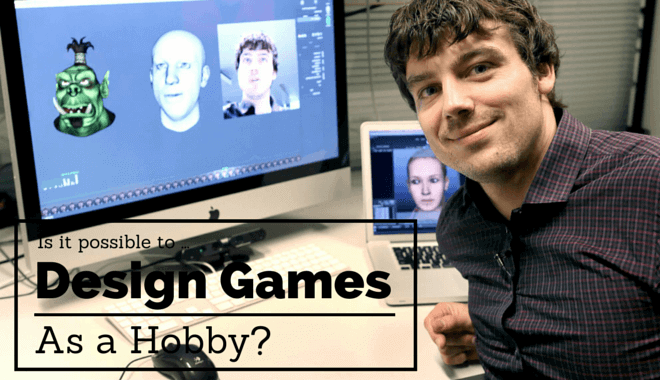




 The Art Center College of Design in Pasadena offers an Entertainment Design program made to prepare the next generation of creative storytellers. You’ll master the latest in digital technology to become effective at conceptualizing and creating work with your own voice.
 The California College of the Arts has two campuses in San Francisco and Oakland, which together teach more than 2,000 students each year. Both campuses offer a Bachelor of Arts degree in Animation that has helped aspiring animators like you break into the industry and do what they love for a living after graduation.
 At San Jose’s Cogswell Polytechnical College you can take advantage of one of the top Digital Art & Animation programs in the nation. This Bachelor of Arts degree starts off by giving future animators like you a strong understanding of traditional art.
 Coleman University is a private, nonprofit institution in San Diego that offers a robust Game Programming Development & Design degree program. The degree is designed to prepare you for a career as a 3D modeler as well as a game programmer, game designer, game tester, interface designer, and QA specialist.
 Loyola Marymount University in Los Angeles is one of 28 institutions belonging to the Association of Jesuit Colleges and Universities. They offer an excellent Animation program that gives students a strong understanding of how to create animations for video games, film, television, and other digital media.
 The University of Southern California in Los Angeles is one of the biggest and most renowned schools in the state.
 Ex’pression College for Digital Arts is home to an Animation and Visual Effects degree that prepares students for successful careers in 3D animation, 3D visualization, and visual effects for film, television, video games, and more.
 Video Symphony in Burbank offers a Graphics, Animation & Effects certificate program that offers the training needed to be a good visual effects artist. This includes courses that focus on video editing programs, Adobe software, and other visual effects tools commonly used by professionals in the entertainment industry.
 Moorpark College in Ventura County is a liberal arts college with a gorgeous 150-acre campus. They offer a Drafting Technology program designed to help students earn a career in fields relating to computer animation, interior design, architecture, and mechanical drafting and design.


 In pursuit of your Bachelor’s of Fine Arts in Fine Media, your
  Considered one of San Antonio’s finest animation programs,
  Located in Baytown, Texas, the certificate program offered at Lee College provides a thorough and comprehensive education in the field of digital game technology. Choosing this program offers you a thorough look at the gaming industry and market as well as what skills are necessary to create the storyboarding, animation, programming and graphic arts required to develop new games.
 Taking a look at the Associate of Applied Sciences Degree in Game Design at Richland College, you’ll find a fully immersive program designed to offer two tracks for your key focus. Whether you are seeking a core education in Art, Animation and Design or a degree in Programming, the choice is yours.
 You’ll quickly discover why the Computer Animation Program is one of
  Southern Methodist University is the cornerstone of Interactive Technology training. Located in Dallas, this groundbreaking program that was founded by early industry icons is a five and a half year program for those wishing to complete the full educational experience that ends with earning a Master’s Degree in Interactive Technology.
 Collin College, located in McKinney Texas is the only local public college, granting students an excellent opportunity to explore all that is available in the community-based college experience. Their Communication Design department provides an educational experience that meets the industry standards in the fields of graphic design, animation, digital video, web, and interactive design. You will discover industry-experienced faculty and practicing professionals amongst the highly trained staff. Drawing the latest practices and standards in the industry, you will be prepared for entry-level work in the field or moving on to a four-year degree and beyond.
 You’ll begin your education at Vista College with a program track that prepares you for a variety of animation careers in video games, film, and special effects as well as 3D animation. Located in San Antonio, this comprehensive program prepares you for lucrative career opportunities in the many fields demanding experienced and well-trained individuals such as Aerospace, Tourism, Defense, Education Information Technology and more.

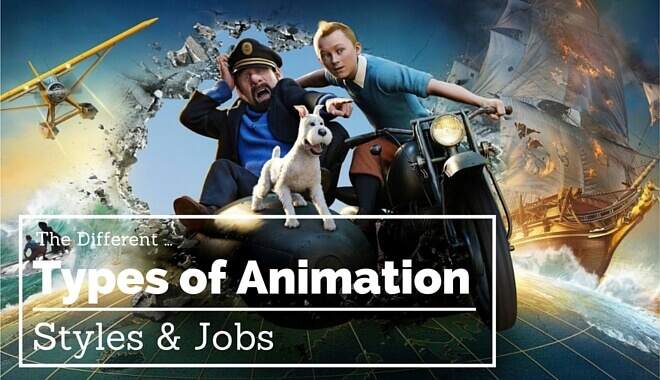
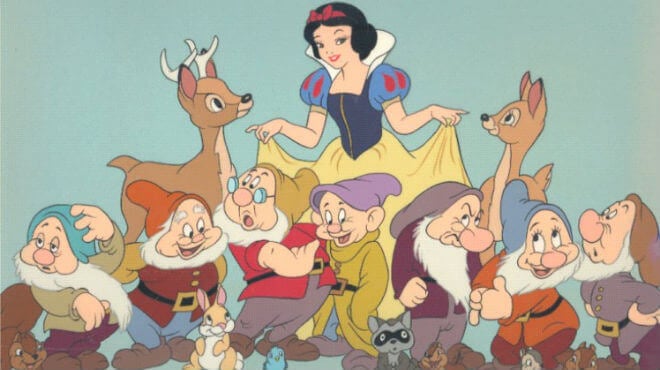

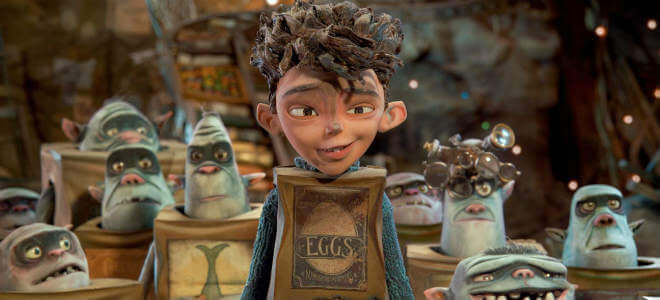





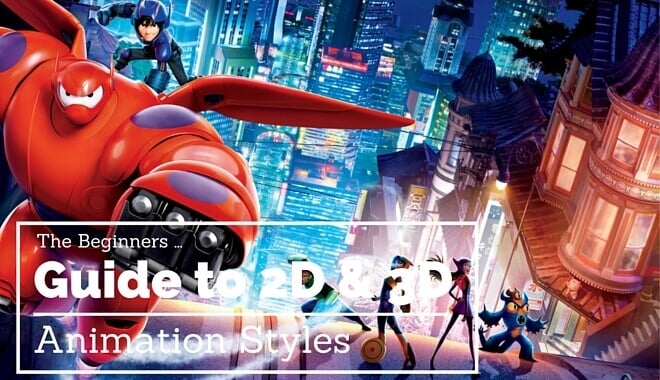
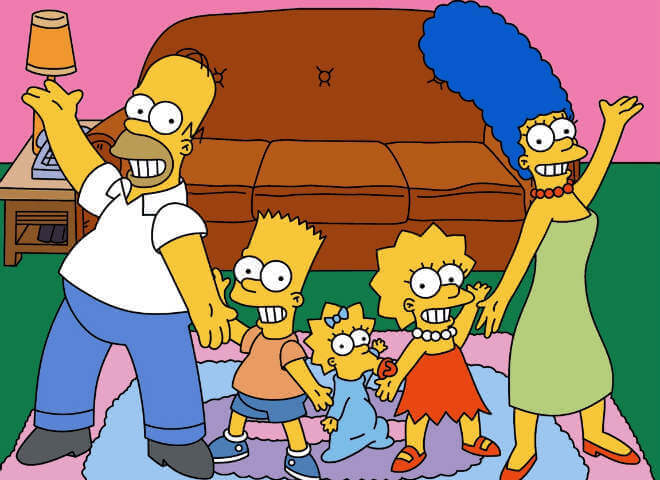

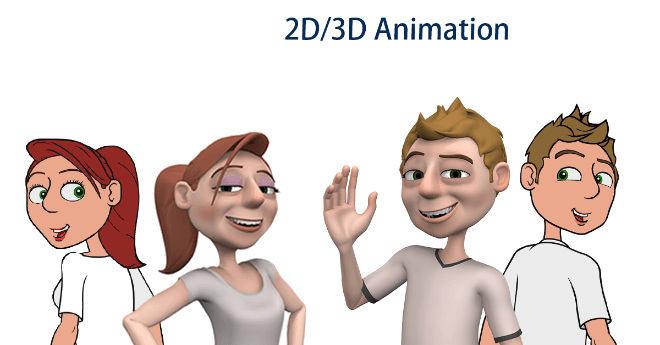 That being said, it is considered much easier to animate a 3D scene because you’re simply moving and manipulating the objects, lights, and camera.





 The International Academy of Design & Technology (Sanford-Brown) has a Digital Media Production program that will turn you into a professional animator in no time. You’ll graduate with the ability to create and produce digital media for a number of communication and entertainment fields.

 Ringling College of Art and Design in Sarasota is home to arguably one of the best animation programs in the state.
 Stetson University is one of the top animation schools in Florida with four college campuses found throughout Central Florida. Both their Minor and Major degrees in Digital Arts are available to turn you into a skilled 3D animator with experience in music production, image manipulation, video, and other interactive media.
 The University of Tampa has an excellent Bachelor of Fine Arts in animation program that offers training and experience in both traditional studio instruction as well as computer technology. Students can expect to develop their creativity, drawing potential, visualization skills, and design ability throughout the course of the program.
 Rasmussen College Florida is actually a system of schools located across Minnesota, North Dakota, Kansas, Illinois, Wisconsin, and Florida. Their Ocala, Florida campus offers both an Associate’s and Bachelor’s degree in Graphic Design that has helped countless students prepare themselves for a number of careers.
 Southern Technical College in Orlando offers an Associate’s Degree in Digital Design that’s perfect for aspiring animators and artists looking to land a job as a graphic designer, printing worker, desktop publisher, and more.
 Ridge Career Center in Winter Haven makes available a number of days, evenings, and online programs designed to prepare people for a career in a number of fields. A Digital Design program is available that may be of interest to any aspiring animators or digital artists.




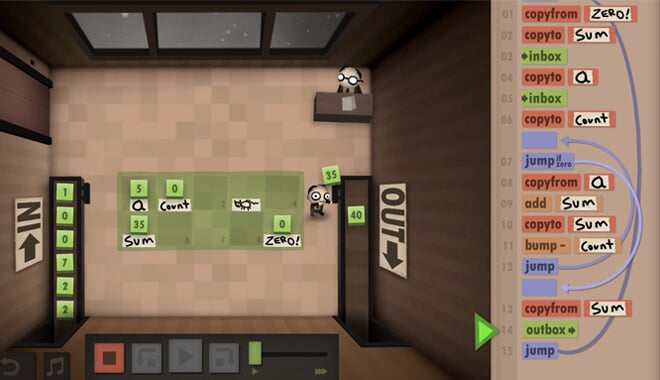





 Smaller studios mean more space for professional advice-givers, and if you have experience in game design then it might be time to consider going freelance.
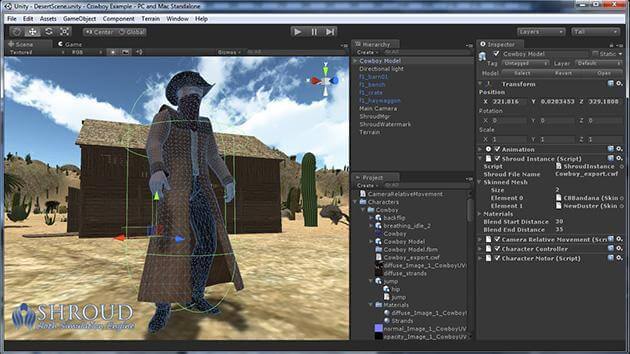

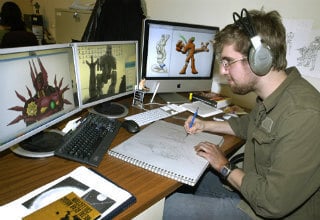 Unfortunately, the image you have of a lead designer is wrong.
 Days tend to start with following up on projects from the previous day/week/month – finding out where the developers are with the project, relaying that information to project management and marketing, and fixing any queries those departments might have with the game you’ve designed.



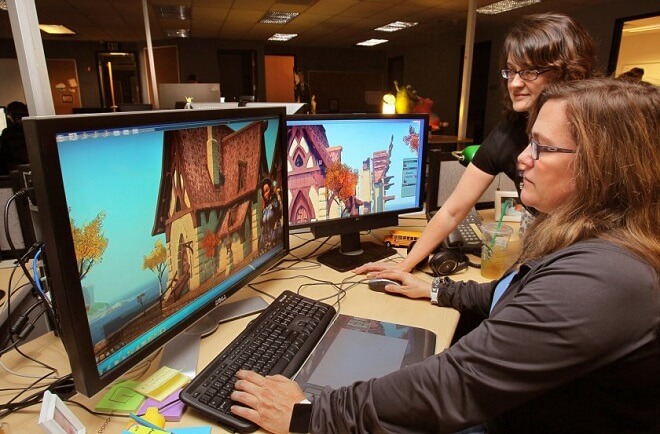

 Hollywood, Florida
 Columbus, Ohio