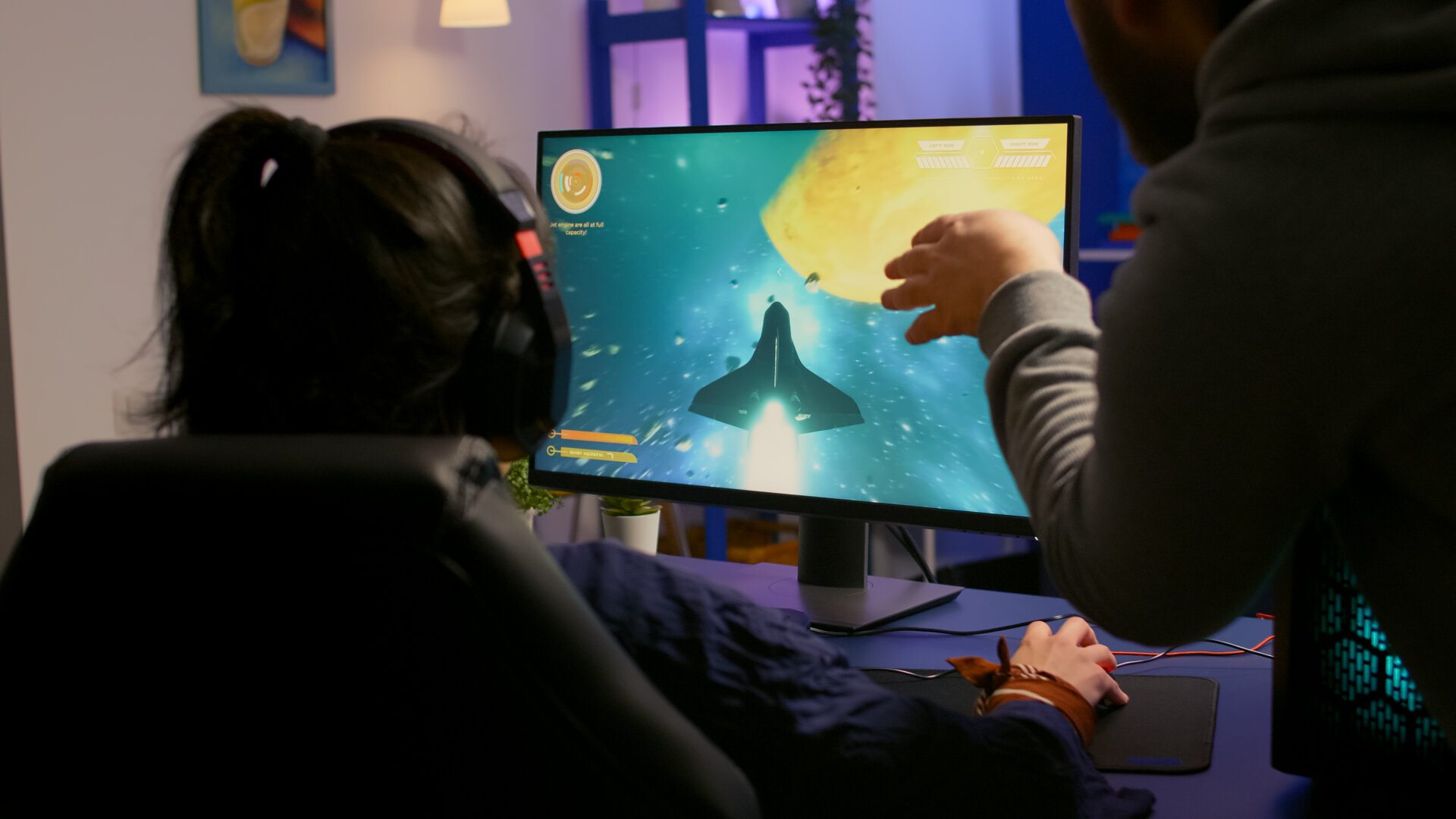
Are you interested in becoming a game designer? Read on to discover the most essential video game designer qualifications you need to finally enter the gaming industry as a professional.
As with any other profession across industries, qualifications matter in game design. You need to meet them if you really want the job of designing engaging and immersive experiences for players worldwide. But most people have a common misconception. Chances are, you also thought that you only needed to be extra creative to get in. While unique creativity is expected, it’s rarely enough.
In reality, modern game design goes beyond pure imagination. Every mechanic must survive technical constraints, production schedules, teamwork, and real player behavior. That’s why studios like Naughty Dog, Ubisoft, or Nintendo also typically consider your ability to execute, collaborate, and design within technical constraints. They hire people who can prove they understand systems, iterate under pressure, and translate abstract ideas into playable experiences. Studios want someone who can design games that will attract players and hold up for many years after the launch.
Now, it sounds challenging. And without sugarcoating anything, it actually is. But don’t let that discourage you. All you need to do is make sure you know the video game designer qualifications well. You want to meet all the requirements that will make you employable in a game designer work environment.
That said, save yourself the trouble of digging across the internet for the specifics. This guide breaks down everything you need to know about the video game designer qualifications, so you’ll understand what matters, what is optional, and what actually gets you hired.
Education Needed for Video Game Designers

It’s an open secret in the game industry that studios have always been relatively flexible about academic backgrounds, as long as candidates can demonstrate real design capability. Nonetheless, they still value education.
While it’s far from a strict requirement, many designers have degrees in game design from specialized game design schools. On this route, you can engage in structured learning through programs that simulate production pipelines. So, you can expect to work in teams, pitch ideas, build prototypes, and present playable projects. On the other hand, there are also game designers who came from unrelated academic backgrounds. In fact, a survey conducted by Amazon Game Studios’ Jason Bay found that there are game designers who have come from computer science, humanities, art, media, applied science, information technology, and business as their fields of study.
Meanwhile, if you deem that these pathways aren’t for you, you can always opt for online courses, boot camps, and tutorials. Many successful names in the game industry actually took a self-taught path. Like Eric Barone, who created Stardew Valley. Although he did graduate with a computer science degree, he basically taught himself how to make a video game.
For aspiring game designers, attending universities such as the University of California and DigiPen Institute of Technology is recommended. They are often ranked among the top schools for game design and related programs. On the other hand, you can enroll in game design courses on Coursera or Udemy. Or perhaps, leverage detailed tutorials on channels like Extra Credits and Game Maker’s Toolkit.
Essential Skills for Game Designers

Now, the reason why formal education isn’t generally considered mandatory is that skills are the real currency of game design. In many studios, employers measure a game designer’s value by what they can design, test, and apply in practice, not just by what they know in theory. In other words, they want someone who can walk the walk, not just talk the talk. But at the same time, this also proves the importance of education. Regardless of the pathway, studying grants critical knowledge and skills in game design.
Soft Skills
One of the most important abilities is creativity. Game design entails conceptualizing unique gameplay and game worlds, and limitless imagination is vital to do so. In the same way, communication is critical. You can have a brilliant idea, but if you cannot explain it clearly to other developers, the project can lose direction. Open communication also strengthens collaboration, which is highly significant in game creation.
Closely tied to this is an understanding of player psychology. Good designers go beyond creating a fun game. You need to develop a project that keeps players engaged. Aside from these, adaptability and project management help a game designer thrive. These ensure you can find ways to solve problems, preventing delays or failures that would keep the project from meeting standards.
Technical Skills
Basic programming is essential for game designers. That’s why you need proficiency in various game engines. Unity is widely used in mobile and indie development, while Unreal Engine is popular among high-end AAA production. Yes, you’re not expected to be a full-fledged programmer. But you can count on an employer wanting you to understand how these engines function. This includes basic scripting logic, how gameplay systems are assembled, how assets are integrated, and how to debug issues when mechanics fall apart.
Beyond proficiency in game engines, many studios also expect game designers to possess other software skills. Tools like Blender are often used for quick prototyping of environments or gameplay spaces. Even if designers are not the ones creating the final assets, your understanding of spatial design and object placement is crucial to maintaining a smooth level flow and player navigation. Similarly, standout game designers should know their way around design software, such as Adobe Photoshop or XD, which are frequently used for UI mockups, interface layout planning, and visual communication with artists. You need to be able to create rough sketches to speed up decision-making.
All of these abilities form the core of video game designer qualifications because they mirror real-world production pipelines in game design. That means your ability to generate fresh ideas, solve problems, work in a team, and use multiple industry software is no longer optional. Such skills are valued because they impact how quickly ideas can be tested and iterated.
Certifications for Video Game Designers
Unlike other fields, game design does not rely heavily on certifications as a hiring requirement. However, it doesn’t mean that having one or two won’t help. Certifications can still serve a useful supporting role. And this is especially true for those transitioning into the game industry from unrelated careers.
Programs such as Unity certifications or Unreal Engine training courses can help validate foundational knowledge and show that you’ve engaged with structured learning. Online platforms like edX also offer courses in interactive storytelling, game theory, and UX design that can help bridge knowledge gaps in key design concepts. In addition, Ed2go has partnered with several game design schools to offer a continuing education program covering game asset creation, programming languages, and general game development techniques.
In practice, adding one to your credentials can boost your chances of landing a video game design career. But it’s important that you view them as supplementary signals within the broader framework of video game designer qualifications.
Building a Game Design Portfolio
While certifications can help you get noticed, they don’t outweigh formal education and skills. And in many hiring processes, one effective way to showcase your knowledge and skills is through a strong portfolio. It’s where theory becomes visible evidence.
In building one, you don’t necessarily have to make it large. What matters more is making it intentional. What does that mean? A single small but well-designed playable game can demonstrate more capability than multiple unfinished projects. Even simple mechanics built in Unity or even Godot Engine can show understanding of core design principles, from feedback loops to pacing and player motivation. A basic platformer with tight controls and well-structured levels can be more impressive than a visually complex but poorly designed project.
Another equally important component of your portfolio is design breakdowns. For those unfamiliar, these are written or visual analyses of existing games that show how certain systems work. Take, for example, how Hades uses narrative repetition or how Portal 2 teaches mechanics through level progression. Showing the ability to break down games into components emphasizes that you understand design intent rather than just gameplay experience.
You can also prove your skills in working within constraints by including modding work or custom levels built for existing games in your portfolio.
Ultimately, video game designer qualifications are best seen through portfolios, as they show not just what you know but how you apply it. In most hiring decisions, this highlights playable work and clear design thinking, which matter more than degrees and certifications.
Experience Required for Game Designers
As a newcomer in the gaming industry, you would probably find it ironic that you’re applying for a position to gain experience, but employers prefer that you have experience before hiring you. Know that it’s normal, and there are workarounds. Keep in mind that experience in game design is not always formal employment. You can gain relevant production exposure through many indirect paths.
Internships remain one of the most common ways to do so. By working as interns in either major or indie studios, you will surely get structured exposure to production pipelines and real team collaboration.
One more effective entry point is participating in game jams. Global Game Jam, the world’s biggest game creation event, enables participants to design, build, and finish a game in a very short timeframe. And this form of practice can make you valuable in the actual industry, as most projects entail production pressure and rapid iteration under constraints.
If you’ve been following games, you probably know about the mods created for games like Skyrim and Minecraft. Surprisingly, these gave birth to modding communities that can also serve as unofficial training grounds. Through extensive ecosystems, you can experiment with mechanics, level design, and player interaction without needing a studio environment.
With the experiences you can gain from these, you’ll be moving from just theoretical knowledge to applied design in real-world settings.
Tips for Aspiring Game Designers

A few extra steps on top of the video game designer qualifications can certainly help you reach your goal. To help you navigate the path, here are a few practical tips:
- Start with small projects – Instead of forcing yourself to create large, complex games that never really get completed, focus on simple concepts that still showcase what you can do and that you’re likely to be able to finish. A polished puzzle game is much more impressive than a messy hardcore simulation.
- Examine existing games – Play many games as much as possible. But don’t just have fun; play them actively so you can study what makes them work. For example, play titles like Elden Ring and focus on why enemy placement and world design create specific emotional responses.
- Engage with communities – Be sure to value constant feedback and join Discord groups, game jams, and online forums. Doing so exposes you to critique, iteration, and collaboration. All of which reflect industry realities.
- Build up your contacts – Attend meetups and events to expand your network of game design professionals that can, in one way or another, help you find and get jobs within the industry.
- Be open to starting in small roles – Don’t be hesitant to accept junior positions. For instance, taking a quality assurance tester role can expand your gaming knowledge. Breaking into game design is less about finding the perfect opportunity. It’s more about building consistent evidence of capability over time.
Key Takeaways
Romanticizing game design as pure creativity will get you on the wrong foot. Real game design is a structured discipline built on systems, constraints, and iteration. The strongest game designers are those who can balance imagination with execution.
When you look at actual job openings at companies like Hasbro or Rockstar Games, the most common requirements include, but are not limited to, in-depth game design principles and gameplay mechanics knowledge, understanding of object-oriented programming patterns, proven experience in game design environments, and multiple skills like problem-solving, programming, and visual scripting. And this is just a glimpse of the many things you need to qualify for.
That means you need to view video game designer qualifications as a layered progression of capability. Education provides structures, skills provide execution, certifications provide additional validation, and portfolio and experience provide proof and context. Most importantly, treat your body of work as part of your evolving video game designer qualifications. Over time, they will become the proof studios rely on when deciding whether to hire you.

