Home Blog Page 3

Building Your First Game Without a Programming Degree․ Let’s Go!

0

The myth that game development needs a computer science degree is no longer relevant. Modern tools have separated technical complexity from creative execution. Nowadays, an amateur can create a playable game with visual systems, off-the-shelf frameworks, and asset ecosystems that do not require one to write conventional code, much like wanting to create a video. What still matters is systems thinking, iteration discipline, and understanding player experience. This guide will show the realistic way to go through no experience to a completed first game.

Code-First to Tool-First Development

For decades, game creation meant programming engines from scratch. This was altered when commercial engines started to abstract low-level systems such as rendering, physics and input handling. Modern engines such as Unity, Unreal Engine, and Godot provide 

  • Real-time editors
  • Drag-and-drop object systems
  • Built-in physics and lighting
  • Asset libraries
  • Export pipelines for PC, mobile, and web

Beginners are not involved in engineering infrastructure; they are involved in assembling systems of gameplay. The difference is similar to filmmaking: you no longer build a camera; you learn framing, lighting, and editing. 

Choosing the Right Engine as a Beginner

Not all engines serve first-time developers equally. Your choice affects learning curve, flexibility, and completion probability. 

Visual-first engines 

Best for non-programmers. 

  • Construct 3 is browser-based and uses event-driven logic. 
  • GameMaker offers drag-and-drop logic with optional scripting for more advanced control.
  • RPG Maker offers ready-made structure of turn based games.

These engines are based on event systems. Instead of writing code such as if player health is below zero, trigger game over, you define triggers through logic blocks like when health equals zero, trigger game over. This cause and effect mapping is a reflection of the way designers think.

Hybrid engines 

Allow room to grow beyond beginner limitations.

  • Unity supports visual scripting as well as C#
  • Unreal engine supports Blueprint visual scripting and C++

The tools will enable the beginners to begin visually and progressively embrace programming where necessary.

  • A good substitute is Godot, which is an open source. It is light, non-expert friendly and has optional scripting in case one wishes to have greater control and not be pressurized by commercial ecosystems.

Visual Scripting: Programming Without Syntax

Visual scripting replaces written syntax with node graphs or event blocks. Its advantages are practical. It eliminates syntax errors, teaches logical structure, speeds up prototyping, and encourages experimentation. You still design systems, you simply connect logic blocks visually.

In traditional programming, you create variables, check conditions, and call functions. In visual scripting, you connect nodes such as Player Collision, Reduce Health, and Trigger Animation. The logic is identical, but the interface is visual. This approach builds computational thinking without requiring abstract syntax memorization.

Asset Ecosystems: Reusing Instead of Reinventing

One reason why first time developers give up is that they end up trying to do everything on their own. There is no longer that bottleneck in modern asset marketplaces. There is no need to create character models, animations, sound effects, environments, or user interface elements as such.

Marketplaces like the Unity Asset Store and itch.io provide affordable or free resources that accelerate development. Using assets is not cheating. It mirrors professional workflows where studios license tools to reduce production time.

Beginners should treat asset stores as construction kits: assemble gameplay first and customize aesthetics later.

The Real Workflow of a First Game

  1. A realistic beginner pipeline starts with a very small concept. Not an RPG, not an open world. Examples include dodging falling objects, a simple platform jumper, or a one-screen puzzle game. Small scope dramatically increases completion probability.
  2. Next comes building a graybox prototype using primitive shapes instead of finished art. The goal is to test movement, validate the camera, and ensure mechanics feel responsive. At this stage, visuals are irrelevant. Playability is everything.
  3. Once the foundation works, core mechanics are implemented. Focus stays on the primary interaction loop such as jump timing, shooting accuracy, or object physics. If the core mechanic is not satisfying, visual polish will not fix the experience.
  4. After mechanics are stable, feedback systems are added. Sensory confirmation is dependent on players. The sound and action in picking up things, screen vibration when hit, and during damage taking animation goes a long way in enhancing perceived quality.
  5. Only at this point, should temporary images be substituted with adequate assets. Art assists in the gameplay and must not be an obstacle to development.
  6. The last is to create a whole playable loop which includes a goal, challenge, reward and the opportunity to restart. Even the traditional arcade games are based on such a structure.

Common Beginner Mistakes That Kill Projects

The most widespread point of failure is the scope explosion. Novices create dream games rather than initial games. A pilot project ought not to be a year project but a weeks project.

Tool-hopping is another trap. Changing the engines during the project is backward and destroys morale. Pick one engine and finish something small.

Pre-functional perfectionism is a waste of power. Being on visual polishing days then on the test gameplay and becoming burnt. A simple visual game is preferable to a beautiful prototype game that will not play.

The tutorial dependence gives a false impression of improvement. Tutorial watching is a productive experience, but the actual building is what trains real skills.

Not respecting playtesting does not allow any improvement. The developers unconsciously learn to live with their flaws, and the newcomers expose them right away.

Learning Curve: A Realistic Timeline

After a diligent effort, the initial weeks will be dedicated to mastering the engine interface, passing through a tutorial, and learning about the object systems.

The third and fourth week should be sufficient to create a minimal prototype, add movement and camera functionality, and release a prototype that is playable.

The second month is dedicated to the development of mechanics, the inclusion of asset libraries, and the development of a full game cycle.

In month 3, attention is actually given to interface polish, audio implementation, and testing.

It takes two to three months to code a programming background with a basic playable game. Mastery requires years, but completion does not.

The visual systems are limited at some point. Scripting can be required to create complex artificial intelligence behaviors, elaborate procedural systems, and performance optimization.

Basic programming is at this point useful but not compulsory.

There are a great number of success stories of developers who act as designers in the use of visual tools, artists in the use of marketplace assets or producers in the organization of freelancers.

Games are multidisciplinary products, not coding exercises.

What Actually Determines Success

Technical skill is rarely the primary barrier. More decisive factors include systems thinking, understanding how mechanics interact, and iteration discipline — the habit of testing, refining, and simplifying repeatedly.

Constraint acceptance is equally important. Creativity thrives under limits, and successful beginners design within manageable scope.

Player empathy determines whether mechanics feel intuitive and rewarding. Designing for experience rather than developer preference separates engaging games from technical experiments.

These competencies develop through project completion, not passive study.

Technology no longer blocks beginners. Completion psychology does. The development pipeline is accessible. The real challenge is persistence through bugs, confusion, and imperfect outcomes. Finishing a small, imperfect game teaches more than planning a perfect one.

A first project is not meant to be a portfolio masterpiece. It is proof that you can design systems, solve workflow problems, and ship a playable product.

That milestone separates aspiring developers from practicing ones. 

A programming degree is no longer the gateway to game development. Modern engines abstract complexity, visual scripting replaces syntax barriers, and asset ecosystems reduce production overhead.

What remains essential is design logic, structured iteration, and disciplined scope control.

The modern path into game creation resembles digital construction rather than engineering from raw materials.

You do not need to build the machine.

You need to learn how to assemble meaningful interactive experiences using the tools already available.
Sweepstakes Casino Coins Explained: Gold vs. Sweep Coins

0

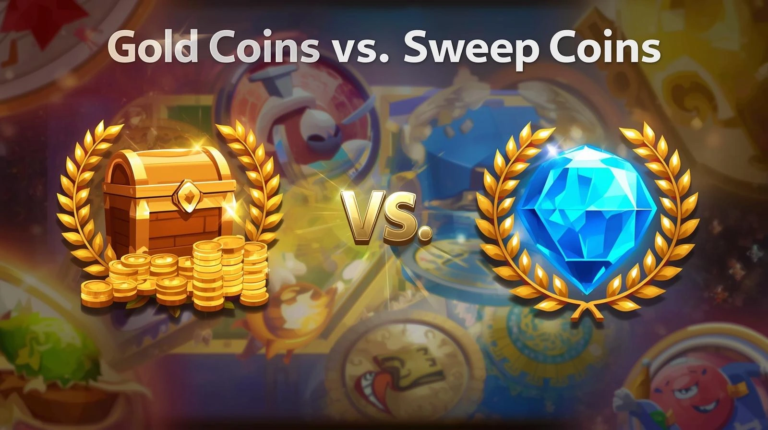
Whether or not you’ve spent time at an online social casino, it’s possible you’ve experienced some confusion in regards to how online social casinos use the dual-currency system and how they appear to be intentionally made as difficult for new players to understand. As Sweepspulse mentions the reason for understanding the differences in Gold Coins and Sweep Coins isn’t simply for educational reasons, it can help maximize your enjoyment of the games and allow you to clearly understand what you are getting when you make each click.

The Two-Currency System: A Legal Innovation

Sweepstakes Casinos did not create Dual Currency Systems for Convenience; They had to create them to meet the need to comply with State Gambling Laws and provide an exciting casino gaming experience to Players.

Why Two Coins Exist

The separation serves a critical legal function:

Gold Coins Sweep Coins
Purchased for entertainment only Obtained free as bonuses or through AMOE
No monetary value Redeemable for cash prizes
Unlimited purchase amounts Strict earning limits and expiration dates
Used for fun/play-money gaming Used for promotional sweepstakes entries
No tax implications Winnings may be taxable income

This difference between a gambling experience and a promotional sweepstakes model makes it Legal in Most U.S. Jurisdictions.

Gold Coins: The Entertainment Currency

Think about Gold Coins as either the “chips” you use at a poker game or as virtual tokens that you can earn at an arcade. Their sole purpose is to add a level of fun to your gaming experience and have no real-world value beyond your enjoyment of the games themselves.

What do Gold Coins do?

Methods to acquire Gold Coins:

  • Purchasing direct bundles of Gold Coins (and sometimes getting free Sweep Coins)
  • Awarded through daily sign-in promotions, special events and sweepstakes
  • Gained by participating in social media promotions and referring friends
  • Re-wards earned through VIP programs for being loyal to the site.

Key characteristics of Gold Coins:

  • There is NO WAY TO WITHDRAW GOLD COINS – Once you’ve bought Gold Coins, they’re used up within gameplay
    • USE THEM ALL YOU WANT – You may use Gold Coins on ANY slot machine, table game, or specialty game title
    • THEY COST VARYING AMOUNTS OF MONEY – From $0.99 “try it out” bundle to $99+ “high roller” package
    • LARGE PURCHASES USUALLY TRIGGER EXTRA BONUSES – A larger Gold Coin purchase will usually allow access to new/unique games or features

Pro tip: Players who smartly budget for entertainment, like going to a movie or paying for a subscription service, will treat Gold Coins as an entertainment expense. Do NOT buy more Gold Coins than you would spend on a single evening out.

Why casinos design Gold Coin purchases to be “frictionless”

Casinos create an environment where Gold Coin purchases are designed to appear seamless. The bright colors, celebratory animation and “limited time” bonus countdowns make you want to continue playing. Important to note: These are entertainment items, not investments. Even when playing with Sweepstakes Gold Coins, the House Edge exists; therefore the mathematically expected outcome over time is always in favor of the casino.

Sweep Coins: Where Real Value Lives

Sweep Coins (Sweepstakes Coins), (also known as Sweeps Coins; Sweeps Cash; or Sweeps), are the sweepstakes gaming elements that exist in these programs. These programs have a very different legal sweepstakes gaming format than social casino applications.

Gaining Sweep Coins: The No Purchase Option

There are many ways to obtain Sweep Coins since the “No Purchase Necessary” stipulation was implemented. A number of the ways are listed below:

  1. Mail-in Requests (AMOE)

    2. Purchase Bonus

    3. Social Media and Contests

    4. Daily Rewards

    How to Redeem Sweep Coins to Win Real Money

To redeem Sweep Coins for real cash prizes there are multiple steps to complete:

Step Details Timeline
Account Verification Government ID, proof of address, banking details 24-48 hours
Playthrough Requirements SC must be wagered 1x before redemption Instant after betting
Minimum Threshold Usually 50-100 SC minimum for first redemption N/A
Processing Method Bank transfer, PayPal, or gift cards 3-10 business days
Tax Documentation 1099 forms for winnings over $600 End of fiscal year

Critical Differences Players Must Understand

Beyond the most obvious “rewards for fun versus rewards for money” differences, there are many other operational differences that can greatly impact your overall experience as a player at Sweepstakes sites.

Expiration Dates

Gold Coins never expire. They will always be in your account until you choose to spend them or close your account. Sweep Coins typically have an expiration date of 60 days from when you last logged into your online account. If you don’t log back into your online account and use your Sweep Coins within those 60 days, they will no longer be available for you to use and will be forfeited by the site.

Games That Can Be Played

The majority of all gaming sites, including Sweepstakes sites, limit the amount of high RTP (Return To Player) games that can be played using Sweepstakes coins. Some progressive jackpot games and Live Dealer games can only be played with Gold Coins because these types of games create a huge liability risk for the gaming site if large amounts of Sweepstakes winnings were redeemed.

Wagering Mechanics

When you are playing a game using Sweepstakes Coins:

  1. Every time you place a bet, you are entering a Sweepstakes drawing for the chance to win even more Sweepstakes Coins.
    2. Any winnings you receive will also be awarded in the form of additional Sweepstakes Coins.
    3. The only way to get additional Sweepstakes Coins is by earning them through approved methods – you cannot buy more Sweepstakes Coins.

Conclusion

The Gold Coin/Sweep Coin separation is an ingenious legal innovation in today’s gaming market. Gold coins provide a fun and cost-free experience (for practicing), and use sweepstakes coins to generate real cash. Always use Gold Coins to practice and have fun and never use Sweep Coins unless you are sure you will win them back.

Gold Coins and Sweep Coins can coexist so long as America has multiple different state gaming laws. Understanding how to use both coins gives you a clear view of what each coin does and how to use them.

Read all the specific platform rules before buying or exchanging Sweep Coins for cash. Laws for Sweepstakes Gaming Vary Between Jurisdictions. Also, Responsible Gaming is always a Top Priority

How Rainbow Six Siege Uses Currency to Shape Player Progression

0

Rainbow Six Siege is widely recognized for its tactical gameplay, destructible environments, and emphasis on teamwork. Unlike many traditional shooters, success in Siege relies heavily on operator abilities, map knowledge, and strategic coordination rather than fast reflexes alone. Alongside these gameplay systems, Ubisoft has also built a structured progression economy that revolves around unlocking operators and cosmetics.

From a game design perspective, Siege offers an interesting example of how currencies can be used to support long term player engagement while maintaining competitive balance. The system allows players to customize their experience while keeping the core gameplay fair for everyone.

Why operator design drives the entire progression system

At the center of Rainbow Six Siege is its roster of operators. Each operator introduces unique gadgets and tactical possibilities that can completely change how a round is played.

Because these abilities directly influence strategy, unlocking operators becomes a key part of progression. Early in the game, players begin with a small selection of characters. As they play more matches, they earn resources that allow them to expand their roster.

This design encourages gradual learning. Instead of overwhelming players with dozens of options immediately, the game introduces operators over time so players can understand each gadget and counter strategy.

The role of currencies inside Rainbow Six Siege

Rainbow Six Siege includes multiple currencies that support the progression system. Renown is earned through gameplay and can be used to unlock operators or cosmetic items. This currency rewards consistent play and encourages players to complete matches, challenges, and seasonal events.

Alongside this system, the game also includes premium currency that players sometimes discuss when considering cosmetic content. In community conversations about bundles, skins, or seasonal items, players frequently reference R6 credits as the currency used for purchasing certain cosmetics and premium content.

This dual currency model is common in multiplayer game design because it separates gameplay progression from optional cosmetic purchases. The structure helps maintain fairness while still allowing developers to support ongoing updates.

Cosmetic customization and player identity

While operator abilities define gameplay strategy, cosmetics play an important role in player identity. Rainbow Six Siege offers a wide variety of visual customization options including

  • Weapon skins that change the appearance of firearms
  • Operator uniforms that alter character outfits
  • Headgear variations that provide visual individuality
  • Weapon charms that attach to guns as collectible items

These items do not affect gameplay performance, but they allow players to express personality within the game. For designers, cosmetics are a safe way to expand the economy without disrupting competitive balance.

Seasonal events and themed bundles also encourage players to return regularly, since new cosmetic content is introduced throughout the year.

Why Siege’s economy works for a competitive shooter

Designing a progression system for a tactical shooter presents unique challenges. Any system that gives players gameplay advantages through purchases would undermine the competitive nature of the game.

Rainbow Six Siege avoids this problem by ensuring that operator access can be earned through normal gameplay while cosmetics remain optional. The economy therefore supports engagement without forcing players into spending money in order to compete.

Discussions about digital marketplaces occasionally appear in gaming communities when players talk about cosmetic items or in game currencies. Platforms such as Eldorado are sometimes mentioned in these broader conversations about digital gaming economies.

However, the core progression in Siege still revolves around playing matches, learning operators, and improving tactical coordination.

Long term design lessons from Rainbow Six Siege

Rainbow Six Siege has remained relevant for many years because its systems combine deep gameplay with a sustainable progression model. The game regularly introduces new operators, maps, and seasonal content while maintaining a stable competitive environment.

For game designers, the title demonstrates how currencies, cosmetics, and operator progression can work together without compromising fairness. The balance between gameplay rewards and optional purchases allows the game to evolve while keeping the tactical core intact.

As multiplayer shooters continue to grow, Siege remains one of the clearest examples of how thoughtful economy design can support both player engagement and long term competitive integrity.

Probability Engines and Reward Architecture in Modern Digital Platforms

0

Visit any large digital system that requires random selection of results, be it a mobile game, a sweepstakes platform or a regulated gambling product and one thing dominates the centerstage; How are results determined, how are rewards designed. Spinning reels or digital cards can be viewed by the users, but behind the scenes, there is rigorous math, deterministic probability and verified logic. Global gaming regulators state that certified random number systems are required to meet statistical tests that verify that the system is fair in the long term. Having experience of working with product teams and the analysis of technical audits, I can state it this way: the design of the engine is a determiner of trust, retention, and revenue. It is time to deconstruct how these systems work.

Core Structure of Probability Engines

At the heart of any chance-based platform sits a probability engine. In regulated environments, this engine relies on a pseudo-random number generator (PRNG). A PRNG produces number sequences that pass randomness tests such as chi-square distribution analysis. Testing labs like eCOGRA and GLI validate these systems before launch.

The structure typically includes:

  • A seed value that initializes the number sequence
  • An algorithm that generates outcome values
  • A mapping table that converts numbers into results

For example, a number between 1 and 10,000 may map to predefined symbol combinations. The distribution is not guesswork it is mathematically defined before deployment.

A casino game development company must ensure that this structure meets jurisdiction rules. In the United Kingdom, for instance, the UK Gambling Commission requires documented RTP values and independent testing certification. Without this foundation, no platform can operate legally in regulated markets.

Mathematical Models Behind Reward Distribution

Probability engines define outcomes, but reward distribution models define value. Return to Player (RTP) is the most cited metric. RTP represents the theoretical payout percentage over millions of cycles. For example, a 96% RTP means that over long-term play, $96 returns to players for every $100 wagered. The remaining 4% represents house edge.

Volatility, also called variance, shapes how rewards appear:

  • Low variance: frequent small payouts
  • Medium variance: balanced frequency and size
  • High variance: rare but large payouts

These profiles influence user behavior. High variance systems may attract risk-tolerant users, while low variance formats support longer sessions.

Progressive prize pools add another layer. A fixed percentage of each wager contributes to a shared pool. Once triggered, the system resets to a predefined base value. This structure is common in digital slot platforms and verified by independent testing labs.

When a casino game development company builds such systems, it must calculate:

  • Exact payout frequency
  • Maximum exposure limits
  • Long-term revenue stability

Mathematical transparency protects both operator and player.

Reward Architecture Design Framework

Probability defines what can happen. Reward architecture defines how users experience it.

A strong reward framework follows a clear loop:

  1. Action
  2. Outcome
  3. Feedback

Feedback matters more than many expect. Visual signals, sound cues, and progress indicators shape perception of value. Research in behavioral economics shows that near-miss outcomes can increase engagement without altering payout percentage. However, regulators monitor such mechanics to prevent misleading design.

Tier systems extend the architecture. Many platforms use multi-level reward tracks:

  • Base level with standard rewards
  • Mid-level with bonus multipliers
  • High-tier access with exclusive features

Dual currency models are also common. One currency is earned through activity. Another is purchased. Clear conversion limits prevent imbalance.

Player Behavior and Statistical Response

Numbers alone do not explain platform success. Player response to probability systems completes the picture. When reviewing analytics dashboards for digital gaming products, one pattern appears again and again: behavior shifts based on payout frequency and reward timing.

Low variance systems often produce longer session length because small wins occur more often. High variance systems create shorter but more intense sessions due to rare large payouts. This is not theory. Data published by industry analysts such as Newzoo shows session frequency and retention strongly correlate with reward pacing.

Key measurable metrics include:

  • Average session duration
  • Return visit rate within 7 days
  • Churn rate after loss streaks
  • Lifetime value per user

Near-miss outcomes also affect engagement. Behavioral research confirms that outcomes close to a win can increase replay intent, even when probability remains unchanged. However, regulators monitor this mechanic to prevent misleading perception.

Clear feedback loops and transparent probability display reduce confusion and support long-term retention stability.

Compliance, Transparency, and Audit Standards

Probability systems in regulated markets must pass independent testing before release. Labs such as GLI (Gaming Laboratories International) and eCOGRA conduct statistical validation of random number generators. These audits confirm that outcome distribution matches declared Return to Player (RTP) percentages.

Regulators impose strict requirements. For example:

  • The UK Gambling Commission requires clear RTP disclosure.
  • Malta Gaming Authority mandates certified randomness reports.
  • Many jurisdictions enforce age verification and deposit limits.

Transparency extends beyond math. Platforms must display:

  • Game rules in plain language
  • Odds information where required
  • Full transaction history access

Regular reporting ensures ongoing compliance, not just pre-launch approval. Audit logs track every transaction and outcome event.

From professional observation, platforms that invest in compliance infrastructure build stronger long-term credibility. Short-term revenue tactics rarely survive regulatory review. Trust grows from documented fairness, clear communication, and independent oversight.

Technical Infrastructure and Scalability

The stability and accuracy of server infrastructure are required of probability engines. All results should be computed, documented and verified on real time. Every millisecond can be an issue in a regulated environment, and therefore the speed of response is an issue of concern. Events like jackpot hits or high participation tournaments demand the allocation of loads to more than one server to avoid overburdening.

High availability; This requires multiple server clusters so that when one node fails the other one will automatically start without any loss of data. To ensure audit standards, i.e., to be able to access logs and trace transactions, every transaction is time-stamped and stored in encrypted logs. Systems of monitoring anomalies, payment distribution and abnormal traffic patterns are monitored 24 hours. Scalability is not optional. As the number of users increases, probability calculations should be of the same format and at the same time. Uniformity will provide justice, adherence, and continuity in services on all gadgets.

Board Game Design: Key Steps to Creating Your Own Engaging Tabletop Game

0

When people talk about gamers, the first thing that comes to their mind is people who play video games. It makes others wonder whether board games are going out of style. Actually, they are not fading away anytime soon. In fact, the global board games market is projected to reach $41.07 billion by 2029. The figure indicates that the popularity of tabletop games continues to grow, with players seeking more social and immersive experiences beyond digital screens. As the demand for this game form increases, many creators are becoming interested in learning the ins and outs of board game design.

However, both seasoned game designers and beginners may need some guidance on making a well-crafted game board design, as it features notable differences from modern video games. But worry no more! This article will walk you through the key concepts of board game design and the steps that are necessary in the process of creating your own successful board game.

Understanding Board Game Design Basics  

Image designed by Freepik

At its core, board game design focuses on having a structured system. It is where players interact with rules, components, and objectives to achieve specific outcomes. Compared with video games, tabletop games involve physical components and direct player interaction.

Key Elements of Board Game Design

  • Experience Design

A game should allow players to become invested and truly connect with it.

  • Physical Design

Every component must improve the gameplay and make the game more immersive and interactive.

  • Strategy Design

Players should have defined mechanics and objectives for a clear direction when playing.

  • Visual Design

The game should be visually appealing to enhance player retention and potentially attract a broader audience.

How to Design a Board Game

Image designed by Freepik

There is no strict or universal approach to board game design. Many things can differ from one designer to another. Nevertheless, here is a basic approach you can take in starting your journey in board game design.

  • Start with an Idea

Identify what type of game you want to create. One way to do it is by asking yourself questions such as: Who will play the game? How should they feel? What makes this game unique? What are the objectives?

  • Build a Basic Prototype

Transform your ideas into a physical format. It does not need to be visually polished yet. You will use this to define the board layout and player flow to test the gameplay concept.

  • Test and Refine

Invite other people to participate in a playtest, so you can see if the rules are clear, the gameplay is balanced, and the overall game flows smoothly.

Enhancing Your Game Design Board

After you are done making a core gameplay that works well, the next thing you should do is enhance the game design board. It adds up to the overall playing experience, which can potentially either make or break your game.

  • Integrate a fitting artwork that matches the essence of your game.
  • Add components like tokens, dice, cards, miniatures, and trackers.
  • Put dynamic areas where players can make exciting decisions.

The additional elements that you will add do not necessarily need to influence gameplay. Their purpose would be to make the game more fun, immersive, interactive, and memorable. Subsequently, once you are finished with these steps, you can proceed to the actual production.

Common Mistakes in Board Game Design

Mistakes are part of life, which means they are essentially inevitable even in the process of board game design. Yes, it can be exciting to be making a tabletop game, but creators often encounter challenges. That is why we are going to help you identify all the possible problems you can encounter, so you can do your best to avoid them.

  • Unclear Game Direction

Sometimes, excitement can get ahead of you, and it can cause you to make a game immediately without having clear objectives. Consequently, it can also lead to a game without clear and concise rules. These make a game feel disjointed and frustrating.

  • Overcomplicated Ideas

Remember, too much of anything is a bad thing. Creators tend to overcomplicate mechanics and the board layout. Too many mechanics, spaces, symbols, and rules can make the game overwhelming and the gameplay difficult to understand.

  • Poor Visual Communication

If players find it hard to identify important areas of the board, you can be in trouble. Unclear symbols, inconsistent visual design, and small texts can make a game stressful rather than enjoyable.  

  • Balance Issues

Even if the game features compelling mechanics and ideas, if it relies too much on luck or strategy, there is a chance it would lead to unfair advantages. Players can feel helpless or find it too difficult.

  • Pacing Concerns

You can create the most entertaining board game, and players would still lose interest over time. As a designer, you have to consider pacing. Having a game that runs too long can feel repetitive and become boring. You want something that maintains excitement throughout.

Tips for Successful Board Game Design  

Careful planning is key to creating a memorable and successful board game. Although we mentioned that game design pitfalls are basically inevitable, there are ways to increase your chances of avoiding them or at least fixing them.

  • Decide on a Clear Gameplay

Determine what you want to do and keep rules short and clear.

  • Start Small

Concentrate on one mechanic and move forward gradually. Keep a consistent structure that keeps the gaming flowing smoothly.

  • Keep Visuals Simple but Appealing

Ensure that your board game is visually inviting, but do not overdo the process.

  • Examine Existing Board Games

Observe other board games and what makes them successful. You can try to aim for a mix, prioritize player interaction, and keep the learning curve manageable.

  • Playtest

Do not be afraid to change or adjust your game. Iteration is key. Continuous testing is necessary to ensure that every aspect of your board game works.

  • Put It Out There

Most people hesitate to let others know about their game due to fears of negative comments and their idea being stolen. Do not be one of them. Allow people to play your game and be open to constructive feedback.

Final Thoughts: The Tabletop Adventure Continues!

It would not be a surprise if many people thought that board game design was easy. After all, most things look manageable until you are actually the one doing it. At least with this guide, you now understand that board game design is an artistic and analytical process. Every stage poses its own challenges that contribute to the final gaming experience you can create. So, if you want to learn more, you can also take game design courses to hone your knowledge and skills. 

At this point, you are ready to start crafting a thoughtful game design board, playtest ideas, and improve along the way. Who knows? You might be the next creator to make engaging board games that would bring family, friends, and many people together around the table.

Note: This article is for educational and informational purposes only. While we aim to ensure accuracy and reliability, practices may vary depending on the project, design experience, and industry trends.

The Art of Game Design: Key Principles for Creating Engaging Games

0

Do you like reading books? Are you interested in game design? Have you ever heard of the art of game design? If yes, keep on reading, as meaningful insights await!

Most of the time, people say that doing something with passion brings out the magic in everything. It makes jobs easier and allows people to turn their dreams into reality. In line with this, the idea of being passionate about something is also true when it comes to creating a game. However, realistically speaking, it is going to take more than that. Making games goes beyond combining graphics, sound, and mechanics. It is a deeply creative process that calls for understanding human psychology, storytelling, and interaction. That is where the art of game design enters the picture

From the earliest video games, such as Computer Space (1971) by Nutting Associates and Pong (1972) by Atari, to today’s modern open-world titles like Assassin’s Creed: Shadows (2025) by Ubisoft Quebec, and The Elder Scrolls 5: Skyrim (2011) by Bethesda Game Studios, game designers continue to balance challenge, reward, and engagement. It proves that successful games are not simply about fun. They are also about creating meaningful and immersive experiences that keep players invested.

This guide ensures that you gain a deeper understanding of what it takes to make engaging and meaningful games. In detail, it will explore the key concepts of the art of game design, the impactful work and insights of Jesse Schell, the advantages of reading his book, its use, and much more.

Exploring The Art of Game Design

The art of game design offers more than career preparation; it introduces systems thinking, creative problem-solving, and the ability to empathize with the experience of players. Whether you are already a seasoned professional in the gaming industry, an aspiring game designer or a student taking his first steps into the field, understanding these principles helps in making sure that every game you create is designed to captivate audiences and stand out in an already-saturated gaming market.

Key Lessons from Jesse Schell

Image Credit: Schell Games via LinkedIn

Who is Jesse Schell?

Before we dive into the specifics and intricate details, it is best to know the mind and the writer behind the work in focus. The person who created The Art of Game Design: A Book of Lenses is Jesse Schell. He is a well-known author, educator, and game designer. Additionally, Schell is popular for his contributions to the interactive entertainment industry. He is essentially a master in combining creativity with technology, leading the development of several games that have turned out to be award-winning.

Aside from working as a game design professor at Carnegie Mellon University, where he trains the next generation of artists and creators, he is also the chief executive officer of Schell Games. Specifically, it is a full-service game development company that has bagged more than 100 awards.

What does Jesse Schell say about game design?

Jesse Schell essentially teaches that games are experiences molded by various elements of design rather than a product of a collection of rules. Through his book about the art of game design, he underlined the importance of focusing on the player, iterative design, choosing meaningful elements, and many more. Most importantly, he emphasizes that ensuring all disciplines work well together is critical in creating successful games.

Game Design Lenses Explained

Image Credit: Schell Games

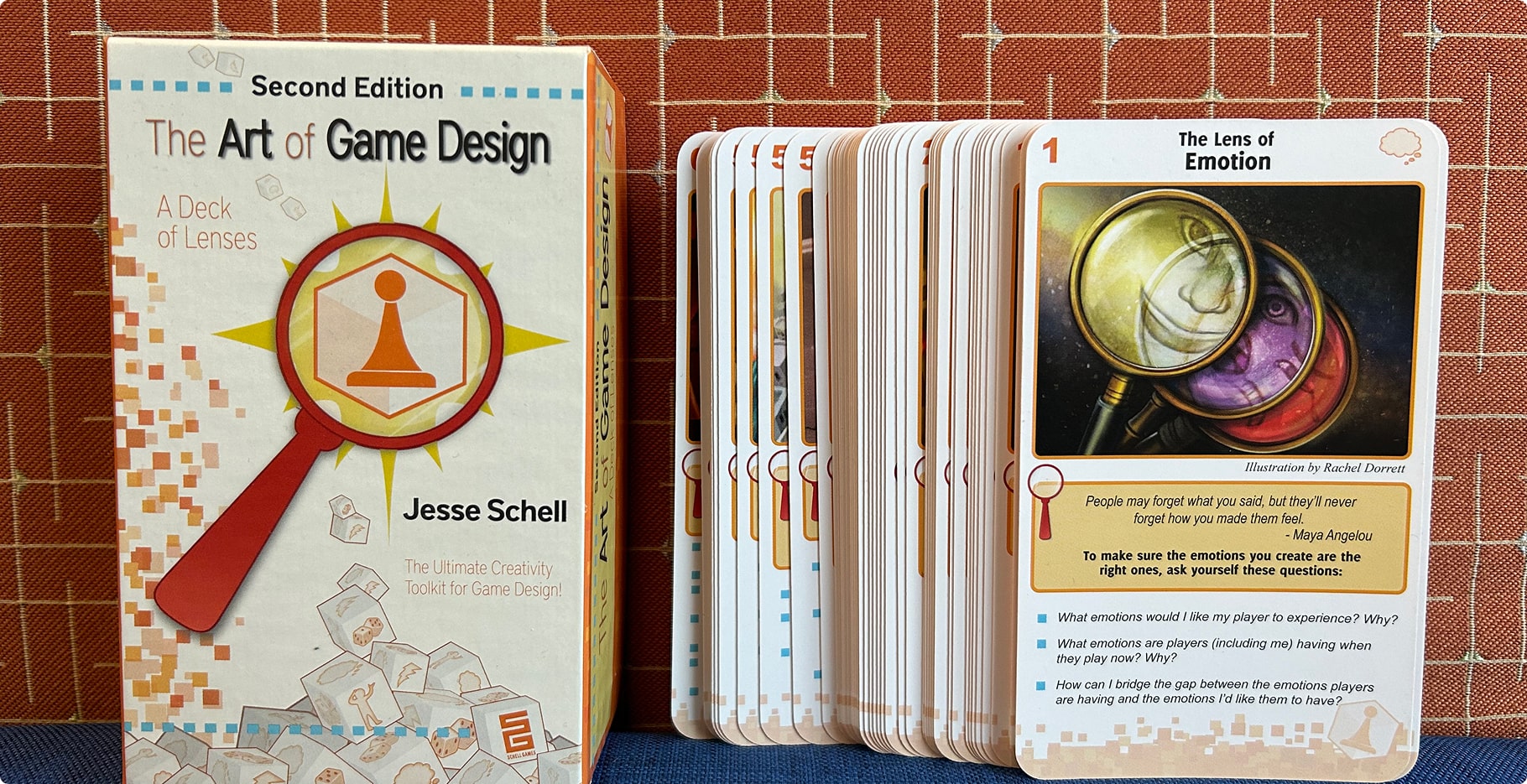
At the core of The Art of Game Design: A Book of Lenses are 100 lenses that provide detailed information on how to examine games from various perspectives effectively. However, explaining all of them would require a book of its own. Instead, we will highlight the first ten lenses for a detailed overview of the kind of insights the book actually offers.

  • The Lens of Essential Experience

Rather than focusing on your game, concentrate on the player experience. Make sure that the game you are creating matches the experience you desire.

  • The Lens of Surprise

Enhance the entertainment aspect of your game by incorporating elements of surprise.

  • The Lens of Fun

Design parts of your games that contribute to the fun features, as this makes most games appealing.

  • The Lens of Curiosity

Always include elements that would spark questions in the mind of every player and make them care more about the things to come. The curiosity that builds upon them often leads them to play more.

  • The Lens of Endogenous Value

Improve your game by considering what players find valuable. You want to include features like items, scores, and objects that would make them want to succeed.  

  • The Lens of Problem Solving

Your game should entail solving problems, as this can cause players to become eager to return and find the answers.

  • The Lens of the Elemental Tetrad

Check if the game possesses all four elements (i.e., mechanics, story, aesthetics, technology). Determine if you need to improve how your game utilizes them or if they embody a shared theme.

  • The Lens of Holographic Design

Assess your game holographically to identify what works well and what needs improvement in the context of playing experience.

  • The Lens of Unification

Ask yourself whether your game includes the essentials to have a unified theme.

  • The Lens of Resonance

Dig deeper into the core of your game and evaluate the aspects that make people excited or what resonates well with the intended audience and purpose.

For a more complete view, here are the rest of the lenses covered by Schell’s work on the art of game design:

Lens of Infinite Inspiration Lens of Chance Lens of Balance Lens of the Story Machine
Lens of The Nameless Quality
Lens of the Problem Statement Lens of Fairness Lens of Accessibility Lens of the Obstacle
Lens of Friendship
Lens of the Eight Filters Lens of Challenge Lens of Visible Progress Lens of Simplicity and Transcendence
Lens of Expression
Lens of Risk Mitigation Lens of Meaningful Choices Lens of Parallelism Lens of the Hero’s Journey
Lens of Community
Lens of the Toy Lens of Triangularity Lens of the Pyramid Lens of the Weirdest Thing Lens of Griefing
Lens of the Player Lens of Skill vs. Chance Lens of the Puzzle Lens of Story Lens of Love
Lens of Pleasure Lens of Head and Hands Lens of Control Lens of Freedom
Lens of the Team
Lens of Flow Lens of Competition Lens of Physical Interface Lens of Indirect Control
Lens of Documentation
Lens of Needs Lens of Cooperation Lens of Virtual Interface Lens of Collusion
Lens of Playtesting
Lens of Judgment Lens of Competition vs. Cooperation Lens of Transparency Lens of the World
Lens of Technology
Lens of Functional Space Lens of Time Lens of Feedback Lens of the Avatar
Lens of the Crystal Ball
Lens of Dynamic State Lens of Reward Lens of Juiciness Lens of Character Function
Lens of the Client
Lens of Emergence Lens of Punishment Lens of Channels and Dimensions Lens of Character Traits
Lens of the Pitch
Lens of Action Lens of Simplicity/Complexity Lens of Modes Lens of the Interpersonal Circumplex Lens of Profit
Lens of Goals Lens of Elegance Lens of the Interest Curve Lens of the Character Web
Lens of Transformation
Lens of Rules Lens of Character Lens of Inherent Interest Lens of Status
Lens of Responsibility
Lens of Skill Lens of Imagination Lens of Beauty Lens of Character Transformation
Lens of the Raven
Lens of Expected Value Lens of Economy Lens of Projection Lens of Inner Contradiction
Lens of Your Secret Purpose

Benefits of The Book of Lenses

Jesse Schell’s book about the art of game design is comprehensive and practical, translating theory into actionable guidance that offers countless benefits.

  • Structured Game Evaluation

The lenses provided by Jesse enable game designers to have a concrete system of assessing aesthetics, mechanics, narrative, and the like.

  • Idea Generation

Reviewing each lens discussed in the book sparks fresh ideas to approach game design.

  • Enhanced Player Focus

Each lesson indicates that every design choice should benefit player experience.

  • Universal Application

All the concepts and ideas covered by the lenses are applicable to any kind of game.

Why Read The Art of Game Design  

Image Credit: Schell Games

Reading the art of game design is critical for both beginners and game industry professionals.

First, it provides a holistic perspective by teaching how mechanics, story, visuals, and player psychology work together.

Second, the book delivers practical examples, showing real-world cases to illustrate abstract principles.

Third, Schell’s work beams with industry relevance, covering information that is applicable to various genres, platforms, and even non-entertainment gamification projects.

Fourth, it serves as a long-term reference, as many designers can frequently revisit specific parts or exercises during development.

All in all, Jesse Schell’s The Art of Game Design: A Book of Lenses is not only theoretical; it is a practical guide that informs decision-making in every stage of game creation. Until this day, with new editions of the book published, it is one of the most cited resources in game design courses and professional studios. As a matter of fact, it is also trusted by more than 50 colleges and universities, underlining the book’s credibility and usefulness.

Aside from these, Jesse Schell’s book positions itself as a good read, since it has a score of 4.39 out of 5 on Goodreads and 4.7 out of 5 on Amazon. To give you actual feedback from people who have read the book, check out some of these comments:

  • Michael Burnam-Fink (Goodreads): “This is a work of love by someone who clearly understands why games are fun, and how to manage the tricky business of coordinating all the people required to build one.”
  • Constantino Bolaños Araya (Amazon): “The author goes in depth about all the key elements you must mind in order to make your game design as consistent and enjoyable as you can…”
  • George Kaslov (Goodreads): “This book is an excellent resource for the whole process of making a game.”

On top of these remarks from regular readers, the book about the art of game design has also received praise and good reviews from industry experts. For instance, Sims creator Will Wright said that it is the most comprehensive game design book he has ever seen. In the same way, Naughty Dog studio head Neil Druckmann shared that it is one of the few works he always references during production. He even said that it is a must-have.

Top Insights from Game Design Books

By reading widely, designers gain diverse perspectives and strategies that can enhance their ability to make innovative and engaging games. Here are some of the best insights from other game design books:

Actions must have discernible, meaningful outcomes

The physical “feel” of control is a distinct aesthetic

Fun is the feedback the brain gives when learning

How to Use Game Design PDFs 

Game design PDFs refer to digital documents that contain content about game design, including case studies, examples, frameworks, guides, principles, theories, tools, and tutorials. In other words, these are versatile instruments in improving one’s understanding and execution of game design or game development in general. Once you get hold of these kinds of readings, always make sure to get the most out of them. Here is how to:

  • Study Core Principles
  • Follow Step-by-Step Exercises
  • Use Templates and Frameworks
  • Reference during Development
  • Combine with other Resources
  • Iterate and Review

A skilled game designer knows how to use game design PDFs as active tools rather than merely passive reading materials. For example, approaching the art of game design pdf deliberately, you can practice game design in a structured and efficient way.

Frequently Asked Questions

Q1: What is the art of game design?

Answer: It is the craft of making interactive experiences that combines aesthetics, mechanics, narrative, and player psychology.

Q2: What is The Art of Game Design: A Book of Lenses all about?

Answer: Jesse Schell’s book about the art of game design delves into the core of game design, exploring what world-class designers use to create unique and outstanding games across different genres.

Q3: Do I need to read Jesse Schell’s book to begin my journey in game design?

Answer: While it is not mandatory nor necessary, it can be of huge help in getting structured guidance, practical exercises, and principles that are very valuable for both beginners and professionals alike.

Q4: Why is The Art of Game Design: A Book of Lenses important?  

Answer: It is widely considered one of the most influential resources for learning game design, as it provides numerous insights and information that help game designers analyze gameplay, storytelling, player engagement, and more from various perspectives.

Q5: Can beginners use Schell’s lenses effectively?

Answer: Yes. However, it would be best to start with two to three lenses before gradually exploring more, as the lenses are designed to scale with experience.

Q6: How long does it take to master the art of game design

Answer: Honestly, complete mastery can take up to several years of experience, studying, and exposure to the field. Nonetheless, noticeable progress can be seen within 6 to 12 months with dedicated study and practice.

Q7: Can I learn game design from PDFs alone?

Answer: While PDFs like the one about the art of game design can serve as supplements for learning, they cannot replace hands-on experience or formal education in game design schools.

Final Thoughts

The art of game design is a creative, iterative, and multi-disciplinary practice. By studying the book about the art of game design by Jesse Schell, exploring game design lenses, utilizing game design PDFs, and reading complementary books, game designers are sure to acquire the knowledge and skills to create extraordinary games that can be enjoyed by millions of gamers worldwide.

Furthermore, a game designer must keep in mind that mastery emerges from practice as much as from study. So, one must experiment, playtest, and refine continuously. At the same time, aspiring and experienced game designers will be able to produce projects that challenge, delight, and resonate by giving importance to the factors that shape how players perceive and enjoy a game, including but not limited to levels, mechanics, and narrative.

Of course, like in any form of art, do not forget to enjoy the process!

Note: This article is for educational and informational purposes only. Although we aim to ensure accuracy and reliability, insights and outcomes may vary.

The Smartphone Takeover: How Ireland’s Gaming Scene Went Mobile-First

0

If you’ve looked at how we’re spending our downtime in Ireland lately, there’s a massive shift happening right under our noses. We’ve officially moved past the era of sitting at a desk to get our digital kicks. Ireland’s entertainment market has gone “mobile-first,” and it isn’t just about making things fit on a smaller screen. It’s a total structural renovation. With smartphone use now eclipsing desktops and broadband finally reaching the furthest corners of the country, platforms are being built for the thumb before they’re ever even considered for the mouse. We aren’t just talking about a change in habits; we’re talking about a change in the literal DNA of how software is designed.

This isn’t just a simple resize job. It’s a whole new way of thinking. Developers are ditching those clunky, heavy interfaces in favor of vertical navigation and “thumb-friendly” zones. We’re also seeing a huge rise in Progressive Web Apps (PWAs)—these are basically websites that act exactly like apps. You get the speed and feel of a native download without having to wait for a 200MB file to finish on a patchy connection. It’s all about killing friction and getting people straight into the action. If you have to jump through three different menus just to start a session, most users in Dublin or Galway will have already closed the tab.

A perfect example of this in the wild is the aviator game in Ireland. This “crash-style” format was basically born for the smartphone. Because it doesn’t need a massive GPU to render some fancy 3D world, it runs perfectly even if your 5G signal is a bit hit-or-miss in more rural areas. This kind of efficiency is the new “table stakes.” If a platform can’t run smooth on a phone, it’s basically a ghost ship in the Irish market. It thrives because it respects the user’s time and their hardware’s limitations.

To keep things snappy, platforms rely on Content Delivery Networks (CDNs) and “edge computing.” Basically, your data is being processed at a hub right down the road—maybe in Dublin or Cork—instead of some massive server farm on the other side of the planet. These protocols handle real-time talk between your device and the server without needing constant page refreshes. This is absolutely critical for multiplier games. When a millisecond is the difference between a win and a “crash,” you can’t afford even a hint of lag. Now that 5G is rolling out across the country, those latency ceilings are finally starting to crumble, allowing for even more complex data streams to reach our pockets.

The mobile revolution has also forced the finance world to move way faster. Nobody wants to type in a 16-digit card number on a tiny touchscreen anymore—it’s a nightmare. Irish users expect “one-tap” everything. This has led to a massive expansion in open banking and e-wallets. Integrating services like PayPal isn’t just a convenience; it’s a trust signal. If a platform makes it easy to move your money in and out securely, you’re much more likely to stick around. We’ve entered an era where the payment gateway is just as much a part of the “fun” as the actual content, purely because of how frictionless it’s become.

Security has also gone mobile-native. We’re now using biometrics—fingerprints and face scans—to log in and authorize payments. It’s faster and significantly more secure than an old-school password you’d probably forget anyway. Behind the curtain, SEPA Instant is the real hero. It’s what makes sure that when you tap “withdraw,” the cash actually moves through the banking rails in something close to real-time. The ultimate goal here is simple: the speed of your wallet needs to keep up with the speed of the game. If the “win” feels instant, the payout should too.

Design for the Minimalist

As AI gets sharper at catching fraud and 5G brings augmented reality into the mainstream, the Irish gaming scene is only getting faster and more immersive. We’re looking at a future where your phone might project a live dealer or a multiplier curve right onto your kitchen table via AR. But for that to work, the “boring” stuff—the servers, the protocols, and the payment rails—has to be perfect. The platforms that master this invisible plumbing are the ones that are going to own the market for the next decade.

What You Need to Know About Video Game Designer Salary in 2026

With today’s economy, many people are starting to place less emphasis on job titles. Unlike before, having a high-ranking job position is not exactly a big deal anymore — at least for most people. Based on a recent survey, 73% of respondents ranked salary among the top three factors when joining a new organization. It is essentially the new norm. That means more people are looking for careers based on their earning potential, including those interested in the gaming industry. Questions like how much do video game designers make or what the average video game designer salary looks like are becoming increasingly common. 

In 2026, understanding the current video game designer salary can help students, hobbyists, and industry professionals determine whether the game design field remains a good choice. Well, most designers earn competitive wages compared with other creative and tech careers, thanks to the gaming industry, which continues to expand due to evolving technology and growing player demand. However, the pay varies depending on multiple factors.

To help you assess the video game designer salary, below is a breakdown of what to expect if you pursue a career in video game design.

What Do Video Game Designers Make?

Image designed by Freepik

A common starting point when researching the industry is asking what do video game designers make today. Well, on average, the video game designer salary in the United States is around $94,654 per year.

Do Video Game Designers Get Paid Well?  

Many aspiring game designers wonder if video game designers get paid well compared with other careers. The short answer is yes, especially for those game designers with years of experience.

Like most jobs, the early stages will have you earning moderate wages. However, this phase is the perfect time to build portfolios and establish industry connections. Soon after, mid-career professionals who take on leadership roles and specialize in more complex areas (e.g., gameplay systems, level design, user experience) tend to see notable increases in salary.

In line with this, the broader video game design and development salary landscape also benefits from the rapid growth of the global gaming market. With billions of players worldwide and increasing investments in game development, projections indicate that the global video game market size would jump to more than $600 billion by 2030. Due to this expansion, many professionals benefit from competitive compensation, making video game design salary prospects more appealing.

Entry-Level Game Design Salary  

For newcomers with none to three years of experience, the entry level game design salary commonly ranges from $46,000 to $72,000 annually. Entry-level roles often include junior game designer, associate game designer, and the like.

Video Game Designer Salary Per Year  

Looking at the video game designer salary per year allows job seekers to see a clearer picture of long-term earning potential. So, it is totally okay to ask how much do video game designers make a year. Typically, the average yearly wage starts from $46,000 all the way up to over $194,760.

Video Game Designer Salary Per Month  

Breaking earnings down monthly can help visualize the video game designer salary per month. On average, the usual range of monthly salary for game designers is $3,257 to $13,789. The average monthly wage is $6,702.

Video Game Designer Wage Per Hour  

Another way to evaluate income is by looking at the wages on an hourly basis, which makes asking the question “How much do video game designers make per hour?” a strategic approach. Generally, game designers make between $10.66 and $45.15, with the average base salary standing at $21.94 per hour.

Key Factors Affecting Video Game Designer Salaries

Image designed by Freepik

The exact figure depends on several elements. Here is a closer look at the factors affecting how much video game designers make.  

  • Education/Degree 

Graduates from specialized programs in game design may find it easier to enter the industry, and their education can boost their earnings. Based on a report from Zippia, those with a bachelor’s degree earn about $100,000, while individuals with higher education earn more.

  • Skills/Specialization 

Job seekers who possess skills, specifically Adobe Photoshop, animation, motion graphics, video content, and video production, are likely to gain advantages when applying for work.

  • Company & Industry 

Larger studios and major game publishers tend to offer higher salaries. On the other hand, smaller indie studios or independent game developers may provide lower base pay. Likewise, the specific industry where a game designer works is a driving factor. According to Glassdoor data, Microsoft and PlayStation offer some of the highest salaries for game designers, with ranges of $136,000 to $236,000 and $119,000 to $195,000, respectively. At the same time, the report shows that the information technology industry holds the jobs with the highest video game designer salary, with an average wage of over $100,000.

  • Location 

The place where your work is based also affects the level of salary, as this accounts for the cost of living, the demand in the area, and the like. For instance, California is one of the most high-paying states for game designers, with Irvine at over $184,00 per year and San Diego at more than $150,000 a year.

How to Increase Your Video Game Designer Salary

There are several strategies you can employ in maximizing your earning potential as a video game designer.

  • Get a specialized or relevant degree.
  • Develop job-ready skills and experience.
  • Stay informed on industry standards.
  • Expand your professional network.
  • Keep up with gaming industry trends.

Final Thoughts: Practicality is the Best Policy!

The discussed video game designer salary in 2026 mirrors the continued growth of the gaming sector, which is promising for many professionals in the field. From entry-level positions to senior roles, game designers can earn competitive salaries while doing what they love.

Whether you are researching how much video game designers make or simply exploring career options, understanding salary trends can help you navigate the industry better to help you set yourself up for life. Let us admit it, we all need to earn a living. It is now a more important factor when evaluating opportunities. In other words, financial stability outweighs prestige. After all, everyone wants to build a stable life, and earning a reliable income is one way to achieve this.

Note: This article is for educational and informational purposes only. Although we aim to ensure accuracy and reliability, actual figures may vary depending on sources and industry factors.

Best Video Games To Get Your Fix if You’re a Poker Fan

0

Poker players tend to think in patterns. They read hands, calculate odds, and make decisions under pressure. These habits do not switch off when the cards are put away. They carry over into other games, and certain titles reward that same kind of thinking.

Video games have borrowed from poker for years. Some feature full poker simulations. Others wrap poker logic into different systems, asking players to weigh risk, manage resources, and recognize when to commit or fold. The following games offer something for players who want poker mechanics, poker-adjacent strategy, or both.

Some of the most notable games that poker fans often gravitate toward include Balatro, Red Dead Redemption 2 (poker tables), Prominence Poker, Poker Night at the Inventory, Slay the Spire, Inscryption, Into the Breach, Poker Club, Governor of Poker 3, and Zynga Poker.

Balatro Rearranges the Rules

LocalThunk released Balatro in early 2024, and it won three awards at The Game Awards later that year, including Best Independent Game. The game has sold more than 5 million copies as of January 2025 and holds a 92 score on OpenCritic with a “Mighty” rating. Critics have recommended it at a rate of 100%. On Steam, it carries a 98% positive rating across more than 95,000 reviews. Publisher Playstack has also hinted at additional updates following the game’s success.

The game takes poker hands and turns them into a scoring system. You build hands, yes, but you also manipulate them through Joker cards that twist the math. A pair becomes worth more. A flush triggers a bonus effect. The deck itself changes as you progress, and each run forces you to reconsider what constitutes a strong hand.

Standard poker assigns fixed rankings. Balatro asks you to forget that. A three-of-a-kind might outperform a full house if you have stacked the right modifiers. The game teaches you to think about poker hands as building blocks rather than finished products.

Runs last between 30 minutes and an hour. You lose often, especially early on. Learning which Jokers combine well takes time, and the randomness of the deck means some runs die before they start. Players who enjoy working through variance and adjusting strategy on the fly will find something familiar here.

Poker Woven Into Larger Worlds

Some games treat poker as a side activity rather than the main event. Red Dead Redemption 2 places no-limit Texas Hold’em tables across several locations, each with AI opponents that behave according to actual poker logic. Years after release, players still sit down at these tables. You can play poker games in Prominence Poker for a more focused session, or try the Poker Night at the Inventory remaster launching March 5, 2026 for $9.99, which pits you against Max, Strong Bad, Tycho, and The Heavy.

Red Dead Redemption 2 rewards patience. The poker tables serve as one part of a much larger world, but they function correctly. Opponents fold when they should, bluff when they might, and punish loose play. You can spend hours in the saloon without touching the main story.

Prominence Poker focuses entirely on the game itself. The AI opponents behave consistently, and the mechanics follow standard poker rules. Players who want to practice reading situations without real money on the line will find it useful.

The Poker Night at the Inventory remaster brings back a format that mixed poker with character dialogue. Max, Strong Bad, Tycho, and The Heavy sit across from you and react to each hand. The stakes stay low, but the format offers something different from a straight simulation. At $9.99, the price matches the scope.

Strategy Games That Use Poker-Like Decision Making

Some games do not include poker at all but reward the same mental habits. Slay the Spire uses deck-building and probability. You construct a deck over time, and each fight asks you to play the best hand you can from what you draw. Card counting matters. So does knowing when to burn resources and when to hold back.

Inscryption hides a card game inside a horror narrative. The mechanics borrow from multiple sources, and the game shifts rules repeatedly. Players who enjoy adapting to new information will recognize the feeling. You start with a plan, the situation changes, and you adjust.

Poker memory also serves players in games like Into the Breach, where every move has visible consequences. The game shows you what enemies will do before your turn ends. You weigh outcomes, commit to a line, and accept the result. The process resembles postflop decision-making, where information is incomplete but enough exists to act.

Card Games That Stay Close to Poker

Poker Club offers a simulation for players who want realistic visuals and multiplayer lobbies. The game includes Texas Hold’em tournaments and cash games with adjustable stakes. It lacks some of the personality found in other entries, but it functions as a poker client without real money.

Governor of Poker 3 takes a lighter approach. The tone is casual, the settings are Western-themed, and the stakes carry no weight outside the game itself. It works well for players who want to log a few hands without committing to longer sessions.

For mobile players, Zynga Poker remains active. The game runs on virtual currency, and the player base is large enough to keep tables full at most hours. It does not teach advanced strategy, but it provides repetition.

What Poker Players Look For

Poker trains specific skills. Pattern recognition, bankroll management, and tilt control all apply outside the felt. The games listed here reward those habits in different ways.

Balatro asks you to think creatively about hand values. Red Dead Redemption 2 and Poker Night at the Inventory embed poker into broader settings. Slay the Spire and Into the Breach borrow poker logic without using cards from a standard deck. Poker Club and Governor of Poker 3 stay close to simulation.

Each title offers something. None of them replace actual poker, but they scratch a similar itch. Players who want to stay sharp between sessions, or who want something new that still feels familiar, will find options here.

Conclusion

Poker players are naturally drawn to games that reward patience, probability, and calculated risk. While nothing truly replicates the tension of a real poker table, many video games capture the same type of strategic thinking. Some, like Balatro and Poker Club, focus directly on poker mechanics. Others, like Slay the Spire or Into the Breach, apply the same decision-making mindset in completely different systems.

What connects these games is the kind of thinking they demand. Players recognize patterns, evaluate uncertainty, and commit to decisions without perfect information. These are the same mental habits that define successful poker play. For players who enjoy the strategic depth of poker, these games offer a compelling way to engage that mindset even when the cards are not on the table.

Game Design Classes: Master Skills and Create Your Own Video Games

Have you ever wondered how games are created? Perhaps a better question is, have you ever dreamed of creating games? If your answer is yes, then you clearly have an eye for something incredible.

As of now, the United States is home to roughly 287,200 game designers. In fact, prior estimates indicated that the game designer job market will record a 9.3% growth over the decade from 2016 to 2026. So, if you are interested in riding this wave of opportunity, now is the chance to explore game design classes. As the gaming industry continues to evolve, it reshapes how creators produce games, which is why gaining industry expertise and practical skills early can set you apart. Whatever specialization you would want to focus on, the right classes for video game design will help you learn how to create original, playable projects, making your dreams of turning your fondness for games into a career.

Stay until the end of this article, as we will feature the best game design classes for beginners. On top of this, we are going to provide you with a guide on how to select the right one, discuss the benefits, shed light on learning formats, and explore all the essentials.

Top Game Design Classes for Beginners  

Image designed by Freepik

If you are a newbie in game design, going straight to advanced courses or pro classes to accelerate your development is not necessarily going to help. It could actually make everything seem and feel complicated, which might lead you to back out. And the last thing we want is for you to give up on your goals that easily. Therefore, starting with beginner-friendly game design classes is essential to avoid overwhelming yourself. Gain fundamental knowledge first, and the rest will follow smoothly. Here are options that concentrate on both creative and technical aspects of game design:

Online Video Game Design Classes for Kids & Teens – OutSchool

  • Focus Areas: game design, game development, Roblox game creation, coding, and more.

Game Design Boot Camps – Game Design Skills

  • Focus Areas: game design fundamentals, game mechanics, game writing, and level design.

Game Design Courses – Coursera

  • Focus Areas: game design, game development, artificial intelligence, game engines, and more.

For individuals who prefer formal on-campus learning, they can opt for classes for video game design that are designed for beginners through introductory university courses. However, this would most likely entail commitment to completing a degree. Below are a few examples:

Introduction to Game Design – Pennsylvania State University

  • Offered Under: Game Development minor

Introduction to Media Arts & Game Development – University of Wisconsin

  • Offered Under: Bachelor of Arts in Media Arts and Game Development

Choosing the Right Video Game Design Classes

While you are free to try many things, there is no guarantee that you will thrive in all of them. Honestly, trial and error is not an option here, at least not for everyone. This brings us to following the steps that make for the best choice.

  • Identify your goals
  • Choose your preferred learning format
  • Evaluate duration and cost
  • Assess course content

Aligning your choice of game design classes with your personal goals and situation helps you make smart choices that elevate your learning experience.

Benefits of Classes for Video Game Design  

Students who are enrolled in video game design classes will benefit from several advantages.

Skill Development

Classes pushed students to become technically proficient, creative artists, critical thinkers, problem-solvers, and industry tools masters.

Portfolio Building

Most classes do not simply make students watch and listen; they emphasize hands-on learning, which allows learners to build real projects.

Industry Insights

Often, classes are led by experienced instructors who share real-world knowledge and experience.

Networking Opportunities

Internships and forums are commonly tied to game design classes, which essentially connect students to game industry professionals.

Online vs. In-Person Game Design Classes  

Many people are stuck choosing between online and in-person classes. But the truth is, both can be effective, and it all boils down to your learning style, resources, goals, and lifestyle.

Advantages of Online Classes

  • Flexible schedules
  • Access to global instructors and platforms
  • Self-paced learning

Advantages of In-Person Classes

  • Direct mentorship
  • Collaborative opportunities
  • Access to industry-grade tools

Essential Skills Taught in Game Design Classes  

Game design classes let students acquire the skills that will make them effective contributors to any game development team once they enter the industry.

Take a look at some of the most impactful skills you can learn from studying game design.

Creative and Technical Skills

  • Game mechanics and level design
  • Programming and scripting
  • Storytelling and narrative design
  • 3D modeling and animation
  • User experience and user interface design

Soft Skills

  • Adaptability and resilience
  • Problem-solving
  • Time management
  • Communication
  • Attention to Detail

How to Start Your Game Design Journey

Image designed by Freepik

If you are serious about embarking on a game design path, you can follow these steps to gradually move from a beginner to an expert who is capable of making interactive and immersive games.

Establish a Background

Utilize tutorials and free assets to gain a basic idea of the field and play games to see what works and what needs improving.

Get an Education

Enroll in game design classes or university programs to further acquire specialized knowledge and skills.

Build Actual Projects

Create projects or prototypes to test your abilities and apply what you have learned.

Develop a Portfolio

Showcase your work to demonstrate your capabilities and skills.

Engage with the Community

Join forums and groups to learn from fellow game designers, to seek feedback, and to stay updated with industry trends.

Continue Learning

Never stop working on your skills and learning new ones as the game industry continues to evolve.

Final Thoughts: Unlock Your Potential!

The world of game design is constantly expanding, and it is full of opportunities for creative and technically skilled individuals. Even with tight competition, there can always be a space for every aspiring game designer. However, you must really work hard and smart to belong. One way to increase your chances of securing a spot is by enrolling in game design classes, as these allow you to establish the expertise needed to kick off a professional career in the field. Subsequently, the insights provided in this guide will help you move through the gaming landscape with confidence, knowing that you are making informed choices.

Note: This article is for educational and informational purposes only. Although we aim to ensure accuracy and reliability, course availability, industry standards, and other specific details may change over time.

Game Design Degree: What You Need to Know Before Starting Your Journey

If you have a burning passion for games and you would love to have an above-average income, it is probably a good time for you to get your game designer education. In today’s time, pursuing a game design degree can be the first step toward a rewarding career in the thriving gaming industry. To give you a clear glimpse at the figure you could be earning, the average base salary per year of a video game designer in the United States is a whopping $94,541 as of this writing. More importantly, you could make more once you acquire higher education and gain valuable experience.

Whether you are interested in programming, storytelling, or interactive art, understanding the ins and outs of this path will ensure your education aligns with your goals. We understand that researching all of this on your own can be overwhelming. Well, it is your lucky day, for we will provide you with a comprehensive guide to help you navigate game design and development colleges, along with undergraduate programs and game design courses. At the same time, our guide offers insights on selecting a game design major, what to expect, and the career pathways that await you.

Top Game Design Degree Programs  

Image Credit: Univerlist

Your chosen program is one of the deciding factors in your career trajectory. Consequently, one way to ensure you are taking the right track is by selecting a video game design and development program that combines technical training with creative practice. Here are some of the best options:

Bachelor of Fine Arts in Game Development and Interaction Design

  • Location: University of Southern California
  • Overview: Covers game design and production, game development principles, interactive systems design, and game prototyping.

Bachelor of Fine Arts in Game Design

  • Location: New York University
  • Overview: Focuses on game design, game studies, visual design, programming, audio design, game development, and game business.

Game Design Minor

  • Location: Carnegie Mellon University
  • Overview: Explores game design, game assessment, and game development.

These programs underline the importance of both practical and theoretical knowledge, as they train students for the fast-evolving gaming space. Their reputation also precedes them.

Best Game Design Schools in Texas

Image Credit: UTexas

Aspiring game designers in Texas will find many high-quality game design schools in the state that provide strong preparation for the industry. A few examples include:

University of Texas

  • Location: Austin
  • Offered Program: Game Development and Design program

Texas A&M University

  • Location: College Station
  • Offered Program: Game Design and Development minor

Texas Tech University

  • Location: Lubbock
  • Offered Program: Game Design and Culture certificate

If you live in Texas and you are looking for balanced technical and creative growth, these schools are ideal for you.

Choosing a Game Design Major

When it is time to design which game design major you are going to take, you must first identify which specialization you prefer. The selection commonly spans programming, software development, animation, and interactive design, and beyond. Likewise, choosing a game design degree requires considering multiple factors, such as career goals, financial condition, location, preferred learning style, and the like. Aligning your game design major and game design degree with personal circumstances guarantees a more rewarding educational journey.

Game Design and Development Colleges  

It is also equally important to be well-informed about the kinds of game design and development colleges available. Aside from the general separation between private and public universities, there are more specific distinctions, including art schools, technical universities, online institutions, and more. Exploring all of these can be of help in determining which learning environment perfectly matches your needs.

Video Game Design Bachelor’s Degree Guide  

For those unfamiliar, a video game design bachelor’s degree usually takes four years to complete. This educational track often includes core courses and advanced electives. Completion of a game design degree is a huge help in pursuing professional careers in the game sector. It can also serve as a prerequisite to a master’s degree.

Exploring Game Design Undergraduate Programs  

The purpose of game design undergraduate programs is to introduce students to the full spectrum of designing and developing games. These also offer portfolio creation and internship opportunities through project-based learning and studio partnerships, respectively.

What to Expect in a Game Design School  

Like any other student choosing or entering a school, expectations are part of the process. Accordingly, learners attending video game designing colleges for a game design degree should expect to be exposed to comprehensive training. It covers collaborative workshops, the use of industry-standard hardware and software, and game competitions, or more popularly known as game jams.

Careers With a Game Design Degree

Image designed by Freepik

Earning a game design degree opens doors to various roles in the industry. While the careers technically depend on your specialization skills, the common pathways include the following:

  1. Game Designer
  2. Game Project Manager
  3. Game Tester
  4. Gameplay Programmer
  5. Indie Game Developer
  6. Level Designer
  7. Narrative Designer
  8. Systems Designer
  9. Technical Artist
  10. UI/UX Designer

The list is actually just the tip of the iceberg. A game design degree features several more career possibilities. Your education, knowledge, skills, and experience are the limit.

Quick Reminder

If you reached this section, you are probably thinking that there should be a catch at some point. Questions like “Is a game design degree worth the cost?” may arise, but that is a totally reasonable concern. To tell you honestly, this field comes with a risk. Tuition costs, living expenses, and industry competition are among the many considerations. That is why you need to have expectations that match your financial status and skills to make informed decisions.

Final Thoughts: Turn Your Dreams Into Reality!

For anyone driven to bring games to life, investing in a game design degree can be a wise investment. Not only does it let you do what you love, but it also allows you to do what you love and earn a living. And I have not even mentioned the joy you would bring to over 3.32 billion active video game players around the world.

Most importantly, you must understand that carefully choosing programs, colleges, majors, and the like that align with your situation is critical to ensure a successful career in the gaming industry.

Note: This article is for educational and informational purposes only. Although we aim to ensure accuracy and reliability, outcomes may vary based on individual circumstances and industry changes.

Top Game Design Courses to Boost Your Creative Skills

It is clearly an optimistic time for the video game industry, with the global video game market estimated to reach $329.8 billion in value this year. This promising projection is one of the main reasons why many students aspire to attend game design schools or take game design courses, and creators seek to enter the field. Hence, everyone should understand that creativity is just as important as technical skill in this industry.

Whether you are an aspiring designer or looking to expand your portfolio, finding suitable game design courses can help you master essential skills to stand out. While there is a big cluster of individuals looking to do exactly this, there is a learning path for everyone. The selection ranges from comprehensive courses in game design to hands-on tutorials, free resources, and beginner-friendly programs.

To help you improve your game design education and hone your creative wheelhouse, our guide will highlight various courses in game design.

Image designed by Freepik

Top Game Design Courses Online

Online game design courses offer flexibility and depth. Here are some of the top options for learners seeking structured programs in this format:

Unreal Engine: Master Interactive FX & Game Design – Coursera

  • Areas of study: game design, video game development, virtual environment, scripting, computer graphics, animation, 3D assets, and more.  

Game Design for Game Developers – Udemy

  • Areas of study: game design, game design documentation, and fundamental design principles.

Gamification – Coursera

  • Areas of study: game design, project design, design thinking, social impact, and more.

These courses in game design help students develop a portfolio, which is vital for pursuing careers in the gaming industry.


Free Game Design Classes to Try  

Not all learning needs to come with a price tag. That is right! There are a few free game design classes online that are available to help individuals gain an initial background in the field.

Game Design – Cursa

  • Areas of study: game design foundations, player psychology, systems-level design, progression, difficulty, player experience, and more.

Learn Game Design – Udemy

  • Areas of study: Unreal Engine, level design, blueprint visual scripting, game development, basic game interactions,

These are designed as testing waters. The options are for you to check your interest in game design before committing to paid programs.


Game Design Education for Beginners  

Those creators who are starting fresh can turn to beginner-friendly game design education that includes courses covering the fundamentals.

Introduction to Game Design: Process and Creation – edX

  • Areas of study: game design, game experiences, game prototyping, and more.

Introduction to Game Design – Coursera

  • Areas of study: game design, video game development, systems design, storytelling, interactive design, conceptual design, and animation.

Introduction to Game Development – Code Academy

  • Areas of study: game design, gameplay development, game assets, and game development tools.

These beginner courses deliver early experiences that build confidence and establish a strong foundation for more advanced game design courses online.


Best Game Design Tutorials and Lessons

Many students prefer self-directed learning. Fortunately, this type of education is accessible through game design tutorials and lessons that help focus on specific skills.

Online Game Design & Development Classes – Skillshare

  • Includes several classes that cover the use of various industry software, such as Adobe InDesign, Unity, Autodesk Maya, Unreal Engine, and beyond.

Game Design Skills – YouTube

  • Delivers a plethora of videos that provide first-hand practical knowledge and insights from experts in the video game industry.

Extra Credits – YouTube

  • Offers short-form animated video essays about multiple aspects of games, how they are made, how to make them better, and their cultural impact.

Game design lessons and tutorials of this kind allow learners to study at their own pace and choose what to learn. Combining these with a formal game design course ensures both depth and breadth.


Game Development for Education  

For anyone who aims to turn creativity and their passion for games into a thriving professional career, game development for education provides a structured pathway into the industry. Remember that it is about choosing and using the best game design courses to acquire the necessary practical skills.

Choosing the Right Game Design Courses


Unsure how to decide on the right game design courses? Here is a quick guide to select one based on factors, such as goals, schedule, and budget:

  • Define Your Focus

Ensure your goals are clear. Do you want to concentrate on technical skills or creative expertise?

  • Pick a Format

Choose what form of learning suits your style and situation. Generally, game design online courses are for flexibility, while in-person formats are best for hands-on mentorship.

  • Consider Cost and Duration

Determine how much money and time you are willing to spend on game design education. Free game design courses are good for exploration, but paid options are mostly better for deeper guidance. At the same time, paid ones usually take more time to complete.

  • Look for Relevant Courses

Find courses that match your needs and provide tools and software training, expert faculty, and a comprehensive curriculum.

By considering these factors and steps, you can ensure a productive and enjoyable learning journey that fits what you want.

Frequently Asked Questions

Q: Are game design classes suitable for beginners without any prior experience?

A: Yes! Many game design courses are tailored for first-time learners. Most of them combine theory and practice exercises for a smooth break-in.

Q: Are there free game design courses online?

A: Yes. There are free courses that help in game design learning and game design training without a financial commitment.

Q: How do I pick the best game design education that matches my goals?

A: Of course, you need to determine your goals beforehand. Then, always check course formats, outcomes, duration, and user reviews before enrolling in anything to ensure that your chosen program aligns with your objectives.

Final Thoughts: There’s plenty, but choose wisely!

With today’s booming industry, many programs in the field of game design have emerged. That means there is a wealth of options to boost your creative skills, from hands-on game design courses online to targeted game design tutorials. Beginner programs, specialized lessons, and relevant courses equip learners with the tools to be triumphant in the gaming industry. Yes, unfortunately, guts alone will not make you successful here. Kidding aside, you can develop both technical and artistic expertise by choosing the right combination of courses. Do this, and you will likely leave a mark in the ever-evolving world of game design.

Note: This article is for educational and informational purposes only. Although we aim to ensure accuracy and reliability, it is best to verify the latest information directly with the course provider, as details may change over time.

Are Game Design Courses Expensive? A Proven Guide to Game Design Course Costs 2026

If you’re here, it’s probably because you’ve been browsing school websites, and you’ve seen the numbers. Forty thousand, sixty thousand, maybe more. The numbers seem scary, especially when you start picturing yourself in a few years, still paying off debt. 

The simple answer to the question ‘are game design courses expensive?’ is, unfortunately, that yes, they can be. 

But that isn’t the whole truth. Because game design isn’t just one thing, it has many aspects and specializations. There are programmers, artists, writers, producers, and sound designers. The cost of learning any one of those trades can differ a lot from the top universities to community colleges. And the price is only half. The other half is you. What you need, how you learn, how much debt you’re willing to carry before you land your first job. So before you commit to those years of work, you have to look past the tuition and see what you’re actually getting yourself into.

For-Profit Universities and Private Academies

When you start researching game design education, you will see some names more than others. Full Sail. DigiPen. Gnomon. These institutions dominate the search results and fill advertisements. They promise labs equipped like professional studios, alumni credits on blockbuster titles, and recruiters who return calls. The pitch is compelling, and the facilities are impressive. It is, by any measure, a package that makes you want to call them.

But most of the time, you’re not just paying for knowledge here, you’re also paying for the brand and for the network. It’s a premium product, and it comes with a premium cost.

So let’s break down what these universities offer their students, with actual numbers.

  • Full Sail University – Undergraduate programs in Game Art, Game Development, or Computer Animation run $88,000 to $95,000 for tuition. They’ve got a campus in Winter Park and run on an accelerated timeline.

  • Gnomon – This is the school if you want to work in Hollywood or at the big VFX houses. But if you want a Bachelor of Fine Arts here, you’re crossing the six-figure line. For four years, the 4-year BFA program can reach over $205,000, including living expenses in LA. They’re known for connections, but those connections are expensive. Always check the school’s Accreditation before committing to such a high tuition per credit rate.

DigiPen Institute of Technology

  • DigiPen Institute of Technology – They focus on C++ programming programming and engineering side. For undergrads at their main campus, the prices are around $40,000 per year in tuition. They also have a Singapore campus with similar rates.

These places have one thing the others don’t, structure. You are constantly under a lot of pressure. You’ve got deadlines, mentors who’ve worked on big titles, and you’re just one in a room full of other talented kids who will push you. But you have to be clear-eyed about it. You have to ask yourself if this is worth the debt. Because it’s not just the tuition, you will have a starter salary you’ll be chasing for many years, and no time to take risks on an indie project.

It means you can accept a position at a small indie studio, taking creative risks. It means you are not chained to a corporate contract solely to service loan payments. In an industry where portfolio matters more than pedigree, that flexibility is not just practical. It is freedom.

The Middle Path: Public Universities and Community Colleges

Do not overlook the public institution. Many students make this mistake, and they assume that if a program doesn’t have a famous name, it lacks value. 

A public university with a reputable computer science or interactive media department can have the same educational foundation at a much cheaper cost. For students, annual tuition is around $10,000 and $25,000. These places receive state funding, which subsidizes the cost of instruction, a reason their prices are more manageable. 

The Community College Entry Point

Community college is an even more affordable option. You can complete your general education, learn the fundamentals of UI/UX design or 3D modeling, and then go to a four-year institution. They have formal articulation agreements with public universities, so the credits transfer. This way students can live at home, work part-time, and avoid the debt that accompanies four years at a private institution. 

The Hidden Costs of Design School in 2026

Before you commit, remember that the price isn’t the final number. To compete, you need the right hardware. A computer capable of running Unreal Engine 5 or Unity HDRP will cost $2,000 to $3,500. Also, for professional-grade mastery, you have to pay licensing fees for Adobe Creative Suite or Autodesk Maya, which add $600 per year to your expenses. If you want to be self-taught path, these costs remain, but you can use some modern tools to automate asset creation and coding, which reduces the cost

The Trade-offs and Realities

The experience at these institutions isn’t the same as in private universities. The laboratory equipment can be older, and the animation instructor may bring more academic theory than experience with big names. You might have to do more self-teaching to master specific technical concepts, such as understanding ambient occlusion. Their career options may not have direct lines to recruiters at Naughty Dog or Insomniac. It’s not a guarantee, but these are things to research before applying, usually from other students.

But consider the good parts. A lighter debt changes your early career, it means you can accept a position at a small indie studio and take all the creative risks you want. Also, you are not chained to a contract just for loan payments. In this industry, portfolio matters more than your degree, so having freedom and flexibility can help you a lot.

Before you graduate, most reputable programs will require a Capstone Project to prove your skills. This is where your first portfolio review happens, and it is a very big step in landing a job at a studio like Naughty Dog or Insomniac. 

There are many schools like these across the country. Wichita State University has a Bachelor of Applied Arts in Media Arts. Southern New Hampshire University offers a Bachelor of Science in Game Art and Interactive Design. In California, Berkeley City College gives you an Associate of Arts in Animation and Game Design. The best method to find the ones close to you is the National Center for Education Statistics’ College Navigator.

Learning The Trade On Your Own

But if none of these options fit you, there is an even cheaper, more flexible option. 

If you really want to make games, the entire internet is your classroom. YouTube is an incredible library, and there are forums, free versions of Unreal and Unity, and tutorials from devs who like to teach for free. And the cost is your time and your internet bill.

Then you have the targeted bootcamps. These are programs that focus on the basics and teach you everything you might need to start creating a game. They cost a few thousand dollars, between $2,000 to $10,000, for a 12-week course on a specific skill.

Game Design course

You can find entry-level courses on platforms like Coursera. The California Institute of the Arts offers Game Design: Art and Concepts, a beginner-friendly specialization that includes a course called “Introduction to Game Design.” It takes about 6 hours to complete and you won’t need any diplomas or prior experience, just apply and start learning.

Now that you are here, you’ve seen that numbers can be high or low. But here’s what colleges don’t put in the brochure. Your diploma matters, but your dedication and work are what take you beyond a simple career to success. Yes, some game design courses can be expensive. But the real cost isn’t always on the tuition statement, it’s the freedom. Choose with your eyes open, whatever makes you feel like it’s the best fit for your career.

Software Providers Compared: What Sets NetEnt, Pragmatic Play, and Play’n GO Apart

0

The modern casino lobby is a vast digital maze. Most players select a game because the name sounds familiar. However, the studio behind the title dictates the true nature of the experience. Each developer maintains a unique philosophy that shapes every math model. If you know the studio, you can predict the risk. You also grasp the potential for a large win. This insight transforms a random choice into a planned strategy. It allows for a better use of time and budget.

NetEnt: The Artistic Benchmark

NetEnt stands as a pioneer in the digital space. They focus on titles that look like modern films. Their team employs 3D graphics to build visual depth. Many fans remember the first time they saw a character move on the screen. This studio does not just make games; they craft worlds. They prefer a balance between small wins and large jackpots. This approach keeps the player active for a long duration. Their catalog contains titles that changed the industry forever.

NetEnt titles often feature a medium risk level. This makes them a top choice for those who want a steady pace. They also focus on the user interface. The buttons and menus feel intuitive and sleek. Furthermore, they acquire licenses for famous films and music stars. This strategy brings a sense of nostalgia to the reels. Players can interact with their favorite characters in a new format. Consequently, NetEnt remains a titan of the premium segment.

Distinctive Features of NetEnt Titles

  • They use “Avalanche” mechanics, where symbols fall into place
  • The team creates custom soundtracks for every major release
  • Their mobile versions provide a seamless touch interface.

Pragmatic Play: The Modern Powerhouse

In contrast to the artistic focus of NetEnt, Pragmatic Play takes a different path. This studio focuses on speed and volume. They release multiple games every month to keep the lobby fresh. This rapid pace does not hurt the quality of the math. They favor high-risk and high-reward structures. Their titles often feature multipliers that can skyrocket in a single turn. Players who want a thrill often choose this provider. The visual style is bright and colorful. It captures the eye immediately in a crowded digital space.

Pragmatic Play also leads the market in live dealer options. This versatility makes them a favorite for many operators. Their “Drops and Wins” concept is a massive success. It adds an extra layer of prizes to the standard game. As a result, the brand has a loyal fan base. They reward the player for their loyalty with frequent events. The studio understands the demand for mobile-friendly content. All their games load fast on any network.

Feature NetEnt Pragmatic Play
Primary Visual Style Cinematic and 3D Bright and Vibrant
Risk Profile Medium High
Release Frequency Monthly Multiple per month
Signature Mechanic Avalanche Reels Multiplier Totals

The Value of Professional Guidance

The sheer volume of slots can overwhelm even a veteran. Professional reviews offer a clear map of this complex landscape. These platforms test every feature before the public sees the results.

This process ensures that the data is accurate and fair. Enthusiasts who want to verify game mechanics often rely on clashofslots.com, which provides transparent data for both new and classic releases. This resource helps fans avoid poor choices. It highlights the best parts of each new release. A good review platform acts as a trusted friend. It tells you which game fits your personal style. Reliability is the key to a successful session.

Play’n GO: The Narrative Specialist

Play’n GO excels in the mobile market. They design games that work perfectly on small screens. Their work often centers on a specific character or a quest. The “Rich Wilde” series is a perfect example of this strategy. They use a “Grid” system for many of their hits. Symbols fall from the top of the screen in large blocks. This creates a chain reaction of wins. The studio avoids simple clones of old games. They want every title to feel fresh and unique.

The math behind Play’n GO titles is often quite volatile. They target players who enjoy a challenge. Their bonus rounds often contain multiple stages. This adds a sense of progress to the session. You do not just turn the reels; you complete a mission. This narrative depth sets them apart from the competition. Moreover, they offer a wide range of themes. You can find ancient myths or futuristic sci-fi in their list.

Innovations from the Play’n GO Studio

  1. The use of “Cluster Pays” for non-linear wins
  2. Character-driven stories that span multiple game sequels
  3. Interactive bonus rounds that require player choices.

How to Choose the Right Developer

To find the best game, you must match your goals with the studio DNA. If you want a visual spectacle, NetEnt is the clear winner. Their attention to detail is hard to beat. If you prefer a fast pace and high stakes, Pragmatic Play is for you. They offer a constant stream of new content. Play’n GO serves those who love a good story. Their grid slots provide a different type of excitement. Each provider brings a different strength to the table.
Player Goal Recommended Provider Best Game Type
Visual Immersion NetEnt Licensed 3D Slots
Big Win Potential Pragmatic Play High Multiplier Slots
Mobile Narrative Play’n GO Grid and Quest Slots

Steps for a Smarter Game Selection

  • Check the provider name before you start the session
  • Read a review to understand the risk level
  • Test the game in a free mode to see the style.

Closing Thoughts

The choice of a developer is the most important step for a player. It determines the frequency of wins and the quality of the art. When you understand the studio, you control the experience. You no longer rely on luck to find a fun game. Instead, you make a choice based on facts and logic. This leads to more satisfaction and a better use of resources. The industry continues to evolve, but these three giants remain the benchmark for quality.


Consequently, use these insights to navigate the digital lobby with confidence. Expert knowledge ensures that you find a game that matches your taste and risk level. Ultimately, a smart choice elevates your session to quality entertainment.

Best Game Design Schools in Providence (2026)

Providence carries the moniker Creative Capital for good reason. Beyond its economic influence and vibrant art scene, the city is also a focal point for students and creators who are planning to engage with gaming and interactive media. Game design schools in the area provide credible pathways into college and the industry, underlining hands-on experience and portfolio creation. Although limited, there are also a few game studios in the city, such as Drool LLC, that open entry points to professional success.


Our Criteria

To determine the top game design schools in Providence, Rhode Island, we reviewed publicly available information and program offerings, and we relied on EduRank to select the best options in the city. Our focus was on identifying schools that provide the strongest preparation for professional game design careers. This approach ensures a consistent evaluation while prioritizing choices that equip students with knowledge and practical skills for the evolving gaming industry.

How to Use Our Criteria

While our list is based on statistics and facts, we acknowledge that it is not absolute and is open to interpretation. We also recognize that each student has varying needs regarding program focus, campus culture, cost, lifestyle, and the like. With that said, our rankings are solely intended to provide guidance and highlight programs that can help students land a career in game design.


Top Game Design Schools in Providence, Rhode Island (2026)

Brown University

Image Credit: Brown University

Brown University offers over 230 non-credit courses for pre-college students, and one of these is the Systems Thinking and Principles of Game Design course. From the title itself, students will explore systems thinking within the realm of game design and games in general. Likewise, two of the main learning objectives are for students to be able to design and analyze various games and apply game design principles to multiple disciplines. Meanwhile, college students at the university can participate in the Brown RISD Game Developers organization, wherein they can experience the full game development process — from ideation to creation. For pre-college participants, the course can serve as an early foundation that may later support game design studies at the collegiate level.

General Information:

  • Current ranking in the world: 76 of 14,131
  • Current ranking in the United States: 49 of 2,496
  • Current ranking in Providence: 1 of 6
  • Control: Private not-for-profit
  • Highest degree offered: Doctor’s degree
  • Acceptance rate: 5%
  • Graduation rate: 96%

Tuition and fees at Brown University are over $65,000 per year for in-state and out-of-state students.

Rhode Island School of Design

Image Credit: RISD

Rhode Island School of Design’s Continuing Education department hosts teen online courses, wherein game design is one of the subject areas. More specifically, those who decide to take this will have to complete two main courses, particularly Concept Art for Games and Start Designing Games. With the first, students are going to learn how to design game elements, whereas the second course helps them apply the principles of game design to prototypes, develop narratives, and understand game development platforms. Besides this, there are other program streams: Board Game Design, Video Game Level Design, and more. Upon completion, students will have a strong foundation to pursue related college degrees and eventually have careers in game design.

General Information:

  • Current ranking in the world: 2488 of 14,131
  • Current ranking in the United States: 624 of 2,496
  • Current ranking in Providence: 4 of 6
  • Control: Private not-for-profit
  • Highest degree offered: Master’s degree
  • Acceptance rate: 14%
  • Graduation rate: 88%

Tuition and fees at Rhode Island School of Design are over $58,000 per year for in-state and out-of-state students.

Johnson & Wales University

The Student Involvement Fest was held on Gaebe Commons. Photos Mike Cohea 2022

Johnson & Wales University houses as Bachelor of Science in Computer Science degree program. It is a hands-on program that includes a Video Game Design elective course. At the same time, students can expect to enhance their skills in artificial intelligence, software design, software development, software analysis, programming languages, and more. Furthermore, career possibilities include, but are not limited to, software developer, software engineer, and application developer.

General Information:

  • Current ranking in the world: 3166 of 14,131
  • Current ranking in the United States: 816 of 2,496
  • Current ranking in Providence: 5 of 6
  • Control: Private not-for-profit
  • Highest degree offered: Doctor’s degree
  • Acceptance rate: 84%
  • Graduation rate: 55%

Tuition and fees at Johnson & Wales University range from about $15,000 to over $39,000 per year for in-state and out-of-state students.

Honorable Mentions: Community College of Rhode Island and Rhode Island College.

Why Study Game Design in Providence, Rhode Island?

Providence anchors a substantial share of the developing game design ecosystem of Rhode Island. With the universities offering relevant game design programs, students are sure to benefit from a rich academic landscape. Moreover, the schools in the city prioritize project-based learning and industry-focused skills that prepare individuals for the collegiate level and careers in traditional and modern game studios. Above all, even if game companies are not one of its strong suits, Providence has enough to lay the groundwork for future employment.

Frequently Asked Questions 

Q: Does Providence support game design education?

A: Yes. Institutions in the city offer strong programs in the field for every student who wishes to enter the gaming industry.

Q: Which school would be a strong pick in the city for game design education?

A: All the programs offered at the listed universities are robust choices for game design learning; it all depends on which suits a student’s preference.

Q: Can students learn game design through online programs in the city?

A: Yes, online game design courses are available at the Rhode Island School of Design and the Community College of Rhode Island.

Note: This article incorporates the latest available data and information at the time of writing. Please note that statistics can fluctuate over time due to updates and real-world changes.

Best Game Design Schools in Madison (2026)

Madison is one of the few places to hold the prestigious Platinum Bicycle Friendly Community designation from the League of American Bicyclists. Yet the city’s friendly reputation goes beyond bike lanes. It is also carving out space for students who are interested in pursuing game design education. While the number of game design schools is not vast, the universities offer highly relevant programs that teach core industry skills. Plus, graduates can take advantage of the game studios based in the area, such as Filament Games and Respawn Entertainment.


Our Criteria

To determine the top game design schools in Madison, Wisconsin, we reviewed publicly available information and program offerings, and we relied on EduRank to select the best options in the city. Our focus was on identifying schools that provide the strongest preparation for professional game design careers. This approach ensures a consistent evaluation while prioritizing choices that equip students with knowledge and practical skills for the evolving gaming industry.

How to Use Our Criteria

While our list is based on statistics and facts, we acknowledge that it is not absolute and is open to interpretation. We also recognize that each student has varying needs regarding program focus, campus culture, cost, lifestyle, and the like. With that said, our rankings are solely intended to provide guidance and highlight programs that can help students land a career in game design.


Top Game Design Schools in Madison, Wisconsin (2026)

University of Wisconsin – Madison

Image Credit: UW Madison

The University of Wisconsin – Madison has established a program that lets students earn a certificate in game design. Through this interdisciplinary program, learners will understand games and game design from multiple perspectives. Accordingly, this allows them to be proficient in the entire process of designing entertaining and impactful gameplay. In terms of the courses in the curriculum, there are Video Games & Learning, Game Design I & II, Topics in Game Design, and Introduction to Digital Forms. Programming electives are also accessible through this program for extended learning. After completing the certificate program along with an undergraduate degree, graduates will qualify for careers in game design and the broader game industry.

General Information:

  • Current ranking in the world: 17 of 14,131
  • Current ranking in the United States: 13 of 2,496
  • Current ranking in Madison: 1 of 5
  • Control: Public
  • Highest degree offered: Doctor’s degree
  • Acceptance rate: 43%
  • Graduation rate: 89%

Tuition and fees at the University of Wisconsin – Madison range from about $9,000 to over $39,000 per year for in-state and out-of-state students.

Madison Area Technical College

Image Credit: MATC

Madison Area Technical College only offers a career training program in video game design and development. It does not currently have a formal degree program in the field. Nonetheless, this online course guarantees that students will learn how to utilize creativity when designing and developing games. Within 12 months, students are going to complete a syllabus that features game development, game assets, programming languages, real-time game engines, and mathematics. Once the training is completed, students will be equipped with skills to work as independent game designers and developers or for game studios.

General Information:

  • Current ranking in the world: 3380 of 14,131
  • Current ranking in the United States: 880 of 2,496
  • Current ranking in Madison: 2 of 5
  • Control: Public
  • Highest degree offered: Post-Baccalaureate Certificate
  • Acceptance rate: 100%
  • Graduation rate: 26%

Tuition and fees at Madison Area Technical College range from about $4,000 to over $6,000 per year for in-state and out-of-state students.

Why Study Game Design in Madison, Wisconsin?

Even if Madison is more popular for its bike scene than its game design ecosystem, it does not necessarily indicate that aspiring game designers have no chance to learn here. In fact, there are extensive certificate programs to choose from that provide students with varied options to focus on either the technical or creative aspect of game design. At the same time, the present game developers in the city and throughout Wisconsin pose as effective sources of real-world exposure for graduates.

Frequently Asked Questions 

Q: Are there opportunities to learn game design in the city?

A: Yes, while the area does not house a full-blown game design degree, students will still benefit from comprehensive certificate programs.

Q: Which game design program provides the strongest education?

A: For multidisciplinary coursework, students can take the Game Design certificate at the University of Wisconsin – Madison.

Q: Is there an online alternative program to study game design in the city?

A: Yes, Madison Area Technical College offers an online game design training course, which covers multiple areas of study.

Note: This article incorporates the latest available data and information at the time of writing. Please note that statistics can fluctuate over time due to updates and real-world changes.

Best Game Design Schools in Des Moines (2026)

Des Moines may be more widely recognized as a major insurance and financial services hub rather than a prominent center for the game industry. Be that as it may, it remains a suitable option for students seeking to become professional game designers. Although small in number, the game design schools here maintain high academic standards, while studios like Gold Creek Games help support the local career landscape.


Our Criteria

To determine the top game design schools in Des Moines, Iowa, we reviewed publicly available information and program offerings, and we relied on EduRank to select the best options in the city. Our focus was on identifying schools that provide the strongest preparation for professional game design careers. This approach ensures a consistent evaluation while prioritizing choices that equip students with knowledge and practical skills for the evolving gaming industry.

How to Use Our Criteria

While our list is based on statistics and facts, we acknowledge that it is not absolute and is open to interpretation. We also recognize that each student has varying needs regarding program focus, campus culture, cost, lifestyle, and the like. With that said, our rankings are solely intended to provide guidance and highlight programs that can help students land a career in game design.


Top Game Design Schools in Des Moines, Iowa (2026)

Grand View University

Image Credit: GVU

Grand View University’s Game Design and Interactive Analytics major ensures that students are ready for the rigors of working in the gaming sector. A few highlights of the curriculum include game-aligned courses, such as Introduction to Games, Programming for Games, Game Studio, and Game Design Capstone. Students will even explore 2D/3D digital design, animation, AR/VR design, and more. Accomplishing all the courses means learners understand design, play, and narrative elements more deeply. Subsequently, graduates have a plethora of career options to choose from, including game designer, app designer, interactive media designer, producer, user experience designer, animator, writer, researcher, and 3D illustrator.

General Information:

  • Current ranking in the world: 5701 of 14,131
  • Current ranking in the United States: 1498 of 2,496
  • Current ranking in Des Moines: 3 of 4
  • Control: Private not-for-profit
  • Highest degree offered: Post-master’s certificate
  • Acceptance rate: 98%
  • Graduation rate: 56%

Tuition and fees at Grand View University range from about $9,000 to over $32,000 per year for in-state and out-of-state students.

Des Moines Area Community College

Image Credit: DMACC

Des Moines Area Community College offers three online alternatives to gain the necessary skills in the field. For students seeking a long-term option, the school administers a Video Game Design and Development training course that focuses on game engines, programming, game development, and game assets. In contrast, those who prefer short-term learning can opt for the Get Started in Game Development course that features lessons, such as Game Genres, Platforms, and Audiences, Game Interface Design, and Game-Development Processes. Finally, students also have the chance to complete a Certificate in Basic Game Design by taking courses, including Introduction to Game Design and Intermediate Video Game Design. All of these options enable completers to pursue game design and development careers.

General Information:

  • Current ranking in the world: N/A (not yet reported)
  • Current ranking in the United States: N/A (not yet reported)
  • Current ranking in Des Moines: N/A (not yet reported)
  • Control: Public
  • Highest degree offered: N/A (not yet reported)
  • Acceptance rate: N/A (not yet reported)
  • Graduation rate: N/A (not yet reported)

Tuition and fees data for Des Moines Area Community College have not been published by the ranking and data provider (Edurank).

Why Study Game Design in Des Moines, Iowa?

What makes Des Moines a promising place to learn game design is the fact that it combines formal degree programs with accessible certificate options. This compensates for the small selection of game design schools. The offered programs in the city also emphasize practical, portfolio-focused skills that are immediately applicable to industry roles at game studios within the city or the state of Iowa.

Frequently Asked Questions 

Q: Can students pursue game design education in Des Moines?

A: Absolutely. Grand View University and Des Moines Area Community College offer programs, making the city a viable place to study game design.

Q: What is the best game-focused program in the area?

A: A stronger choice of program would be the Game Design & Interactive Analytics major at Grand View University, since it is a formal degree.

Q: Is there a flexible online or certificate option for game design?

A: Yes, different types of online game design offerings are available at Des Moines Area Community College.

Note: This article incorporates the latest available data and information at the time of writing. Please note that statistics can fluctuate over time due to updates and real-world changes.

Memorable Quotes from Resident Evil 4

Resident Evil 4 Leon S. Kennedy was a totally new survival horror protagonist. He arrived in that Spanish village and brought his dry personality that defined a whole era of gaming. Resident Evil 4 has perfected the atmospheric dread and how to make gamers feel like they’re part of an ’80s horror.

One minute you’re running from a villager with a chainsaw, and the next, Leon is treating a very bad situation like a small inconvenience. Resident Evil 4 combines grit and humor, which is why the quotes are still so iconic. The gravelly voice of the Merchant is still chilling, but Leon’s total refusal to take a cult leader seriously is why these lines are now in the hall of fame for the genre.

Resident Evil 4 church

Inside Resident Evil 4

Leon S. Kennedy shows up in Spain. The president’s daughter has been taken by a cult, and it’s Leon’s job to get her back. Sounds simple, except the village is crawling with people who look normal until they’re not. Ganados, they call them, once villagers, now puppets of some parasite that makes them act like monsters. Every corner hides a new twist, from a chainsaw-wielding maniac to a giant monster that seems ripped from someone’s fever dream. You need to run, hide, and shoot to survive, but Leon’s snarky remarks and the Merchant who pops up from time to time make the survival a little easier.

The dialogue is a very good mix of horror and jokes, said at the perfect time, just enough to make you want to keep going. While you are dragging Ashley through all this chaos, the tension is constant, but the game lets you breathe with little moments and good quotes.

Resident Evil 4

The Best Qotes of Resident Evil 4

“Where’s everyone going? Bingo?” – Leon S. Kennedy says this after the initial village siege. A church bell rings, and the Ganados stop their attack to head to the church.

“Your right hand comes off?” – Leon’s response when Salazar threatens to send his “right hand” (his bodyguard) to kill him.

“Got a selection of good things on sale, stranger!” – the Merchan. Everyone who played the game knows it by heart. This is the greeting when you browse the inventory of the shopkeeper.

“Rain or shine, you’re going home.” – Leon promises Ashley Graham that he will get her back to safety.

“I’ll give you a holy body!” – Bitores Méndez says this during the boss fight with the Village Chief, framing the Plaga parasite as a gift.

“Monsters… I guess after this, there’ll be one less to worry about.” – A darker reflection from Leon at his own infection.

“Well, I see the president’s equipped his daughter with ballistics, too!” – Luis Sera

“How rude. And I don’t think this has anything to do with my figure and standing, who are you?” – Ashley Graham

“Well, if it isn’t the bitch in the red dress.” –  Leon S. Kennedy

“¡DETRÁS DE TÍ, INBÉCIL!” – just one of the few of the snarled warnings from the Ganados (the infected villagers) right before they try to drive a pitchfork into your shoulder.

“The names Mike, if you’re looking for firepower, you’ve come to the right place.” – Mike, the attack helicopter pilot.

“I have only one, very important question:… You got a smoke?” – Luis Sera

“Did you send out the invitations? I told you NO MORE THAN FIFTY PEOPLE!” – Ramon Salazar

“Try using a knife next time. Works better for close encounters.” – Leon S. Kennedy

“Oh yeah? Well, I really dont give a damn. Rain or shine, you’re goin’ down.” – Osmund Saddler

“Strangah, what are yer’ needing that for? Goin’ huntin’ an elephant?” – the Merchant

“Not only will you need cash, you’ll need guts to buy that weapon.” – the Merchant

“Leon, help me!” – the sound that haunted the nightmares of every gamer back in 2005. It’s the high-pitched scream of Ashley Graham, Leon’s companion, who was determinedly helpless. Fortunately, Ashley got a lot more useful in the remake.

If you’ve ever wondered what it takes to design stories like this, check out the basics of video game design to see how game creators shape worlds, and what you need to apply to your dream school.

CasinOK: StreamBet, Daily Lossback, and the Features Other Crypto Casinos Have Not Built Yet

0

The CasinoK Features That Most Crypto Casinos Have Not Thought of Yet

There is a short list of things people refuse to compromise on. Someone searching for the best window installer near me wants the job done right the first time, with no surprises after the invoice arrives. Casino players carry the same mindset. The question is never what a platform has, but what it offers that nobody else does. CasinOK launched in 2025 as a fully licensed online casino with three features that separate it from the wider pack: StreamBet, a daily lossback up to $20,000, and a no-KYC model that holds up well past the signup page.

StreamBet: Live Slot Betting Inside One Interface

Most online casinos treat slot games and sports betting as two completely separate products. Players switch between tabs, lose context, and break their session flow constantly. StreamBet at the CasinOK website puts live slot streams and real-time betting inside the same mobile interface without switching screens. Casino players watch active slot sessions and place bets directly on outcomes in real time. No third-party app. No separate login required on any mobile devices.

For new players and seasoned users who have spent time on regular online casinos, StreamBet feels noticeably different from anything in the standard playbook. Live casino games and online slots stay completely siloed on most platforms. StreamBet collapses that wall entirely. It adds a social dimension to online gambling that most gambling sites have not attempted to build natively, giving casino players quick access to a format that genuinely does not exist elsewhere.

The Daily Lossback: 100% Back Every 24 Hours

Reload bonuses and weekly cashback are standard across reputable online casinos. A daily lossback running at 100% up to $20,000 is not. At CasinOK, users who end any 24-hour window in the red receive full net losses back, up to $20,000. Wagering requirements on returned funds sit at 40x. The promotion runs automatically with no promo code and no manual claim required.

For sports bettors and casino players running high session volumes, the daily reset matters more than a weekly cashback structure ever could. A bad session on live roulette or slot games does not carry into the next day. Players who absorb a rough run on live casino games or crash games get a concrete reset rather than waiting until the end of the week. Among many promotions across online casinos, the daily lossback structure here is harder to match.

No Mandatory KYC: What It Looks Like Past the First Deposit

Many casino sites advertise no-KYC registration but quietly request additional verification documents after the third withdrawal. At CasinOK, no mandatory KYC applies to most users across the full lifespan of the account. The registration process and registration takes under two minutes with just an email and password to open a new account. Users start playing immediately after the first deposit without a lengthy verification process blocking access.

Fast withdrawals settle in 0 to 1 hour for crypto, and the absence of ID friction keeps that timeline intact. Withdrawal options cover BTC, ETH, USDT, LTC, XRP, DOGE, DASH, BCH, and USD Coin. Payment options for deposits include traditional payment methods through Visa, MasterCard, and MoonPay for players who need to purchase crypto before depositing. Monthly limits on withdrawals reach $250,000 for high-volume players.

The Loyalty Program and Boss Club

The loyalty program at CasinOK tracks activity automatically across all casino games and the sportsbook. New players move through 10 Boss Club tiers without manually opting in or filing claims. Higher tiers unlock better cashback rates, exclusive deposit bonus offers, and escalating rewards. The top prize pool reaches $100,000. Sports bettors who split time between free bets and live dealer games across the platform accumulate progress on both products simultaneously.

For players who want honest feedback on where a welcome bonus and deposit bonus actually stack up, the Boss Club adds long-term value beyond the initial free spins and first deposit match.

Games, Providers, and Responsible Gambling Tools

All the games at CasinOK span slots, live casino, crash games, and mini games across 7,000+ titles. Pragmatic Play, Nolimit City, Relax Gaming, and Evolution Gaming all supply titles to the catalog. Live casino games from Evolution Gaming cover blackjack, live roulette, and baccarat at realistic games quality with professional live dealer setups. Fair play runs through certified RNG systems and provably fair technology on select titles.

Deposit limits, loss limits, wagering requirements, and self exclusion options sit inside account settings for responsible gambling management. Enhanced security comes through two-factor authentication. The support team handles all account, payment methods, and responsible gambling queries 24/7 through live chat and email support at support@casinok.com. Users who need fast, direct answers get them without waiting.

A very good casino earns the description through features that hold up under real-world use. The same standard applies when searching for the best window installer near me. CasinOK is a good casino because StreamBet, the daily lossback, no mandatory KYC, and a fully licensed platform with fast withdrawals all deliver exactly what they promise on arrival.

Frequently Asked Questions

Will players be pleasantly surprised by the language options available at CasinOK?

CasinOK runs fully across 13 languages, including English, Spanish, Turkish, Russian, German, Hindi, Korean, French, Finnish, Swedish, Norwegian, Thai, and Italian, covering a wider range than most online casinos launched in 2025.

Does CasinOK support multiple languages across the full platform, including the sportsbook and live casino?

Every section of the CasinOK platform, from casino games and slot games to sports betting and live dealer tables, runs across all 13 supported languages without feature loss.

Best Game Design Schools in Salt Lake City (2026)

Expanded game design education opportunities are available in Salt Lake City. The game design schools in the area provide diverse and comprehensive programs in games, interactive media, and the like. Students can find bachelor’s degree offerings and certificate programs, further contributing to the local industry’s talent pool.


Our Criteria

To determine the top game design schools in Salt Lake City, Utah, we reviewed publicly available information and program offerings, and we relied on EduRank to select the best options in the city. Our focus was on identifying schools that provide the strongest preparation for professional game design careers. This approach ensures a consistent evaluation while prioritizing choices that equip students with knowledge and practical skills for the evolving gaming industry.

How to Use Our Criteria

While our list is based on statistics and facts, we acknowledge that it is not absolute and is open to interpretation. We also recognize that each student has varying needs regarding program focus, campus culture, cost, lifestyle, and the like. With that said, our rankings are solely intended to provide guidance and highlight programs that can help students land a career in game design.


Top Game Design Schools in Salt Lake City, Utah (2026)

University of Utah

Image Credit: Abound

The University of Utah is renowned for its Division of Games, which features top-tier programs for video game education. In particular, the selection includes a Bachelor of Science in Games, a Bachelor of Science in Computer Science with an emphasis in Entertainment Arts & Engineering, and a Master of Entertainment Arts and Engineering with a track in game design. Among the courses offered in the curricula are Traditional Game Development, Intro to Game Design, and Gameplay Content Design, corresponding to the programs mentioned previously. Each of these program offerings by the school enables graduates to pursue various roles in the gaming industry.

General Information:

  • Current ranking in the world: 56 of 14,131
  • Current ranking in the United States: 41 of 2,496
  • Current ranking in Salt Lake City: 1 of 7
  • Control: Public
  • Highest degree offered: Doctor’s degree
  • Acceptance rate: 87%
  • Graduation rate: 64%

Tuition and fees at the University of Utah range from about $8,000 per year for in-state students to over $28,000 per year for out-of-state students.

Neumont University

Image Credit: Neumont University

Neumont University or Neumont College of Computer Science stands out for its Bachelor of Science in Software & Game Development degree program. Its curriculum highlights include game design, programming, game engine systems, project management, Java, C++, and others. One of the objectives of the courses is for every student to master the production life cycles and methods of game and software development. Graduates of this program will have gameplay programmer, engine & tools programmer, AI programmer, interactive developer, game developer, simulation programmer, and software developer as their career options.

General Information:

  • Current ranking in the world: 7501 of 14,131
  • Current ranking in the United States: 1931 of 2,496
  • Current ranking in Salt Lake City: 5 of 7
  • Control: Private for-profit
  • Highest degree offered: Bachelor’s degree
  • Acceptance rate: 89%
  • Graduation rate: 57%

Tuition and fees at Neumont University range from about $13,000 to over $25,000 per year for in-state and out-of-state students.

Salt Lake Community College

Image Credit: SLCC

Salt Lake Community College offers an academic certificate in Game Design & Development. The curriculum featured in this program includes Computer Graphics Essentials, Game Assets & Production, Game Development Intro to Animation, and Introduction to Programming courses. Meanwhile, the electives vary from 3D Modeling & Sculpting to 3D Animation & Rigging to Game Audio Design. Completing this certificate pathway makes students qualified for positions as technical artists in the game industry.

General Information:

  • Current ranking in the world: N/A (not yet reported)
  • Current ranking in the United States: N/A (not yet reported)
  • Current ranking in Salt Lake City: N/A (not yet reported)
  • Control: Public
  • Highest degree offered: N/A (not yet reported)
  • Acceptance rate: N/A (not yet reported)
  • Graduation rate: N/A (not yet reported)

Tuition and fees data for Salt Lake Community College have not been published by the ranking and data provider (Edurank).

Why Study Game Design in Salt Lake City, Utah?

In Salt Lake City, students do not have a wide selection of game design schools, but they benefit from a combination of top-ranked formal degree programs, as well as comprehensive certificate alternatives that are suited for modern game design careers. More importantly, the few available programs, especially at the University of Utah, support interdisciplinary learning, which prepares graduates for roles across the spectrum of the gaming industry. This promising academic scene is even enhanced by the city’s growing sector of studios, featuring the likes of Avalanche Software and Red Games Co.

Frequently Asked Questions

Q: Is it possible to acquire game design education in Salt Lake City?

A: Yes — aspiring game designers can gain expertise in the field through the schools with relevant programs in the city.

Q: Which program is considered the most robust for game design?

A: One of the strongest game-focused academic pathways in the area is the Division of Games of the University of Utah.

Q: Is there an online game design program offered in Salt Lake City?

A: Based on the official websites, there are no listed online programs for game design in the city.

Note: This article incorporates the latest available data and information at the time of writing. Please note that statistics can fluctuate over time due to updates and real-world changes.

Best Game Design School in Boise (2026)

Aspiring game designers will find a decent selection of game design programs in Boise, despite the city not having a large slate of game design schools and standalone game design degrees. The region’s main educational institution for the field of gaming emphasizes hands-on production, interdisciplinary collaboration, and real-world industry workflows.


Our Criteria

To determine the top game design schools in Boise, Idaho, we reviewed publicly available information and program offerings, and we relied on EduRank to select the best options in the city. Our focus was on identifying schools that provide the strongest preparation for professional game design careers. This approach ensures a consistent evaluation while prioritizing choices that equip students with knowledge and practical skills for the evolving gaming industry.

How to Use Our Criteria

While our list is based on statistics and facts, we acknowledge that it is not absolute and is open to interpretation. We also recognize that each student has varying needs regarding program focus, campus culture, cost, lifestyle, and the like. With that said, our rankings are solely intended to provide guidance and highlight programs that can help students land a career in game design.


Top Game Design School in Boise, Idaho (2026)

Boise State University

Image Credit: BSU

Boise State University begins its game design education offerings with a bachelor’s degree, and then it allows students to apply for additional online training courses to expand their learning.

For the formal education, the school’s department of Games, Interactive Media & Mobile Technology delivers a Bachelor of Science in Games, Interactive Media, and Mobile degree program. In here, students have to complete the curriculum by taking courses, such as 3D Animation and Modeling, Advanced Game Development, Digital Tools for Interactivity, Game and Virtual Reality Audio, Game Design Theory, Interactive Programming, Mobile Application Development for Media, Multiplayer Game Development, and many more. Additionally, this specific major ensures that students gain knowledge to produce and manage innovation in both hardware and software.

On the other hand, students who would like to extend their game design education can take an online video game design and development course. Similar to training programs of this nature, the main focus would be on mathematical skills, real-time game engines, programming languages, game development techniques, and game asset creation. Practical application is also emphasized here, as students will be required to produce three different kinds of games. Meanwhile, those who prefer to specialize in related fields can opt for the online Digital Game Artist certificate course. Students who choose this can expect to learn game art, game asset animation, 2D and 3D modeling, texturing methods, and the fundamental art principles.

As for the possible career pathways, graduates of the Bachelor of Science in Games, Interactive Media, and Mobile degree program can pursue roles like mobile app developer, software developer, video game designer, and web developer. Similarly, online course completers can become character designers, game artists, game designers, game developers, and the like.

General Information:

  • Current ranking in the world: 792 of 14,131
  • Current ranking in the United States: 223 of 2,496
  • Current ranking in Boise: 1 of 3
  • Control: Public
  • Highest degree offered: Doctor’s degree
  • Acceptance rate: 84%
  • Graduation rate: 62%

Tuition and fees at Boise State University range from about $5,000 per year for in-state students to over $25,000 per year for out-of-state students.

Why Study Game Design in Boise, Idaho?

Boise may lack a wide range of game design school selection featured in other cities and states, but it is up there in terms of quality. Despite having only a single option, it champions a nationally ranked educational institution that develops a talent pipeline in game design. At the same time, the city essentially has a growing indie scene, with game developers and studios based in the area, such as Ponywolf and Hakjak. Their presence provides a bright outlook for every graduate planning to start a game design career and gain real-world professional experience without moving to a different city.

Frequently Asked Questions 

Q: Does the city of Boise house a school that provides high-quality game design education for students interested in the field?

A: Yes, indeed. The city is home to one reputable institution that hosts game design programs for learners looking to enter the gaming industry.

Q: What is considered the strongest program for game design in this city in Idaho?

A: Being the only option, the best game design program in the area is the Bachelor of Science in Games, Interactive Media, and Mobile at Boise State University.

Q: Can I find online programs for game design in Boise?

A: Yes, the extended studies department of Boise State University offers online training courses in video game design & development and digital game art.

Note: This article incorporates the latest available data and information at the time of writing. Please note that statistics can fluctuate over time due to updates and real-world changes.

Best Game Design Schools in Anchorage (2026)

With no standalone game design programs and limited alternative pathways, Anchorage has yet to have what it takes to compete with other cities in providing extensive education in the field. However, it does have some game design schools that deliver noteworthy programs, allowing students to gain relevant and foundational knowledge and skills to enter the gaming industry.


Our Criteria

To determine the top game design schools in Anchorage, Alaska, we reviewed publicly available information and program offerings, and we relied on EduRank to select the best options in the city. Our focus was on identifying schools that provide the strongest preparation for professional game design careers. This approach ensures a consistent evaluation while prioritizing choices that equip students with knowledge and practical skills for the evolving gaming industry.

How to Use Our Criteria

While our list is based on statistics and facts, we acknowledge that it is not absolute and is open to interpretation. We also recognize that each student has varying needs regarding program focus, campus culture, cost, lifestyle, and the like. With that said, our rankings are solely intended to provide guidance and highlight programs that can help students land a career in game design.


Top Game Design Schools in Anchorage, Alaska (2026)

University of Alaska Anchorage

Image Credit: UAA

The University of Alaska Anchorage helps students specifically looking for game design education through its computer science pathway. In particular, the Bachelor of Arts or Bachelor of Science in Computer Science program curriculum explores software development and fundamental programming. These areas of focus cover computer programming, computing theory, database systems, systems architecture, and software engineering. While not a full-pledged game design degree, this option provides the necessary technical foundation that is valuable in the gaming industry. The possible careers for graduates include database administrators, programmers, software developers, and software engineers.

General Information:

  • Current ranking in the world: 3364 of 14,131
  • Current ranking in the United States: 874 of 2,496
  • Current ranking in Anchorage: 1 of 2
  • Control: Public
  • Highest degree offered: Doctor’s degree
  • Acceptance rate: 67%
  • Graduation rate: 29%

Tuition and fees at the University of Alaska Anchorage range from about $6,000 per year for in-state students to over $19,000 per year for out-of-state students.

Alaska Pacific University

Image Credit: APU

Alaska Pacific University offers a Bachelor of Arts in Liberal Studies, in which the curriculum tackles the History & Culture, Humanities, Social Sciences, and more. These may not be directly game design topics, but they foster essential skills that are valued in the creative game development industry. Also, having a robust background in these areas can be an advantage in game design, especially in the creation of immersive experiences, analyzing player behavior, understanding the impact of games, and beyond. Accordingly, this program creates an opportunity to enter the gaming space or to prepare for graduate study.

General Information:

  • Current ranking in the world: 4525 of 14,131
  • Current ranking in the United States: 1175 of 2,496
  • Current ranking in Anchorage: 2 of 2
  • Control: Private not-for-profit
  • Highest degree offered: Doctor’s degree
  • Acceptance rate: 86%
  • Graduation rate: 47%

Tuition and fees at Alaska Pacific University range from about $11,000 to over $20,000 per year for in-state and out-of-state students.

Charter College Anchorage

Image Credit: Must Read Alaska

Charter College at Anchorage hosts a Certificate in Computer-Aided Design program. Specifically, it trains students how to use computer software to design and alter 2D and 3D graphics (e.g., drawings, models). In the context of games, the program allows learners to make 2D and 3D elements for a video game. Upon completion, students will gain skills to pursue careers in the animation and game design industries.

General Information:

  • Current ranking in the world: N/A (not yet reported)
  • Current ranking in the United States: N/A (not yet reported)
  • Current ranking in Anchorage: N/A (not yet reported)
  • Control: Private for-profit
  • Highest degree offered: N/A (not yet reported)
  • Acceptance rate: N/A (not yet reported)
  • Graduation rate: N/A (not yet reported)

Tuition and fees data for Charter College Anchorage, have not been published by the ranking and data provider (Edurank).

Why Study Game Design in Anchorage, Alaska?

It may be true that Anchorage is not among the first cities that come to mind for game design education. However, the place offers meaningful pathways that help students prepare for careers in game design and related fields. The lack of dedicated degrees only means that the relevant coursework is found within broader programs, and not that there is none. Students would also benefit from small class sizes and affordable tuition and fees.

Frequently Asked Questions 

Q: Are there game design programs in Anchorage?

A: While there are no standalone options, alternative programs that provide suitable coursework can be found at the universities in the city.

Q: Which school in the area has the most direct game-related program?

A: The University of Alaska Anchorage seems to have the most game-aligned offering, which is through its computer science program.

Q: Are there online options in Anchorage?

A: Although limited, students can find online programs at Charter College, Anchorage.

Note: This article incorporates the latest available data and information at the time of writing. Please note that statistics can fluctuate over time due to updates and real-world changes.

How American Game Developers Use Reward Systems to Maximize Player Retention

0

American game developers have refined reward systems into sophisticated retention engines designed to keep players engaged for months and even years. From structured progression paths and daily login bonuses to randomized loot drops and prestige-driven social systems, these mechanics are carefully engineered around psychological triggers such as anticipation, motivation, and reinforcement. Modern live-service games amplify these strategies with seasonal updates and monetized battle passes that transform engagement into an ongoing cycle rather than a one-time purchase experience. At their best, reward systems deepen immersion and strengthen long-term loyalty. When misused, they become grind-heavy or manipulative, undermining trust and ultimately damaging retention instead of improving it.

The Psychology Behind Reward Systems

American studios construct retention frameworks around well-documented behavioral psychology principles that explain why players repeatedly return. Core drivers include intrinsic motivation, where enjoyment comes from mastery and achievement, and extrinsic motivation, where tangible rewards such as currency, loot, or cosmetic upgrades reinforce effort. Developers evaluate metrics including daily active users (DAU), monthly active users (MAU), churn rate percentages, session length averages, and average revenue per user (ARPU) to determine whether these psychological triggers are functioning as intended. Variable reinforcement schedules—where rewards are unpredictable—stimulate dopamine responses that heighten anticipation and emotional investment. When a rare item carries a 5% drop rate, players experience heightened engagement precisely because the outcome is uncertain. Visible progress indicators, countdown timers, and milestone rewards also intensify goal-oriented behavior, keeping players invested in reaching the next measurable objective without feeling stagnant.

Progression Systems as Long-Term Retention Engines

Structured progression systems form the backbone of long-term engagement across many American-developed games. Level ladders, experience point (XP) accumulation, skill unlocks, and tiered advancement systems provide consistent evidence of growth. Some large-scale role-playing games implement level caps of 50, 60, or even 100 tiers, ensuring that meaningful advancement requires sustained commitment over extended periods. Developers carefully track time-to-level data, completion percentages, and player drop-off points to calibrate pacing. If progression accelerates too quickly, players may exhaust available content prematurely. If advancement slows excessively, frustration builds and churn increases. Balanced XP scaling ensures players are consistently rewarded while still challenged. Skill trees deepen retention by allowing personalized builds that reflect strategic choices, increasing emotional investment because players feel ownership over their development path rather than simply following a predetermined sequence.

Daily Login Incentives and Habit Formation

Daily login systems transform casual engagement into routine behavior by rewarding simple return activity. These incentives frequently escalate across consecutive days, offering in-game currency, cosmetic items, or temporary performance boosts that become more valuable the longer the streak continues. Developers monitor 1-day, 7-day, and 30-day retention rates to measure how effectively these systems build habit loops. The psychological mechanism is straightforward: cue, action, reward. A notification or reminder acts as the cue, logging in becomes the action, and receiving a bonus reinforces the habit. Streak-based mechanics intensify commitment because breaking a 7-day, 14-day, or 30-day sequence feels like losing earned progress. Even modest currency amounts distributed daily can produce measurable increases in DAU, especially when tied to time-sensitive availability windows that reset every 24 hours and create urgency around participation.

Variable Rewards and Randomized Drops

Randomized reward structures remain one of the most powerful retention mechanisms in American game development. Loot tables assign probability percentages to items, sometimes as low as 1% or 0.5% for ultra-rare gear, dramatically increasing emotional stakes during gameplay. In certain regions, transparency regulations require developers to disclose exact drop odds, influencing how reward pools are structured and communicated. The psychological effect of unpredictability sustains engagement longer than guaranteed outcomes because each attempt carries potential surprise. Near-miss experiences—where players almost obtain a rare item—can further intensify motivation, as the perceived proximity to success encourages additional attempts. Developers carefully tune probability distributions to maintain perceived fairness; if drop rates are too generous, rarity loses meaning, but if too restrictive, frustration replaces excitement. Properly balanced randomness fuels anticipation without crossing into discouragement.

Social Status and Prestige Rewards

Recognition and visibility amplify retention by appealing to social identity and competitive instincts. Ranked systems divided into tiers such as Bronze, Silver, Gold, Platinum, Diamond, Master, and Challenger create aspirational ladders that encourage ongoing improvement. Public leaderboards display standings, reinforcing competitive commitment as players strive to maintain or elevate their rank. Exclusive seasonal cosmetics, limited-edition skins, and title badges serve as outward symbols of achievement, increasing perceived value because they signal dedication or skill. Matchmaking rating systems (MMR) operate behind the scenes to balance competition while sustaining upward mobility goals. Prestige-driven rewards extend engagement because players are motivated not only by in-game advantages but also by recognition within their community, strengthening both personal identity and long-term participation.

Live-Service Models and Seasonal Content

The live-service model has reshaped retention strategies across the American gaming industry by shifting focus from one-time sales to continuous engagement. Seasonal battle passes frequently include 50-tier or 100-tier progression tracks, offering parallel free and premium reward paths that incentivize consistent play. Players earn tier advancement by completing daily and weekly challenges, reinforcing regular interaction throughout the season. Rotating in-game events and limited-time modes refresh gameplay loops, preventing stagnation while encouraging return visits. Revenue generated from live-service ecosystems reaches billions annually across leading franchises, underscoring the financial significance of retention-centered design. By structuring content around predictable seasonal cycles, developers maintain long-term engagement momentum rather than relying solely on launch-period excitement.

Cross-Industry Incentive Models

Reward systems extend beyond gaming into broader entertainment industries where sustained engagement drives profitability. Incentive frameworks mirror structures seen in loyalty programs and promotional campaigns. Incentive models such as online casino bonuses function as retention-driven reward structures, offering deposit matches, loyalty tiers, or time-limited promotions to increase repeat interaction. American game developers apply similar retention analytics, tracking frequency of return, engagement duration, and user lifetime value. Timed offers, point accumulation systems, and recurring promotions create measurable participation spikes across multiple sessions. While the mediums differ, the structural similarities in reward-based engagement strategies highlight the universal effectiveness of reinforcement and anticipation mechanics.

Data Analytics and Behavioral Tracking

Retention optimization relies heavily on large-scale data analysis. Developers examine session duration averages, churn percentages, retention benchmarks, and purchase conversion rates to evaluate reward effectiveness. A decline in 7-day retention below target thresholds often prompts recalibration of incentives, XP pacing, or reward frequency. A/B testing compares multiple reward configurations simultaneously, identifying statistically significant improvements in engagement metrics across diverse user segments. Machine learning algorithms analyze behavioral patterns to predict churn risk, triggering targeted offers or bonuses designed to re-engage at-risk players. Telemetry systems collect millions of interaction data points, allowing continuous refinement of reward loops in near real time.

Where Reward Systems Are Most Commonly Used

Layered reward systems appear across massively multiplayer online games (MMOs), first-person shooters, mobile games, sports franchises, and role-playing titles. Mobile games often emphasize frequent login rewards and microtransaction-linked incentives because shorter session lengths align with recurring bonus distribution. Competitive multiplayer titles focus heavily on ranked tiers, seasonal resets, and prestige cosmetics that sustain aspiration-driven participation. Role-playing games prioritize long-form progression systems and expansive loot structures that reward extended commitment. Each genre adapts reward mechanics to match player expectations and gameplay pacing, ensuring alignment between incentives and core experience.

When Reward Systems Fail

Reward systems lose effectiveness when balance deteriorates. Excessive grind requirements that demand disproportionate hours for minimal progression create fatigue rather than motivation. Players quickly recognize manipulative monetization tactics, especially when pay-to-win structures undermine competitive fairness. When extrinsic rewards overshadow intrinsic enjoyment, engagement becomes transactional instead of entertaining. Burnout rates increase when repetition replaces meaningful advancement, reducing session length and long-term retention. Sustainable reward design depends on equilibrium—delivering reinforcement that complements gameplay rather than compensating for its weaknesses. American developers that maintain transparency, pacing balance, and authentic fun preserve trust while maximizing player retention over time.

How to Find Crypto Casinos with Fastest Payouts

0

Getting paid quickly matters. Nobody wants to wait days or weeks to access their winnings from a crypto casino. The good news is that many platforms now offer near-instant withdrawals, but not all casinos deliver on their promises. The fastest payout crypto casinos process withdrawals in under 10 minutes by using automated blockchain technology and minimal verification requirements.

Finding these quick-payout platforms requires more than just reading casino ads. Players need to know what factors actually speed up withdrawals and how to spot the platforms that truly prioritize fast payments. Different casinos use different cryptocurrencies, have various verification policies, and set different withdrawal limits, all of which affect payout speed.

This guide breaks down the exact factors that determine payout speed and provides clear methods to identify casinos that consistently deliver fast withdrawals. Readers will learn how to evaluate blockchain networks, understand fee structures, and recognize red flags that signal slow payment processes.

Key Factors for Identifying Fast-Payout Crypto Casinos

Fast payouts depend on three main factors: how the casino processes withdrawals, whether it holds proper licenses, and what real users say about their experiences. These elements work together to determine if a platform can deliver winnings quickly and safely.

Understanding Payout Times and Withdrawals

Crypto casinos process withdrawals at different speeds based on their internal systems and blockchain technology. Some platforms complete transactions in minutes, while others may take hours or days.

The fastest casinos use automated withdrawal systems that skip manual approval steps. These platforms send funds directly to player wallets once a request goes through. For example, platforms like BiggerZ or JB Casino offer instant cryptocurrency withdrawals with no waiting periods, which means players can access their winnings right after they cash out.

Processing times also vary by cryptocurrency type. Bitcoin transactions might take 10 to 30 minutes due to network confirmation times. However, alternatives like Litecoin or USDT often process faster.

Players should look for casinos that clearly state their withdrawal timeframes. The best platforms display this information in their terms or FAQ sections. They also set reasonable withdrawal limits that don’t force players to split large winnings into multiple smaller requests.

Transaction fees matter too. Some casinos charge nothing for withdrawals, while others deduct a percentage or flat fee. Lower fees mean players keep more of their winnings.

Licensing and Regulatory Compliance

Licensed casinos follow specific rules that protect players and guarantee fair operations. A valid gambling license shows that a platform meets certain standards for security and transparency.

Different jurisdictions offer various types of licenses. Curacao, Malta, and Costa Rica are common licensing authorities for crypto casinos. Each has different requirements, but all licensed casinos must prove they operate fairly and handle funds properly.

Players can verify a casino’s license by checking the footer of its website. Most platforms display their license number and issuing authority there. The licensing body’s website usually has a database where players can confirm if a license is active and legitimate.

Licensed casinos must also implement security measures like encryption and identity verification. These protections help prevent fraud and money laundering. While verification steps might add a few minutes to the first withdrawal, they protect both the player and the casino from illegal activities.

Unlicensed casinos carry higher risks. They don’t answer to any regulatory body, which means players have limited recourse if disputes arise.

Reputation and User Reviews

Real player experiences reveal how a casino actually performs beyond its marketing claims. Review sites and forums provide honest feedback about payout speeds, customer service quality, and problem resolution.

Players should check multiple review sources to get a balanced view. Reddit communities, Trustpilot, and dedicated gambling forums often contain detailed user reports. Recent reviews matter more than older ones since casino performance can change over time.

Consistent complaints about delayed payouts or unreasonable verification requests are red flags. A few negative reviews are normal for any business, but patterns of similar problems suggest systemic issues.

Positive indicators include quick customer support responses, transparent communication about withdrawal processes, and fair bonus terms. Casinos with strong reputations often resolve problems publicly and maintain active community channels. Platforms with years of operation and thousands of satisfied players demonstrate stability and trustworthiness that newer casinos haven’t yet established.

Step-by-Step Methods to Find the Fastest Payout Crypto Casinos

Players need to assess multiple factors to identify crypto casinos that process withdrawals quickly. The speed of transactions depends on the cryptocurrencies accepted, withdrawal rules, and how fast the support team handles requests.

Comparing Accepted Cryptocurrencies and Their Processing Speeds

Different cryptocurrencies process transactions at different speeds. Bitcoin can take 10 to 60 minutes per transaction due to network congestion. Litecoin typically completes transfers in 2.5 minutes. Ethereum processes payments in about 12 to 15 seconds.

The fastest options include cryptocurrencies like XRP and Stellar, which complete transactions in just 3 to 5 seconds. Players should check which coins each casino accepts before they sign up. A casino might accept Bitcoin but process XRP withdrawals much faster.

Network fees also affect payout speed. Some blockchains charge higher fees during busy periods, which can delay transactions. Players should ask the casino if they cover network fees or if those costs come out of the withdrawal amount.

Evaluating Withdrawal Policies and Limits

Every crypto casino has specific rules about how much players can withdraw and how often. Minimum withdrawal amounts typically range from $10 to $100. Maximum limits can be anywhere from $2,000 to $10,000 per transaction, though some casinos offer higher limits for VIP members.

Verification requirements can slow down the first withdrawal. Most casinos require identity documents before they approve a payout. However, some platforms allow instant withdrawals without verification up to a certain amount.

Players should read the terms carefully to understand processing times. Some casinos advertise instant withdrawals but actually mean they approve requests instantly. The actual transfer still depends on blockchain speed. Others have pending periods where they review the transaction for 1 to 24 hours before they send it.

Checking Support Response Times

Fast support teams help resolve withdrawal issues quickly. Players should test the support options before they deposit money. They can ask a simple question through live chat and see how long it takes to get a response.

The best crypto casinos offer 24/7 support through multiple channels like live chat, email, and sometimes phone. Live chat typically provides the fastest answers, often within 1 to 5 minutes. Email responses can take several hours or even days.

Players should also check if the casino has a help center with clear information about withdrawals. Good documentation means fewer questions and faster payouts. If support is slow to answer basic questions, they will likely be slow to handle withdrawal problems too.

Conclusion

Fast crypto payouts depend on three main factors: the blockchain network used, the casino’s internal processes, and any verification requirements. Players should test withdrawal speeds with small amounts first to verify actual payout times match advertised claims.

The fastest platforms process Bitcoin withdrawals in 10-60 minutes, while networks like TRON or Lightning can deliver funds in under 2 minutes. However, speed means little without proper licensing and fair game mechanics.

Players who prioritize quick access to winnings should compare multiple casinos, read recent user reviews, and check which cryptocurrencies each platform supports. The best choice balances speed with security and fair terms.

Best Game Design Schools in Honolulu (2026)

Honolulu is home to the world-famous Waikiki Beach, with white sands and turquoise waters, making it a premier tropical destination. Its game design ecosystem, by contrast, is less prominent. However, even if the game design schools and game companies in the city are limited, students can still find a few universities with relevant programs. In the same sense, although Honolulu lacks the high concentration of major studios, graduates can try applying for independent ones, such as Silver Spook Games.


Our Criteria

To determine the top game design schools in Honolulu, Hawaii, we reviewed publicly available information and program offerings, and we relied on EduRank to select the best options in the city. Our focus was on identifying schools that provide the strongest preparation for professional game design careers. This approach ensures a consistent evaluation while prioritizing choices that equip students with knowledge and practical skills for the evolving gaming industry.

How to Use Our Criteria

While our list is based on statistics and facts, we acknowledge that it is not absolute and is open to interpretation. We also recognize that each student has varying needs regarding program focus, campus culture, cost, lifestyle, and the like. With that said, our rankings are solely intended to provide guidance and highlight programs that can help students land a career in game design.


Top Game Design Schools in Honolulu, Hawaii (2026)

University of Hawaii at Manoa

Image Credit: APRU

The University of Hawaii at Manoa’s gateway to game design education is a Video Game Design and Development course, which is offered within the College of Arts and the College of Natural Sciences. More concretely, this offering covers computer science techniques to teach students how to design and build video games, interactive applications, and entertainment environments. Completing this equips learners with a strong background for game design roles in the industry.

General Information:

  • Current ranking in the world: 513 of 14,131
  • Current ranking in the United States: 159 of 2,496
  • Current ranking in Honolulu: 1 of 6
  • Control: Public
  • Highest degree offered: Doctor’s degree
  • Acceptance rate: 70%
  • Graduation rate: 63%

Tuition and fees at the University of Hawaii at Manoa range from about $11,000 per year for in-state students to over $33,000 per year for out-of-state students.

Hawaii Pacific University

Image Credit: Appily

Hawaii Pacific University offers a Bachelor of Arts in Cinematic Multimedia Arts, which helps students gain multifaceted skills in motion graphics, game design, and animation. On top of this, students can take a concentration in Animation and Multimedia Design, wherein the curriculum includes courses like Game Design, 3D Animation Studio, and Animation Storytelling. Upon graduation, this can be a stepping stone to secure careers in animation, game design, motion graphics, and the like.

General Information:

  • Current ranking in the world: 2756 of 14,131
  • Current ranking in the United States: 704 of 2,496
  • Current ranking in Honolulu: 2 of 6
  • Control: Private not-for-profit
  • Highest degree offered: Doctor’s degree
  • Acceptance rate: 84%
  • Graduation rate: 41%

Tuition and fees at Hawaii Pacific University range from about $21,000 to over $32,000 per year for in-state and out-of-state students.

Kapiʻolani Community College

Image Credit: KCC

Kapiʻolani Community College delivers a New Media Arts associate degree program, with specialization options in Animation and Interface Design. The former introduces students to 3D computer animation, while the latter allows students to explore the various aspects of interface design (e.g., aesthetics, business, production, theory, technology). Consequently, the career positions that await graduates include 3D modeler, animator, character rigger, UI designer, and UX designer.

General Information:

  • Current ranking in the world: N/A (not yet reported)
  • Current ranking in the United States: N/A (not yet reported)
  • Current ranking in Honolulu: N/A (not yet reported)
  • Control: Public
  • Highest degree offered: N/A (not yet reported)
  • Acceptance rate: N/A (not yet reported)
  • Graduation rate: N/A (not yet reported)

Tuition and fees data for Kapiʻolani Community College have not been published by the ranking and data provider (Edurank).

Honorable Mention: Liliʻuokalani Center

Why Study Game Design in Honolulu, Hawaii?

Despite Honolulu being a weaker player in the game design scene, it remains a viable place to acquire knowledge and skills in the field. Students with financial limitations would also find the city appealing thanks to universities with affordable tuition and fees. However, graduates would have to deal with a narrow selection of game design studios in the city or in Hawaii, in general. Looking at the brighter side, the ones that are based here can provide initial working experiences before graduates pursue bigger careers in other places.

Frequently Asked Questions

Q: Can I learn game design in Honolulu?

A: Yes, several pathways are available at universities in the city for students seeking game design education.

Q: What are the ideal game design programs in the city?

A: Since there are no confirmed standalone game design programs as of this writing, some of the best options would be the relevant coursework at the University of Hawaii at Manoa and Hawaii Pacific University.

Q: Is there a flexible setup or an online format of game design education in Honolulu?

A: As of now, the universities on the list do not feature online game design programs or courses.  

Note: This article incorporates the latest available data and information at the time of writing. Please note that statistics can fluctuate over time due to updates and real-world changes.