Home Blog Page 6

Game Design Portfolio: 10 Projects That Actually Get Interviews

0

A game design portfolio is not a scrapbook of everything you have made. It is a curated set of proof points that show how you think, how you iterate, and how you collaborate under constraints. Recruiters and hiring managers are scanning for signals: design intent, player empathy, systems reasoning, and the ability to finish.

Most students lose interviews because their work is either too vague (“I designed levels”) or too broad (“Here’s a big game we never shipped”). Your portfolio should make it easy for someone skimming in two minutes to understand what you built, why you made the decisions you made, and what changed after testing.

When you are assembling case studies and polishing write-ups, treat your documentation like a deliverable. Some students even draft their explanations using the WritePaper academic writing platform methods, because the structure is familiar: claim, evidence, results, and reflection. That mindset helps you communicate clearly, which is a design skill in itself.

Below are 10 portfolio project types that consistently create strong interview conversations, plus what to include so each project reads like a professional case study rather than a class assignment.

What Interviewers Actually Want to See

Before you pick projects, align on what reviewers evaluate:

  • Decision-making: What problem were you solving, and what options did you reject?
  • Iteration: What changed after playtests, and how did you measure improvement?
  • Craft: Are your interactions readable, your pacing intentional, your system coherent?
  • Collaboration: Can you work with art, engineering, audio, and production constraints?
  • Ownership: What did you do, specifically?

A portfolio that answers those questions directly is far more persuasive than one that tries to impress with scope.

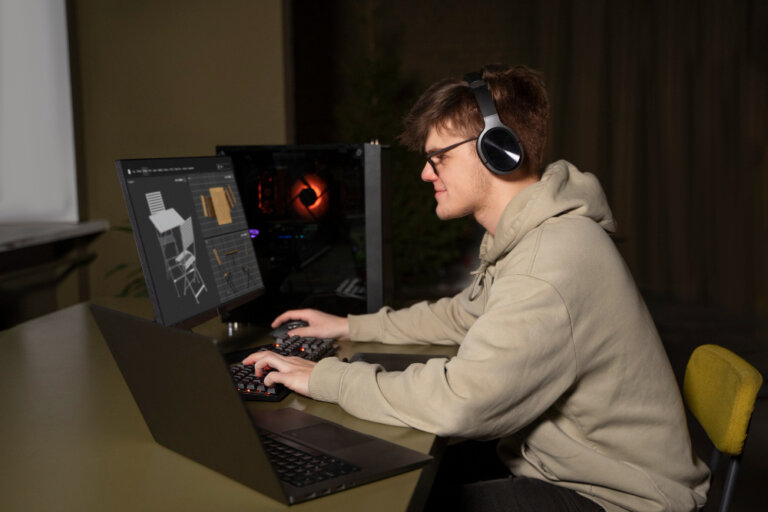
https://www.pexels.com/photo/man-in-white-shirt-using-laptop-computer-5592597/

Project 1–2: A Tight Systems Prototype With Balancing Notes

Build a small system-heavy prototype in a week or two: a combat loop, economy loop, crafting loop, roguelike item set, or tactical abilities. The project must be small enough to tune and ship, but deep enough to demonstrate tradeoffs.

What to show: your core loop diagram, the tuning spreadsheet, and at least two iterations of balancing changes. In one paragraph, call out what you learned about player incentives and why the “fun” version often differs from the “fair” version.

Project 3–4: A Level Design Slice With Clear Goals and Telemetry

Make a 5–10 minute playable level that teaches, escalates, and resolves. This is the level-design equivalent of a short film: strong pacing, readable encounters, and intentional player guidance.

Include a short breakdown of your metrics. You do not need a full analytics stack; simple measures like time-to-completion, death locations, or “where players got lost” are enough. The key is to show you used evidence, not vibes.

Project 5: A UX/Onboarding Redesign With Before/After Evidence

Pick a small game or prototype and redesign its onboarding, HUD, or menu flow. Then compare the original to the improved version. UX is a major differentiator in junior portfolios because it shows empathy and clarity.

Document the issues you observed, the changes you made, and the outcome. If you run even five quick tests, you can state what has improved. This is also where concise writing matters; treat your portfolio page like a product spec, not a blog post, and avoid turning it into an academic writing platform essay.

Project 6: A Narrative Branch That Survives Scope

Create a short narrative experience with branching dialogue that does not explode. The goal is not to write a novel. The goal is to demonstrate structure: state tracking, meaningful choices, and consequences that are visible.

Show a dialogue map, your rules for choice design, and an example of how you cut or merged branches to keep production realistic. Hiring teams love seeing good scope instincts because it is rare in student work.

Project 7: A Multiplayer or Social Mechanic Prototype

You do not need full netcode to demonstrate social design. A “hot-seat” prototype, asynchronous ghost racing, or local co-op system can still show how you think about coordination, competition, fairness, and readability.

Explain your win conditions, your counterplay, and how you prevented one dominant strategy. Multiplayer design discussions often lead to strong interviews because they reveal your mental model quickly.

Project 8: A Live-Ops Style Event or Progression Pass

Design a limited-time event, quest chain, or progression pass for an existing game concept. Focus on pacing and retention, not dark patterns. Make it clear you understand player value and ethical design boundaries.

Show your cadence plan (daily/weekly goals), your reward structure, and how you would communicate it in-game. Even if you never implement the full thing, a well-structured design doc can demonstrate professional thinking.

Project 9: A Mod or a Design Patch for a Known Game

Mods are high-signal because they prove you can work within constraints and ship to real players. Even small mods can be powerful if you document the design intent and the iteration cycle.

If you cannot mod, do a design patch instead: propose changes, prototype them in a simplified environment, and justify them. Use short screenshots, patch-note style bullets, and playtest feedback.

Project 10: A Team Project Where Your Role Is Unmistakable

Team projects are only valuable if your contribution is crystal clear. Pick one team project that shipped, and write the case study like a postmortem focused on your scope.

Include:

  • your responsibilities (systems, levels, narrative, UX, production)
  • what you built end-to-end
  • how you coordinated with others
  • what tradeoffs you made under deadline

This is the one place where a clean, consistent writing platform style helps: standardized headings, short sections, and predictable evidence formatting.

How to Package Each Project So It Gets Read

Here is the minimum structure that works for almost any project:

  • One-sentence pitch: genre + hook + platform
  • Your role: what you owned (be specific)
  • Problem statement: what you were trying to solve
  • Constraints: time, team size, tools, limits
  • Process: ideation → prototype → playtest → iterate
  • Results: what improved and how you know
  • Assets: build link, video, docs, tuning sheet, diagrams

If you only do one upgrade to your portfolio, make every project page follow this pattern. Reviewers love consistency because it reduces cognitive load.

Closing: Your Portfolio Is a Conversation Starter

The best portfolio projects are not the biggest. They are the ones that create crisp interview conversations: “Why did you tune it this way?” “What did playtesters struggle with?” “What would you do next?” If your projects make those questions inevitable, you are already ahead of most candidates.

Pick two projects that show systems thinking, two that show player guidance and UX, one that shows narrative or content structure, and one that proves you can ship with a team. Then document them with ruthless clarity. That combination, far more than fancy visuals, is what consistently turns student portfolios into interview invitations.

Video Games You Didn’t Know Were Made by Students – And Can Game Design Be a Real Career

0

Not every hit video game starts in a studio with millions of dollars and a team of full-time developers. Some start in dorm rooms. Others in small classrooms. Or as part of a thesis.

Student-made games might not sound like a big deal – but some of them go on to win awards, sell millions, and spark careers. And while most students worry about keeping up with classes, a few are quietly designing the next viral game during lab hours. When things get hectic, it’s no surprise some whisper Can someone please just write my assignment so I can finish this prototype? Tools like EssayPro make that possible – letting students pursue their passions and keep up with their deadlines.

The truth? Game design isn’t just for fun. It can be a legitimate, well-paid path – if you play it right.

Games You Didn’t Know Were Created by Students

Let’s start with the surprises. You might have played one of these and never known it came from a student project.

1. Portal (Valve)

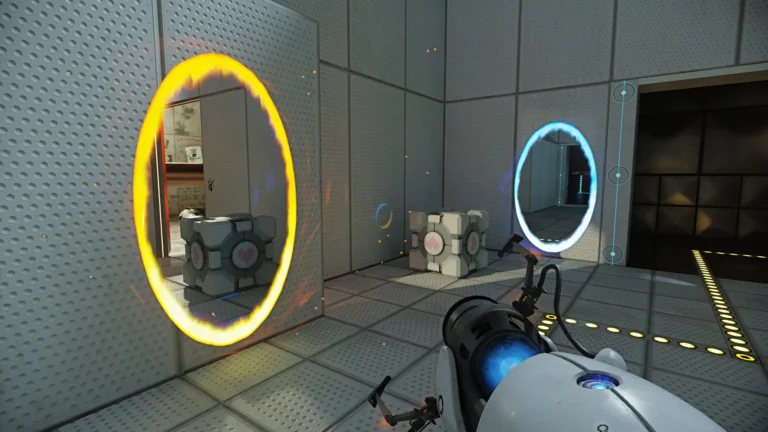
Yes – that Portal. The idea began as a student project at DigiPen Institute of Technology. It was called Narbacular Drop, and Valve was so impressed, they hired the whole team. The core gameplay – portals, physics puzzles, and dark humor – stayed.

2. Superhot

This stylish, slow-mo shooter started as a student entry in a 7-day game jam. It blew up thanks to its simple concept: time moves only when you do. The student devs launched a Kickstarter, raised funding, and turned it into a full release.

3. Outer Wilds

Originally a grad school project at USC’s Interactive Media program, this open-world mystery game became a critical darling. It even won a BAFTA Game Award. Its slow, thoughtful pace was unusual – and brilliant.

4. Baba Is You

Designed by a Finnish student, Arvi Teikari, as part of a game jam, this logic-based puzzle game lets you rewrite the rules of the game as you play. It went on to win multiple awards and gained cult status.

These games prove that big ideas don’t need big studios – just time, support, and the right tools.

What Makes a Student Game Stand Out?

Most student games are rough. That’s okay. But some shine early.

The standout games usually do a few things really well:

  • They have a clear, original mechanic.
  • They know their limits and work within them.
  • They focus on feel and flow, not just features.
  • They’re built by passionate teams who finish things.

Finishing – that’s the hardest part. Anyone can start a game. Shipping one, even a tiny demo, sets you apart.

And that’s where help matters. Academic demands don’t disappear just because your game is gaining traction. That’s why services like an essay writing service exist – and why students like Adam Jason, a project lead turned mentor, recommend balance. “You don’t have to choose between deadlines and creativity,” he says. “You just need smart support and structure.”

Can Game Design Be a Lucrative Career?

Short answer? Yes.

Long answer? Yes – but it takes real planning.

Game design isn’t just about coding or art. It’s systems thinking, storytelling, psychology, math, and collaboration. Studios need designers, sure – but also writers, animators, UX researchers, monetization specialists, and QA testers. It’s a whole ecosystem.

Here’s where the money starts to show:

  • AAA Studios: Salaries for entry-level designers range from $60,000 to $80,000 per year.
  • Indie Success: Sell 50,000 copies of a $15 game? That’s $750,000 in gross revenue.
    Freelancing: Many designers do contract work on the side, earning $30-$70/hour.
  • Tools: Some designers monetize tutorials, plug-ins, or assets on marketplaces like Unity Asset Store or Itch.io.

The trick is staying consistent. Building a portfolio. Publishing something – even a simple prototype – gives you leverage.

From Dorm Room to Steam Page: How It Happens

So how do students actually turn a passion project into a career? Here’s a quick look at the usual path:

  1. Class project → Jam submission
    Start with a school assignment. Turn it into a quick game jam entry.
  2. Game jam → Online demo
    Polish the jam version into a short playable demo. Post it on Itch.io or Steam Early Access.
  3. Demo → Feedback loop
    Get real players to test it. Watch what breaks. Fix it.
  4. Build a team or apply for grants
    You don’t need to do it alone. Look for other students or online collaborators.
  5. Finish and ship
    Launch it. Even a rough build counts. You learn the most by releasing.

Along the way, don’t be afraid to offload where you need help. Whether it’s a part-time artist, a code tutor, or asking someone to write my assignment for me, you win by protecting your time and energy.

Game Design Isn’t Just a Hobby 

Even if you don’t “make it” in games, design thinking applies to everything.

You learn to:

  • Solve problems creatively
  • Work in teams under pressure
  • Handle feedback and revision
  • Blend technical and artistic thinking 

These are real-world, career-ready abilities. Whether you go into UX, education tech, simulation design, or interactive media, the skills transfer.

Final Word: Start Small, Think Big

You don’t need to build the next Elden Ring. You just need to ship something. Anything. That demo, sketch, or broken prototype might be the seed of your future career.

And if you’re serious about it? Protect your time. Ask for help. Use tools that keep you focused. If you ever think Should I pay to write my assignment so I can finish this build, you’re not alone. 

Sometimes success means prioritizing the dream – without dropping the ball.

Top 3 Best Game Design Schools in West Virginia for 2026

Students seeking a game design education can consider West Virginia, despite the state not having a huge roster of game design schools. With key institutions in the region, aspiring game designers are sure to find programs related to the field that would help them achieve their dream of entering the gaming industry. In line with this, West Virginia’s game design education, which fosters local talent, compensates for its video game industry’s rather low economic impact of $33.9 million, based on the data by the Entertainment Software Association.  


Our Criteria

To determine the top game design schools in West Virginia, we reviewed publicly available information and program offerings and relied on EduRank to select the best options in the state. Our focus was on identifying schools that provide the strongest preparation for professional game design careers. This approach ensures a consistent evaluation while prioritizing choices that equip students with knowledge and practical skills for the evolving gaming industry.

How to Use Our Criteria

While our list is based on statistics and facts, we acknowledge that it is not absolute and is open to interpretation. We also recognize that each student has varying needs regarding program focus, campus culture, cost, lifestyle, and the like. With that said, our rankings are solely intended to provide guidance and highlight programs that can help students land a career in game design.


Three Game Design Schools in West Virginia (2026)

West Virginia University

Image Credit: Appily

West Virginia University offers undergraduate and graduate programs. To start with, they can apply for a Bachelor of Arts in Game Design and Interactive Media. In this, students will greatly benefit from small class sizes when studying courses, such as Gaming Design and Digital Narrative, Beginning 3D Animation, Interactive Audio Design, and Intermediate Game Design. Then, they can pursue higher education through the Master of Arts in Game Design, which is an online program. It will expand and build upon their skills by taking courses, including Game Design, Fundamentals of UX/UI in Game Design, and the like. All in all, this pathway allows graduates to become character artists, game designers, game developers, mobile game designers, and UI/UX designers.

Quick Facts

  • World ranking: 259 of 14,131
  • US ranking: 105 of 2,496
  • Control: Public
  • Highest degree offered: Doctor’s degree
  • Acceptance rate: 86%
  • Graduation Rate: 61%

Tuition and fees at the school range from about $9,000 per year for in-state students to over $28,000 per year for out-of-state students.

University of Charleston

Image Credit: Appily

The University of Charleston has a Bachelor of Science in Applied Computer Science, which includes an option to specialize in video game development. With this four-year program, learners have the chance to gain expertise in designing, building, and launching games. As part of the learning outcomes, students will be trained in 3D modeling, animation, game engines, programming, and sound design. Once the program is completed, every graduate is ready for professional roles as a 3D modeler, animator, game designer, game developer, or technical artist.

Quick Facts

  • World ranking: 3904 of 14,131
  • US ranking: 1026 of 2,496
  • Control: Private not-for-profit
  • Highest degree offered: Doctor’s degree
  • Acceptance rate: 65%
  • Graduation Rate: 46%

Tuition and fees at the school range from about $16,000 to over $32,000 per year for in-state and out-of-state students.

Bethany College

Image Credit: Ivy Central

Bethany College houses a Bachelor of Science in Game Development. In detail, this program champions an industry-driven curriculum, which explores C#, project-based development, and gaming industry workflows. It also features modern facilities, such as computer labs, a science lab, and an esports arena. In connection, the possible career pathways for graduates are character artist, concept artist, content designer, game developer, programmer, QA game tester, UX specialist, and many more.

Quick Facts

  • World ranking: 4964 of 14,131
  • US ranking: 1299 of 2,496
  • Control: Private not-for-profit
  • Highest degree offered: Master’s degree
  • Acceptance rate: 60%
  • Graduation Rate: 46%

Tuition and fees at the school range from about $10,000 to over $31,000 per year for in-state and out-of-state students.

Honorable Mentions: Blue Ridge Community and Technical College, James Rumsey Technical Institute, Marshall University, Mountwest Community & Technical College, and West Virginia Wesleyan College.

Why Study Game Design in West Virginia?

Yes, West Virginia is not considered a top-tier state for the video game industry. Yes, its game design education scene is compact. However, it still manages to strengthen its presence in the field through robust game-aligned academic pathways. The rate of tuition and fees at the universities is also cost-effective. The region even provides career opportunities for graduates thanks to a few studios, such as Vandalia Softworks.

Frequently Asked Questions

Q: Can I apply for game design programs in West Virginia?

A: Yes, specifically through the recommended game design schools on this list.

Q: Which is the top game design degree in the area?

A: West Virginia University’s Bachelor of Arts in Game Design and Interactive Media is one of the most extensive undergraduate programs in the state.

Q: Is there an online game design degree in West Virginia?

A: Yes, graduate students can pursue a Master of Arts in Game Design at West Virginia University, which is a fully online program.

Note: This article incorporates the latest available data and information at the time of writing. Keep in mind that statistics can vary over time due to updates and real-world changes.

Top 5 High-Rated Game Design Schools in Washington for 2026

One of the major global hubs for game design and development is the state of Washington. According to the Entertainment Software Association, its video game industry has a $13.9 billion impact on the economy and supports more than 28,000 jobs. Washington is also home to major AAA studios, such as Bungie and Valve Corporation. Of greater importance, it houses some of the most respected game design schools that administer rigorous game design programs.


Our Criteria

To determine the top game design schools in Washington, we reviewed publicly available information and program offerings and relied on EduRank to select the best options in the state. Our focus was on identifying schools that provide the strongest preparation for professional game design careers. This approach ensures a consistent evaluation while prioritizing choices that equip students with knowledge and practical skills for the evolving gaming industry.

How to Use Our Criteria

While our list is based on statistics and facts, we acknowledge that it is not absolute and is open to interpretation. We also recognize that each student has varying needs regarding program focus, campus culture, cost, lifestyle, and the like. With that said, our rankings are solely intended to provide guidance and highlight programs that can help students land a career in game design.


Five Game Design Schools in Washington (2026)

University of Washington

Image Credit: UW

The University of Washington’s online game design certificate caters to those looking for flexibility. In a span of eight months, with solely evening classes, students will have to accomplish three courses: Fundamentals of Game Design, Game Mechanics & Systems Design, and Game Studio Roles & Development. By examining essential parts of contemporary game design through a hands-on approach, learners will become experts in game system elements, video game genres, various game dimensions, project management, and the business aspect of game creation. In particular, this program is designed for individuals who plan to pursue careers as game designers and game developers.

Quick Facts

  • World ranking: 10 of 14,131
  • US ranking: 8 of 2,496
  • Control: Public
  • Highest degree offered: Doctor’s degree
  • Acceptance rate: 43%
  • Graduation Rate: 84%

Tuition and fees at the school range from about $11,000 per year for in-state students to over $40,000 per year for out-of-state students.

Washington State University

Image Credit: WSU

Washington State University delivers a Bachelor of Arts in Digital Technology and Culture, which has game design as one of its focus areas in its multidimensional curriculum. In here, students will experience the process of creating and critiquing video games. The required courses include Video Game Theories & History or Digital Strategies and Engines and Platforms. Additionally, they can select more courses like 3D Animation, Multimedia Design, Usability and Interface Design, and more. As promised by the university, graduates of this program are ready for diverse gaming careers, including animator, game designer, multimedia designer, and UI designer, among others.

Quick Facts

  • World ranking: 145 of 14,131
  • US ranking: 73 of 2,496
  • Control: Public
  • Highest degree offered: Doctor’s degree
  • Acceptance rate: 85%
  • Graduation Rate: 62%

Tuition and fees at the school range from about $10,000 per year for in-state students to over $27,000 per year for out-of-state students.

Seattle University

Image Credit: SU

Seattle University has a formal program to study game design — a Bachelor of Fine Arts in Game Art. With this, students will be led by experienced professionals in completing a curriculum that enhances their 2D\3D art, game design, interactive media, programming, and storytelling skills. They can also access state-of-the-art facilities (e.g., digital workstations, game development labs, motion capture studio, VR/AR studios) in mastering industry-standard software and creating game projects. Typically, the career pathways for graduates are roles such as animators, character artists, game artists, game designers, game producers, level designers, and technical artists.

Quick Facts

  • World ranking: 544 of 14,131
  • US ranking: 166 of 2,496
  • Control: Private not-for-profit
  • Highest degree offered: Doctor’s degree
  • Acceptance rate: 76%
  • Graduation Rate: 73%

Tuition and fees at the school range from about $15,000 to over $53,000 per year for in-state and out-of-state students.

DigiPen Institute of Technology

Image Credit: DigiPen

The DigiPen Institute of Technology offers two game design degree programs: Bachelor of Arts in Game Design and Bachelor of Science in Computer Science and Game Design. Specifically, the former integrates game design, humanities, and social sciences, as students learn skills in creating experiences for games. In contrast, the former allows learners to be well-versed in game design and computer programming. A few of the current courses are Introduction to Game Design, Tabletop Game Design, Role-Playing Game Design, Game Design, Development & Production, and others. Upon completion, BA program graduates can pursue roles like level designer, narrative designer, systems designer, quest designer, while BS graduates can secure careers as AI programmer, gameplay programmer, and technical designer.

Quick Facts

  • World ranking: 4300 of 14,131
  • US ranking: 1114 of 2,496
  • Control: Private for-profit
  • Highest degree offered: Master’s degree
  • Acceptance rate: 68%
  • Graduation Rate: 52%

Tuition and fees at the school range from about $31,000 to over $37,000 per year for in-state and out-of-state students.

Lake Washington Institute of Technology

Image Credit: Pathways to Jobs

Lake Washington Institute of Technology provides a Bachelor of Applied Science in Game Design and Development program, which covers 3D modeling, animation, game mechanics, programming, traditional art, and more. Also, the curriculum features courses, such as 2D Game Design, 3D Game Design, and Principles of Gameplay Mechanics. Accordingly, one of the main objectives is to teach students how to analyze the key elements of digital game design. Moreover, this program guides learners towards careers in game design, game development, and interactive media.

Quick Facts

  • World ranking: 6540 of 14,131
  • US ranking: 1714 of 2,496
  • Control: Public
  • Highest degree offered: Bachelor’s degree
  • Acceptance rate: 100%
  • Graduation Rate: 40%

Tuition and fees at the school range from about $3,000 per year for in-state students to over $8,000 per year for out-of-state students.

Honorable Mentions: Academy of Interactive Entertainment, Bellevue College, Cornish College of the Arts, and Western Washington University.

Why Study Game Design in Washington?

Washington is a beautiful state, featuring rivers, a mountain range, and the Pacific coastland. However, its appeal goes well beyond its natural beauty. More specifically, aspiring game designers will love it here, for it boasts a dense ecosystem of game design universities and massive studios. It means students have their education and career covered. As one of the leading states in gaming and game design, there is no doubt that it is a highly active center for gaming talent and development.

Frequently Asked Questions

Q: Does Washington host universities for game design education?

A: Yes, it is home to several nationally-ranked universities offering game design programs.

Q: What is the best game design degree in the state?

A: Some of the most prominent options are the game design and development degrees at DigiPen Institute of Technology.

Q: Is remote learning available in game design schools in Washington?

A: Yes. One of the best options for online game design is the University of Washington’s game design certificate course.

Note: This article incorporates the latest available data and information at the time of writing. Keep in mind that statistics can vary over time due to updates and real-world changes.

How Slot Machine Design Influences Player Behavior

0

For many people, slot machines are the most familiar face of gambling. Bright lights, catchy tunes, and spinning reels call from every corner of a casino or phone screen. Yet few players stop to ask why these games look and sound the way they do. Designers spend hours studying how every color, symbol, and jingle can shape what someone feels and does. To see how this works, think of an online casino hub where the popular online casino entertainment site called spinbara dazzles newcomers with a colorful lobby, promising a tempting casino bonus. The look, the music, and the pace of play are all chosen with care. Each lever pull, screen tap, and blinking marquee is mapped out after months of user testing and lab studies. The aim is simple: extend engagement, lift wagers, and keep the casino floor—or app—ever busy around the clock. They pull a player in, invite longer sessions, and steer choices from one game to another. This article explores the main design tricks behind slot machines and explains how they influence behavior. By understanding these tools, players and parents can make smarter decisions about leisure time and money spent.

Color and Symbols

Brain science studies reveal the power of colors to communicate quickly to our minds, and slot designers understand this, selecting vibrant hues which signal luck, prosperity or serenity to their players. Red lights flash after wins because their signal excitement. Gold frames with coin symbols tell players “riches await”. Even background color matters: A deep blue screen can give players confidence that the reels will spin evenly and safely, encouraging them to stay longer and spin again. Cherries, bars and sevens have long been symbols that people recognize quickly without too much thought before spinning again. On video slots, animated gems or cute animals serve the same function: when they line up easily they send an instant signal of success; similarly when our brain recognises familiar, shiny images it produces dopamine–our feel-good chemical! That burst reinforces the habit of hitting the spin button before realizing what the final outcome has become apparent. Floor planners place flashy cabinets along busy aisles so their brilliant red and gold colors catch people just passing by; soft rocking chairs matched to these hues complete the invitation for longer stays than just passing glances.

Sound Effects and Music Loops

Sounds are the silent companions of slot machines. A soft ding marks every coin that falls, while rising chords create tension before reels stop turning. Not only are these noises entertaining; they train our ears to anticipate rewards! Studies show that players interpret games more generously when their win sounds are louder, even for small payouts. Background music also acts as an effective stimuli; fast tempos raise heart rates more rapidly leading to quicker decisions by the player. Slow jazz loops create the sensation of time dragging on, providing the feeling of an informal evening out. Designers test various tracks until they find one which best matches their target audiences; many tunes use similar chord progressions seen in children’s cartoons to provide safe, playful stimulation for brain processes. Combine speakers near a player’s head with sound effects and music for an intimate experience. Sound effects and music work as part of a loop: hear a chime, feel good about what just happened, press spin again – this keeps seats filled while most tones do not fall within typical speech range, meaning your brain rarely tires of hearing them again and again.

Slot Machine Rewards and Near Misses

Unlike the odds-laden world of real life casino gambling, slot machines do not pay out at random intervals; rather they follow carefully planned reward schedules designed to maintain hope without draining their bankroll completely. Small wins occur frequently enough that hope remains alive without draining their finances too rapidly while bigger prizes appear just often enough that winning feels possible. Variable ratio reinforcement, the mechanism behind social media likes’ addictive quality. Another tool known as near miss occurs when two jackpot symbols land but one jackpot symbol stops short by just one position; when this occurs, our brain interprets this result almost as an equivalent win. MRI scans reveal that similar reward centers of our brain light up even without actual money changing hands, even without us receiving anything for it. Designers take advantage of this by stacking reels so near misses occur more frequently than would normally occur due to random chance; creating the strong urge to try again as victory feels ever so close; these schedules also speed up play while eliminating time for thoughtful pauses, keeping players immersed for far longer than originally anticipated in trying their luck at winning big!

Responsible Design and Player Awareness

Realizing how slot games operate doesn’t mean eschewing them completely; rather, it helps players make clearer choices. Some modern developers now include features to break out from any trance-inducing rhythm. Timers serve to remind players how long they have been spinning, while win/loss meters show that each round truly balances itself out, eliminating any illusion that small wins offset larger losses. Transparent odds tables replace vague “up to” messages and session-limit settings allow players to cap themselves after a specific time or budget has elapsed. Governments and health groups advocate for stricter regulations – such as mandatory pop-up warnings after every thousand spins. Some regions now mandate hourly reminders showing time and total spending to players, though awareness remains the best way of guarding against irresponsible gambling behavior. By noting how color, sound and reward schedules influence our emotions as players experience casino slots in mobile gaming apps – parents may share these insights with teen gamers encountering riskier forms of entertainment like digital slots – it allows all involved players to have an opportunity to slow their pace of gambling responsibly.

From Stable to Start Line: Building Progression Systems in Horse Racing Games

0

If we take all the best games that will sit in the forever-greats cabinet, what do they have in common? A good story? A good multiplayer feature? Not really. Most of them had impressive progression systems. They are the quiet engine behind every good horse racing game.

If you strip it away, all you’re left with are the races that feel disconnected and pointless. Yes, you might win, but what do you get for all those wins? So, without a good progression system, the game falls apart. But if you build it the right way using layers and many different categories (breeding, upgrades, decisions, XP, leveling, and prestige), suddenly games become a lot more fun.

Even though horse racing games are all about speed, the best ones don’t rush things. They make progression feel earned, which, yes, sometimes may be frustrating, but it makes the entire process more rewarding.

Progression Has to Feel Slower Than the Player Wants

This sounds counterintuitive, but it’s true. Imagine a game where 10 minutes in, you’ve already unlocked everything. What’s the point of playing the game longer? But this is like a balance scale. If the process is too slow, they quit out of frustration. After all, this is horse racing; players want some areas to be fast.

The sweet spot lives in the middle. Horse racing games do this well because racing itself is built around patience. Horses don’t peak instantly. Stables don’t become dominant after one race. This means that the game mirrors reality, even though it may be time-consuming.

However, once players reach a certain point of prestige/success, the entire process feels more rewarding. On top of that, people have already spent a lot of time building something in the game, so there is a lower chance they’ll quit the game soon.

Early Progression Is About Learning, Not Winning

The early stages of horse racing games should be easygoing. The horse racing industry is complex and imagine a person who has never placed a horse racing bet in their life, or watched a horse race, starting a game with 10 different modes flashing on the screen. It’s confusing!

Just like in betting, all beginners have a learning curve. During this time, bettors learn what metrics in a race are important, how odds work, and how to manage their budget. Some even scan local authoritative sites like TwinSpires for the best horse racing bets, all to get better at something quicker.

Well, we have the same thing in horse racing games. Progression systems shouldn’t punish new players for not knowing what they’re doing. Early stages should teach them about mechanics and management.

Short races, limited stats, clear upgrades, and simple breeding choices. All of these things will flatten the learning curve and make games feel more understandable to beginners.

Horses Are Progression Anchors

In most of the popular racing games, horses aren’t disposable units. They’re long-term investments. You breed them, take care of them, train them, and race them.

They spent a lot of time with their horse, which is where the emotional attachments come in. Pro game developers know that emotional attachment can slow down progression, but in a good way. Studies suggest that this is a real thing, and people really do get emotional attachments to game characters. People hesitate before replacing a character they’ve spent hours developing, and that’s natural.

This creates a natural pacing in horse racing games. Instead of chasing the next unlock, upgrade, or race, players weigh trade-offs. When horses become anchors, progression becomes a series of decisions instead of a straight line, and that’s all because they’ve spent so much time developing their character.

Facilities and Systems

A common trap in racing games is making faster horses the only meaningful upgrade. That works briefly, then collapses.

A good idea is to layer progression through systems. That’s why we have stables, training grounds, races, and many other aspects (areas within a single game).

These upgrades don’t feel as exciting as a new horse, but they multiply future progress.

Players who understand this always advance faster, even if their horses aren’t the best early on. That mirrors real racing operations and, more importantly, rewards strategic thinking instead of brute grinding.

Progression should compound. Not reset.

Resource Scarcity Creates Real Choices

There is nothing worse than having unlimited currency. This can kill not just the progression but the entire game, and it is even worse than bad balancing.

That’s why strong racing games limit resources just enough to force prioritization. You can upgrade something, but not everything. Some games, like Rival Stars, “starve” you of resources before your next big upgrade, so if you spend recklessly, you won’t have enough money to progress.

Scarcity also makes success feel more satisfying. Winning a tough race is just like beating Malenia, Blade of Miquella, in Elden Ring. You feel like you’re about to pop a champagne just because the road there was tough.

Importance of Late-Game Progression

One of the hardest parts of progression design is the late game, and there is a good reason for that. Increasing costs and stat requirements feel lazy, and players notice. That’s why better systems change how progression works instead of just stretching it without any point.

Higher-level races introduce complexity. Breeding becomes more dynamic, and the competition is harder than ever before.

After all, at this stage, people aren’t chasing unlocks anymore. They worry about strategies, optimizing systems, and competing with others.

Progression in the game is responsible for engagement. People log in constantly because there’s always something just out of reach. When progression is done right, winning a race feels great, but building something that lasts feels even better.

Top 5 Best Game Design Schools in Virginia for 2026

Virginia presents a developing gaming landscape. In fact, it currently has an economic impact of $402.5 million on the video game industry, as reported by the Entertainment Software Association. More than that, its local industry supports 920 direct jobs and 724 indirect jobs. The state’s reputation in the field is also anchored by strong academic programs at various game design schools in the state, allowing students to experience top-ranked game design education.


Our Criteria

To determine the top game design schools in Virginia, we reviewed publicly available information and program offerings and relied on EduRank to select the best options in the state. Our focus was on identifying schools that provide the strongest preparation for professional game design careers. This approach ensures a consistent evaluation while prioritizing choices that equip students with knowledge and practical skills for the evolving gaming industry.

How to Use Our Criteria

While our list is based on statistics and facts, we acknowledge that it is not absolute and is open to interpretation. We also recognize that each student has varying needs regarding program focus, campus culture, cost, lifestyle, and the like. With that said, our rankings are solely intended to provide guidance and highlight programs that can help students land a career in game design.


Five Game Design Schools in Virginia (2026)

University of Virginia

Image Credit: University of Virginia

The University of Virginia primarily guides students who want to pursue game design through a Computer Game Design course within its Computer Science department. To be specific, it concentrates on the design and technical areas of the process of making a video game. It means that students will experience every step from conceptualization all the way to playtesting. As part of the course, they will be familiarized with the tools and concepts involved in 2D and 3D computer video games development. Completion of the course can be of help in landing jobs in game design and development.

Quick Facts

  • World ranking: 55 of 14,131
  • US ranking: 40 of 2,496
  • Control: Public
  • Highest degree offered: Doctor’s degree
  • Acceptance rate: 17%
  • Graduation Rate: 95%

Tuition and fees at the school range from about $17,000 per year for in-state students to over $53,000 per year for out-of-state students.

Virginia Polytechnic Institute and State University

Image Credit: Appily

Virginia Polytechnic Institute and State University, commonly referred to as Virginia Tech, offers a way to learn game design through its College of Engineering. Particularly, students can take a Video Game Design and Engineering course, which focuses on multiple aspects of contemporary interactive video games for PC. It includes artificial intelligence, game architecture, computer graphics, game design principles, game mechanics, play testing, and user interaction. By the end of the course, students will know how to develop game assets, construct 2D graphics, design player interaction and collision detection, and analyze computational theory used in video game design — all of which prepare them for careers in the gaming industry.

Quick Facts

  • World ranking: 95 of 14,131
  • US ranking: 57 of 2,496
  • Control: Public
  • Highest degree offered: Doctor’s degree
  • Acceptance rate: 57%
  • Graduation Rate: 86%

Tuition and fees at the school range from about $12,000 per year for in-state students to over $33,000 per year for out-of-state students.

George Mason University

Image Credit: Alfa Beta

George Mason University provides a structured pathway towards game design with its Bachelor of Fine Arts in Computer Game Design degree program. The focus areas of this program are the creative elements of computer game design. Students will also gain technical skills essential to the field thanks to the curriculum, with major courses such as Applied Coding for Game Designers, Introduction to Game Design, Basic Game Design, Digital Game Design, Advanced Game Design Studio, and beyond. As promised by the university, graduates of this program will be ready for employment in the game design and game development field.

Quick Facts

  • World ranking: 219 of 14,131
  • US ranking: 96 of 2,496
  • Control: Public
  • Highest degree offered: Doctor’s degree
  • Acceptance rate: 89%
  • Graduation Rate: 69%

Tuition and fees at the school range from about $10,000 per year for in-state students to over $35,000 per year for out-of-state students.

Virginia Commonwealth University

Image Credit: Appily

Virginia Commonwealth University champions game design preparation via a Bachelor of Fine Arts in Kinetic Imaging with an interaction and game design concentration. This 121-credit program assists students in learning emergent systems, game design, and virtual interactive worlds. More concretely, the interaction and game design emphasis allows learners to master the integration of interactive elements with narrative and world-building techniques in gamification environments. At the same time, they are expected to make projects that engage with contemporary issues in the field. The possible career pathways for graduates include game designer, interactive media designer, and other roles in the specific space.

Quick Facts

  • World ranking: 256 of 14,131
  • US ranking: 103 of 2,496
  • Control: Public
  • Highest degree offered: Doctor’s degree
  • Acceptance rate: 93%
  • Graduation Rate: 65%

Tuition and fees at the school range from about $12,000 per year for in-state students to over $34,000 per year for out-of-state students.

Old Dominion University

Image Credit: Old Dominion University

Old Dominion University delivers a  Bachelor of Science in Interdisciplinary Studies with a Game Studies & Design major. The game design highlights of the curriculum are Visual Design Fundamentals for Game Design, Technologies for Game Design and Development, and Game Design and Rhetoric courses. As students complete the program, they will learn how to adapt game development and game design principles in response to technological advancements. Furthermore, degree completion indicates that students are formally trained for roles like character or environmental designer, game designer, game developer, gameplay engineer, game producer, game programmer, game tester, and level designer.

Quick Facts

  • World ranking: 557 of 14,131
  • US ranking: 171 of 2,496
  • Control: Public
  • Highest degree offered: Doctor’s degree
  • Acceptance rate: 91%
  • Graduation Rate: 44%

Tuition and fees at the school range from about $7,000 per year for in-state students to over $30,000 per year for out-of-state students.

Honorable Mentions: Averett University, Christopher Newport University, Marymount University, Shenandoah University, University of Richmond, Virginia Peninsula Community College, Virginia Wesleyan University, and Washington and Lee University.

Why Study Game Design in Virginia?

The state of Virginia boasts universities with game design programs and relevant coursework that offer project-focused experiences, internships, and portfolio development. Students will also gain all the essentials for stepping into careers in game studios. Plus, the area hosts a couple of gaming companies that may serve as career destinations for graduates, before they decide to apply for major AAA studios based in other states.

Frequently Asked Questions

Q: Can I find game design schools in Virginia?

A: Absolutely. There are many game design schools in the state with programs emphasizing real projects and portfolio preparation.

Q: What is the ideal game design program in the region?

A: One of the top programs for game design is the Bachelor of Fine Arts in Game Design at George Mason University.

Q: Is it possible for students to enroll in online game design programs in Virginia?

A: Yes, specifically through the online courses provided by the University of Richmond and Virginia Wesleyan University.

Note: This article incorporates the latest available data and information at the time of writing. Keep in mind that statistics can vary over time due to updates and real-world changes.

Top 2 Best Game Design Schools in Vermont for 2026

Vermont has a sparse game design ecosystem, with the Entertainment Software Association reporting that its video game industry contributes just $11.8 million to the economy. That is why it is no surprise that the number of supported jobs within the sector is less than a hundred. Likewise, the game design schools in the area are extremely limited. What it does have is one nationally recognized university that offers comprehensive game design programs for students seeking formal education in the field. At the same time, there are a few decent alternatives to choose from.


Our Criteria

To determine the top game design schools in Vermont, we reviewed publicly available information and program offerings and relied on EduRank to select the best options in the state. Our focus was on identifying schools that provide the strongest preparation for professional game design careers. This approach ensures a consistent evaluation while prioritizing choices that equip students with knowledge and practical skills for the evolving gaming industry.

How to Use Our Criteria

While our list is based on statistics and facts, we acknowledge that it is not absolute and is open to interpretation. We also recognize that each student has varying needs regarding program focus, campus culture, cost, lifestyle, and the like. With that said, our rankings are solely intended to provide guidance and highlight programs that can help students land a career in game design.


Two Game Design Schools in Vermont (2026)

Champlain College

Image Credit: Champlain College

Champlain College is renowned for its Game Studio Experience, which delivers a Game Design degree that enables students to gain robust foundational skills in the field. In detail, learners will complete a curriculum that includes courses like Visual Communication for Game Design, Introduction to Game Design, Principles of Game Design, Senior Portfolio: Game Design, and others. Most importantly, learners will be instructed to work on actual games and projects instead of sitting through lectures. Additionally, some of the minors students can take include Game Programming, Game Sound Design, Real-Time 3-D Modeling, and UI Design & Implementation Minor, among others. Upon graduation, they will be qualified for careers in content design, level design, narrative design, systems design, and technical design.

At the same time, the university provides an online Bachelor of Science in Interactive Game Design degree program. It aims to instill students with art, business, design, and technology knowledge related to modern game design. Some of the courses in this online program are 3D Modeling, Introduction to Game Design, Technical Skills for Game Design, Game Engines for Designers, and much more. Learners will also explore the use of Unity, Adobe Creative Suite, Level Editor Software, Maya, and the like. The top jobs awaiting completers include game designer, gameplay programmer, interactive game producer, and UI artist.

Quick Facts

  • World ranking: 3378 of 14,131
  • US ranking: 879 of 2,496
  • Control: Private not-for-profit
  • Highest degree offered: Master’s degree
  • Acceptance rate: 67%
  • Graduation Rate: 63%

Tuition and fees at the school range from about $10,000 to over $45,000 per year for in-state and out-of-state students.

Vermont State University

Image Credit: VSU

Vermont State University offers an online video game design and development course. It is a comprehensive training program that helps students in the acquisition of skills in game programming, game modeling and texturing, game engine foundation, and game development. Learners will complete 500 course hours in a self-paced setup. Once completed, they will be ready for professional game design and game development roles.

Quick Facts

  • World ranking: N/A (not yet reported post-merger)
  • US ranking: N/A (not yet reported post-merger)
  • Control: Public
  • Highest degree offered: N/A (not yet reported post-merger)
  • Acceptance rate: N/A (not yet reported post-merger)
  • Graduation Rate: N/A (not yet reported post-merger)

Tuition and fees data for the school have not been published by the ranking and data provider (Edurank).

Honorable Mentions: Community College of Vermont and Vermont College of Fine Arts.

Why Study Game Design in Vermont?

Vermont has a very small number of standalone and traditional game design degree programs, but students will be more than pleased with what it offers. In other words, the state’s game design scene is concentrated but high-quality. Aside from on-campus programs that support skill building, there are also fully online options, giving additional flexibility. While graduates are most likely to transfer to other states to start their careers, Vermont does house independent studios like Frame Interactive and Sundae Month, which could allow them to gain entry-level professional experience. In short, it is not much, but it works.

Frequently Asked Questions

Q: Does Vermont support game design education?

A: Yes, the state is home to a few universities that provide programs relevant to game design.

Q: Which school in the region offers the best game design degree?

A: Champlain College is the state’s only nationally ranked program with several game design majors.

Q: Are there online game design programs in Vermont?

A: Yes, students can opt for online alternatives at Champlain College and Vermont State University.

Note: This article incorporates the latest available data and information at the time of writing. Keep in mind that statistics can vary over time due to updates and real-world changes.

How Indian Game Designers Are Shaping Mobile-First Gameplay Experiences

0

Mobile gaming in India has moved far beyond being a casual time-pass. It is now a serious creative and technical space, driven by designers who deeply understand local habits, devices, and attention spans. From real-time formats inspired by shows like CrazyTime Live to fast arcade and skill-based games, Indian game designers are shaping experiences that feel natural on a phone rather than adapted from something built for a desktop. What stands out is not just how these games look, but how they behave in the hands of real players.

Designing for the Way Indians Actually Play

Indian players mostly game on smartphones, often on the move. Designers here do not assume long sessions or perfect conditions. They design for interruptions, quick loading, and instant feedback.

That mindset changes everything. Menus are simpler. Tutorials are shorter. Gameplay mechanics reveal themselves gradually instead of all at once.

Key design priorities often include:

  • One-thumb or minimal-touch controls.
  • Clear visuals that work on small screens.
  • Fast entry into gameplay without long setup.
  • Smooth performance on mid-range devices.

This approach makes games more inclusive and easier to enjoy across different regions and income levels.

Short Sessions, Strong Engagement

One of the biggest contributions Indian designers have made is mastering the art of short-session gameplay. Many players open a game for just a few minutes, maybe while commuting or waiting in line.

Designers respond by creating tight gameplay loops. A round feels complete in seconds, not minutes. Progress still feels meaningful, even when played in bursts.

This is especially visible in:

  • Crash-style and instant-result games.
  • Casual strategy titles with quick levels.
  • Competitive formats that reset frequently.

The result is engagement without exhaustion.

Cultural Awareness Without Overdoing It

Indian game designers are becoming more confident about using cultural cues, but subtly. Instead of leaning heavily on stereotypes, they borrow textures, colours, expressions, and themes that feel familiar without being loud.

You might notice:

  • Warm colour palettes inspired by festivals.
  • Background music with light regional tones.
  • Characters and environments that feel locally grounded.

The best designs do this quietly. Players feel at home without being distracted by forced symbolism.

UI and UX Built for Clarity

Mobile-first design in India places huge importance on clarity. Internet speeds vary. Screen sizes vary. Attention varies even more.

Because of this, Indian UI designers focus on:

  • Bold buttons and readable text.
  • Minimal on-screen clutter.
  • Visual cues instead of long instructions.

Good UX here is not about fancy transitions. It is about reducing confusion and making the next action obvious.

Monetisation That Respects the Player

Indian designers are also rethinking monetisation. The old idea of aggressive popups is slowly giving way to more thoughtful systems.

Many mobile games now:

  • Allow free play before commitment.
  • Offer optional boosts instead of hard gates.
  • Keep purchases clearly explained.

This builds trust, which matters in a market where players are cautious about spending.

Testing in Real-World Conditions

Another quiet strength of Indian game design is testing. Designers often test games on real networks, real devices, and in real-life situations. That feedback directly shapes performance and usability. Games that survive this process tend to feel lighter, faster, and more stable.

Conclusion

Indian game designers are no longer just following global trends. They are actively defining how mobile-first gameplay should feel in a country where phones are the primary gaming platform. By designing for short sessions, varied devices, and real human behaviour, they create experiences that feel natural rather than forced.

As mobile gaming in India continues to grow, this grounded, player-aware design approach may well influence how games are built far beyond the country’s borders.

Imperfect Information In-Game Design For Modern Card Games

0

If you’re making a game and your playtesters keep saying “the RNG feels unfair,” it may feel like they are complaining about it being too hard, but actually, your difficulty balance may be fine. The issue is often information design: what the player can know about, when they can discover this information, and how important that information is to the eventual outcome. Great hidden-information games do not feel random. They feel tense but still learnable, because even a loss points back to a decision the player understands.

Seeing Imperfect Information in Real Hands

Imperfect information means players make decisions without seeing the full state. Hidden hands, face-down cards, unrevealed draws, secret objectives, and simultaneous picks all qualify. Luck still matters, but timing is more important: think about when the player is required to commit to a decision, what they learn when they do, and how the overall picture shifts as information is unveiled.

Rather than keeping this abstract, let’s look at a concrete example using a platform with plenty of card games on offer. To start, open Lucky Rebel and choose a poker-based table game. As you play, try to understand each hand as five different moments: (1) initial state, what is visible before anyone acts; (2) commitment, what you must choose while still guessing; (3) reveal, what information appears next and what stays hidden; (4) resolution, what is now locked in; (5) reset, what carries forward into the next hand.

For each moment, jot down an inference a skilled player could make, a trap they might anticipate, and one question that remains open. You are not trying to study poker here; you are tracking how a system hands the player just enough information to form an impression, then asks them to act, then pays that action off with a reveal that either confirms or corrects the model. To deepen the comparison, repeat the same audit with a different poker-style game on Lucky Rebel, paying attention to where the decision window tightens or expands. Those moments are what you need to recreate if you are building a game, whether it’s a digital card battler, tactics game, or social deduction piece.

Once you have grasped that sequence, attach the correct term to what you just observed. You can learn more about this in Games with Imperfect Information. Don’t worry too much about the algorithms here; just focus on the core idea: when two states are indistinguishable to the player, you are effectively designing one decision moment, not two different moments. Recognizing this will make you a better designer.

The Decision Window Is the Real Unit of Design

Players do not experience “mechanics.” They experience moments where they must commit with partial knowledge. A decision window is that moment, and it is where hidden information either creates tension or creates fog.

Freeze the game at any choice and ask:

  1. What does the player know right now?
  2. What are they committing to when they act?
  3. What new information arrives immediately after?

If those answers are clear, players form hypotheses, test them, and improve. If they are blurry, players invent explanations, and may start to blame the RNG because they don’t know what’s happening.

Limit the Possibility Space Without Killing Mystery

Hidden information is only interesting when the player’s guess space has shape. A face-down card becomes compelling when the player can narrow it to a few plausible options, then make a choice that expresses that read. When every secret could be anything, you have not created a compelling game; you have created a coin flip, and that doesn’t feel appealing to a lot of players.

Modern design is about adding possibility within limits. Deckbuilding rules constrain what can exist. Revealed history tells you what is already gone. Public resources and costs signal what kinds of plays are even possible.

Treat every hidden element as a question the player is allowed to answer over time. If your system gives no path to narrowing, players stop reading and start hoping. That’s not what you want as a designer.

Make Randomness Legible Through Feedback

Players misread randomness when outcomes arrive without an interpretable context. Streaks feel meaningful. Rare events feel personal. A few bad draws can overwrite a hundred neutral ones. You cannot delete those reactions, but you can design feedback that helps players learn what distributions look like within a session.

Expose memory. In physical games, the discard pile often does this. In digital games, any persistent trace that shows what has left the deck, what has been revealed, or what is still unknown can reduce noise.

Most importantly, pay off commitment with information. If a player makes a read and commits, the reveal should teach them something concrete, even if they lose. That learning loop is what turns imperfect information from frustration into depth.

Imperfect information needs to be carefully balanced and relevant to the game: the player will not know everything, but what they do know will matter. Pay attention to creating clear decision windows, bounded possibilities, and meaningful reveals, and your card game will feel alive, instead of arbitrary.

Top 3 Best Game Design Schools in Utah for 2026

Among the 50 states in the United States of America, Utah is one of those that punches above its weight in terms of the local video game industry. As per the data provided by the Entertainment Software Association, its economic impact stands at $394.6 million and boasts 1,353 supported jobs. In the same sense, despite having a smaller game design education ecosystem, Utah also manages to deliver extensive programs, industry-relevant curricula, and project-based experience through some of its game design schools.


Our Criteria

To determine the top game design schools in Utah, we reviewed publicly available information and program offerings and relied on EduRank to select the best options in the state. Our focus was on identifying schools that provide the strongest preparation for professional game design careers. This approach ensures a consistent evaluation while prioritizing choices that equip students with knowledge and practical skills for the evolving gaming industry.

How to Use Our Criteria

While our list is based on statistics and facts, we acknowledge that it is not absolute and is open to interpretation. We also recognize that each student has varying needs regarding program focus, campus culture, cost, lifestyle, and the like. With that said, our rankings are solely intended to provide guidance and highlight programs that can help students land a career in game design.


Three Game Design Schools in Utah (2026)

University of Utah

Image Credit: Abound

The University of Utah houses the Utah Division of Games, which has a selection of multiple degree programs that explore game design. Specifically, the options include a Bachelor of Science in Games, a Bachelor of Science in Computer Science with an Entertainment Arts & Engineering emphasis, and a Master of Entertainment Arts and Engineering with a game design track. In detail, the Games BS ensures that students are prepared for overall game design, the EAE specialization includes courses that tackle video game design and development, and the MEAE game design track allows learners to have a robust background in design. Upon completion of any of the programs, graduates are sure to land roles as game designers in the industry.

Quick Facts

  • World ranking: 56 of 14,131
  • US ranking: 41 of 2,496
  • Control: Public
  • Highest degree offered: Doctor’s degree
  • Acceptance rate: 87%
  • Graduation Rate: 64%

Tuition and fees at the school range from about $8,000 per year for in-state students to over $28,000 per year for out-of-state students.

Utah Valley University

Image Credit: UVU

Utah Valley University’s main game design offering is an online game design and development course. It is a program that teaches students about game asset creation, game engines, and programming languages. In particular, one of the primary learning outcomes is knowing how to design and make PC video games. Meanwhile, if students prefer on-campus learning, they can take the Bachelor of Science in Animation and Game Development, which is not a game design program, but provides relevant skills. More concretely, this option focuses on 2D animation and 3D animation, along with the modern, industry-standard processes in the field. Further, graduates can apply their training and expertise to roles in the gaming industry, such as animator, game designer, and the like.

Quick Facts

  • World ranking: 2032 of 14,131
  • US ranking: 492 of 2,496
  • Control: Public
  • Highest degree offered: Master’s degree
  • Acceptance rate: 100%
  • Graduation Rate: 41%

Tuition and fees at the school range from about $5,000 per year for in-state students to over $22,000 per year for out-of-state students.

Neumont University

Image Credit: NU

Neumont University, also known as Neumont College of Computer Science, broadens its academic scope in game design with a Bachelor of Science in Software & Game Development program. It introduces learners to various areas, such as game design, gameplay design, game engine systems, programming, project management and planning, and UI design, among others. Some of the courses in the curriculum are Introduction to Artificial Intelligence, Object-Oriented Programming & Design, C++ Programming, and Topics in Game Development. This degree program prepares students for careers like AI programmer, game designer, game developer, game programmer, interactive developer, and simulation programmer.

Quick Facts

  • World ranking: 7501 of 14,131
  • US ranking: 1931 of 2,496
  • Control: Private for-profit
  • Highest degree offered: Bachelor’s degree
  • Acceptance rate: 89%
  • Graduation Rate: 57%

Tuition and fees at the school range from about $13,000 to over $25,000 per year for in-state and out-of-state students.

Why Study Game Design in Utah?

While the game design school selection in Utah is not exactly broad, the available options are nationally recognized programs or largely relevant coursework. Students are likely to gain portfolio pieces and real-world-ready experience through them. The state also supports direct and indirect jobs in the video game sector, with game companies like D20Studios and Alchimia Studios providing career prospects for graduates.

Frequently Asked Questions

Q: Is Utah worth considering for game design education?

A: Although the game design programs are not vast and standalone ones are rare, Utah still provides reliable pathways to gain relevant skills.

Q: What is Utah’s top game design program?

A: The Entertainment Arts & Engineering program at the University of Utah is widely recognized as the state’s deeply focused game design track.

Q: Does Utah provide access to online game design programs?

A: Yes, students can find an online game design course at Utah Valley University.

Note: This article incorporates the latest available data and information at the time of writing. Keep in mind that statistics can vary over time due to updates and real-world changes.

Top 5 Best Game Design Schools in Texas for 2026

In recent years, Texas has started to become one of the country’s most exciting tech hubs. This growth has helped fuel innovation and the expansion of both business and education in the field. With startups setting up shop and large companies finding a new home in the state’s cities, the influx of technology has greatly benefited the gaming industry. These days, some of the biggest players in gaming call Texas home, including major AAA studios like Gearbox Software and independent ones such as Certain Affinity. At the same time, the state has become a significant center for game design schools that provide nationally ranked programs and comprehensive certificate pathways.


Our Criteria

To determine the top game design schools in Texas, we reviewed publicly available information and program offerings and relied on EduRank to select the best options in the state. Our focus was on identifying schools that provide the strongest preparation for professional game design careers. This approach ensures a consistent evaluation while prioritizing choices that equip students with knowledge and practical skills for the evolving gaming industry.

How to Use Our Criteria

While our list is based on statistics and facts, we acknowledge that it is not absolute and is open to interpretation. We also recognize that each student has varying needs regarding program focus, campus culture, cost, lifestyle, and the like. With that said, our rankings are solely intended to provide guidance and highlight programs that can help students land a career in game design.


Five Game Design Schools in Texas (2026)

University of Texas at Austin

Image Credit: UT Austin

The University of Texas at Austin hosts a Game Development and Design program. Its recently expanded curriculum now includes specialization areas to align with the emerging advancements in the digital interactive and immersive media industry. Now, students have the chance to specialize in Arts and Entertainment Technologies, which concentrates on game animation, art, and design. Additionally, the coursework of the program includes Animation for Games, Video Game Scripting, Mobile Game Design, Level Design, Narrative Design, and many more. For career pathways, the university is known for producing graduates who can excel in fields where people who can design and develop games are needed.

Quick Facts

  • World ranking: 32 of 14,131
  • US ranking: 26 of 2,496
  • Control: Public
  • Highest degree offered: Doctor’s degree
  • Acceptance rate: 29%
  • Graduation Rate: 88%

Tuition and fees at the school range from about $11,000 per year for in-state students to over $42,000 per year for out-of-state students.

Texas A&M University

Image Credit: Texas A&M University

Texas A&M University offers a Game Design and Development minor, which can be of help in acquiring a solid foundation in game design and software development principles. A few of the required courses in the curriculum of this 16-credit-hour minor are Computer Graphics or Game Design, Game Development, Advanced Game Design, and Game Level Design. Completion of the minor can lead to professional careers as a game designer or a game developer.

Quick Facts

  • World ranking: 46 of 14,131
  • US ranking: 36 of 2,496
  • Control: Public
  • Highest degree offered: Doctor’s degree
  • Acceptance rate: 63%
  • Graduation Rate: 84%

Tuition and fees at the school range from about $9,000 per year for in-state students to over $36,000 per year for out-of-state students.

Texas Tech University

Image Credit: Appily

Texas Tech University is giving undergraduate students a chance to gain an advantage in the professional world by giving them the option to earn a Game Design and Culture certificate. Those who grab this opportunity will learn how to use digital and physical interactive media, understand the contexts of games, and enhance practical production skills. In detail, there are five courses involved in this certificate program, namely: Interactive Media Storytelling, Introduction to Game Development, Digital Gaming Culture, Designing for Play, and Writing for Media and Communication. Accordingly, completers are well-suited for careers in game design.

Quick Facts

  • World ranking: 292 of 14,131
  • US ranking: 113 of 2,496
  • Control: Public
  • Highest degree offered: Doctor’s degree
  • Acceptance rate: 71%
  • Graduation Rate: 67%

Tuition and fees at the school range from about $8,000 per year for in-state students to over $21,000 per year for out-of-state students.

University of North Texas

Image Credit: UNT

The University of North Texas delivers a Bachelor of Science in Game Studies and Design that is available as a degree or a certificate program. Both are interdisciplinary programs where students benefit from experiential learning using industry tools and processes to understand, design, and create games. Some of the common courses include Games, Play, and Stories, Game Studies: Players, Culture and Industry, Advanced Narrative Design for Gaming, and Introduction to Game Design. In line with this, graduates may pursue professional roles in game criticism, game design, game development, game scripting, and narrative design.

Quick Facts

  • World ranking: 335 of 14,131
  • US ranking: 123 of 2,496
  • Control: Public
  • Highest degree offered: Doctor’s degree
  • Acceptance rate: 72%
  • Graduation Rate: 60%

Tuition and fees at the school range from about $8,000 per year for in-state students to over $18,000 per year for out-of-state students.

University of Texas at Dallas

Image Credit: Appily

The University of Texas at Dallas has undergraduate and graduate programs for students who would like to pursue game design. For the undergraduate, the school provides a Bachelor of Arts in Animation and Games degree, which explores experimental animation, game mechanics, and visual narrative. Learners in this program can expect to take courses, such as Digital Art and Design Foundations, Animation and Game Fundamentals, and more. Meanwhile, at the graduate level, the university offers a Master of Fine Arts in game development. In this three-year program, students will practice game design and study different aspects of games. Moreover, graduates can find themselves in roles such as animators, character designers, game designers, game developers, and others.

Quick Facts

  • World ranking: 497 of 14,131
  • US ranking: 153 of 2,496
  • Control: Public
  • Highest degree offered: Doctor’s degree
  • Acceptance rate: 65%
  • Graduation Rate: 71%

Tuition and fees at the school range from about $14,000 per year for in-state students to over $40,000 per year for out-of-state students.

Honorable Mentions: Abilene Christian University, Collin College, East Texas A&M University, Houston Community College, Lamar University, Lee College, Northwest Vista College, Sam Houston State University, Southern Methodist University, Texas State University, University of Houston, University of Texas at Arlington, University of Texas at San Antonio, and University of the Incarnate Word.

Why Study Game Design in Texas?

Aspiring game designers are sure to find a great fit at one of the many Texas game design schools. As the state houses top-tier educational programs in the field, students will gain knowledge, skills, and portfolios. Subsequently, graduates have concrete career destinations since Texas is home to numerous studios, with Austin having the largest concentration.

Frequently Asked Questions

Q: Should I study game design in Texas?

A: Yes, especially if you want to get a game design education and graduate with a plethora of game studios to choose from to kick off your career.

Q: Which program is considered the best for game design in Texas?

A: One of the strongest options for game design is the Game Development and Design program at the University of Texas at Austin.

Q: Are Texas universities offering online game design courses?

A: Yes. Some of the schools you can choose from are Abilene Christian University and Texas State University.

Note: This article incorporates the latest available data and information at the time of writing. Keep in mind that statistics can vary over time due to updates and real-world changes.

5 Best Games Like Animal Crossing for PC

0

Animal Crossing is a classic with its charming village life, adorable characters, and endlessly customizable spaces. In fact, it’s one of the reasons why I bought a Nintendo Switch. The combination of a portable console and a cozy game takes you on a peaceful adventure, but can you also do that on PC with games like Animal Crossing?

Several alternatives manage to capture Animal Crossing magic, so there are plenty of choices, most of which have modest system requirements. In this article, I’ve listed my favourite Animal Crossing alternatives on PC, and here are all of them.

Stardew Valley

Stardew Valley is a must-have for those craving that Animal Crossing experience on PC. The indie title can be considered the father of the cozy gaming genre on PC, as it reached unimaginable popularity after its 2016 release.

In Stardew Valley, you plant crops, raise animals, and integrate yourself into a small town full of memorable characters. You can decorate your farmhouse to your heart’s content, befriend (and even romance) villagers, participate in seasonal festivals, and explore caves for resources.

I love how Stardew Valley respects your time, too, since there’s no rush in the game. You can optimize your farm layout or enjoy the peaceful routine of watering crops and chatting with neighbors.

Where to download Stardew Valley on PC: Available on Steam and GOG.

Cozy Grove

Cozy Grove puts a supernatural spin on the Animal Crossing formula. The game places you on a haunted island inhabited by adorable ghost bears. You’re essentially a Spirit Scout, and you get to help these spirits resolve their unfinished business while bringing joy back to the island.

Cozy Grove syncs to real-world time, so you get around 30-60 minutes of fresh content each day. I like how this design encourages you to check in regularly without demanding an entire evening. Time investment is often one of the biggest pros or cons of gaming, depending on your preference, so many players can also appreciate this aspect.

Overall, you get to collect shells, flowers, and critters to donate, and decorate your campsite while uncovering each bear’s backstory in Cozy Grove. I’d personally say this game is worth a try for its beautiful hand-drawn art style and emotional storytelling.

Where to download Cozy Grove on PC: Available on Steam and Epic Games Store.

Dinkum

Dinkum is frequently described as “Australian Animal Crossing,” and that comparison is spot-on. You arrive on a vast island in the outback and gradually transform it into a thriving town by completing tasks, inviting NPCs to move in, and unlocking new abilities.

I enjoy how Dinkum nails the exploration and collection aspects on par with Animal Crossing. You can catch bugs, fish in different spots, mine for resources, and even tame wild animals, which are all engaging experiences.

Dinkum also mixes in some survival elements to its cozy vibes. You’ll need to manage your energy and deal with occasional predators.

Where to download Dinkum on PC: Available on Steam.

Disney Dreamlight Valley

From my point of view, Disney Dreamlight Valley is the perfect combination of Animal Crossing with some The Sims in the mix as well. The farming sim formula feels even more cozy with Disney and Pixar characters around. It’s definitely worth a try.

You get to team up with characters like Mickey Mouse, Merlin, and Wall-E to restore the once-beautiful valley by clearing the Night Torns in Disney Dreamlight Valley.

Dreamlight Valley’s gameplay loop consists of farming, fishing, cooking, and decorating your home while building relationships with characters across the valley. Each character has unique storylines that unlock as you deepen your friendship, and you can explore more realms in the process.

Dreamlight Valley looks like it leans on nostalgia, but the game stands on its own merits with regular content updates and a genuinely fun gameplay loop that doesn’t feel like it’s just recycling memorable video game quotes.

Where to download Disney Dreamlight Valley on PC: Available on Steam and Epic Games Store.

Hello Kitty Island Adventure

Hear me out on this one: Hello Kitty Island Adventure is one of the most fun Animal Crossing alternatives on PC. It executes Nintendo’s formulas perfectly with all the charm and polish.

In Hello Kitty Island Adventure, you arrive on an island with Sanrio characters and help restore various cabins, solve environmental puzzles, and collect critters for the Nature Reserve. You can catch bugs and fish, grow and breed flowers to create new colors, customize cabins for different characters, and give gifts.

The game originally released on iOS, but it eventually arrived on PC in Jan. 2025. Overall, there’s genuine depth here, with dozens of characters to befriend and plenty of collectibles to hunt down, and you may enjoy the game even more if you have watched any of the Hello Kitty animated movies or series.

Where to download Hello Kitty Island Adventure on PC: Available on Steam.

FAQs

Can I get Animal Crossing on PC?

No, you can’t get Animal Crossing on PC because it’s not available on the platform. The franchise is a Nintendo exclusive.

Why is Animal Crossing not on PC?

Animal Crossing isn’t on PC because it’s a Nintendo exclusive, which helps drive up console sales.

Is there a way to play Switch games on PC?

Yes, but not quite legally. Nintendo has shut down quite a few emulators throughout the years, but also admitted that emulators were technically legal, too, according to AndroidAuthority. So there’s a bit of a dilemma there, a bit similar to the legislation of betting apps in various countries.

Top 5 Best Game Design Schools in Tennessee for 2026

Tennessee has a growing reputation in the gaming industry. According to data provided by the Entertainment Software Association, the state has a $268.8 million economic impact and supports over 600 direct jobs in the sector. These numbers suggest that, from a rich culture and music scene to premier schools and a gorgeous environment, students have plenty of reasons to consider Tennessee as a place to pursue their game design degree. The region boasts a healthy variety of public and private game design schools, many of which offer excellent programs for aspiring video game designers.


Our Criteria

To determine the top game design schools in Tennessee, we reviewed publicly available information and program offerings and relied on EduRank to select the best options in the state. Our focus was on identifying schools that provide the strongest preparation for professional game design careers. This approach ensures a consistent evaluation while prioritizing choices that equip students with knowledge and practical skills for the evolving gaming industry.

How to Use Our Criteria

While our list is based on statistics and facts, we acknowledge that it is not absolute and is open to interpretation. We also recognize that each student has varying needs regarding program focus, campus culture, cost, lifestyle, and the like. With that said, our rankings are solely intended to provide guidance and highlight programs that can help students land a career in game design.


Five Game Design Schools in Tennessee (2026)

University of Memphis

Image Credit: Appily

The University of Memphis integrates an online video game design and development course and an online digital game artist certificate program into its academic framework through its Center for Regional Economic Enrichment. In detail, the game design option students will study programming languages, video game design, and 3D work. In contrast, the game artist pathway lets them explore character design, environmental design, and more. Completers will be prepared to step into careers in game art, game design, and game programming.

Quick Facts

  • World ranking: 581 of 14,131
  • US ranking: 183 of 2,496
  • Control: Public
  • Highest degree offered: Doctor’s degree
  • Acceptance rate: 93%
  • Graduation Rate: 49%

Tuition and fees at the school range from about $8,000 per year for in-state students to over $13,000 per year for out-of-state students.

East Tennessee State University

Image Credit: ETSU

East Tennessee State University channels game design focus into a Bachelor of Science in Digital Media program with a concentration in digital game design. Particularly, this track lays a solid foundation through a curriculum that includes courses such as Game Play and Testing, Game Design, Interaction for Game Design, and more. With this specialization opportunity, graduates are essentially preparing for careers in environment design, game design, game development, level design, modeling for games, and scripting for interaction.

Quick Facts

  • World ranking: 976 of 14,131
  • US ranking: 261 of 2,496
  • Control: Public
  • Highest degree offered: Doctor’s degree
  • Acceptance rate: 87%
  • Graduation Rate: 50%

Tuition and fees at the school range from about $7,000 per year for in-state students to over $23,000 per year for out-of-state students.

Middle Tennessee State University

Image Credit: Appily

Middle Tennessee State University’s game design program offerings are limited to online pathways. Similar to the University of Memphis, it offers an online game design course and an online digital game artist program. Likewise, students will learn about 3D work, character design, environmental design, game design, programming languages, and more. In the same way, students completing the courses are qualified for roles, including game artist, game designer, game developer, and others.

Quick Facts

  • World ranking: 1125 of 14,131
  • US ranking: 289 of 2,496
  • Control: Public
  • Highest degree offered: Doctor’s degree
  • Acceptance rate: 68%
  • Graduation Rate: 54%

Tuition and fees at the school range from about $7,000 per year for in-state students to over $27,000 per year for out-of-state students.

Belmont University

Image Credit: Appily

Belmont University’s game design offering caters to students looking for a pre-college experience in the field. Particularly, learners have the chance to participate in a Game Design and Programming Camp. This year’s edition will be a four-day experience, allowing students to create original interactive video games. Part of the learning experience includes game development and programming fundamentals. The university promises a nationally-recognized education, which would help them better prepare for formal programs in the field once they enter a university.

Quick Facts

  • World ranking: 2474 of 14,131
  • US ranking: 620 of 2,496
  • Control: Private not-for-profit
  • Highest degree offered: Doctor’s degree
  • Acceptance rate: 96%
  • Graduation Rate: 72%

Tuition and fees at the school range from about $26,000 to over $39,000 per year for in-state and out-of-state students.

Trevecca Nazarene University

Image Credit: Appily

Trevecca Nazarene University offers a game design and development concentration, which is accessible through the Bachelor of Science in Computer Science and Bachelor of Science in Information Technology degree programs. This specialized track’s curriculum covers essential courses, such as Game Design Principles, 3D Game Design, Game Programming, and a Game Development Capstone Experience. In line with this, alumni commonly find employment in careers related to computer programming, game design, game development, UX/UI design, and more.

Quick Facts

  • World ranking: 5687 of 14,131
  • US ranking: 1493 of 2,496
  • Control: Private not-for-profit
  • Highest degree offered: Doctor’s degree
  • Acceptance rate: 70%
  • Graduation Rate: 55%

Tuition and fees at the school range from about $11,000 to over $28,000 per year for in-state and out-of-state students.

Honorable Mentions: Chattanooga State Community College, Lipscomb University, Nashville State Community College, Pellissippi State Community College, Vanderbilt University, and the University of Tennessee – Martin.

Why Study Game Design in Tennessee?

Tennessee is definitely worth considering if students want a decent selection of game design schools that offer degrees useful for a prosperous career in the gaming space. It houses a combination of public and private universities that caters to all levels of financial capabilities. The options also range from formal degrees to certificates and boot camps, which ensures that learners find the best choice that suits their preferences.

Frequently Asked Questions

Q: Is Tennessee a smart choice for game design?

A: Certainly. The state offers a variety of options to learn game design.

Q: What is the game design program in Tennessee?  

A: One that is often ranked high is East Tennessee State University’s Digital Game Design concentration under its Digital Media program.

Q: Are there online pathways to study game design in Tennessee?

A: Yes. Students will find online game design courses at Middle Tennessee State University, Nashville State Community College, and the University of Memphis.

Note: This article incorporates the latest available data and information at the time of writing. Keep in mind that statistics can vary over time due to updates and real-world changes.

Top 1 Best Game Design School in South Dakota for 2026

South Dakota has a quite small game design ecosystem, which pales in comparison to those in other regions in the United States.

According to the Entertainment Software Association, the local video game industry’s economic impact stands at $4.5 million, which is well below the billions contributed by other areas. At the same time, the total number of jobs supported by the said sector is 30. It is also significantly less than the thousands of direct and indirect career opportunities provided by other states, such as Oregon and New York. These dismal figures are primarily driven by the lack of game design schools and game studios in South Dakota, which otherwise could have strengthened the state’s position in the gaming industry.

Nevertheless, the region houses one university that provides robust education for aspiring game designers and a few alternative options to gain relevant knowledge and skills.


Our Criteria

To determine the top game design schools in South Dakota, we reviewed publicly available information and program offerings and relied on EduRank to select the best options in the state. Our focus was on identifying schools that provide the strongest preparation for professional game design careers. This approach ensures a consistent evaluation while prioritizing choices that equip students with knowledge and practical skills for the evolving gaming industry.

How to Use Our Criteria

While our list is based on statistics and facts, we acknowledge that it is not absolute and is open to interpretation. We also recognize that each student has varying needs regarding program focus, campus culture, cost, lifestyle, and the like. With that said, our rankings are solely intended to provide guidance and highlight programs that can help students land a career in game design.


Best Game Design School in South Dakota (2026)

Dakota State University

Image Credit: Appily

Dakota State University is the only educational institution in South Dakota that has a standalone game design degree. Specifically, it provides students with a Bachelor of Science in Computer Game Design. In this on-campus program, students will benefit from a project-based curriculum that includes courses such as 3D Character Animation, Rigging and Lighting, Game Design Core Experience, and Introduction to Game Design. Learners are also going to work with industry tools and technologies and experienced faculty in designing their first concept to developing an actual game. Upon graduation, students will be fully prepared for careers as an application developer, concept artist, game designer, game developer, multimedia specialist, and software engineer.

Quick Facts

  • World ranking: 2358 of 14,131
  • US ranking: 591 of 2,496
  • Control: Public
  • Highest degree offered: Doctor’s degree
  • Acceptance rate: 98%
  • Graduation Rate: 49%

Tuition and fees at the school range from about $7,000 per year for in-state students to over $11,000 per year for out-of-state students.

Honorable Mentions

Given that the state’s game design school options are limited, here are alternatives where students can gain relevant learning to pursue careers in the gaming industry.

  • Southeast Technical College

Southeast Technical College offers a Computer Programming Associate Degree program. It also houses the Game Development Student Organization, which is a group of students studying game design patterns, game engines, and more.

  • Dakota Wesleyan University

Dakota Wesleyan University’s Digital Media and Design program explores UI/UX and graphic design, which could be helpful in game design fields.

Why Study Game Design in South Dakota?

Putting into consideration the current game design scene in South Dakota, it is easy to exclude it from your options. With that said, its appeal may be limited to the locals who do not want to transfer or those out-of-state students who will be moving to the region. Accordingly, those who choose to study game design in South Dakota can take advantage of affordable education and a lower cost of living. Together, these factors ensure that higher education is more accessible. Other than that, the game design schools in the area may be limited, but the one that exists provides strong programs for meaningful careers and growth opportunities.

Frequently Asked Questions

Q: Can I get game design education in South Dakota?

A: While there is a significant lack of game design schools in the state, students can definitely study game design in the area.

Q: Which South Dakota university offers a standalone game design degree?

A: The best, and perhaps the only, option for students looking for a dedicated game design degree is the Bachelor of Science in Computer Game Design at Dakota State University, which delivers a comprehensive program in the field.

Q: Do the universities in South Dakota support online programs for game design?

A: As of this writing, there is no confirmed online game design course in the state. You may check their respective official websites for the latest information.  

Q: Are there affordable options for game design education in the region?

A: Yes, there is. The tuition fees at Dakota State University are under $12,000.

Note: This article incorporates the latest available data and information at the time of writing. Keep in mind that statistics can vary over time due to updates and real-world changes.

Custom Controllers Online: Rush Controller Brings Pop Culture and Performance to Gaming Gear

0

Gamers Build Dream Controllers Without Leaving Home

Gaming gear used to mean settling for whatever big-box stores had in stock. Players grabbed generic black controllers off shelves and hoped for the best. The landscape has changed. Gamers now create custom controllers online, picking every detail from button colors to stick tension before anything ships.

Rush Controller operates from Allentown, Pennsylvania, offering fully customizable gaming gear through its Shopify platform. SMR Trade LLC, the parent company, lets players design controllers for Xbox Series X, Xbox Series S, PlayStation 5, and Nintendo Switch. No middleman. No waiting in store lines. Orders ship worldwide with tracking.

Performance Parts Meet Personal Style

Custom controller options go beyond simple color swaps. Players select grips, faceplates, thumbsticks, paddles, and finishes to match their playstyle. Smart triggers add rapid-fire capability for competitive gaming situations. Adjustable tension systems let users fine-tune how stiff or loose their sticks feel during gameplay.

Pop culture designs separate the brand from standard offerings. Anime themes like Goku Ultra Instinct print on Xbox Elite models. Movie characters such as V for Vendetta appear on Xbox Series controllers. Marvel heroes, Rick and Morty characters, and Simpsons designs give players ways to show personality while they play.

Built for Wear and Tear

Controllers face constant use. Bumpers get pressed thousands of times. Thumb movements stress internal parts. Life expectancy matters when gear costs $124.99 to $289.99.

The company tests each controller for durability and cross-platform compatibility. PC gamers can plug in and play without driver headaches. Console players get the same reliable performance whether they game on Xbox or PlayStation systems.

Pros and casual gamers both choose gear based on how long parts last. Rush Controller designs products to handle extended gaming sessions and competitive play without breaking down.

Creating Speed Advantages

Milliseconds make the difference between winning and losing in competition. Standard controllers work fine for casual play. Serious gamers need every edge available.

Remappable buttons let players assign actions to back paddles instead of reaching for face buttons. Speed increases when fingers stay on triggers and sticks. Call of Duty matches get faster. Response times improve across all games.

Custom tension settings help with aim control during high-pressure moments. Tighter sticks offer precision for long-range shots. Looser options give speed for close combat. Players adjust based on what each game demands.

Price Points That Make Sense

Premium controller brands often charge $200 to $300 for basic customization. Rush Controller prices start at $124.99 for Xbox Series X models with custom prints. Elite variants with front and back designs reach $289.99.

Free shipping applies to orders over $150 using code SHIPNOFEE. Standard orders under $50 also qualify for free delivery. The company handles fulfillment globally, accepting payments through Shopify’s secure system plus Apple Pay.

Design Process from Screen to Hands

Customers visit the website and pick their platform first. Xbox Elite Core, Xbox Series 2, PS5, or Joy-Cons appear as options. Next comes theme selection from dozens of licensed and original designs.

Print choices include front-only or front-and-back coverage. Color options extend to buttons, sticks, and shell components. The configurator shows changes in real time.

Orders process within days. Tracking numbers arrive via email after items ship. Support staff at (609)-216-8699 or support@rushcontroller.com handle questions 24/7.

Returns and Customer Trust

A 14-day return window gives buyers time to test their gear. Items must arrive unused for full refunds. Customers pay return shipping costs. Defective or incorrect products get exchanged within five to seven days at no charge.

Mixed feedback exists online. Some players love the designs and build quality. Others report sensitivity issues or reliability concerns. The company maintains its support commitment regardless of review sentiment.

Trusted gaming communities discuss custom controllers online frequently. Rush Controller competes by offering accessible pricing and wide design variety.

What Sets the Brand Apart

Gamers enjoy owning gear nobody else has. Standard controllers flood every gaming setup. Custom options let personality show through during streams or local competitions.

Rush Controller offers pop culture themes other companies skip. Lego Star Wars Joy-Cons appeal to Nintendo fans. Neon Abyss prints attract players who want bold colors. Anime designs connect with a huge community of fans.

The ability to order from home matters. No store visits. No limited stock frustrations. Players create what they want, pay online, and wait for delivery.

Future of Custom Gaming Gear

Controller customization continues growing. More gamers want gear built for their hands and playstyles. Online platforms make ordering easier than ever before.

Rush Controller positions itself as an affordable option for players seeking performance and style. Whether someone plays Call of Duty competitively or streams on PC, custom controllers online give them tools to play better and stand out. The brand keeps adding designs, updating parts, and shipping gear to gamers who refuse to settle for generic.

Frequently Asked Questions

Do custom controllers give players an edge in competitive games?

Yes, remappable buttons, smart triggers, and adjustable tension are designed to improve gameplay speed and precision during competition.

Can Rush Controller build the controller of my dreams?

Players create fully customized gear by selecting grips, faceplates, sticks, colors, and themes before ordering online.

What makes Rush Controller a great choice for serious gamers?

The brand offers performance upgrades, pop culture designs, and reliable builds coming at prices lower than premium competitors.

Top 5 Best Game Design Schools in South Carolina for 2026

South Carolina builds game industry talent through its select but meaningful game design schools. With programs combining artistic and technical skills with portfolio development, aspiring game designers have concrete paths to achieve their goals in the state.


Our Criteria

To determine the top game design schools in South Carolina, we reviewed publicly available information and program offerings and relied on EduRank to select the best options in the state. Our focus was on identifying schools that provide the strongest preparation for professional game design careers. This approach ensures a consistent evaluation while prioritizing choices that equip students with knowledge and practical skills for the evolving gaming industry.

How to Use Our Criteria

While our list is based on statistics and facts, we acknowledge that it is not absolute and is open to interpretation. We also recognize that each student has varying needs regarding program focus, campus culture, cost, lifestyle, and the like. With that said, our rankings are solely intended to provide guidance and highlight programs that can help students land a career in game design.


Five Game Design Schools in South Carolina (2026)

University of South Carolina

Image Credit: USC

The University of South Carolina makes game design studies available through a Bachelor of Arts in Media Arts program. Specifically, it ensures that students will gain analytical and practical skills in digital animation, game design, augmented reality, virtual reality, and more. Utilizing a flexible curriculum, learners explore courses like Advanced Game Design and New Media Art that leverage hands-on learning. On top of that, they will benefit from internship opportunities and cutting-edge facilities and equipment.

At the same time, the University of South Carolina System’s satellite campus in Union delivers an online game design training. Its curriculum includes courses that will teach students how to design and create video games.

These options prepare students for roles as an animator, game designer, and game producer.

Quick Facts

  • World ranking: 204 of 14,131
  • US ranking: 89 of 2,496
  • Control: Public
  • Highest degree offered: Doctor’s degree
  • Acceptance rate: 61%
  • Graduation Rate: 78%

Tuition and fees at the school range from about $12,000 per year for in-state students to over $34,000 per year for out-of-state students.

Clemson University

Image Credit: Clemson University

Clemson University’s Center for Corporate Learning hosts an online video game design and development course. This option relies on a comprehensive approach to the architecture of a game engine in teaching learners how to design and develop video games. The included curriculum also trains students in asset creation, programming languages, and much more. Upon successful completion of this online course, students can expect to be qualified for positions in game design and game development areas.

Quick Facts

  • World ranking: 254 of 14,131
  • US ranking: 102 of 2,496
  • Control: Public
  • Highest degree offered: Doctor’s degree
  • Acceptance rate: 38%
  • Graduation Rate: 88%

Tuition and fees at the school range from about $14,000 per year for in-state students to over $37,000 per year for out-of-state students.

Furman University

Image Credit: Furman University

Furman University extends its academic offerings through its Center for Innovative Leadership, which offers an online game design boot camp. The curriculum features three complementary courses that last 12 weeks each. Students will begin with the essentials of game design, then move on to game design principles and prototyping, and finish with professional game design and implementation. To summarize, they will first study the game design theory before designing and building games. As students learn from industry experts, they are being equipped with skills to become game artists, game designers, and level designers.

Quick Facts

  • World ranking: 1790 of 14,131
  • US ranking: 436 of 2,496
  • Control: Private not-for-profit
  • Highest degree offered: Post-master’s certificate
  • Acceptance rate: 53%
  • Graduation Rate: 81%

Tuition and fees at the school range from about $14,000 to over $57,000 per year for in-state and out-of-state students.

Anderson University

Image Credit: Appily

Anderson University positions its Bachelor of Science in Coding: Game Development program as part of its academic offerings for students interested in entering the gaming sector. At the core of the program is the focus on instilling students with a robust programming background that emphasizes the design and development of games. The curriculum also ensures that, at the end of the program, learners will be able to create games using the theoretical principles of game design and development, analyze every aspect of a video game, and master programming, among others. With this, graduates will be able to pursue careers as a game designer, game developer, quality assurance tester, and UX designer.

Quick Facts

  • World ranking: 2272 of 14,131
  • US ranking: 566 of 2,496
  • Control: Private not-for-profit
  • Highest degree offered: Doctor’s degree
  • Acceptance rate: 53%
  • Graduation Rate: 71%

Tuition and fees at the school range from about $14,000 to over $32,000 per year for in-state and out-of-state students.

Winthrop University

Image Credit: Appily

Winthrop University offers a Bachelor of Arts in Game Design degree, which explores an interdisciplinary approach to learning character design, storytelling, user experience, world building, and other principles connected to game design. Additionally, some of the major courses in the curriculum are Design Fundamentals, Game Graphics, Beginning Game Design, Intermediate Game Design, and Advanced Game Design. Once the program is completed, graduates will have career opportunities in multiple areas of game design.

Quick Facts

  • World ranking: 2404 of 14,131
  • US ranking: 602 of 2,496
  • Control: Public
  • Highest degree offered: Post-master’s certificate
  • Acceptance rate: 75%
  • Graduation Rate: 61%

Tuition and fees at the school range from about $15,000 per year for in-state students to over $30,000 per year for out-of-state students.

Honorable Mentions: Coastal Carolina University, Coker University, Lander University, Limestone University, Trident Technical College, and USC Upstate.

Why Study Game Design in South Carolina?

Game design programs at the universities in South Carolina excel in interdisciplinary approaches, blending creative media production, technical development, and experiential learning. Take note, all of these are key factors for breaking into game studios or interactive media roles. In line with this, careers in the state are somewhat generous, with companies like Atmos Games and Kiz Studios providing working opportunities to graduates.

Frequently Asked Questions

Q: Does South Carolina provide solid opportunities to study game design?

A: Indeed. Many educational institutions that offer game design programs are present in the region.

Q: What program is best for game design in South Carolina?

A: Some of the top choices are Winthrop University’s bachelor’s degree in game design and the Bachelor of Arts in Media Arts at the University of South Carolina.

Q: Can you study game design online through South Carolina schools?

A: Yes, specifically through the online video game design training at the University of South Carolina Union, Clemson University, and Furman University.

Note: This article incorporates the latest available data and information at the time of writing. Keep in mind that statistics can vary over time due to updates and real-world changes.

Top 3 Best Game Design Schools in Rhode Island for 2026

Rhode Island has a flourishing presence in the game design industry. In particular, the growth is primarily driven by top-tier education and training programs provided by game design schools in the state, rather than a concentration of AAA game studios. Nonetheless, there are independent studios based in the area, such as Drool LLC. On top of these, it also has a growing community in the field, specifically the Rhode Island chapter of the International Game Developers Association, which consists of a group of individuals interested in creating games.


Our Criteria

To determine the top game design schools in Rhode Island, we reviewed publicly available information and program offerings and relied on EduRank to select the best options in the state. Our focus was on identifying schools that provide the strongest preparation for professional game design careers. This approach ensures a consistent evaluation while prioritizing choices that equip students with knowledge and practical skills for the evolving gaming industry.

How to Use Our Criteria

While our list is based on statistics and facts, we acknowledge that it is not absolute and is open to interpretation. We also recognize that each student has varying needs regarding program focus, campus culture, cost, lifestyle, and the like. With that said, our rankings are solely intended to provide guidance and highlight programs that can help students land a career in game design.


Three Game Design Schools in Rhode Island (2026)

Brown University

Image Credit: BU

Brown University delivers a Systems Thinking and Principles of Game Design course within its pre-college programs. It is a two-week, on-campus offering that allows students to delve into game design, human cognition, and systems thinking. Throughout the course, students will learn how to design and analyze games, apply the principles of game design to multiple disciplines, and utilize systems thinking. At the same time, for learners who want hands-on experience, the Brown RISD Game Developers organization creates video game projects every semester. Learners who complete the program can pursue a dedicated game design degree in college, which would then lead to professional careers in the industry.

Quick Facts

  • World ranking: 76 of 14,131
  • US ranking: 49 of 2,496
  • Control: Private not-for-profit
  • Highest degree offered: Doctor’s degree
  • Acceptance rate: 5%
  • Graduation Rate: 96%

Tuition and fees at the school are about $65,000 per year for in-state and out-of-state students.

Rhode Island School of Design

Image Credit: Appily

The Rhode Island School of Design allows students to study game design through its Continuing Education department. One of the main courses in the program is Start Designing Games, which aims to train students in applying game design principles to prototypes, developing stories and challenges, using game engines, and more. Moreover, some of the other program streams include 3D Character Modeling, Art of the Game, Board Game Design, and Video Game Level Design. Meanwhile, the school also provides a Bachelor of Fine Arts degree in Film/Animation/Video, which focuses on honing the skills of students in using the tools to execute their creative vision. Both options lead to careers in various areas of game design.

Quick Facts

  • World ranking: 2488 of 14,131
  • US ranking: 624 of 2,496
  • Control: Private not-for-profit
  • Highest degree offered: Master’s degree
  • Acceptance rate: 14%
  • Graduation Rate: 88%

Tuition and fees at the school are about $58,000 per year for in-state and out-of-state students.

New England Institute of Technology

Image Credit: Appily

The New England Institute of Technology lists two ways to pursue game design education. The first one is an associate degree in Video Game Design, which enables students to learn 2D/3D animation, game design, and software tools within 18 months. The other route is the Bachelor of Science in Video Game Design degree. In this 36-month program, learners will develop advanced skills in 2D/3D asset creation, game analytics, game design, and UI/UX design. In terms of possible career paths, the associate degree opens doors to becoming an animator, character designer, game designer, and game tester, while the bachelor’s degree leads to becoming a 2D & 3D game asset creator, environment artist, game level designer, video game designer, and UI/UX designer.

Quick Facts

  • World ranking: 5843 of 14,131
  • US ranking: 1534 of 2,496
  • Control: Private not-for-profit
  • Highest degree offered: Doctor’s degree
  • Acceptance rate: 73%
  • Graduation Rate: 57%

Tuition and fees at the school range from about $15,000 to over $33,000 per year for in-state and out-of-state students.

Honorable Mentions: Community College of Rhode Island, Johnson & Wales University, Rhode Island College, and the University of Rhode Island.

Why Study Game Design in Rhode Island?

Rhode Island offers access to top-ranked programs, functional facilities, and experienced faculty. In addition, the fact that the state is the smallest in the union means that students can benefit from smaller class sizes. Most importantly, both the training options and  dedicated game design offerings at universities map directly to college programs or professional roles in the gaming industry.

Frequently Asked Questions

Q: Does Rhode Island have game design education offerings?

A: Yes, the state is home to universities that deliver degree programs and relevant coursework for game design.

Q: What game design program should I take in Rhode Island?

A: Some of the top choices are the associate and bachelor’s degree programs at New England Institute of Technology.

Q: Is there an online setup available in the state to study game design?

A: Yes. You can opt for online game design options at the Community College of Rhode Island and the Rhode Island School of Design.

Note: This article incorporates the latest available data and information at the time of writing. Keep in mind that statistics can vary over time due to updates and real-world changes.

Is a Game Design Degree Worth the Cost in 2026?

0

Choosing a game design degree in 2026 is no longer a simple passion-related choice. Money plays a central role now. However, you cannot spend tomorrow’s earnings today. With increasing tuition fees, expensive tools, and a rising cost of living, you cannot call it a no-brainer decision.

At the same time, the gaming industry remains competitive and unpredictable. There are jobs in the sector, but they are not guaranteed. So, whether a game design degree is worth it or not is a valid question.

Students deserve facts before committing years and money. This article examines costs, funding methods, and career outcomes. It’s a must-read for aspiring candidates!

Understanding the Total Cost of a Game Design Degree

Tuition Costs in 2026

Tuition is the largest expense for most students. This cost varies by institution type and residency status. Delivery format also affects pricing.

Many students focus only on first-year tuition. However, that approach often leads to regret later. It’s because the total program cost matters more than the sticker price. Small annual differences grow quickly over four years.

Program type Typical annual tuition Estimated 4-year total
Public university (in-state) $9,000-$15,000 $36,000-$60,000
Public university (out-of-state) $30,000+ $1,20,000+
Private or specialized game school $28,000-$45,000 $112,000-$180,000
Online degree programs $12,000-$20,000 $48,000-$80,000


Other Game Design Student Expenses

Game design programs require specialized tools. Most schools expect students to meet technical standards immediately. Students must budget for them separately.

Common expenses include:

  • A capable computer for 3D engines and rendering, usually $1,500-$2,500
  • Software subscriptions for design and asset creation, often $600-$1,200 per year
  • Paid assets and portfolio hosting for coursework and showcases

These costs are often overlooked. However, over four years, these expenses often reach between $3,000 and $6,000. They are rarely bundled into tuition.

Living Expenses While Studying Game Design

Living costs quietly strain most student budgets. According to the Bureau of Labor Statistics, student living costs keep rising faster than inflation. Housing and food drive the largest increases. On top of it, full-time study limits work hours and, thus, the earning opportunities for many students.

If you’re a local, congrats on saving a fortune already. However, if not, rent, food, and transportation add up quickly. Tuition deadlines and housing deposits create additional pressure. Game design programs often sit in high-cost cities, making the accommodation even more expensive.

Annual living expenses are between $14,000 and $22,000 most of the time. Over four years, your incurring might exceed $60,000. In such a scenario, location choices matter more than many expect.

How Students Usually Cover Education and Living Costs

Few students rely on a single funding source, i.e., parental/family income. However, for most, a mix of several methods works the best. Scholarships or grants help, but they rarely cover everything.

Common funding methods used to cover the cost of game development education include:

  • Merit-based or departmental scholarships
  • Family contributions and personal savings
  • Part-time or seasonal work
  • Loans or short-term financial support

Some students explore options for paying for a game design degree when timing issues arise. These aids are usually used for short-term needs. Remember, they can’t be your substitutes for long-term planning.

Game Design Job Prospects in 2026

Game design does not offer a single career path. Graduates, after completing this degree, enter several overlapping job markets. Internships and shipped projects carry significant weight in getting an aspirant placed. Portfolios often outweigh transcripts.

The Entertainment Software Association reports continued industry growth. However, the problem is that competition remains intense across all entry-level roles. Also, project cycles still affect job stability.

In the game design sector, entry-level hiring remains selective. Graduates often begin in:

  • Junior game or level design roles
  • Quality assurance or testing positions
  • UI or interaction support roles
  • Contract or freelance project work

Salary Expectations and Early Career Reality

Game design career salary outcomes vary widely.

Growth is not automatic. While your role and specialization matter, location also plays a major role. A person’s skills must evolve to remain employable. Layoffs and studio closures still happen.

Career stage Typical salary range
Entry-level roles $47,000-$1,10,000
Mid-level roles (3-5 years) $75,000-$150,000
Senior or specialized roles $100,000+


Evaluating Return on Investment

The return on a game design degree depends heavily on student behavior during school. Those who treat the degree as a launchpad rather than a guarantee tend to fare better.

A game design degree cost 2026 tends to pay off when students:

  • Build strong portfolios alongside coursework
  • Join internships early
  • Be a part of game jams or modding communities
  • Don’t borrow more than realistic starting salaries

Some students choose alternative paths. They go for certificates and online programs, as they cost less. However, real-world experience still matters most.

Conclusion

In 2026, a game design degree carries real financial risk. While it still offers real opportunities, it cannot remove competition. So, the ROI of a game design degree is not fixed. Students who plan carefully gain flexibility. Those who ignore game design tuition and living expenses alongside other costs face pressure later. In short, clear expectations that are set as per your current financial condition and skills lead to better decisions.

Top 5 Best Game Design Schools in Pennsylvania for 2026

Pennsylvania has a growing reputation for game design, underlined by indie studios such as Aether Studios and Cipher Prime. Based on the data from the Entertainment Software Association, its vibrant ecosystem in the field currently has an impact of about $1 billion on the economy, with more than 3,000 direct and indirect jobs provided for people in the video game industry. Meanwhile, the state also hosts a diverse array of game design schools with higher-education programs that assist students pursuing careers in game design.


Our Criteria

To determine the top game design schools in Pennsylvania, we reviewed publicly available information and program offerings and relied on EduRank to select the best options in the state. Our focus was on identifying schools that provide the strongest preparation for professional game design careers. This approach ensures a consistent evaluation while prioritizing choices that equip students with knowledge and practical skills for the evolving gaming industry.

How to Use Our Criteria

While our list is based on statistics and facts, we acknowledge that it is not absolute and is open to interpretation. We also recognize that each student has varying needs regarding program focus, campus culture, cost, lifestyle, and the like. With that said, our rankings are solely intended to provide guidance and highlight programs that can help students land a career in game design.


Five Game Design Schools in Pennsylvania (2026)

University of Pennsylvania

Image Credit: University of Pennsylvania

The University of Pennsylvania houses a Master of Science in Engineering in Computer Graphics & Game Technology, which is designed to address the demand for computer-generated imagery. Its current curriculum includes courses, such as 3D Computer Modeling, Computer Animation, Game Design and Development, and more. Towards the end, there would also be a Game Design practicum. In line with this, the knowledge and skills acquired in the program prepare students for roles in advertising, entertainment, technology, and game design.

Quick Facts

  • World ranking: 16 of 14,131
  • US ranking: 12 of 2,496
  • Control: Private not-for-profit
  • Highest degree offered: Doctor’s degree
  • Acceptance rate: 6%
  • Graduation Rate: 97%

Tuition and fees at the school range from about $41,000 to over $58,000 per year for in-state and out-of-state students.

Pennsylvania State University

Image Credit: Penn State

Pennsylvania State University provides a game development minor that is available to most degree programs at Penn State Behrend. With a focus on learning animation, game design, game production, game programming, and quality assurance, the curriculum includes courses like Introduction to Game Design, Technical Game Development, Gaming and Interactive Media, Advanced Game Design, and Advanced Game Programming, among others. Moreover, the possible career areas for graduates are animation, game design, game development, and the like.

Quick Facts

  • World ranking: 21 of 14,131
  • US ranking: 16 of 2,496
  • Control: Public
  • Highest degree offered: Doctor’s degree
  • Acceptance rate: 54%
  • Graduation Rate: 86%

Tuition and fees at the school range from about $19,000 per year for in-state students to over $43,000 per year for out-of-state students.

Carnegie Mellon University

Image Credit: CMU

Carnegie Mellon University’s Integrative Design, Arts, and Technology network offers a game design minor that allows students to be experts in game design, game development, and game assessment. Particularly, learners will take courses including Computer Game Programming, Introduction to Game Design, Game Design, Prototyping, and Production, and Experimental Game Design. Through these, they can acquire skills in game programming, game systems and mechanics design, interface design and user testing, and more that are relevant to the field. Furthermore, graduates will be ready for roles in animation, game design, and game development.

Quick Facts

  • World ranking: 51 of 14,131
  • US ranking: 38 of 2,496
  • Control: Private not-for-profit
  • Highest degree offered: Doctor’s degree
  • Acceptance rate: 11%
  • Graduation Rate: 93%

Tuition and fees at the school range from about $48,000 to over $62,000 per year for in-state and out-of-state students.

Drexel University

Image Credit: Appily

Drexel University sustains a Bachelor of Science in Game Design & Production program. With an option to take it in four years or five years, students are guaranteed to gain design and technology skills. Also, this full-time undergraduate program lets students benefit from small class sizes and hands-on experience when completing courses, such as Character Animation for Gaming, Game Development Foundations, Realtime Visualization, and Scripting for Game Design. Consequently, the career paths for degree holders are animator, character designer, game designer, level designer, narrative designer, and many more in entertainment gaming and simulation industries.

Quick Facts

  • World ranking: 266 of 14,131
  • US ranking: 108 of 2,496
  • Control: Private not-for-profit
  • Highest degree offered: Doctor’s degree
  • Acceptance rate: 78%
  • Graduation Rate: 77%

Tuition and fees at the school range from about $36,000 to over $58,000 per year for in-state and out-of-state students.

Moore College of Art and Design

Image Credit: Visit Philadelphia

The Moore College of Art and Design is popular for its Animation & Game Arts major. In this program, learners will work with experts and professional mentors in studying animation and game design. In particular, some of the focus areas are 3D modeling, character design, rigging, stop-motion animation, and storyboarding. Similarly, the core curriculum includes 2D/3D Design, Animation, Game Art & Design, Game Strategies Studio, and much more. More importantly, this program produces versatile graduates who are more than qualified to become 2D or 3D animators, colorists, game designers, motion designers, storyboard artists, and tabletop game designers.

Quick Facts

  • World ranking: 3886 of 14,131
  • US ranking: 1018 of 2,496
  • Control: Private not-for-profit
  • Highest degree offered: Master’s degree
  • Acceptance rate: 61%
  • Graduation Rate: 63%

Tuition and fees at the school range from about $48,000 to over $62,000 per year for in-state and out-of-state students.

Honorable Mentions: Albright College, Montgomery County Community College, Harrisburg University of Science and Technology, Kutztown University, Lehigh University, Pennsylvania College of Art & Design, Pennsylvania College of Technology, Pennsylvania Western University Edinboro, Temple University, and the University of Pittsburgh.

Why Study Game Design in Pennsylvania?

The game design education in Pennsylvania is especially notable for combining top-tier research institutions and industry-connected programs. From interdisciplinary degrees to studio-oriented design options, the game design universities in the state support a broad range of interests and career objectives.

Frequently Asked Questions

Q: Can I get formal game design education in Pennsylvania?

A: Yes. In fact, multiple universities deliver game design programs in the area.

Q: What game design program is the most prestigious in the region?

A: One of the most reputable game design offerings in Pennsylvania is the Bachelor of Science in Game Design & Production at Drexler University.  

Q: Does Pennsylvania support online game design learning?

A: Yes. For online formats, some of your options would include Pennsylvania College of Technology and Temple University.

Note: This article incorporates the latest available data and information at the time of writing. Keep in mind that statistics can vary over time due to updates and real-world changes.

Top 3 Best Game Design Schools in Oregon for 2026

Oregon is home to an exciting and expanding game design scene. With many gaming studios located in the state, such as Cascadia Games and ClutchPlay Games, and more slated to pop up, it is slowly becoming a new tech hub. What’s even more impressive is that Oregon’s video game industry has an economic impact of over $1 billion and supports 3,433 jobs, said the Entertainment Software Association. With the growth of Oregon gaming, the need for qualified designers has grown as well. Subsequently, the state’s game design schools have responded by offering game design or related programs and course loads.


Our Criteria

To determine the top game design schools in Oregon, we reviewed publicly available information and program offerings and relied on EduRank to select the best options in the state. Our focus was on identifying schools that provide the strongest preparation for professional game design careers. This approach ensures a consistent evaluation while prioritizing choices that equip students with knowledge and practical skills for the evolving gaming industry.

How to Use Our Criteria

While our list is based on statistics and facts, we acknowledge that it is not absolute and is open to interpretation. We also recognize that each student has varying needs regarding program focus, campus culture, cost, lifestyle, and the like. With that said, our rankings are solely intended to provide guidance and highlight programs that can help students land a career in game design.


Three Game Design Schools in Oregon (2026)

Oregon State University

Image Credit: OSU

Oregon State University offers an opportunity for students to gain relevant knowledge and skills in game design through its Computer Science-Applied: Simulation and Game Programming. In particular, the curriculum includes courses like Intro to Computer Graphics, Intro to Game Programming, Computer Animation, and more. Outside the program, the university also houses the Video Game Development Club, wherein students can experience developing video games. Accordingly, the possible job opportunities for completers include engine programmer and game server programmer.

Quick Facts

  • World ranking: 105 of 14,131
  • US ranking: 60 of 2,496
  • Control: Public
  • Highest degree offered: Doctor’s degree
  • Acceptance rate: 79%
  • Graduation Rate: 71%

Tuition and fees at the school range from about $11,000 per year for in-state students to over $33,000 per year for out-of-state students.

University of Oregon

Image Credit: OU

The University of Oregon does not have a standalone game design degree, but delivers Bachelor of Arts and Bachelor of Science degrees in Art and Technology. These programs focus on creative thinking, experimentation, intense research, and visual communication delivery systems. At the same time, the curriculum requires students to take rigorous classes in animation, game art, interactivity, programming, and many more. Moreover, completing any of the programs ensures professional careers in the field of digital illustration, game design, interactive programming, and motion graphics.

Quick Facts

  • World ranking: 209 of 14,131
  • US ranking: 91 of 2,496
  • Control: Public
  • Highest degree offered: Doctor’s degree
  • Acceptance rate: 85%
  • Graduation Rate: 71%

Tuition and fees at the school range from about $13,000 per year for in-state students to over $40,000 per year for out-of-state students.

Pacific Northwest College of Art

Image Credit: WU

The Pacific Northwest College of Art ensures that students can pursue game design education by providing a game design minor. Specifically, the offering aims to teach students about creating characters, designing gameplay and mechanics, and forming narratives. Likewise, the curriculum, with courses in character design and scripting, develops skills in experimentation, design, production, prototyping, and research. Completion of the minor enables students to become competent game designers in independent or AAA studios.

Quick Facts

  • World ranking: 6233 of 14,131
  • US ranking: 1648 of 2,496
  • Control: Private not-for-profit
  • Highest degree offered: Master’s degree
  • Acceptance rate: 69%
  • Graduation Rate: 46%

Tuition and fees at the school range from about $41,000 to over $47,000 per year for in-state and out-of-state students.

Honorable Mentions: Chemeketa Community College, Clackamas Community College, Eastern Oregon University, Mt. Hood Community College, Lane Community College, Pacific University, Portland Community College, and Portland State University.

Why Study Game Design in Oregon?

While programs in Oregon, specifically in game design, are limited, students can acquire the skills to become game designers through several different academic routes. Appropriate programs are offered at numerous schools in the region, the largest of which offer game design, multimedia, and computer science degrees. The state’s local gaming industry also provides thousands of direct and indirect jobs, making it an attractive destination for those looking for game design careers.

Frequently Asked Questions

Q: Does Oregon offer a gaming degree?

A: As of this writing, the state does not yet have many dedicated degrees in the field, but students can specialize through other alternative options.

Q: What is the best game design program in the state?

A: You can consider taking the game design minor at Willamette University’s Pacific Northwest College of Art.  

Q: Are there online options?

A: Yes, Mt. Hood Community College offers an online alternative.

Note: This article incorporates the latest available data and information at the time of writing. Keep in mind that statistics can vary over time due to updates and real-world changes.

Top 3 Best Game Design Schools in Oklahoma for 2026

Oklahoma ensures that high-quality, focused education is available for aspiring game designers at its game design schools. Even if it is not the biggest state for it in the United States, the universities in the region still do their best to provide well-developed academic programs. GoldFire Studios, Vaporware Studios, and other independent gaming companies in Oklahoma are also present to serve as professional career destinations for graduates.


Our Criteria

To determine the top game design schools in Oklahoma, we reviewed publicly available information and program offerings and relied on EduRank to select the best options in the state. Our focus was on identifying schools that provide the strongest preparation for professional game design careers. This approach ensures a consistent evaluation while prioritizing choices that equip students with knowledge and practical skills for the evolving gaming industry.

How to Use Our Criteria

While our list is based on statistics and facts, we acknowledge that it is not absolute and is open to interpretation. We also recognize that each student has varying needs regarding program focus, campus culture, cost, lifestyle, and the like. With that said, our rankings are solely intended to provide guidance and highlight programs that can help students land a career in game design.


Three Game Design Schools in Oklahoma (2026)

University of Tulsa

Image Credit: Appily

The University of Tulsa has designed a curriculum centered on a Bachelor of Science in Computer Simulation and Gaming program. Under the Computer Simulation and Gaming Core of the Tulsa curriculum, students will take courses, such as Game Design Concepts, Introduction to Game Programming, 3D Modeling and Animation, Environmental Storytelling and Level Design, and many more. There are also elective courses focusing on Animation and Visual Effects, Game Design, Art and Graphics, Game Development and Engineering, Simulation and Serious Games, and Game Production. The potential jobs of graduates are game designer, game programmer, interactive media developer, serious games developer, and virtual reality engineer.

Quick Facts

  • World ranking: 979 of 14,131
  • US ranking: 262 of 2,496
  • Control: Private not-for-profit
  • Highest degree offered: Doctor’s degree
  • Acceptance rate: 58%
  • Graduation Rate: 73%

Tuition and fees at the school range from about $25,000 to over $46,000 per year for in-state and out-of-state students.

Oklahoma City University

Image Credit: Oklahoma City University

Oklahoma City University offers a Bachelor of Arts in Game Design and Animation, which helps students join the game development industry by honing their skills and proficiencies in 3D animation, artificial intelligence in games, experimental game design, and more. The highlights of the curriculum are courses like 3D Modeling and Animation, Concept Development, Game Design and Animation Studio, Motion Graphics, and Texturing, Rendering, and Lighting. This bachelor’s degree prepares students for professional game design roles, such as a 3D modeler, animation artist, character concept artist, character rigger, environmental concept artist, programmer, and video game level designer.

Quick Facts

  • World ranking: 2203 of 14,131
  • US ranking: 541 of 2,496
  • Control: Private not-for-profit
  • Highest degree offered: Doctor’s degree
  • Acceptance rate: 70%
  • Graduation Rate: 64%

Tuition and fees at the school range from about $10,000 to over $28,000 per year for in-state and out-of-state students.

Oklahoma Christian University

Image Credit: Oklahoma Christian University

Oklahoma Christian University provides a Bachelor of Fine Arts in Gaming and Animation. This program makes sure that learners are well-versed in game design, gaining skills in 2D animation, animating and rigging 3D models, audio production, game level design, interactive design, texturing, and UV mapping. In addition, the curriculum has a focus on gaming and animation, encompassing courses like 3D Modeling and Animation, Gaming and Animation Studio, Interactive Media Design, and Team Game Production. With this, graduates will be equipped with industry-level competencies to pursue roles in animation and game design.

Quick Facts

  • World ranking: 4858 of 14,131
  • US ranking: 1268 of 2,496
  • Control: Private not-for-profit
  • Highest degree offered: Master’s degree
  • Acceptance rate: 97%
  • Graduation Rate: 55%

Tuition and fees at the school range from about $10,000 to over $24,000 per year for in-state and out-of-state students.

Honorable Mentions: Oklahoma State University, Oral Roberts University, Rogers State University, and Seminole State College.

Why Study Game Design in Oklahoma?

Oklahoma is committed to preparing students for game careers. Even with limited options, the state maximizes its resources to provide high-value game design education to students. The universities also emphasize hands-on learning, which opens up high-quality training opportunities. Consequently, this boosts their competitiveness in the job market. On top of these, the state’s local gaming industry is supported by emerging independent studios, making it an excellent setting for pursuing a degree in the field.

Frequently Asked Questions

Q: Is it feasible to learn game design in Oklahoma?

A: With the presence of a few educational institutions that offer game design programs, it is more than possible to acquire formal schooling in the field.

Q: What game design program is the most ideal to take in the state?

A: One of the programs that is worth considering is the Bachelor of Arts in Game Design and Animation at Oklahoma City University.

Q: Are there online alternatives for game design education in Oklahoma?

A: Applicants can find an online video game design course and an online game artist certificate program at Oklahoma State University.

Note: This article incorporates the latest available data and information at the time of writing. Keep in mind that statistics can vary over time due to updates and real-world changes.

Top 5 Best Game Design Schools in Ohio for 2026

Despite not having the massive AAA studio presence of other states, Ohio still positions itself as an appealing location for breaking into game design. Currently, it only has a few independent companies, such as Blackfoot Studios and Flipline Studios. However, that is not where its strength lies. The Buckeye State’s main contribution to the field is its array of game design schools with dedicated game design programs and courses.


Our Criteria

To determine the top game design schools in Ohio, we reviewed publicly available information and program offerings and relied on EduRank to select the best options in the state. Our focus was on identifying schools that provide the strongest preparation for professional game design careers. This approach ensures a consistent evaluation while prioritizing choices that equip students with knowledge and practical skills for the evolving gaming industry.

How to Use Our Criteria

While our list is based on statistics and facts, we acknowledge that it is not absolute and is open to interpretation. We also recognize that each student has varying needs regarding program focus, campus culture, cost, lifestyle, and the like. With that said, our rankings are solely intended to provide guidance and highlight programs that can help students land a career in game design.


Five Game Design Schools in Ohio (2026)

Ohio State University

Image Credit: USTMA

Ohio State University, within its College of Arts and Sciences, offers a Game Studies minor, which offers Introduction to Game Design and Intermediate Game Design courses. With these, students will be able to understand games from different perspectives. The introductory course teaches them about game design principles, while the intermediate course allows learners to explore computer games and experiential media design concepts. The courses will also give students the chance to create games and develop working prototypes, respectively. At the end of the program, graduates will be qualified for roles in game design.

Quick Facts

  • World ranking: 23 of 14,131
  • US ranking: 18 of 2,496
  • Control: Public
  • Highest degree offered: Doctor’s degree
  • Acceptance rate: 51%
  • Graduation Rate: 88%

Tuition and fees at the school range from about $11,000 per year for in-state students to over $40,000 per year for out-of-state students.

University of Cincinnati

Image Credit: University of Cincinnati

The University of Cincinnati administers a bachelor’s degree program in Games & Animation. The curriculum will be taught by award-winning multimedia artists and industry veterans who focus on a hands-on approach in studying the art of animation and the world of game design. Specifically, courses will include Game Tools, Introduction to 3D Animation, Introduction to Game Design, Intermediate Animation, Intermediate Game Design, and much more. Moreover, the school aims to provide students with a competitive program that produces visionary artists prepared to contribute as animators, game artists, game designers, game producers, game testers, gameplay programmers, narrative designers, and many more.

Quick Facts

  • World ranking: 171 of 14,131
  • US ranking: 78 of 2,496
  • Control: Public
  • Highest degree offered: Doctor’s degree
  • Acceptance rate: 88%
  • Graduation Rate: 72%

Tuition and fees at the school range from about $11,000 per year for in-state students to over $28,000 per year for out-of-state students.

Kent State University

Image Credit: Appily

Kent State University delivers a Bachelor of Science degree in Animation Game Design. In this program, learners can expect to acquire conceptual understanding, problem-solving skills, and technical competency in animation, game design, and modeling. The coursework also ensures that students will learn how to animate assets and elements, and the role of 2D/3D model creation and the design process of game environments. Completion of the program guarantees students a professional-quality portfolio to land roles, including animator, character technical artist, drafting technician, game designer, level designer, quest gameplay designer, and more.

Quick Facts

  • World ranking: 439 of 14,131
  • US ranking: 139 of 2,496
  • Control: Public
  • Highest degree offered: Doctor’s degree
  • Acceptance rate: 87%
  • Graduation Rate: 65%

Tuition and fees at the school range from about $12,000 per year for in-state students to over $23,000 per year for out-of-state students.

Miami University – Oxford

Image Credit: Abound

Miami University in Oxford houses a Bachelor of Science in Games + Simulation, which helps students create and interpret games. Additionally, game art, game design, and game development will be the areas of focus. The curriculum will also include courses like Introduction to Game Studies, Introduction to Game Design, Intermediate Interaction Design and Development, Game Prototyping, Pipeline and Production, and more. Furthermore, the program will open up career opportunities in 3D modeling, creative development, game design, and game development.

Quick Facts

  • World ranking: 566 of 14,131
  • US ranking: 174 of 2,496
  • Control: Public
  • Highest degree offered: Doctor’s degree
  • Acceptance rate: 82%
  • Graduation Rate: 82%

Tuition and fees at the school range from about $13,000 per year for in-state students to over $36,000 per year for out-of-state students.

Ohio University

Image Credit: Ohio University

Ohio University is known for its Bachelor of Science in Virtual Reality and Game Development offering. This program includes courses like Foundations of VR and Game Design, Digital Game Design: Concepts, and Game Development courses in its comprehensive curriculum. Upon graduation, students can pursue roles in the gaming field at major companies, including Activision/Blizzard, Bungie, EA, Ubisoft, Unity, and Walt Disney Company & Imagineering.

Quick Facts

  • World ranking: 2230 of 14,131
  • US ranking: 551 of 2,496
  • Control: Public
  • Highest degree offered: Doctor’s degree
  • Acceptance rate: 85%
  • Graduation Rate: 66%

Tuition and fees at the school range from about $13,000 per year for in-state students to over $24,000 per year for out-of-state students.

Honorable Mentions: Bowling Green State University, Case Western Reserve University, Cleveland Institute of Art, Cleveland State University, Columbus College of Art & Design, Franklin University, Heidelberg University, Shawnee State University, and Stark State College.

Why Study Game Design in Ohio?

Ohio is a great place to study, thanks to its numerous renowned schools that offer game design programs. The Buckeye State is also known for academic excellence and independent game development. At the same time, you will be somewhat close to East Coast states that do have a good number of notable game development companies, publishers, etc. The lower cost of living can also make a difference if you are looking for a first-rate education but do not want to pay several thousand dollars just for room and board alone. To give you an idea, living in Ohio is less expensive than in Massachusetts and California.

Frequently Asked Questions

Q: Can I study game design in Ohio?

A: Yes. In fact, it is home to several of the best universities for video game design in the entire country.

Q: What is the best game design program in the state?

A: One of the top choices for a game design program is the Animation and Game Design bachelor’s degree program at Kent State University.

Q: Is it possible to learn game design through an online format in Ohio?

A: Among many others, Franklin University offers an online video game design course.

Note: This article incorporates the latest available data and information at the time of writing. Keep in mind that statistics can vary over time due to updates and real-world changes.

Dota 2 vs League of Legends: Two Esports Worlds in 2026

0

Comparisons between Dota 2 and League of Legends still matter in 2026, but the lens shifted. Attention moved from popularity toward how two competitive ecosystems evolved separately. Both games share competitive roots, yet modern identities reflect sharply different design and structural choices.

That divergence shapes how audiences engage with professional play today. Fans track form swings, roster changes, and esports betting odds differently because uncertainty plays out differently across ecosystems. One environment rewards adaptation under controlled chaos, while the other rewards consistency inside a rigid structure.

Core Differences Between Dota 2 and League of Legends in 2026

Despite sharing the MOBA label, these games follow very different competitive logics. One ecosystem grew around openness and risk, while the other scaled through structure and control. By 2026, that contrast shows clearly in how each scene treats pressure, planning, and player responsibility.

In Dota 2, teams accept instability as part of the system because opportunity often comes with volatility. In League of Legends, teams operate inside predictable frameworks because consistency protects long-term performance. These differences shape decisions long before matches begin, and they explain why the two scenes rarely converge:

  • Design philosophy. Dota 2 builds around systemic depth and interaction, while League of Legends prioritizes clarity and readable power spikes.
  • Season structure. Dota 2 relies on open qualification paths and volatile calendars, whereas League uses centralized regional leagues.
  • Competitive pressure. Dota concentrates stress into fewer peak events, while League spreads pressure across the entire season.
  • Career stability. Dota careers fluctuate with results, but League offers predictable progression through league systems.
  • Audience experience. Dota peaks during flagship events, while League maintains consistent weekly engagement.

This contrast explains why the games coexist without replacing each other. Each ecosystem attracts players, teams, and viewers who value different competitive experiences.

Competitive Structure: How the Seasons Are Built

Season structure shapes how pressure builds across the year – and how teams plan around it. In Dota 2, teams navigate open qualifiers, invitations, and independent circuits with limited safety nets. In League of Legends, centralized regional leagues control progression, keeping competitive paths stable and predictable. That structural gap affects every competitive decision in 2026, because each system rewards different forms of stability:

  • Qualification access. Dota 2 teams rely on open qualifiers and invitations, while League teams advance through fixed league placements.
  • Calendar volatility. Dota seasons fluctuate based on results, whereas League seasons follow stable weekly schedules.
  • Risk exposure. Dota teams face elimination through missed events, while League teams absorb losses without losing visibility.
  • Preparation strategy. Dota rewards sharp peaks and fast adaptation, while League favours long-term consistency.
  • Organizational pressure. Dota organizations operate under constant uncertainty, while League organizations plan around guaranteed participation.

Neither model replaces the other. In 2026, they simply reflect different philosophies of how competition should reward risk and control.

Major Tournaments and Flagship Events

Flagship events still anchor each competitive year, but they tell stories differently. Dota 2 concentrates pressure into a single gravitational centre. League of Legends spreads narrative tension across a structured season.

The International and Dota’s Peak Model

The International remains Dota 2’s defining moment, because it condenses an entire year into weeks. Teams build strategies around one peak, accepting risk in exchange for ultimate payoff. This model amplifies volatility because form timing matters more than seasonal consistency.

In 2026, the International will still reward creativity under pressure. Teams that read patches faster gain massive advantages. Viewership spikes dramatically, then recedes, reinforcing the event’s mythic status.

Worlds and League’s Seasonal Narrative

Worlds functions differently, because it completes a long, visible journey. League of Legends emphasizes regional dominance, gradual adaptation, and storyline continuity. Success at Worlds validates systems rather than surprises.

In 2026, Worlds still favours teams that peak late, but within controlled margins. Preparation outweighs improvisation, and adaptation happens incrementally. The spectacle feels less chaotic, but more narratively complete.

Teams, Players, and Career Paths

Career paths split early between ecosystems because structure dictates risk and stability. In Dota 2, careers remain volatile – results reshape rosters quickly and without guarantees. Players adapt constantly, switching roles, teams, or regions to stay relevant.

League of Legends offers clearer progression because regional leagues protect continuity and visibility. Players build reputations gradually, while organizations invest in long-term development. Longevity comes through consistency rather than reinvention, and that pattern still defines 2026.

Viewership, Streaming, and Audience Behaviour

Audience behaviour reflects ecosystem structure. Dota 2 viewership concentrates around major moments, especially during The International cycle. League of Legends maintains steadier weekly engagement through league broadcasts.

Streaming culture mirrors this divide. Dota content often centres on analysis and experimentation. League content emphasizes personality, narratives, and co-streaming ecosystems. Both models thrive because they satisfy different consumption habits.

Regional Power and Global Balance

Regional influence highlights philosophical differences. Dota 2 maintains relative international parity because open circuits encourage cross-regional clashes. Unexpected runs feel plausible, even deep into tournaments.

League of Legends displays stronger regional identities. Korea and China continue shaping meta standards, while other regions chase adaptation. In 2026, this imbalance persists, yet the system accepts it as part of its narrative structure.

Meta, Patches, and Competitive Identity

Patch philosophy defines competitive identity. Dota 2 embraces disruptive updates that reshape priorities quickly. Teams that solve patches early gain disproportionate advantages.

League of Legends favours controlled balance changes, ensuring stability across broadcasts. Meta shifts feel deliberate rather than explosive. In 2026, this difference continues shaping preparation cycles, scrim culture, and viewer expectations.

Dota 2 and League of Legends no longer compete for the same future. They represent parallel answers to the same question: how should modern esports balance freedom, structure, risk, and storytelling? In 2026, both worlds remain viable precisely because they refuse to converge.

Top 3 Best Game Design Schools in North Dakota for 2026

North Dakota produces skilled, industry-ready game designers through meaningful alternative pathways, as it does not yet have a long list of game design schools that offer formal game design degree programs. With the availability of certificates and relevant tracks, students in the state who are passionate about the gaming industry have viable options to gain expertise in the field. In line with this, the independent studio Beach Interactive also exists in the region, providing entry-level professional experience to graduates.


Our Criteria

To determine the top game design schools in North Dakota, we reviewed publicly available information and program offerings and relied on EduRank to select the best options in the state. Our focus was on identifying schools that provide the strongest preparation for professional game design careers. This approach ensures a consistent evaluation while prioritizing choices that equip students with knowledge and practical skills for the evolving gaming industry.

How to Use Our Criteria

While our list is based on statistics and facts, we acknowledge that it is not absolute and is open to interpretation. We also recognize that each student has varying needs regarding program focus, campus culture, cost, lifestyle, and the like. With that said, our rankings are solely intended to provide guidance and highlight programs that can help students land a career in game design.


Three Game Design Schools in North Dakota (2026)

North Dakota State University

Image Credit: Appily

North Dakota State University does not have a dedicated game design degree program. As of this writing, the only options available are online certificate training programs in digital game art and video game design and development. For the first one, students will learn asset animation, 2D/3D modeling, texturing techniques, and art fundamentals. The second option helps in understanding programming languages, designing video games, and more. Both curricula prepare students for roles in the gaming, simulation, and interactive media industries, such as a game artist and a video game designer.

Quick Facts

  • World ranking: 572 of 14,131
  • US ranking: 177 of 2,496
  • Control: Public
  • Highest degree offered: Doctor’s degree
  • Acceptance rate: 96%
  • Graduation Rate: 64%

Tuition and fees at the school range from about $9,000 per year for in-state students to over $13,000 per year for out-of-state students.

University of North Dakota

Image Credit: UND

The University of North Dakota does not deliver a standalone game design program, but it has alternatives to acquire expertise or build foundational skills. Those who want to cultivate their skills in designing and developing video games can leverage an online game design course, which concentrates on programming, mathematics for game development, game modeling and texturing, and skills in game engines. Meanwhile, the university also offers a Bachelor of Science in Esports degree, which includes courses like Introduction to Game Studies and Game Design for Esports. Moreover, both programs equip students with the necessary skills to qualify for roles in the gaming space.

Quick Facts

  • World ranking: 691 of 14,131
  • US ranking: 200 of 2,496
  • Control: Public
  • Highest degree offered: Doctor’s degree
  • Acceptance rate: 77%
  • Graduation Rate: 63%

Tuition and fees at the school range from about $9,000 per year for in-state students to over $17,000 per year for out-of-state students.

Minot State University

Image Credit: Appily

Minot State University offers an interdisciplinary game design and development certificate. Particularly, it allows students to explore game and software development. The program covers digital art design, game systems’ rhetorical structures, and game engines. Additionally, some of the courses in the curriculum are Computer Science, Algorithms and Data Structures, Windows Programming, Cognition and Games, and more. To top it off, learners will be required to design, develop, and publish a video game as their capstone project. With the help of a hands-on approach, completers will be ready for careers in the gaming industry, including game design, UI/UX design, and the like.

Quick Facts

  • World ranking: 3797 of 14,131
  • US ranking: 986 of 2,496
  • Control: Public
  • Highest degree offered: Post-master’s certificate
  • Acceptance rate: 72%
  • Graduation Rate: 48%

Tuition and fees at the school range from about $7,000 to over $9,000 per year for in-state and out-of-state students.

Honorable Mention: North Dakota State College of Science (Offers a video game design and development online course).

Why Study Game Design in North Dakota?

The lack of standalone game design degrees in North Dakota is often viewed as a deal breaker. However, if you look at the bright side, it is balanced by accessible training options. Specifically, it mainly includes certificates, interdisciplinary courses, and technical foundations. All of which allows students to tailor their education through different programs. In other words, the state’s educational landscape in the field is niche but practical. Overall, the game design education in North Carolina banks on experiential learning and affordability.



Frequently Asked Questions

Q: Is it possible to learn game design in North Dakota?

A: While traditional game design programs are not available, there are game-aligned certificates and relevant coursework.

Q: What is the best game-related program in the state?

A: All options are essentially equal, considering the situation of game design education in the area.

Q: Are there online training options for game design in North Dakota?

A: Online video game design certificates are available through career training programs.

Note: This article incorporates the latest available data and information at the time of writing. Keep in mind that statistics can vary over time due to updates and real-world changes.